子供用光学フレームの落下耐性はどのようにテストされ、どのような基準が適用されますか?
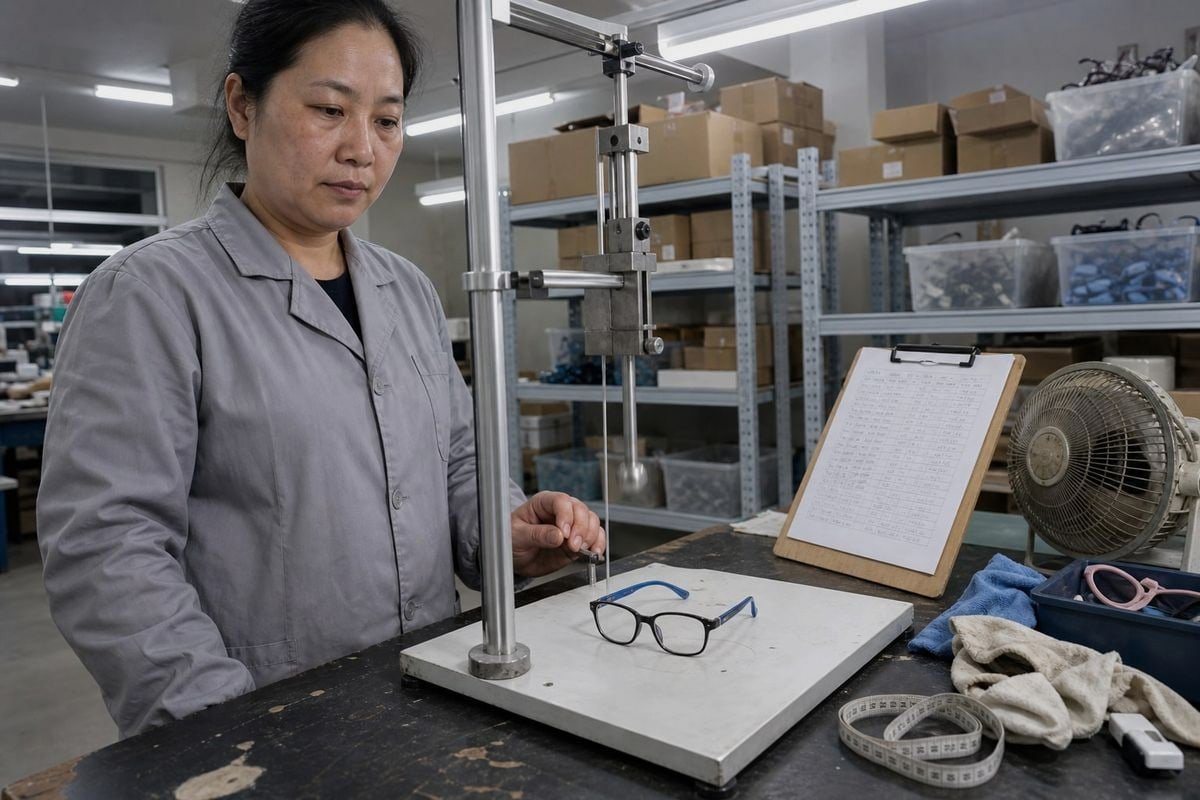
子供用光学フレームの落下耐性は、私が太州の生産ラインで毎日チェックしているものです。ひび割れたフレームの返品コンテナ1つで、若いブランドの評判が一夜にして台無しになる可能性があります。.
子供用光学フレームの落下耐性は、FDA落下球テストのようなレンズ衝撃テスト、ISO 12870に基づくフレーム強度テスト、ANSI Z87.1に基づく高質量衝撃テスト、子供の実際の転倒をシミュレートするメーカーの落下および張力テストを通じてテストされます。.
それが簡単な答えです。しかし、「落下耐性」は単一のテストではありません。ラボで実際に何が起こっているのか、そしてサプライヤーにどのような基準を要求すべきかをご説明します。.
子供たちのメガネフレームは、実際の落下に耐えられることを、どのようなラボテストで確認できますか?
オーストラリアのバイヤーが、ビデオ通話中にサンプルフレームをコンクリートに落とすように依頼してきたことがあります。私はそれを5回行いました。その瞬間、バイヤーは約束ではなく証拠を求めていることを学びました。そのため、私たちのラボは現在、すべてのセッションを記録しています。 衝撃耐性テスト セッション。.
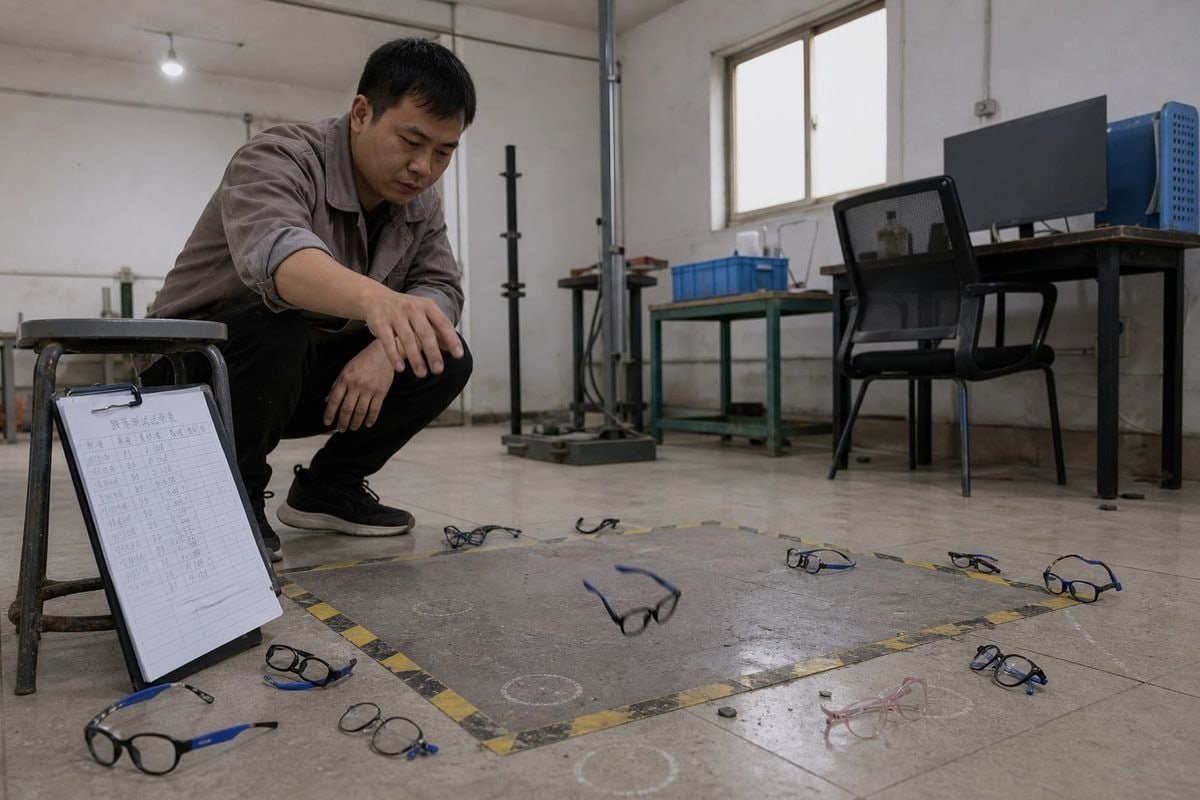
ラボでは、レンズに対するFDA落下球テスト、500グラムの物体をフレーム、ブリッジ、テンプルに落下させる高質量衝撃テスト、耐久性サイクル、フレーム変形テスト、および子供の頭の高さから硬い表面への繰り返し自由落下落下テストを通じて、耐落下性を確認しています。.
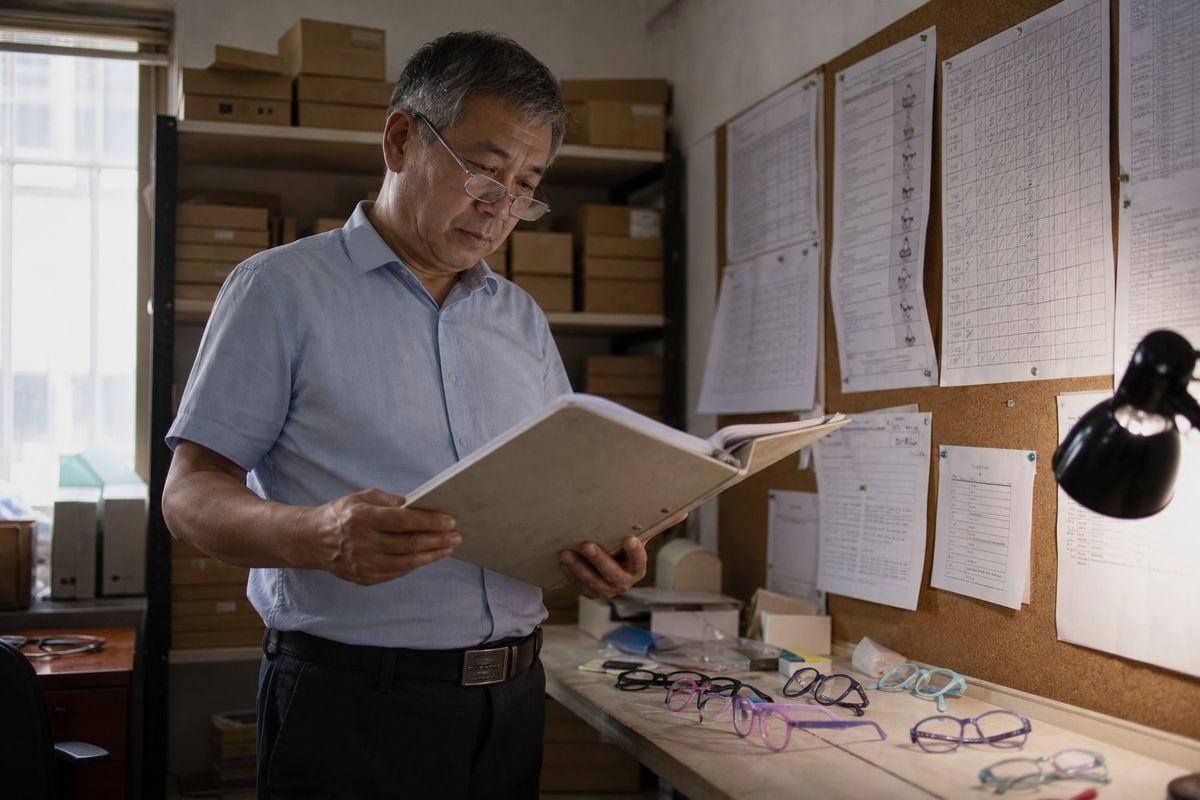
最初に理解すべきことは、落下耐性は単一の数値ではなくシステムであるということです。私たちのQCルームでは、テストを3つのレイヤーに分割しています。レンズの衝撃、フレームの保持、フレームの耐久性です。各レイヤーは、小児用眼鏡の安全性に関する異なる質問に答えます。.
落下テストの3つのレイヤー
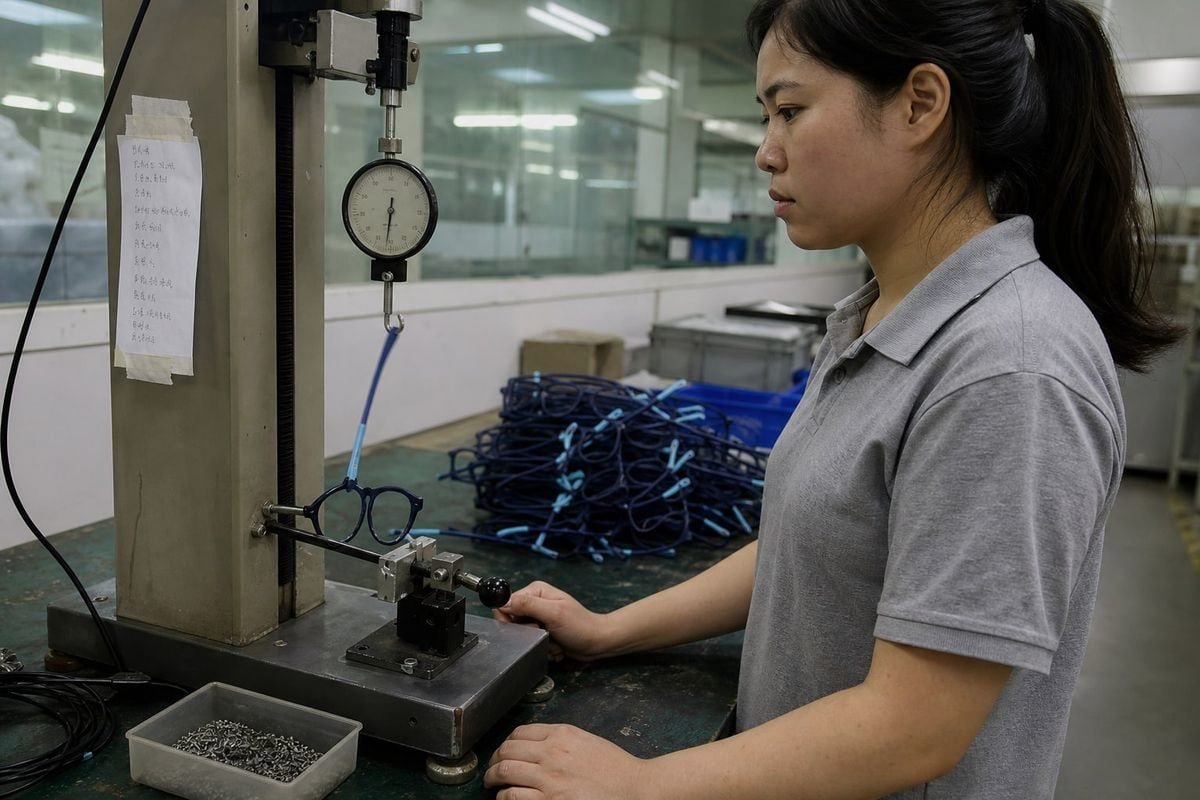
レンズテストは次のように尋ねます。レンズは割れますか?古典的なFDA落下球テストは、5/8インチの鋼球(約0.56オンス)を50インチの高さからレンズの水平な上面に落下させます。ボールは、幾何学的中心の5/8インチの円内に当たる必要があります。レンズが割れなければ合格です。誘導管がボールを導くことがありますが、落下を遅らせることはできません。 保持テストは次のように尋ねます。衝撃時にレンズが外れますか?高質量衝撃テストは、ANSI Z87.1に由来し、500グラムの尖った投射物を眼鏡に落下させます。フレーム前面は、割れることなくレンズを保持する必要があります。研究によると、フレームのデザインはレンズの保持に直接影響するため、弱いフレームに入った強いレンズは依然として失敗します。 1 耐久性テストは次のように尋ねます。フレームは日常の乱用に耐えられますか?ここでは、曲げ、ねじり、テンプルの引っ張り、繰り返し自由落下テストを実行します。これは、子供が一手で眼鏡を引っ張ったり、遊び場の滑り台から落としたりするのを模倣しています。.
テストタイプ それがチェックするもの, 典型的な方法 ANSI Z87.1 2, レンズの破損耐性.
5/8インチの鋼球、50インチの落下、幾何学的中心.
| 高質量衝撃 | フレーム内のレンズ保持 | 500gの尖った投射物を眼鏡に落下させる |
|---|---|---|
| 保持テストは次のように尋ねます。衝撃時にレンズが外れますか?高質量衝撃テストは、ANSI Z87.1に由来し、500グラムの尖った投射物を眼鏡に落下させます。フレーム前面は、割れることなくレンズを保持する必要があります。研究によると、フレームのデザインはレンズの保持に直接影響するため、弱いフレームに入った強いレンズは依然として失敗します。 | 張力テスト | テンプルとヒンジの強度 |
| テンプルアームへの制御された引張力 | 自由落下テスト | フレーム全体の生存 |
| 設定された高さから硬い表面への繰り返し落下 | 変形サイクリング | ブリッジとテンプルの耐久性 |
| 永久的なセットを測定する繰り返し曲げサイクル | 私たちがバイヤーに常に説明するニュアンスの1つは、単一の衝撃に合格しても、実際の耐久性が証明されるわけではないということです。実際の落下は、ランダムな角度でコーナー、ヒンジ、テンプルチップに当たります。そのため、真剣な工場では、規定のテストに加えて、多角度の落下プロトコルを追加しています。一部の高度なR&Dチームは、現在、有限要素解析を使用して、単一の金型を切断する前に数千の落下角度をデジタルでシミュレートしており、これによりフレームジオメトリの弱点が早期に発見されます。 | FDA落下球テストでは、5/8インチの鋼球を50インチの高さからレンズの中心に落下させます。 |
| 21 CFR 801.410は、この方法を正確に定義しています。約0.56オンスの鋼球が、レンズの幾何学的中心の5/8インチの円内に当たる必要があり、レンズは割れてはなりません。 | 落下球テストに合格しても、子供用フレームがすべての実際の落下に耐えられるとは限りません。 | 落下球テストは、1つのポイントでのレンズの衝撃耐性のみを検証します。フレームの耐久性、レンズの保持、および多角度の落下には、多くのサプライヤーがスキップする個別のテストが必要です。 |
バイヤーに常に説明しているニュアンスが1つあります。単回の衝撃をクリアしても、実際の耐久性が証明されるわけではありません。実際の落下は、コーナー、ヒンジ、テンプルチップにランダムな角度で当たります。そのため、真面目な工場では、規定されたテストに加えて、多角度落下プロトコルを追加しています。一部の先進的な研究開発チームは、現在、有限要素解析を使用して、単一の金型をカットする前に数千もの落下角度をデジタルでシミュレーションし、フレーム形状の弱点を早期に発見しています。.
ドロップ耐性のあるキッズ用フレームを調達する際に確認すべき国際的な安全基準は何ですか?
国際.
米国ではレンズの耐衝撃性についてFDA 21 CFR 801.410を、国際的なフレームの堅牢性についてはISO 12870を、眼鏡レンズについてはANSI Z80.1を、スポーツ用アイウェアについてはASTM F803を、保護用アイウェアとして販売されるフレームについてはANSI Z87.1を確認してください。.
フレームの強度、ブリッジの変形、テンプルの耐久性
| 標準 | 地域 / 本体 | それがカバーするもの | 必須? |
|---|---|---|---|
| 衝撃安全性 | アメリカ合衆国 | 耐衝撃レンズ(落下試験済み) | はい、ほとんどの米国の眼鏡レンズに対応 |
| ISO 12870規格 3 | 国際的 | フレームの堅牢性、ブリッジの変形、テンプルの耐久性 | EUバイヤーから広く要求されています |
| ANSI Z80.1 | アメリカ合衆国 | 眼鏡レンズの品質と衝撃 | 業界コンセンサス標準 |
| ASTM F803 4 安全基準 | アメリカ合衆国 | スポーツ用眼鏡の高速衝撃 | スポーツ保護に関する主張に必要 |
| ANSI Z87.1 | アメリカ合衆国 | 産業用および保護用眼鏡、高質量衝撃 | 安全定格の眼鏡に |
| BS EN ISO 12312-1 | ヨーロッパ/国際 | サングラス、衝撃および落下球テストを含む | EUサングラス市場に必要 |
バイヤーが見落としがちなギャップ
FDAの規則はレンズの基準であり、フレームの基準ではありません。多くのバイヤーは、子供用フレームの耐落下性はレンズと同じように規制されていると思い込んでいます。そうではありません。通常の処方箋子供用眼鏡のフレームテストは、それほど一貫して規定されていません。そのギャップこそ、ISO 12870規格が最も重要になる理由です。ISO 12870は、荷重下でのブリッジの変形と、繰り返し機械的ストレス下でのテンプルの耐久性を測定します。これは、フレームが学校の1年間を生き残れるかどうかを予測する機械的強度要件です。.
ASTM F803は別のカテゴリに属します。これは、野球やラケットのような高速の飛翔体に対して、フレームとレンズを一緒にテストします。あなたのブランドがスポーツ用ゴーグルを販売している場合、ASTM F803が基準となります。日常的な光学フレームにとっては過剰ですが、テストがどこまで進むかを示しています。一方、ANSI Z80.3は処方箋なしのサングラスを対象としているため、光学フレームと子供用サングラスの両方を当社から調達しているバイヤーは、同じ注文でANSI Z80.3準拠についてよく問い合わせます。.
私の実践的なアドバイスは、標準を製品の主張に合わせることです。サプライヤーが「落下テスト済み」と言っても、FDA 21 CFR 801.410、ISO 12870、またはASTM/ANSI規格の名前を挙げない場合は、どのプロトコルに従ったかを示すまで、そのフレーズをマーケティング用語として扱ってください。.
TR90やTPEEのようなフレーム素材は、衝撃や落下への耐性にどのように影響しますか?
柔軟な子供用フレームを15年間成形してきた経験から、エンジニアは1つの率直な教訓を得ました。材料の選択が、フレームがラボに届く前に落下テストの結果の大部分を決定します。硬いアセテートのフロントとTR90のフロントは、コンクリート上では全く異なる挙動をします。.
TR90メモリープラスチックとTPEEは、ひび割れるのではなく、衝撃エネルギーを吸収・分散するため、落下耐性を劇的に向上させます。形状記憶性により、フレームは落下時に曲がっても元の位置に戻り、剛性素材が力を破損箇所に直接伝達するのとは対照的です。.
硬質プラスチックはひび割れて破損します。柔軟なエンジニアリングプラスチックは、はるかに少ない頻度で、永久的な変形によって破損します。この単一の違いが、私たちが約800種類の子供用スタイルのほとんどをTR90形状記憶プラスチックフロントとTPEEテンプルを中心に構築している理由を説明しています。.
各材料が衝撃でどのように振る舞うか
TR90(グリラミドとも呼ばれる)は、本物の形状記憶を持つ熱可塑性プラスチックです。子供がフレームを落としたとき、フロントが曲がり、衝撃エネルギーを構造全体に分散させ、元の形状に戻ります。当社の落下テストでは、TR90フロントは、比較可能な硬質フレームをブリッジやレンズリムで破損させるような落下に日常的に耐えています。.
TPEEはテンプルでさらに進んでいます。それは 熱可塑性エラストマー 5 子供の頭に対して柔らかいままですが、引き裂きに強いです。私たちはTR90フロントとTPEEテンプルを組み合わせています。なぜなら、テンプルは最もねじれの負荷がかかるからです。子供たちは片手で眼鏡を外し、座り込み、バックパックに押し込みます。柔軟なヒンジの耐久性も向上します。なぜなら、材料がヒンジネジに集中するトルクを吸収するからです。.
| 素材 | 衝撃挙動 | 形状記憶 | 中程度から重い | 子供用フレームでの最適な使用 |
|---|---|---|---|---|
| TR90(グリラミド) | 曲がり、元に戻る | 素晴らしい | 非常に軽い | フレームフロントおよびフルフレーム |
| TPEE | 弾力性があり、引き裂きに強い | 素晴らしい | 非常に軽い | テンプル、ソフトタッチパーツ |
| 標準的なアセテート | ストレスポイントでひび割れる可能性がある | 限定的 | 中程度 | ファッションスタイリング、大人用フレーム |
| 金属 | 永久的に曲がる | 悪い | 中程度 | 小さな子供には最適ではない |
レンズ側では、ポリカーボネートとTrivexは、同じ物理法則により子供用眼鏡で主流となっています。高い延性強度により、ガラスよりもはるかに簡単にFDA準拠を達成できる、粉砕するのではなく曲がってエネルギーを吸収できます。.
注目すべき2つのトレンドがあります。バイオベースの高衝撃ポリマー(ひまし油由来の材料を含む)は、従来のプラスチックが脆くなる極低温でも耐衝撃性を維持します。これは、北欧やカナディアンウィンターに販売する場合に関連します。また、一部の開発者は、微細な亀裂で視覚的に色が変わる応力白化ポリマーを実験しており、保護者に早期の構造的警告を与えています。環境に優しい材料はすでに当社の調達の中心であるため、私たちは両方を注意深く追跡しています。.
大量注文をする前に、サプライヤーの落下試験結果をどのように確認できますか?
日本の調達マネージャーは、最初の見積もりメールを拒否しましたが、5S管理されたワークショップを訪れ、テンションテスターがリアルタイムでテンプルアームを引っ張るのを見た後、大量注文をしました。価格ではなく、検証がその取引を成立させました。.
特定の基準名を記載した第三者機関の検査レポートを要求し、レンズが加工後にテストされたかどうかを確認し、独自の落下試験のために量産前のサンプルを発注し、工場の眼科光学品質管理プロセスをレビューし、施設を直接またはビデオで監査することにより、落下試験結果を検証します。.
マーケティング用語は安価です。「落下テスト済み」や「耐久性がある」は、それらを裏付ける名前付きプロトコルなしでは何も意味しません。ここに、私たちが協力するすべてのブランド創設者および製品開発マネージャーに推奨する検証プロセスがあります。
5段階の検証プロセス
- テストレポートを名前付き標準で要求します。. 各レポートがどの標準をカバーしているか尋ねます。レンズの場合はFDA 21 CFR 801.410、フレームの場合はISO 12870、スポーツの主張がある場合はASTM F803です。信頼できるレポートには、標準、テスト日、ラボ、およびサンプルバッチの名前が記載されています。.
- エッジング後のテストについて尋ねます。. レンズはブランクとして落下球テストに合格できますが、フレームに合わせてカットされた後は弱くなります。完成したエッジング済みレンズで、実際のフレームでテストが行われることを確認してください。.
- 独自のサンプルトライアルを実行します。. 量産前のサンプルを注文し、自分で落としてみてください。タイルに、テーブルの高さから、10回。ひび割れ、レンズの外れ、ヒンジの緩みを確認してください。私たちはバイヤーに、大量注文の前にこれを行うことを奨励しています。.
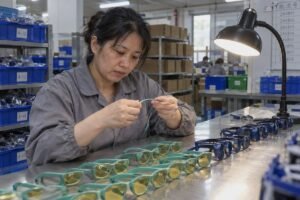
- QCプロセスを確認してください。証明書だけでなく。. 工場がラインからユニットをどれくらいの頻度で引き抜くか尋ねてください フレーム変形試験 および張力チェック。私たちのワークショップでは、QCチェックポイントは原材料検査から最終梱包まで実行されます。なぜなら、小児用アイウェアの安全性は、1つのゴールデンサンプルではなく、数千ユニットの一貫性に依存するからです。.
- 工場を監査してください。. ライブビデオウォークスルーは多くのことを明らかにします。専用の試験装置を探してください — ドロップボールリグ、テンプルテンションテスター、フレックスサイクリングマシン。あなたがトレーダーではなく、生産ラインを見たことのない実際の工場と取引していることを確認してください。.
もう1つの実用的なヒント:サプライヤーに過去の失敗について説明するように依頼してください。実際の経験を持つ工場は、ある時点でブリッジとテンプルの耐久性サイクリングでバッチが失敗したことがあります。根本原因と修正方法をどのように説明するかは、証明書よりも品質文化について多くを語ります。.
結論
子供用光学フレームの落下耐性は、レンズの耐衝撃性試験、フレームの堅牢性基準、およびTR90やTPEEなどの柔軟な素材を組み合わせています。すべてのバルク注文の前に、指定された基準と検証済みのレポートを要求してください。.
脚注
医療機器規制に関する公式FDAリソース。これには、レンズの耐衝撃性要件が含まれます。. ↩︎
安全アイウェアに関する米国国家規格。高質量および高速度の耐衝撃性に関する基準を提供します。. ↩︎
眼鏡フレームの耐久性と堅牢性を確保するための要件と試験方法を定義する国際規格。. ↩︎
さまざまな高衝撃スポーツでの怪我のリスクを最小限に抑えるように設計された保護具の標準仕様。. ↩︎
耐衝撃性特性のために柔軟なアイウェアに使用される素材である熱可塑性エラストマーの技術概要。. ↩︎

 English
  Español de México
  Deutsch
  Français
  日本語
日本語  العربية
  Português do Brasil