How to Create a Kids’ Sunglasses Spec Sheet for Suppliers?
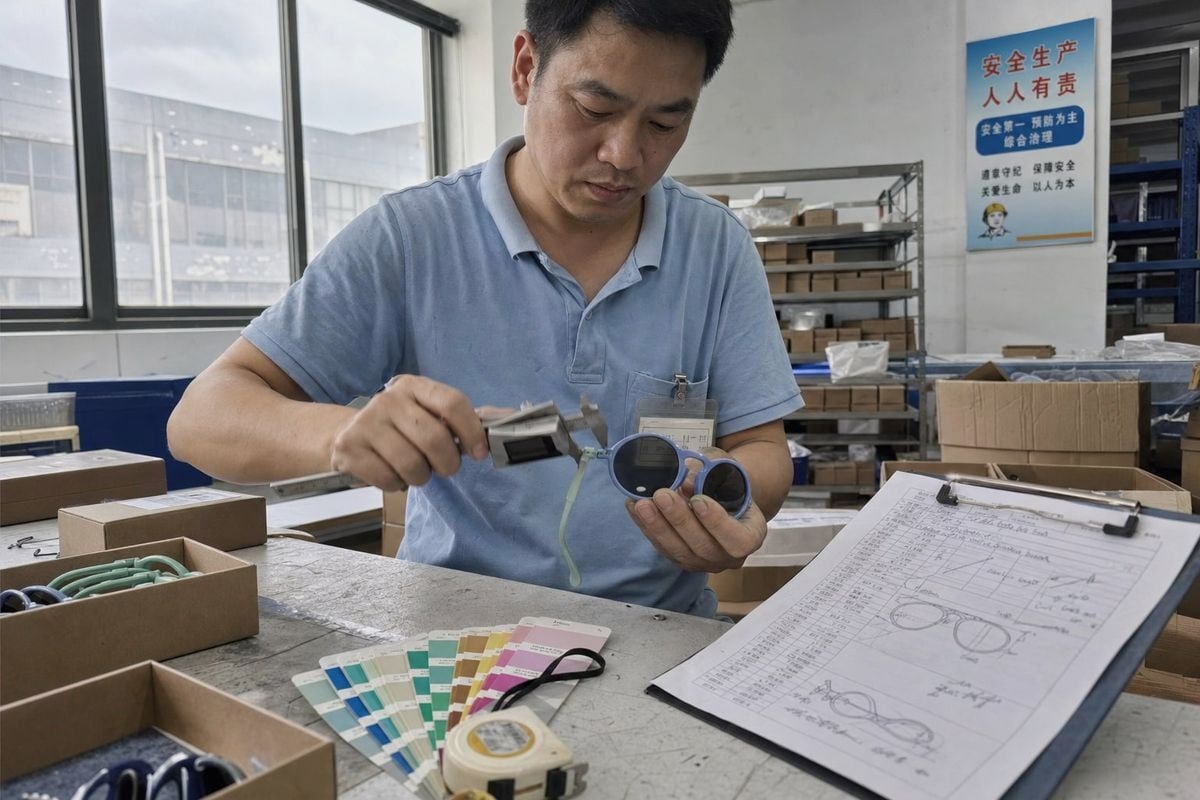
A vague kids’ sunglasses spec sheet causes wrong samples, delayed launches, and wasted budget. I have seen it happen on our production line many times, and it always hurts the buyer most.
To create a kids’ sunglasses spec sheet for suppliers, define the product name and SKU, target age group, frame and lens materials, exact color codes, fit dimensions in millimeters, safety standards, packaging, quantities, and revision numbers in one clear, annotated, manufacturing-ready document.
Let me walk you through each part of the sheet. I will show you what to include, why suppliers need it, and which mistakes cost the most money.
What Details Should I Include in a Kids' Sunglasses Spec Sheet?
Last year, a new brand from Australia sent us a single inspiration photo and asked for a quote. We had to send back eleven questions before we could price anything.
A kids' sunglasses spec sheet should include product identification, target age group, style reference images, frame and lens materials, Pantone color codes, size measurements, weight target, key features, safety standards, packaging instructions, order quantities, and a revision history with dates.
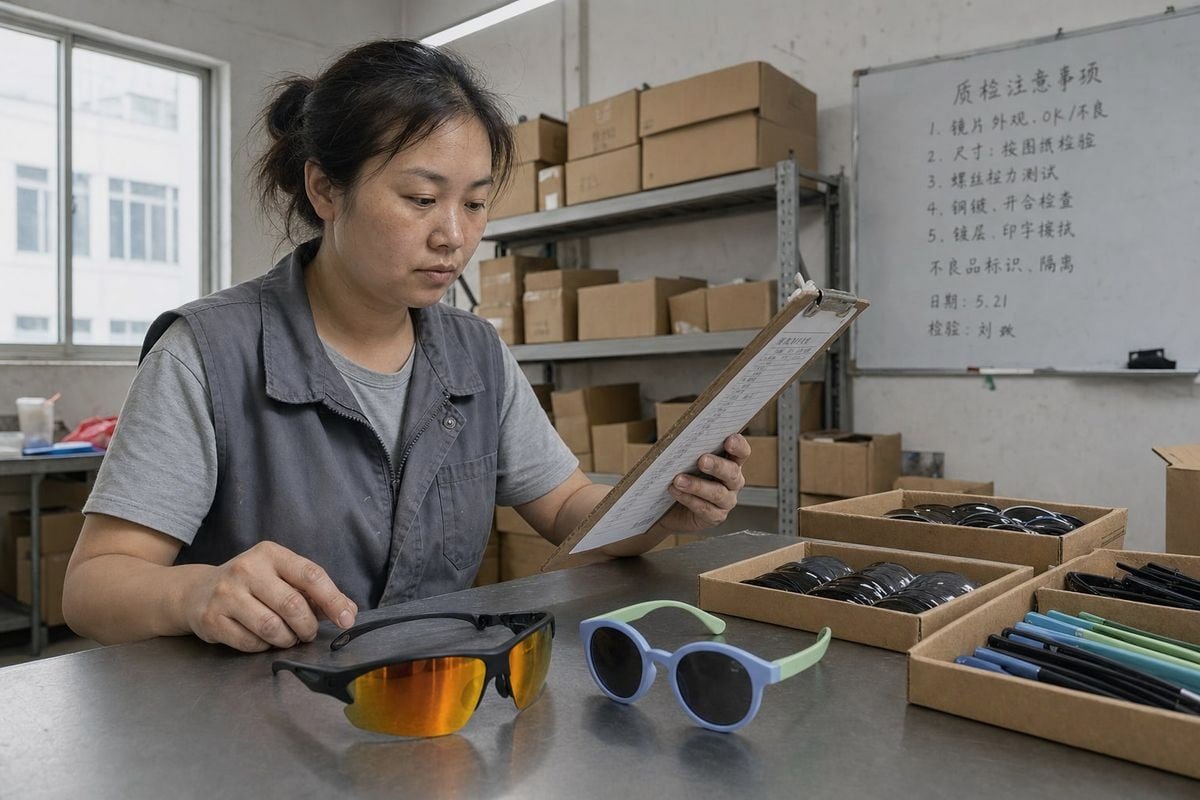
A spec sheet is not a mood board. It is a manufacturing document. Its job is to let a factory quote, sample, and produce your kids' sunglasses with minimal back-and-forth. In our experience working with buyers from more than 20 countries, the sheets that work best follow a repeatable structure, almost like an eyewear tech pack template that you reuse across every style.
The Core Field Checklist
Here is the field-by-field structure I recommend to every buyer before they send an RFQ:
| Section | Fields to Include | Why Suppliers Need It |
|---|---|---|
| 識別 | Product name, model number, SKU, revision, date | Prevents version confusion during sampling |
| Target User | Age group (e.g., 3–6 years), use case | Drives fit, material, and safety choices |
| Style Reference | Catalog number, sketch, or annotated photos | Confirms if it is an existing mold or new tooling |
| Materials | Frame material, lens material, coatings | Determines cost, safety, and durability |
| 在庫色、1つのMOQで混合 | Frame and lens colors with exact codes | Avoids "wrong shade" sample rejections |
| Dimensions | Lens, bridge, temple, total width | Ensures the frame actually fits a child |
| Features | Flexible temples, strap slots, polarized lens | Defines the true product, not just the look |
| コンプライアンス | Required standards and test reports | Lets the factory plan testing and documentation |
| パッケージング | Unit pack, master carton, labels, barcodes | Affects cost, lead time, and retail readiness |
| Quantities | Total order, colorway split, MOQ notes | Enables an accurate quote the first time |
One Decision Suppliers Always Ask About
State clearly whether you want ODM or OEM. If you choose an existing style from a catalog — we keep around 800 styles ready for exactly this reason — your sheet mostly documents color, logo, lens, and packaging changes. If you want a new mold 1, your sheet must be far more detailed, with technical drawings and tolerances. This single decision changes your cost, timeline, and risk more than any other field.
Also add a weight target. Children notice heavy frames immediately. A target like "under 20 grams" gives the factory a real benchmark to engineer toward.
Which Safety and Material Standards Must I Specify for My Supplier?
There is a trade-off we discuss with almost every buyer: cheaper rigid plastic frames versus flexible materials that survive being bent, dropped, and chewed. For children, we always argue for the second option.
Specify UV400 protection standards for lenses, impact-resistant polycarbonate or polarized TAC lenses, BPA-free and flexible frame materials such as TPEE or TR90, and market compliance like EN ISO 12312-1 for Europe, plus CPSIA for the US, with required test reports named explicitly.
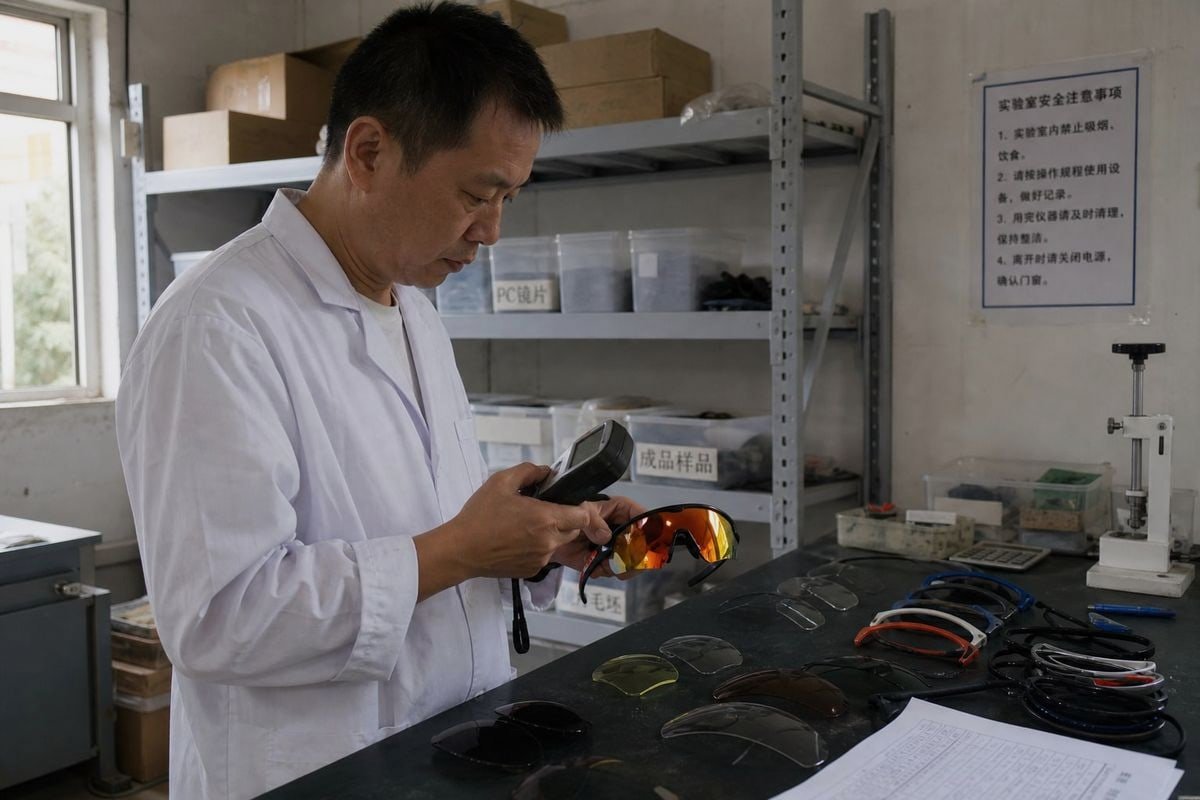
Safety is where kids' eyewear separates itself from adult fashion eyewear. A child will drop the sunglasses, sit on them, twist the temples, and sometimes put them in their mouth. Your spec sheet must anticipate all of this in writing, because a factory only builds what the document requires.
Lens Requirements to Write Down
Start with the lens. State the material, the UV requirement, and any optional performance features:
| Lens Specification | What to Write | Notes for Kids' Products |
|---|---|---|
| UV保護 | UV400 protection standards, blocking up to 400nm | Non-negotiable for children's developing eyes |
| レンズ素材 | Polycarbonate or polarized TAC lenses | Impact resistance matters more than optics grade |
| Tint | Category number and color code | Category 3 is common for bright outdoor use |
| Coatings | Mirror, anti-scratch, or gradient finish | Reference a sample or photo for mirrored effects |
For example, a sport wraparound shield lens with an orange-to-yellow mirrored gradient needs both the base tint and the mirror coating specified separately. If you only write "orange lens," you will get five different interpretations.
Frame Materials and Compliance
For frames, name the material precisely: TR90, acetate, PC, or TPEE flexible frames. At our Taizhou factory, we build most children's styles in TR90 with TPEEテンプル 2 because the combination bends without snapping and stays comfortable on small faces. Whatever you choose, add "BPA-free materials" and "environmentally friendly, non-toxic" as written requirements, not assumptions.
Then list compliance by market. EN ISO 12312-1 compliance covers sunglasses sold in Europe. CPSIA governs children's products in the US, and FDA impact requirements 3 apply to eyewear there too. State who pays for testing and which lab reports you expect before shipment. Also include hinge and screw specifications — hinge type 4, screw size, and whether spring hinges are required — since loose small parts are a genuine hazard on children's products.
How Do I Communicate Sizing and Fit Requirements for Children's Faces?
A buyer from Japan once approved a sample by photo, then discovered at fitting trials that the bridge sat too low on toddlers' noses. One missing millimeter measurement caused a six-week delay. That lesson shaped how we ask for sizing today.
Communicate sizing by stating the target age range, then listing lens width, bridge width, temple length, and total frame width in millimeters with tolerances, in a measurement table tied to pediatric head dimensions rather than scaled-down adult sizes.
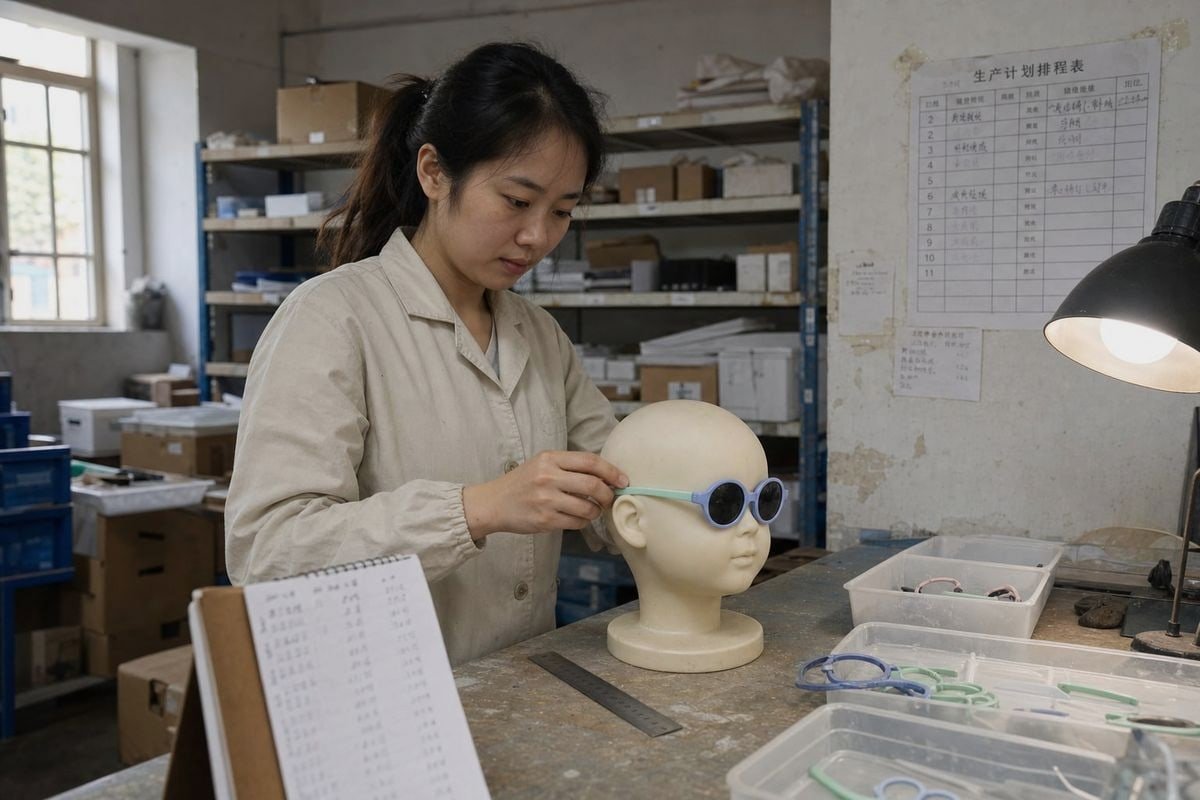
Children's faces are not small adult faces. Their bridges are flatter, their heads are proportionally wider, and their ears sit differently. So a frame dimensions guide built on pediatric proportions 5 matters far more than styling details. Our engineers have found that a well-specified 2mm change in bridge width can decide whether a frame stays on a running four-year-old or slides off constantly.
The Measurement Table Every Sheet Needs
Use a table like this and adjust the numbers to your target age band:
| 測定 | Typical Range (Ages 3–6) | Typical Range (Ages 7–10) | 公差 |
|---|---|---|---|
| レンズ幅 | 40~45 mm | 45–50 mm | ±0.5 mm |
| 鼻梁の幅 | 115〜120 mm | 120〜128 mm | ±0.5 mm |
| テンプル長 | 110~120 mm | 120~130 mm | ±1.0 mm |
| フレーム全体の幅 | 110–118 mm | 118–128 mm | ±1.0 mm |
| Frame weight | Under 20 g | 25 g未満 | ±1.0 g |
These are illustrative ranges. Confirm the exact figures against your own fit testing, then lock them into the sheet with tolerances so quality control has objective pass/fail numbers.
Fit Notes Beyond the Numbers
Numbers alone do not capture fit. Add short written notes for the details that keep sunglasses on active kids:
- Wraparound styles: state the ベースカーブ 6, since a shield lens must follow the face without pressing the temples.
- Nose pads: specify integrated rubber or soft-touch pads for grip on low bridges.
- Temple tips: request rubberized, anti-slip tips for sport styles.
- Retention: note whether the temples need recessed slots for a head strap, which many baby and toddler brands now require.
- Flexibility: define how far temples must flex without permanent deformation, which is where TR90 and TPEE materials prove their value.
Finally, always plan a wear test on real children during sample approval. A frame can measure perfectly and still pinch. We encourage buyers to test samples with kids in the target age group before sign-off, and to record the feedback as fit notes in the next revision.
What Common Mistakes Should I Avoid When Writing a Spec Sheet for Manufacturers?
After fifteen years of quoting kids' eyewear projects, our sales team can predict which spec sheets will cause trouble within the first read. The problem patterns repeat across brands and countries.
Avoid vague color descriptions without Pantone codes, missing age group or lens material, inspiration photos with no annotations, undefined packaging, uncontrolled revisions, and unspecified hardware — each gap forces suppliers to guess, which leads to wrong quotes, rejected samples, and delayed production.
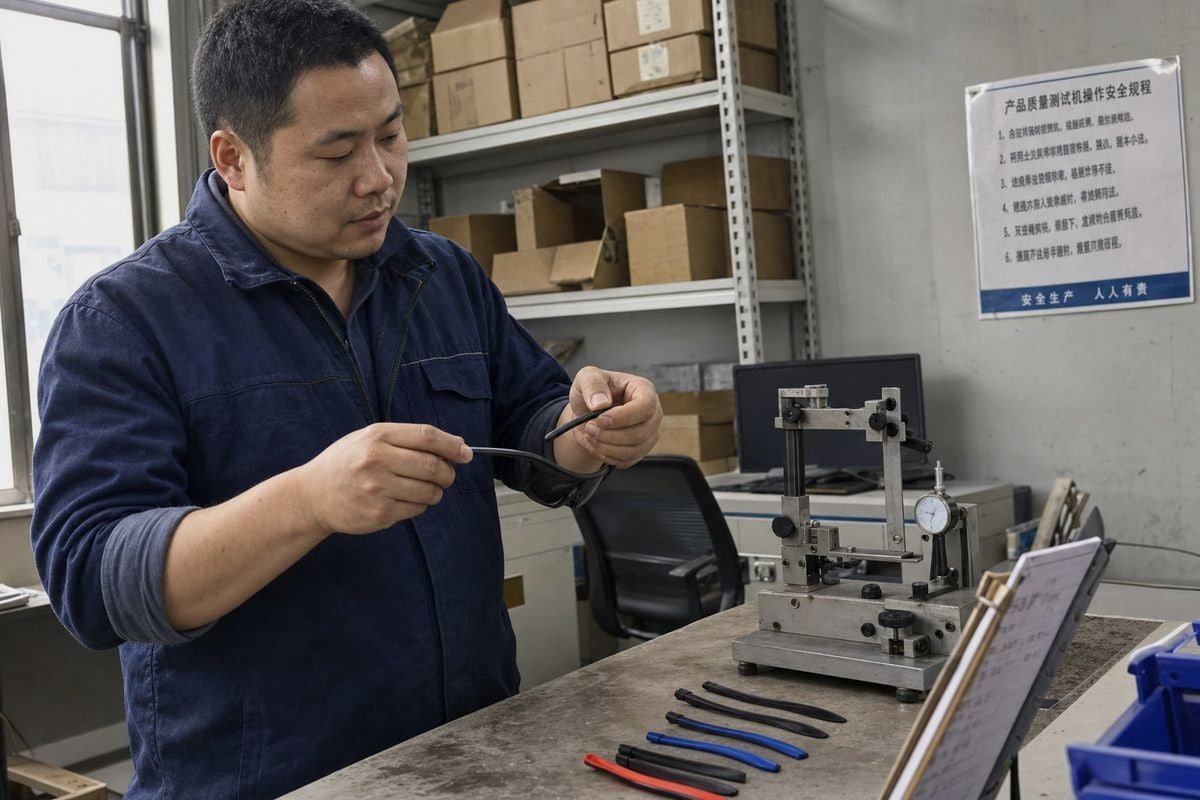
Most spec sheet failures are not about missing knowledge. They are about missing precision. Let me break down the mistakes we see most, and the fix for each one.
The Six Most Expensive Mistakes
First, vague colors. Writing "pastel blue frame with mint arms" invites interpretation. Pantone color matching solves this: state the Pantone code 7 for each part — front frame, temples, temple tips — or send a physical color chip. Two-tone frames especially need part-by-part color callouts.
Second, missing lens details. If you skip lens material and performance, the factory defaults to the cheapest option that fits your price. Always name the lens material, the UV level, and whether polarized lenses are required.
Third, unannotated images. A photo shows style, not construction. Annotate every image: mark the logo position and method (printed, engraved, or embossed), the finish (glossy versus matte or soft-touch rubberized), the hinge type, and any gradient direction on mirrored lenses. Visual annotations dramatically reduce misinterpretation.
Fourth, no revision control. When a buyer emails changes across ten messages, nobody knows which version is final. Put a revision number and effective date on every page, and keep a change log at the bottom of the sheet.
Fifth, packaging left until after sampling. Unit boxes, pouches, hangtags, barcodes, and master carton details all affect cost and lead time. Define them upfront so your quote covers the retail-ready product, not just bare frames.
Sixth, ignored hardware. Undefined hinge and screw specifications lead to inconsistent quality between production runs. Specify them once, and add them to your quality control checklist so inspections check the same points every time.
A Practical Middle Ground
You do not need a perfect sheet before talking to suppliers. A lean first draft with known fields filled and open questions flagged works well. We often help buyers complete gaps during quoting. The mistake is not an incomplete sheet — it is an ambiguous one that pretends to be complete.
結論
A precise kids' sunglasses spec sheet turns your idea into a factory-ready plan. Define materials, sizes, safety, and packaging clearly, and your supplier can quote, sample, and deliver right the first time.
脚注
1. Overview of the manufacturing process used to create custom plastic frames and components. ↩︎
2. Technical overview of high-performance thermoplastic elastomers used for flexible and durable eyewear components. ↩︎
3. Official FDA guidance on the mandatory impact resistance standards for all sunglasses sold in the US. ↩︎
4. Reference for the different mechanical components used to connect eyeglass frames and temples. ↩︎
5. Scientific study on facial measurements in children, essential for designing properly fitting pediatric eyewear. ↩︎
6. Technical definition of lens curvature, which determines the fit and optical quality of eyewear. ↩︎
7. Explains the industry standard system for identifying and matching colors in manufacturing. ↩︎

 English
  Español de México
  Deutsch
  Français
  日本語
日本語  العربية
  Português do Brasil