How Can Consignment Stocking Lower Inventory Costs for Kids’ Sunglasses?
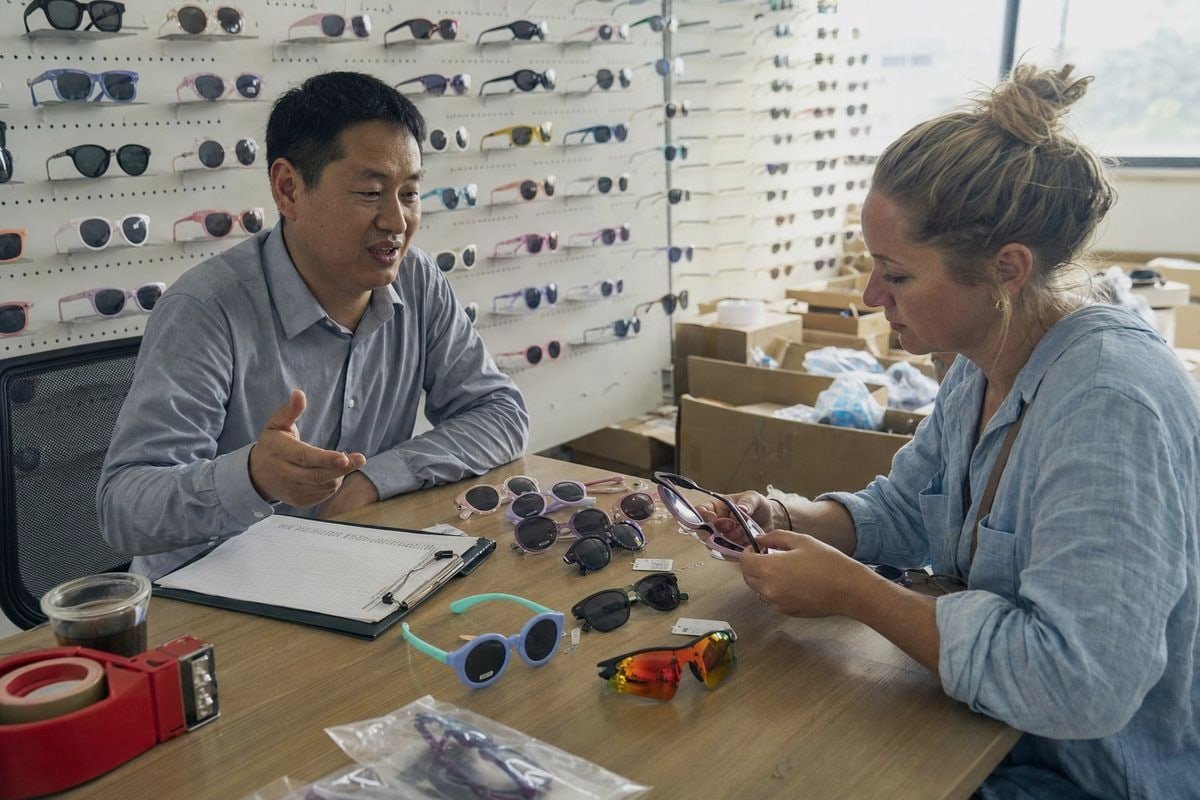
Consignment stocking for kids’ sunglasses comes up constantly when buyers visit our Taizhou factory. They love our 800 styles — but they fear paying upfront for stock that might not sell.
Consignment stocking lowers inventory costs for kids’ sunglasses by letting retailers pay only after items sell. The supplier retains ownership, so upfront purchase costs disappear, carrying costs shrink, markdown pressure drops, and unsold seasonal frames can be returned instead of becoming dead stock.
That is the short answer. Now let me walk you through how the model actually works, what it saves, where it can go wrong, and how to find a partner who offers it.
What is consignment stocking and how does it work for kids' eyewear brands?
Last spring, a boutique buyer from Australia asked me a blunt question during a sampling call: "Alan, why should I own 500 pairs before a single child tries one on?" Fair point.
Consignment stocking means the supplier ships kids' eyewear to the retailer but keeps legal ownership until each pair sells. The retailer pays per sale, usually through a revenue share, and can return unsold frames — shifting inventory risk from the shop back to the supplier.
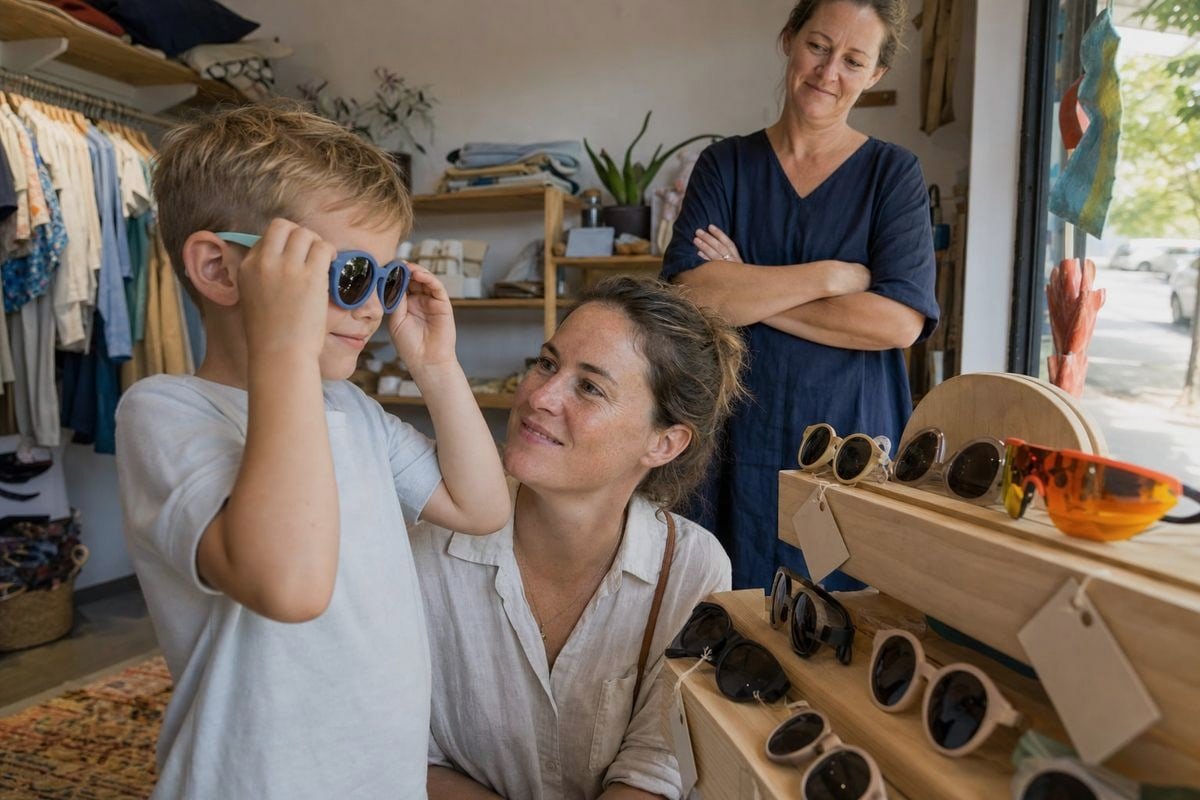
The mechanics are simple. Instead of a standard wholesale distribution agreement where you buy stock outright, a consignment agreement 1 defines who owns the goods, when payment happens, and what happens to units that do not move.
The basic flow, step by step
- The supplier and retailer sign a consignment agreement covering pricing, revenue split, return terms, and damage responsibility.
- The supplier ships the sunglasses — for example, flexible TPEE 2 frames for toddlers and TR90 sport shields for older kids.
- The retailer displays the stock but does not record it as an asset on its books.
- When a pair sells, the retailer keeps its agreed share and remits the rest to the supplier.
- Unsold or end-of-season units are returned, swapped, or rotated by the supplier.
Why the accounting matters
Because the consignor keeps the inventory on its books, the retailer's balance sheet stays light. Working capital optimization is the real prize here. Cash that would have been locked in shelf stock stays free for marketing, staffing, or store expansion. In our experience exporting to 20+ countries, this is exactly what young kids' brands need most in their first two seasons.
Kids' eyewear is a strong fit for this model. Frame sizes change as children grow. Colors follow fast-moving trends — one season it is periwinkle-blue rounds with mint temples, the next it is mirrored gradient shields. Seasonal demand fluctuations are sharp: summer holidays and school breaks spike sales, while winter months can be quiet unless you carry ski-friendly wraparound styles. Consignment absorbs that volatility instead of forcing you to guess it perfectly.
How much can I reduce upfront inventory investment by using consignment stock?
Numbers persuade better than promises, so let me share the math we run with new brand clients before they choose between wholesale and consignment terms.
Consignment can cut upfront inventory investment to nearly zero, because payment happens only after sale. Retailers also avoid carrying costs — often estimated at 25% to 55% of inventory value annually — while preserving cash flow and expanding assortment without extra capital.

Think about what a traditional buy-in actually costs you. You pay for the goods before the season starts. Then you pay to store them, insure them, and finance them. Then, if a colorway flops, you pay again through markdowns. Consignment attacks every one of those layers.
Traditional buying vs. consignment at a glance
| 要因 | Traditional wholesale buying | Consignment stocking |
|---|---|---|
| Payment timing | Before sale, upfront | After each unit sells |
| Ownership of unsold stock | Retailer | Supplier |
| Markdown and dead stock risk | 高い | Low — returns allowed |
| Working capital tied up | Significant | Minimal |
| Ability to test many styles | Limited by budget | Broad and flexible |
| Gross margin per unit | Higher | Lower (revenue share) |
The carrying cost you never see on an invoice
Carrying cost reduction 3 is the hidden win. Owned inventory quietly consumes 25% to 55% of its value every year through storage, handling, insurance exposure, shrinkage, and the cost of capital. When the supplier retains ownership, most of that burden shifts away from you. There are also no interest-related financing costs, because you are not borrowing to fund a seasonal buy.
Assortment without the budget ceiling
Here is where kids' sunglasses get interesting. A small boutique that wants 30 frame styles across multiple colors and age groups would normally need a serious budget. Under consignment, that same shop can display soft silicone-feel toddler rounds next to bold mirrored sport shields for active eight-year-olds — without buying it all. Your 在庫回転率 4 improves too, because the stock on your floor is curated by real sell-through data, not by a purchase order you made six months ago. It reframes the question from "how much inventory can I afford?" to "how much shelf space can I profitably allocate?"
What risks should I consider before choosing a consignment stocking model?
Honesty builds better partnerships than hype, and I have seen consignment deals fail when either side ignored the trade-offs — so let me weigh them openly here.
The main risks of consignment are lower per-unit margins from revenue sharing, heavier administrative tracking, unclear liability for damaged frames, and weaker supplier commitment. Fast-selling, predictable products may earn more through outright purchase, so evaluate margin against risk carefully.
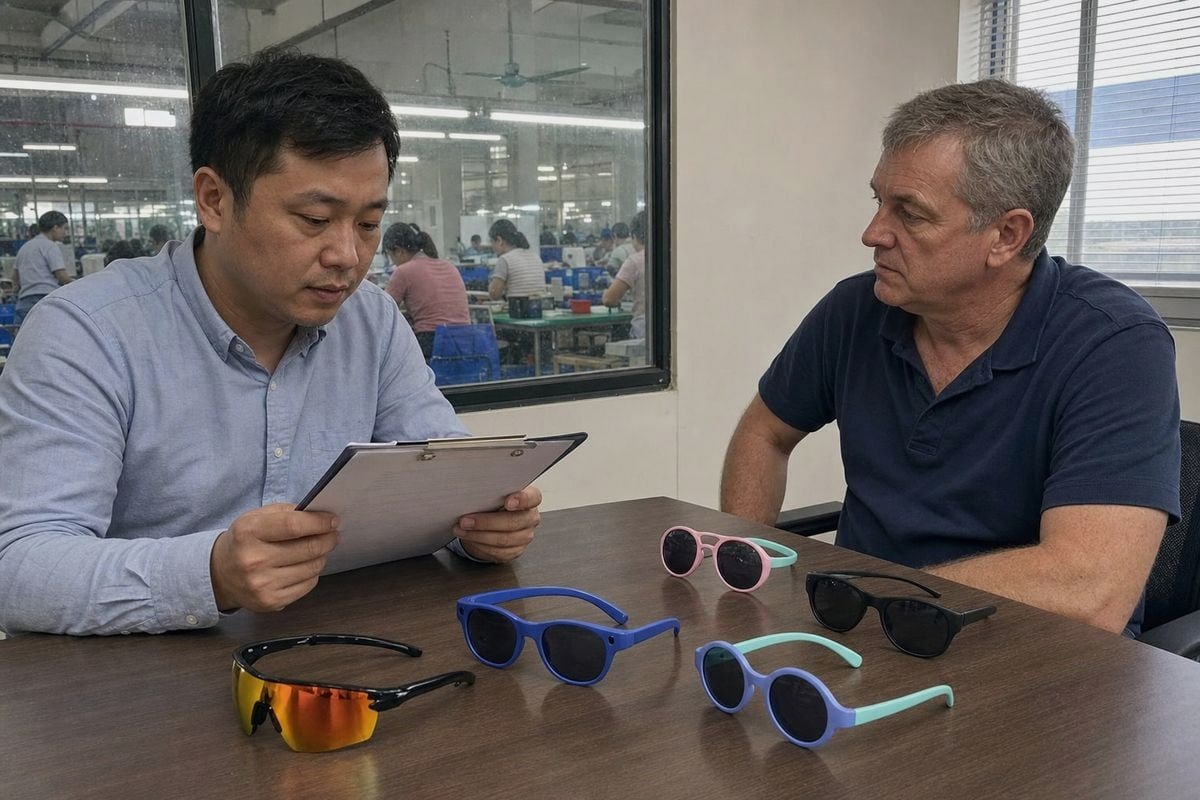
Consignment is not free money. You trade margin for safety. In children's product categories, revenue splits for the store commonly fall around 40% to 60%, and consignment pricing often reflects a fraction of full retail. If a polarized best-seller flies off your shelf every week, giving up half the revenue hurts. Owning that SKU outright might be smarter.
The four risks that matter most
| リスク | Why it matters for kids' sunglasses | How to manage it |
|---|---|---|
| Lower gross margin | Kids' price points are already modest, so a big revenue split squeezes profit | Reserve consignment for unproven or seasonal styles; buy proven winners outright |
| Tracking complexity | Small SKUs, many colors and sizes — easy to lose count | Use POS-linked reporting or a Vendor Managed Inventory 5 arrangement |
| Damage and condition disputes | Children try frames on roughly; hinges and lenses take abuse | Define damage responsibility and inspection standards in the contract |
| Supplier reliability | If the consignor disappears, returns and swaps stall | Vet the factory's history, QC process, and export track record |
Administrative load is real
Every consigned pair must be tracked from arrival to sale to return. Without supply chain visibility — shared data on what is on the shelf, what sold, and what needs replenishing — reconciliation becomes a monthly headache. This is why the best consignment programs pair the model with Vendor Managed Inventory 6, where the supplier watches real-time POS data and triggers automated replenishment. That also handles stockout prevention during summer peaks, when running out of a hot style costs more than any commission.
When consignment is the wrong tool
Be honest about your data. If you have two years of sell-through history showing a style sells out every June, buy it. Consignment shines where uncertainty lives: new brands, new frame materials like flexible TPEE, new markets, and shoulder seasons. It is a risk-management tool, not a universal discount.
How do I find a reliable kids' sunglasses manufacturer that offers consignment terms?
Over fifteen years of running our eyewear workshop, I have learned that flexible commercial terms only work when the factory behind them is genuinely stable.
Look for an experienced factory — not a trader — with a broad existing style catalog, proven child-safe materials like TPEE and TR90, UV400 or polarized lens options, clear QC processes, and written agreements covering revenue splits, returns, damages, and replenishment timing.
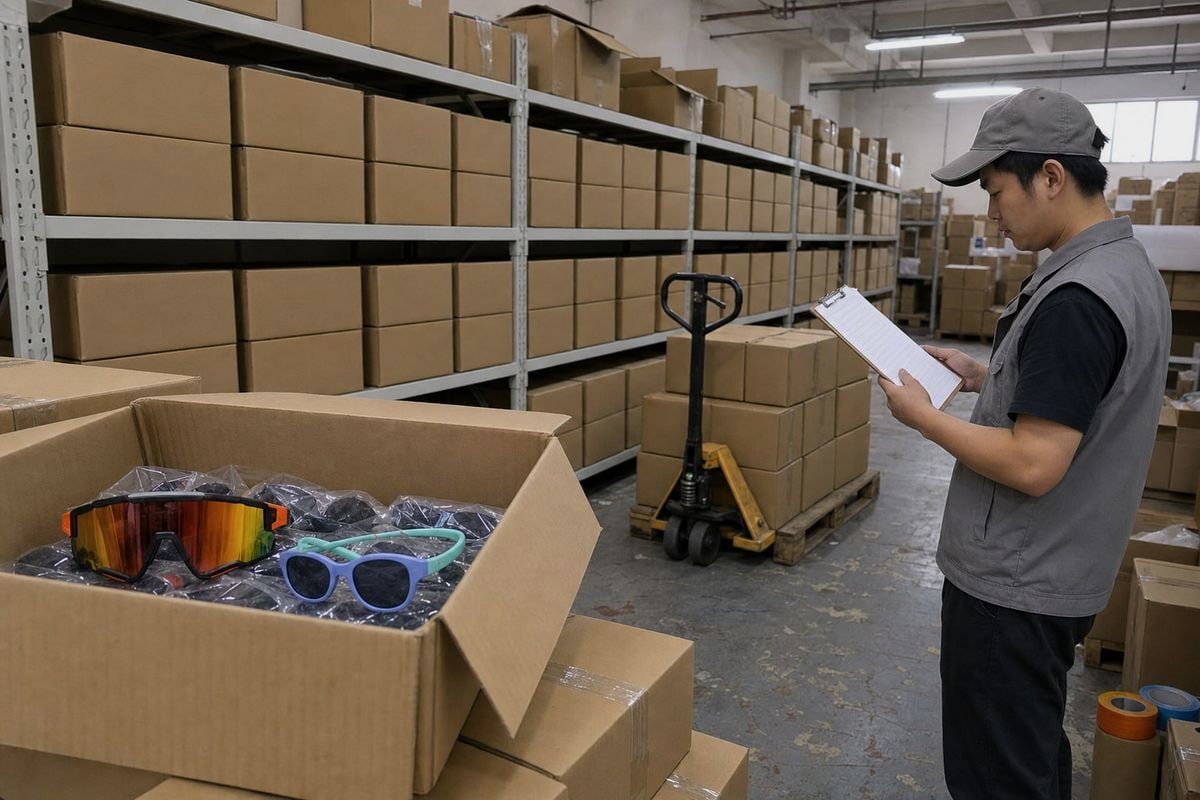
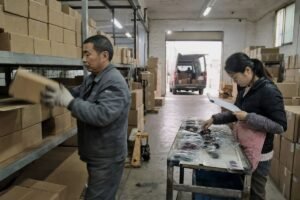
Consignment shifts risk onto the supplier. That only works if the supplier can absorb it. A trading company with no factory, no QC line 7, and thin margins cannot honestly hold ownership risk on your behalf. So your first filter should always be: is this a real production facility?
A practical vetting checklist
| What to verify | What good looks like |
|---|---|
| Factory status | Actual production floor with skilled workers, not a middleman office |
| Style depth | A large ready catalog (we maintain roughly 800 styles) so you can test without mold investment |
| Material expertise | Flexible TPEE and TR90 construction — safe, bendable, and comfortable on children's faces |
| Lens quality | UV400 protection standard, polarized options available |
| OEM/ODM support | Custom colors, logos, packaging, and retail-ready presentation |
| Process discipline | Organized workshop management and consistent QC checkpoints |
| Contract clarity | Written terms on splits, returns, product obsolescence risk, and damage liability |
Questions to ask before signing
Ask how the supplier handles seasonal rotation. A strong partner will swap summer-specific frames for winter-vacation styles — think mirrored gradient shields suited to ski trips — at no markdown cost to you. Ask who manages replenishment data. Ask how returned units are inspected, refurbished, or retired, because condition control matters enormously in children's products. Some innovative programs even support grow-with-me trade-in cycles, where the supplier manages the refurbished stock loop as kids outgrow their frames.
Also ask about retail markdown strategies for end-of-season units. A supplier who plans exits calmly is a supplier who has done this before. Finally, start small. In our own client relationships, the best long-term partnerships began with one test assortment — often a mix of soft two-tone rounds for toddlers and sporty wraparounds for older kids — before scaling into full seasonal programs. A reliable factory will welcome that cautious start, because we know the reorder is where trust is actually built.
結論
Consignment stocking cuts upfront costs, carrying costs, and dead stock risk for kids' sunglasses. Pair it with a proven, safety-focused factory partner, and it becomes a genuine growth strategy.
脚注
1. Explains the legal ownership concept underlying consignment retail arrangements. ↩︎
2. Alibaba.com is a major sourcing platform for TPEE and other eyewear frame materials. ↩︎
3. World Bank research covers how inventory carrying costs affect SME cash flow globally. ↩︎
4. Defines the metric retailers use to judge consignment sell-through performance. ↩︎
5. Background on the replenishment model paired with consignment programs. ↩︎
6. Explains the VMI model referenced for automated replenishment within consignment programs. ↩︎
7. ISO sets global quality control standards manufacturers rely on for reliable production. ↩︎


 English
  Español de México
  Deutsch
  Français
  日本語
日本語  العربية
  Português do Brasil