How to Confirm Customs Classification for Kids’ Optical Frames from China?
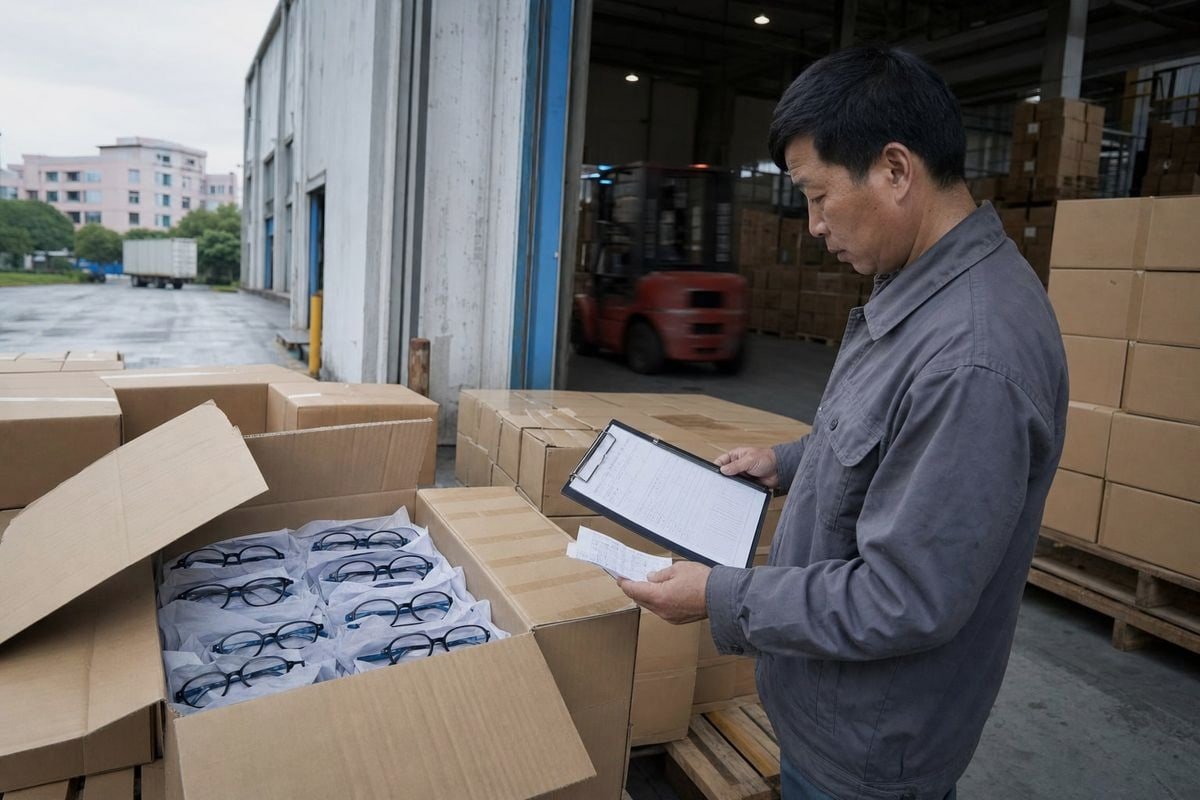
Confirming customs classification 1 for kids’ optical frames from China trips up many buyers. I have watched shipments from our Taizhou factory sit at ports over one wrong code.
To confirm customs classification for kids’ optical frames from China, verify the product matches HTSUS heading 9003 (frames without corrective lenses), check the frame material for the correct subheading, review CBP CROSS rulings, request supplier documentation, and file a binding ruling if the product is ambiguous.
That answer sounds simple. In practice, each step has traps. Let me walk you through them one by one, the same way I do with our own buyers.
What HS Code Should I Use for Kids' Optical Frames Imported from China?
A buyer from Australia once emailed me in a panic. Her broker had flagged three different possible codes for the same order of our TR90 kids optical frames. She asked which one was right.
Kids' optical frames without corrective lenses typically fall under HTSUS heading 9003, with plastic frames like TR90 classified under HS Code 9003.11 and metal frames under 9003.19. Frames fitted with prescription lenses shift to heading 9004, and novelty toy glasses may fall under 9503.

Classification depends on what the product actually is when it crosses the border, not on how it is marketed. This is the single most important idea in this whole article. Customs officers apply the General Rules of Interpretation 2 to the physical goods in the carton. They do not care that your website calls the item "children's eyewear."
The Decision Tree for Kids' Eyewear
I tell buyers to walk through four questions before they touch a tariff database:
- Does the frame have corrective lenses installed? If yes, you are likely in heading 9004, not 9003.
- Does it only have demo lenses? Demo or "dummy" lenses are disregarded. The product is legally treated as an empty frame under heading 9003.
- Is it a real optical product or a novelty item? CBP has ruled that children's "fun glasses" designed mainly for amusement classify as toys under heading 9503.
- What is the dominant frame material? Plastic frames go to 9003.11; metal frames go to 9003.19.
How the Headings Compare
| Heading | Covers | Typical Kids' Product |
|---|---|---|
| 9003.11 | Plastic frames and mountings | TR90 or acetate frames with demo lenses |
| 9003.19 | Frames of other materials | Metal or mixed-material frames |
| 9004 | Spectacles and sunglasses with lenses | Prescription glasses, UV400 kids' sunglasses |
| 9503 | Toys | Costume or novelty "fun glasses" |
The USITC method is to start with the most specific four-digit heading, confirm it fits, then narrow to subheadings. Also remember that the first six digits are the international HS code, while the full 10-digit HTSUS Classification is US-specific. Your destination country may add different digits, so confirm locally too.
How Can I Confirm My Supplier Provides Accurate Customs Documentation?
In our 15 years of exporting children's eyewear to buyers in 20+ countries, I have learned one hard lesson: a supplier's casual HS code suggestion is not a compliance document. It is a starting point at best.
Confirm supplier accuracy by requesting a written material declaration, detailed product specifications, and photos of the actual shipment. Cross-check the suggested code against the CBP CROSS rulings database and official HTS tools, and never rely on a verbal or invoice-only HS code from any factory.

The legal responsibility for classification sits with you, the importer of record. Not with your Chinese factory. Not with your freight forwarder. This surprises many first-time buyers, and it is why auditable written records now matter so much. Customs authorities increasingly expect importers to show a documented, reasonable-care process 3 behind every code, rather than a code copied from a supplier invoice.
A Practical Verification Workflow
Here is the process I recommend, and the one we support from our side of the transaction:
- Ask the factory for a signed material composition sheet. For our frames, that means stating TR90 percentages, TPEE temple material, hinge components, and lens type.
- Get photos of the actual production run, not catalog renders. Classification follows the goods as imported.
- Test the suggested heading yourself using the official HTS search and the Census Schedule B tool.
- 検索 CBP CROSS 4 for rulings on comparable products. Plastic spectacle frames have been ruled under 9003.11.0000, which gives you a strong analog.
- Save screenshots and dates. Build a classification file you could hand to an auditor.
Red Flags in Supplier Paperwork
Watch for vague material descriptions like "plastic" with no polymer named, invoices where every product shares one code, and suppliers who change codes when you ask about Import Duty Rates. Any of these signals means you should slow down and verify independently. A serious factory will answer material questions in writing without hesitation, because we get these questions weekly and they are entirely reasonable.
Will Material Choices Like TR90 or TPEE Affect My Customs Classification?
When we developed our flexible TR90 frames with TPEE temples, one design goal was safety on active kids' faces. But I quickly saw that material choices also carry customs consequences buyers should understand upfront.
Yes, materials affect classification at the subheading level. TR90, TPEE, and acetate are all plastics, so frames made from them classify under HS Code 9003.11 for plastic frames. Metal or mixed-material frames may shift to 9003.19, and material choices also trigger separate compliance duties like UFLPA checks for acetate.
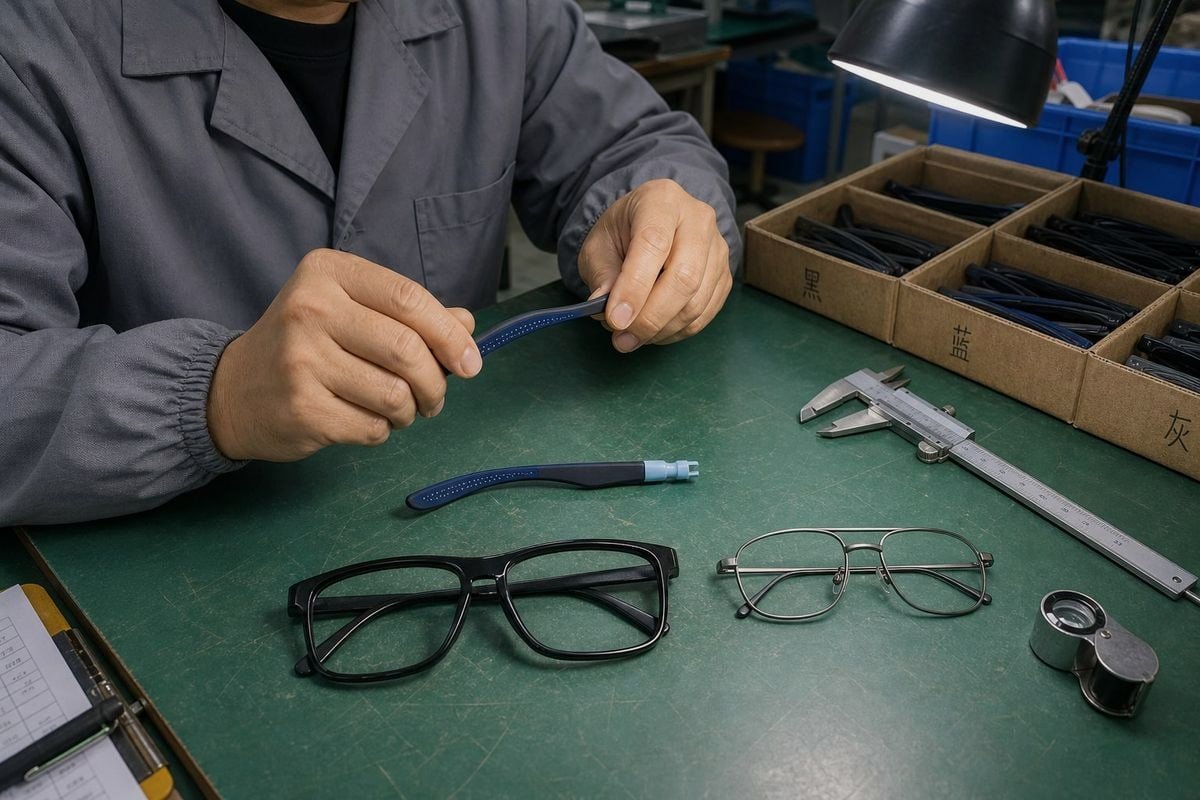
Some buyers worry that flexible polymers like TPEE might be treated differently from rigid plastics. They are not. For classification purposes, spectacle frame materials divide into two broad camps: plastics and everything else. TR90 (a nylon-based polymer), TPEE (a thermoplastic elastomer), polycarbonate, and acetate all count as plastic. The subheading question only gets interesting with mixed constructions.
Mixed-Material Frames and the Dominant Material Test
Many kids' frames combine materials. Our own designs pair a TR90 front with TPEE temples and silicone hinge connectors and ear hooks. When materials mix, the dominant material by weight or value generally determines the 10-digit classification. A plastic front with plastic temples stays firmly in 9003.11. A plastic front with metal temple cores requires closer analysis, and that is exactly the kind of ambiguity worth escalating to a broker or a ruling.
| 素材 | タイプ | Likely Subheading | Extra Compliance Note |
|---|---|---|---|
| TR90 | Nylon-based plastic | 9003.11 | Standard CPSIA testing for under-12 users |
| TPEE | Thermoplastic elastomer | 9003.11 | Confirm phthalate compliance in writing |
| アセテート | Cellulose-based plastic | 9003.11 | UFLPA risk: cotton linters in the supply chain |
| Metal alloy | Non-plastic | 9003.19 | Lead content testing is critical for kids' use |
Material Choices Beyond the Code
Note the acetate line above. Cotton linters used in acetate production are a high-risk input under the Uyghur Forced Labor Prevention Act 5, so acetate importers should map that supply chain. This does not change the HS code, but it can stop a shipment just as effectively. Our TR90 and TPEE frames avoid that particular exposure, which is one quiet advantage of flexible polymer construction. Materials also drive CPSIA Compliance testing scope, since lead and phthalate limits apply to all children's products regardless of the tariff heading.
What Paperwork Should I Request from My Manufacturer to Avoid Customs Delays?
A lesson I learned early in our export business: a shipment is only as fast as its slowest document. One missing test report can hold retail-ready cartons at a port for weeks while your launch date slips.
Request a signed material declaration, commercial invoice with accurate descriptions, packing list, CPSC-accredited lab test reports supporting a Children's Product Certificate, proof of permanent country-of-origin marking, FDA registration details, and any tooling or mold cost records needed for accurate customs valuation.
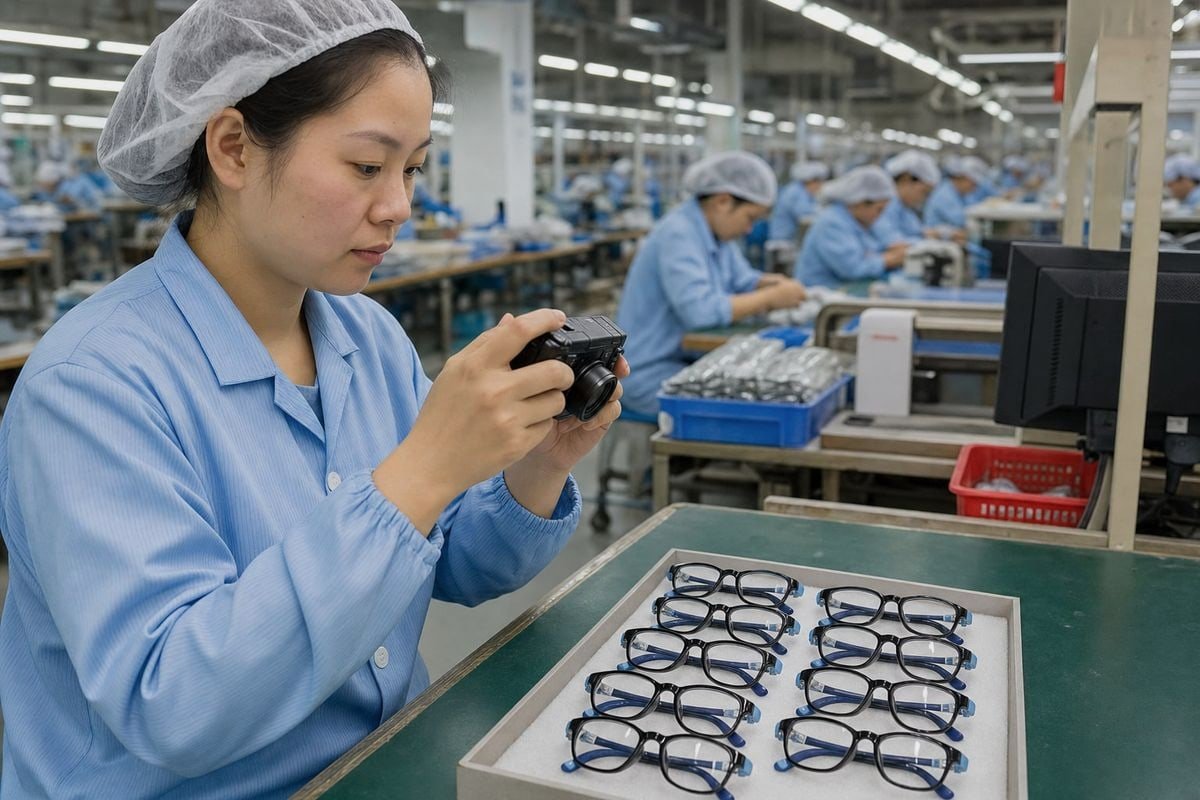
Kids' optical frames sit at the intersection of three regulatory systems: customs, product safety, and medical devices. Your paperwork file needs to satisfy all three. I will break the checklist into layers so nothing gets missed.
The Three-Layer Document Checklist
| レイヤー | 文書 | なぜ重要なのか |
|---|---|---|
| Customs | Commercial invoice, packing list, material declaration | Supports the HTSUS Classification and duty calculation |
| Customs | Declared value including "assists" like molds you provided | Tooling paid to the factory must be added to customs valuation |
| Safety | CPSC-accredited third-party lab reports, Children's Product Certificate | CPSIA requires lead and phthalate testing for users under 12 |
| Medical | FDA establishment registration and device listing confirmation | Optical frames are Class 1 medical devices under FDA Medical Device Registration rules |
| Origin | Photos of permanent "Frame China" marking on the temple | 19 CFR Part 134 marking rules; missing marks risk port seizure |
Duty Planning Documents
Two more items belong in your file. First, a landed-cost worksheet that includes Section 301 Tariffs 6, since China-origin eyewear carries supplemental duties on top of base rates, and that gap materially changes your margins. Second, if your transaction runs through a middleman, records supporting the First Sale Rule, which can let duties be calculated on the factory price rather than the higher resale price. And if your product serves children with disabilities in a specialized pediatric design, ask your broker about duty-free eligibility 7 under HTS 9817.00.96 via the Nairobi Protocol.
If any classification question remains genuinely ambiguous after all this, file a Binding Ruling Request with CBP before shipment. It is the only answer that legally binds customs, and it costs nothing but time.


 English
  Español de México
  Deutsch
  Français
  日本語
日本語  العربية
  Português do Brasil