How to Check FDA Medical Device Labeling for Kids’ Sunglasses from China?
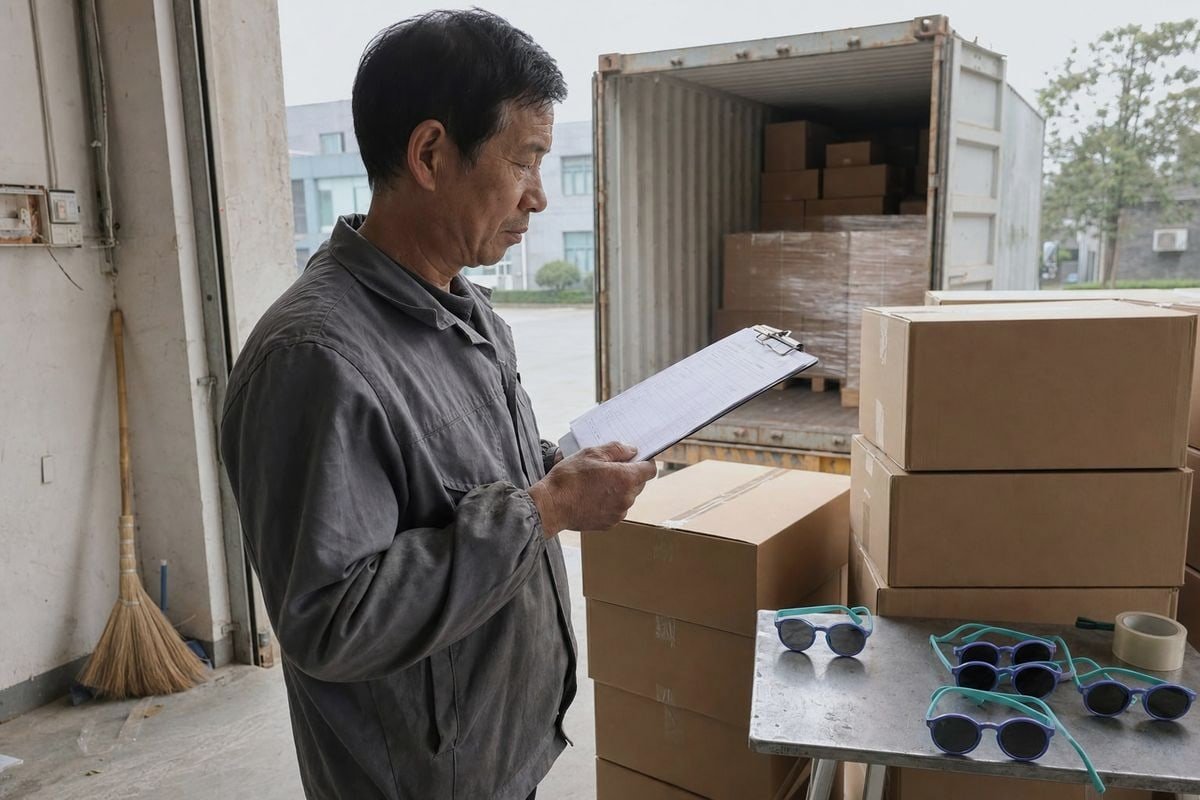
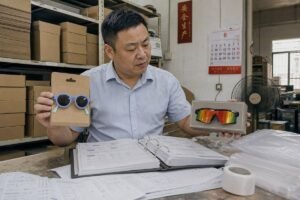
Checking FDA medical device labeling for kids’ sunglasses from China stops shipments from being seized. On our production line in Taizhou, I have seen one missing address line freeze an entire container.
To check FDA medical device labeling for kids’ sunglasses from China, verify the statement of identity, the manufacturer or distributor name and full address, an intended-use statement, impact-resistance compliance under 21 CFR 801.410, FDA Establishment Registration and Device Listing, plus country-of-origin marking and CPSIA children’s product documentation.
That is the short answer. Now let me walk you through each layer, step by step, the way I check labels for our own export orders.
What FDA labeling requirements apply specifically to children's sunglasses sold in the US?
A buyer from Melbourne once asked me why sunglasses need "medical" labeling at all. Her surprise is common. Our export team answers this question almost every week.
Nonprescription kids' sunglasses are regulated as a Class I medical device by the FDA. Labeling must include a statement of identity, the name and full business address of the manufacturer or distributor, adequate directions for use, truthful UV claims, and lenses that meet 21 CFR 801.410 impact-resistance rules.
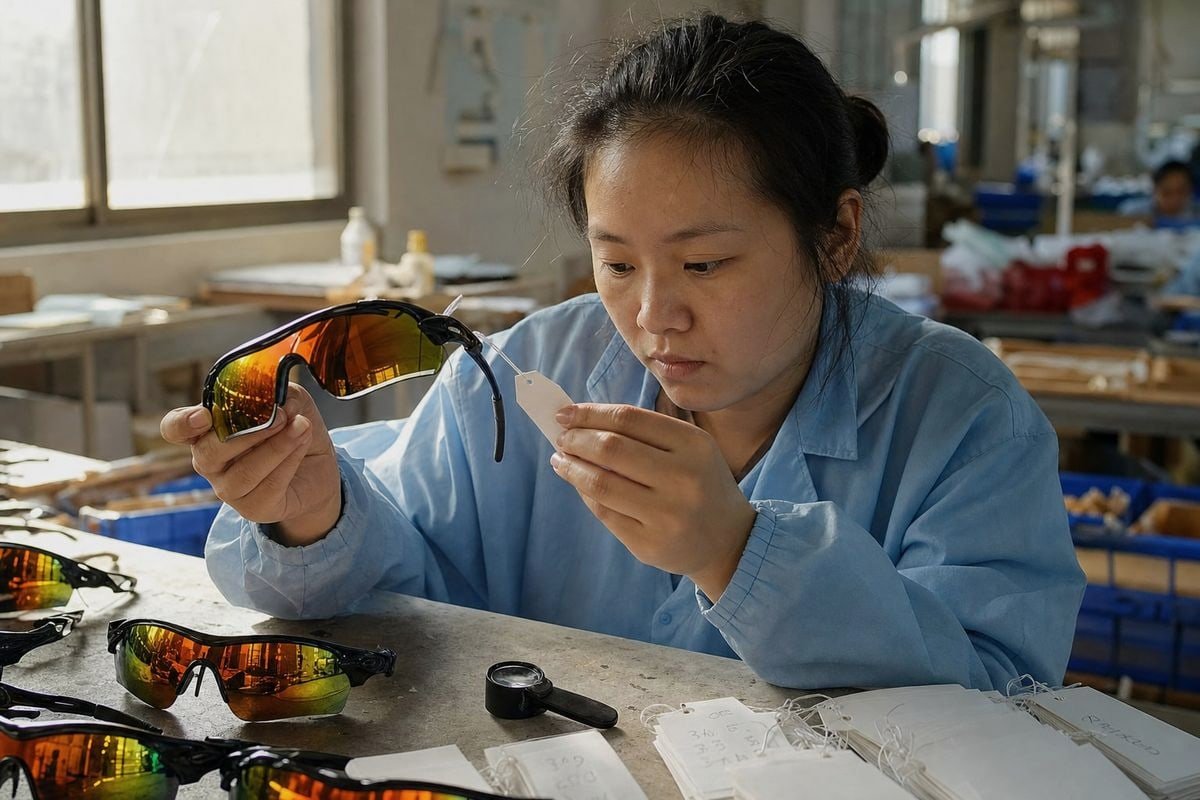
The FDA does not publish a special category called "kids' sunglasses from China." Instead, any sunglasses intended to reduce UV exposure fall under the general framework for nonprescription eyewear. That framework treats the product as a Class I medical device 1, subject to General Controls. The labeling rules apply whether the frames are molded in Taizhou or in Texas.
The core labeling elements
子供製品証明書 general device labeling rules 2 sit in 21 CFR 801.1 through 801.16. In plain terms, they demand four things on the label. First, a clear statement of identity 3 — the word "Sunglasses" is enough. Second, the name and place of business of the manufacturer, packer, or distributor, including street address, city, state, and ZIP code. Third, adequate directions for use, written so a layperson — here, a parent — can use the product safely. Fourth, no false or misleading statements. Vague promises like "blocks all harmful rays" without support are exactly what triggers FDA attention.
Impact resistance and UV claims
Beyond identity and address, two technical points matter most for children's eyewear. Lenses must be impact resistant under 21 CFR 801.410, proven by the drop ball test. And any claim about UVA UVB protection levels 4 must be accurate and supportable. When we specify UV400 lenses for a customer's order, we keep the lens supplier's test data on file so the claim on the packaging is never an empty phrase. Many buyers also reference ANSI Z80.3 standards for nonprescription eyewear performance; the FDA framework and that voluntary standard work together, not against each other.
| Labeling Element | Where It Comes From | What to Look For |
|---|---|---|
| Statement of identity | 21 CFR 801 general rules | The word "Sunglasses" clearly displayed |
| Business name and address | 21 CFR 801.1 | Full street address, city, state, ZIP |
| Directions for use | 21 CFR 801.5 | Plain-language use and care guidance |
| 耐衝撃性 | 21 CFR 801.410 | Drop ball test compliance on record |
| UV claims | Misbranding provisions | UV400 or UVA/UVB claims backed by data |
How do I verify that my Chinese manufacturer's labeling documentation meets FDA standards?
Early in our export history, we learned a hard lesson: a generic factory test report is worthless if it cannot be tied to your specific shipment. Verification means tracing, not collecting.
Verify your supplier by searching the FDA Establishment Registration and Device Listing database for their name and Device Listing Number, confirming a legitimate U.S. Agent, and matching lot numbers on the drop ball test certificate to your commercial invoice and physical labels.

Importing medical devices from China 5 adds obligations that a purely domestic purchase does not. A foreign manufacturer 6 must hold a valid FDA Establishment Registration and must list the sunglasses product category. The manufacturer must also name a U.S. Agent. As the importer, you may have your own registration duties too. None of this is optional, and none of it should rest on the supplier's word alone.
A four-step verification process
- Search the FDA database. Enter the manufacturer's legal name or registration number in the FDA's Establishment Registration & Device Listing database. Confirm the registration is active and covers the correct product code.
- Check the Device Listing Number. The listing must match the sunglasses category, not some unrelated product the factory registered years ago.
- Inspect the U.S. Agent details. Cross-reference the agent's contact information. A generic email domain like @gmail.com or @163.com is a warning sign of a placeholder registration that may collapse during a customs audit.
- Run the batch-to-invoice check. Take the lot number printed on the physical label. Confirm the same lot appears on the drop ball test certificate and on the commercial invoice. If they do not link, the certificate is likely a generic document recycled across orders.
At our factory, we issue lot-specific drop ball test certificate documentation with every children's order precisely because sophisticated buyers now run this linkage check. A supplier who resists it is telling you something.
Documents to request before you wire a deposit
| 文書 | なぜ重要なのか | 赤信号 |
|---|---|---|
| FDA Establishment Registration proof | Confirms the factory is known to FDA | Registration under a different legal entity |
| Device Listing Number | Confirms the sunglasses category is listed | Listing for unrelated products only |
| Drop ball test certificate | Proves 21 CFR 801.410 compliance | No lot number, or undated report |
| Quality system evidence | FDA requires quality controls, not just labels | No documented QC process at all |
| U.S. Agent confirmation | Required for foreign manufacturers | Unreachable or generic-email agent |
What information should appear on the product label versus the packaging for compliance?
Balancing compliance text against a clean retail look is a trade-off we negotiate on nearly every OEM packaging project. Cramming everything onto a tiny frame is neither required nor wise.
The frame itself should carry permanent country-of-origin marking and the CPSIA tracking label. The retail packaging carries the statement of identity, business name and full address, directions for use, UV protection claims, and net quantity on the principal display panel.
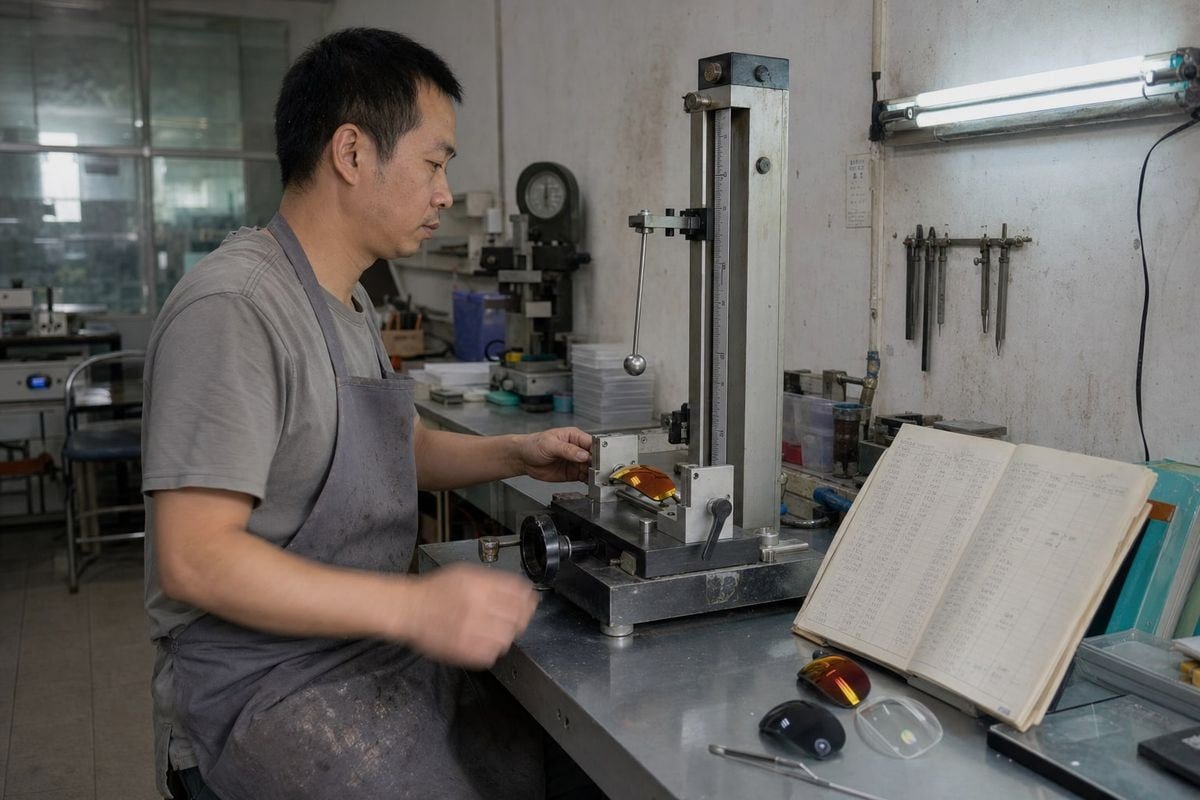
Think of compliance information in two layers: what must survive on the product itself, and what belongs on the box, hang tag, or pouch. Regulators care about both, but they care about them differently.
What goes on the frame
Two items should be permanent on the product. The first is country-of-origin marking — "Made in China" — which customs rules require to be conspicuous, legible, indelible, and permanent. The second is the CPSIA tracking label 7 required for children's products, identifying the manufacturer, production date, and batch. For children's eyewear, adhesive stickers are risky; customs officers frequently reject stickers as non-permanent. On our TR90 and TPEE frames, we mold or laser-engrave this information into the temple arm, because engraving survives handling, washing, and an inspector's fingernail test.
What goes on the packaging
The retail packaging carries the FDA-facing content. The principal display panel needs the statement of identity and net quantity. Somewhere clearly visible, the packaging must show the manufacturer, packer, or distributor name with a full U.S.-format address. For private-label programs — which describe most of our OEM customers — the "Manufactured for" or "Distributed by" phrasing is essential, because the brand on the box is usually not the factory that made the product. Directions for use, care instructions, and accurate UV400 or UVA/UVB claims round out the panel. Separately, your Children's Product Certificate travels with your commercial documentation, not on the retail box.
| Location | Required Information | Permanence Standard |
|---|---|---|
| Frame temple | Country of origin, CPSIA tracking label | Molded or engraved, not stickers |
| Packaging front panel | Statement of identity, net quantity | Printed, clearly legible |
| Packaging back or side | Business name, full address, directions, UV claims | Printed, not obscured by stickers |
| Trade documents | Children's Product Certificate, test reports | Available on request at import |
Which common labeling mistakes could delay my customs clearance or trigger FDA warnings?
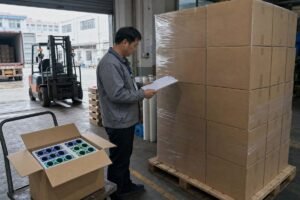
Reviewing artwork files before mass production has saved more of our customers' shipments than any other single QC step we perform. Most failures are avoidable and painfully repetitive.
The most common mistakes are labeling kids' sunglasses as toys, missing or incomplete business addresses, unsupported UV claims, sticker-based origin marking, generic test certificates with no lot linkage, and skipping FDA registration or CPSIA compliance because sunglasses are 510(k)-exempt.
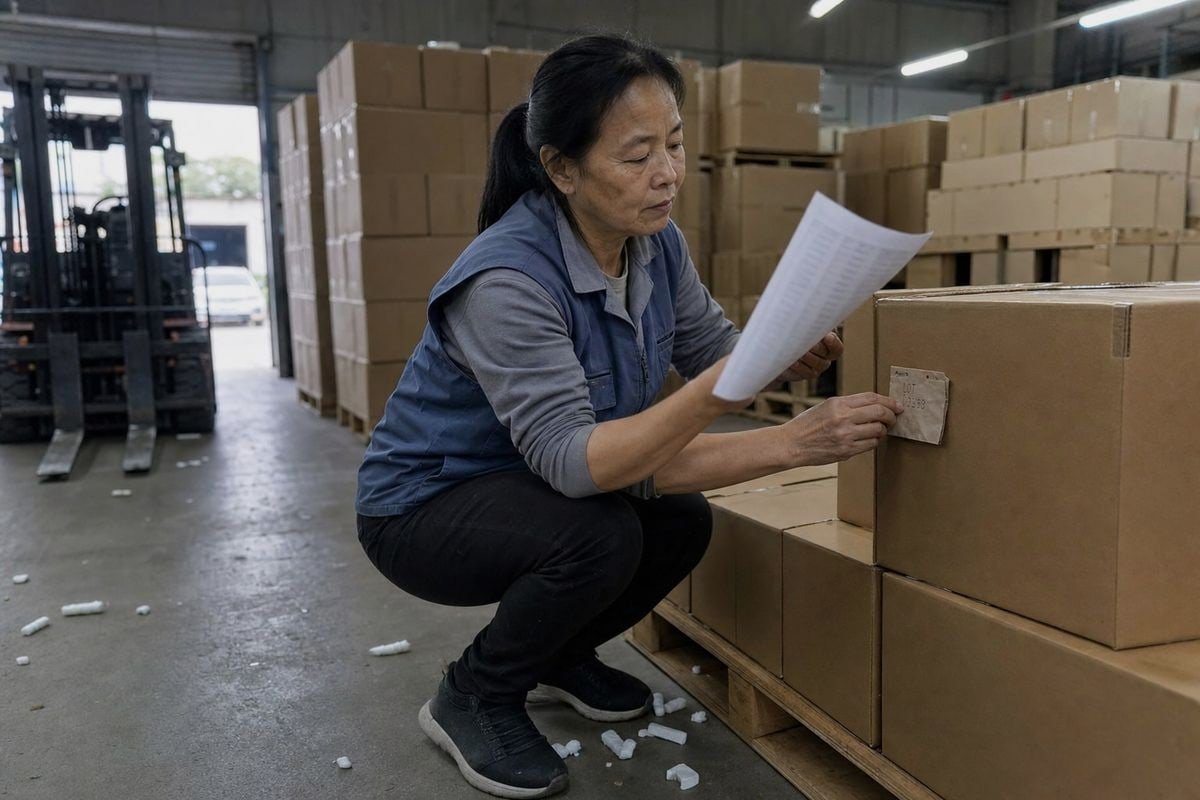
Some buyers assume that because most sunglasses are exempt from 510(k) premarket notification 8, the product is effectively unregulated. I push back on this every time it comes up. Exemption from 510(k) does not mean exemption from labeling rules, establishment registration, device listing, quality system requirements, or impact resistance. It only removes one premarket step. Everything else still applies, and customs screening will still find the gaps.
The toy labeling paradox
The single most dangerous mistake I see on marketplace listings is the phrase "This is a toy" printed on kids' sunglasses packaging. It feels harmless — even reassuring to parents. Legally, it is a contradiction. The product is a medical device intended to protect eyes from UV; calling it a toy conflicts with that intended use and can render the shipment misbranded, which is grounds for detention or seizure. Toy branding also drags the product into a different testing regime without removing the device obligations. Keep the identity clean: they are sunglasses.
Other frequent failures
Watch for these recurring issues before your goods leave the factory:
- Incomplete addresses. A brand name with no street address fails the labeling rule outright.
- Overclaiming. "Blocks 100% of all radiation" with no data behind it invites a misbranding finding.
- Sticker origin marks. Adhesive labels peel off; customs treats them as non-permanent for children's medical devices.
- Recycled certificates. A test report with no lot number cannot substantiate your specific batch.
- Ignored CPSIA compliance. FDA rules and children's product rules stack; passing one does not satisfy the other. Lead limits, phthalate limits, third-party testing, and the tracking label are a separate, mandatory layer.
- Placeholder registrations. A U.S. Agent nobody can reach unravels during an audit.
One more nuance worth stating plainly: "FDA approved" is almost always the wrong phrase for these products. The accurate claim is compliance with FDA labeling and regulatory requirements. Using "FDA approved" on packaging is itself a misleading statement.
結論
Checking FDA medical device labeling for kids' sunglasses from China is a layered task, and skipping one layer risks your entire shipment. In fifteen years of exporting children's eyewear, our team has seen careful buyers succeed on a simple habit: verify the label, the database, and the lot-linked documents before production, not after arrival. Confirm the statement of identity and full business address. Search the FDA registration database yourself. Demand a lot-specific drop ball test certificate. Insist on engraved origin and tracking marks. Treat CPSIA as a parallel obligation, not an afterthought. Do those things with a factory that welcomes the scrutiny, and clearing U.S. customs stops being a gamble and becomes routine.
脚注
1. FDA’s classification system for medical devices, including Class I. ↩︎
2. Searchable database for the Code of Federal Regulations Title 21 Part 801. ↩︎
3. Official FDA guidance detailing general labeling requirements including the statement of identity. ↩︎
4. FDA information on ultraviolet radiation and its effects on health. ↩︎
5. FDA’s official guide for importing medical devices into the United States. ↩︎
6. FDA instructions for foreign establishments on registration and device listing. ↩︎
7. CPSC guidance on mandatory tracking labels for children’s products under CPSIA. ↩︎
8. Official FDA explanation of the 510(k) premarket notification process. ↩︎

 English
  Español de México
  Deutsch
  Français
  日本語
日本語  العربية
  Português do Brasil