How to Build a Factory List and Sample Library for Kids’ Sunglasses Sourcing?
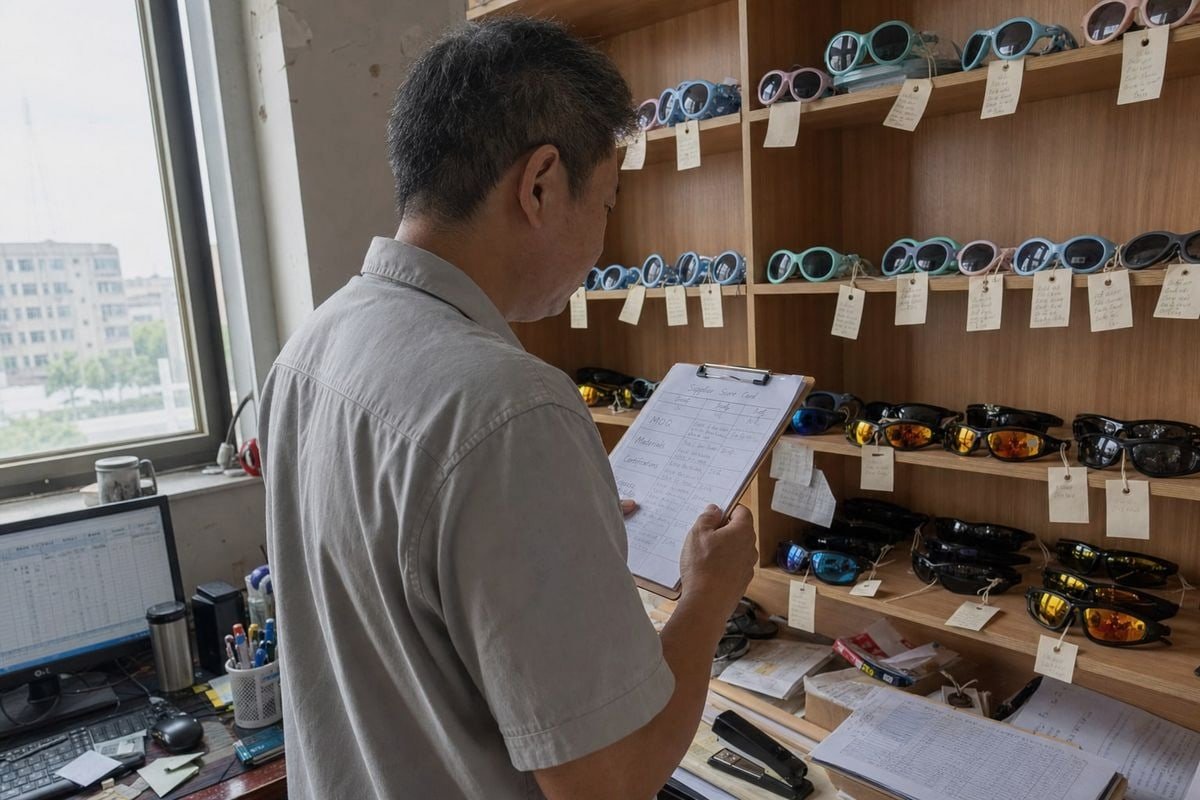
Every week, buyers tell me their kids’ sunglasses sourcing failed after samples arrived broken, oversized, or non-compliant. On our production line, I see exactly why that keeps happening.
To build a factory list and sample library for kids’ sunglasses sourcing, verify real manufacturers with child-eyewear experience, record MOQ, materials, certifications, and lead times in a scorecard, then catalog every sample by age range, frame size, lens type, and compliance status for fair comparison.
That answer sounds simple. In practice, most buyers skip half the steps. Let me walk you through the full system, one stage at a time.
How do I identify reliable kids' sunglasses factories before requesting samples?
A buyer from Australia once told me she had contacted twelve "factories" before finding us — and later discovered that nine of them were trading companies reselling the same catalog.
Identify reliable kids' sunglasses factories by verifying in-house production through video tours, checking real children's eyewear experience, requesting certifications and test reports, and testing technical knowledge on materials like TPEE and TR90 before you ever pay for a sample.
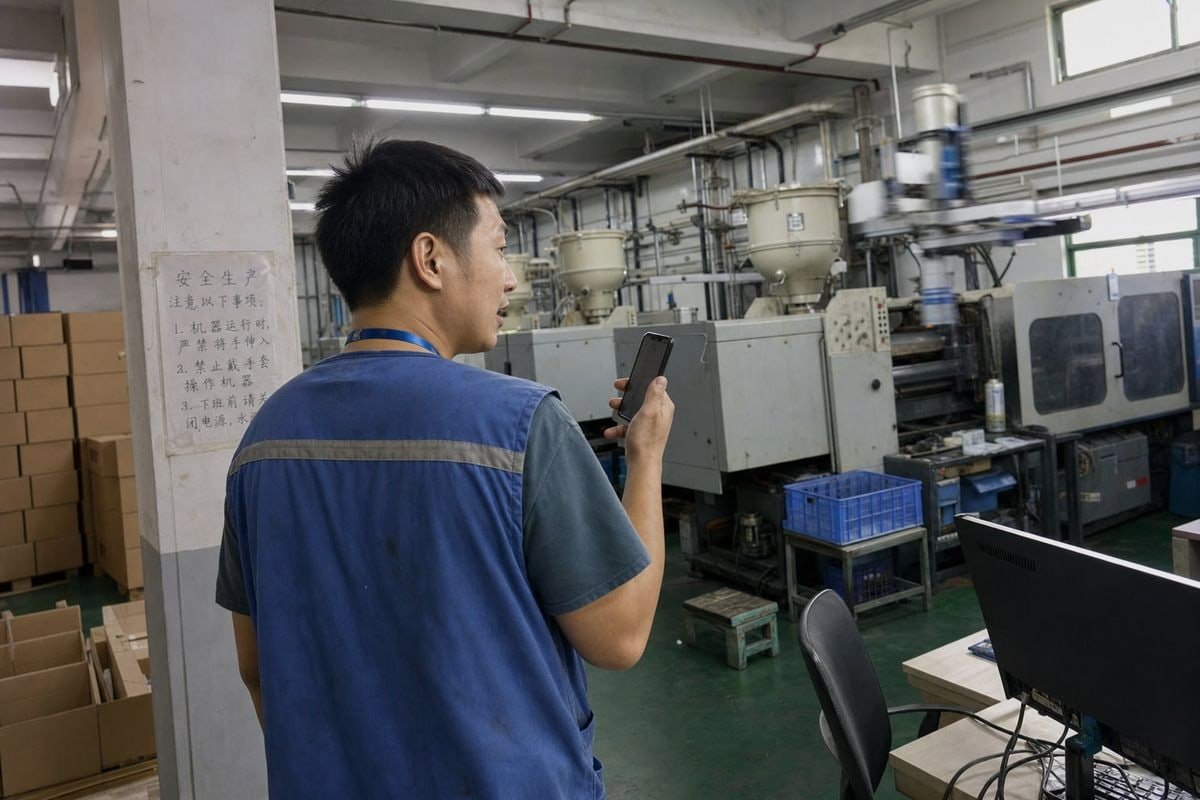
子供製品証明書 supplier vetting process is where most sourcing projects are won or lost. In my fifteen years in eyewear, the pattern is always the same: buyers who verify early save money later. Buyers who skip verification pay for it in failed samples and missed launch dates.
Separate real factories from trading companies
A trading company can send you photos. A real OEM eyewear manufacturer 1 can send you a live video call from the injection molding floor. That difference matters. Ask every supplier these questions:
- Can you show a live factory tour or recent workshop video?
- How many workers do you have, and what equipment runs in-house?
- Can you show recent production runs of kids' models specifically?
- Do you support OEM/ODM work, or only resell existing stock?
Then listen to how they answer. When a buyer asks me about hinge torque on a TR90 frame or the hardness of a TPEE temple, I can answer in detail because our engineers deal with those specifications daily. A reseller usually cannot.
Build your factory list as a scorecard
Do not treat your factory list as a contact sheet. Treat it as a factory audit checklist you score over time. Here are the fields I recommend tracking:
| Field | なぜ重要なのか |
|---|---|
| Factory vs. trader status | Traders add cost and lose technical detail |
| Kids' eyewear experience | Child sizing and safety are specialist skills |
| Materials offered (TPEE, TR90, PC) | Confirms flexible-frame capability |
| MOQ by style and color | Defines your testing risk |
| Sample and production lead time | Protects your launch calendar |
| Certifications and test reports | CPSIA compliance, EN71 safety standards 2, FDA registration |
| Existing style catalog size | Larger catalogs mean lower mold investment |
| Responsiveness score | Predicts how production problems get handled |
Score each supplier from one to five in every row. After three or four email exchanges, the pattern becomes obvious. The suppliers who answer vaguely on materials will also answer vaguely when a shipment goes wrong.
What should I look for when building a sample library for TPEE and TR90 frames?
When we were developing our first TR90フレーム 3 with TPEE temples, we kept a shelf of every failed prototype. That shelf taught us more than any catalog ever did.
Build your sample library by cataloging each TPEE and TR90 sample under age group, frame width, temple length, bridge fit, lens type, UV400 status, flex behavior, finish quality, and supplier name, so you can compare identical criteria across every factory.
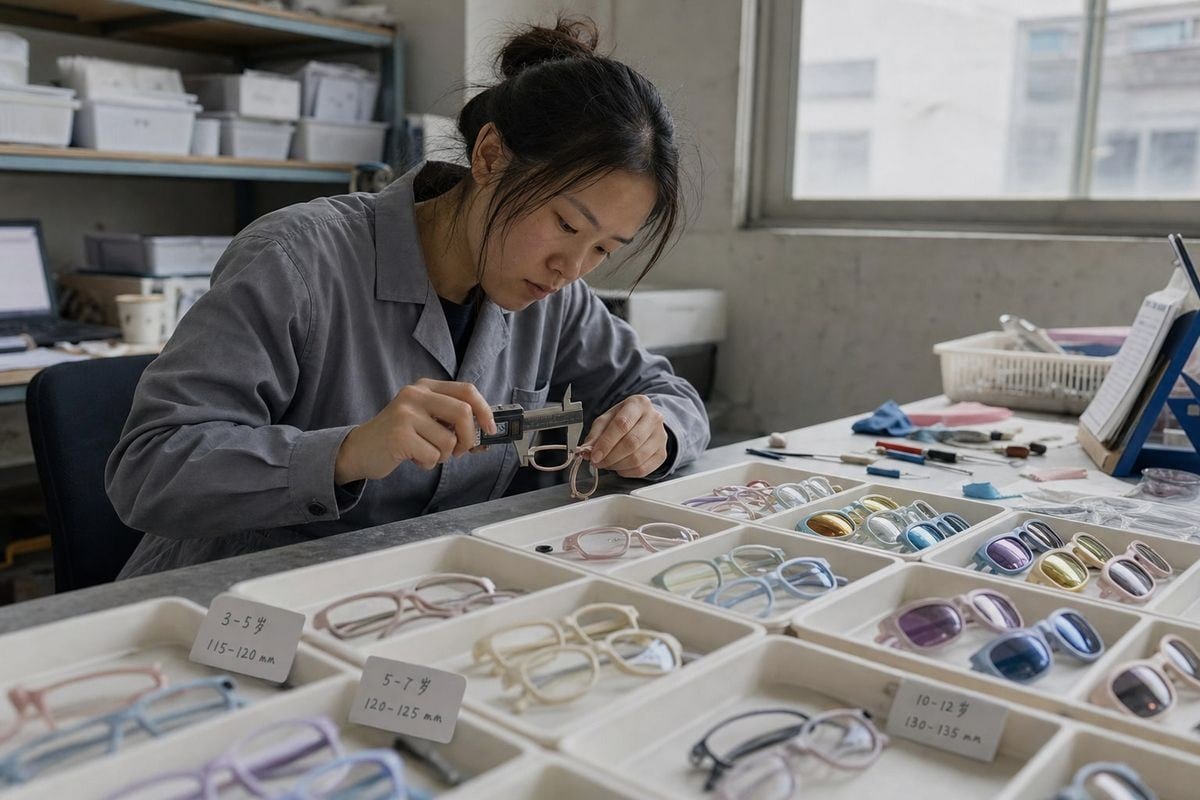
A sample library is your institutional memory. Without one, you repeat the same evaluation mistakes with every new supplier. With one, you can put two nearly identical frames side by side and see instantly which factory built the better hinge.
Catalog by dimensions, not just style
Children's faces change fast. A frame that fits a three-year-old will slide off a seven-year-old. So the first layer of your library should be an anthropometric sizing structure, organized by age band. Record lens width, bridge width, and temple length in millimeters for every sample. Over time, this becomes your own sizing reference that replaces generic guesswork with ergonomic precision.
Track material behavior separately
TPEE flexible frames and TR90 frames behave differently, and your library should capture that. In our workshop, we bend every TPEE temple through a full twist test TPEE material 4 before it ships. Log the same observations for your samples:
| Attribute | TPEE | TR90 |
|---|---|---|
| 柔軟性 | Extremely flexible, rubber-like recovery | Flexible with strong shape memory |
| 中程度から重い | 非常に軽い | 非常に軽い |
| Impact behavior | Bends without snapping | Resists cracking under stress |
| Best use on kids' frames | Temples and full baby frames | Frame fronts and optical frames |
| Surface finish | Soft matte touch | Matte or glossy options |
Keep a material swatch library alongside the finished samples. Color chips, texture plaques, and lens tint samples let you approve future colorways without waiting for a full prototype development cycle.
Add a failure library
Do not throw away broken samples. Label them, note the exact breaking point, and keep them. A "failure library" gives you proprietary durability benchmarks. When a new supplier's hinge fails at the same point an old rejected sample did, you know exactly what question to ask next.
Finally, log compliance status per sample: UV400 verified or claimed, CPSIA test report on file or pending, EN71 relevance for your market. A beautiful sample with no paperwork is not production-ready.
How many suppliers should I shortlist for a kids' eyewear sourcing project?
One trade-off I discuss with almost every new buyer is breadth versus depth: contact more factories and spread your attention thin, or go deep with a few and risk missing a better option.
Shortlist three to five verified factories for a kids' eyewear sourcing project. Start with a longlist of ten to fifteen candidates, remove traders and generalists during vetting, then order comparable samples from the final three to five before choosing one or two production partners.
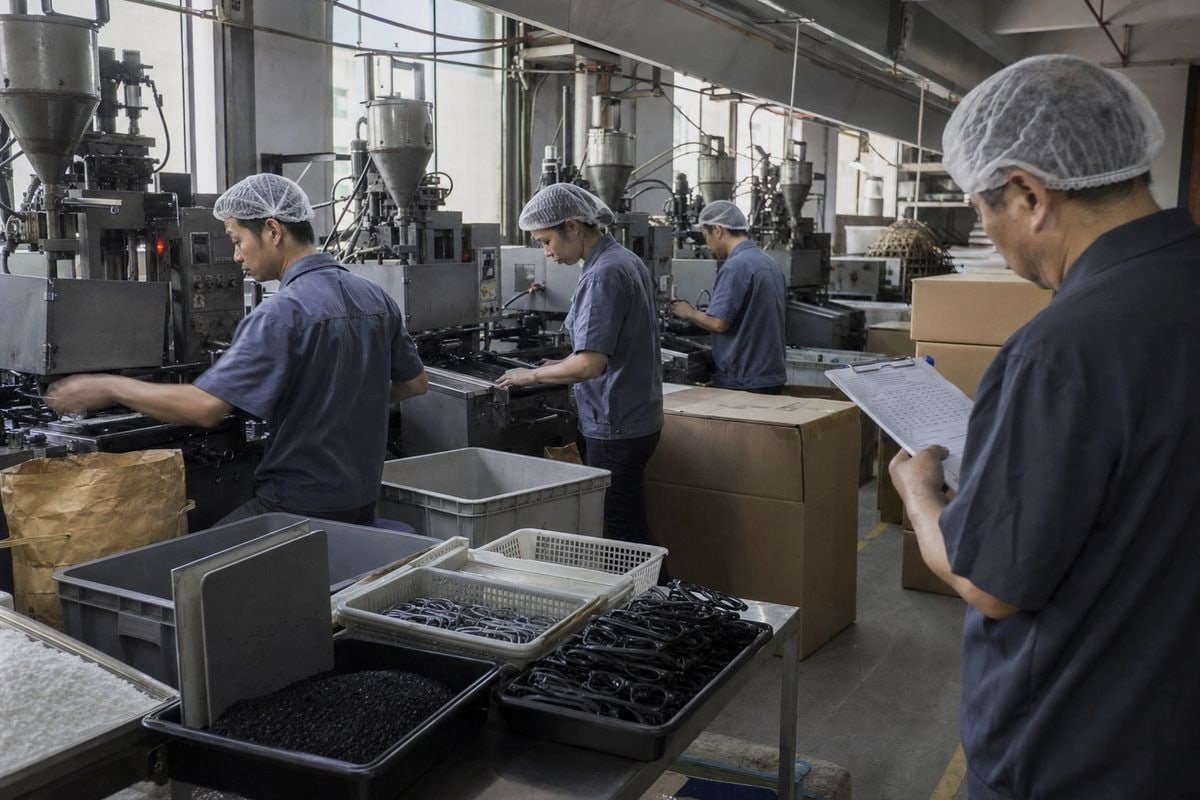
Volume of leads is not the goal. Quality of verification is. I have watched buyers collect forty supplier contacts from B2Bプラットフォーム 5 and optics fairs, then run out of energy before properly vetting any of them. A tighter funnel works better.
The funnel, stage by stage
- Longlist (10–15 suppliers). Gather candidates from B2B platforms, international optics fairs, and referrals. Record basic data in your factory list.
- Screen (down to 6–8). Remove obvious traders, generalists downsizing adult frames, and anyone who cannot discuss child-specific sizing or CPSIA compliance in concrete terms.
- Shortlist (3–5). Request catalogs, sample terms, certifications, and factory videos. Send each one the same product tech pack with sketches, millimeter measurements, lens specs, and branding requirements.
- Sample (3–5). Order comparable samples using one standardized brief so results are apples to apples.
- Partner (1–2). Negotiate Minimum Order Quantity (MOQ), timeline, packaging, and compliance documentation with the top performers.
Why not just one supplier?
A single supplier gives you no benchmark. A buyer from Japan once told me our sample only stood out to her because she had two weaker samples to compare it against. Comparison is what makes evaluation honest. But beyond five sampled suppliers, your comparison quality drops because you cannot give each sample real attention.
Keep the one or two runners-up warm even after you choose. Markets shift, capacity fills up, and a documented backup in your factory list is far cheaper than starting the supplier vetting process from zero.
How do I evaluate samples for safety, comfort, and durability before placing an order?
The lesson that shaped our QC process came early: a stylish frame that fits a child poorly is a failed sample, no matter how good it looks in photos.
Evaluate kids' sunglasses samples by testing fit on target-age head sizes, verifying UV400 protection and impact resistance with test reports, checking CPSIA and EN71 documentation, flexing temples and hinges repeatedly, and scoring every sample against one standardized rubric.
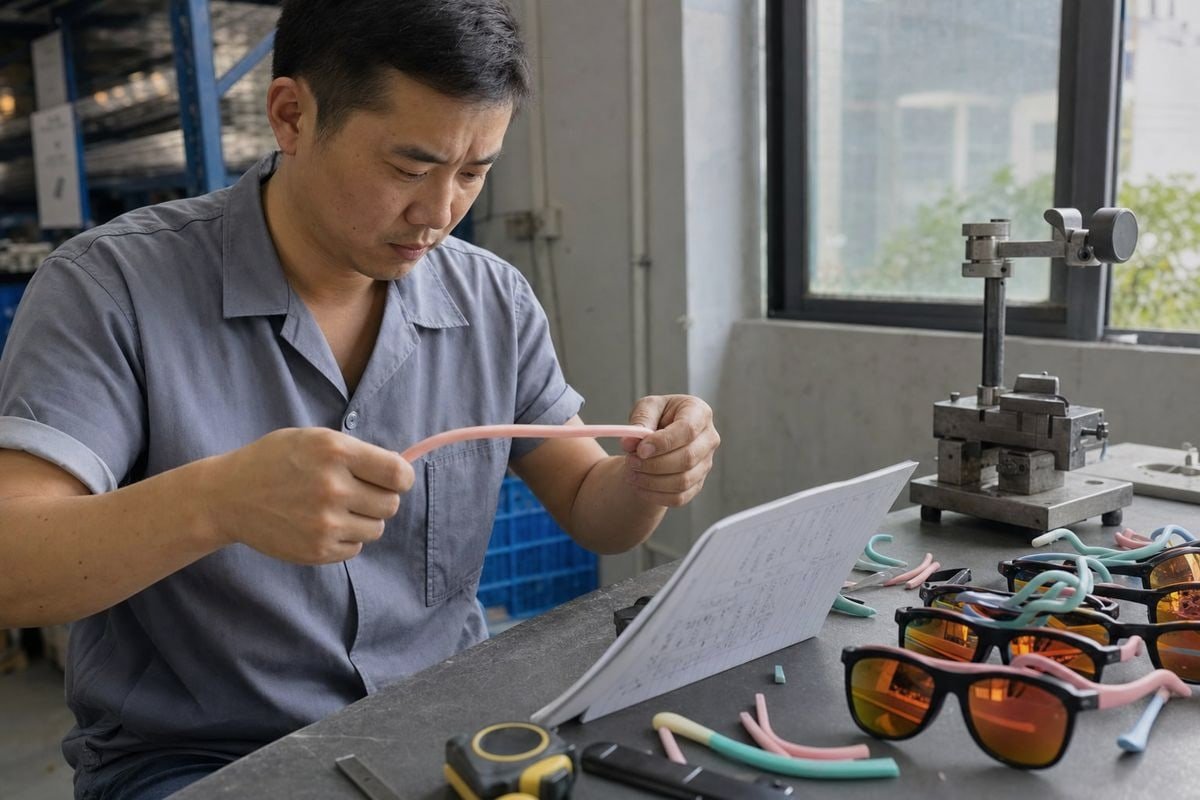
Evaluation only works if it is standardized. If you judge one sample by feel and another by photos, your conclusions are noise. Every sample that reaches your desk should face the same checklist, in the same order.
Safety first, always
Start with what you cannot see. Ask for third-party test reports covering lead, phthalates, and cadmium. Confirm UV400保護基準 6 on the lenses — request the spectral test report, not just a sticker. For the US market, lenses should pass the FDA drop ball test 7 for impact resistance, and your supplier should understand FDA registration requirements for sunglasses. For Europe, EN71 safety standards and CE conformity apply. Then inspect the physical details: rounded edges, no sharp hardware, secure hinge screws, and no small parts that detach under force.
A standardized scoring rubric
Here is a rubric structure I encourage buyers to use across all shortlisted samples:
| Criterion | What to Check | Score 1–5 |
|---|---|---|
| Fit | Bridge sits flat, temples match age-group head width | |
| Comfort | Weight, pressure points, soft temple tips | |
| Flex durability | Temples survive repeated twisting without whitening | |
| Lens quality | Clarity, tint consistency, UV400 report on file | |
| Hinge quality | Smooth action, no looseness after 50 open-close cycles | |
| Finish | Even color, clean mold lines, no rough edges | |
| Branding readiness | Logo placement, print quality, packaging options | |
| コンプライアンス | Documentation for the destination market |
Test fit on real children in your target age range whenever possible, or against your anthropometric sizing data. Bend TPEE temples fully. Drop the frame on a hard floor. Active kids will do worse. If a supplier offers a multi-stage sampling workflow — a raw fit prototype first, then final color and branding — use it, because it catches sizing problems before you pay for finished tooling. Only after the rubric, the paperwork, and the abuse testing align should you discuss a pilot run and production MOQ.
結論
Sourcing failures rarely come from bad luck. They come from missing systems. Build your factory list as a scorecard, your sample library as a benchmark, and production risk shrinks dramatically.
脚注
1. Authoritative definition of OEM manufacturing in the context of factory sourcing. ↩︎
2. Detailed explanation of the European safety standards governing toys and children’s products. ↩︎
3. Official technical data for Grilamid TR90, the premier material for high-quality eyewear frames. ↩︎
4. Technical Wikipedia reference for thermoplastic elastomers, covering the TPEE materials used in durable eyewear frames. ↩︎
5. Authoritative Wikipedia entry defining business-to-business commerce and marketplace structures. ↩︎
6. Expert medical advice on selecting sunglasses with proper UV protection for long-term eye health. ↩︎
7. Official FDA guidelines for the impact resistance testing required for all sunglasses sold in the US. ↩︎

 English
  Español de México
  Deutsch
  Français
  日本語
日本語  العربية
  Português do Brasil