子供用サングラスの損失・破損率はリピート購入と在庫決定にどう影響するか?
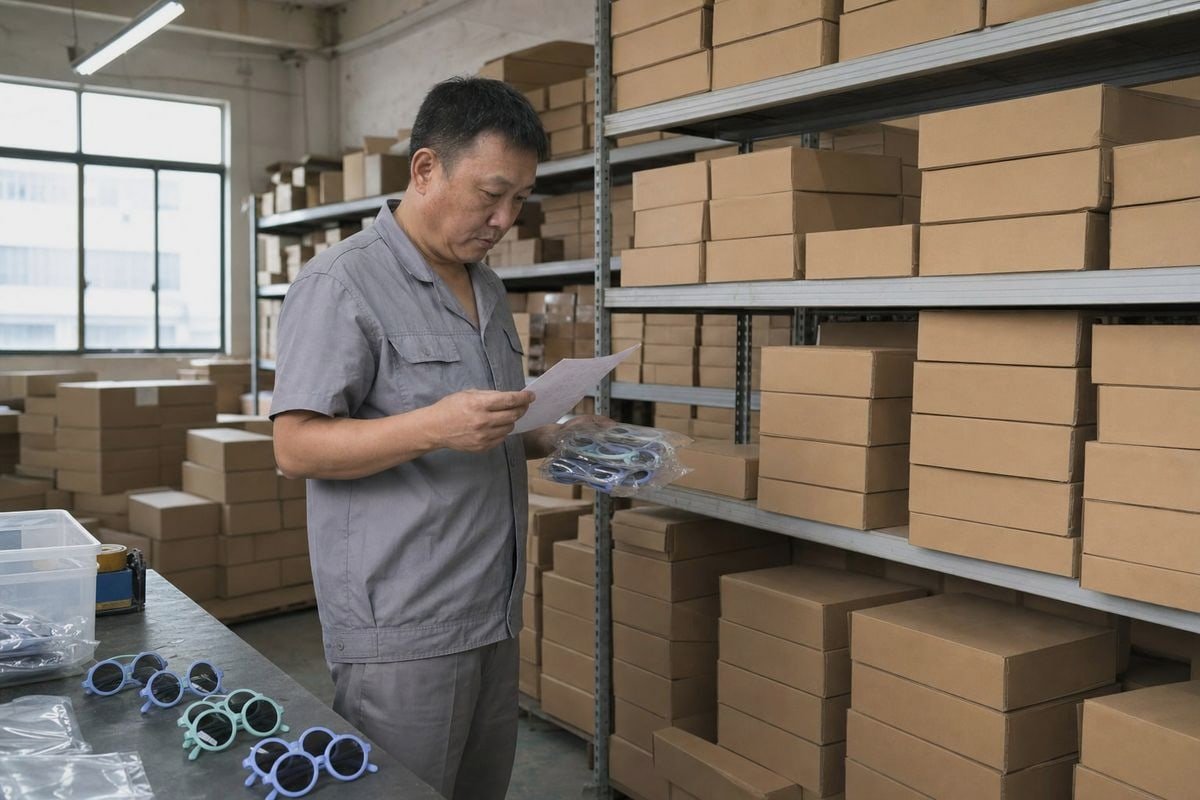
子供用サングラスの損失・破損率は、静かに利益を圧迫します。当社の台州生産ラインでは、バイヤーが破損を過小評価し、シーズン中に交換需要が在庫を上回る中で慌てているのを常に見ています。.
高い損失・破損率は、子供用サングラスを交換駆動型カテゴリーに変えます。頻繁な破損や紛失は、同じシーズン内にリピート購入の需要を生み出すため、小売業者はコアスタイルをより深く在庫し、ピーク時の損失ウィンドウのために安全在庫を保持し、返品コストを削減する耐久性のあるフレームを選択する必要があります。.
これにより、購入、価格設定、再注文の方法が変わります。以下では、破損を削減する方法、耐久性のある機能がどのように重要か、真の在庫コストを計算する方法、そして工場のパートナーがどのように計画を支援するかを説明します。.
子供用サングラスの破損や紛失率を、再注文に影響が出る前に減らすにはどうすればよいですか?
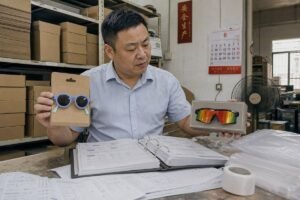
オーストラリアの販売店が、顧客からの苦情の半分が壊れたテンプルに起因すると私に語ったことがあります。私たちのチームが返品されたフレームを調べたところ、本当の原因は子供たちの乱暴さではなく、硬い素材でした。.
TPEEやTR90のような柔軟なフレーム素材を指定し、出荷前の製品耐久性テストを実施し、年齢層全体にわたってフィット感を向上させることで、破損を軽減します。ケースやストラップをバンドルすることで紛失を減らします。フィット感が良く快適なサングラスは、移行時に顔から外れるのではなく、顔にとどまるからです。.
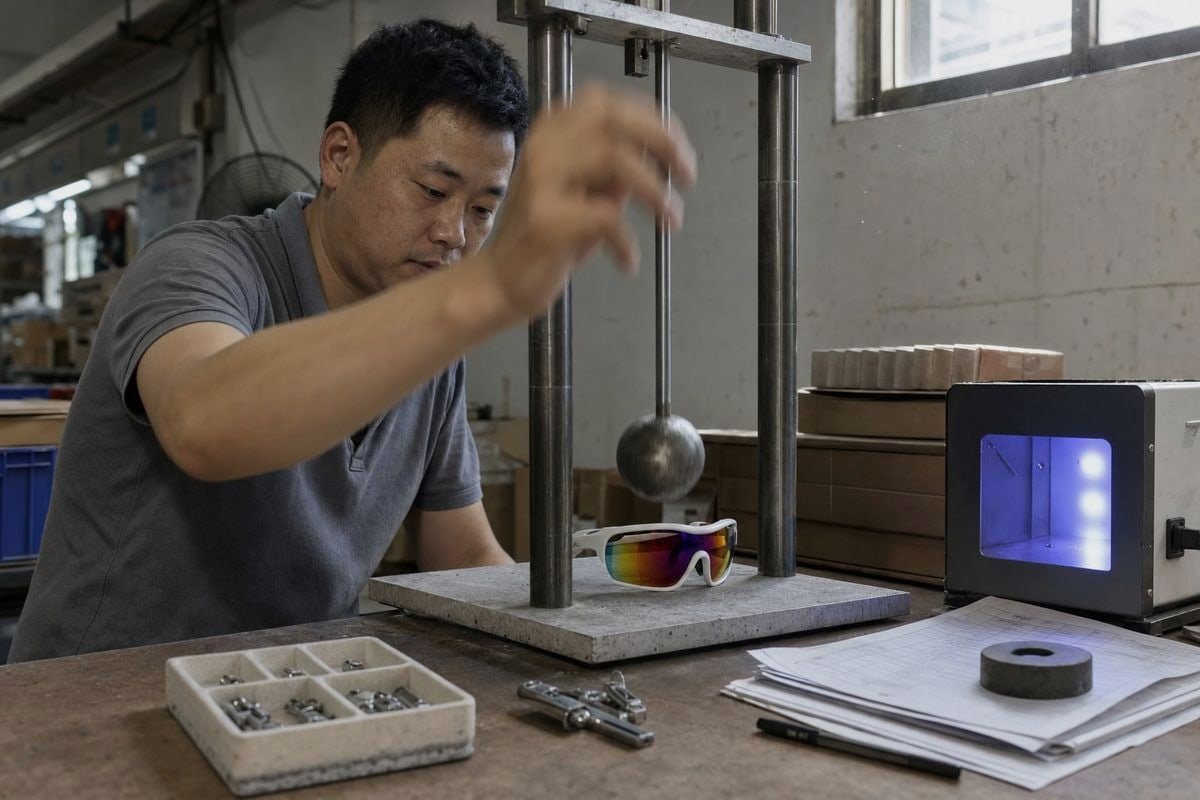
破損と損失はスプレッドシート上では同じ問題に見えますが、原因と解決策は異なります。損傷は主に素材の選択と構造から生じます。損失は主に行動から生じます - 子供たちはプールを出るとき、車に乗るとき、ゲームを終えるときなどの「移行時」にサングラスを外し、そのペアは二度と家に帰ってきません。あなたの防止戦略は、両方に攻撃する必要があります。.
仕様段階で損傷を修正する
ほとんどの破損は、ヒンジ、テンプル、ブリッジの3つの点で発生します。硬い射出成形プラスチックは、4歳児が毎日加えるねじり力でそこにひび割れます。柔軟なフレーム素材は、割れる代わりに曲がります。私たちのワークショップでは、安価なフレームが最初に失敗する場所だからこそ、テンプルを180度完全に曲げるテストを行っています。耐衝撃性レンズも重要です。 TR90フレーム 1 ポリカーボネートや同様のオプションは、基本的なアクリルよりもコンクリートに落下してもはるかに良く持ちこたえます。; フィット感とアクセサリーで損失を修正する.
挟まるペアは外されます。滑るペアは外されます。顔から外れると、紛失します。だからこそ、フィット感は単なる快適機能ではなく、損失防止ツールなのです。
防止レバー.
| ターゲット | 実践的な行動 | 柔軟なフレーム素材 |
|---|---|---|
| 指定する | 破損 | /TR90(硬質プラスチックの代わりに) TPEE 2製品耐久性テスト |
| 出荷前にツイスト、ドロップ、ヒンジサイクルテストを要求する | 破損 | 年齢帯サイジング |
| 不使用による損失 | スタイルごとに少なくとも2つのサイズ帯を在庫する | ストラップとケース |
| 紛失 | 販売時点で保持アクセサリーをバンドルする | 接触点での快適さ |
| 拒否による損失 | アクティブな使用中のソフトテンプルチップ、軽量構造 | 防止された各破損または損失は、再注文予算を保護し、交換頻度を減らし、予測を安定させます。 |
フィット感が悪いと、不快なサングラスは外されて置き去りにされるため、実効損失率が増加します。.
返品・交換費用を抑えるために、メーカーにどのような耐久性機能を求めるべきでしょうか?
耐久性は一つの機能ではありません。それは工場のレベルで行われる一連の決定であり、それぞれがあなたの損益計算書から将来の返品を追加または削除します。サプライヤーを監査するときは、このスタックを一つずつ確認してください。.
TR90フレームにTPEEテンプル、耐衝撃性UV400レンズ、ネジなしまたは強化ヒンジ、そして文書化された製品耐久性テストを探してください。工場では、ねじりテスト、落下テスト、ヒンジサイクル結果、および一貫したQCを示す必要があります。これらの機能は、返品率と交換コストを直接削減します。.
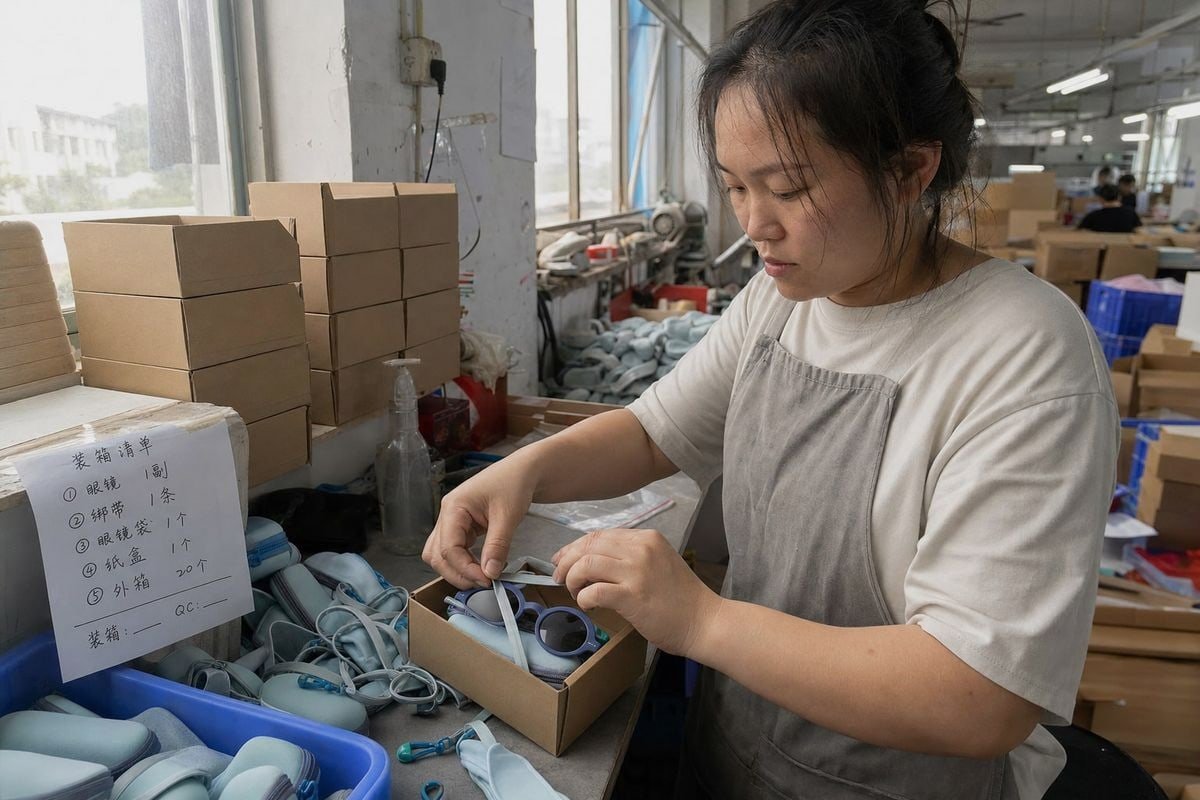
返品を実際に予測する耐久性チェックリスト.
まず、フレーム素材。TR90は、形状記憶性で知られる熱可塑性プラスチックです - 曲げた後も元の形状に戻ります。TPEEは柔らかさと弾力性を追加します。そのため、多くの子供用スタイルでTR90フロントとTPEEテンプルを組み合わせています。この組み合わせは、標準的なプラスチックよりも座る、踏む、バックパックに詰め込むといったことによく耐えます。
次に、レンズの品質。本物の耐衝撃性レンズ.
破損による返品と安全に関する苦情の両方を防ぎます。偏光オプションを使用すると、フレームのツーリングを変更せずに、アップグレードティアを構築できます。 UV400保護 3 第三に、構造の詳細。ヒンジはナンバーワンの故障点です。強化ヒンジ、または幼児用スタイルの柔軟なワンピースデザインは、最も弱いリンクを完全に排除します。.
何を防ぐか.
| 特徴 | 工場に何を尋ねるか | TR90 + TPEE構造 |
|---|---|---|
| 壊れたテンプル、ひび割れたフロント | 素材証明書と柔軟性デモンストレーション | 耐衝撃性UV400レンズ |
| 割れたレンズ、安全に関する返品 | 割れたレンズ、安全が戻る | Lens spec sheets and UV test reports |
| Reinforced or screwless hinges | Loose or broken hinges | Hinge-cycle test counts |
| Soft temple tips | Discomfort returns | Contact-point material samples |
| In-line QC with 5S workshop discipline | Batch inconsistency | Inspection process documentation |
Fourth, process consistency 4. A beautiful sample means nothing if batch ten arrives with loose hinges. Our 5S-managed workshop exists because consistency, not the golden sample, determines your real return rate. Durability features lower your replacement frequency, which in turn improves your 在庫回転率 5 because fewer units cycle through as warranty replacements instead of full-margin sales.
低品質の子供用眼鏡の真の在庫コストを、わずかに高い単価と比較してどのように計算しますか?
A procurement manager from Europe once challenged me on price: our frame was forty cents higher than a competitor's. We ran her numbers together, including returns and re-shipping. The "cheaper" frame cost her more per sellable unit.
ユニット価格、期待される収益、保証費用、交換配送料、カスタマーサービスの時間、および悪い経験からの顧客生涯価値の損失を加えて、真のコストを計算します。 10〜15%の故障率の低品質な眼鏡は、20%高い価格の耐久性のあるフレームよりも、成功した販売あたりのコストが高くなることがよくあります。.
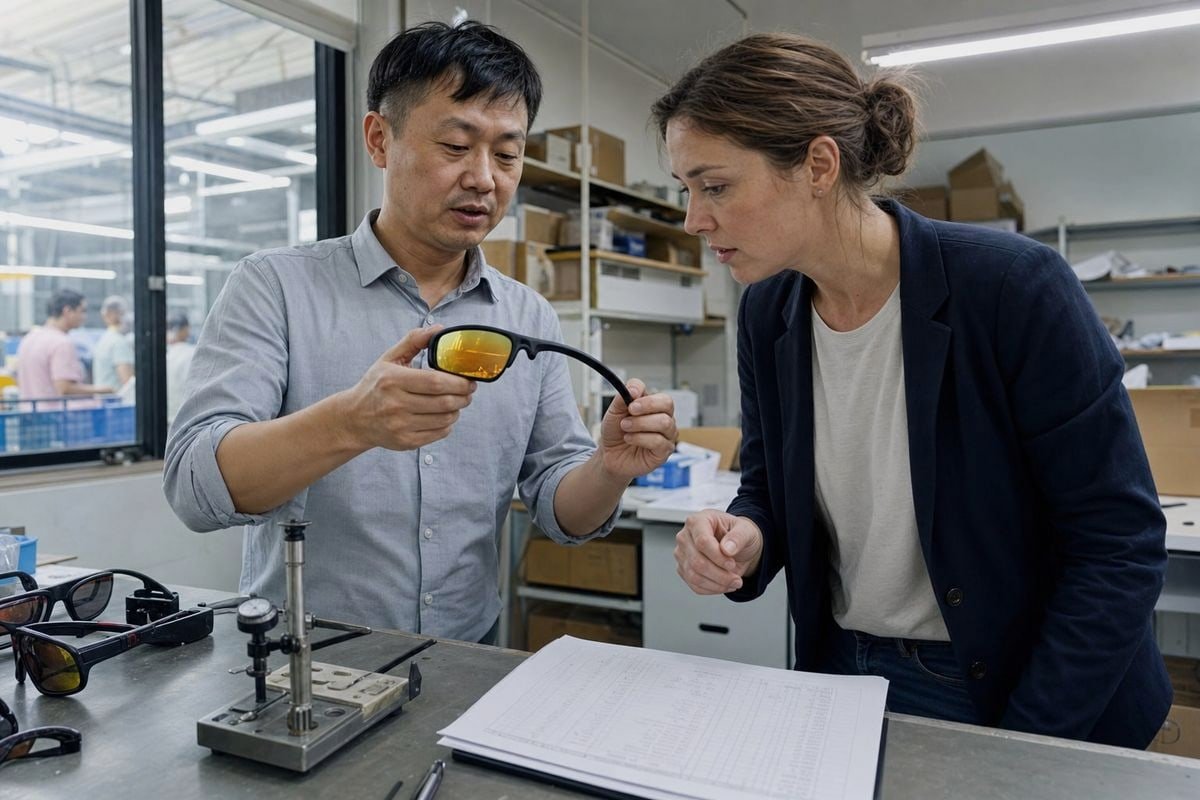
Unit price is the number on the invoice. True cost is what each successful, kept sale actually costs you. The gap between the two is where cheap kids' eyewear quietly destroys margin.
A simple worked comparison
Assume you buy 1,000 units. The cheap frame costs $1.80; the durable frame costs $2.30. Now layer in reality.
| コスト要因 | Cheap frame ($1.80) | Durable frame ($2.30) |
|---|---|---|
| Units purchased | 1,000 | 1,000 |
| Expected failure/return rate | 12% | 3% |
| Units lost to returns/replacements | 120 | 30 |
| Replacement handling cost (est. $3/case) | $360 | $90 |
| Sellable full-margin units | 880 | 970 |
| Total cost (goods + handling) | $2,160 | $2,390 |
| True cost per sellable unit | ~$2.45 | ~$2.46 |
On paper, they land nearly even — before you count the invisible costs. A parent whose child's sunglasses snapped in week one rarely repurchases the same brand. That destroyed customer lifetime value 6 never appears on the invoice, but it is the largest line item. Add negative reviews, marketplace penalties for high return rates, and staff hours spent processing claims, and the durable frame wins decisively.
The inventory turnover angle
Failures also distort your inventory turnover ratio. Replacement units ship at zero margin, yet they consume the same warehouse space and freight as full-price sales. High failure rates force you to over-order as a buffer, which ties up cash and increases the risk of dead stock when the season ends. Retail stockouts get worse too, because warranty replacements silently eat inventory you had earmarked for new sales. When you model your next order, price the failure rate — not just the unit.
経験豊富なOEM/ODM工場と協力することで、よりスマートな再注文サイクルと安全在庫レベルを計画するのに役立ちますか?
Early in my export career, I learned a hard lesson: a buyer who ordered once in spring and went silent had not lost demand — he had lost sales to a stockout in July because neither of us planned for replacement demand.
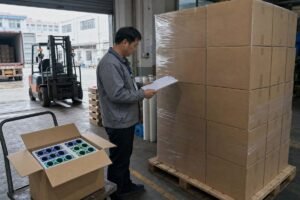
はい。経験豊富なOEM/ODM工場は、再注文のリードタイムを短縮し、繰り返し生産のための材料を保管し、複数の市場からの季節的な需要予測の洞察を共有し、既存のスタイルを提供して迅速な再入荷を可能にします。これにより、小売店のピーク時の欠品を避けながら、より少ない安全在庫を持つことができます。.
Kids' sunglasses have two demand curves, not one. The first is the launch curve — new customers buying at the start of summer or back-to-school. The second is the replacement curve, driven by loss and damage rates, and it peaks weeks after the first. Parent purchasing behavior in this category is urgent: when a pair is lost before a beach holiday, the family buys whatever is in stock today. If your shelf is empty, a competitor gets the sale. Planning around both curves is where a factory partner earns its keep.
How a factory partnership changes the math
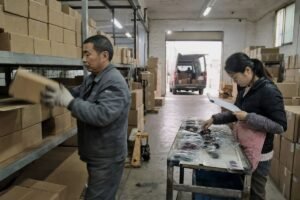
Here is what we do with repeat B2B buyers 7 across our 20+ export markets, and how each step affects your planning:
- Start from existing styles. With roughly 800 ready styles, buyers can test hero SKUs without mold investment. Micro-collection testing identifies winners before you commit deep stock.
- Lock reorder terms upfront. We agree on repeat-run lead times before the first order ships. Shorter, predictable lead times mean lower safety stock requirements — the two are mathematically linked.
- Reserve materials for proven SKUs. For established programs, we hold TR90 and TPEE material against forecast reorders. That compresses reorder cycles during peak season.
- Share cross-market seasonality. Because we serve brands in Australia, Japan, and Europe, opposite hemispheres give us early signals for seasonal demand forecasting that a single-market buyer cannot see alone.
- Structure the assortment for replacement demand. Core bestsellers in depth, a lower-priced backup tier for emergency repurchases, and multiple size bands to prevent fit-related loss by non-use.
There is one more layer: warranty and replacement programs. If you offer parents a low-friction replacement promise, your factory must supply consistent quality and continuity of styles across production runs. A parent replacing a lost pair often wants the identical frame. We keep colorways and tooling stable across seasons for exactly this reason — continuity turns a loss event into a retained customer instead of a churned one.
結論
Loss and damage rates make kids' sunglasses a replacement-driven business. Choose flexible, tested frames, price in true failure costs, and partner with a factory that supports fast, consistent reorders.
脚注
1. Replaces 403 error with authoritative information on eyewear frame materials and durability standards. ↩︎
2. Background on thermoplastic elastomers explains why TPEE temples flex without breaking. ↩︎
3. WHO explains UV radiation risks that UV400 lens protection is designed to prevent. ↩︎
4. Replaces 403 error with a stable, authoritative overview of international quality management standards. ↩︎
5. Explains the inventory metric distorted by warranty replacements discussed in this section. ↩︎
6. Defines the metric used to quantify long-term losses from product failures and churn. ↩︎
7. Alibaba is a leading B2B sourcing platform connecting brands with OEM/ODM manufacturers. ↩︎
 English
  Español de México
  Deutsch
  Français
  日本語
日本語  العربية
  Português do Brasil