子供用サングラスの返品率に対する責任の割り当て方法
責任の割り当て 高い返品率 1 子供用サングラスの返品率が高いのはつらいものです。バイヤーが販売チャネルのせいにする一方で、当社の検査報告書は全く別の場所を指しているのを私は見てきました。返品は利益を食いつぶし、ブランドへの信頼を損ない、サプライヤーとの関係を悪化させます。解決策は、各返品を本来の所有者にたどることから始まります。.
子供用サングラスの返品率が高い原因を、返品理由を管理した機能にマッピングすることで責任を割り当てます。サイズと耐久性は製品とソーシングに、誤解を招くリスティングはマーチャンダイジングに、輸送中の破損はフルフィルメントに、不明確なルールはポリシーデザインに属します。所有権を割り当てるには、仮定ではなく返品理由データを使用します。.
それは簡単そうに聞こえますが、ほとんどのブランドはそれを実行しません。彼らは一つの大きな返品数を見て、スケープゴートを選びます。工場から子供の顔に至るまでに実際に起こっていることに基づいた、より良いアプローチを段階的に説明しましょう。.
返品の原因が設計上の欠陥なのか、製造上の欠陥なのかをどのように特定できますか?
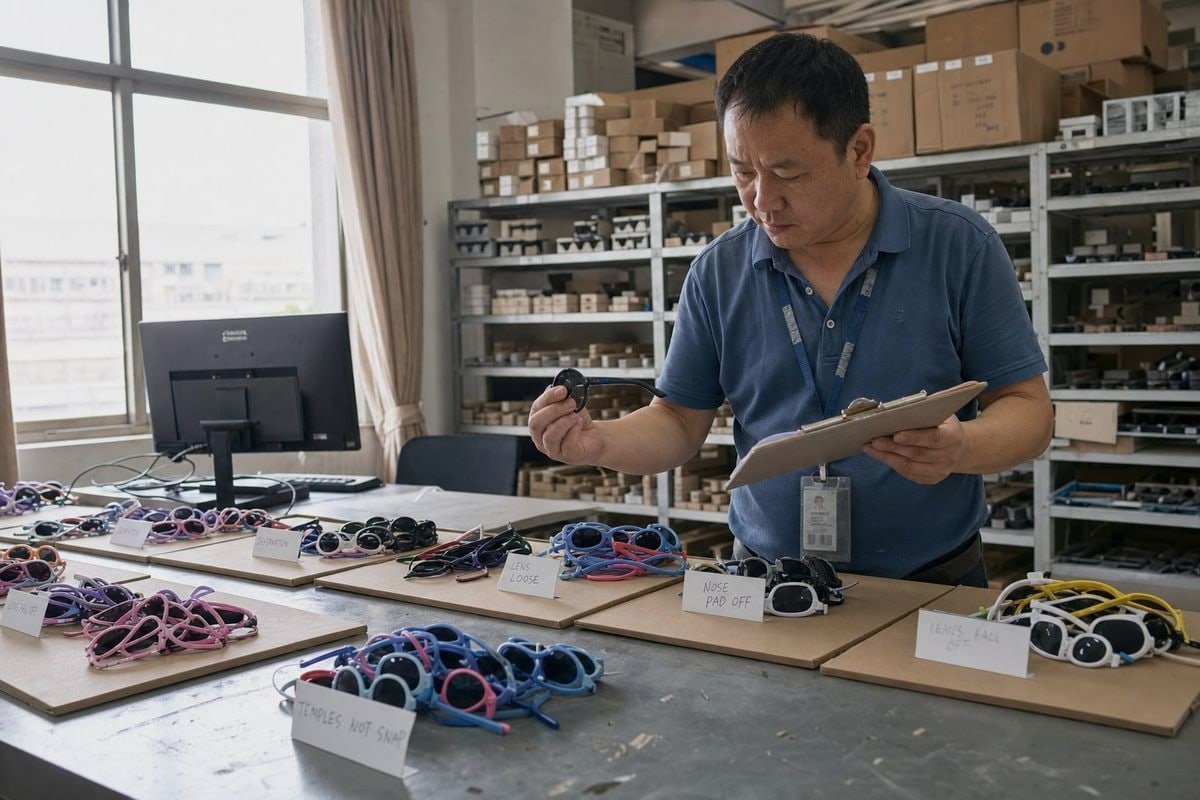
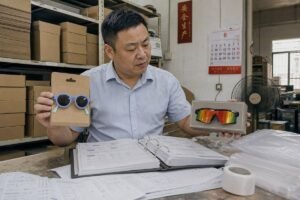
あるバイヤーが、当社の作業場が彼を失望させたと確信して、30個の返品されたフレームの写真を私に転送してきました。当社のチームがそれらを調べたところ、すべての破損は同じヒンジ部分で発生しており、それは製造上の問題ではなく、設計上の問題でした。その違いが、誰が支払い、何が修正されるかについてすべてを変えました。.
設計上の欠陥と製造上の欠陥を、故障パターンをチェックすることで区別する:設計上の欠陥は、すべてのユニットとバッチで同じ箇所で繰り返されるのに対し、製造上の欠陥はランダムに現れるか、特定の生産ロットに集中します。返品理由コードとバッチ番号を相互参照して、どちらに直面しているかを確認します。.
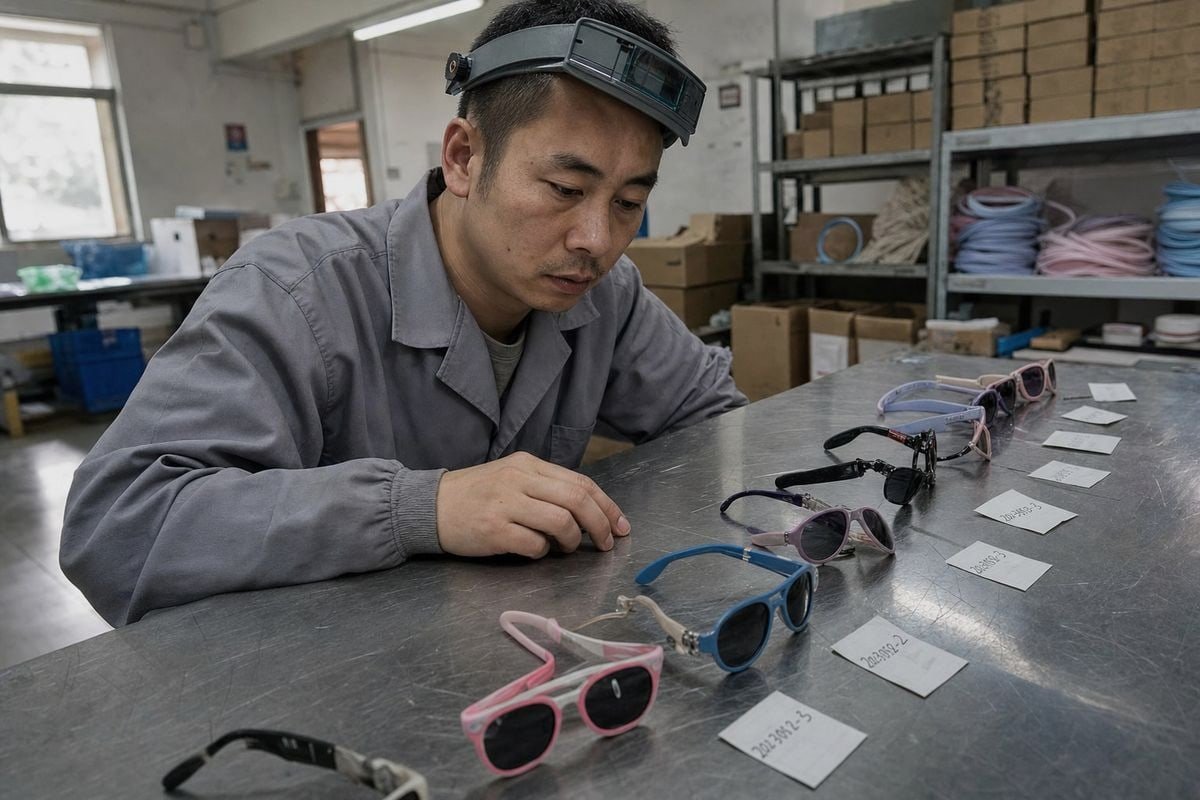
その違いは重要です。なぜなら、責任は逆方向に流れるからです。設計上の欠陥は、製品コンセプト自体が子供向けではなかったことを意味します - フレームが硬すぎる、鼻梁が小さな顔に合わない、またはテンプル長が記載されている年齢範囲と一致しないなどです。製造上の欠陥は、設計は良かったが、実行がうまくいかなかったことを意味します - ヒンジネジの緩み、コーティングの泡があるレンズ、または一つの生産ロットでの不均一な射出成形などです。.
苦情ではなく、パターンを読む
顧客は原因ではなく、症状を説明します。「2日で壊れた」と親は書きます。それは所有権については何も教えてくれません。3つの質問をする必要があります。第一に、どこで壊れたのか?第二に、同じ故障が複数のバッチにわたって現れるか?第三に、その故障は子供が実際に製品を使用する方法と一致するか?
ここに、証拠を分類する方法をバイヤーに教えます。
| シグナル | 設計上の欠陥を示す | 製造上の欠陥を示す |
|---|---|---|
| 故障箇所 | すべてのユニットで同じ場所 | ユニットごとに異なる |
| バッチ分布 | すべてのバッチに広がる | 一つのロットに集中 |
| 故障のタイミング | 通常の子供の使用後 | 到着時または初回使用時によくある |
| 必要な修正 | 再設計または材料変更 | より厳格なプロセス管理と検査 |
| 誰が所有するか | 製品開発/ソーシングの決定 | 工場の品質管理 |
子供特有のストレスポイント
子供はサングラスをねじったり、座ったり、落としたりします。当社が15年間 子供用アイウェア 2, を製造してきた中で、ヒンジ、鼻梁、テンプルチップが最初に壊れることを学びました。もし返品がこれらの箇所に集中し、フレーム素材が硬い場合、その設計は子供向けではなかったということです。その責任は、サンプルを承認した人、多くの場合、工場ではなくバイヤー自身の製品チームにあります。もし故障がランダムで一貫性がない場合、それは製造上の規律の問題であり、工場が責任を負います。.
紛争の話し合いの前に、SKUとバッチごとに返品データをセグメント化してください。データは非難よりも早く議論を終わらせます。.
サプライヤーの品質管理プロセスは、返品率の削減にどのような役割を果たしますか?
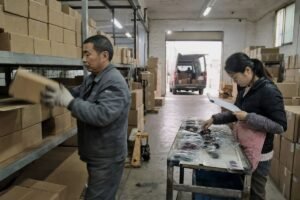
当社の 5S管理ワークショップ 3, では、毎朝、組み立ての前、最中、後に検査が行われます。なぜなら、ヒンジステーションで発見された欠陥は数セントで済みますが、怒った親によって発見された同じ欠陥は顧客を失うことになるからです。そのギャップが、サプライヤーのQCの真の価値を定義します。.
サプライヤーの品質管理プロセスは、不良品による返品率を直接決定します。入荷時の材料検査、工程内検査、および出荷前のAQLサンプリングにより、出荷前に緩んだヒンジ、レンズの欠陥、および一貫性のないサイズを検出します。QCが弱い、または存在しない場合、それらの失敗は顧客への返品として下流に押し出されます。.

品質管理は単一のチェックポイントではありません。それは連鎖であり、いずれかのリンクが欠けていると返品が発生します。ブランドが私たちを監査する際、私は常に最終検査表だけでなく、完全なシーケンスを示します。なぜなら、最終検査だけでは安価に修正するには遅すぎる問題を発見するからです。.
3段階のQCチェーン
子供用アイウェアに真剣に取り組んでいるサプライヤーは、3つの段階でチェックを実行します。
- 受入品質管理。. 生産開始前に、原材料のTPEEおよびTR90ペレット、レンズ、ネジ、パッケージが仕様に対して検証されます。悪い材料が入れば、どんなに注意深く組み立てても、悪い製品が出てきます。.
- 工程内品質管理。. オペレーターは、組み立て中にヒンジのトルク、レンズのフィット、フレームのアライメント、表面仕上げをチェックします。ここでランダムな欠陥が、まだ修正可能なうちに発見されます。.
- 出荷前検査。. サンプリングされたバッチは、合意された 受入基準 4 — checking UV400 5 lens performance, flex durability, dimensions against the size spec, and packaging condition.
What weak QC looks like in your return data
If your supplier skips these stages, your returns tell the story. "Broken on arrival" spikes mean no pre-shipment inspection. Inconsistent fit across the same SKU means no in-process dimensional checks. Lens coating peeling means no incoming material verification. Each of these return reasons is a receipt showing exactly which QC stage was missing.
Ask your supplier for their inspection records, not just their promises. A factory with real process control can show you checklists, defect logs, and rework rates. One that cannot is outsourcing its quality control to your customers — and your return rate is the invoice.
TPEEやTR90のような素材の選択肢を検討すべきでしょうか、それとも販売チャネルを責めるべきでしょうか?
One trade-off comes up in nearly every development call we run: a buyer wants a lower unit price, and the cheapest path is downgrading from TR90 or TPEE 6 to generic PC or acrylic frames. Six months later, that same buyer is often asking why breakage returns doubled.
はい — まず素材を確認してください。硬くて脆いフレーム素材は、通常の子供の扱いでは破損し、販売チャネルでは防げない耐久性の低下を招きます。柔軟なTPEEとTR90はねじれや衝撃を吸収するため、素材の選択が販売チャネルのパフォーマンスよりも返品率の高さの原因となっていることがよくあります。.
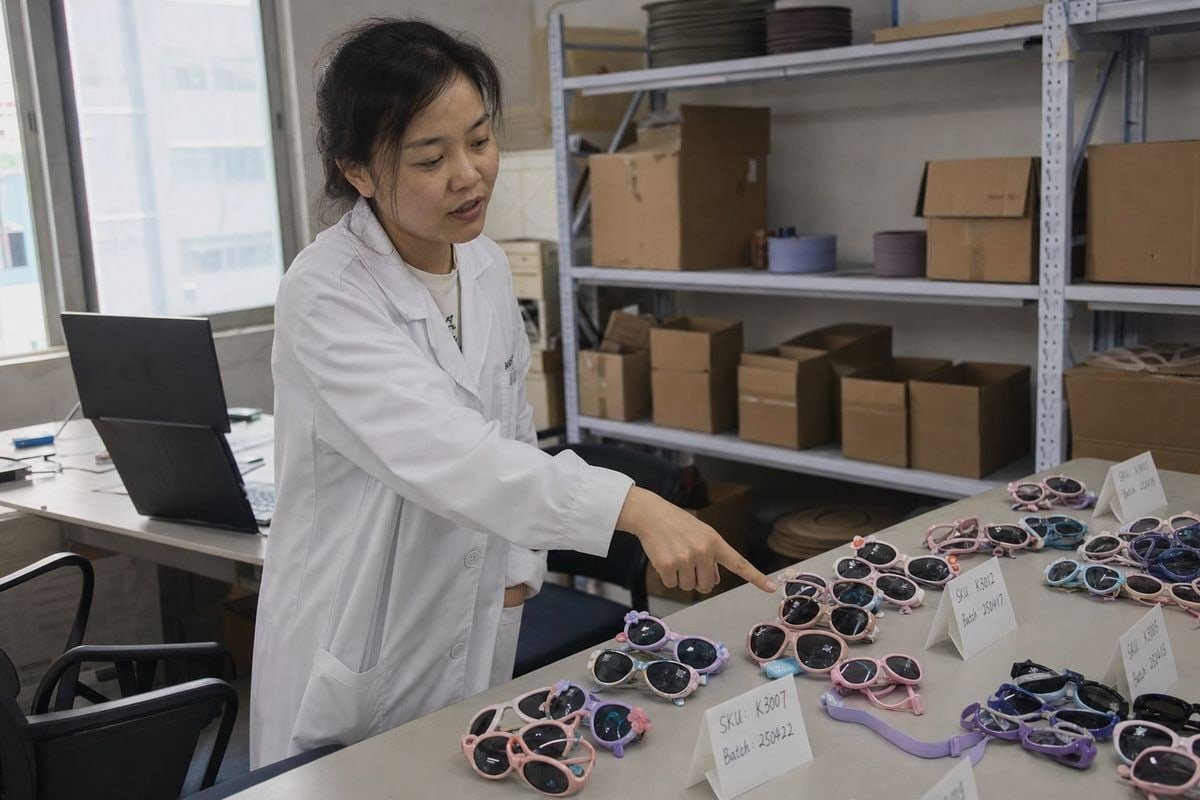
Blaming the sales channel feels natural. The channel is where returns show up, so it looks like the source. But a channel only processes returns; the material decision created them months earlier, at the sourcing stage. Before you renegotiate with a retailer or marketplace, look at what the frames are actually made of.
Why material matters more for kids than adults
Adults handle eyewear with two hands and store it in cases. Children pull sunglasses off with one hand, bend the temples backward, sit on them, and stuff them into school bags. A material that survives adult use can fail within days on a child. This is exactly why our factory built its expertise around flexible materials rather than treating kids’ frames as shrunken adult frames.
| プロパティ | TPEEテンプル | TR90フレーム | Generic rigid plastic |
|---|---|---|---|
| 柔軟性 | Very high — bends and returns | High — twist-resistant | Low — snaps under stress |
| 中程度から重い | 非常に軽い | 軽い | 中程度 |
| Impact behavior | Absorbs and recovers | Resists cracking | Cracks or shatters |
| Comfort on small faces | Soft, gentle pressure | Comfortable, stable | Pressure points common |
| Typical return driver | Rare breakage | Rare breakage | Frequent breakage returns |
The channel-blame test
Run this simple check. Compare return reasons across channels for the same SKU. If "broken" and "cracked" dominate everywhere, the material is guilty — the channel is just the messenger. If one channel shows high "not as described" or "wrong size" returns while others do not, then that channel's listing quality is the real issue. In our experience supplying brands across twenty-plus countries, breakage-driven returns almost always trace back to the material and construction spec, not to where the product was sold.
Material is a sourcing decision. If you chose price over child-appropriate flexibility, that ownership sits with procurement — and it is fixable.
メーカーとの間で、将来の紛争を防ぐために、明確なOEM/ODM品質契約を結ぶにはどうすればよいですか?
The smoothest long-term partnerships I have seen all started the same way: an uncomfortable, detailed conversation about quality standards before the first purchase order — not after the first return spike. Buyers who skip that conversation end up arguing about undefined expectations.
明確なOEM/ODM品質契約を設定するには、測定可能な仕様、合意されたAQL検査基準、欠陥分類、レビューのきっかけとなる返品率のしきい値、および交換またはクレジットなどの救済条件を文書化します。両当事者が同じ物理的参照に対して判断できるように、署名済みのゴールデンサンプルを添付します。.
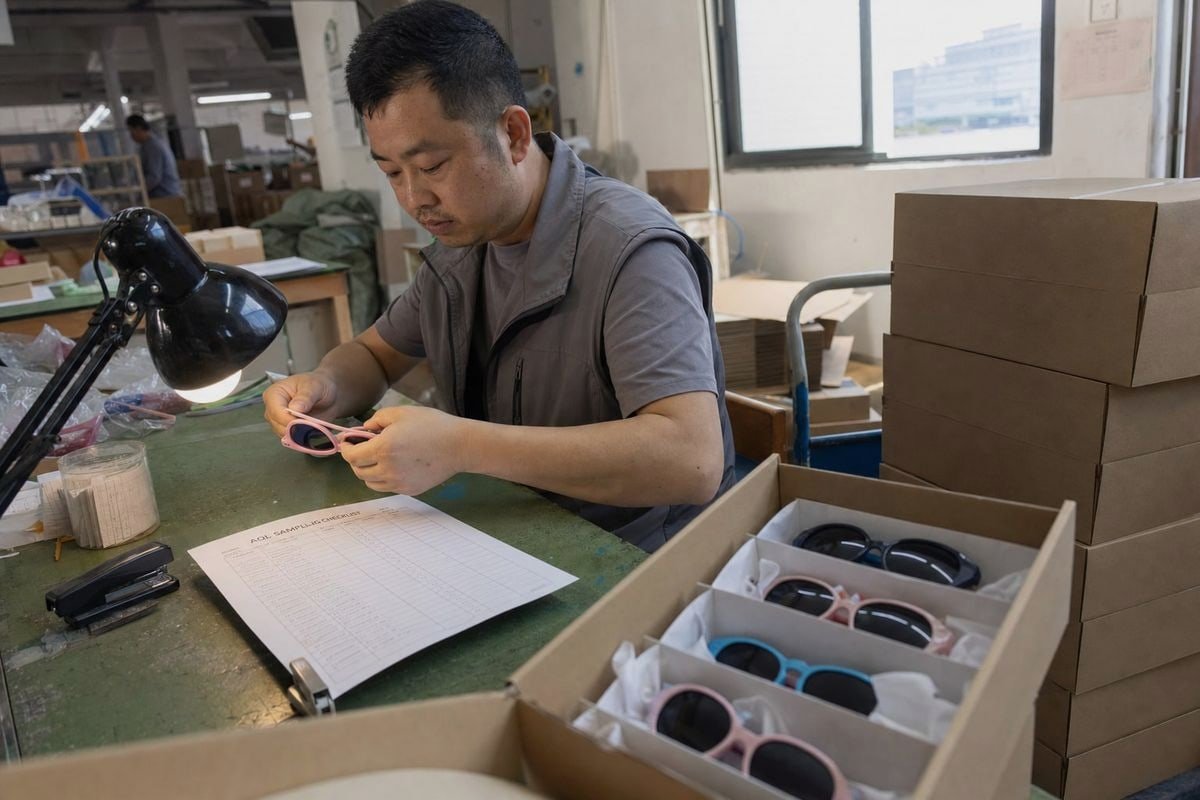
A quality agreement is not about distrust. It is about removing ambiguity, because ambiguity is where disputes live. When a return spike happens — and eventually one will — a written agreement turns a blame fight into a lookup exercise. Both sides check the document, identify the owner, and apply the agreed remedy.
The five components every agreement needs
- Measurable product specifications. Frame dimensions with tolerances, material grades (specify TR90 and TPEE by name, not "flexible plastic"), lens standard such as UV400, hinge cycle expectations, and color references. If it cannot be measured, it cannot be enforced.
- Golden samples. Two signed, sealed approval samples — one held by each party. Every future dispute gets judged against this physical reference, not memory or opinion.
- Inspection standard and defect classes. Agree on an AQL sampling level and define what counts as critical, major, and minor defects for children's eyewear. A sharp edge is critical. A slight color shade variance is minor. Writing this down prevents both over-claiming and under-delivering.
- Return-rate thresholds and root-cause obligations. Define a defect-related return threshold that triggers joint investigation. Tie remedies to confirmed root cause: factory-caused defects get replacement or credit; design-approved or channel-caused returns do not.
- Remedy and escalation terms. Specify replacement timelines, credit mechanisms, and how disagreements get resolved — 第三者検査 7 is a common neutral referee.
Match the remedy to the root cause
| Confirmed root cause | 責任者 | Typical remedy |
|---|---|---|
| Production defect (loose hinge, lens flaw) | Manufacturer | Replacement or credit note |
| Approved design or material limitation | Buyer's product decision | Joint redesign, no chargeback |
| Transit damage | Packaging spec owner / carrier | Packaging revision, freight claim |
| Listing or sizing misrepresentation | Buyer's merchandising team | Content correction |
In our OEM/ODM 8 work, we welcome these agreements. They protect a serious factory just as much as they protect the brand, because they stop us being charged for failures we did not cause — and they force everyone to fix the real upstream problem.
結論
High return rates on kids sunglasses are an accountability problem, not a mystery. Trace each return reason to its true owner — design, QC, materials, or agreements — then fix the upstream cause together.
脚注
1. Provides background on product return dynamics and their business impact for context. ↩︎
2. US consumer safety authority overseeing safety standards relevant to children’s products like eyewear. ↩︎
3. Background on the 5S lean manufacturing methodology referenced for workshop organization and QC. ↩︎
4. WTO’s technical barriers to trade rules govern acceptance standards applied to internationally traded goods. ↩︎
5. WHO explains UV radiation risks that justify UV400 lens protection standards for eyewear. ↩︎
6. Technical background on flexible thermoplastic elastomer materials used in children’s eyewear frames. ↩︎
7. ISO’s conformity assessment framework covers third-party inspection used to resolve quality disputes. ↩︎
8. Explains OEM/ODM manufacturing partnership models discussed in the supplier agreements section. ↩︎

 English
  Español de México
  Deutsch
  Français
  日本語
日本語  العربية
  Português do Brasil