子供用サングラスのパッケージラベルに記載が必要な情報は何ですか?
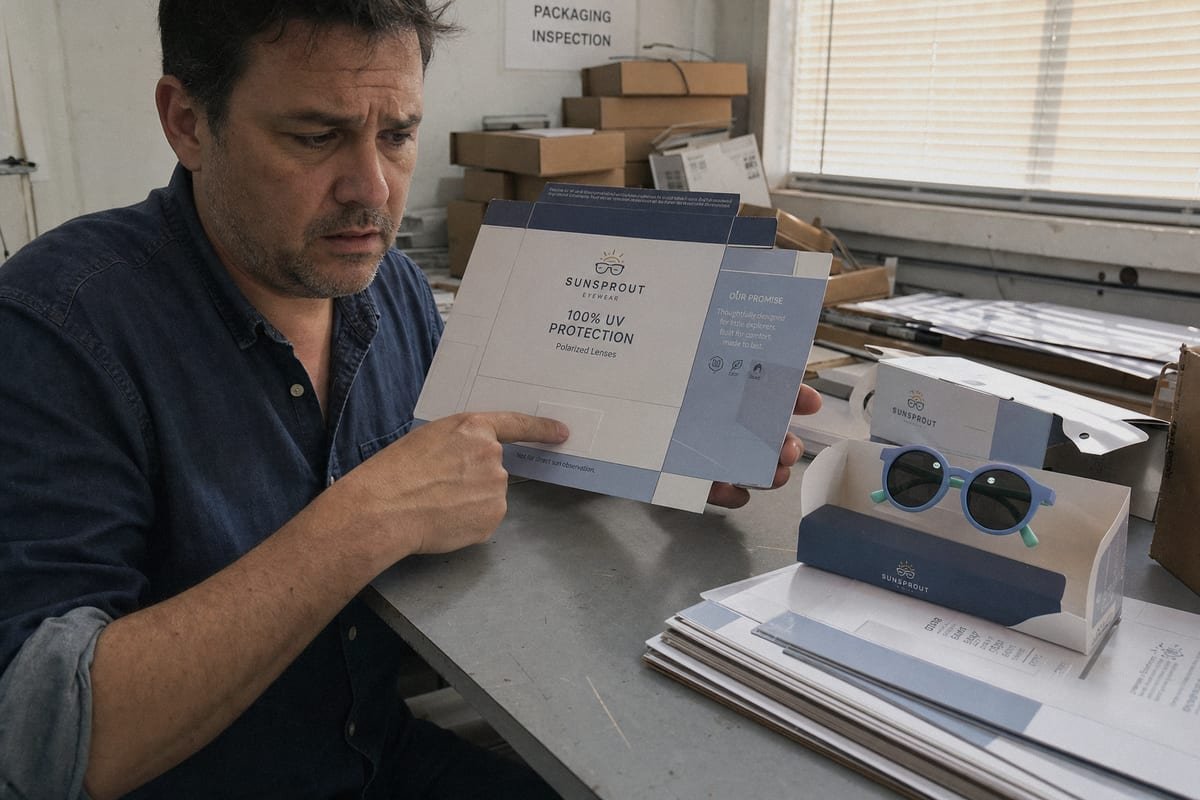
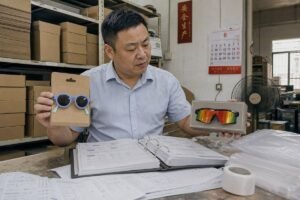
子供用サングラスのパッケージラベルは、昨年、あるバイヤーに高額な通関遅延を引き起こしました。当社の生産ラインでは、不完全なラベルが全出荷を妨げる可能性があるため、印刷前にラベルアートワークを確認しています。.
子供用サングラスのパッケージラベルには、製造業者または輸入業者の氏名および住所、原産国、紫外線保護に関する表示、レンズフィルターカテゴリー、安全に関する警告、および米国の市場向けのCPSIA追跡情報が表示されている必要があります。EUではCEマーキングの詳細が必要であり、オーストラリアではレンズカテゴリーの表示が義務付けられています。.
それが簡単な答えです。しかし、詳細は国によって異なり、間違いは高額になります。市場ごとに、箱に記載すべき内容を説明します。.
子供用サングラスのラベルに記載すべき安全およびコンプライアンス情報は?
当社の台州工場でのパッケージレビュー中、クライアントのアートワークは美しかったのですが、追跡ラベルのブロックが完全に欠落していました。1万個の箱を印刷する2日前に発見しました。.
子供用サングラスのラベルには、製造業者名、原産国、紫外線保護に関する表示、レンズフィルターのカテゴリー、該当する安全上の注意、そして米国向けの場合はバッチ、日付、製造場所を含むCPSIA追跡情報が必要です。表示は真実であり、試験報告書によって裏付けられている必要があります。.
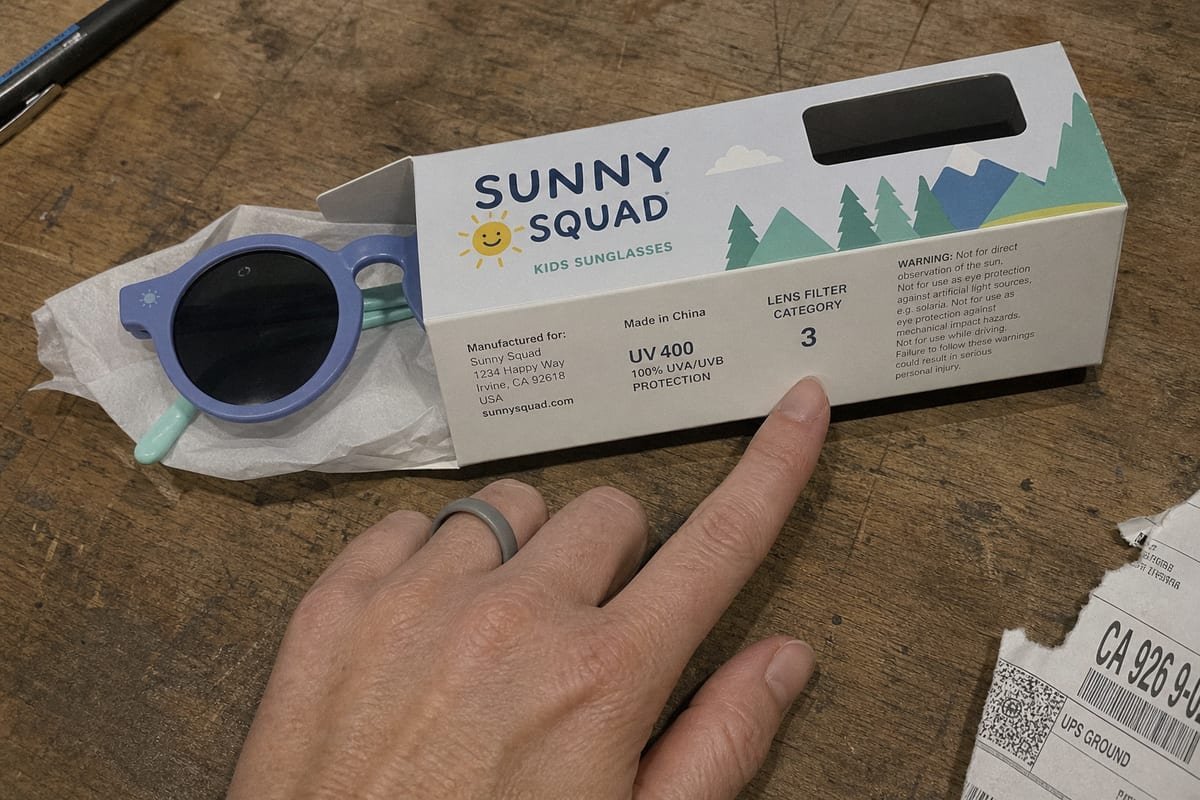
出発点は、子供用サングラスはファッションアクセサリーではなく、規制された製品であることを理解することです。米国では、処方箋なしのサングラスは FDA医療機器分類 1 市販後デバイスとして分類されます。これは、製造業者、包装業者、または販売業者の氏名および所在地、明確な識別および意図された用途の表示、および虚偽または誤解を招くような表示がないことなど、一般的なデバイスのラベリング規則が適用されることを意味します。必要な表示も、小さな文字で埋もれるのではなく、目立つように表示する必要があります。.
コアラベル要素
OEMクライアント向けの 小売準備完了パッケージ を準備する際に使用する基本的なチェックリストを以下に示します。
| ラベル要素 | 対象範囲 | なぜ重要なのか |
|---|---|---|
| 製造業者/輸入業者情報 | 会社の正式名称と連絡先住所 | 米国、EU、英国、オーストラリアで必要 |
| 原産国 | 例:「中国製」" | ほとんどの市場での通関要件 |
| 紫外線保護に関する表示 | UV400保護定格または「100% UVA/UVB」" | 実際のレンズテスト結果と一致する必要があります |
| レンズフィルターカテゴリー | 光透過率に基づくカテゴリー0〜4 | オーストラリアで必須。EUで期待される |
| 安全に関する警告 | "「直射日光の観察には使用しないでください」、「夜間の運転には使用しないでください」" | 消費者保護要件 |
| CPSIA追跡ラベル 2 | バッチ、製造日、および場所 | 米国の子供向け製品に必須 |
子供に特に適用される警告
子供向け製品はさらに厳しく審査されます。パッケージに小さな取り外し可能な部品(ケース、コード、チャーム)が含まれている場合は、 窒息の危険性に関する警告 3 が、より幼い子供を対象とした製品に必要になる場合があります。また、対象年齢を明確に記載することをお勧めします。当社の経験では、年齢表示は、コンプライアンス審査担当者と小売バイヤーの両方が、製品が誰向けであるかを正確に理解するのに役立ちます。.
もう1点:箱に記載された衝撃耐性に関する表示は、手元にある実際の 衝撃耐性テスト によって裏付けられている必要があります。文書化できない表示は絶対に印刷しないでください。.
ターゲットとする輸出市場ごとに、表示要件はどのように異なりますか?
メルボルンの調達マネージャーがかつて私たちに彼女のアートワークの承認を送ってきましたが、それはEU向けには完全に準拠していましたが、オーストラリアが要求するレンズカテゴリー番号が欠落していました。市場が異なれば、ルールも異なります。.
米国はFDAの医療機器スタイル表示とCPSIA追跡ラベルを要求。オーストラリアはレンズのカテゴリー番号、使用説明、供給者の識別情報をラベルに義務付け。EUおよび英国は、CEまたはUKCAマーキング、製造業者名および郵便住所、そして現地語でのバッチまたはシリアル識別情報を要求。.
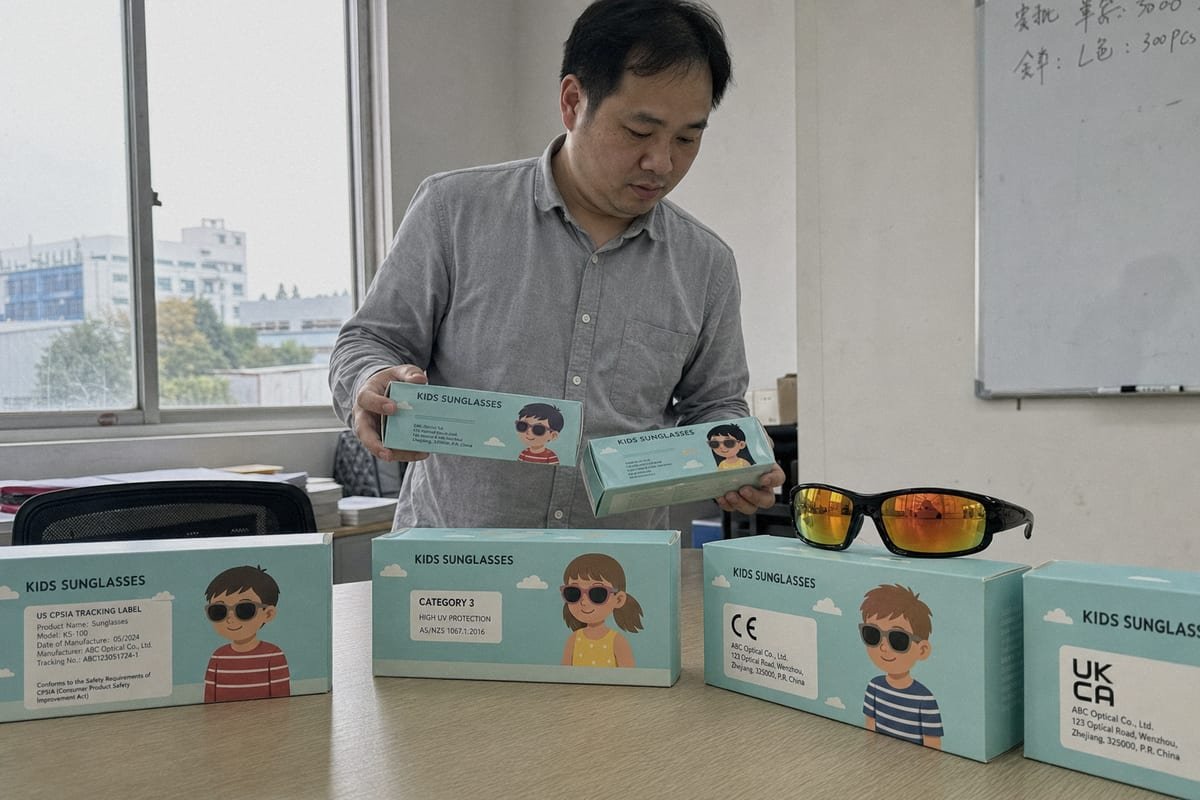
さらに詳しく説明する前に、簡単な比較を以下に示します。
| 市場 | 規制の枠組み | 主なパッケージラベル項目 |
|---|---|---|
| アメリカ合衆国 | FDAデバイス規則+ CPSIAコンプライアンス | 会社名と住所、意図された用途、追跡ラベル、真実のUV表示、衝撃耐性テスト(ドロップボール)の記録 |
| オーストラリア | 必須サングラス規格 | Supplier identity, lens category number, category description, usage information, warnings |
| EU | PPE framework, ISO 12312-1 4 standard | CE marking, manufacturer name and postal address, batch/serial number, end-user information in local language |
| イギリス | UKCA regime (mirrors EU rules) | UKCA marking, UK responsible person address, batch identification |
| 日本 | Voluntary + consumer protection rules | Importer identity, transmittance information, care instructions |
The US in Detail
The US framework has two layers. First, FDA device labeling covers identity, intended use, and honest claims, and lens performance sits alongside ANSI Z80.3 5 requirements as the industry benchmark. Second, CPSIA compliance requires tracking labels on children's products and their packaging — batch number, date of production, and production location — so any defective batch can be traced and recalled.
Australia in Detail
Australia is unusually explicit. The mandatory standard requires a clear, legible mark showing the manufacturer or supplier, the lens category number from 0 to 4, a description of that category, and usage guidance. Most kids' sunglasses we ship to Australian brands are lens category 3, which suits bright sunlight.
EU and UK in Detail
In Europe, sunglasses are treated as 個人用保護具 6. The packaging or product needs CEマーキング 7, the manufacturer's name and postal address, and a batch or serial number. Instructions and warnings must be understandable to end users — which usually means translation into local languages. The UKCA mark follows the same logic for Great Britain.
コンプライアンススペースを失うことなく、パッケージにどのようなブランディングの詳細を追加すべきですか?
Balancing brand personality against regulatory text is a trade-off we help clients weigh on nearly every packaging project. A crowded box looks cheap; a bare box wastes shelf appeal.
コンプライアンス表示用に1つのパネル(通常は背面または底面)を確保し、前面と側面にはロゴ、製品名、対象年齢、カラーストーリー、そして柔軟なTPEEフレームや偏光レンズなどの主要なセールスポイントを使用します。必須の表示は読みやすく、ステッカーで覆われないようにしてください。.
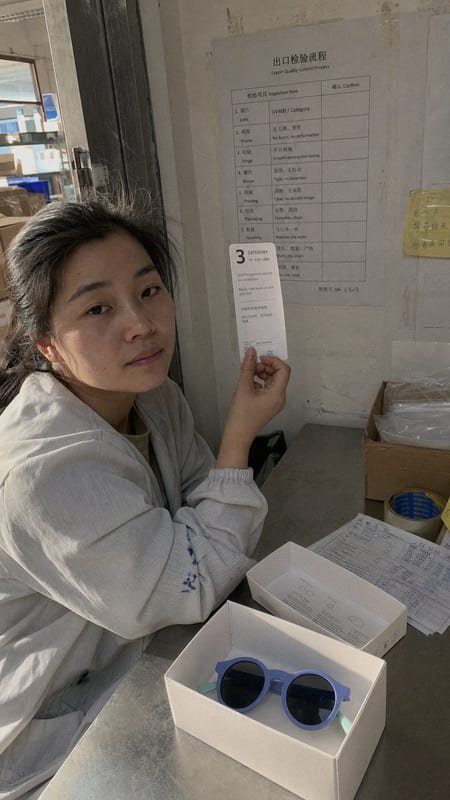
Good packaging tells two stories at once. One story speaks to the parent picking up the box: safety, comfort, style. The other speaks to the regulator or customs inspector: identity, origin, warnings. Our design team maps both stories onto the box before any artwork is finalized, so neither crowds out the other.
A Practical Panel Layout
This is the layout structure we recommend to brands launching from our catalog of roughly 800 existing styles:
- Front panel — logo, product name, hero image or window showing the frame, one headline benefit such as "UV400 protection" or "Flexible & unbreakable."
- Side panels — age range, color name, a short fit note, and any physical fit scale printed on the box for temple-to-temple sizing.
- Back panel — full compliance block: manufacturer/importer name and address, country of origin, lens category, warnings, and care instructions.
- Base or inner flap — CPSIA tracking label with batch code, production date, and factory location.
Selling Points That Also Support Compliance
Some marketing claims double as useful information. A UV400 protection rating is both a benefit and a regulated statement, so keep it accurate. If your frames use bio-based or recycled content, stating the percentage builds trust — but only print figures your material supplier can certify. The same logic applies to screw-less hinge icons or antimicrobial coating claims: they differentiate the product on shelf, yet each one must be verifiable. Our rule for clients is simple — every icon on the box needs a document behind it.
メーカーは国際基準を満たすラベルのデザインを支援してくれますか?
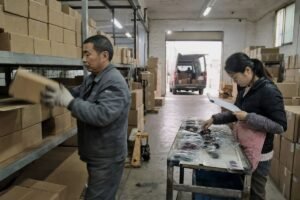
Fifteen years of shipping children's eyewear to buyers in more than twenty countries has taught our team one thing: label problems are far cheaper to fix before printing than at the port.
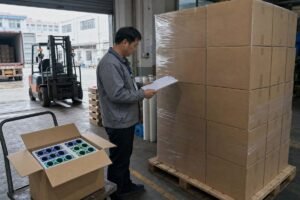
はい — 経験豊富なOEM/ODM工場は、ターゲット市場向けのコンプライアンスブロックを事前に入力し、あらゆる主張の根拠となるテストレポートを提供し、バッチごとにCPSIA追跡コードを印刷し、通関検査を通過する小売準備完了のパッケージを提供できます。あなたは責任あるブランドであり続けますが、工場が技術的な基盤を担います。.

A capable factory does more than print your artwork. It should understand the standards behind the label. When we develop a new kids' style — say, a flexible TR90 frame with TPEE temples — we align the lens specification with ISO 12312-1 for European buyers and ANSI-based expectations for American buyers before the packaging conversation even begins. That way, the claims on the box are already supported.
What to Ask Your Factory Before Printing
| 必須の質問リスト | 良い回答とは |
|---|---|
| Can you provide UV transmittance test data? | Yes, per lens batch, matching the UV400 claim on the box |
| Do you support CPSIA tracking labels? | Yes, with batch, date, and location printed per production run |
| Can you adapt one design for multiple markets? | Yes, with market-specific compliance panels or insert cards |
| Who verifies translated warnings? | The factory drafts; the brand's local reviewer confirms |
| Can artwork be checked before mass printing? | Yes, with a pre-production label review as a standard QC step |
Where the Responsibility Line Sits
Be clear on one point: the brand or importer named on the box carries legal responsibility in the destination market. Our job is to make that responsibility easy to carry. We prepare the compliance block, keep test documentation ready — including impact resistance test records — and flag anything in your artwork that looks risky. Several of our long-term clients now send label drafts with every new purchase order, and we treat that review as part of quality control, not an extra service. That habit has prevented more shipment delays than I can count.
結論
Incomplete labels stall shipments and damage brands. Get the compliance block right for each market, protect space for branding, and partner with a factory that reviews labels before printing.
脚注
1. Clarifies FDA’s regulatory classification for nonprescription sunglasses as OTC devices. ↩︎
2. CPSC guidance on mandatory tracking labels for children’s products under CPSIA. ↩︎
3. CPSC safety guidance on choking hazards relevant to detachable packaging parts for kids. ↩︎
4. Official ISO standard page defining sunglasses and lens category requirements referenced for EU buyers. ↩︎
5. Background on ANSI, the body behind the Z80.3 sunglasses performance standard. ↩︎
6. Background on the PPE classification the EU applies to sunglasses regulation. ↩︎
7. Explains the CE marking system required on EU sunglasses packaging. ↩︎
 English
  Español de México
  Deutsch
  Français
  日本語
日本語  العربية
  Português do Brasil