子供用サングラスのコーティング品質をテストする方法
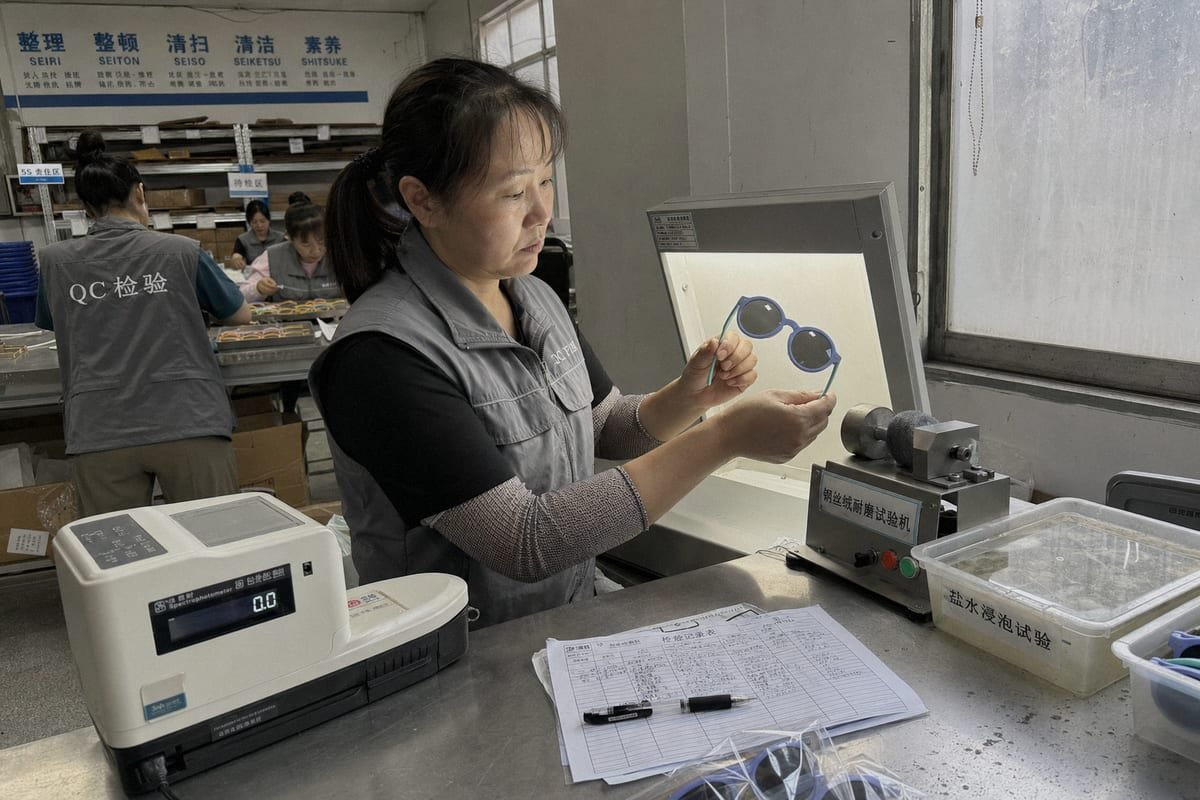
子供用サングラスのコーティング品質は、最も多くの注文がうまくいかなくなったところです ISO 12312-1 1. 出荷品は初日は完璧に見えても、実際の使用から1か月以内に剥がれ、曇り、そして汚れる可能性があります。台州の生産ラインでは、写真ではまばゆく見えるミラーコーティングも、ビーチバッグの中で剥がれてしまえば何の意味もないことを早期に学びました。修正は原則として簡単です。見た目でコーティングを判断するのをやめ、一連の繰り返し可能なテストで判断を開始します。.
子供用サングラスのコーティング品質をテストするには、ライトボックスでの目視検査、クロスカット付着試験、スチールウールまたはバイヤー摩耗試験、塩水沸騰や高温乾燥などの環境老化、そしてUV400および可視光透過率の分光光度計チェックを組み合わせます。これら5つすべてに合格することで、耐久性があり安全なコーティングが確認されます。.
その答えは技術的に聞こえるかもしれませんが、各チェックは理解しやすいです。以下では、バルク商品を承認する前に何を検査すべきか、どのラボテストが重要か、工場のプロセスをどのように監査するか、そしてアクティブな子供に適した耐久性テストはどれかについて説明します。.
大量注文を承認する前に、どのようなコーティングの欠陥を確認すべきですか?
ヨーロッパの子供向けブランドの 出荷前検査 中に、昨年の春、私たちのQCチームはパステルカラーの丸いフレームをラインから外し、45度の角度でのみ見えるかすかなミラーコーティングの曇りを見つけました。その1回の発見が、注文全体を救いました。.
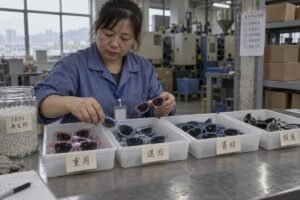
一括注文を承認する前に、ライトボックスの下で複数の角度からレンズを検査し、傷、ピンホール、端の剥がれ、コーティングの曇り、オレンジピールのような質感、射出成形痕、ミラーグラデーションのむら、レンズ間の色の不一致がないか確認してください。層間剥離、かすみ、またはコーティングの境界線が見えるユニットは拒否し、両方のレンズ表面を確認してください。.
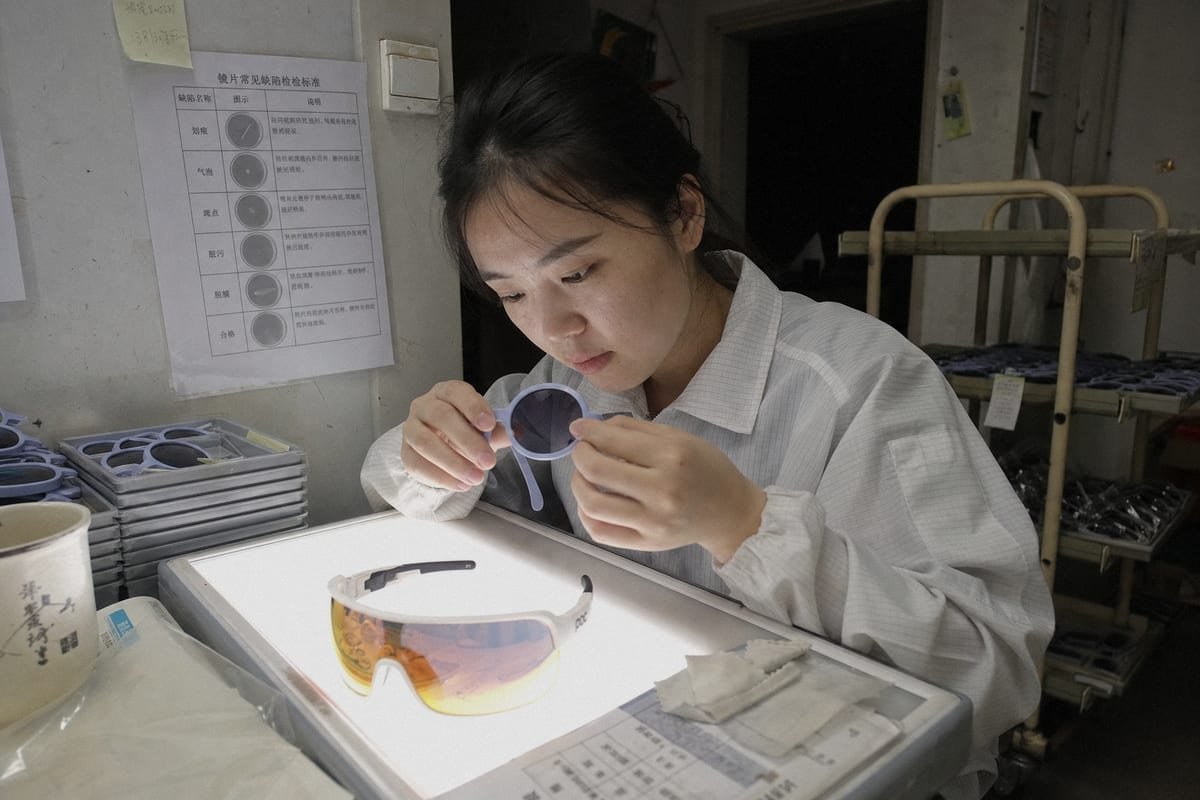
目視検査は、品質チェーン全体で最も速く最も安価なゲートです。しかし、それはあなたが何を見ているかを知っている場合にのみ機能します。私たちの5S管理ワークショップでは、検査官は各レンズを強力な照明の下で回転させ、暗い背景と明るい背景に対してチェックします。異なる欠陥は異なる条件下で現れます。曇りは暗い背景に対して現れます。ピンホールは明るい背景に対して現れます。.
私たちが使用する欠陥チェックリスト
ここに、バイヤーが彼らの 検査指示:
| に書き込むことをお勧めする実用的なチェックリストがあります。 | どのようなものか | 子供にとってなぜ重要か |
|---|---|---|
| 欠陥 | 剥がれまたはフレーク | レンズ端のコーティングの剥がれ |
| 取り扱いによって急速に悪化し、視覚的なアーティファクトを作成します | ピンホール | ミラーコーティングの小さな明るい点 |
| 真空蒸着制御の悪さの兆候 | 曇りまたはかすみ | 角度での乳白色のパッチ |
| 鮮明さを低下させ、若い目には気を散らします | オレンジピール | でこぼこした、不均一な表面テクスチャ |
| ハードコート硬化の悪さを示します | 色の不一致 | 左右のレンズの色合いが異なる |
| 染色またはコーティングバッチ混合の不均一さ | コーティング境界線 | コーティングが停止する目に見えるエッジ |
コーティング中のずさんなマスキング
なぜ1つの角度では十分ではないのか.
スポーツスタイル用に製造しているオレンジからティールへのグラデーションシールドレンズのようなミラーグラデーションレンズは、正面から見ると曇りを隠すことができます。そのため、常に最低3つの角度で検査します。裏側もチェックします。欠陥のある裏側の反射防止コーティングは、子供たちは大人よりも気づきやすいです。なぜなら、彼らはフレームの着用方法をほとんど調整しないからです。.
UV400と傷防止コーティング性能を確認できるラボテストとは?
目視検査では付着強度や耐摩耗性を測定できないため、完璧に見えるコーティングでも、適切なラボテストなしでは数週間で剥がれたり傷がついたりする可能性があります。.
分光光度計は、UVAおよびUVBの400nmまでの透過率ゼロを確認することでUV400保護を保証し、一方、スチールウールによる擦過やベイヤー摩耗試験は、傷防止コーティングの耐久性を定量化します。その後、クロスカット付着試験により、コーティングがレンズ基材にしっかりと接着していることを証明します。.
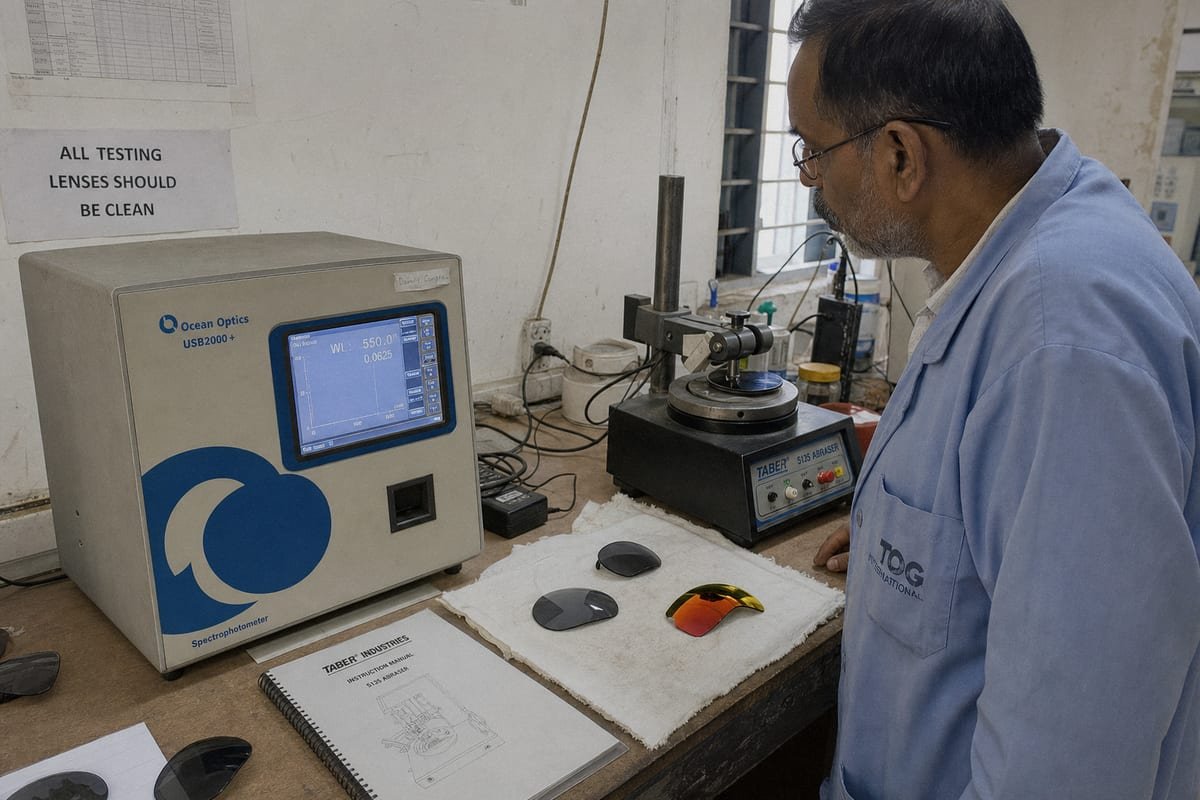
開発で常に考慮しているトレードオフの1つは、より硬い傷防止コートは耐摩耗性に優れていますが、過度に硬化させると脆くなり、曲げによってひび割れることです。直感ではなく、ラボデータがスイートスポットがどこにあるかを示します。.
それらを理解しているバイヤーはより良く交渉し、より賢く監査するため、それらを平易な言葉で説明します。
A 生産前に宛先の基準を書面で指定し、その正確な基準に対する認定ラボからの第三者試験レポートを要求し、分光光度計データで紫外線透過率を確認し、サプライヤーがバッチごとにテストするか、スタイルごとに一度だけテストするかを監査します。口頭の「UV400」の主張に頼らないでください。 2 UV400および光学性能の分光光度計テスト UV400保護 3 レンズを通過する光を測定し、各波長で何が通過するかを測定します。.
基準では、読み取り値は400nm未満の透過率が実質的にゼロであることを示す必要があります。同じ機器が可視光透過率を測定し、レンズカテゴリを決定し、サングラスが運転年齢のティーンエイジャーまたは明るい太陽の下での幼児の使用に安全かどうかを判断します。また、反射率も測定し、反射防止コーティングが実際にグレアを低減しているのか、それとも主張しているだけなのかを示します。
耐摩耗性および耐傷性試験.
| テスト | テスト | 一般的な用途 |
|---|---|---|
| 分光光度計 | 測定するもの | UV400および光学検査 |
| スチールウール摩擦 | 表面傷耐性 | クイックコーティング硬度スクリーニング |
| ベイヤー摩耗 | 基準レンズに対するヘイズ増加 | 定量化された耐傷性耐久性 |
| クロスハッチテープ引き | コーティングと基材の密着性 | 剥離リスク |
| 色彩測定 | レンズを通した色の歪み | 信号機および色の忠実度チェック |
接着:バイヤーが忘れがちなテスト
クロスハッチ接着テストは簡単です。ブレードでコーティングにグリッド状の微細な切り込みを入れます。粘着テープを貼り付けて剥がします。テープと一緒にコーティングの正方形が剥がれる場合、接着が弱いことを意味します。私たちの経験では、この単一のテストは、他のどのテストよりもフィールドでの剥がれに関する苦情を予測します。これは、正常な表面摩耗と、プロセス障害である剥離を区別します。偏光レンズオプションの場合、一部のコーティングプロセスは下の偏光フィルムを劣化させる可能性があるため、コーティング後の偏光効率も検証します。.
工場のコーティングプロセスが国際的な安全基準を満たしているかどうかをどのように知ることができますか?
オーストラリアの調達マネージャーから、私が気に入った質問がありました。「証明書を見せるのではなく、それがどこから来たのかを見せてください。」私たちは彼女にコーティングとQCの流れをステップバイステップで説明し、その透明性がパートナーシップを締めくくりました。.
工場は、コーティングされたレンズがISO 12312-1およびANSI Z80.3の第三者試験に合格し、紫外線透過率制限、落下球体耐衝撃性試験、光学明瞭度要件が含まれ、工場が工程管理、ロットトレーサビリティ、および最近有効な試験報告書の文書化された証拠を提示できる場合に、国際基準を満たします。.
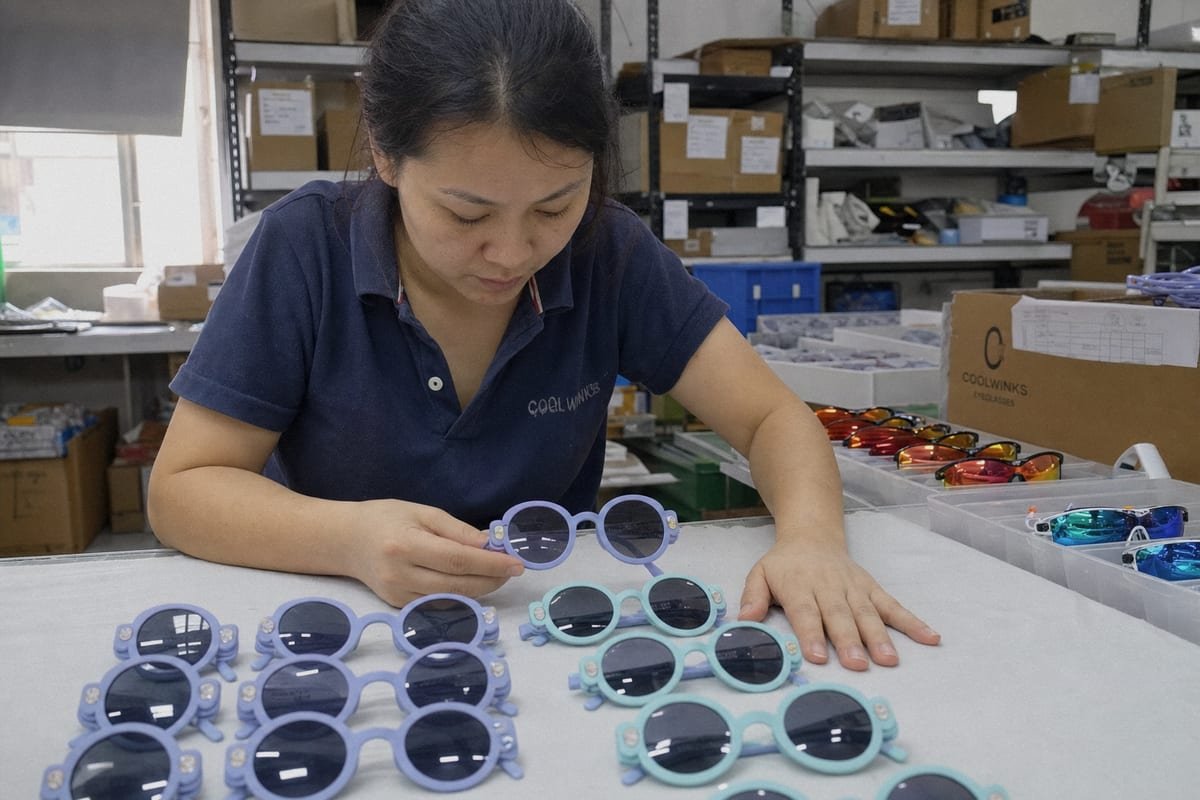
標準への準拠はステッカーではありません。監査できるプロセスです。深刻な顧客が私たちの工場を訪れる際にチェックする内容に基づいて、バイヤーがそれを検証する方法を以下に示します。.
最も重要な2つの基準
ISO 12312-1 4 準拠は、ヨーロッパおよびアジア太平洋地域の大部分で販売されているサングラスを規制しています。UV透過率、可視光透過カテゴリ、屈折力、および耐久性をカバーしています。ANSI Z80.3は米国の同等品であり、 ドロップボールテスト 5, が含まれており、レンズに鋼球を落下させて破損しないことを確認します。子供用製品の場合、耐衝撃性試験は必須です。. ポリカーボネートレンズ 6 ここでの品質が重要です。PCはアクリルよりも衝撃をはるかに良く吸収します。これが、アクティブな子供向けのスタイルに指定する理由の1つです。.
実用的な監査チェックリスト
- 注文しているレンズとコーティングの仕様と一致する、認識された第三者ラボから発行された過去12か月以内のテストレポートを要求してください。.
- コーティングプロセスフローチャートを要求してください。有能な工場は、躊躇なくクリーニング、ハードコートディッピングまたはスプレー、硬化、真空蒸着のステップを説明できます。.
- プロセス内QC記録を確認してください。コーティングの厚さ、硬化温度、接着チェックは、シーズンごとではなく、バッチごとに記録する必要があります。.
- バッチトレーサビリティを確認してください。コーティングの欠陥が発生した場合、工場はそれを製造日とコーティング実行にまで遡る必要があります。.
- 子供は常にサングラスを口に入れたり触ったりするため、フレームとコーティング材料の化学的安全性に関する文書を確認してください。.
また、 塩水噴霧腐食試験 7 金属ヒンジ部品のサイクルを実行します。なぜなら、子供のこめかみの近くで錆びたヒンジネジは、発生するまで誰も考えない安全上の問題だからです。工場がこのレベルの詳細を自発的に提供する場合、それは通常、書類上の劇場ではなく、真の品質文化を示しています。.
アクティブで日常的な子供の使用のために、どのようなコーティング耐久性テストを依頼すべきですか?
長年の保証フィードバックは私たちに厳しい教訓を与えました。大人の耐久性仕様では子供には不十分です。子供用サングラスは、砂まみれのバックパック、暑い車、塩素入りのプール、小さくて汗ばんだ手に囲まれて使用されます。当社のTPEEおよびTR90フレームは、これらの乱用に耐えるように曲がり、レンズコーティングもそれに追いつく必要があります。.
環境エージングテストのリクエスト:塩水煮沸、乾燥熱暴露、温度・湿度サイクル、キセノンアーク加速UVエージング、それぞれに付随する接着および目視再検査。実際の活発な子供の使用をシミュレートするために、汗と唾液への耐性、ワイプサイクル疎水性テスト、および屈曲後の接着チェックを追加します。.

コアの考え方は、ストレスをかけてから検証することです。どんなコーティングも、新鮮な状態ではテープテストに合格します。問題は、シミュレートされた数か月の乱用の後でも合格するかどうかです。そのため、すべての環境テストの後には、クロスハッチ接着テストの繰り返しと、コーティングがレンズとは異なる速度で膨張および収縮するときに現れる細かい微細亀裂であるクレイジングの視覚的チェックを行う必要があります。.
テストと実際の子供のシナリオを一致させる
| 実際のシナリオ | 要求するラボテスト | 失敗の兆候 |
|---|---|---|
| 暑い車の中に放置されたサングラス | 乾燥熱試験、その後接着再確認 | クレイジング、気泡、エッジリフト |
| ビーチやプールでの日々 | 塩水沸騰試験 | コーティングの曇り、剥離 |
| 長年の太陽への露出 | キセノンアーク加速老化 | UVカットオフドリフト、色あせ |
| 汗をかいた顔、フレームを口に入れる | 合成汗と唾液テスト | 変色、化学的浸出 |
| 毎日のシャツの裾の掃除 | ワイプサイクルと接触角テスト | 防汚性低下 |
| フレームの曲がりと落下 | フレックスサイクリング、その後接着テスト | レンズ端付近のコーティングのひび割れ |
バイヤーが最もスキップするテスト
Two tests deserve special mention. First, hydrophobic contact-angle measurement before and after several thousand wipe cycles. Smudges are the top daily complaint from parents, and an easy-clean layer that dies after two weeks of cleaning is worse than none, because it was a selling point on the packaging. Second, post-flex adhesion checks. Flexible frames are wonderful for safety, but they transfer stress into the lens rim. On our line, we bend-cycle assembled frames and then re-test coating adhesion at the lens edge, since that is where cracks start. When you write your test plan, sequence matters: age first, stress second, verify third. A durability report that skips the re-verification step tells you almost nothing.
結論
コーティングの品質はテストのバンドルであり、見た目ではありません。視覚的に検査し、接着と耐摩耗性を検証し、, 機器でUV400を確認し、承認前に老化させます。その厳格さを要求すれば、お子様のサングラスは親の信頼を得るでしょう。, 公式ISO規格ページは、参照されている正確なサングラス安全要件を検証します。.
脚注
NISTは、UVテストに使用される光学測定機器に関する権威ある背景情報を提供します。. ↩︎


 English
  Español de México
  Deutsch
  Français
  日本語
日本語  العربية
  Português do Brasil