子供用サングラス契約における品質基準、検査、および責任の含め方
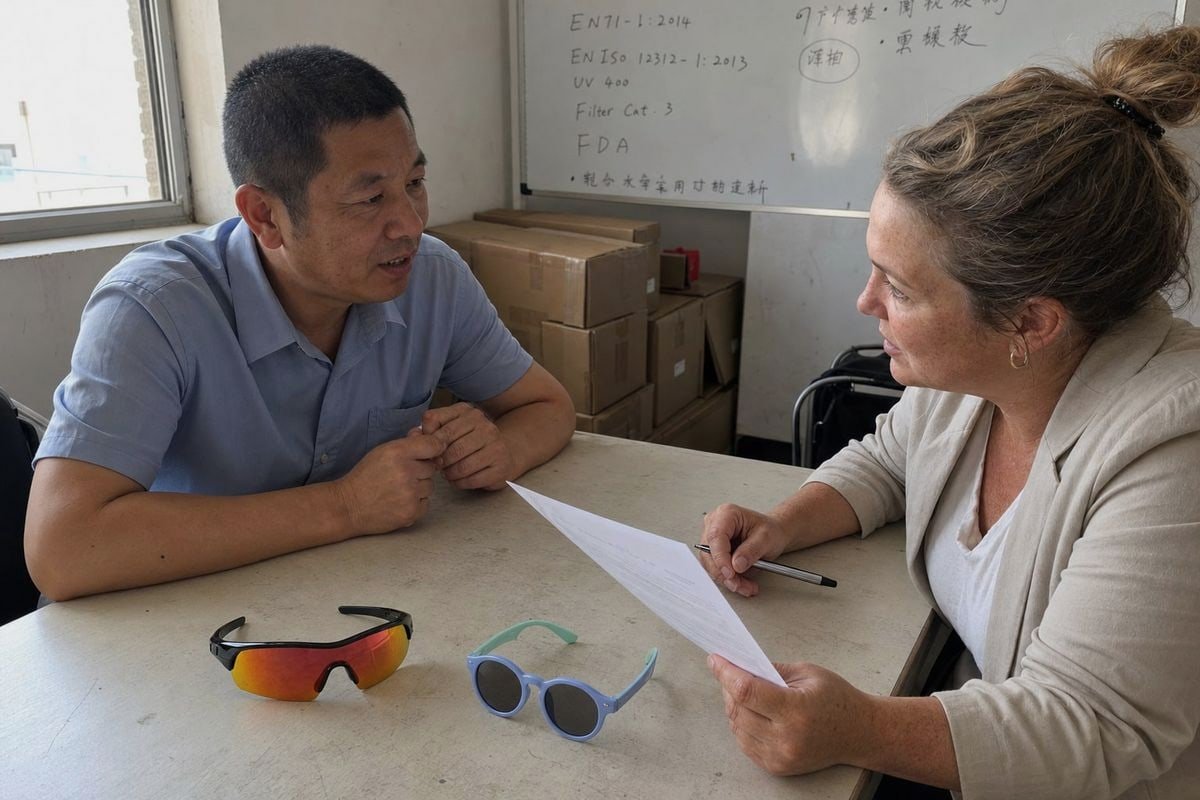
子供用サングラス契約における品質基準、検査、および責任は、しばしば曖昧な1行に押し込められがちです。台州にある私たちの工場では、その曖昧さが買い手にどのようなコストをもたらすかを見てきました。.
子供用サングラス契約に品質基準、検査、および責任を含めるには、正確な安全基準(ISO 12312-1、ANSI Z80.3、AS/NZS 1067.1)を明記し、第三者検査によるAQLベースの検査チェックポイントを定義し、サプライヤー保証、補償、リコール義務、および製造物責任保険条項を追加します。.
以下で、これらの各要素を分解します。何を書くべきか、なぜそれが重要なのか、そして買い手が最もよく見落とす箇所を示します。.
子供用サングラス製造契約書に記載すべき品質基準は何ですか?
オーストラリアのバイヤーがかつて私たちに送ってきた契約書には、「サングラスは高品質でUVをブロックしなければならない」とだけ書かれていました。私たちのチームは、署名する前に書き直すように彼女に依頼しました。その理由は次のとおりです。.
お客様の契約には、100% UVA/UVB(UV400)保護、実験室で検証された透過率制限、市場固有の基準(EUの場合はISO 12312-1、米国の場合はANSI Z80.3、オーストラリアの場合はAS/NZS 1067.1)、飛散防止レンズ素材、子供向け製品の化学物質制限、および各要件の数値許容誤差を指定する必要があります。.
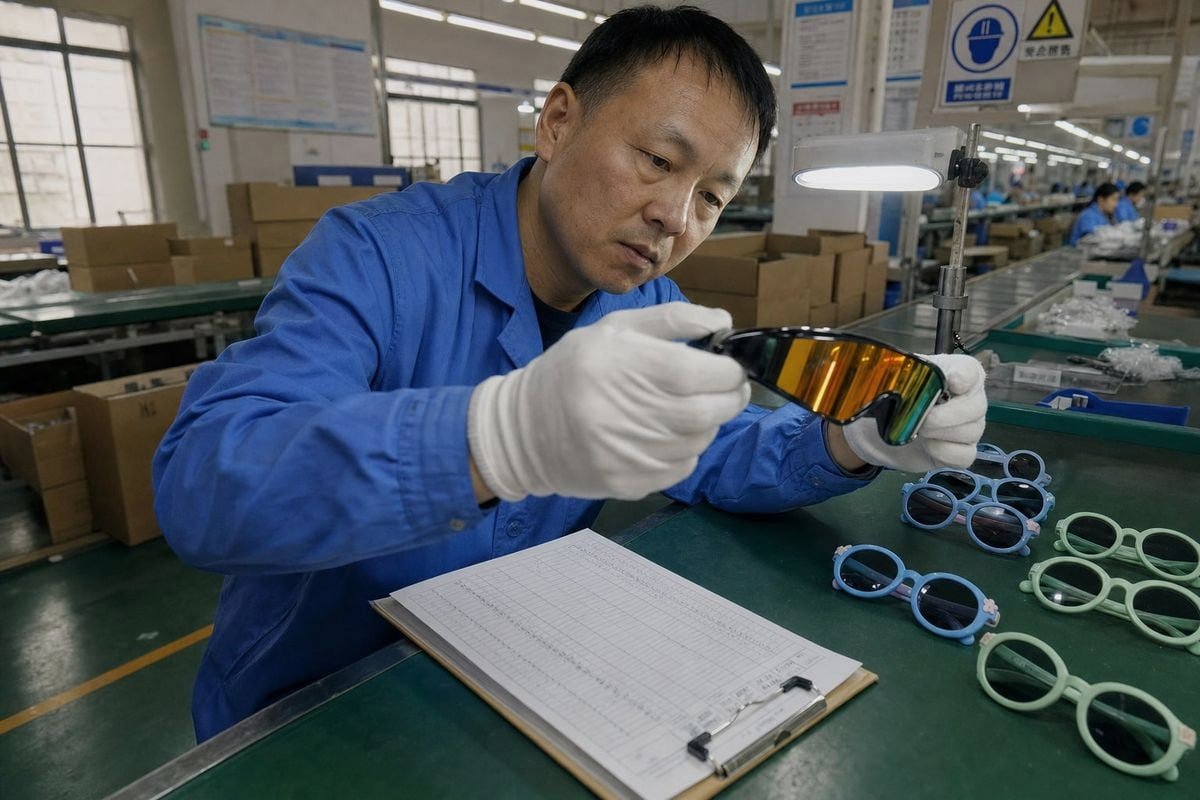
「高品質」のような曖昧な言葉は執行不能です。もし出荷されたレンズがUVを90%しかブロックしない場合、そしてあなたの契約が「UV保護」を定義していなかった場合、明確な違反はありません。だからこそ、私たちはバイヤーに、すべての安全要求を測定可能な仕様に翻訳するように求めています。.
安全性クリティカルな仕様から始める
子供用サングラスは、子供の目を保護するという中核的な製品約束を担っています。したがって、契約はその約束を数値で定義しなければなりません。ラップアラウンドスポーツシールドやパステル調の丸型フレームなど、スタイルは異なりますが、安全性仕様は同じです。.
少なくとも、これらの5つの領域を指定してください:
- UV性能。. 「100% UVA/UVB保護」または「"UV400 1,」と記載し、基準の制限を下回る透過率を示すテストレポートを要求してください。レンズの色合いはUVブロック能力を示さないことを覚えておいてください。UVコーティングのない濃いグレーのレンズは、瞳孔がその後ろで拡大するため、サングラスがないよりも悪いのです。.
- レンズ素材と耐衝撃性。. 要求する ポリカーボネート 2 または同等の飛散防止素材。子供用には絶対にガラスレンズを許可しないでください。私たちのスポーツシールドスタイルは、子供たちは転んだり、物を投げたり、サングラスの上に座ったりするため、ワンピースのポリカーボネートレンズを使用しています。.
- フレーム素材と柔軟性。. 素材名を明記してください。私たちは主にTPEEとTR90を使用しています。これらは鋭利なエッジに折れるのではなく、曲がるからです。契約書には素材を記載し、承認されたサンプルと一致することを要求する必要があります。.
- 化学物質への適合性。. 子供向け製品の場合、鉛、, フタル酸エステル 3, 、および重金属の制限をリストアップしてください。米国のバイヤーはCPSIAの義務を参照し、EUのバイヤーはREACHの制限を参照する必要があります。.
- 色合いのカテゴリと光学的な鮮明さ。. フィルターカテゴリを指定し、均一な色合いで光学的な歪みがないことを要求してください。.
市場に合わせた基準のマッピング
| 市場 | コアスタンダード | 追加の子供向け要件 |
|---|---|---|
| 欧州連合 | EN ISO 12312-1、, CEマーク 4ング | REACH化学物質制限、玩具に隣接する安全チェック |
| アメリカ合衆国 | ANSI Z80.3 | CPSIA鉛/フタル酸エステル制限、追跡ラベル、テストドキュメント |
| オーストラリア / ニュージーランド | AS/NZS 1067.1:2016 | 必須基準への準拠。サングラスは規制製品です。 |
| 日本 | ISO 12312-1に準拠することが多い | バイヤー固有の化学物質およびラベリング要件 |
私が常に指摘するニュアンスは、CEマークだけでは仕様にならないということです。契約書には、その根拠となる基準を明記してください。マークは主張であり、基準は証拠です。.
アイウェアメーカーとの検査チェックポイントの設定方法
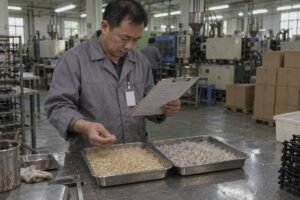
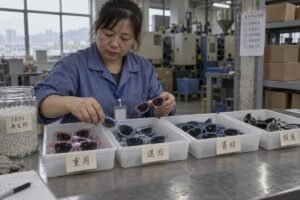
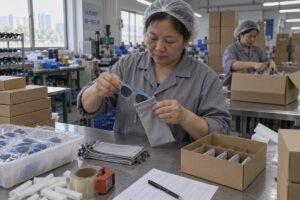
私たちの5S管理ワークショップでのすべての生産ロットは、事前にバイヤーと合意したチェックポイントを通過します。これらのチェックポイントが契約書に記載されている場合、紛争はほとんど発生しません。記載されていない場合、すべてが議論になります。.
契約上のチェックポイントを4つ設定します:製造前サンプル承認、組み立て中のインライン検査、ANSI/ASQ Z1.4に基づくAQLサンプリングを使用した最終ランダム検査、およびUV、衝撃、化学的安全性に関する独立したラボテスト。合格レポートを出荷リリースと支払いの条件とします。.
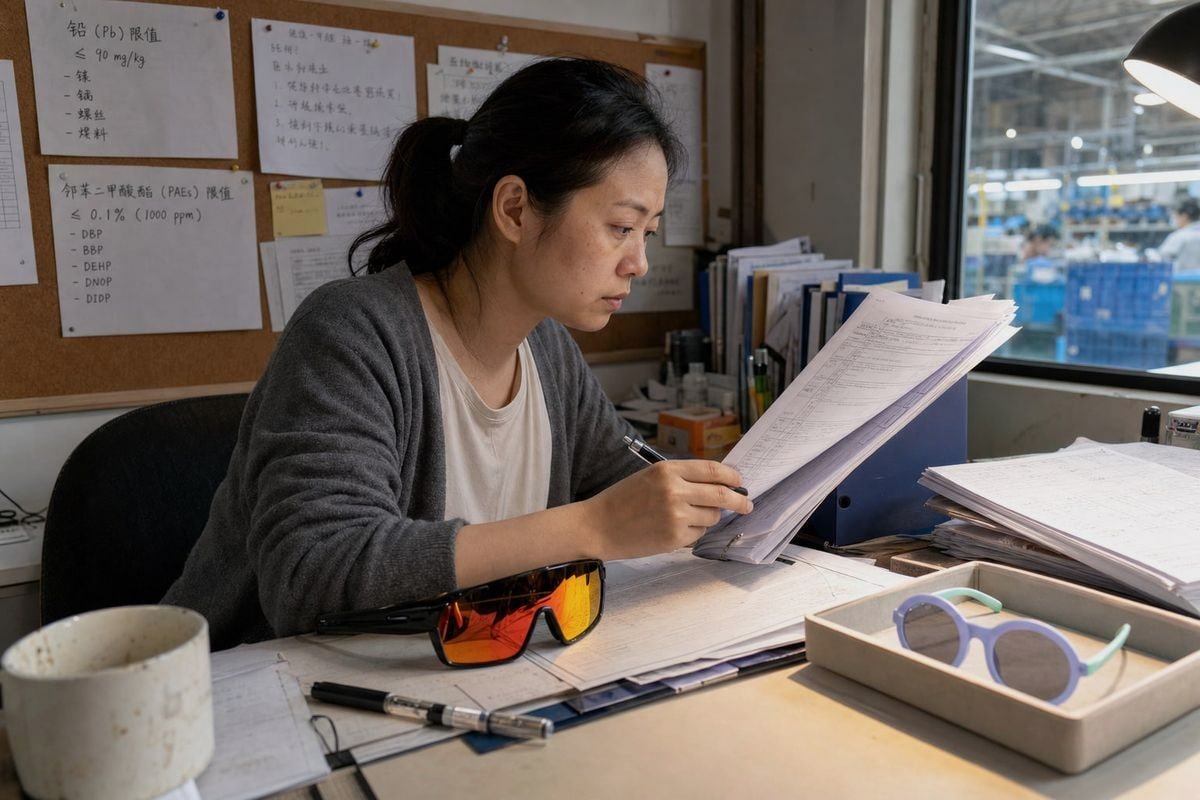
基本的な考え方はシンプルです。検査は一度きりのイベントであってはなりません。それは、それぞれに書き込まれた合格/不合格ルールを持つ一連のゲートであるべきです。経験豊富なバイヤーとどのようにこれを構造化するかを説明します。.
The Four-Gate Inspection Framework
| チェックポイント | タイミング | チェックされる内容 | 契約上のトリガー |
|---|---|---|---|
| 生産前サンプル | 大量生産前 | 素材、色、フィット感、レンズ仕様、パッケージのモックアップ | バイヤーの書面による承認で生産開始 |
| インライン検査 | 20–50% of production complete | Assembly quality, hinge screws, lens seating, coating consistency | Corrective action before continuing |
| Final random inspection | 100% produced, 80%+ packed | AQL sampling of cosmetic, functional, and labeling defects | Pass report required for shipment release |
| Third-party lab testing | Before or during production | UV transmission, impact resistance, lead, phthalates | Certificates delivered before payment |
Write AQL Levels Into the Contract
Do not just write "final inspection required." Define the sampling plan and defect tolerance. A common structure for children's eyewear looks like this:
- Critical defects (safety): AQL 0. Zero tolerance. Examples: sharp edges, cracked lenses, missing UV coating, loose small parts on a strap or hinge.
- Major defects: AQL 1.5 or 2.5. Examples: scratched lenses, misaligned temples, wrong tint gradient on a mirrored shield lens.
- Minor defects: AQL 4.0. Examples: slight packaging blemishes, faint mold marks on a temple tip.
Then name your approved inspection agencies — SGS 5, Bureau Veritas, Intertek, or your own QC team — and state who pays for the first inspection and who pays for re-inspection after a failure. In our experience, making the supplier pay for re-inspection after a failed check keeps everyone honest, including us.
Add Traceability
Require batch and lot certification for lenses. If a UV coating issue ever surfaces, lot traceability lets you recall one batch instead of an entire season's inventory. We laser-mark or label lots for buyers who ask, and I would encourage every children's brand to ask.
出荷後に安全上の欠陥が見つかった場合、誰が責任を負うべきか?
Years of exporting kids' eyewear to 20-plus countries have taught me one uncomfortable truth: liability questions only get answered fairly when they are answered before anything goes wrong.
製造業者は、製造、材料、または契約基準への不適合に起因する欠陥に対して、交換、返金、リコール費用、および傷害請求に対する補償を含む責任を負うものとします。通常、購入者は、購入者が指定した設計上の選択、ラベリングの指示、および市場での主張に対して責任を負います。.
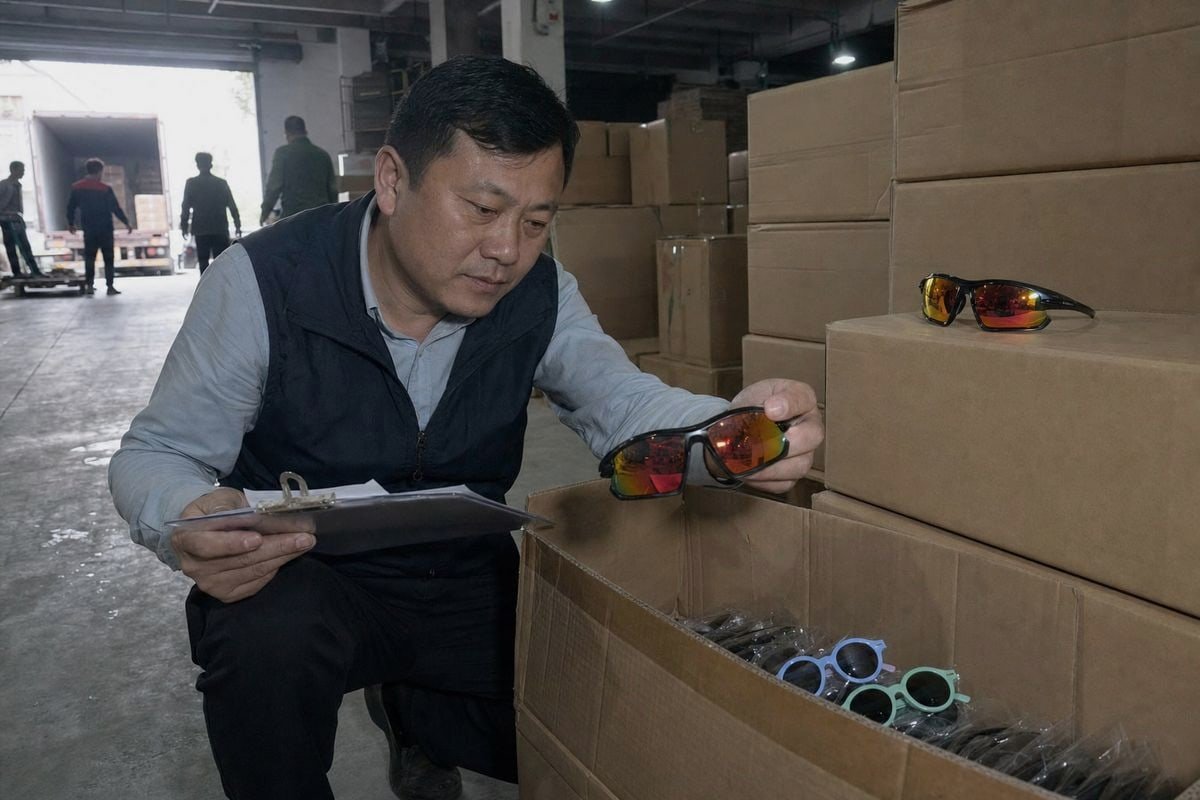
Passing inspection does not erase supplier responsibility. Your contract should say this explicitly. An inspection is a snapshot of a sample; a latent defect — say, a UV coating that degrades within months — can slip through. The warranty must survive acceptance.
Draw the Liability Line by Root Cause
The fairest way to allocate liability is by asking: who controlled the decision that caused the failure?
| Failure Scenario | 根本原因 | Who Bears Liability |
|---|---|---|
| Lenses fail UV400 testing at retail | Wrong coating or material substitution | 製造業者 |
| Lens shatters, child injured | Non-conforming lens material | 製造業者 |
| Phthalates exceed limits in rubber temple tips | Uncontrolled raw material sourcing | 製造業者 |
| Product recalled over a strap the buyer designed and specified | Buyer's design decision | Buyer, unless factory flagged the risk |
| Packaging claims "polarized" but buyer ordered non-polarized lenses | Buyer's artwork instruction | バイヤー |
| Goods conform to spec but the spec itself violates local law | Buyer's spec, unless supplier warranted compliance | Depends on the compliance warranty |
That last row is why compliance warranties matter. If the supplier warrants that products "comply with AS/NZS 1067.1," the supplier owns that outcome even if the buyer's spec was silent. As a factory, we accept that warranty for standards we know and test against — and honest suppliers should.
Build a Graduated Remedy Ladder
Do not treat a scratched lens and a shattered lens the same way. Structure remedies by severity:
- Cosmetic defects above AQL: rework or discount, capped liability.
- Functional defects: replacement or refund of affected units, plus re-shipping costs.
- Safety-critical defects: full refund, recall cost coverage, and indemnification for third-party injury claims — carved out from any liability cap.
Graduated caps encourage strict QC on safety items while keeping minor disputes fast to resolve. Also require the supplier to carry product liability insurance 7 with a stated minimum coverage, and ask for the certificate before your first purchase order, not after your first claim.
契約条項は、コンプライアンスに準拠しない子供用アイウェアから私のブランドをどのように保護しますか?
When we onboard a new children's brand, I often review their draft agreement and find the same missing pieces. The gaps are predictable, so the fixes can be too.
サプライヤーのコンプライアンス保証、支払い前の書類提出、第三者検査権、ロットトレーサビリティ、リコール協力、補償、追加被保険者としてのブランド名記載、継続的な規制更新通知、検査合格に連動した支払いマイルストーンをカバーする条項でブランドを保護しましょう。.
Think of these clauses as layers of defense. Each one closes a specific gap between a marketing claim and a proven, documented fact.
The Nine Clauses I Would Never Skip
- Compliance warranty. The supplier warrants conformity with every named standard, absence of restricted substances, and consistency with approved samples — surviving inspection and acceptance.
- Documentation before payment. Test reports, declarations of conformity, and certificates must be delivered before final payment or shipment release. No documents, no funds.
- Inspection and audit rights. You may inspect the factory, appoint third-party agencies, and re-inspect after failures at the supplier's cost. Our workshop hosts buyer audits regularly; a factory that resists this clause is telling you something.
- Traceability. Batch and lot certification for lenses and frame materials, retained samples from each production run, and records kept for a defined number of years.
- Corrective action procedure. Automatic rework, replacement, or refund obligations when goods fail inspection — with defined timelines, so a failed shipment does not stall your launch season indefinitely.
- Recall cooperation. The supplier must support any recall, cover costs for defects it caused, and assist with regulatory notices in your market.
- Indemnification. The supplier indemnifies you against injury claims, regulatory penalties, and third-party claims arising from defects or non-compliance.
- Insurance. Product liability coverage with minimum limits, certificates on request, and you named as additional insured where possible.
- Continuous compliance. If ISO 12312-1, CPSIA rules, or AS/NZS requirements change, the supplier must notify you within a defined window and implement necessary changes.
Consumer Label vs. Contract Specification
A useful mental check: every claim on your retail packaging should map to a contract clause with evidence behind it. "UV400" on the hang tag should trace back to a transmission test report required by your agreement. "Flexible and kid-safe" should trace back to a named material spec and chemical test. If a claim has no contractual backing, either add the clause or remove the claim. Labels sell the product; contracts prove it.
結論
A kids' sunglasses contract must prove safety, not just claim it. Name the standards, gate production with inspections, and allocate liability clearly — before the first order ships.
脚注
1. CDC guidance on UV protection standards supports the UV400 requirement discussion. ↩︎
2. Explains the shatter-resistant plastic material required for safe children’s lenses. ↩︎
3. CDC factsheet on
 English
  Español de México
  Deutsch
  Français
  日本語
日本語  العربية
  Português do Brasil