How to Write a Clear Purchase Contract When Sourcing Kids Sunglasses?
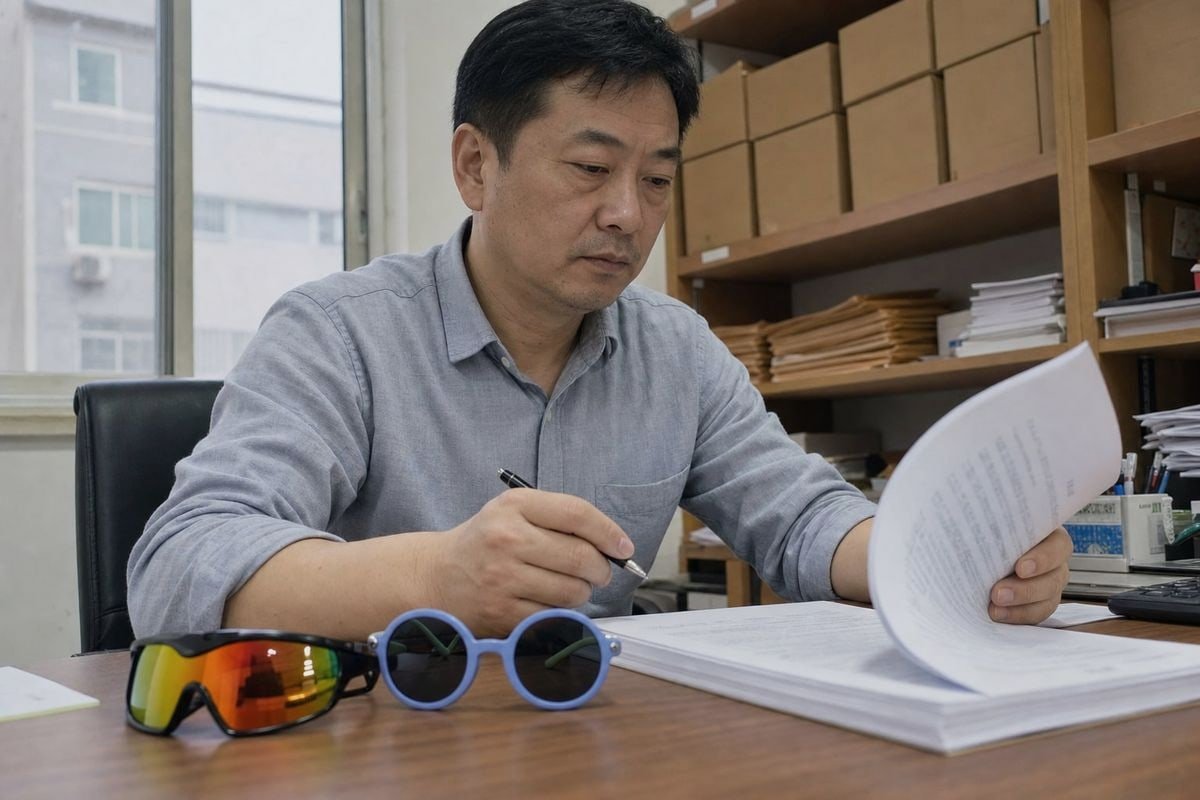
A clear purchase contract when sourcing kids sunglasses can save your brand from disaster EN 71 1. In our Taizhou factory, I have seen vague agreements turn small quality issues into six-figure disputes. One missing clause can sink a launch.
A clear purchase contract for kids sunglasses must precisely define the product specifications, materials, and safety standards; set measurable quality tolerances and inspection rights; state payment, delivery, and penalty terms in plain language; and assign ownership of molds, designs, and intellectual property before production begins.
Below, I break down each part of the contract. I will show you what to write, what to attach, and what to negotiate Incoterm 2. Let’s start with safety and compliance.
What Key Terms Should I Include to Protect Product Safety and Compliance?
A few years back, a buyer sent us a one-page purchase order with no compliance clause at all. We flagged it ourselves, because children's eyewear carries risks that generic contracts simply ignore.
Your contract should require the supplier to warrant compliance with all applicable children's product safety, labeling, and import rules in your destination market, provide third-party test reports before shipment, define recall cost-sharing, and cover small-parts safety for straps, charms, and decorative attachments.
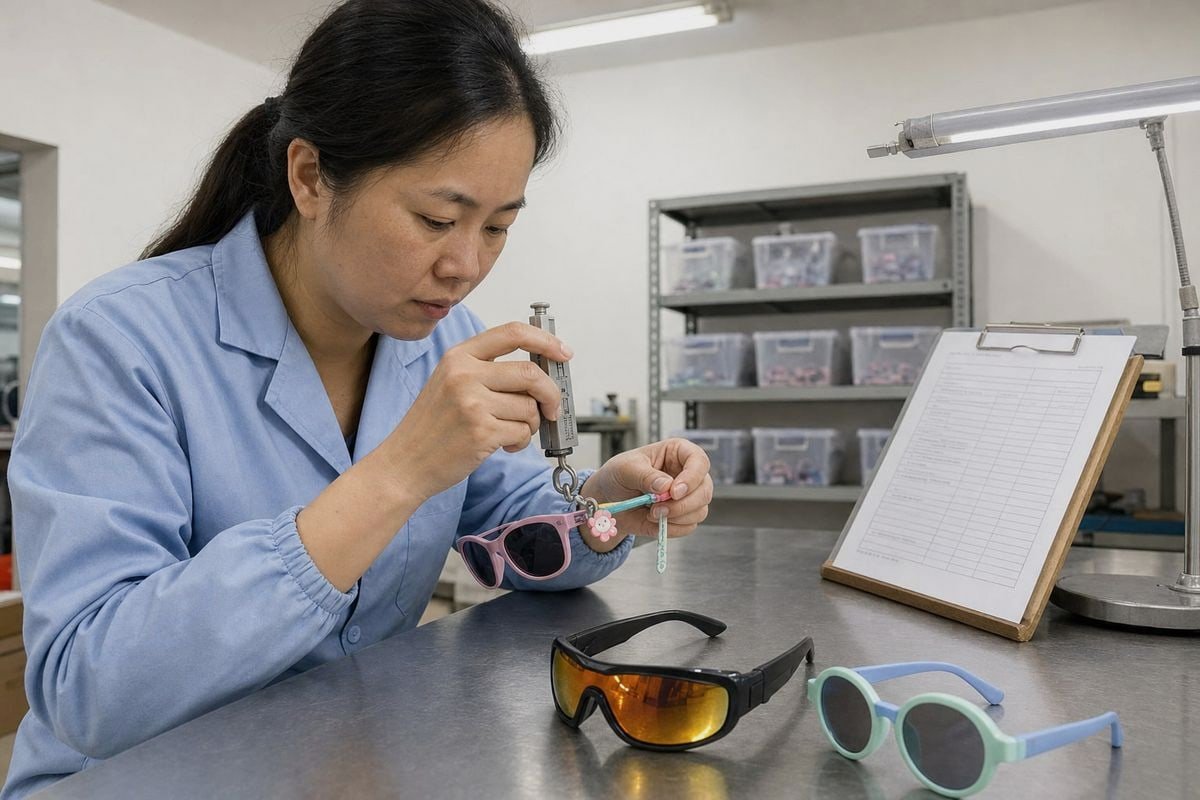
Kids sunglasses are not just eyewear. In most markets, they are treated as a children's product first. That changes everything about how you draft the contract. A generic sunglasses agreement will not protect you if a frame snaps and a small part becomes a choking hazard, or if the lens fails a UV protection claim.
Name the Standards, Name the Market
Do not write "the goods must be safe." That sentence is legally almost useless. Instead, name the destination market and require compliance with the standards that apply there. Depending on where you sell, that may include children's product safety frameworks such as CPSIA 3 in the US, EN 71 or sunglasses standards in Europe, or equivalent rules in Australia and Japan EN 71 4. Because requirements differ by country and sales channel, our advice to buyers is simple: state your market explicitly, then require the supplier to warrant compliance with "all applicable product safety, labeling, and import requirements for children's eyewear" in that market. We serve brands in over twenty countries, and this clause is the one that prevents the most confusion.
Require Documents Before Shipment, Not After
Your contract should make compliance documents a condition of payment or shipment. Useful items to require include:
- Third-party lab test reports for UV protection claims (for example, UV400 5) and lens impact behavior.
- Small-parts and choking-hazard testing for any straps, charms, cords, or decorative elements. These are the parts generic eyewear contracts overlook most often.
- Material safety documentation for frame and temple materials.
- A declaration of conformity or certification where your market requires one.
Add a Recall Liability Clause
If sunglasses are recalled after distribution due to a child safety hazard, who pays? Your contract should answer this before the first carton ships. Define cost-sharing for recall logistics, replacement goods, and destruction of defective stock. Pair this with an indemnification clause 6 that shifts liability to the supplier when the loss stems from noncompliance, defect, or misrepresentation. A serious factory will not run from this clause. When buyers raise it with us, we see it as a sign they know what they are doing.
How Can I Clearly Define Materials, Quality Standards, and Tolerances in My Contract?
The trade-off I weigh most often with new buyers is simplicity versus specificity. A short contract is easy to sign. But when a lens coating peels at month three, only the specific contract protects you.
Define materials by exact grade (such as TR90 frames and TPEE temples), attach a measurable specification sheet covering lens category, UV rating, dimensions, and color codes, set AQL inspection levels for defects, and include a golden sample clause making an approved physical sample the binding quality reference.

Think of this section of the contract as a specification document with legal teeth. If a term cannot be measured, it cannot be enforced. "Good quality flexible frames" means nothing in a dispute. "TR90 frame with TPEE temples, hinge withstands defined flex cycles, lens meets UV400" gives an inspector something to test.
Write Specs You Can Measure
Our engineers have found that most quality disputes trace back to specs that were never written down. Here is how vague language compares to contract-ready language:
| Vague Term | Contract-Ready Term |
|---|---|
| "Flexible, safe frame" | "Frame: TR90; temples: TPEE; no sharp edges after flex testing" |
| "Dark lenses" | "Lens category 3, UV400, gray polarized, per attached spec sheet" |
| "Kids size" | "Lens width 45mm ±0.5mm; temple length 125mm ±1mm; age range 3–8" |
| "Blue color" | "Frame color: Pantone reference stated in Appendix A" |
| "Good packaging" | "Each pair in printed box per approved artwork file dated and signed" |
Set AQL Levels and Defect Definitions
Your inspection clause should state the sampling standard and acceptable quality limits 7. A common structure for kids eyewear looks like this:
| Defect Class | Example | Typical AQL |
|---|---|---|
| Critical | Sharp edge, detachable small part, failed UV claim | 0 (none accepted) |
| Major | Broken hinge, lens scratch in vision zone, wrong color | 1.5 or 2.5 |
| Minor | Slight polish mark, minor box print flaw | 4.0 |
State who pays for inspection, when it happens, and how fast defects must be reported after arrival.
Lock in a Golden Sample Clause
Before mass production, both parties should sign and retain identical approved samples. The contract should state that mass production must match the golden sample, and that the sample governs any quality dispute the written spec does not resolve. In our fifteen years of eyewear production, this single clause has resolved more disagreements than any other.
What Payment, Delivery, and Penalty Clauses Should I Negotiate with My Manufacturer?
One buyer from Australia once told me she lost a whole summer season because a previous supplier shipped three weeks late with no penalty clause in place. The goods arrived after her retail window closed.
Negotiate a 30% deposit with balance paid after passed inspection, state the payment method and currency, fix delivery dates using a specific Incoterm such as FOB, and include late-delivery penalties, a rejection window for nonconforming goods, and clear refund or replacement remedies.
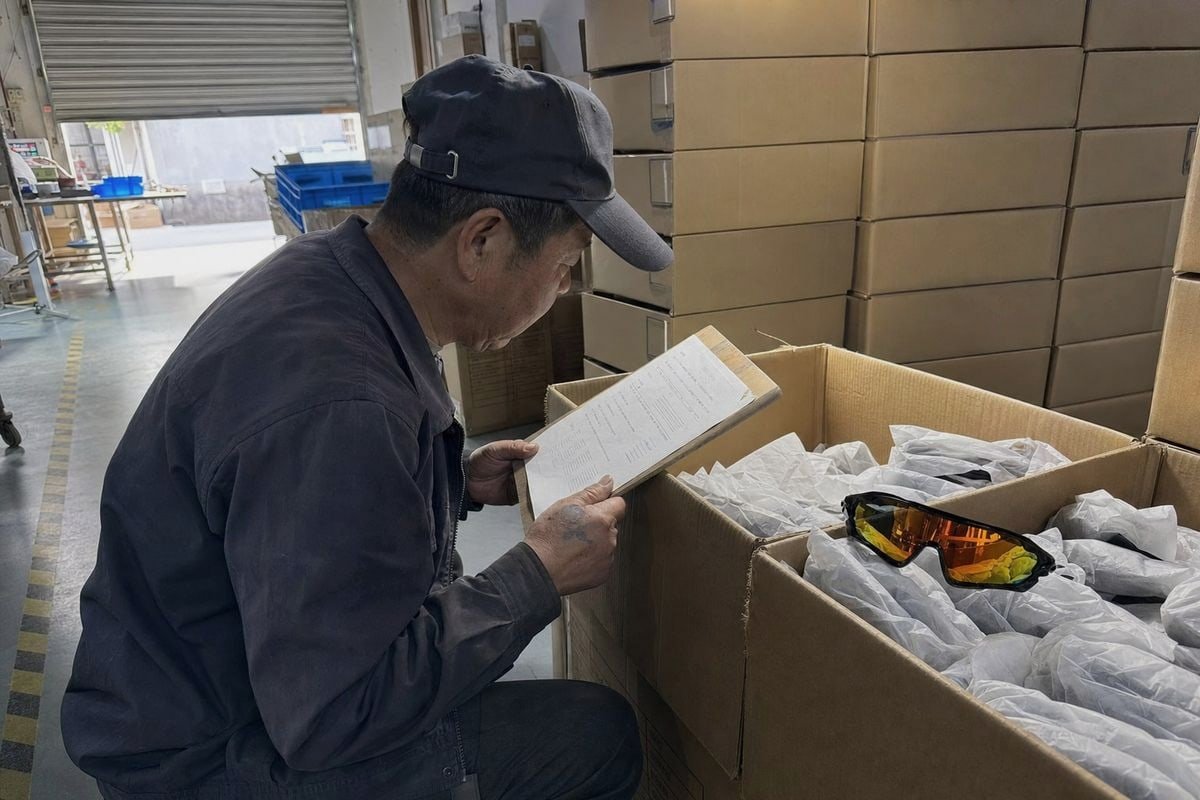
Money and timing are where plain language matters most. Both sides must read the same clause and reach the same number. Here is how I recommend structuring these terms.
Payment Structure That Protects Both Sides
A typical structure for OEM kids sunglasses orders looks like this:
| Term | Common Practice | What to Write in the Contract |
|---|---|---|
| Deposit | 30% by T/T at order confirmation | Exact percentage, currency, due date |
| Balance | 70% after passed pre-shipment inspection | Trigger event, not just a calendar date |
| Method | T/T for standard orders; L/C for large ones | Bank details and accepted methods |
| Late payment | Interest or hold on shipment | Specific consequence, stated plainly |
Tying the balance payment to a passed inspection, rather than a shipping date, is the single most protective move a buyer can make. It aligns the factory's incentive with your quality outcome. We accept this structure gladly, because our inspection pass rate is what we sell.
Delivery Terms and Incoterms
Always name an Incoterm 8. FOB is the most common for buyers with their own freight forwarders. CIF shifts freight arrangement to the seller. EXW puts everything on you. Then state the port, the latest shipment date, and packaging requirements including carton markings and retail-ready inner packaging.
Penalties and Remedies
Your remedies clause should answer three questions. What happens if goods arrive late? A common approach is a small percentage deduction per week of delay, capped at a maximum. What happens if goods fail inspection? Define your choice of rework, replacement, refund, or price reduction. What happens if problems repeat? Include a termination right for repeated defects, missed dates, or failed compliance documents. Also set a rejection window, such as a fixed number of days after arrival, to document and report nonconforming goods with photos and inspection records.
How Do I Handle Intellectual Property and Custom Design Rights in My Purchase Agreement?
When we develop a custom frame with a brand, the first question our project team asks is about mold ownership. It surprises buyers how often this issue is left out of contracts entirely.
State in writing that custom molds, artwork, logos, and packaging designs belong to the buyer once tooling costs are paid, prohibit the supplier from selling custom designs to third parties, define mold amortization terms if costs are spread across orders, and add confidentiality obligations.
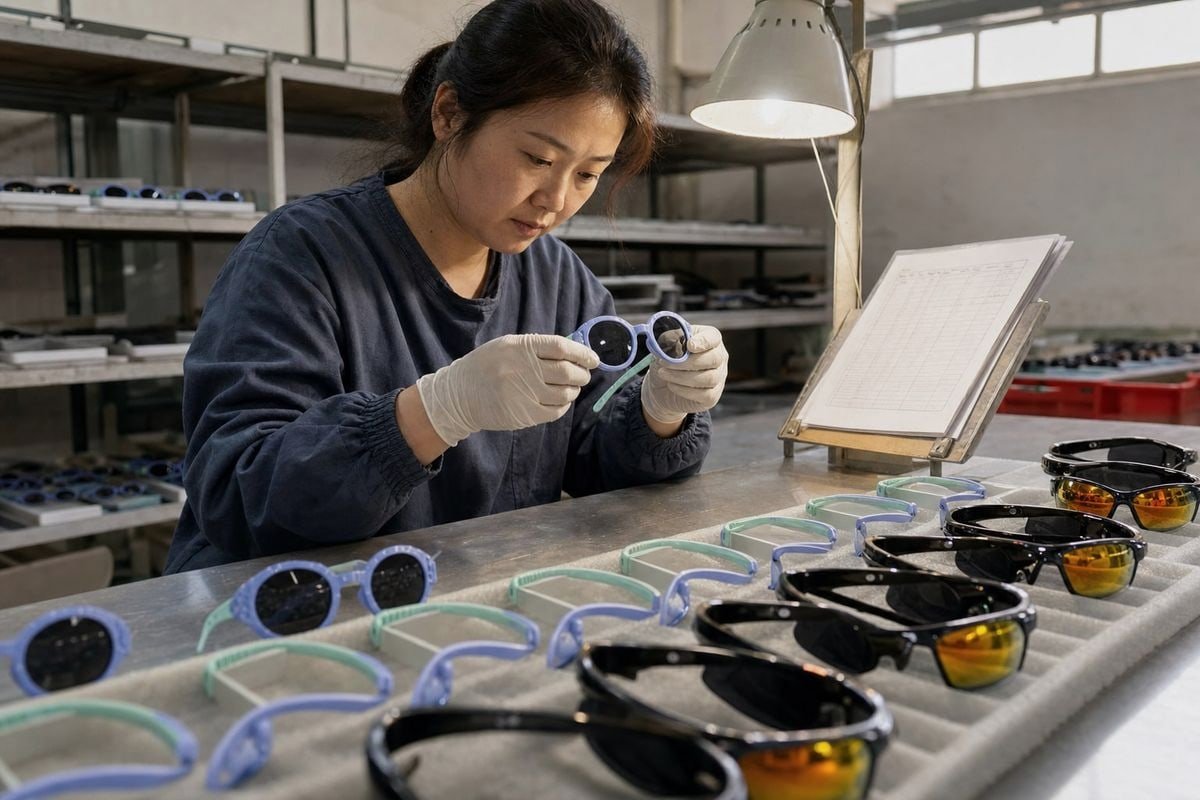
Intellectual property clauses matter most when your order is custom. If you pick from a factory's existing catalog, the design belongs to the factory, and your contract mainly covers your logo and packaging. If you invest in a custom frame mold, the stakes rise sharply. Our factory offers around 800 existing styles precisely so new brands can launch without heavy mold investment, but many established brands eventually want proprietary designs. Here is how to protect them.
Mold and Tooling Ownership
Write down who owns the mold, in plain words. Three common arrangements exist. First, the buyer pays the full tooling cost upfront and owns the mold outright. Second, the factory absorbs the cost and retains ownership, usually with a minimum order commitment. Third, the cost is amortized: a portion of the tooling fee is built into each unit price across a defined volume, after which ownership transfers to the buyer. If you choose amortization, the contract must state the total tooling cost, the per-unit portion, the volume threshold, and what happens if the relationship ends before the threshold is reached. Also state that the factory may not use a buyer-owned mold for any other customer.
Design Exclusivity and Confidentiality
If you supplied the design, artwork, or brand assets, the contract should say the supplier receives only a limited license to produce your order. Prohibit the sale of your custom design, colorways, or packaging to third parties. Add a confidentiality clause covering your product roadmap, pricing, and artwork files. In return, respect the factory's IP too: do not take a factory's catalog design to another supplier for tooling copies. Honest brands and honest factories both benefit from clauses that cut in both directions.
Attach Everything
Finally, list your attachments in the contract: spec sheets, approved artwork, packaging dielines, and the signed golden sample reference. Attachments turn intentions into evidence.
Conclusion
A vague contract invites disputes; a precise one prevents them. Define specs, standards, payments, and IP in measurable terms, attach your documents, and get legal review for cross-border deals.
Footnotes
1. Background on the E
More Articles You Might Like

August 1, 2026
Should Factory Handle Kids Sunglasses Packaging & Labeling, or Use a Designated Supplier?

August 1, 2026
Own Warehouse vs Supplier Direct Fulfillment: Which Cuts Return Costs for Kids Sunglasses Brands?

August 1, 2026
Direct-to-Port Warehouse or Overseas Staging: Which Saves More on Kids Sunglasses Shipping?
Looking for a Reliable Kids Eyewear Partner?
Explore 800+ ready styles and full OEM/ODM support tailored to your brand.
Get in Touch English
  Español de México
  Deutsch
  Français
  日本語
日本語  العربية
  Português do Brasil