How to Verify Payment Account Matches Contracted Supplier for Kids Optical Frames?
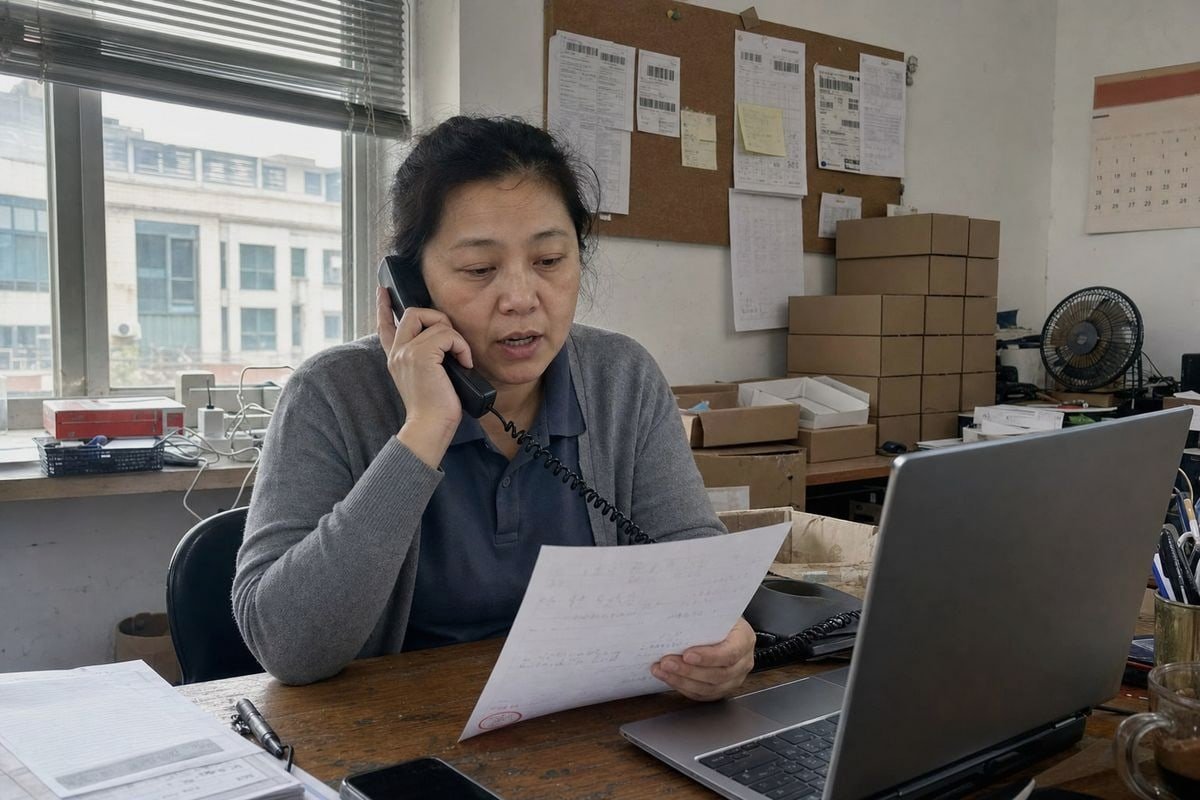
Learning to verify a payment account matches your contracted supplier for kids optical frames protects your money. I have watched buyers nearly wire funds to impersonators pretending to be our factory.
To verify a payment account matches your contracted kids optical frames supplier, confirm the bank beneficiary name exactly matches the legal entity on the contract and business license, request a stamped bank account opening certificate, and validate any change through an independent callback before wiring funds.
The steps below follow the exact order a careful buyer should use. Start with the supplier entity, then the bank account, then the payment controls. Let’s walk through each one.
How can I confirm the bank account name exactly matches my supplier's registered company name?
A buyer from Australia once emailed us, worried because our invoice showed a Chinese company name she had never seen. That question was smart. Our team explained why names must match character for character.
Compare the bank beneficiary name on the proforma invoice against the registered company name on the supplier's business license and signed contract. All three must match exactly, character for character. Ask the supplier for its official English name registration if the account name uses translated wording.

Name matching sounds simple, but it is where most fraud slips through. A valid account number proves nothing about ownership. An IBAN or SWIFT code 1 can pass every format check and still belong to a criminal. The real question is not "does this account exist?" but "does this account belong to the legal entity I contracted with?"
Understand the three levels of account checking
There is a big difference between checking format, status, and ownership. Only ownership verification stops invoice redirection fraud.
| Check level | What it confirms | Does it stop fraud? |
|---|---|---|
| Format validation | Account number, SWIFT/BIC, IBAN structure is valid | No — only catches typos |
| Status check | The account is open and active | No — a fraudster's account is also active |
| Ownership verification | The account holder name matches your contracted supplier | Yes — this is the control that matters |
Handle translation issues carefully
Chinese factories like ours register under a Chinese legal name. The bank beneficiary name for international wires is usually an official English translation registered with the bank. In our experience exporting to 20+ countries, this is where honest confusion happens most. Ask your supplier to provide the bank's own record showing the English beneficiary name. Do not accept a name that is "close enough." A payee name that is similar but not identical to the contracted supplier is a classic red flag. Where your bank offers a Confirmation of Payee or verification of payee service, use it — the receiving bank confirms whether the account holder name matches the payee name you entered. That single check defeats most impersonation attempts.
What documents should I request to verify my kids optical frames supplier's business license and banking details?
During vendor onboarding at our Taizhou factory, serious buyers usually send us a short document checklist before the first order. We welcome it. A legitimate factory has these papers ready within a day.
Request the business license showing the Unified Social Credit Code, a stamped bank account opening certificate, an export license or customs registration, the signed contract with the same legal name, and a recent proforma invoice. Cross-check all documents against official government registries.
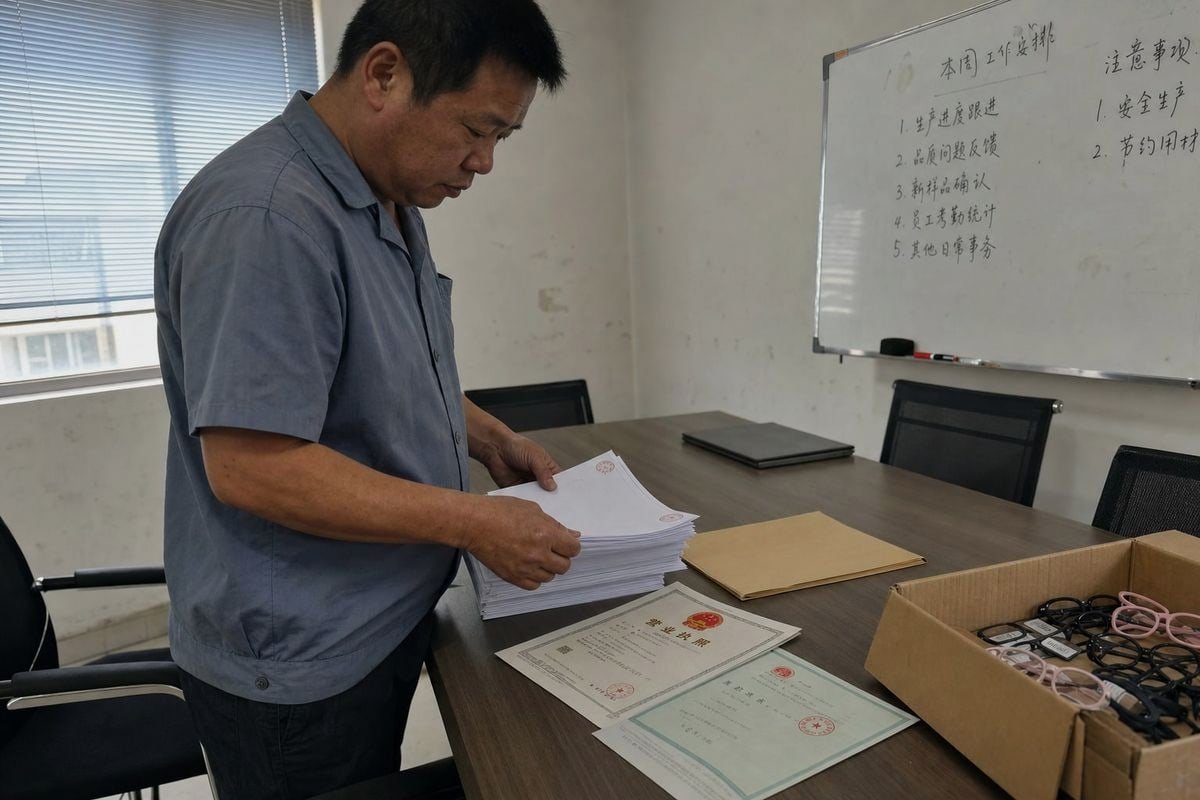
Supplier due diligence for wholesale eyewear procurement is not paperwork for its own sake. Each document answers a different question, and together they form a chain of proof linking the factory, the contract, and the bank account. Here is what to request and why it matters.
| Document | What it proves | What to check |
|---|---|---|
| Business license | The supplier is a registered legal entity | Unified Social Credit Code 2, legal representative, registered address |
| Bank account opening certificate | The corporate account belongs to that entity | Stamped by the bank; company name matches the license exactly |
| Export/customs registration 3 | The factory can legally export | Name consistency with the license |
| Signed contract and PO | The commercial relationship | Same legal entity name as all documents above |
| Proforma invoice | The payment instruction | Beneficiary name and account match the opening certificate |
Verify against independent sources
Do not rely only on the PDFs a supplier sends. Look up the Unified Social Credit Code in official Chinese government registries or through a third-party business credit report. Confirm the legal representative and registered address match. This is basic KYC compliance for vendors, and it takes less than an hour know your customer 4. As a factory with roughly 120 workers and 15 years of eyewear experience, we know that transparent suppliers never resist these checks — hesitation itself is a warning sign.
Watch the bank branch location
Cross-reference the bank branch's location with the factory's registered region. A kids eyewear factory registered in Zhejiang province asking for payment to an account opened in an unrelated country or region is a logistical anomaly worth pausing over. There can be legitimate reasons, such as a Hong Kong trading entity, but that arrangement must be written into the contract — not introduced by email at payment time.
How do I protect my payment if the factory asks me to pay a different account than the one on our contract?
We once had a European client forward us an email — supposedly from us — announcing new beneficiary bank details two days before a balance payment. It was not from us. Her callback to Alan's known number saved the order.
Treat any bank-detail change as a high-risk event. Pause the payment, call the supplier on a phone number from your original onboarding file, request a new stamped bank certificate, require dual approval internally, and only release funds after documenting the verification.
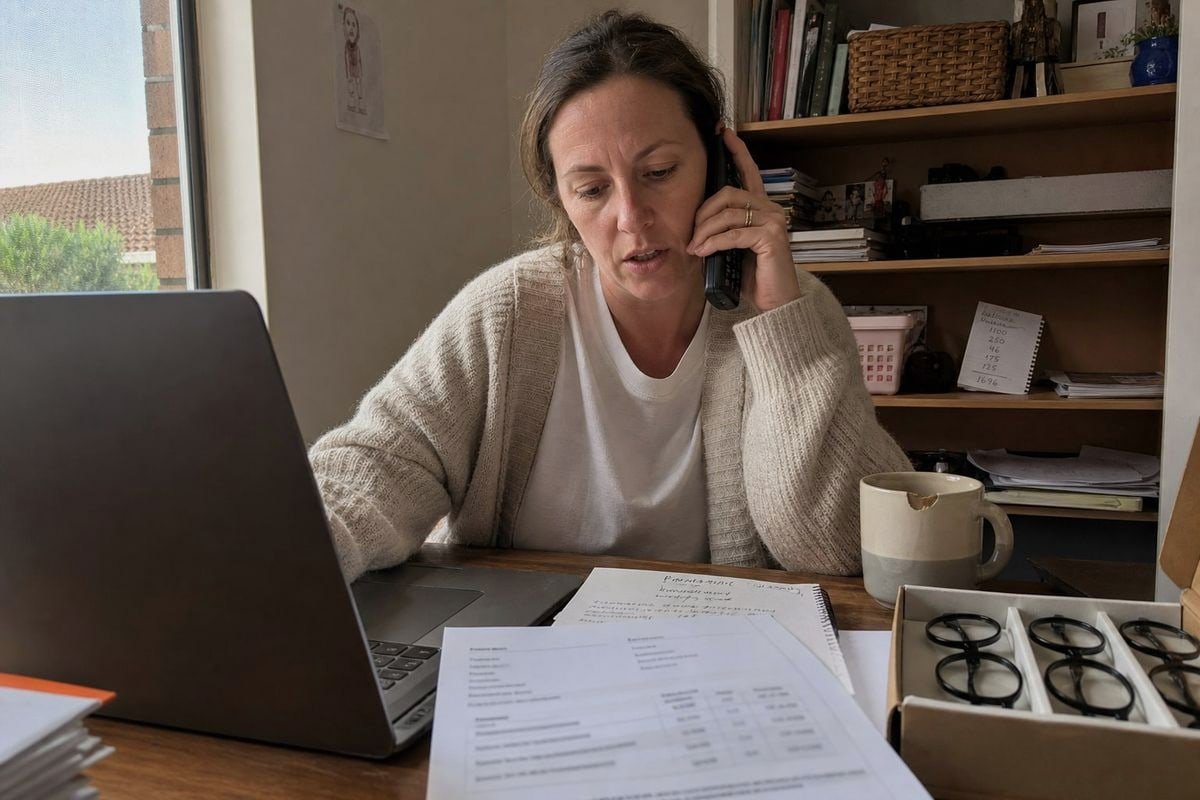
A request to change beneficiary bank details shortly before payment is due is the single most reliable fraud indicator in international trade. This is how business email compromise 5 works: attackers monitor a real email thread, wait for an invoice, then send new account details from a spoofed or hijacked address. The message looks authentic because most of it is authentic. Only the account number changed.
Follow a strict change-control process
- Stop. Put the payment on hold the moment new details arrive. No exceptions for urgency — urgency is the weapon.
- Verify independently. Call the supplier using a number from the signed contract, your onboarding records, or the official website. Never use contact details inside the change request itself.
- Demand fresh documents. Ask for a new stamped bank account opening certificate matching the new account.
- Apply dual approval. The person who received the new details should not be the same person who approves the wire. Segregation of duties defeats social engineering.
- Amend the contract. A legitimate account change should be formalized in a signed contract amendment, not an email.
- Document everything. Record who verified, when, and with what evidence, then save it in the vendor file.
Some buyers worry this slows down urgent replenishment. In our experience, a proper callback takes ten minutes. A misdirected wire takes months to chase and is usually never recovered. When we changed nothing about our own account for years, repeat buyers could also lean on purchase order reconciliation — comparing new instructions against every prior successful payment. Consistency across payment history is itself evidence.
What steps can I take to avoid fraud when wiring payment to an overseas eyewear manufacturer?
Weighing speed against safety is a trade-off we discuss with new buyers all the time. Kids optical frames often mean recurring replenishment for optical shops and school programs, so nobody wants payment friction — but nobody can afford a lost wire either.
Build a layered process: verify the supplier entity first, match beneficiary bank details to the contract, run bank-level name matching where available, send a small test transfer, refuse personal accounts, use dual approval, and archive every verification record before releasing the full wire.
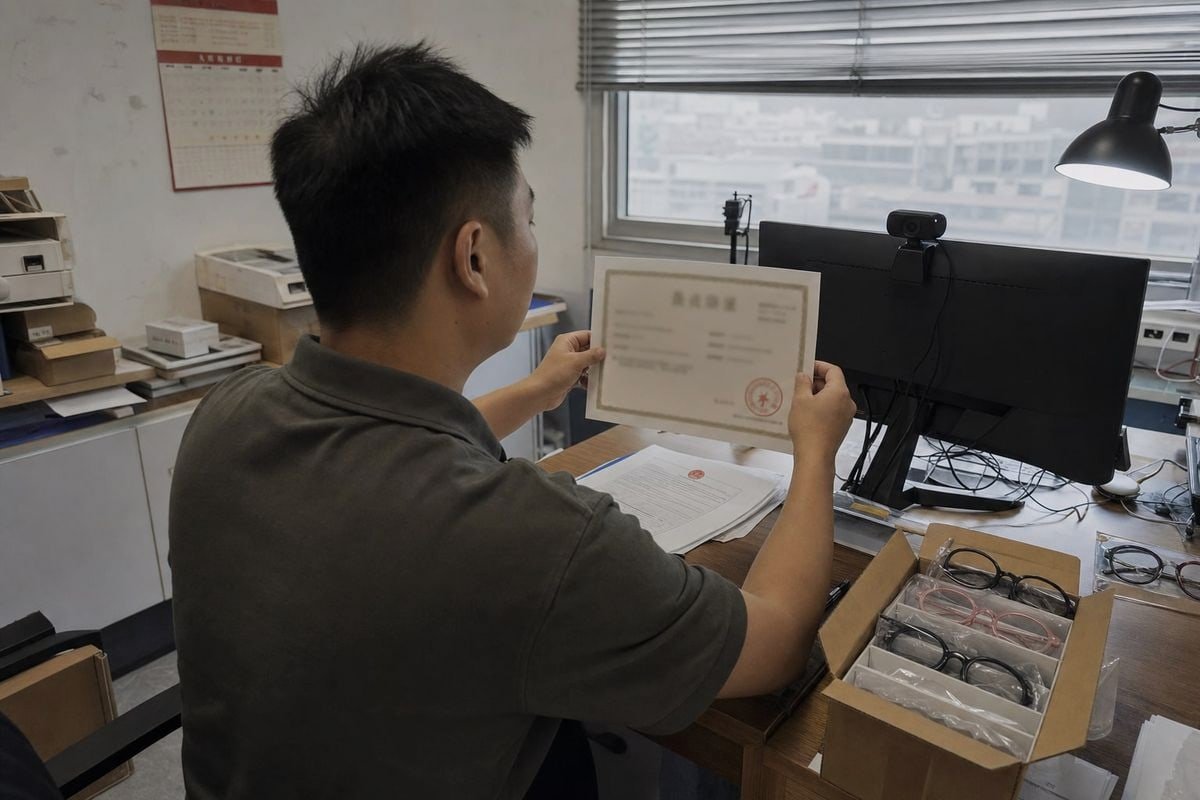
Supply chain fraud 6 prevention works best as layers, because no single control is available everywhere. Confirmation of Payee services do not exist on every payment rail, so where bank-level name matching is unavailable, you stack other controls to compensate. Here is the full defensible workflow we recommend to our own B2B clients before their first wire transfer verification.
| Step | Action | Layer it protects |
|---|---|---|
| 1 | Match invoice payee to contracted legal entity | Entity identity |
| 2 | Compare beneficiary details to contract and prior payments | Consistency |
| 3 | Run format checks on SWIFT/IBAN/account number | Clerical accuracy |
| 4 | Use bank name-match service if available | Ownership |
| 5 | Send a small test transfer and confirm receipt via a known channel | Ownership backup |
| 6 | Require second internal approver | Human error and BEC |
| 7 | Save all evidence to the vendor file | Audit and disputes |
Use test transfers as a handshake
Where automated name matching is unavailable, a micro-transaction handshake works well. Wire a small amount, then ask the supplier to confirm the exact amount, timestamp, and reference code through a separate, previously verified channel. When buyers do this with us, our finance team confirms within hours. Only after confirmation should the full deposit follow.
Strengthen the process around the payment
Never pay a personal account, full stop. A real factory operates a corporate account matching its registration. Collect banking data through a secure supplier onboarding portal rather than plain email where possible. Apply three-way matching — purchase order, shipping or inspection documents, and invoice — so the payment always ties back to real goods. Some buyers even link payment triggers to deliverables, releasing the balance only after receiving batch-specific compliance test reports 7 for children's frames. That connects payment security to product safety, which is exactly where it belongs in this category. Finally, document every check. An audit trail turns a one-time precaution into a repeatable control your whole team can follow.
Conclusion
Verify the entity, match the beneficiary name exactly, treat every bank change as high-risk, and layer your controls. Ten minutes of verification protects both your funds and your supply of kids optical frames.
Footnotes
1. Wikipedia explains the SWIFT/BIC code standard mentioned for payment formatting checks. ↩︎
2. Background on the Chinese business registration identifier referenced for verification. ↩︎
3. China Customs is the authoritative source for verifying export and customs registration status. ↩︎
4. KYC is the compliance framework underlying the supplier verification process described. ↩︎
5. Explains the exact fraud mechanism described for spoofed payment change requests. ↩︎
6. FTC guidance on business payment fraud supports the layered prevention strategy discussed. ↩︎
7. CPSC provides authoritative guidance on children’s product safety testing requirements referenced. ↩︎
More Articles You Might Like

August 5, 2026
Bio-Based vs Regular Cellulose Acetate: What's the Difference for Kids' Frames?

August 5, 2026
How Recyclable Are Kids' Optical Frame Materials, and What Eco-Friendly Alternatives Exist?

August 5, 2026
Do Kids Optical Frames Whiten or Age in Storage, and How to Control Warehouse Conditions?
Looking for a Reliable Kids Eyewear Partner?
Explore 800+ ready styles and full OEM/ODM support tailored to your brand.
Get in Touch English
  Español de México
  Deutsch
  Français
  日本語
日本語  العربية
  Português do Brasil