How to Verify FDA Registration and U.S. Agent for Kids Optical Frames from China?
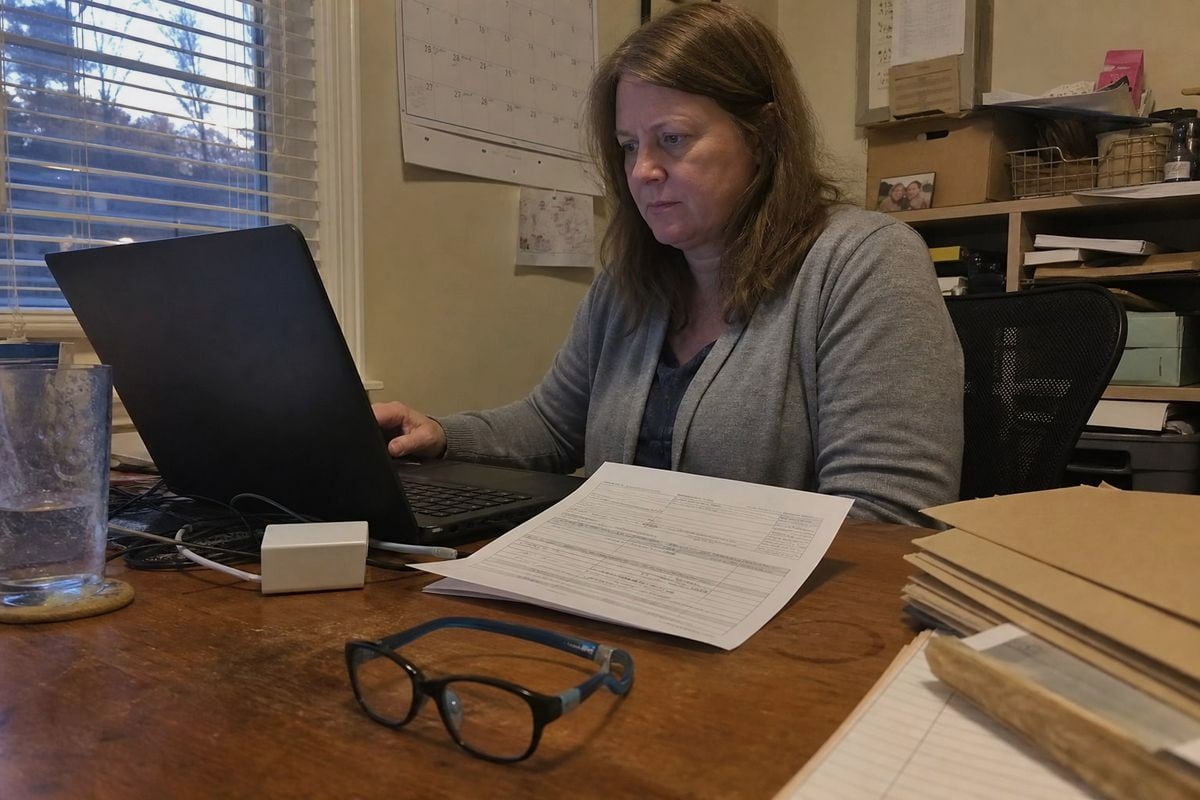
Verifying FDA registration and the U.S. Agent 1 for kids optical frames from China trips up many buyers 510(k) premarket notification 2. I have watched shipments stall at customs because our clients’ previous suppliers faked paperwork — and our Taizhou factory often ends up fixing that mess.
To verify FDA registration and a U.S. Agent for kids optical frames from China, search the FDA’s public Establishment Registration and Device Listing database using the manufacturer’s legal name or registration number, confirm the eyewear device listing is active, and independently contact the named U.S. Agent at a verifiable U.S. address.
That is the short answer. Below, I will walk you through each verification step, the documents to request, and the warning signs of fake claims.
How can I confirm my Chinese optical frames supplier is actually FDA registered?
A buyer from Melbourne once emailed me a competitor's "FDA Certificate" and asked if ours looked the same. Our answer surprised her: no legitimate Chinese eyewear manufacturer should have one.
Search the FDA Establishment Registration & Device Listing database with the supplier's exact legal name, FEI number, or Owner/Operator Number. Confirm the registration status is current, the country matches, and spectacle frames appear in the device listing. Never accept a certificate as proof — FDA does not issue registration certificates.

Spectacle frames are a Class I medical device 3 in the United States. They are exempt from 510(k) premarket notification, but the foreign factory still needs FDA establishment registration and an FDA device listing. This is a common point of confusion. Buyers ask us for "FDA approval," and we explain that no such approval exists for kids optical frames. Registration is the correct concept, and it is verifiable by anyone with an internet connection.
Step-by-step database check
- Open the FDA's Establishment Registration & Device Listing search page.
- Enter the manufacturer's exact legal name. Use partial words if the full name returns nothing, because Chinese company names are often translated inconsistently.
- If the supplier gave you a registration number or Owner/Operator Number, search by that number instead. A number alone proves nothing until you see it in the FDA public database yourself.
- Check the establishment type. It should include "Manufacturer" and the country should be China.
- Open the device listing and confirm it covers spectacle frames or the relevant eyewear product code.
The database is updated weekly, usually on Mondays. So a brand-new registration may take a few days to appear.
What each result field tells you
| Database Field | What to Confirm |
|---|---|
| Legal name | Matches the name on your proforma invoice and contract |
| Country / address | Matches the factory address you were quoted, not a trading office |
| Establishment type | Includes "Manufacturer" for the actual production site |
| Registration status | Active for the current year (renewal and user fees are annual) |
| Device listing | Covers spectacle frames or the correct eyewear product code |
In our experience exporting to the US for over a decade, the name-match step catches the most problems. Traders sometimes borrow a registered factory's paperwork while producing elsewhere. If the name on the database does not match the name on your invoice, stop and ask why.
What role does a U.S. Agent play in FDA registration, and how do I verify mine is legitimate?
When we first registered our Taizhou facility, choosing a U.S. Agent felt like a formality. Years later, I know it is one of the checks smart buyers scrutinize hardest.
A U.S. Agent is the mandatory communication liaison between FDA and a foreign establishment — handling inquiries, emergencies, and inspection scheduling. Verify legitimacy by confirming a real U.S. street address (not a P.O. Box), a working phone number, a matching business identity, and the agent's own confirmation of consent.

Every foreign establishment that registers with FDA must name a U.S. Agent. FDA requires the agent's name, address, and phone number, and the agent must reside in the U.S. or maintain a place of business there. The agent is not a license issuer. The agent does not certify product safety. The agent simply ensures FDA can reach the foreign factory quickly — for questions, for scheduling a foreign inspection, or in an emergency.
That limited role matters when you evaluate claims. Some suppliers wave the phrase "we have a U.S. Agent" around as if it were a quality mark. It is not. It is a compliance contact requirement, nothing more. But a fake or unreachable agent is a serious problem, because it suggests the whole registration may be built on sand.
A practical verification checklist
| Check | Legitimate Agent | Warning Sign |
|---|---|---|
| Address | Physical U.S. street address | P.O. Box or virtual mailbox only |
| Phone | Answered, and the agent knows the factory | Disconnected, or agent never heard of the supplier |
| Identity | Registered U.S. business or resident individual | Name cannot be found in any state business registry |
| Consent | Agent confirms they accepted the role | Agent is unaware they were named |
| Competence | Understands FDA communications and eyewear import compliance | Cannot explain their responsibilities |
Call or email the agent directly. Ask two questions: "Do you act as U.S. Agent for this factory?" and "How long have you held the role?" A legitimate agent answers both in one minute. In my experience, buyers who make that five-minute call avoid the worst supplier surprises. Also consider the long term: agents who additionally support labeling review or FDA import alerts monitoring add real value to your supply chain.
Which FDA documents should I request from my manufacturer before placing an order?
Before any first US-bound order leaves our workshop, we send buyers a standard compliance pack. Over fifteen years, that habit has prevented more customs delays than I can count.
Request the factory's FDA establishment registration number and Owner/Operator Number, the device listing details for spectacle frames, the named U.S. Agent's full contact information, drop ball test documentation under 21 CFR 801.410 if lenses are included, and CPSIA test reports for children's products.
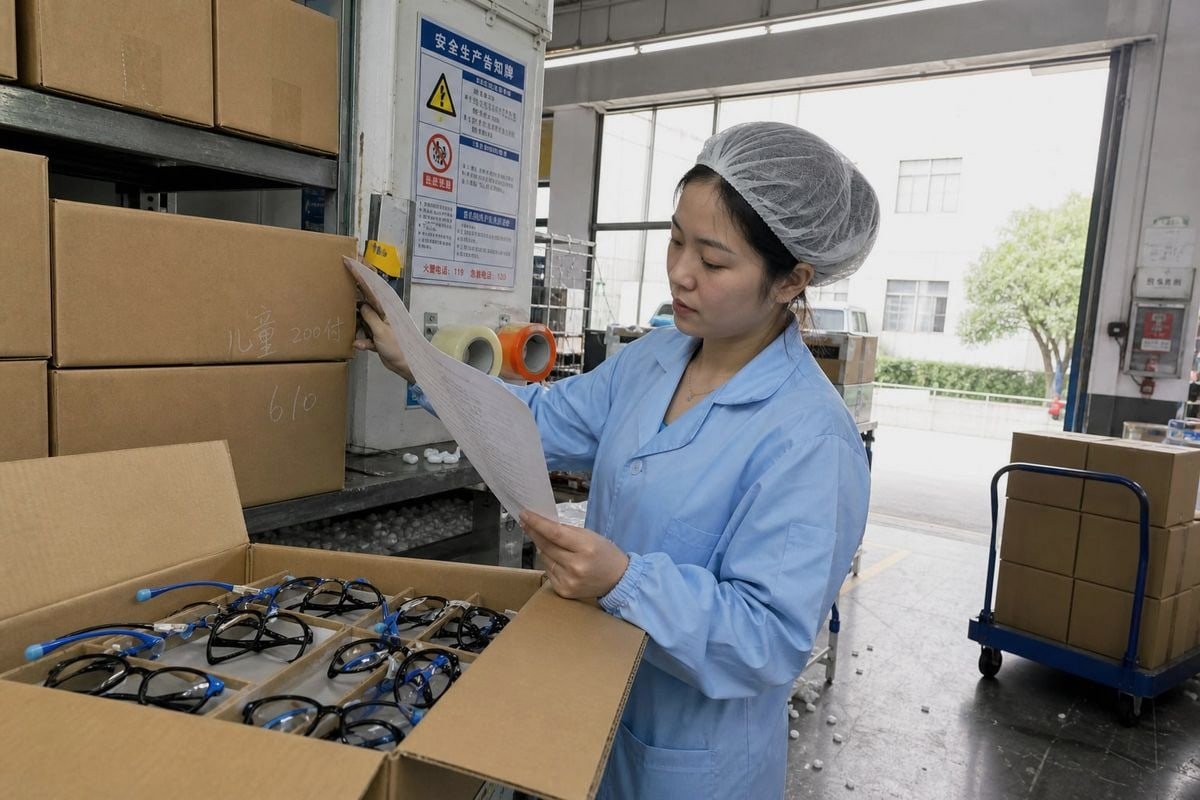
Documents from a supplier are starting points, not endpoints. Every item on the list below should be cross-checked against an independent source. Here is what we recommend our own clients request, and why each item matters.
The pre-order compliance pack
| Document / Detail | Why You Need It | How to Verify It |
|---|---|---|
| FDA registration number and Owner/Operator Number | Confirms establishment registration exists | Search the FDA public database yourself |
| Device listing information | Confirms spectacle frames are actually listed | Cross-check in the same database |
| U.S. Agent name, address, phone | Confirms the mandatory liaison is real | Contact the agent directly |
| Drop ball test certificate | Impact resistant lenses are required under 21 CFR 801.410 4 | Ask for batch-level records, not one old report |
| CPSIA test reports and Children's Product Certificate | Children's products face CPSC rules on lead and phthalates | Check the lab is CPSC-accepted |
| Quality system overview | Shows consistent production controls | Ask how the medical device quality system principles are applied in the workshop |
Frames only versus frames with lenses
This distinction changes your paperwork. If you import frames with demo lenses or finished prescription lenses, the impact-resistance rule under 21 CFR 801.410 applies to the lenses, and you should hold drop ball test documentation before shipment. If you import frames only, the lens obligation shifts downstream to whoever glazes them — but you should still document that clearly in your contract, because US customs clearance questions can arise either way.
Also remember that as the initial U.S. importer, your own business may need its own FDA establishment registration. Many first-time kids' eyewear brands miss this. FDA obligations do not stop at the factory gate; they follow the product through the supply chain. A supplier who understands this dual responsibility — and who raises it before you ask — is usually a supplier who runs a serious operation.
What red flags suggest a supplier's FDA registration or U.S. Agent claim might be fake?
A German importer once forwarded us a rival quote boasting "FDA and CE approved children's glasses." Two of those four words were meaningless for US eyewear, and that told us everything.
Major red flags include claims of "FDA approved" or "FDA certified" frames, certificate-style documents FDA never issues, company names that do not match the FDA public database, expired or missing device listings, U.S. Agents with mailbox-only addresses, and refusal to share registration numbers for independent checking.
Fake compliance claims usually fail on language before they fail on paperwork. FDA does not approve Class I eyewear. FDA does not certify factories. FDA does not issue framed certificates for device registration. Any supplier who uses those words either misunderstands US law or hopes you do. Neither is a good sign for a children's product, where eyewear import compliance mistakes carry real consequences for real kids.
The most common warning signs, ranked by seriousness
- "FDA approved" marketing language. The single most common tell. Registration is not approval, and honest suppliers say so plainly.
- A glossy "FDA Registration Certificate." These are sold by third-party consultancies or simply forged. FDA issues no such document.
- Name mismatch. The database entry names one company; your invoice names another. Often a trader renting a factory's identity.
- Lapsed registration. Registration requires annual renewal and user fees. An entry that vanished from the database this year is not "registered."
- Unverifiable U.S. Agent. A vague name, a P.O. Box, a dead phone line — any one of these undermines the whole registration claim.
- No CPSIA awareness. A factory making kids' frames that has never heard of CPSIA compliance, tracking labels, or third-party testing is a factory that has not seriously served children's brands.
- History of FDA import alerts. Check whether the company or its products appear on FDA import alert lists, which can trigger detention without physical examination at the border.
One habit protects you from nearly all of these: verify everything at the source. Databases, phone calls, and accredited lab reports beat PDFs every time. When we onboard a new brand client, we invite exactly this scrutiny — because a supplier who welcomes verification rarely has anything to hide.
Conclusion
Skip verification and you risk detained shipments and damaged trust. Check the FDA database, call the U.S. Agent, demand real documents — and partner with factories that welcome the scrutiny.
Footnotes
1. Found current FDA page detailing requirements for U.S. Agents for foreign establishments. ↩︎
2. Official FDA page explaining 510(k) premarket notification requirements and exemptions. ↩︎
3. FDA’s official classification system for medical devices, including Class I definitions. ↩︎
4. Direct link to the eCFR regulation concerning impact-resistant lenses in eyewear. ↩︎
More Articles You Might Like

August 5, 2026
Bio-Based vs Regular Cellulose Acetate: What's the Difference for Kids' Frames?
August 5, 2026
How Recyclable Are Kids' Optical Frame Materials, and What Eco-Friendly Alternatives Exist?
August 5, 2026
Do Kids Optical Frames Whiten or Age in Storage, and How to Control Warehouse Conditions?
Looking for a Reliable Kids Eyewear Partner?
Explore 800+ ready styles and full OEM/ODM support tailored to your brand.
Get in Touch English
  Español de México
  Deutsch
  Français
  日本語
日本語  العربية
  Português do Brasil