How to Tell If a Supplier Is a Factory or Trading Company When Sourcing Kids Optical Frames from China?
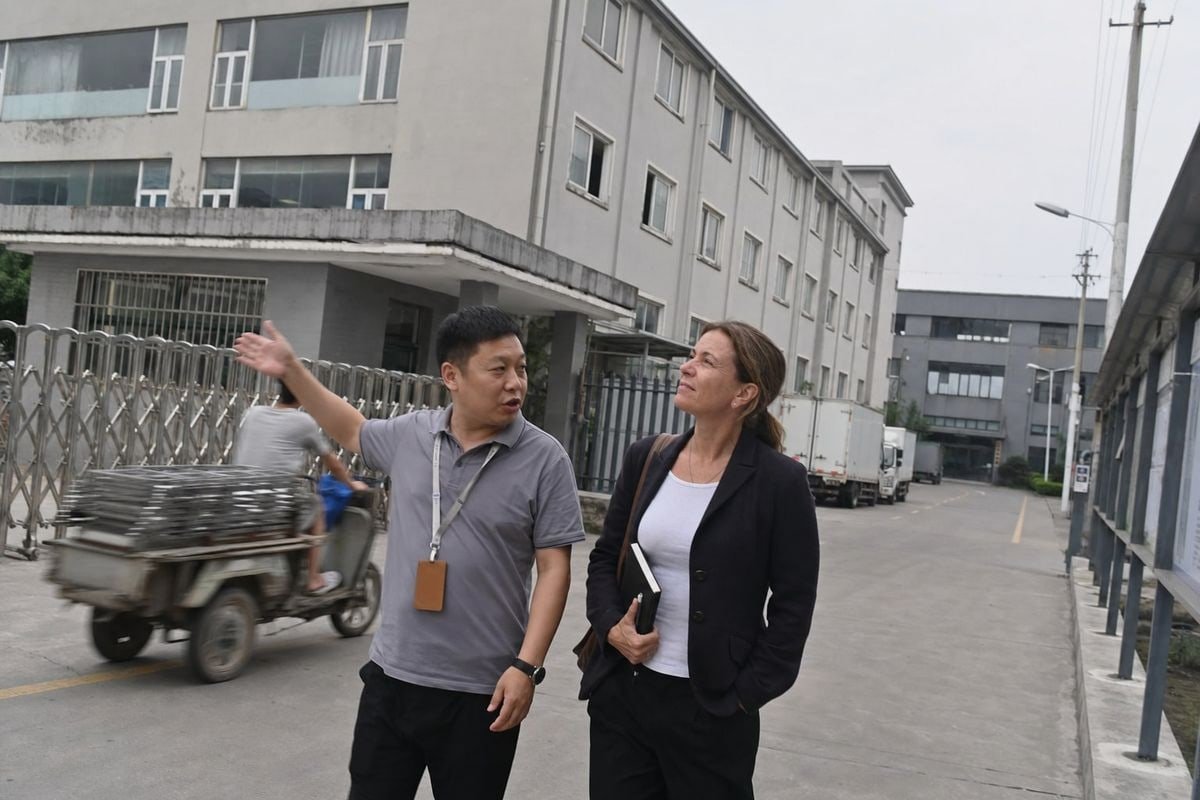
Sourcing kids optical frames from China gets risky when your “factory” turns out to be a middleman unified social credit code 1. I have watched buyers visit our Taizhou workshop after being burned exactly this way.
To tell if a supplier of kids optical frames is a factory or trading company, verify the Chinese business license scope for manufacturing terms, confirm an industrial-park address, request a live production video tour, ask detailed technical questions, and match certificate names to the legal entity.
No single check is enough on its own. You need to combine legal evidence, visual evidence, and technical evidence. In this article, I will walk you through each layer, step by step, based on what buyers actually verify when they audit our own factory.
What Questions Should I Ask to Verify a Supplier's Factory Status Before Placing an Order?
Last spring, a procurement manager from Australia sent us a twelve-question checklist before her first order. She later told me most suppliers she screened never answered half of it.
Ask for the supplier's full Chinese legal name and unified social credit code, then check the Chinese business license scope for manufacturing terms like 生产 or 制造. Also request a 13% VAT invoice, certificate ownership proof, mold ownership details, and specific production capacity figures.
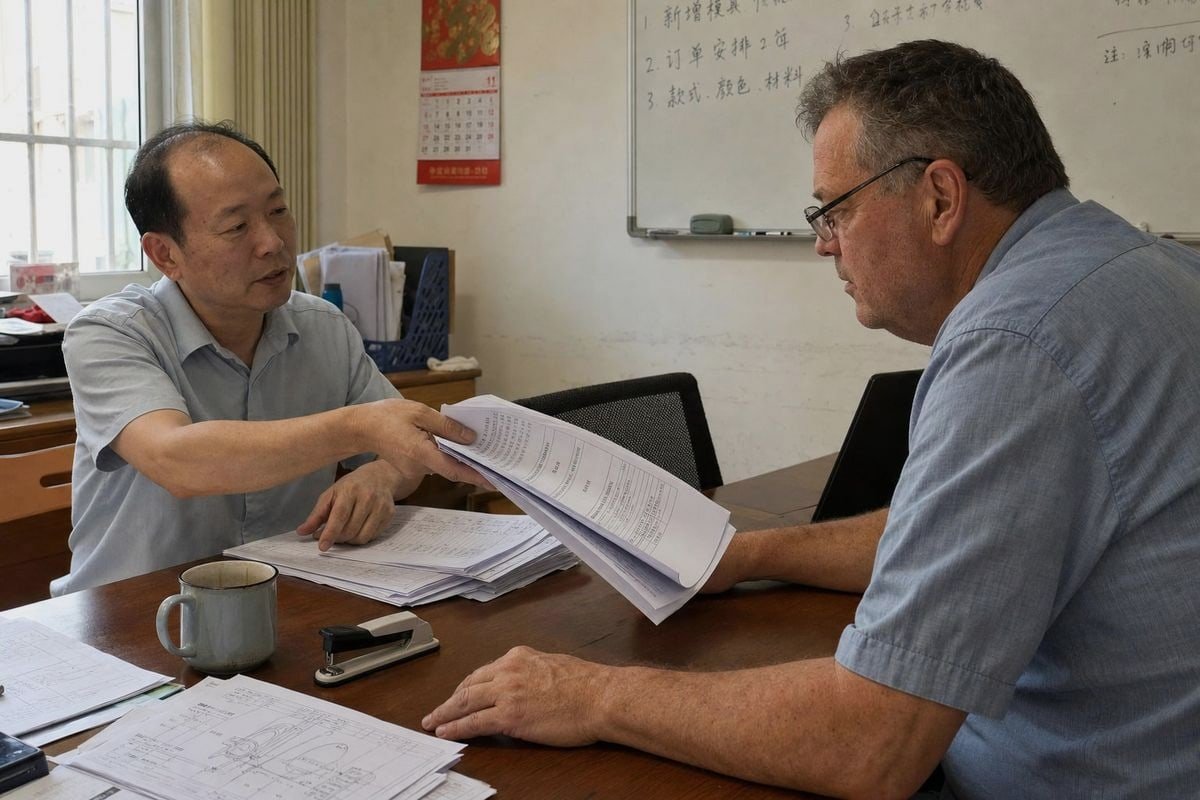
The right questions do two jobs at once. They collect hard evidence, and they test how the supplier reacts under pressure. A genuine factory answers quickly because the information lives in-house. A trading company stalls, because it must "check with the factory" first.
Start with the Legal Identity
Always request the full Chinese legal name, not the English storefront name on Alibaba. English names are marketing labels. The Chinese name is what appears on the business license, bank account, and export records. With that name or the unified social credit code 2, you can look up the company on China's official enterprise registry. Look at the business scope wording. Manufacturing words such as 生产 (production), 制造 (manufacturing), or 加工 (processing) next to eyewear or plastic products support a factory classification. Scope language dominated by 销售 (sales), 批发 (wholesale), or 贸易 (trading) points toward a trader.
Then Move to Commercial and Technical Questions
Here is the question set I recommend, grouped by what each question proves:
| Question to Ask | What a Factory Answer Looks Like | What a Trader Answer Looks Like |
|---|---|---|
| Can you issue a 13% VAT invoice under your own name? | Yes, immediately, with export VAT rebate status explained | Hesitation, or invoice comes from a third party |
| Who owns the molds for your pediatric sizes? | We do; here are mold photos and tooling records | Vague, or admits molds are "public molds" |
| What is your monthly injection molding 3 capacity? | A specific number tied to machine count | A round number with no machine details |
| Whose name is on your CE test reports? | Our legal entity name, matching the license | A different company name appears |
| What is your MOQ per color and why? | Explained by material batch and spray-line logic | A number quoted with no reasoning |
At our factory, we can answer every one of these on the same call, because our roughly 800 existing styles, our TR90 and TPEE tooling 4, and our quality control inspection records all sit under one roof. That is the practical difference you are testing for.
Can I Spot the Difference Between a Factory and a Trading Company During a Video Call or Visit?
We host live video tours for overseas buyers almost every month, and I can usually predict their first request: walk me from the raw material store to the packing line, without cuts.
Yes. During a live video tour or on-site factory audit, request an unedited walk from raw materials to injection molding, assembly, QC stations, and packing. Check that wall signage, worker uniforms, and shipping cartons all show the same legal company name.
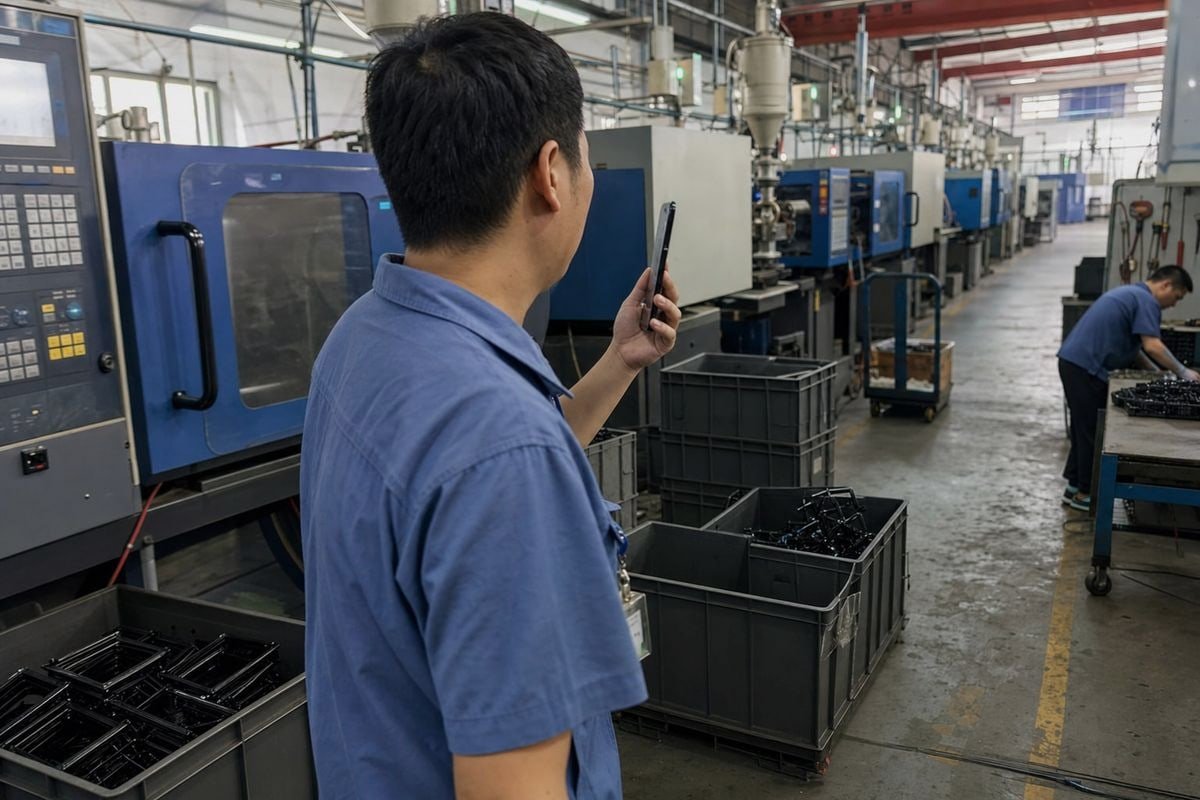
A live, unscripted walk-through is one of the strongest practical checks you can run without flying to China. Pre-recorded videos can be borrowed. Showrooms can be rented. A live tour on your schedule is much harder to fake.
What to Ask to See, in Order
- The building exterior and signage. The company name on the gate should match the business license. Note whether the location looks like an industrial park or an office tower.
- Raw material storage. For kids optical frames, you should see TR90 pellets, TPEE granules, or acetate sheets in labeled sacks or racks, ideally with traceability paperwork.
- Injection molding production. Ask the guide to stand next to a running machine and show a part coming out of the mold. Ask which style that mold makes.
- Assembly and QC stations. Look for hinge insertion, temple fitting, and inspection tables with checklists. In our 5S-managed workshop, every station has a posted standard, and buyers notice that immediately.
- Durability testing equipment. For children's frames specifically, ask to see bridge-widening and temple-flex endurance testers in action. A trader's "showroom office" will not have these.
- Packing area. Cartons and shipping marks should carry the same entity name you verified earlier.
Reading the People, Not Just the Machines
Ask the person on camera an unplanned technical question, such as why a certain frame uses a TPEE temple instead of full TR90. Factory staff answer from daily experience. Sales-only staff freeze or deflect. Also watch for hesitation when you ask to move to a different area. If the tour keeps returning to the sample room, treat that as a warning sign, because a showroom proves inventory, not production.
Why Does Sourcing Kids Optical Frames Directly from a Factory Matter for Quality and Pricing?
There is a trade-off we discuss openly with new brands: a trader may quote faster and accept mixed SKUs, but every extra layer between you and the molding machine costs you money and visibility.
Buying kids optical frames directly from a factory removes the middleman margin, gives you control over materials and pediatric sizing, ensures certificates match the real producer, and makes batch-to-batch quality traceable. For children's eyewear, that traceability directly affects safety and compliance.
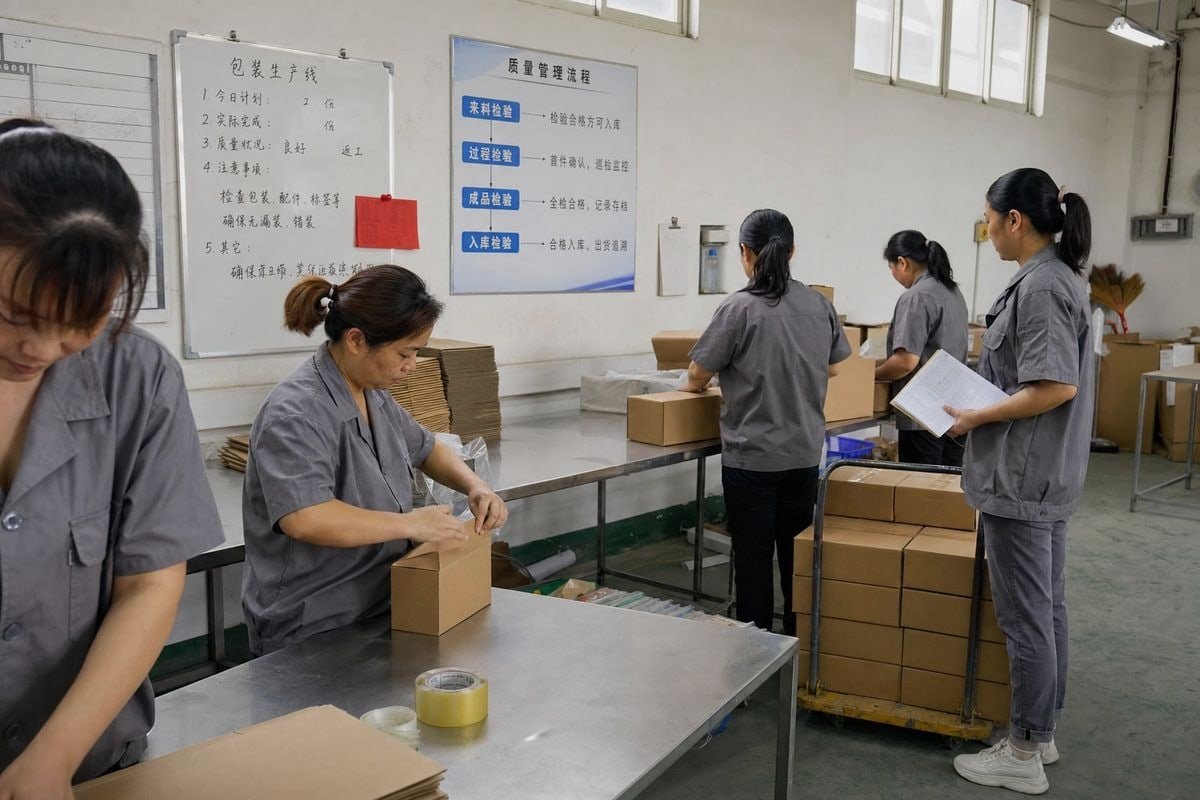
Children's frames are not a commodity product. Fit, flexibility, and material safety carry real consequences. A frame that pinches a child's temples gets abandoned in a drawer, and your retail partner remembers whose brand was on the box. That is why supplier structure matters more here than in generic consumer goods.
The Cost and Control Comparison
| Factor | Direct Factory | Trading Company |
|---|---|---|
| Pricing | Ex-factory cost plus one margin | Factory cost plus trader markup |
| Material traceability | Raw material reports issued to the producing entity | Reports often in another company's name |
| Pediatric fit control | Direct access to anthropometric sizing data and molds | Depends on which factory fills the order |
| Custom OEM and ODM work | Colors, logos, lenses, packaging handled in-house | Requests relayed, details lost in translation |
| Batch consistency | Same lines, same molds, same QC team | Orders may shift between factories |
| Compliance documents | FDA and CE certifications match the producer | Certificate names may not match |
Why This Hits Kids Frames Harder Than Adult Frames
Children's eyewear safety standards 5 demand consistent dimensions, impact resistance, and non-toxic materials. When we develop a frame for the 3–6 age group, we work from pediatric facial measurements 6 to set bridge width and temple curvature, then validate flexibility on our own test rigs before mass production. A trader cannot adjust any of that mid-order, because they do not control the tooling. They can only pass your complaint down the chain and hope. In our experience exporting to buyers in more than 20 countries, the brands that scale smoothly are the ones whose supplier can change a temple radius by half a millimeter and confirm it in the next sample round within days, not weeks. That responsiveness only exists at the source. Pricing matters, but for kids optical frames, control is the bigger prize.
What Red Flags Suggest My Supplier Might Be a Trading Company Pretending to Be a Factory?
A lesson I learned early in this industry: the most polished supplier profiles often belong to companies that have never touched an injection molding machine. Real factories spend on tooling; traders spend on marketing.
Key red flags include a catalog mixing eyewear with unrelated goods, a downtown office address, certificates naming a different company, inability to issue a 13% VAT invoice, vague answers on molds and machinery, reliance on generic public molds, and refusal of live production video.
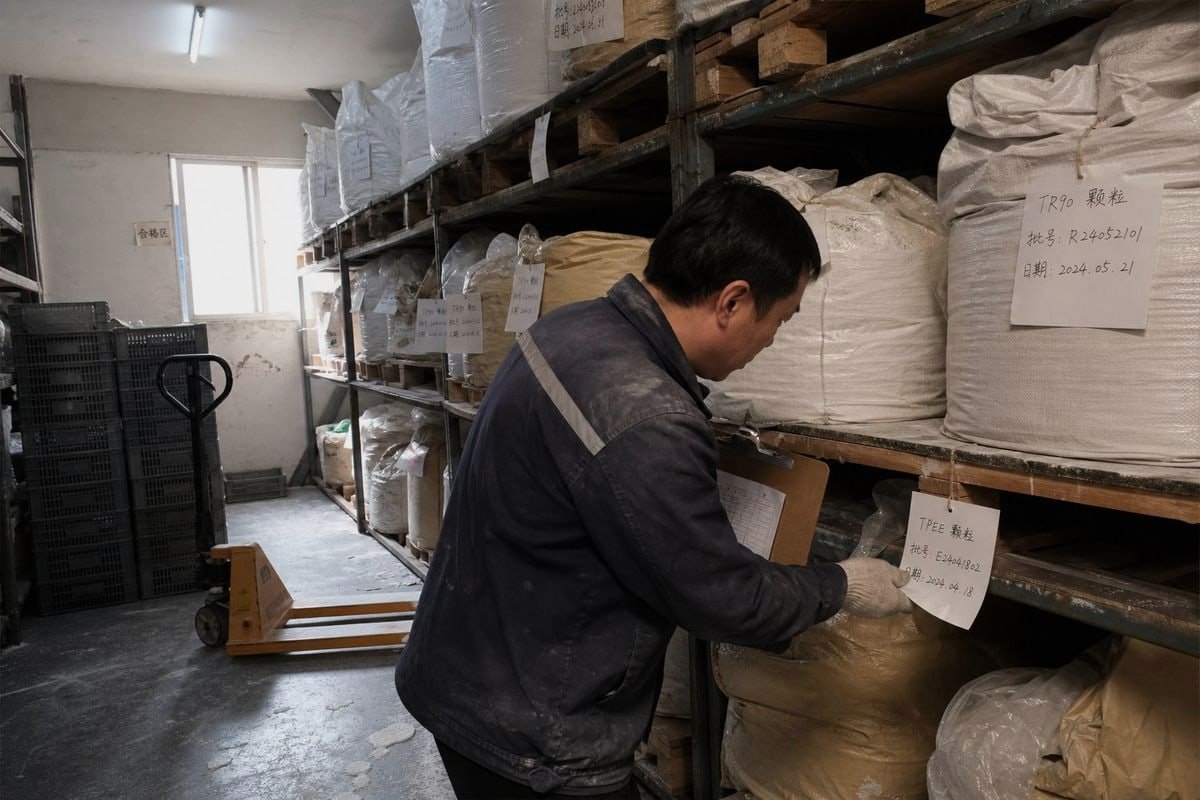
Red flags rarely appear alone. One weak signal might be a false positive. Three or more together tell a clear story. Here is how I would weight them.
| Red Flag | Severity | Why It Matters |
|---|---|---|
| Certificates show a different legal name | Critical | The real producer is someone else entirely |
| Cannot issue a 13% VAT invoice in own name | Critical | Legitimate manufacturers can; most pure traders cannot |
| Sells kids frames plus toys, LEDs, and kitchenware | High | Real eyewear makers specialize narrowly |
| Only shows showroom or sample room on video | High | Proves stock, not production |
| Vague on TR90 vs acetate frame processing details | High | Factory staff know their materials cold |
| Only offers generic public molds for pediatric sizes | Medium | Suggests no proprietary tooling investment |
| Downtown office address in registry records | Medium | Screening signal only; some factories keep city sales offices |
Beware the False Positives Too
Fairness matters here. Some genuine factories register broad business scopes or keep sales offices in Wenzhou or Shenzhen city centers, close to buyers, while production sits in an industrial zone outside town. Eyewear industrial clusters around Wenzhou, Shenzhen, and Taizhou all work this way. So an urban address alone does not condemn a supplier. Equally, a trading company that is transparent about its factory partners, provides traceability, and manages quality control inspection 7 properly can still be workable for small MOQ or mixed-SKU orders. The real disqualifier is deception. When we onboard a new buyer at our workshop, we hand over the license, the test reports in our name, and the mold records without being asked, because a supplier with nothing to hide volunteers evidence. A supplier who resists every verification step has already answered your question.
Conclusion
Verify the license scope, tour the line live, test technical depth, and match every document to one legal name. Do that, and misrepresented suppliers cannot reach your purchase order.
Footnotes
1. Provides context on the unique identification number for Chinese businesses. ↩︎
2. Authoritative Wikipedia entry for the mandatory business registration identifier in China. ↩︎
3. Authoritative Wikipedia entry for the primary manufacturing process used in eyewear production. ↩︎
4. Technical details on the high-performance thermoplastic material commonly used in kids’ eyewear. ↩︎
5. International standard specifying requirements and testing methods for spectacle frames. ↩︎
6. Authoritative Wikipedia entry for the science of human body measurements used in frame design. ↩︎
7. Authoritative Wikipedia entry defining the standards and processes for manufacturing quality control. ↩︎
More Articles You Might Like
August 5, 2026
Bio-Based vs Regular Cellulose Acetate: What's the Difference for Kids' Frames?
August 5, 2026
How Recyclable Are Kids' Optical Frame Materials, and What Eco-Friendly Alternatives Exist?
August 5, 2026
Do Kids Optical Frames Whiten or Age in Storage, and How to Control Warehouse Conditions?
Looking for a Reliable Kids Eyewear Partner?
Explore 800+ ready styles and full OEM/ODM support tailored to your brand.
Get in Touch English
  Español de México
  Deutsch
  Français
  日本語
日本語  العربية
  Português do Brasil