How to Set Safety Stock Levels for On-Demand Kids Optical Frames Ordering?

Setting safety stock levels 1 for on-demand kids optical frames ordering worries many of the buyers who visit our Taizhou workshop. Too little stock, and a child waits weeks for a replacement frame. Too much, and cash sits frozen in colors that never sell. I have watched both mistakes hurt good brands, so let me share the method we recommend to our partners.
Set safety stock levels for on-demand kids optical frames by segmenting SKUs by sales velocity, then applying the formula: safety stock = z-score × demand deviation × √lead time for core styles. Start with 50% of lead-time demand as a fallback, and recalculate reorder points quarterly.
That is the short answer. Now let me walk you through each part, using real numbers and the lessons we have learned supplying kids frames to buyers in more than 20 countries.
How much safety stock should I keep for TR90 kids optical frames given lead times from China?
A procurement manager from Australia once told me she doubled every order "just to be safe." Six months later, half her slow colors were still on the shelf. Our production team helped her build a smarter buffer instead.
Keep roughly 3–6 weeks of average demand as safety stock for core TR90 kids optical frames, assuming a 30–45 day eyewear manufacturing lead time from China plus shipping. Fast-selling replacement sizes deserve the higher end; fashion colors deserve far less.
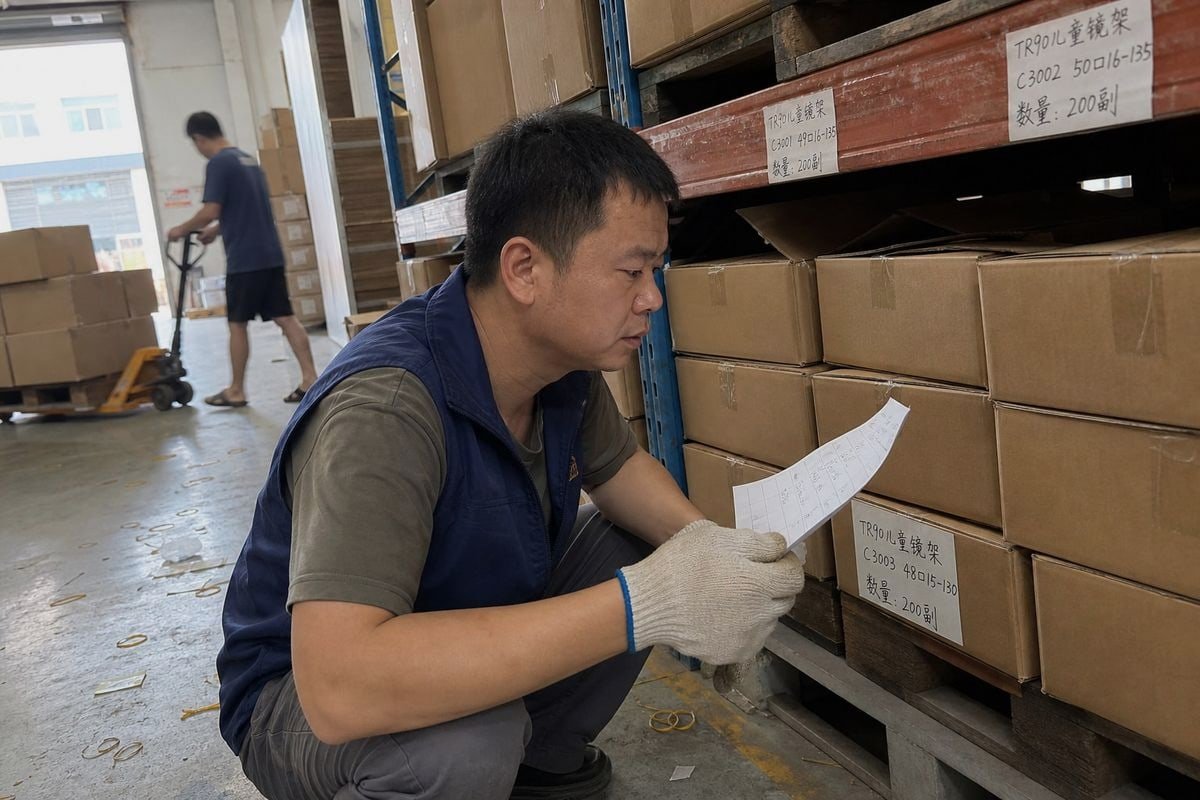
The right number depends on three inputs: your demand rate, your total lead time, and your tolerance for stockouts. In our experience exporting to Europe, Japan, and Australia, total lead time is the piece buyers underestimate most. Production is only part of the clock.
Break down the full lead time first
For a typical TR90 kids optical frame order from our factory, the timeline looks like this:
| Stage | Typical Duration | Notes |
|---|---|---|
| Order confirmation and materials | 3–7 days | Faster for existing styles |
| Production and QC | 25–35 days | TR90 injection, assembly, inspection |
| Sea freight to EU/AU | 25–40 days | Air freight cuts this to 5–8 days |
| Customs and inbound receiving | 3–7 days | Varies by market |
So your true lead time by sea is often 60–85 days. If you sell 100 units of a core kids optical frame per month, your lead-time demand is roughly 200–280 units. Safety stock sits on top of that, not instead of it.
Adjust for lead time variability
Lead time variability 2 matters as much as the average. Peak season before back-to-school can add a week to freight. Chinese New Year adds more. We advise buyers to measure their last six to eight orders and record the actual days from PO to receipt. If lead times swing widely, your safety stock must grow to absorb that swing. If your supplier delivers consistently, you can hold less. This is why supplier reliability is a real financial asset, not a soft benefit. A factory that ships on time every time lets you carry weeks less inventory across your whole assortment of children's prescription glasses.
Can I rely on OKAY EYEWEAR's ~800 existing styles to reduce my safety stock investment?
When we were developing our existing-style catalog over the past 15 years, one goal drove us: let new brands launch without heavy mold investment. That same catalog changes your inventory math in a useful way.
Yes. Ordering from an existing catalog of ~800 styles removes mold development time, shortens replenishment cycles, and lowers minimum order pressure. Shorter, more reliable lead times mean less lead-time demand to cover, which directly reduces the safety stock you must finance.
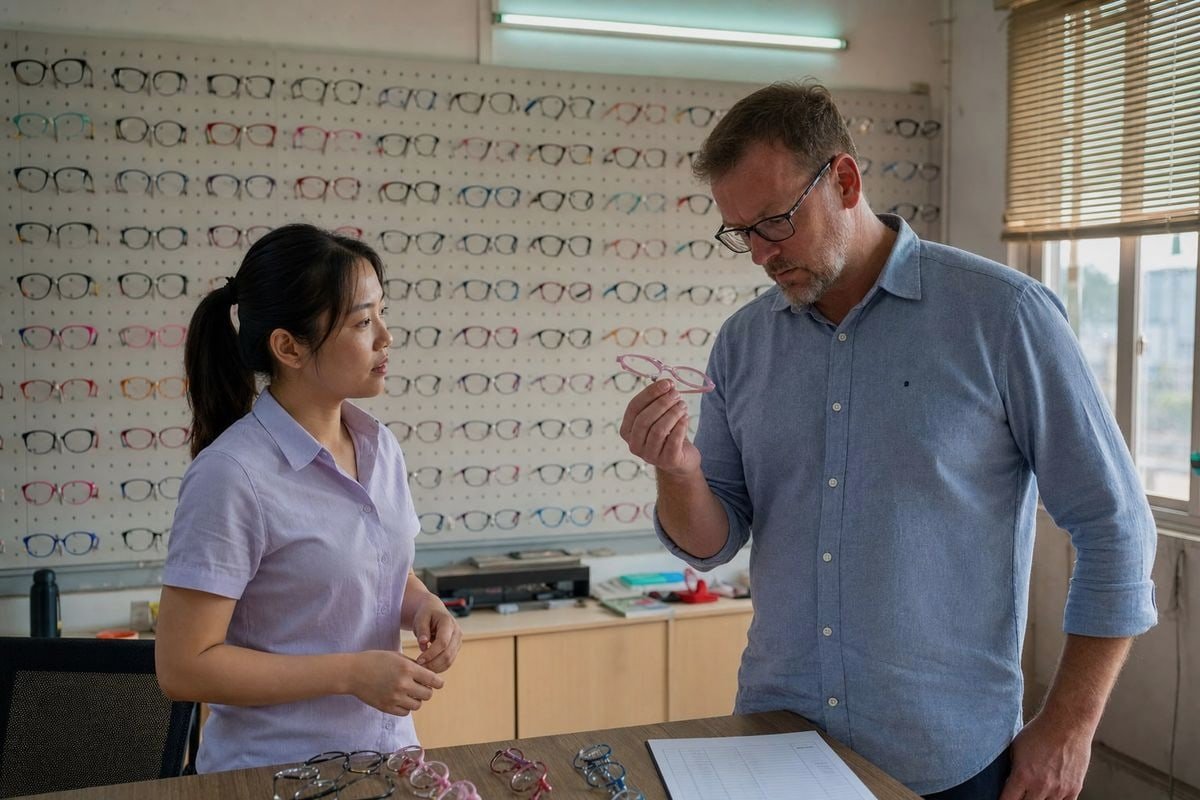
The core logic is simple. Safety stock exists to protect you during the replenishment window. Anything that shrinks or stabilizes that window shrinks the buffer you need. Custom-molded frames require tooling, sampling, and approval rounds before production even starts. An existing TR90 or TPEE style skips all of that. Our team can move an in-catalog order into production in days, not weeks.
There is a second effect. Existing styles carry proven production data. We already know the material behavior, the hinge tolerances, and the QC checkpoints. That reduces the risk of a failed inspection delaying your shipment — another hidden source of lead time variability.
Where the catalog helps most
Some buyers raise a fair objection here: "If I rely on your stock styles, am I giving up differentiation?" In our experience, the answer is no, because the catalog is a base, not a ceiling. You can customize colors, logos, lens options, and packaging on existing tooling. You get retail-ready branding without the safety stock penalty of a from-scratch mold project.
Here is how the two paths compare for inventory planning:
| Factor | Custom Mold Project | Existing Catalog Style |
|---|---|---|
| Pre-production time | 30–60 extra days | Near zero |
| Lead time predictability | Lower on first runs | High, proven process |
| MOQ pressure | Higher | Lower, more flexible |
| Required safety stock | Higher | Lower |
| Branding options | Full | Colors, logos, lenses, packaging |
For a young brand testing kids eyewear trends, this is the difference between financing three months of buffer and financing five. Use the catalog to keep your safety stock lean, then invest in custom molds only for styles that have already proven demand.
How do I calculate reorder points for flexible TPEE and TR90 frames without overstocking?
There is a trade-off I weigh with almost every buyer: a higher customer service level protects sales, but it locks up cash. Flexible frame materials like TPEE and TR90 do not expire, yet sizes and colors still go stale as kids eyewear trends shift.
Calculate the reorder point as average daily demand × lead time in days + safety stock. For safety stock, use z-score × demand standard deviation × √lead time. Choose a z-score of 1.65 (95% service) for core SKUs and lower targets for fashion variants.

Let me make this concrete with a worked example, because the reorder point calculation only feels hard until you run it once.
A worked example for a core TR90 frame
Suppose your best-selling TR90 kids optical frame with TPEE temples sells 5 units per day on average, with a daily standard deviation of 2 units. Your total lead time is 64 days.
- Lead-time demand = 5 × 64 = 320 units.
- Safety stock = 1.65 × 2 × √64 = 1.65 × 2 × 8 = 26.4, round to 27 units.
- Reorder point = 320 + 27 = 347 units.
When on-hand plus on-order inventory drops to 347, you reorder. If both demand and lead time vary a lot, use the combined variability formula, which adds a lead-time deviation term. Most inventory management software 3 can run it for you once you feed it clean data.
Match service levels to SKU roles
Not every frame deserves 95% protection. Segment first, then assign targets:
| SKU Class | Example | Service Level | z-score 4 |
|---|---|---|---|
| A: Core replacement sizes | Black flexible frame, ages 6–9 | 95–98% | 1.65–2.05 |
| B: Steady sellers | Translucent pink acetate-look style | 90% | 1.28 |
| C: Fashion or niche colors | Seasonal or trend-led variants | 80–85% | 0.84–1.04 |
A child who breaks their only pair of children's prescription glasses cannot wait. Their parents will buy elsewhere. That is why Class A frames justify high buffers. A trend color does not carry the same urgency, so let it run leaner. If your sales history is thin — under six months — skip the statistics and hold 50% of lead-time demand as a starting heuristic. Then adjust: move to 60–70% if stockouts persist, or down to 30–40% if inventory piles up. Better demand forecasting models can come later; a workable policy today beats a perfect one next year.
What communication process helps me avoid stockouts when ordering on-demand from my factory partner?
A lesson we learned the hard way years ago: a buyer's forecast email sat unanswered over a holiday, and their reorder landed two weeks late. Since then, our team has run a structured communication rhythm with every partner, and preventing stockouts has become far more about process than luck.
Share rolling 90-day forecasts monthly with your factory, confirm production slots before hitting your reorder point, and agree on fixed response times for order confirmation. Add milestone updates at production start, QC, and shipment so delays surface early, not at the deadline.
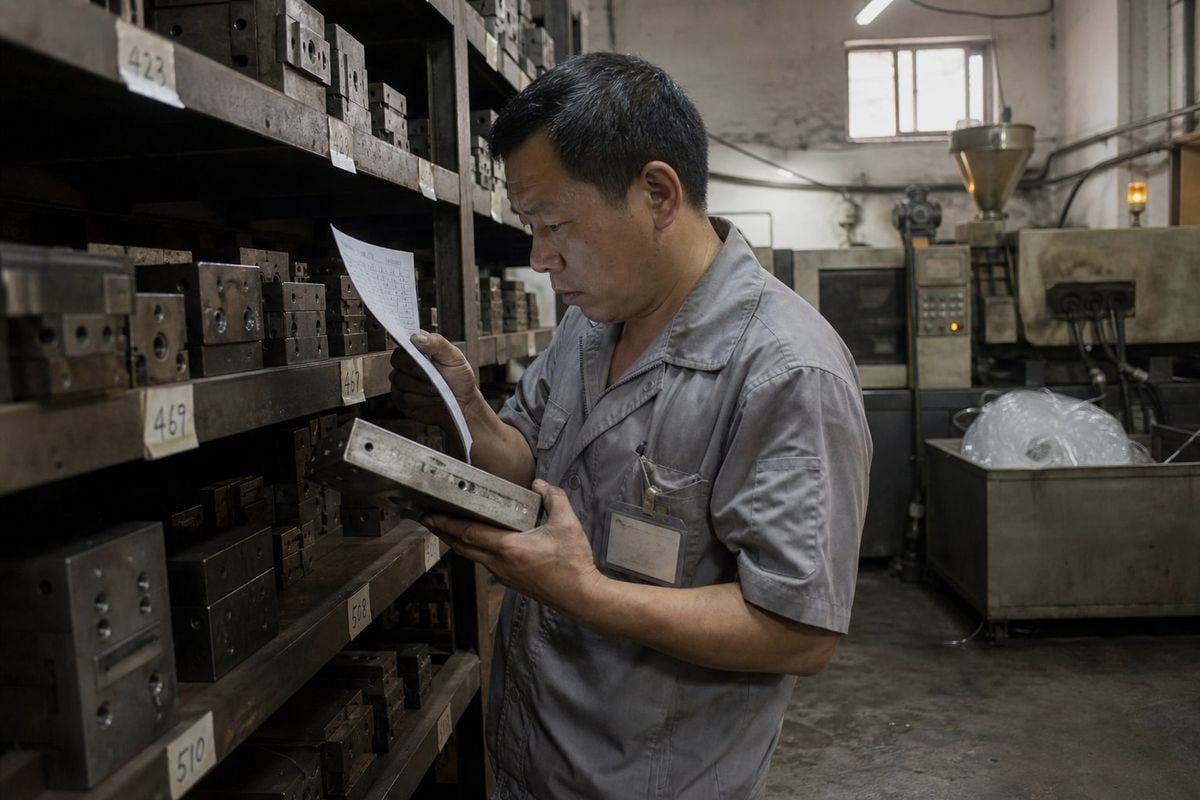
Good optical supply chain management 5 is mostly disciplined communication. Formulas set the buffer; communication decides whether the buffer is ever actually tested. Here is the process we run with our long-term B2B partners, and it works whether you order monthly or quarterly.
A five-step communication rhythm
- Monthly rolling forecast. Send your factory a simple 90-day outlook by SKU, even if it is rough. We use these forecasts to pre-plan TPEE and TR90 material purchasing, which quietly shortens your real lead time.
- Pre-reorder heads-up. Flag an upcoming PO one to two weeks before your reorder point triggers. This lets the factory reserve a production slot instead of queuing you behind other orders.
- Confirmed order acknowledgment. Agree on a maximum response time — we commit to confirming orders, quantities, and ship dates within 48 hours. Silence is where stockouts are born.
- Milestone updates. Ask for three checkpoints: production start, QC completion, and shipment with tracking. Any slip appears weeks early, giving you time to expedite by air if a Class A frame is at risk.
- Quarterly review. Compare actual lead times and fill rates against plan. Feed real lead time variability back into your reorder point calculation and adjust service levels.
Pair this rhythm with basic frame inventory tracking — even a shared spreadsheet works at first, though dedicated inventory management software scales better. Also plan around the calendar. Orders placed before Chinese New Year or the pre-back-to-school rush need earlier commitments. We remind partners of these windows every year, because a forecast shared in time is worth more than any safety stock formula applied too late.
Conclusion
Stockouts lose families; overstock freezes cash. Segment your kids optical frames, calculate reorder points per SKU class, lean on existing styles, and keep a steady communication rhythm with your factory partner.
Footnotes
1. Explains the concept of safety stock in inventory management. ↩︎
2. Discusses the causes and impact of lead time variability in supply chains. ↩︎
3. Describes software used to track and manage inventory levels and movements. ↩︎
4. Defines z-score and its role in safety stock calculation. ↩︎
5. Replaced with an authoritative definition from ASCM (Association for Supply Chain Management), a leading professional organization in the field. ↩︎
More Articles You Might Like
August 5, 2026
Bio-Based vs Regular Cellulose Acetate: What's the Difference for Kids' Frames?

August 5, 2026
How Recyclable Are Kids' Optical Frame Materials, and What Eco-Friendly Alternatives Exist?

August 5, 2026
Do Kids Optical Frames Whiten or Age in Storage, and How to Control Warehouse Conditions?
Looking for a Reliable Kids Eyewear Partner?
Explore 800+ ready styles and full OEM/ODM support tailored to your brand.
Get in Touch English
  Español de México
  Deutsch
  Français
  日本語
日本語  العربية
  Português do Brasil