How to Set Online Price Tiers for Kids Optical Frames to Support Subscriptions?

Setting online price tiers for kids optical frames is where many buyers we supply get stuck. Parents abandon carts, subscriptions stall, and margins quietly bleed away.
Set online price tiers for kids optical frames by calculating true landed cost first, then building three clear tiers — entry, core, and premium — where the middle tier bundles durability, a replacement benefit, and subscription convenience so it becomes the obvious choice for most parents.
That is the short answer. Now let me walk through how we help our B2B partners build each layer of that pricing ladder, step by step.
How can I structure price tiers that make subscription plans feel like an obvious upgrade?
Last spring, a buyer from an Australian kids brand asked us why her subscription sign-ups were flat. Her pricing page had six options. Parents simply froze and left.
Structure three tiers only: a constrained entry tier, a value-packed core tier, and an aspirational premium tier. Make the core tier include one replacement benefit and wider style choice, price it 30–50% above entry, and label it clearly as the best value.
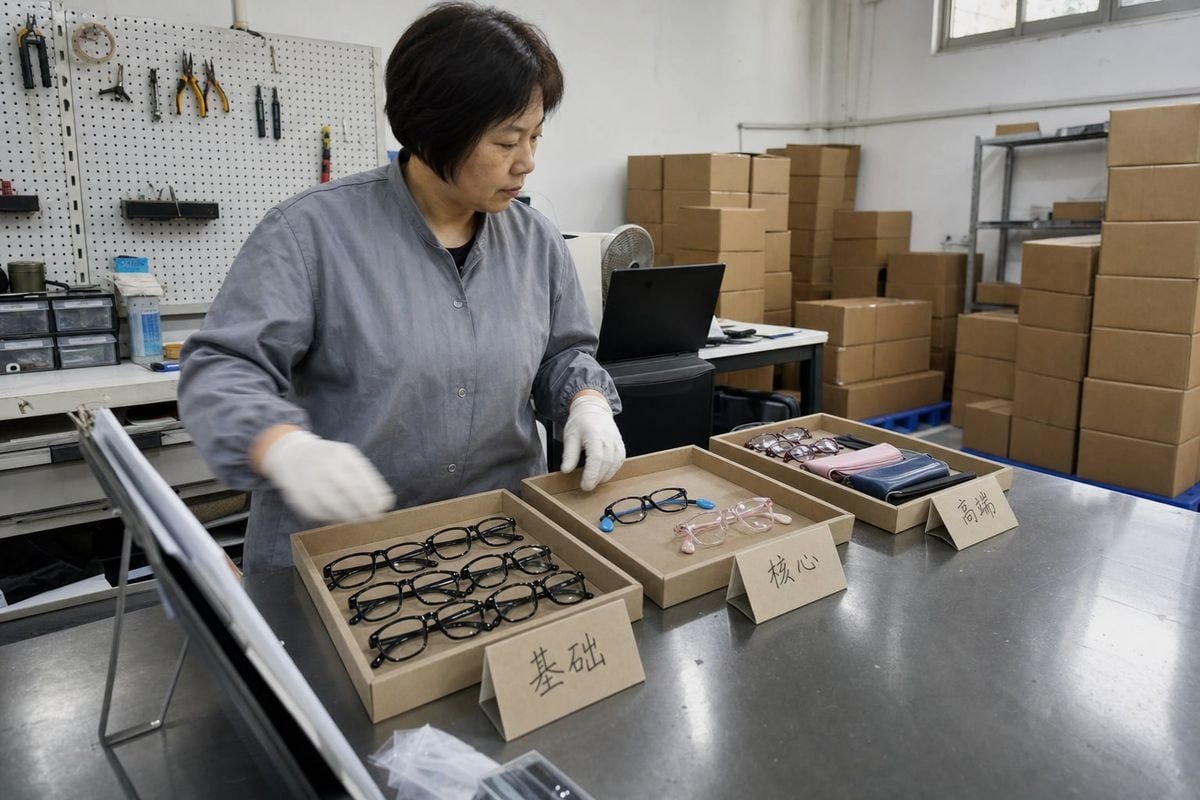
Choice friction kills conversion. When we advise brands launching an eyewear subscription model, we always start with the same rule: fewer tiers, bigger value gaps. Three tiers work because parents can compare them at a glance. Five or six tiers force homework, and busy parents do not do homework at checkout.
The three-tier ladder in practice
Here is a structure we have seen work for online optical retailers selling children's frames:
| Tier | What it includes | Role in the ladder |
|---|---|---|
| Entry | Basic frame styles, standard prescription lenses 1, limited colors | Attracts price-sensitive parents, anchors the low end |
| Core | Durable children's frames, wider style range, one included replacement, easier exchanges | The intended bestseller — most parents should land here |
| Premium | Top materials, full style access, unlimited breakage replacements, priority shipping, growth-size swaps | Aspirational; justifies the core tier by comparison |
The entry tier should be honest but constrained. Give it real value, but limit style selection and exclude the replacement policy. The premium tier exists partly to make the core tier feel balanced. This is classic anchoring, and it works because it is transparent, not tricky.
Make the middle tier visually obvious
Online, design does half the pricing work. Use clean comparison cards, bold checkmarks, and an explicit "Most Popular" badge on the core tier. One optical practice example we studied used six tiers starting at $89 with $40 spacing — it functioned, but staff spent hours explaining it. Three tiers explain themselves.
Also communicate that basic prescription lenses are included in every tier's base price. Parents distrust pricing that hides the lens cost until checkout. Clarity here is what makes the upgrade feel like a choice, not a trap.
What pricing strategy works best when kids outgrow or break their frames so often?
In our 5S-managed workshop in Taizhou, we bend-test kids frames daily, because we know one thing from fifteen years of production: children break glasses. Your pricing must expect it.
Price for breakage by building a remake allowance into every tier, based on true landed cost — frame, lenses, packaging, shipping, payment fees, and support time. Then sell replacements as a subscription benefit, turning your biggest cost risk into your strongest retention tool.
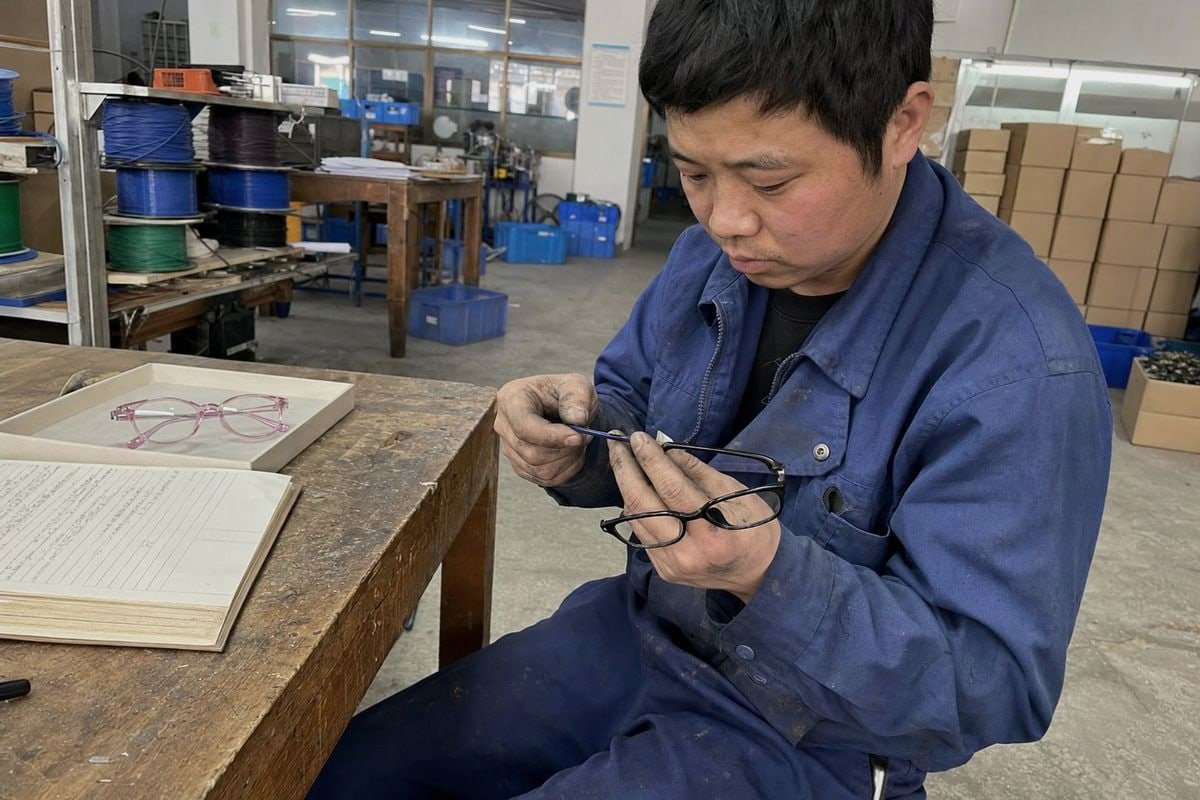
The mistake I see most often is pricing kids frames like adult frames. Adult eyewear might see one service request in two years. A seven-year-old can snap a temple in a week, sit on the frame in a month, and outgrow the size in a year. If your tiers only cover the wholesale frame cost plus markup, every replacement request eats your margin.
Start with true landed cost, not wholesale cost
Before you set any tier, add up the full cost base:
| Cost input | Why it matters for kids frames |
|---|---|
| Frame wholesale cost | Your starting point, never your only number |
| Inbound shipping and duties | Often forgotten by first-time importers |
| Packaging and outbound shipping | Retail-ready boxes and cases add real cost |
| Payment processing fees | 2–3% on every recurring charge |
| Customer support time | Fit questions and sizing help are frequent with kids |
| Remake and replacement allowance | The single biggest difference versus adult eyewear |
| Return and warranty exposure | Parents expect a generous replacement policy |
| Marketing acquisition cost | Subscriptions must recover this over time |
Only when the lowest tier covers this full cost should you build upward.
Turn breakage into the value proposition
Here is the reframe that changes everything: breakage is not just a cost — it is the reason parents subscribe. A one-off purchase leaves a parent exposed. An eyewear subscription with a built-in replacement policy sells certainty. That is why the core tier should include one replacement, and the premium tier should cover unlimited damage replacements plus size swaps as the child grows — the "Grow-With-Me" logic that also prompts prescription updates after annual eye exams.
One more thing helps affordability messaging: remind parents that vision insurance benefits, a flexible spending account (FSA), or HSA funds 2 can often offset these costs. That makes even the premium tier feel manageable.
How do I price OEM/ODM options like lenses, colors, and packaging within each tier?
A Japanese buyer once asked us for custom pastel colorways, branded cases, and blue light filtering lenses 3 — then asked which tier each belonged in. Great question, and the answer shapes your whole margin structure.
Assign OEM/ODM options by tier role: keep standard lenses and stock colors in the entry tier, place popular lens upgrades and custom colors in the core tier, and reserve premium packaging, photochromic lenses, and exclusive colorways for the top tier.

Custom options are where subscription pricing gets interesting, because customization is exactly what we do all day at our factory. We support custom colors, logos, lenses, packaging, and accessories for brands in more than twenty countries. The trick is not offering everything to everyone — it is mapping each option to the tier where it strengthens the ladder.
Map upgrades to tiers deliberately
| OEM/ODM option | Entry tier | Core tier | Premium tier |
|---|---|---|---|
| Prescription lenses (single vision) | Included | Included | Included |
| Blue light filtering | Paid add-on | Included or discounted | Included |
| Anti-scratch coating | Paid add-on | Included | Included |
| Photochromic lenses 4 | Not offered | Paid add-on | Included or discounted |
| Custom frame colors | Stock colors only | Wider palette | Exclusive colorways |
| Packaging | Standard box | Branded case | Premium gift-style kit with accessories |
Notice the pattern. Lens upgrades like blue light filtering are excellent core-tier sweeteners because their perceived value is high and their marginal cost is modest. Photochromic and impact-resistant polycarbonate options carry more cost, so they sit higher on the ladder or earn a fair add-on price.
Packaging is a tier signal, not an afterthought
Packaging tells the parent what tier they bought before they even open the box. We produce retail-ready branded presentation for our partners precisely because unboxing drives subscription renewals. An entry-tier box can be clean and simple. A premium-tier kit — case, cloth, strap, care card — makes the higher recurring price feel earned every single delivery. Some brands even add a sustainability angle at the premium level, pairing eco-friendly materials with a trade-in program for outgrown frames.
Price each option at landed cost plus a consistent margin, then decide whether to bundle it or sell it. Bundled options build tier value; add-ons build average order value. Use both, but never so many add-ons that decision fatigue returns.
Can I offer flexible TR90 and TPEE frame styles across tiers without hurting my margins?
The trade-off I weigh most often with buyers is this: flexible materials cost slightly more upfront, but they slash breakage claims later. That math decides your tier margins.
Yes — use TR90 frames in entry and core tiers and TR90-with-TPEE-temple constructions in core and premium tiers. Their durability lowers your replacement payouts, which protects margin even at higher material cost, making flexible frames the economic backbone of a kids subscription.

Flexible-material expertise is the heart of what we build in Taizhou, so let me be direct about the economics. A rigid, cheap frame looks great in your cost column and terrible in your replacement column. TR90 is lightweight, memory-flexible, and hard to snap. TPEE temples bend, twist, and bounce back — which matters when a child yanks glasses off one-handed, every single day. When your subscription includes a replacement policy, every avoided breakage is pure margin recovered.
Match material construction to tier economics
A structure we recommend to brands choosing from our roughly 800 existing styles:
- Entry tier: solid TR90 frames 5 in stock colors. Durable, affordable kids eyewear that keeps the entry price honest without inviting breakage claims.
- Core tier: TR90 fronts with TPEE temples — like our two-tone styles with silicone tips and cable-style ear hooks for a secure fit on active kids. This construction visibly justifies the price jump.
- Premium tier: the same flexible constructions in exclusive colorways and finishes, from glossy black-and-blue sporty looks to translucent blush-pink acetate-style frames, paired with the fullest replacement coverage.
Because these styles already exist in our catalog, a new brand can build all three tiers without heavy mold investment. That lowers launch risk and lets you test tier pricing with real orders before committing to fully custom tooling.
Protect margins with fit, not just materials
Online fit is the hidden margin killer. Every ill-fitting frame becomes a return, an exchange, or a churned subscriber. Support your tiers with virtual try-on tools, clear pupillary distance measurement guidance, and, where feasible, a home try-on program. Some brands add AI-based sizing from uploaded photos, and a few gamify care habits with loyalty points kids can redeem for accessories or tier upgrades. Fewer sizing failures mean the durability savings from TR90 and TPEE actually reach your bottom line.
Conclusion
Parents buy certainty, not just frames. Build tiers on true landed cost, guide buyers to the core tier, and let flexible TR90 and TPEE durability protect your subscription margins.
Footnotes
1. Details various types of prescription lenses and their functions for vision correction. ↩︎
2. Authoritative source (.gov) providing a clear definition of a Health Savings Account (HSA) and how its funds are used. ↩︎
3. Discusses the potential benefits and effectiveness of blue-light-filtering spectacle lenses in managing vision-related symptoms. ↩︎
4. Explains how photochromic lenses work by adapting to UV light and their benefits for eyewear. ↩︎
5. Describes TR90 as a thermoplastic material, highlighting its durability, flexibility, and lightweight properties for eyewear. ↩︎
More Articles You Might Like

August 5, 2026
Bio-Based vs Regular Cellulose Acetate: What's the Difference for Kids' Frames?

August 5, 2026
How Recyclable Are Kids' Optical Frame Materials, and What Eco-Friendly Alternatives Exist?
August 5, 2026
Do Kids Optical Frames Whiten or Age in Storage, and How to Control Warehouse Conditions?
Looking for a Reliable Kids Eyewear Partner?
Explore 800+ ready styles and full OEM/ODM support tailored to your brand.
Get in Touch English
  Español de México
  Deutsch
  Français
  日本語
日本語  العربية
  Português do Brasil