How to Reduce Frame Breakage When Fitting Kids Optical Frames In-Store?
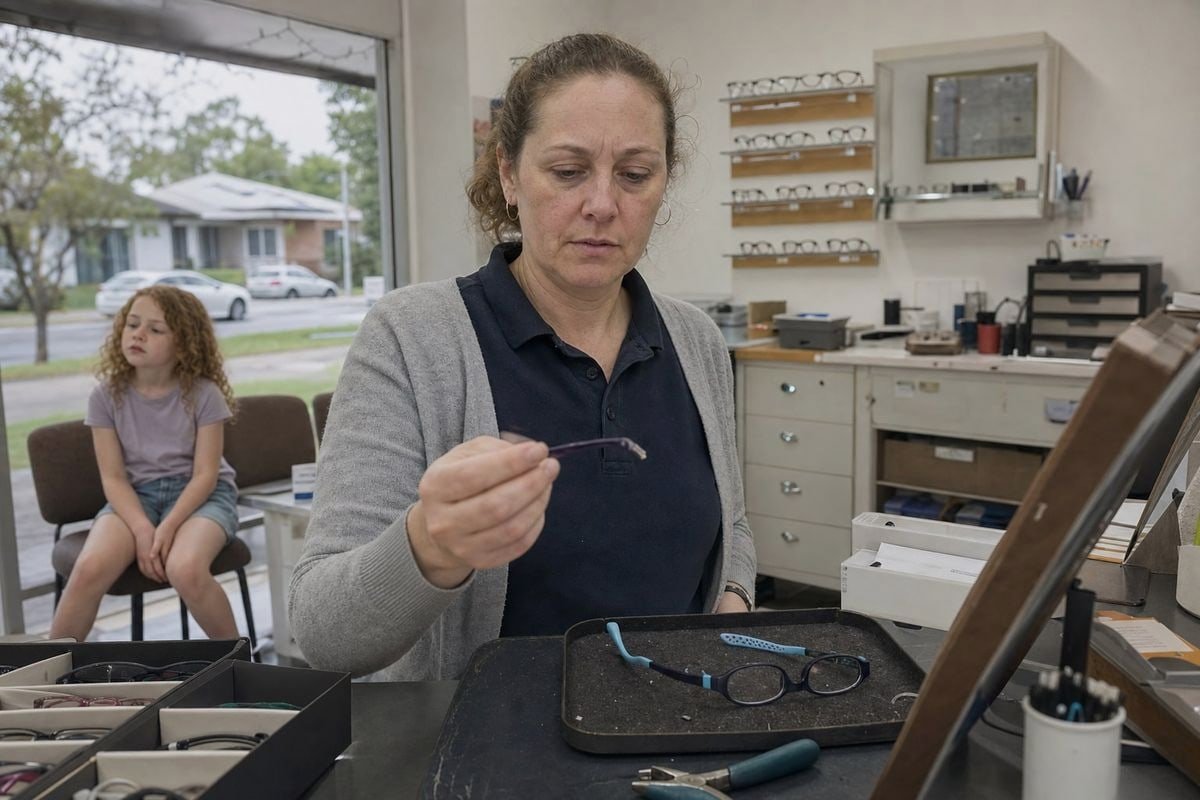
Frame breakage during in-store fitting of kids optical frames frustrates every optical retailer we supply. Broken hinges, snapped temples, cracked bridges — each one costs money and trust.
To reduce frame breakage when fitting kids optical frames in-store, choose flexible materials like TR90 or TPEE, use spring hinges, train staff in gentle low-heat adjustment techniques, fit the frame to the child’s current face, and source from manufacturers who engineer break-resistance into the design.
Each of those five points deserves a closer look. Below, I break down the materials, the training, the designs, and the sourcing decisions that matter most. Let’s start with materials.
What Frame Materials Should I Choose to Prevent Breakage During Fitting?
A distributor in Australia once returned a sample box to our Taizhou factory with three snapped acetate temples inside. His dispensers had adjusted them cold. That box changed how we talk about materials.
Choose TR90, TPEE, or Grilamid for kids optical frames because these high-memory polymers flex and recover instead of snapping. Rigid acetate and cheap injection plastics crack under adjustment stress, while flexible nylon-based materials tolerate bending, twisting, and repeated in-store fitting without structural failure.
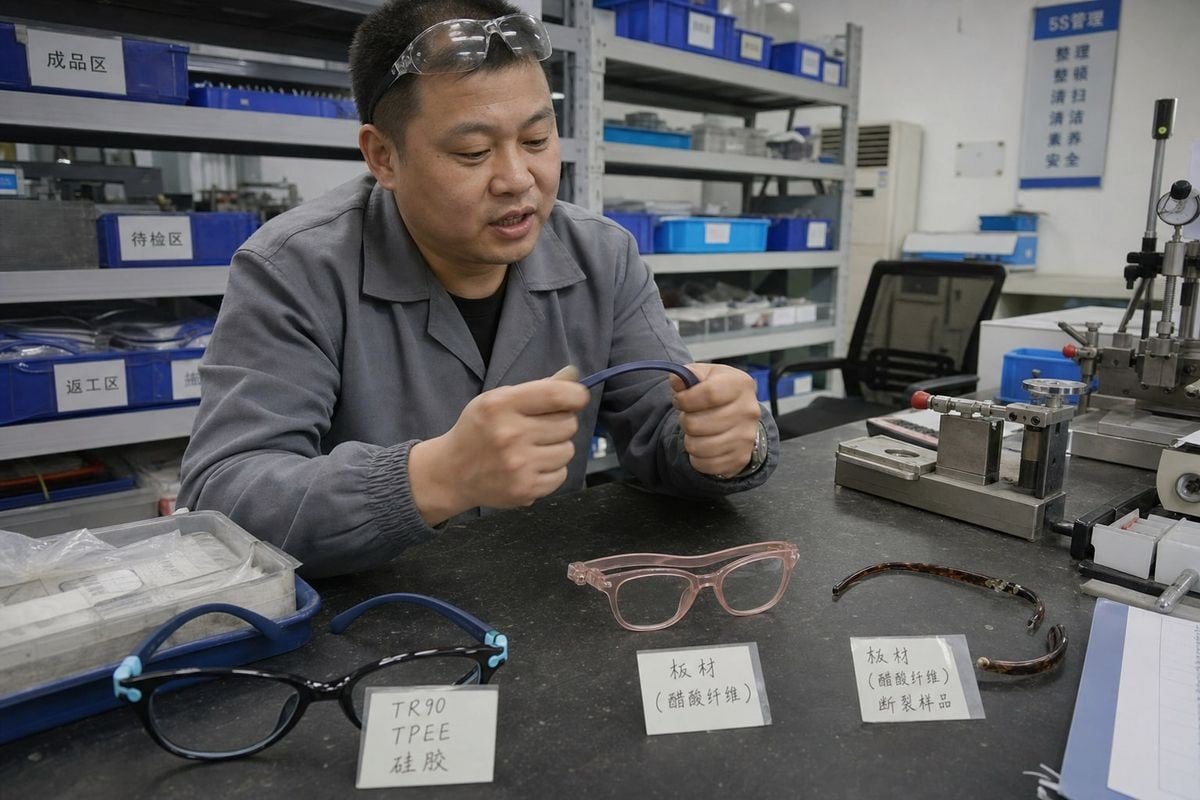
Material choice is the single biggest lever you control before a child ever sits in your fitting chair. In our fifteen years making children's eyewear, the frames that come back broken are almost never the flexible ones. They are the rigid ones that a dispenser tried to force into shape.
Why High-Memory Polymers Win
TR90 material is a nylon-based polymer 1 with shape memory. You can twist a TR90 temple, and it returns to its original form. TPEE goes even further. It is a thermoplastic elastomer 2, so soft and flexible that a toddler can chew on a temple tip without cracking it. We pair TR90 fronts with TPEE temples in many of our styles for exactly this reason: the front holds the lenses in stable alignment, while the temples absorb the abuse.
Here is how the common options compare during in-store fitting:
| Material | Flex Tolerance | Adjustment Risk | Best For |
|---|---|---|---|
| TR90 | High — bends and recovers | Low, but avoid excess heat | Everyday kids optical frames |
| TPEE | Very high — near unbreakable | Very low | Temples, babies, toddlers |
| Acetate | Moderate — needs careful heating | High if cold-adjusted | Fashion-focused older kids |
| Cheap injection plastic | Low — brittle | Very high | Avoid for active children |
| Metal with nose pads | N/A — bends, holds shape | Moderate, screws loosen | Flat or wide nasal bridges |
The Flexibility vs. Adjustability Trade-Off
Some buyers push back here. They worry that a highly flexible frame will not hold a precise optical alignment. That concern is fair, but it misreads how pediatric dispensing 3 actually works. A well-sized flexible frame needs fewer adjustments in the first place, because it conforms to the face instead of fighting it. Metal frames offer finer temple adjustment, but they also introduce screws and pads that loosen over months of rough wear. For most active children, we recommend flexibility first, and metal only for specific bridge fit challenges.
How Can I Train My Store Staff to Fit Kids' Frames Without Damaging Them?
The trade-off we weigh constantly at our factory is this: engineer a frame that survives rough hands, or help stores develop gentler hands. The honest answer is you need both.
Train staff to use minimal heat at correct frame warmer temperature, make small incremental temple adjustments instead of forceful bends, control lens insertion pressure, use padded optical pliers, and teach every child two-hand removal before the family leaves the dispensing table.
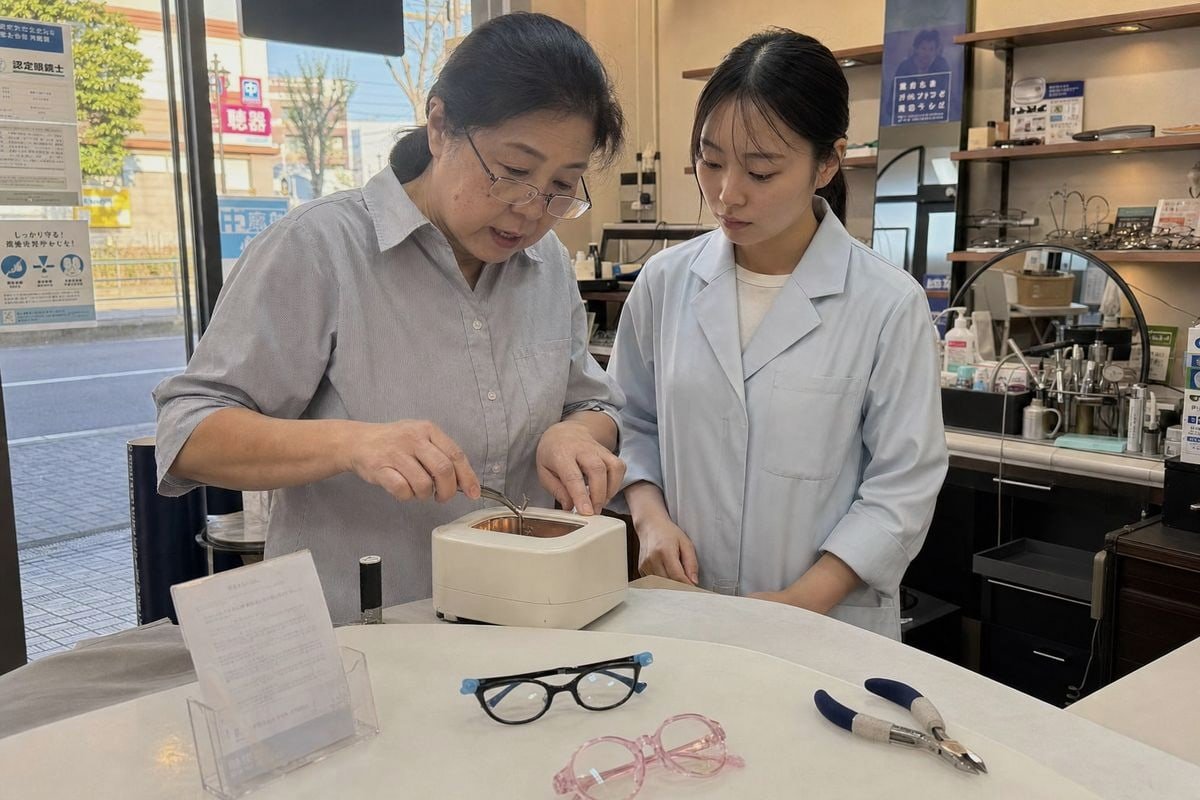
Staff technique matters as much as material. We have visited optical shops in Japan and Europe where dispensers handle kids optical frames beautifully, and others where good frames die on the bench. The difference is almost always training, not talent.
A Five-Step Fitting Protocol for Staff
- Size the frame to the face now, not for growth. An oversized frame slides, and a sliding frame gets pushed, grabbed, and bent all day. Fit for today.
- Check the bridge fit first. The bridge should sit snugly with no gap at the top of the nose. Poor bridge fit causes slippage, and slippage causes handling, and handling causes breakage.
- Adjust in small steps. One large forceful bend creates stress fractures you cannot see. Three small bends with rest between them do not. Use padded optical pliers, never bare metal jaws, on polymer frames.
- Respect heat limits. If you must warm a frame, verify the frame warmer temperature. Overheated TR90 loses its molecular memory 4 and turns brittle. Many modern polymers respond better to a cold glazing technique, where lenses are inserted without heat at all. Ask your frame supplier which method each material needs.
- Teach two-hand removal. Before the family leaves, have the child practice removing the glasses with both hands. One-handed removal is the top cause of hinge and temple failure at home, and the habit starts on day one.
Dynamic Fit Testing
Do not judge fit while the child sits still. Have them look down, smile, shake their head, and walk. If the frame bounces or slides, adjust now. A frame the child never touches is a frame that rarely breaks.
Which Frame Designs Are More Durable for Active Children During Try-Ons?
When we developed our black-and-navy sports style with light blue silicone hinge connectors 5, the design brief was one line: survive a hundred try-ons a day on a retail wall.
The most durable kids frame designs combine spring hinges or flexible silicone hinge connectors, rounded rectangular shapes without sharp corners, one-piece or reinforced bridges, wraparound or hooked temple tips for grip, and modular parts that can be replaced individually after damage.
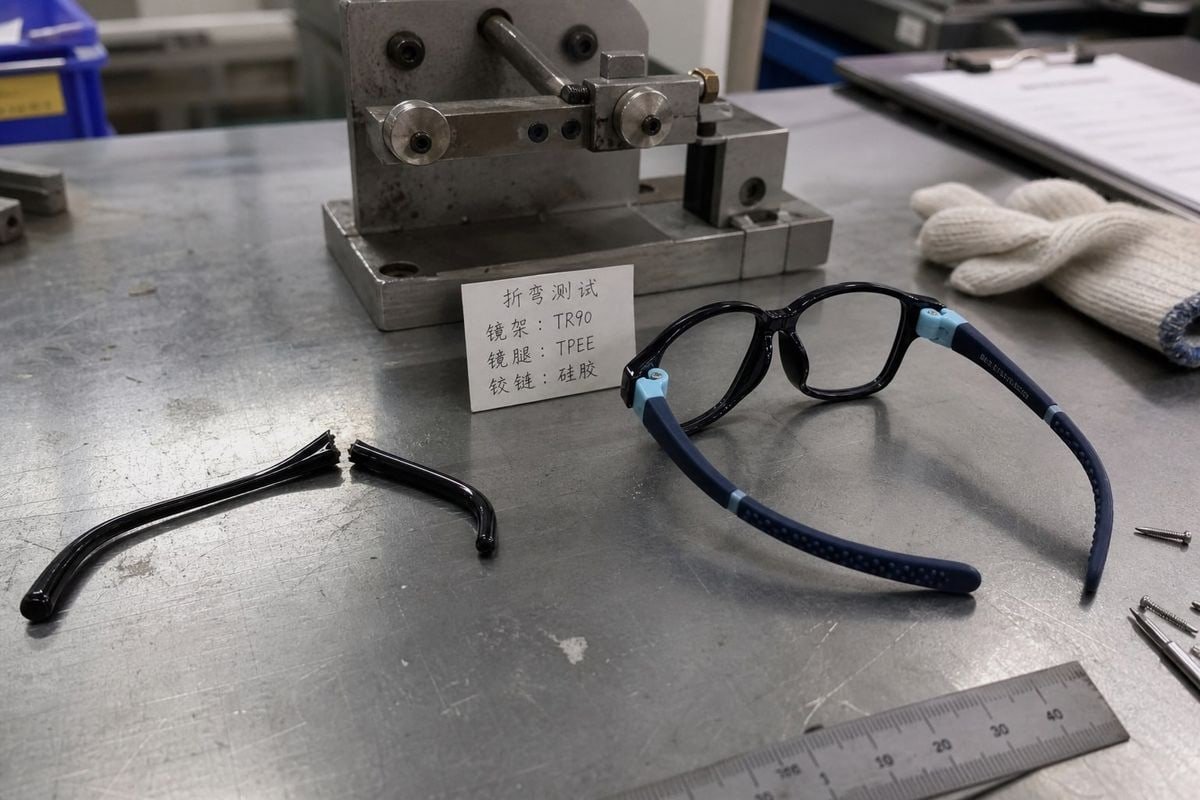
Design decides where fitting stress goes. A good children's frame routes stress away from weak points like hinge screws and thin eyewire, and into parts built to flex. Here are the design features we prioritize across our range of roughly 800 existing styles, and why each one matters during in-store try-ons.
Hinges: The First Point of Failure
Spring hinges are the classic answer. They allow the temples to flex outward past 90 degrees and snap back, which neutralizes the stress of one-handed removal and wide little faces. On our flexible styles, we go a step further with molded silicone hinge connectors, which have no screws at all. No screw means nothing to strip, loosen, or shear during repeated try-ons.
Temples and Retention
Curved, downward-hooking temple tips — like the soft rounded hooks on our sport frames — keep glasses stable during play without pressure behind the ear. For toddlers and high-energy kids, adjustable silicone ear hooks or cable temples stop the frame from launching off the face and hitting the floor. Fewer floor impacts, fewer breaks.
| Design Feature | Stress It Absorbs | Best Age Group |
|---|---|---|
| Spring hinges | Outward temple flex | 5–14 years |
| Silicone hinge connectors | All-direction hinge stress | 1–8 years |
| Hooked TPEE temple tips | Slippage and drop impact | 1–10 years |
| Reinforced saddle bridge | Nose pressure and front twist | All ages |
| Rounded rectangular front | Corner impact from drops | All ages |
Lenses as Structure
Do not overlook the lens itself. Polycarbonate and Trivex lenses 6 are impact-resistant, and once glazed, they act as internal structural support for the eyewire. A frame with a proper lens seated at correct lens insertion pressure is measurably stiffer and more crack-resistant than an empty demo frame.
How Do I Choose a Manufacturer That Builds Break-Resistant Kids Optical Frames?
A procurement manager from a European kids brand once asked me a sharp question during a factory visit: how do you prove durability before I place an order? I handed her a temple and told her to try to break it.
Choose a manufacturer with proven flexible-material expertise in TR90 and TPEE, documented quality control, screwless or spring hinge construction, child-safety testing on edges and materials, OEM/ODM support for custom durability specs, and a large existing style library to reduce your development risk.
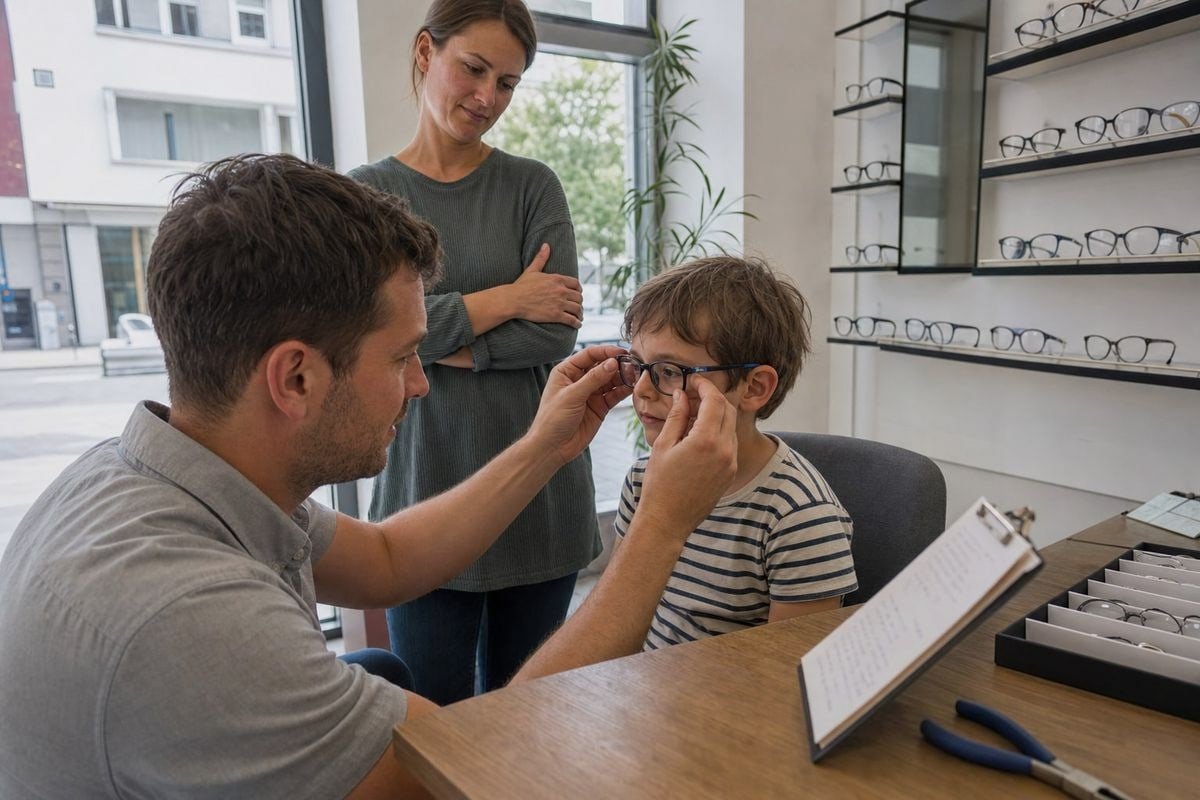
Break-resistance is built into a frame long before it reaches your dispensing table. That means your supplier decision is a breakage-prevention decision. After fifteen years running our workshop in Taizhou with around 120 workers under 5S management, I can tell you what separates a genuine children's eyewear factory from a generic supplier relabeling adult molds.
Questions to Ask Any Supplier
Use this checklist when you evaluate a factory:
| What to Ask | What a Good Answer Looks Like |
|---|---|
| What materials do you specialize in? | Named polymers like TR90 and TPEE, with reasons, not just "plastic" |
| How do you test durability? | Flex, twist, and drop checks in routine QC, not only on request |
| Are edges child-safe? | Rounded fronts, no sharp corners, smooth molded finishes |
| Can I customize durability features? | Yes — hinge type, temple material, bridge shape, colors, logos, packaging |
| Do I need new molds to start? | No — a large existing style library lets you test the market first |
| Who handles fitting questions later? | A named contact who answers dispensing-related questions quickly |
Why Factory-Direct Matters for Durability
Traders cannot answer material questions with authority. A factory can. When a buyer asks us whether a specific style tolerates a cold glazing technique, or what adjustment method suits a TPEE temple, our engineers answer from the production line, not from a catalog. That knowledge flows into the fitting guidance we provide, which flows into fewer breakages in your store. We also support full OEM/ODM programs 7 — custom colors, logos, lenses, and retail-ready packaging — so the durable frame you source also looks like your brand on the shelf.
One more practical point: ask about modular spare parts. A supplier who can ship replacement temples or bridge components lets you repair a frame in minutes instead of writing it off.
Conclusion
Frame breakage is preventable. Choose flexible TR90 and TPEE materials, train staff in gentle pediatric dispensing, pick spring-hinge and screwless designs, and partner with a factory that engineers durability in from the start.
Footnotes
1. Authoritative technical data on Grilamid TR90, a key nylon-based polymer used in flexible eyewear. ↩︎
2. Explains the flexible material properties of TPEE used in durable kids’ frames. ↩︎
3. Provides professional guidelines for fitting and dispensing eyewear to children safely. ↩︎
4. Scientific explanation of shape-memory polymers and their thermal properties during adjustment. ↩︎
5. Authoritative source for the physical properties and flexibility of silicone elastomers used in eyewear components. ↩︎
6. Details the impact-resistant properties of Trivex lenses for pediatric structural support. ↩︎
7. Defines the manufacturing models for original equipment and design used in custom eyewear production. ↩︎
More Articles You Might Like
August 5, 2026
Bio-Based vs Regular Cellulose Acetate: What's the Difference for Kids' Frames?
August 5, 2026
How Recyclable Are Kids' Optical Frame Materials, and What Eco-Friendly Alternatives Exist?
August 5, 2026
Do Kids Optical Frames Whiten or Age in Storage, and How to Control Warehouse Conditions?
Looking for a Reliable Kids Eyewear Partner?
Explore 800+ ready styles and full OEM/ODM support tailored to your brand.
Get in Touch English
  Español de México
  Deutsch
  Français
  日本語
日本語  العربية
  Português do Brasil