How to Negotiate Display Props and Rack Support with Kids Optical Frames Suppliers?
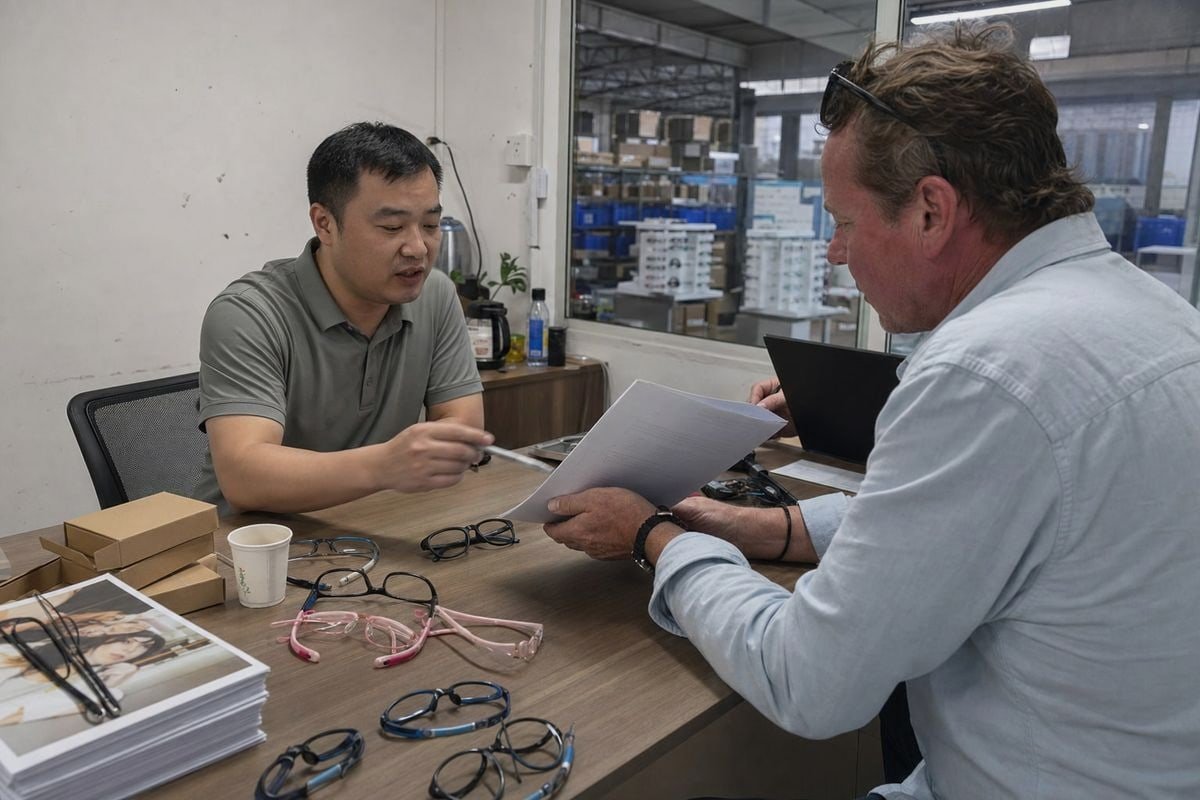
Negotiating display props and rack support with kids optical frames suppliers frustrates many buyers retail-ready packaging 1. I see it constantly when brands approach our Taizhou factory: great frames arrive, then sit invisible on generic shelves, killing sell-through before the reorder ever comes.
To negotiate display props and rack support with kids optical frames suppliers, tie fixture requests to your Minimum Order Quantity, present sell-through data, ask for tiered support (free props, replacement parts, custom racks), and put every commitment — ownership, freight, warranty, replacements — in the written supplier agreement.
That is the short version. Below, I will walk through what support you can realistically expect, how to structure the ask, and how to protect it on paper.
What display and rack support can I actually expect from a kids optical frames supplier?
A buyer from Australia once asked me, mid-sample review, whether our factory could "throw in some stands." That question opened a two-hour conversation, because display support is far broader than most buyers realize.
A kids optical frames supplier can typically provide countertop displays, floor racks, demo trays, branded signage, replacement hooks and clips, retail-ready packaging, and sometimes custom merchandising kits. The level of support scales with your order volume, reorder history, and the length of your partnership.
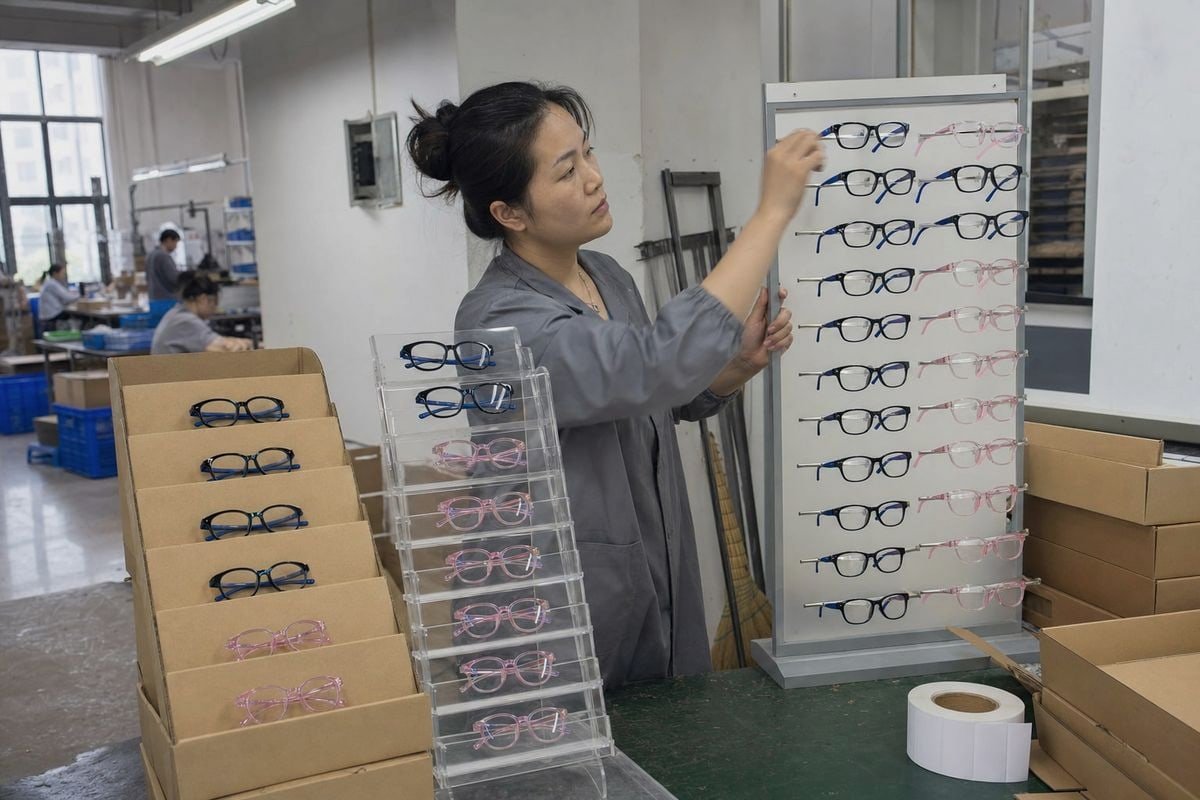
Display props are not a single item. They are a category, and in our fifteen years producing children's eyewear 2 for buyers in more than twenty countries, we have seen the full spectrum of requests. Understanding the menu before you negotiate helps you ask precisely, and precise asks get better answers than vague ones.
The support spectrum, from basic to premium
Here is how support typically breaks down by tier. Not every supplier offers every layer, but this table gives you a realistic map of what exists in the market.
| Support Tier | Typical Items | Usually Offered To |
|---|---|---|
| Basic | Cardboard countertop displays, generic acrylic stands, demo trays | First-time buyers, small MOQ orders |
| Mid-tier | Branded countertop displays, replacement hooks, POP signage, pre-ticketed tags | Repeat buyers with consistent reorders |
| Premium | Custom floor racks, child-height fixtures, seasonal signage refreshes, co-branded materials | High-volume partners, multi-line accounts |
Why kids frames need different fixtures
Children's eyewear has specific merchandising needs. Fixtures should sit lower so kids can see and reach the frames. Slot spacing must fit smaller frame dimensions — adult racks leave kids frames swimming in oversized channels. Construction must be sturdy and anti-tip, because children grab, pull, and lean. When we develop TPEE and TR90 frames 3 at our workshop, we already assume they will survive rough handling; the display holding them should meet the same standard.
Visual merchandising also matters more in the pediatric optical space 4 than many buyers assume. Parents make the purchase, but children influence it. Point of Purchase (POP) displays 5 with playful colors, engaging shapes, and clear try-on access convert browsing into fitting. Some of our brand clients even request oversized, photo-friendly props to encourage parents to share store visits on social media — a small investment that generates organic pediatric optical marketing at zero media cost.
So set your expectations by tier, know what kids-specific features to demand, and treat the fixture as part of the product package, not an afterthought.
How do I negotiate MOQs and costs when requesting display props from my supplier?
The hardest trade-off I weigh in these conversations is fixture cost versus relationship value. A custom rack can cost more than a hundred frames, so when a buyer requests free displays on a small opening order, I have to balance goodwill against real production economics.
Negotiate display props by bundling them into a starter package tied to a defined MOQ. Offer volume commitments, multi-line orders, or reorder minimums in exchange for free or subsidized fixtures. If the supplier resists, propose consignment racks, partial subsidies, or tiered support unlocked by sales milestones.

The core principle is simple: suppliers do not give away fixtures, they invest in accounts. Your job is to make the investment case obvious. When a buyer shows me a planogram 6, an expected annual unit volume, and a reorder cadence, the fixture conversation gets easy. When a buyer just asks "can I get free stands," it stalls.
Frame the ask as sell-through protection
Position display requests as sell-through protection, not as a discount. A professional fixture accelerates inventory turnover rate 7, which means faster reorders for the supplier. Say it plainly: "This rack helps me sell your frames faster, which means I buy from you more often." That reframing turns a cost discussion into a shared-revenue discussion. In our experience exporting to Europe, Japan, and Australia, buyers who connect fixtures to turnover almost always secure better terms than buyers who treat props as freebies.
Use a layered negotiation structure
Never make one big ask. Layer it, so the supplier can say yes at multiple levels.
| Ask Level | What You Request | What You Offer |
|---|---|---|
| Base | Free or discounted countertop displays with the opening order | Meeting the standard MOQ |
| Mid | Replacement parts, branded signage, extra demo trays, setup guidance | A committed reorder schedule or second product line |
| High | Custom merchandising package or exclusive floor display | Annual volume commitment, territory performance, or sell-through data sharing |
That last offer deserves attention. Shelf-space data — which styles move, from which rack positions — is genuinely valuable to a factory like ours. Because we maintain roughly 800 existing styles, sell-through heat maps tell us which designs to keep in tooling and which colorways to develop. Offering that data access is a real bargaining chip, and it costs you almost nothing.
Handle the common objections
Some suppliers will say display props are not included. Do not abandon the ask. Counter with a bundled first-order package, a fifty-percent subsidy, or a performance-based upgrade clause: basic stands now, premium permanent fixtures when you hit an agreed sales milestone. If the supplier only stocks generic racks, negotiate around it — branded signage, child-friendly presentation accessories, and better hooks can transform a generic fixture at a fraction of custom tooling cost. Also ask about co-op marketing funds; some vendor support programs will reimburse part of your fixture spend against documented purchases.
What should I ask for when requesting custom branded display racks for my retail partners?
A lesson our team learned the hard way: a distributor once ordered branded floor racks for a frame line, then discontinued half the line six months later. The racks still advertised styles nobody stocked. Since then, we push every buyer to plan branding, flexibility, and lifecycle together.
Request modular, child-height racks with adjustable slot spacing, durable anti-tip construction, your logo and brand colors, updatable signage panels, and retail-ready extras like pre-ticketed tags and branded mirrors. Confirm ownership terms, replacement part availability, and what happens when frame lines change.
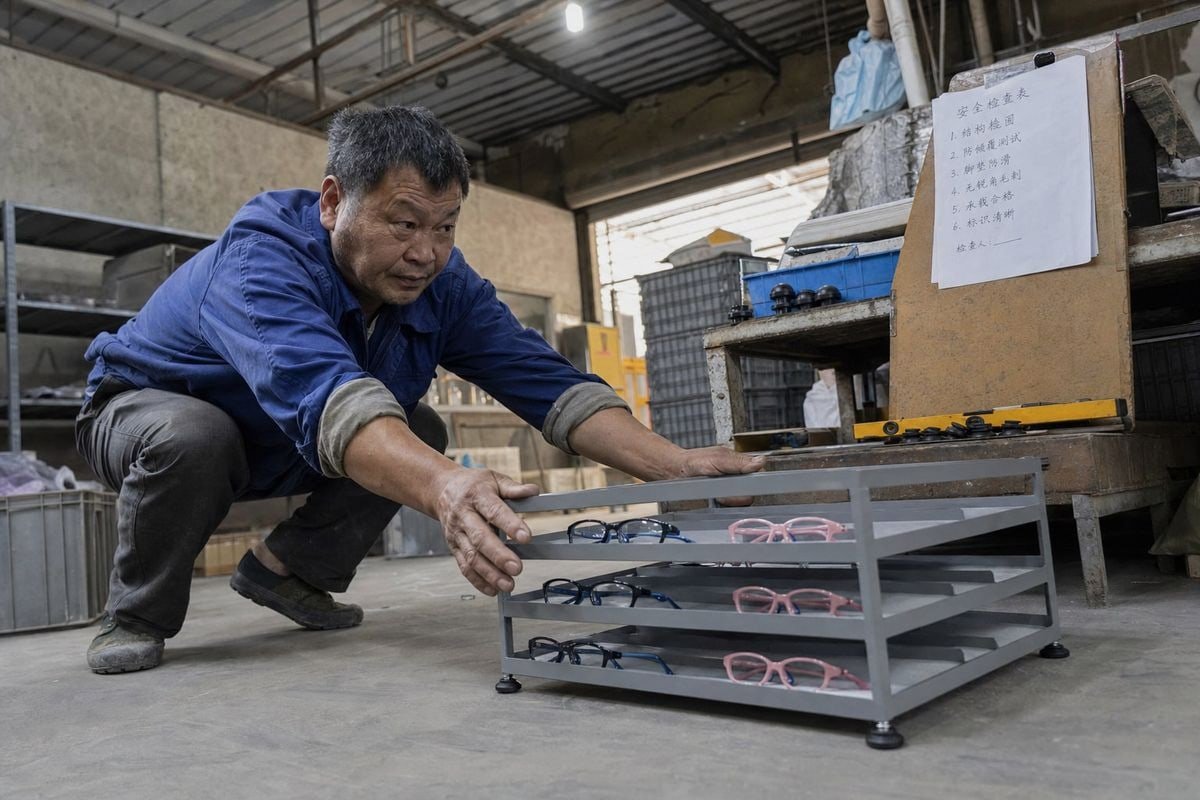
Custom branded displays are where OEM/ODM capability really shows. At our factory we already customize colors, logos, lenses, and packaging for brand clients, so extending that branding to the fixture is a natural step — but only if you specify it correctly. Vague briefs produce racks that look good in a rendering and fail on a shop floor.
Build your specification checklist
Walk through these points with your supplier before anything goes to production:
- Physical design. Child-height placement, modular shelving, slot spacing sized for kids frame dimensions, rounded edges, and anti-tip weighting. Safety is non-negotiable for a children's category.
- Branding. Logo placement, brand colors, and — critically — swappable signage panels. Fixed graphics lock you into today's assortment; updatable panels survive seasonal resets and new launches.
- Retail-ready support. Ask for pre-ticketed price tags, branded mirrors at child height, and try-on trays. Your retail partners have limited setup labor, and anything that arrives ready to merchandise strengthens your position in their retail space management decisions.
- Ownership model. Clarify whether racks are sold, loaned, or provided on consignment. Consignment or loan status on high-value displays can be excellent for cash flow — the supplier retains ownership but you get the equipment free — as long as reclaim conditions are written down.
- Lifecycle terms. Ask how discontinued frame lines are handled if the rack is branded for them, whether seasonal signage refreshes are included, and how replacement hooks, clips, and arms are supplied.
Think beyond the store
Two creative extras have worked well for our brand clients. First, Instagrammable oversized props or themed backdrops near the kids section drive organic engagement from parents. Second, community outreach kits — portable branded display racks with educational materials — let optical retailers support local school vision screenings while building brand visibility. Both are inexpensive to produce alongside a main fixture order, but you must ask for them explicitly; no supplier volunteers them.
How do I make sure display support commitments are included in my supplier agreement?
During a contract review with a European importer last year, we noticed their previous supplier had promised "ongoing rack support" verbally — and delivered nothing after order one. That experience shaped how we now document every fixture commitment for our own clients.
Put every display commitment in the written wholesale eyewear agreement: which props and racks are included, whether they are free, leased, or loaned, who pays freight and duties, warranty and replacement terms, the support duration, renewal conditions, and what happens if reordering stops or fixtures are reclaimed.

Verbal promises about "we'll take care of the rack" are worth nothing eighteen months later, when the sales rep has changed and the hooks are broken. Display arrangements are informal by habit in this industry, and informality is exactly where disputes grow. Treat fixture support like any other commercial term in your wholesale eyewear agreements: define it, price it, and time-bound it.
The clauses that actually matter
| Clause | What It Must State | Why It Matters |
|---|---|---|
| Inclusion list | Exact props, racks, quantities, and specifications | Prevents "we never promised that" disputes |
| Ownership | Free, discounted, leased, loaned, or consignment | Determines who can reclaim fixtures and when |
| Freight and duties | Who pays shipping, customs, and installation for fixtures and parts | Fixture freight is heavy and often forgotten |
| Damage and warranty | Free replacement of damaged or worn components, claim process, response time | A rack with missing hooks is a dead rack |
| Maintenance and signage | Seasonal signage updates and refresh schedule | Keeps displays current across launches |
| Term and renewal | How long support lasts and what triggers renewal or renegotiation | Support should survive beyond the first order |
| Exit conditions | What happens if reordering stops or the supplier reclaims branded fixtures | Protects both sides at relationship end |
Practical documentation habits
Ask direct, open-ended questions during negotiation and capture the answers in writing: What display props come with the first order? Who pays if a rack arrives damaged? Is there a warranty on the display hardware? How are backorders on replacement parts handled? Then fold those answers into the purchase order 8 or a support annex — an email confirmation is better than nothing, but a signed annex is better than an email.
Also plan for annual renegotiation. Your volume grows, your assortment changes, and your fixture needs evolve. Build a yearly review into the agreement so support scales with the relationship. If a supplier refuses to put any fixture commitment in writing, treat that as a genuine risk signal and decide whether the frame margin justifies the uncertainty. In our experience, factories that document support are also the factories that deliver frames on time — the discipline carries across.
Conclusion
Great kids frames die on bad fixtures. Negotiate display props as sell-through investments, layer your asks against MOQ commitments, and lock every promise into writing — that is how partnerships last.
Footnotes
1. Wikipedia provides a comprehensive and stable overview of retail-ready packaging standards. ↩︎
2. FDA provides regulatory standards for children’s eyewear to ensure safety and quality in the pediatric market. ↩︎
3. TPEE and TR90 are common thermoplastic elastomers used in durable eyewear for their flexibility and strength. ↩︎
4. Professional insights into the pediatric optical market help retailers optimize their merchandising strategies for children and parents. ↩︎
5. POP displays are specialized marketing materials placed near products to influence consumer buying decisions at the shelf. ↩︎
6. Planograms are visual diagrams used in retail to detail the placement of products on shelves or displays. ↩︎
7. Wikipedia is a highly authoritative and accessible source for financial definitions. ↩︎
8. Wikipedia is a reliable and accessible source for business and legal document definitions. ↩︎
More Articles You Might Like
August 5, 2026
Bio-Based vs Regular Cellulose Acetate: What's the Difference for Kids' Frames?

August 5, 2026
How Recyclable Are Kids' Optical Frame Materials, and What Eco-Friendly Alternatives Exist?
August 5, 2026
Do Kids Optical Frames Whiten or Age in Storage, and How to Control Warehouse Conditions?
Looking for a Reliable Kids Eyewear Partner?
Explore 800+ ready styles and full OEM/ODM support tailored to your brand.
Get in Touch English
  Español de México
  Deutsch
  Français
  日本語
日本語  العربية
  Português do Brasil