How Much Does All-Risk Insurance Help Vs Carrier Liability for Kids’ Optical Frames Ocean Freight?
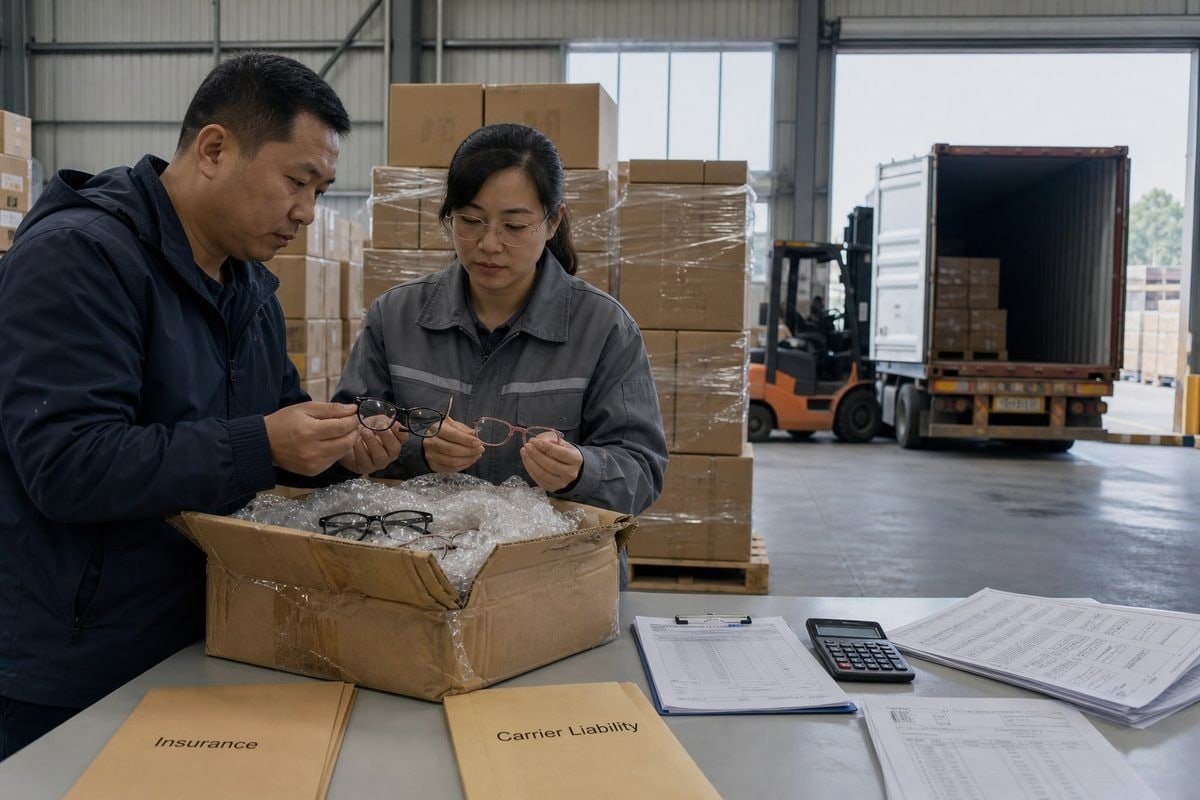
All-risk insurance vs carrier liability is a question our buyers ask constantly Carriage of Goods by Sea Act (COGSA) 1. After fifteen years shipping kids’ optical frames by sea, I’ve seen the wrong choice erase an entire season’s margin.
All-risk insurance helps far more than carrier liability for kids’ optical frames shipped by ocean freight. Carrier liability is often capped near $500 per package under COGSA and requires proving fault, while all-risk covers up to 110% of invoice value for a premium around 0.2%–0.8%.
That short answer hides a lot of detail. Below, I break down real costs, real coverage gaps, and how to file a claim if things go wrong.
How much does all-risk insurance actually cost compared to relying on carrier liability alone?
Last year, a buyer of our TR90 kids optical frames balked at a small insurance quote. Then we ran the math together on his container value, and his hesitation disappeared fast.
All-risk marine cargo insurance typically costs 0.2%–0.8% of declared cargo value for ocean shipments. Carrier liability costs nothing extra, but it recovers only $500 per package under COGSA, which often leaves 80%–90% of the actual value of kids' optical frames completely unprotected.
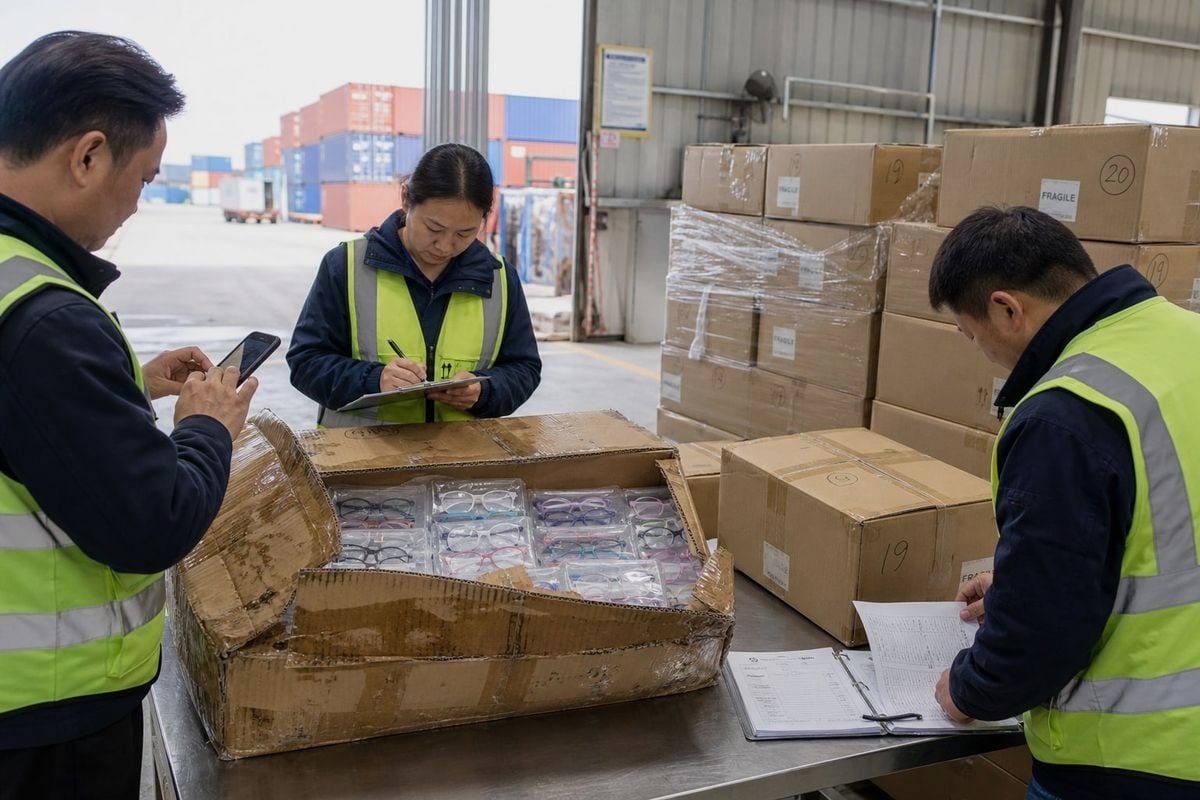
Let me put real numbers behind this, because "insurance premium costs" only make sense next to what you stand to lose. A typical wholesale shipment of children's optical frames from our factory in Taizhou might carry an invoice value of $20,000 to $60,000 in a single containerized cargo booking. Here is how the two options compare in plain figures.
A side-by-side cost example
| Factor | Carrier liability only | All-risk marine cargo insurance 2 |
|---|---|---|
| Upfront cost | $0 | ~0.2%–0.8% of cargo value ($40–$240 on a $30,000 shipment) |
| Coverage basis | Weight or package count | Declared value coverage, often up to 110% of invoice |
| COGSA cap example | ~$500 per package | Not capped by package |
| Burden of proof | Shipper must prove carrier fault | Insurer must prove an exclusion applies |
| Partial damage | Rarely recoverable | Usually covered |
So the real question is not "how much does insurance cost?" It is "how much exposure am I accepting to save $100?" On a $30,000 order of frames packed into, say, 30 master cartons, carrier liability might theoretically return $15,000 — but only if you prove negligence, which rarely succeeds. In practice, recoveries against carriers are slow, contested, and small. The all-risk premium is a rounding error in your international logistics costs. From what I've watched buyers go through, the premium is the cheapest line item on the entire freight invoice relative to what it protects.
What does carrier liability really cover if my kids' optical frames are damaged or lost at sea?
The hardest email I've had to send a client explained why the shipping line owed him almost nothing after a wet container ruined his acetate frames. He assumed "liability" meant "insurance." It does not.
Carrier liability covers loss or damage only when the shipper proves the carrier was legally at fault, and payouts are capped by the Carriage of Goods by Sea Act (COGSA) at roughly $500 per package or by weight-based limits — usually a small fraction of frame value.

Carrier liability is a legal responsibility written into your bill of lading 3 terms, not an insurance policy. That distinction changes everything. Under most ocean freight regimes, the carrier is only liable when their negligence caused the loss, and even then, recovery is capped by convention — commonly $500 per package under COGSA for US-bound freight, or limits expressed in SDR units elsewhere.
The exclusions stacked against you
Carriers also enjoy broad legal defenses. Common ones include:
- Acts of God — storms, extreme weather, and other natural events at sea
- Inadequate packaging — if cartons fail, the carrier walks away
- Theft without proven negligence — pilferage is often unrecoverable
- Errors in navigation or ship management — a classic ocean carrier defense
- Inherent vice — damage attributed to the nature of the goods themselves
Now think about how kids' optical frames actually get damaged. Container condensation warps acetate. Stack compression crushes cartons and scratches lenses. Rough handling snaps hinges. In most of those scenarios, proving the carrier's specific fault is nearly impossible — you were not on the vessel, and the carrier controls the evidence. Loss and damage claims against carriers routinely stall for months and settle for pennies. Freight forwarder liability is similarly limited, so your forwarder's terms rarely rescue you either. For fragile, high-per-unit-value goods like children's eyewear, carrier liability is a fallback for catastrophic, provable losses. It is not meaningful risk transfer, and treating it as such is one of the most common supply chain risk management mistakes I see new importers make.
When should I upgrade from carrier liability to all-risk insurance for my orders?
One trade-off we discuss with every new eyewear brand ordering from our catalog of roughly 800 existing styles: sample shipments can tolerate risk, but a launch container cannot. The upgrade decision depends on what a loss would actually do to your business.
Upgrade to all-risk insurance whenever your shipment is fragile, high-value, seasonal, or hard to replace — which describes nearly every commercial order of kids' optical frames. Rely on carrier liability alone only for low-value, easily replaceable samples where a total loss would not hurt.
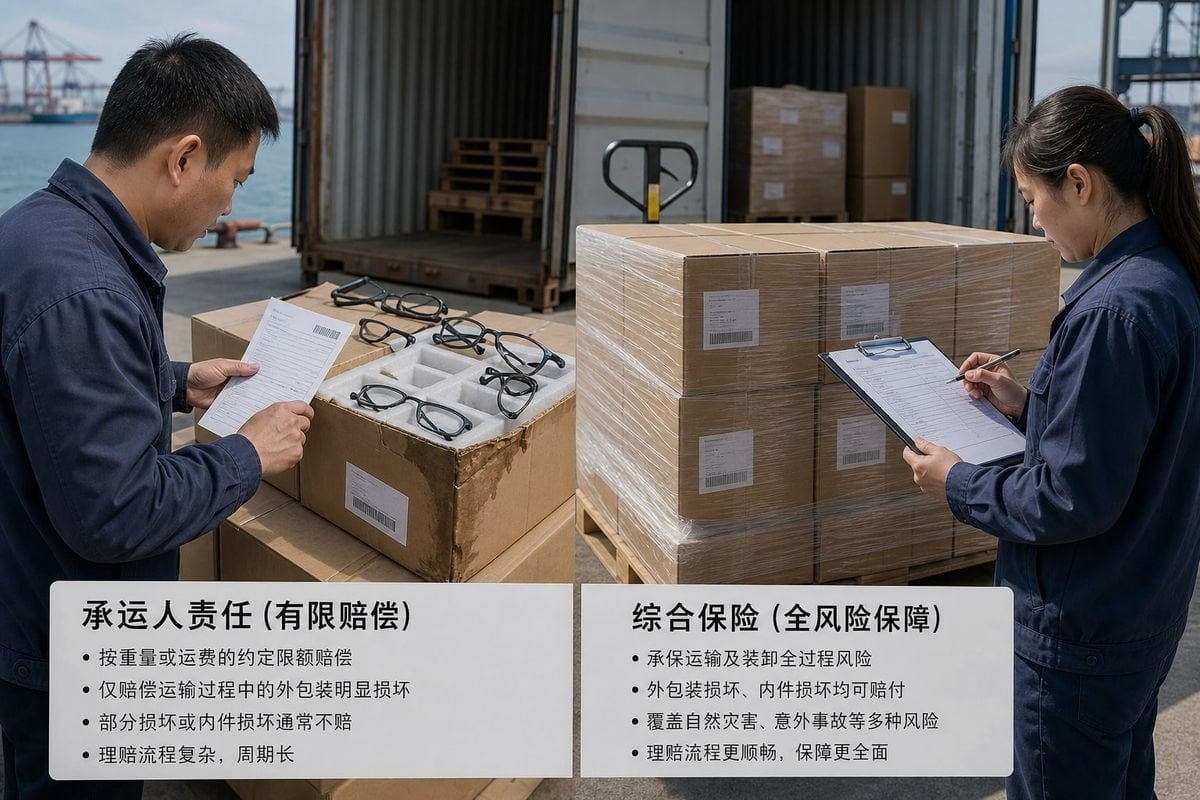
Children's optical frames fail the "carrier liability is enough" test on almost every dimension. They are fragile. They carry high value per kilogram, which makes weight-based liability formulas laughably inadequate. And they are often tied to seasonal windows — back-to-school programs, holiday retail sets — where a delayed or damaged shipment means lost revenue and damaged retailer relationships, not just a replacement order.
A practical decision table
| Shipment scenario | Recommended protection | Why |
|---|---|---|
| Small sample parcels for evaluation | Carrier liability may suffice | Low value, easy to resend quickly |
| First commercial order for a brand launch | All-risk insurance | Launch dates and retailer commitments at stake |
| Seasonal back-to-school inventory | All-risk insurance | Missed sales window cannot be recovered |
| Large replenishment container | All-risk insurance | Value far exceeds any liability cap |
Watch your Incoterms before you assume you're covered
Here is a trap I warn buyers about often. Incoterms responsibilities 4 determine who insures what, and where risk transfers. Under FOB, risk passes to you at the origin port — and no one insures the ocean leg unless you do. Under CIF, the seller must provide insurance, but only minimum-level cover, which typically excludes most of the partial-damage scenarios that ruin optical frames. Buyers who assume CIF means "fully insured" discover the gap only at claim time. My advice: control the insurance yourself, specify all-risk terms with door-to-door coverage, and declare value at 110% of invoice to capture landed costs and lost margin. On our side, we support this by supplying export-grade packing specifications and full documentation, so your policy stands on solid ground.
How do I file a claim if my shipment of frames arrives damaged during ocean freight?
A distributor in Europe once called us in a panic: three cartons of translucent pink acetate frames arrived crushed. Because we had prepared the paperwork together before shipping, his claim settled cleanly. Preparation is the whole game.
To file a claim, note damage on the delivery receipt immediately, photograph everything before unpacking further, notify the carrier and insurer in writing within policy deadlines, preserve the damaged goods and packaging, and submit the bill of lading, commercial invoice, packing list, and a survey report.
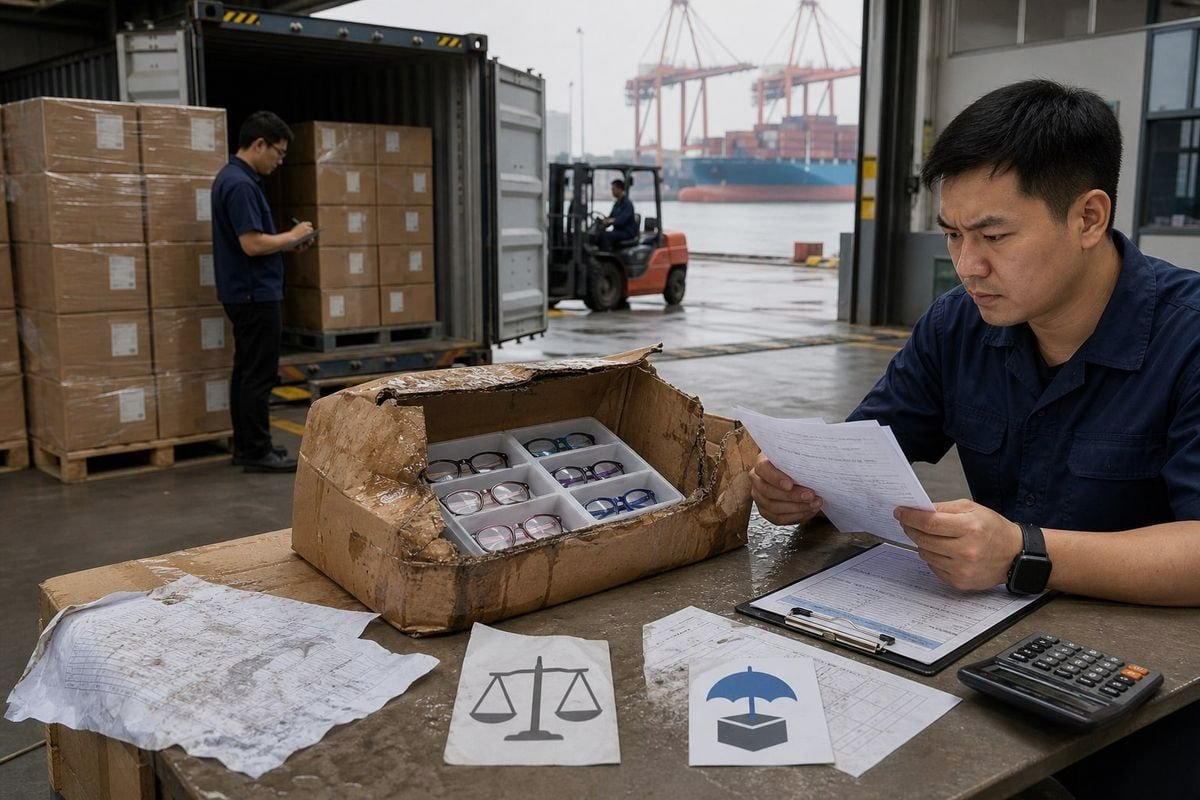
The claims process rewards discipline and punishes delay. Insurers and carriers both look for reasons to reduce or deny loss and damage claims, and missing a notice deadline or discarding evidence hands them one. Here is the sequence I walk our clients through.
Step-by-step claims process
- Inspect at delivery. Open enough cartons to spot damage before signing. Write exceptions like "cartons crushed, water-stained" directly on the delivery receipt.
- Document immediately. Photograph the container seal, carton condition, inner packing, and damaged frames. Timestamped photos are your strongest evidence.
- Give written notice fast. Notify the carrier and your insurer in writing. Concealed damage windows can be as short as three days for ocean freight.
- Preserve everything. Do not throw away damaged frames or packaging. The insurer may send a surveyor to inspect.
- Assemble documents. You will need the bill of lading, commercial invoice, packing list, insurance certificate, and photos or a survey report.
- Quantify the loss. For optical frames, argue commercial loss honestly — warped or scratched frames are unsellable even when technically "present."
| Document | Who provides it | Why it matters |
|---|---|---|
| Bill of lading | Carrier / forwarder | Proves carriage terms and cargo condition at loading |
| Commercial invoice | Supplier | Establishes declared value coverage basis |
| Packing list | Supplier | Confirms quantities and carton contents |
| Survey report | Independent surveyor | Independent evidence of cause and extent |
| Delivery receipt with exceptions | Consignee | Anchors the timeline of discovered damage |
One caveat: even an all-risk policy can deny a claim if damage traces back to insufficient packing. That is why shipping fragile goods like children's frames demands export-grade, multi-layered cartons with moisture barriers and shock protection. We build that into our standard export packing precisely because it protects both the frames and your claim.
Conclusion
A damaged container can wipe out a season. Carrier liability won't save you; it caps recovery near $500 per package. For kids' optical frames, all-risk insurance is the rational, inexpensive protection — pair it with export-grade packing and clear Incoterms.
Footnotes
1. Defines COGSA as a federal law governing rights and obligations for ocean cargo shipments. ↩︎
2. Provides a clear definition of all-risk cargo insurance from a reputable logistics platform. ↩︎
3. Provides a legal definition and explanation of a bill of lading from a university law institute. ↩︎
4. Official government resource defining Incoterms rules and their role in international trade. ↩︎
More Articles You Might Like

August 5, 2026
Bio-Based vs Regular Cellulose Acetate: What's the Difference for Kids' Frames?

August 5, 2026
How Recyclable Are Kids' Optical Frame Materials, and What Eco-Friendly Alternatives Exist?

August 5, 2026
Do Kids Optical Frames Whiten or Age in Storage, and How to Control Warehouse Conditions?
Looking for a Reliable Kids Eyewear Partner?
Explore 800+ ready styles and full OEM/ODM support tailored to your brand.
Get in Touch English
  Español de México
  Deutsch
  Français
  日本語
日本語  العربية
  Português do Brasil