How Long Do Kids’ Optical Frames Last Before Needing Replacement?
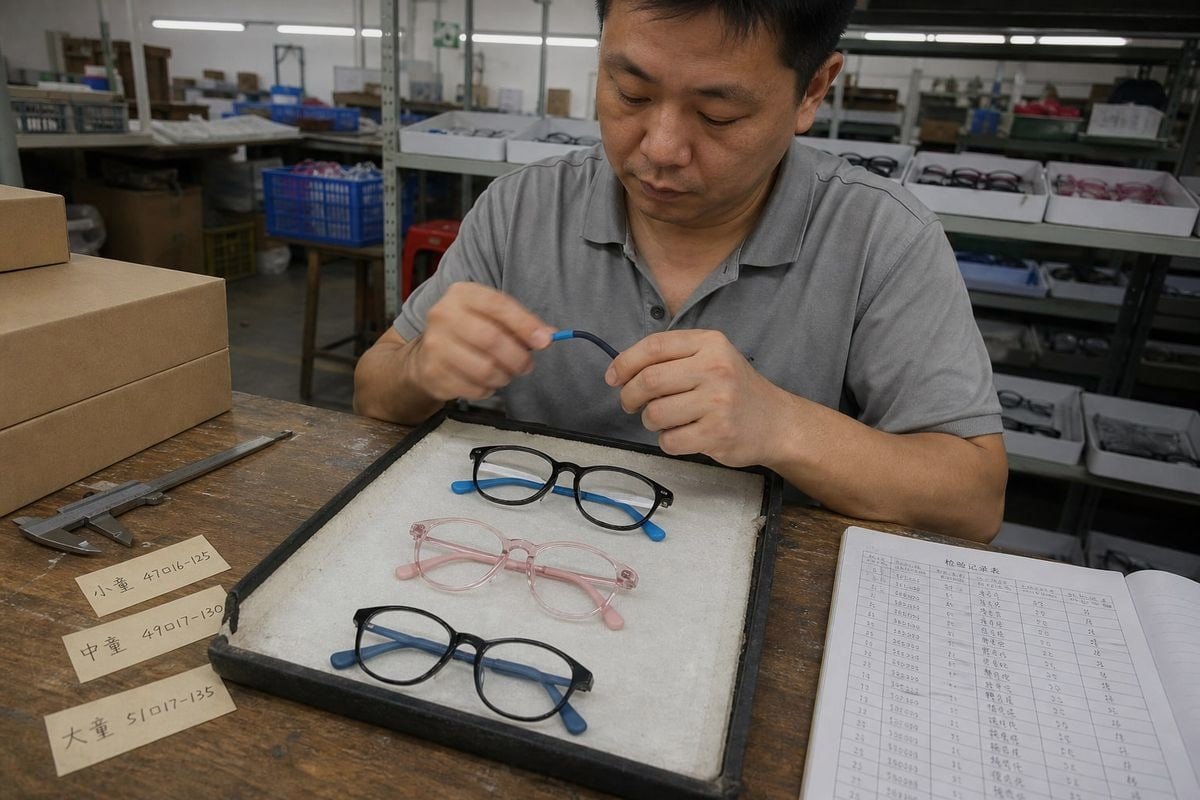
Kids’ optical frames rarely fail on a predictable schedule, and that uncertainty frustrates parents and buyers alike. On our production line in Taizhou, this question shapes almost every design decision we make.
Kids’ optical frames typically last 6 to 24 months before needing replacement. Toddlers may outgrow frames in 3–6 months, preschoolers in 6–12 months, and school-age children can often wear one pair for 18–24 months if the fit stays correct and the material is durable.
That range is wide for a reason. Age, growth rate, material quality, and daily habits all pull the timeline in different directions. Let me break down each factor so you can plan replacements with confidence.
How can I tell if my child's optical frames are worn out or still safe to use?
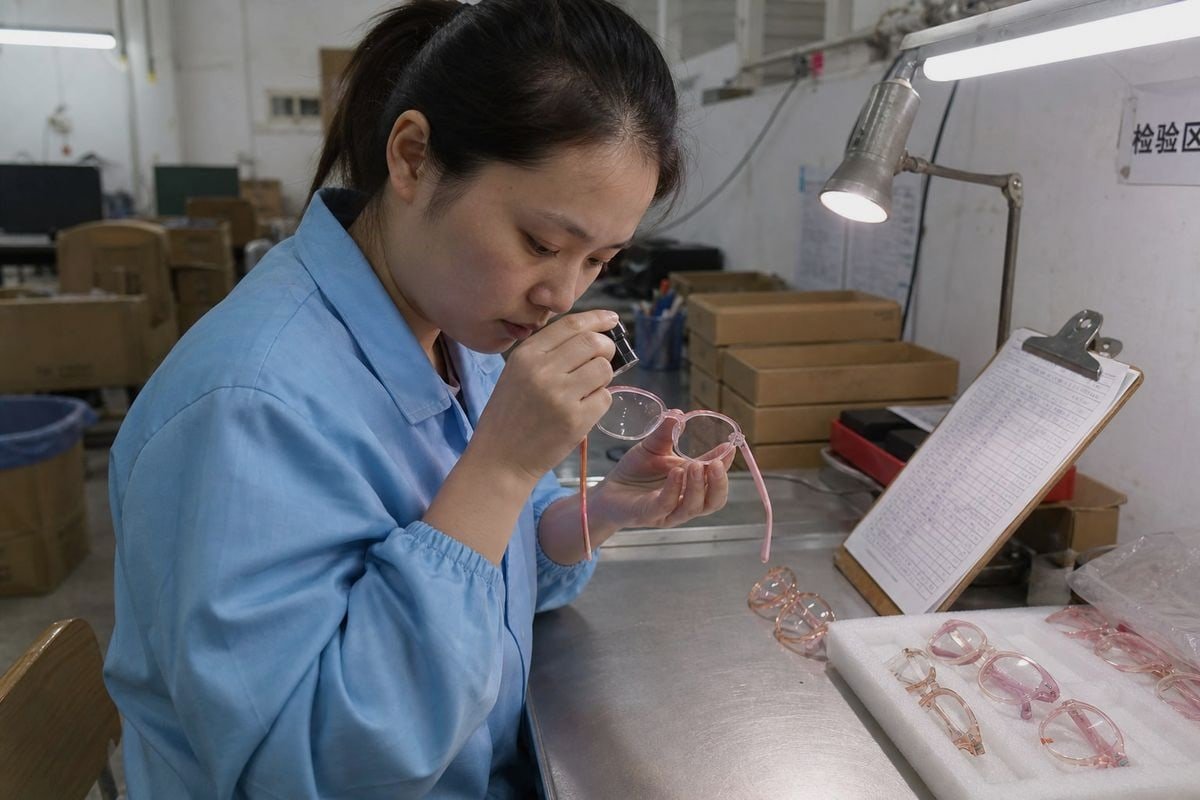
During quality inspections at our workshop, we bend, twist, and drop-test frames daily. The failure signs we look for on the line are the same ones parents should watch for at home.
Worn-out kids' frames show clear signs: they slide down the nose, sit crooked, pinch the temples, or leave red marks on the nose bridge. Bent temple arms, loose hinges, warped lens angles, and crazed lens coatings all mean the frames need replacement or professional repair.

The most important thing I tell buyers is this: kids' frames often need replacement before they break. A frame can look intact and still fail at its real job, which is holding the lenses in the correct position in front of the eyes. When frames slide down or sit unevenly, the optical center shifts away from the pupil. The child loses part of the prescription's benefit even though nothing has snapped.
Fit failures come before physical failures
Growth is the quiet culprit. Red marks on the nose bridge and temple arms that bow outward are immediate signals that the child has outgrown the frame size. During growth spurts, these signs can appear within a few months of purchase. A quick fit check every two to three months catches the problem early.
Physical and coating wear
Physical wear matters too. Protective lens coatings, including anti-reflective and scratch-resistant coating 1 layers, typically begin to degrade or "craze" after 18 to 24 months of daily use. Environmental stress accelerates this. Extreme heat inside a parked car can warp frame geometry and cause coatings to expand and crack. Chemical exposure from sunscreen and DEET-based insect repellents can cause irreversible "blooming" or brittleness in plastic frame polymers — something we warn our outdoor-brand clients about often.
| Warning Sign | What It Means | Action Needed |
|---|---|---|
| Slides down the nose | Bridge outgrown or temples stretched | Frame adjustments or replacement |
| Red marks on nose bridge | Frame too small for the face | Replace with larger size |
| Temple arms bow outward | Facial growth exceeds frame width | Replace immediately |
| Crooked lens position | Warped frame or damaged hinge | Professional repair or replace |
| Cloudy, crazed coating | Coating degradation from heat or wear | New lenses, possibly new frame |
| Loose or wobbly hinges | Structural fatigue | Repair if minor; replace if repeated |
One more caution from our engineering team: repeated parental micro-adjustments — bending frames back into shape at home — weaken the molecular integrity of the bridge and hinges. The frame may then fail suddenly. Let an optician handle nose pad replacement and realignment instead.
What materials make kids' optical frames last longer against daily wear and tear?
Material selection is the trade-off we weigh most carefully when developing new styles. A frame can be strong but heavy, or light but brittle. For children, the balance point sits in a narrow band.
Flexible materials last longest for kids: TR90 nylon, TPEE, silicone, and memory titanium bend under stress without snapping. Combined with spring hinges, polycarbonate lenses, and a flexible bridge, these materials survive drops, twisting, and rough play far better than rigid acetate frames.
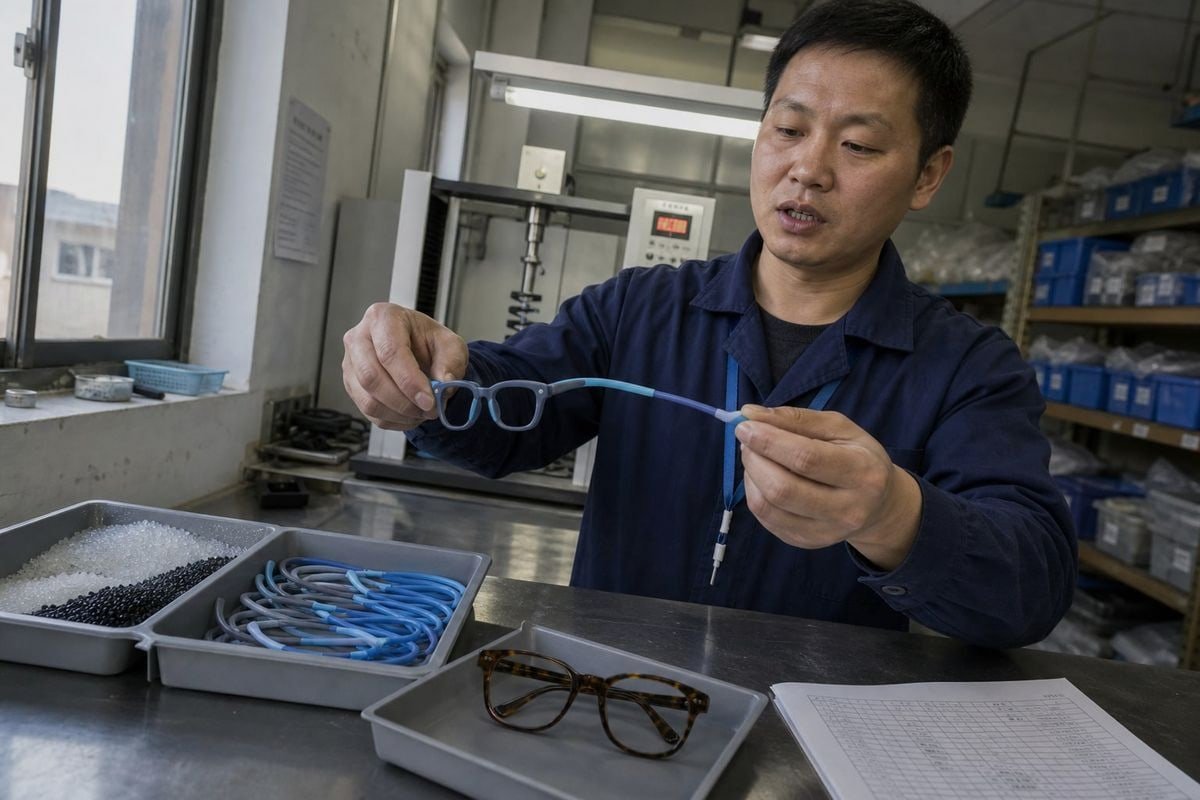
After fifteen years of making children's eyewear, our team has tested nearly every frame material on the market. The pattern is consistent: rigidity is the enemy of longevity in kids' products. Children do not treat glasses gently. They pull them off with one hand, sleep on them, stuff them into backpacks, and drop them on concrete. A material that flexes absorbs that abuse. A material that resists it eventually cracks.
How the main materials compare
| Material | Flexibility | Weight | Impact Resistance | Best For |
|---|---|---|---|---|
| TR90 | Excellent | Very light | High | Everyday optical frames, active kids |
| TPEE | Outstanding | Very light | Very high | Toddlers, temples, sports use |
| Acetate frames | Low | Moderate | Moderate | Style-focused, older children |
| Memory titanium | Excellent | Light | High | Premium frames, teens |
| Standard plastic | Poor | Light | Low | Budget frames, short lifespan |
Acetate frames deserve a fair mention. They offer rich, translucent colors — like the pale pink rounded-rectangular style in our catalog — and they appeal strongly to older children who care about looks. But acetate is more rigid, so it suits kids past the roughest play years.
Construction details matter as much as material
Integrated spring hinges are a critical durability feature. They let the temple arms flex outward when a child yanks the glasses off, preventing hinge breakage during rough handling. Soft silicone temple tips, like the sky-blue ear hooks we mold onto our TR90 frames, add grip and reduce the stress kids put on the frame when it slips. Polycarbonate lenses 2 complete the package with high impact resistance, which pediatric opticians recommend for nearly all children.
Even the best material cannot outrun growth, though. Durable construction extends physical lifespan, but a toddler will still outgrow a bulletproof frame in months. Material quality pays off most for older elementary kids and teens, whose growth has slowed enough to use the full life of the frame.
How often should I expect to reorder frames when sourcing for my children's eyewear brand?
A procurement manager from Australia once asked me why her toddler-line reorders came in twice as fast as her school-age line. The answer sits in the age math, and it should shape every buyer's inventory plan.
Expect reorder cycles that mirror replacement timelines: toddler frames turn over every 3–6 months, preschool frames every 6–12 months, and school-age frames every 12–24 months. Stock deeper in small sizes, and plan for lens-driven replacements as prescriptions change during growth.
When we help brands plan their first orders, we always start with the age breakdown, because replacement frequency is not one number — it is four.
| Age Group | Typical Frame Lifespan | Main Replacement Driver |
|---|---|---|
| Toddlers (1–3) | 3–6 months | Rapid facial growth |
| Preschool (3–5) | 6–12 months | Growth plus rough handling |
| Early elementary (6–9) | 12–18 months | Growth spurts and prescription changes |
| Older elementary / middle school (10–14) | 18–24 months | Prescription changes, style preference |
Three practical points follow from this table. First, smaller sizes turn faster. If your brand serves toddlers and preschoolers, your reorder rhythm will be roughly twice as fast as a brand serving tweens. Second, prescription changes drive replacements independently of frame wear. Children's vision can shift quickly, so an annual eye exam 3 — and the prescription expiration that comes with it — often triggers a new purchase even when the frame is fine. Some families reuse the old frame with new lenses, but only if the fit is still correct.
The insurance rhythm behind consumer demand
Vision insurance coverage also sets the tempo in many markets. Plans that renew frame allowances every one or two years create a natural replacement cycle, and that cycle happens to match the 1–2 year lifespan most clinics cite. Retail demand in insured markets tends to cluster around these renewal windows.
The myopia management factor
There is a newer driver worth planning for. Modern myopia management lenses 4 — DIMS and HALT designs — require extremely precise optical centration. Frames must be replaced the moment slight facial growth shifts the pupillary center. Brands serving optical retailers in myopia-management markets, especially in Asia and increasingly Europe, should expect shorter replacement intervals and faster reorders in those channels.
This is also why we built a catalog of roughly 800 existing styles. New brands can launch across multiple age sizes without heavy mold investment, test which sizes actually turn over, and then reorder based on real sell-through instead of guesswork.
Can choosing flexible TR90 frames reduce breakage and replacement returns from my customers?
The lesson that reshaped our product line came from warranty claims. Years ago, a European distributor showed us their return data: the vast majority of claims were snapped temples and broken bridges on rigid frames. That data pushed us fully toward flexible materials.
Yes. Flexible TR90 frames bend and return to shape instead of snapping, which directly reduces breakage returns. Paired with TPEE temples, spring hinges, and a flexible bridge, TR90 can cut the most common failure modes — broken temples and cracked bridges — that drive warranty claims.

TR90 is a thermoplastic nylon with a rare combination of properties: it is very light, it has high impact resistance, and it has shape memory. When a child twists the frame, it flexes and returns. When a child drops it, it absorbs the shock instead of transferring it to a stress point. For a brand, that translates directly into fewer returns, fewer one-star reviews mentioning breakage, and fewer replacement units shipped for free.
Where flexibility prevents the most common failures
In our experience exporting to brands in more than 20 countries, breakage claims concentrate in three spots: the temple near the hinge, the bridge, and the hinge itself. Here is how a well-built flexible frame addresses each one:
- Temple near the hinge. TPEE temples on a TR90 front flex along their full length, so stress never concentrates at one point. Our navy-to-sky-blue kids' style uses exactly this construction, with soft silicone ear hooks that grip without pressure.
- Bridge. A flexible bridge molded in TR90 tolerates the one-handed pull-off that snaps rigid plastic bridges.
- Hinge. Spring hinges absorb over-extension, and they work even better when the temple material itself gives a little first.
An honest caveat for buyers
I will not overpromise. Flexible frames reduce breakage returns, but they do not eliminate growth-driven replacement. A TR90 frame that survives two years of abuse still needs replacing when the child outgrows it or the prescription changes. There is also a softer factor worth building into your product strategy: children who personally select their frame style show higher ownership of their glasses, which leads to fewer "accidental" breakages and lost pairs. Offering appealing colorways — glossy two-tone blues for active kids, translucent candy pinks for style-conscious ones — is a durability strategy, not just a marketing one. Through our OEM/ODM program, we help brands develop custom colors, logos, lenses, and retail-ready packaging so the child wants to wear and protect the glasses.
Conclusion
Kids’ optical frames last 6–24 months, driven by growth, fit, and material. Choose flexible TR90 and TPEE construction, check fit often, and plan replacements by age — that is how we build every frame.
Footnotes
1. Technical overview of optical coatings used to enhance lens durability and scratch resistance. ↩︎
2. Medical authority recommendation for polycarbonate lenses due to their superior impact resistance for children. ↩︎
3. Professional optometric guidelines emphasizing the importance of regular vision checks for school-aged children. ↩︎
4. WHO fact sheet discussing global vision impairment and the role of corrective management strategies. ↩︎
More Articles You Might Like

August 5, 2026
Bio-Based vs Regular Cellulose Acetate: What's the Difference for Kids' Frames?

August 5, 2026
How Recyclable Are Kids' Optical Frame Materials, and What Eco-Friendly Alternatives Exist?
August 5, 2026
Do Kids Optical Frames Whiten or Age in Storage, and How to Control Warehouse Conditions?
Looking for a Reliable Kids Eyewear Partner?
Explore 800+ ready styles and full OEM/ODM support tailored to your brand.
Get in Touch English
  Español de México
  Deutsch
  Français
  日本語
日本語  العربية
  Português do Brasil