How to Highlight Technical Selling Points to Persuade Optometrists to Recommend Kids’ Frames?
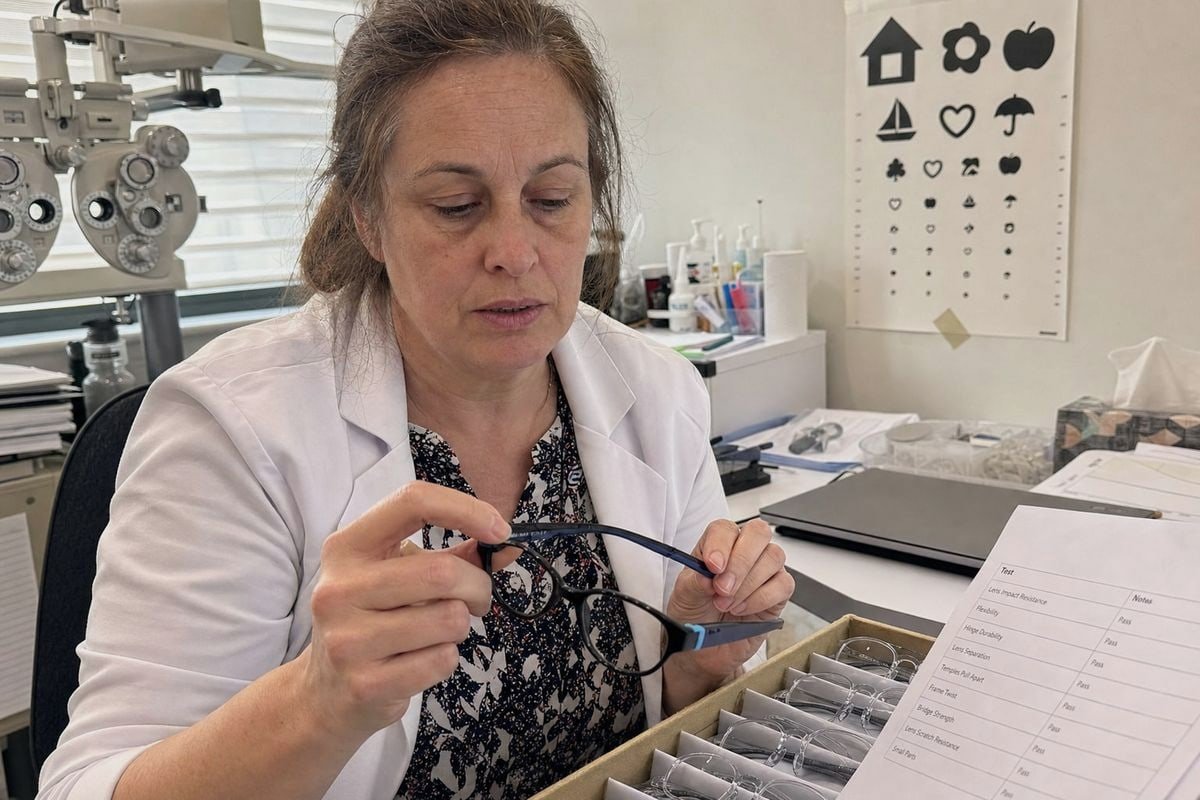
Learning how to highlight technical selling points to persuade optometrists is something our Taizhou factory refined over 15 years of building TR90 and TPEE 1 children’s frames.
To persuade optometrists to recommend kids’ frames, translate technical selling points into clinical outcomes: present TR90 and TPEE material data as compliance and safety evidence, supply test reports and certifications, and frame flexible hinges, lightweight builds, and proper fit as solutions to breakage and non-wear.
Optometrists hear feature lists every week. What they rarely get is proof that a frame solves their daily problems: broken temples, sliding bridges, and children who refuse to wear their glasses UV400 lens verification 2. This article shows you how to close that gap, section by section.
How can I explain TR90 and TPEE material benefits in terms optometrists actually trust?
A buyer from Australia once asked me why our TPEE temples felt so different from the cheap sunglasses she had imported before. That conversation taught me how to talk about materials properly.
Explain TR90 and TPEE in clinical terms: TR90 offers memory flexibility, low weight, and impact resistance, while TPEE adds soft, hypoallergenic, bendable comfort at contact points. Frame both as compliance tools that reduce breakage, skin irritation, and non-wear in active children, not as marketing buzzwords.
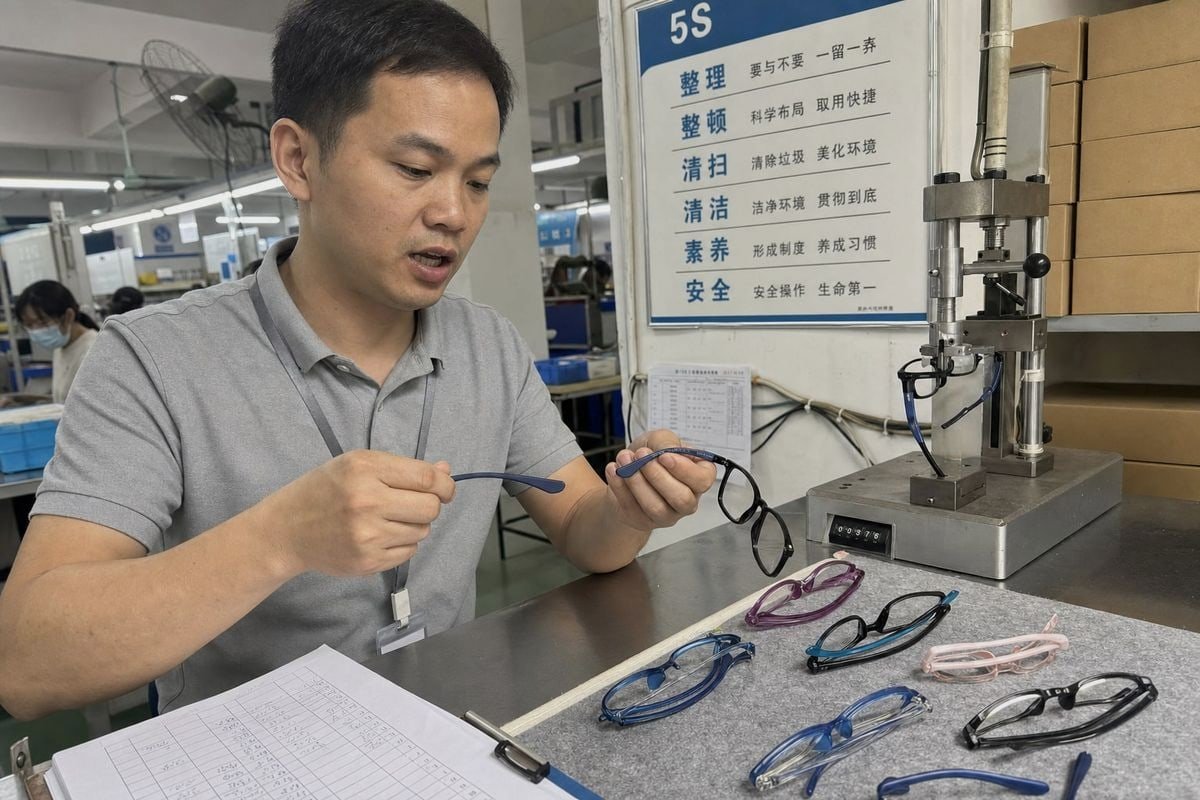
Optometrists trust mechanisms, not adjectives. So when our sales team briefs a new optical distributor, we never say "super durable." Instead, we explain what the polymer actually does on a child's face. That small shift changes the whole conversation.
Speak to the mechanism, not the slogan
TR90 is a thermoplastic with memory properties. It flexes under stress and returns to shape. For an optometrist, that means fewer adjustment visits and fewer warranty returns. TPEE is a soft elastomer. We use it on temples and tips because it bends around the ear without pressure points. It is also naturally suited to hypoallergenic eyewear positioning 3, which matters for children with sensitive skin. These are durable frame materials with a clear clinical story: less breakage, better proper fit for children’s glasses, and higher daily wear time.
A comparison optometrists can use chairside
| Property | TR90 (front frame) | TPEE (temples/tips) | Standard acetate |
|---|---|---|---|
| Flexibility | High, memory return | Very high, soft bend | Low to moderate |
| Weight | Very light | Very light | Heavier |
| Skin comfort | Good | Excellent, soft touch | Good but rigid |
| Break risk under twisting | Low | Very low | Higher |
| Best clinical benefit | Fewer repairs | Comfort and compliance | Style variety |
In our experience exporting to 20+ countries, the winning line is simple: "The parent's language is durability; the clinician's language is compliance." TR90 and TPEE let you speak both at once. When we developed our TR90 fronts with TPEE temples, the goal was exactly that overlap — a frame that survives playground abuse and stays comfortable enough that the child keeps it on all day.
What technical documentation should I provide to help optometrists recommend my frames confidently?
Early in my career at our Taizhou workshop, a European importer rejected an otherwise perfect sample because our documentation folder was thin. We never made that mistake again.
Provide material safety certificates, mechanical durability test reports, dimensional specification sheets with child-specific bridge and temple measurements, UV400 lens verification, warranty terms, and compliance documents for target markets. Complete, organized documentation lets optometrists defend their recommendation to parents with evidence, not opinion.
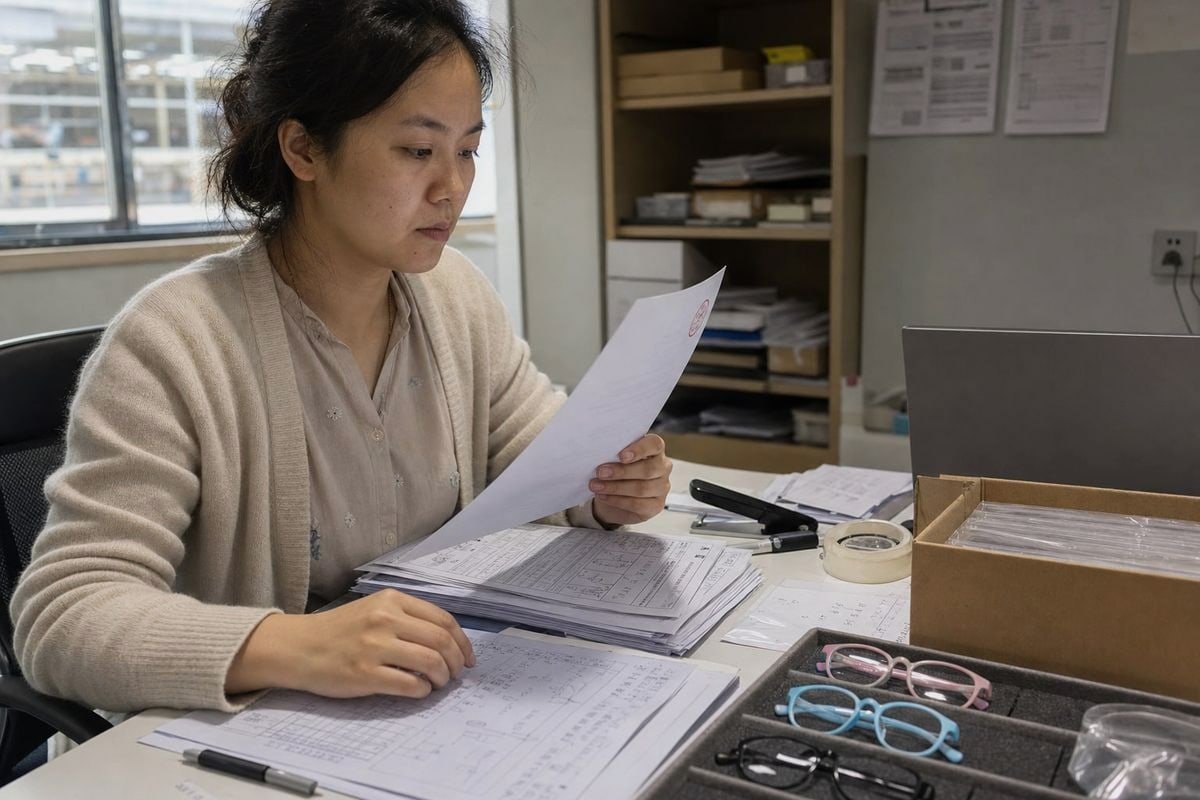
Documentation is not paperwork. It is the bridge between your factory and the optometrist's professional reputation. When a clinician recommends a frame, they are lending it their credibility. Your job is to make that loan feel safe.
The documentation package that works
From our OEM/ODM projects with children's brands, this is the package that consistently earns trust:
| Document | What it proves | Why the optometrist cares |
|---|---|---|
| Material safety certificates 4 | TR90/TPEE are skin-safe and environmentally friendly | Answers parental concerns about eyewear touching a child's face all day |
| Durability and flex test reports | Frame survives repeated bending and twisting | Supports pediatric optical sales without breakage complaints |
| Dimension spec sheet | Bridge width, lens size, temple length per age group | Enables proper fit for children's glasses without guesswork |
| Lens verification | UV400 protection, impact-resistant lenses, scratch-resistant coating | Backs safety claims made chairside |
| Warranty policy | Replacement terms for breakage | Lowers the perceived risk of the purchase for parents |
| Market compliance files | Standards for the destination market | Protects the practice legally and commercially |
Present it in layers
Do not dump everything at once. We recommend a one-page summary sheet first, with the full binder available on request. Optometrists are busy. Give them the headline facts — materials, sizes, safety, warranty — in thirty seconds. Then let the detail sit behind it for the skeptics. In our experience, buyers who receive a layered documentation set move to sample orders faster, because nothing feels hidden. Also state your warranty early. In kids' eyewear, the warranty is part of the product, not an afterthought, and it removes emotional friction around breakage before it starts.
How do I present safety and comfort features so they align with an optometrist's clinical priorities?
There is a trade-off we weigh on every new mold: softer materials feel better, but the frame still needs enough structure to hold prescription lenses in perfect alignment. Getting that balance right is the whole craft.
Map every safety and comfort feature to a clinical outcome: impact-resistant lenses protect active eyes, rounded edges and flexible temples prevent injury, lightweight builds prevent nose-bridge pressure, and soft TPEE contact points sustain all-day wear. Comfort equals compliance, and compliance is the optometrist's real priority.
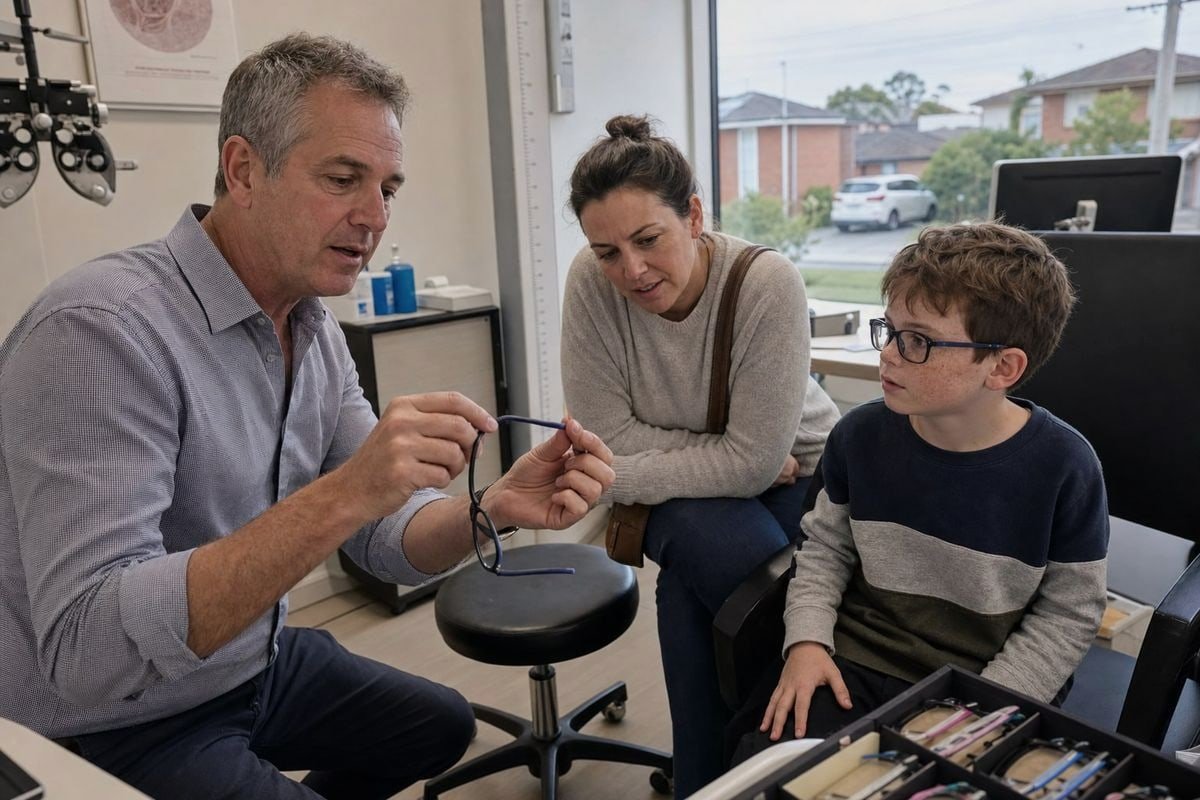
An optometrist's core worry is simple: will the child actually wear these glasses? A prescription only works when it sits on the face. So every safety and comfort feature you present should ladder up to one clinical idea — consistent wear.
Translate features into clinical language
Here is the feature-to-outcome translation we coach our B2B partners to use:
| Technical feature | Parent-facing benefit | Clinical priority it serves |
|---|---|---|
| Impact-resistant lenses (polycarbonate/Trivex options) | Safer for sports and play | Ocular safety for active kids |
| UV400 lenses | Long-term eye protection outdoors | Preventive eye health |
| Scratch-resistant coating | Clearer vision for longer | Stable visual acuity between visits |
| Rounded frame corners, no sharp hinge points | Fewer injuries in falls | Physical safety |
| Soft TPEE temples and cable ear hooks | Stays on, no pressure sores | Compliance and consistent wear |
| Lightweight TR90 front | No sliding, no nose marks | Fit stability, accurate optical centration 5 |
Fit is the silent safety feature
A common design error in kids' frames is a bridge that is too wide, so the glasses slide down and the child looks over the lenses. On our children's lines, we design child-specific bridge geometry and offer cable-style ear hooks on active styles, because a frame that stays in position keeps the optical center where the prescription needs it. This matters even more for practices doing myopia management 6, where lens positioning affects treatment outcomes. When you present fit this way — as an optical accuracy issue, not just comfort — clinicians lean in. Comfort is not a soft benefit. It is the behavioral engine behind every successful pediatric prescription.
Can I use flexible-hinge and lightweight design data to stand out during optometrist evaluations?
One of my favorite moments in a buyer meeting is the twist test. I hand over a sample, invite them to bend the temples backward, and watch the surprise when the frame springs back. Data opens doors, but a demonstration closes them.
Yes. Flexible-hinge behavior and gram-level weight data are strong differentiators in optometrist evaluations. Quantify flex range, return-to-shape performance, and frame weight versus rivals, then pair the numbers with a live bend demonstration. Concrete, testable claims outperform generic durability promises every time.

Evaluations are comparisons. The optometrist is holding your frame in one hand and a competitor's in the other. Data gives them a rational reason to choose yours; a demonstration gives them an emotional one. You need both.
Build a simple evaluation script
We suggest a four-step sequence for reps and distributors:
- State the number. Give the frame weight in grams and note the flex range of the temples. Lightweight TR90 fronts with TPEE temples typically undercut standard acetate noticeably, and clinicians feel the difference instantly.
- Demonstrate it. Bend the temple outward and let it return. Twist the front gently. Invite the optometrist to do it themselves. Hands-on proof beats brochures.
- Connect it to their chair time. Flexible hinges and memory materials mean fewer emergency adjustment visits and fewer angry parents with snapped frames. That is real optometry practice profitability language — less unpaid repair time, fewer remakes, happier recalls.
- Close with risk removal. Pair the design data with your warranty terms. A flexible frame plus a clear replacement policy makes the recommendation nearly risk-free for the practice.
Anticipate the objection
Some optometrists worry that very flexible frames cannot hold lens alignment. Address it head-on: the front frame stays dimensionally stable while flexibility is engineered into the temples and hinge zones. That separation — rigid where optics need it, soft where the child's head needs it — is precisely how we design our TR90-front, TPEE-temple styles. Naming the objection before they raise it signals engineering maturity, and with roughly 800 existing styles in our catalog, we can usually show the exact flex profile a practice's patient base needs without new mold investment.
Conclusion
Optometrists recommend frames that protect their credibility. Give them mechanisms, documentation, clinical framing, and demonstrable data — and your kids' frames become the easy, defensible choice.
Footnotes
1. Provides a foundational understanding of thermoplastic materials like TR90 and TPEE. ↩︎
2. Details the UV400 standard for lenses, explaining its significance for eye protection. ↩︎
3. Explains what hypoallergenic means in the context of eyewear materials and sensitive skin. ↩︎
4. Offers a general overview of product certification, which includes material safety and compliance. ↩︎
5. Explains the concept of optical center in eyeglass lenses and its importance for clear vision. ↩︎
6. Provides a comprehensive, evidence-based definition and approach to myopia management. ↩︎
More Articles You Might Like
August 5, 2026
Bio-Based vs Regular Cellulose Acetate: What's the Difference for Kids' Frames?
August 5, 2026
How Recyclable Are Kids' Optical Frame Materials, and What Eco-Friendly Alternatives Exist?
August 5, 2026
Do Kids Optical Frames Whiten or Age in Storage, and How to Control Warehouse Conditions?
Looking for a Reliable Kids Eyewear Partner?
Explore 800+ ready styles and full OEM/ODM support tailored to your brand.
Get in Touch English
  Español de México
  Deutsch
  Français
  日本語
日本語  العربية
  Português do Brasil