How to Ensure Kids’ Sunglasses Frame Coatings from China Meet US Lead Limits?
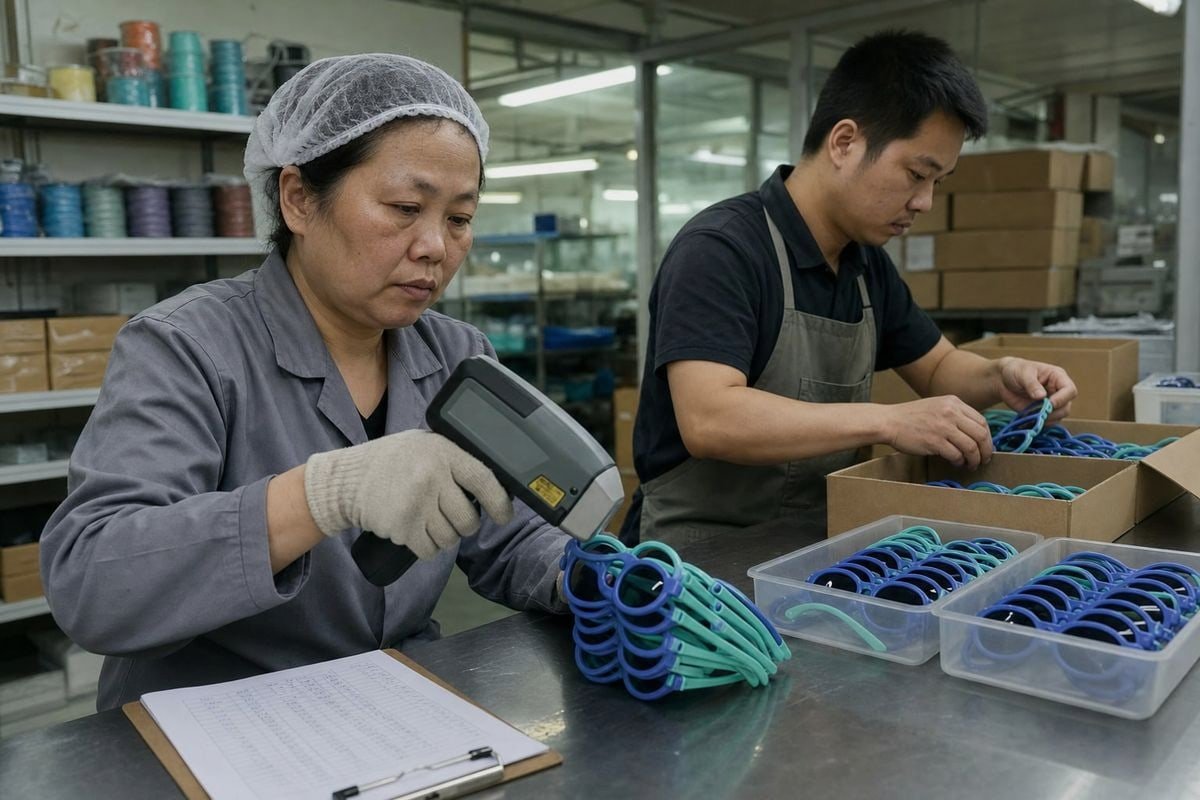
Kids’ sunglasses frame coatings from China can fail US lead limits without warning. On our production line in Taizhou, we have seen how one wrong pigment ruins an entire shipment.
To meet US lead limits, kids’ sunglasses frame coatings must stay under 90 ppm lead, and accessible frame parts under 100 ppm. Verify compliance through CPSC-accepted third-party lab testing, a Children’s Product Certificate, coating chemistry controls, and pre-shipment XRF screening at the factory.
That is the short answer. Below, I break down each step so you can protect your brand before production starts, not after a failed test.
What Lead Limits Do US Regulations Actually Set for Kids' Sunglasses Coatings?
A buyer from Australia once asked me why we test both the paint and the plastic underneath it. The answer sits at the heart of US lead law, and our QC team explains it to every new client.
US regulations set two separate limits: paint and similar surface coatings on children's products must not exceed 90 ppm lead under 16 CFR Part 1303 and CPSIA, while accessible substrate components — frames, hinges, screws — must not exceed 100 ppm total lead content.
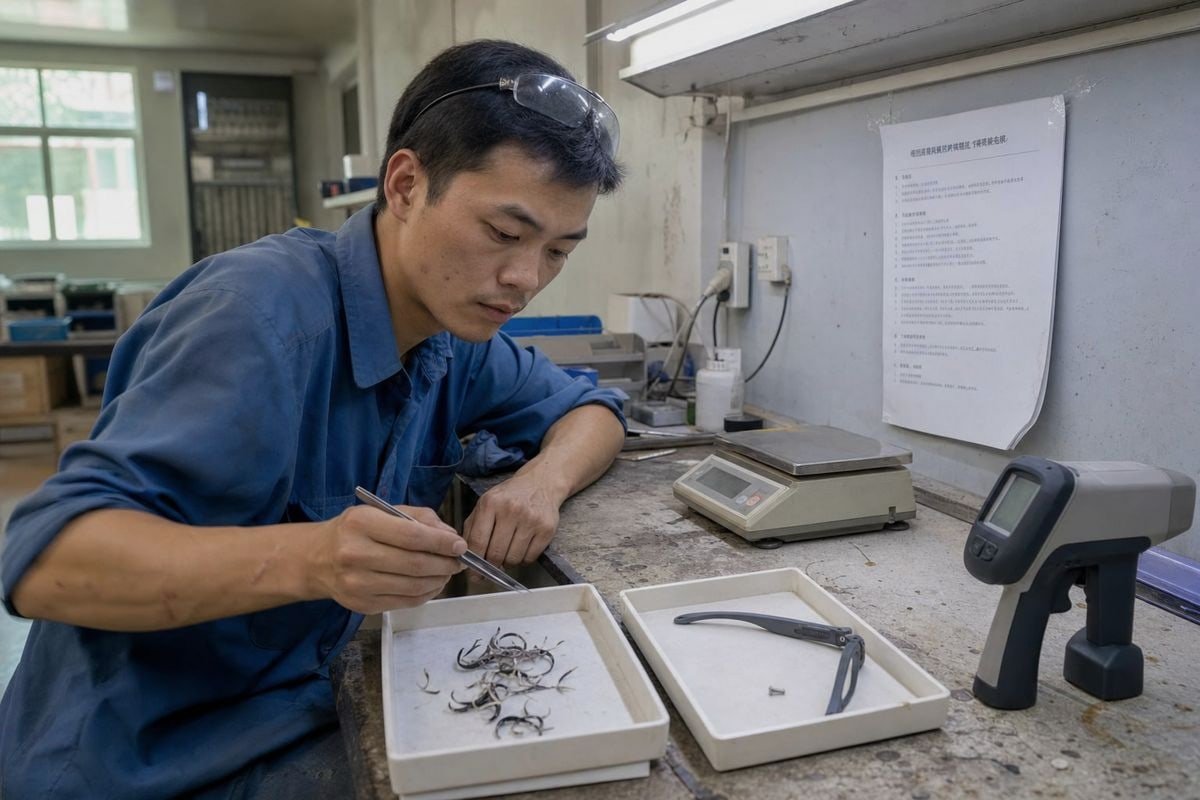
These are two different rules with two different test methods. Many importers confuse them, and that confusion causes failed shipments. Let me separate them clearly.
The Two Limits Side by Side
| Rule | Limit | What It Covers | Legal Basis |
|---|---|---|---|
| Lead in surface coatings | 90 ppm (0.009%) | Paint, spray finishes, printed logos, decorative inks | 16 CFR Part 1303 |
| Total lead content | 100 ppm | Accessible substrate parts: frame plastic, hinges, screws, nose pads, temple tips | CPSIA Section 101 |
The coating rule is stricter and applies to anything sprayed, printed, or painted onto the frame. The total lead rule applies to the materials themselves — every part a child can touch. On a typical kids' style, like a round two-tone frame with a periwinkle front and mint temples, both the color layers and the base plastic must comply. Even the small silver hinge screws count as accessible components.
Here is the trap that catches importers most often. Under US law, a coating is not considered a barrier. If the plastic underneath the paint contains excess lead, painting over it does not make the product legal. The CFR states this directly: paint, coatings, and electroplating do not make lead inaccessible to a child.
One more point matters. CPSIA phased these limits down over time — from 600 ppm to 300 ppm to today's 100 ppm for children's products. The trend has only moved in one direction: stricter. Also note that "children's product" means items designed primarily for children 12 and under. Non-corrective kids' sunglasses fall squarely into this category, which triggers CPSIA compliance 1, tracking labels, and third-party safety testing. Some corrective eyewear is treated differently as an optical device, but a fashion or sport sunglass for a child is a children's product, full stop. Kids' sunglasses are also treated as Class I medical devices 2 by the FDA for impact-resistance purposes, so drop-ball testing 3 sits alongside lead compliance.
How Can I Verify My China Manufacturer's Coatings Are Lead-Compliant Before Ordering?
Early in our fifteen years of making children's eyewear, we learned a hard lesson: a pigment sub-supplier changed a formula without telling anyone. Since then, we verify coatings before a single frame gets sprayed.
Verify compliance before ordering by requesting the coating formulation and restricted-substance declarations, testing raw liquid paint samples, requiring lead-free certificates from pigment sub-suppliers, running XRF analyzer screening on pre-production samples, and confirming the factory has documented change-control procedures for any finish substitution.

Prevention costs far less than a recall. The key is to push verification upstream — before mass production, and ideally before the coating even touches a frame.
Start with Wet Paint, Not Finished Frames
The smartest check happens at the raw material stage. Ask your supplier to test liquid coating samples for heavy metals before application. If the pigment batch is contaminated, you find out before an entire production run is sprayed and lost. At our factory, we hold coating batches until the paperwork clears. It adds a few days. It saves entire orders.
Audit the Secondary Supply Chain
Your frame assembler does not make pigments or solvents. Lead usually enters through those sub-suppliers. So require lead-free certificates directly from the pigment and solvent makers, not just a general statement from the frame factory. A serious supplier will share these documents without hesitation. A vague answer here is a red flag.
Use XRF Screening as an Early Warning
Handheld XRF analyzer screening gives fast, non-destructive lead readings on frame coatings and substrates. It is not a substitute for CPSC-accepted lab testing, but it catches problems in real time on the factory floor. We screen pre-production samples this way before anything goes to a formal lab. Bright colors, metallic finishes, mirrored effects, and printed graphics deserve the closest attention — decorative features are where lead pigments historically hide. lead in paint regulations 4
Watch for Risk Signals by Finish Type
| Finish or Feature | Lead Risk Level | Why |
|---|---|---|
| Glossy sprayed color coats | Higher | Pigment-heavy layers; formula changes are common |
| Metallic or mirrored trims | Higher | Electroplating and metallic pigments can carry lead |
| Printed logos and graphics | Medium | Inks vary batch to batch |
| Uncoated colored TPEE / TR90 | Lower | Color is in the resin masterbatch, fewer surface layers |
| Rubberized soft-touch coatings | Medium | Additives and pigments need declarations |
One reason we build many kids' styles in colored TPEE and TR90 with the color compounded into the resin is exactly this: fewer sprayed layers means fewer failure points. Fewer coatings, fewer surprises.
What Testing Reports and Certificates Should I Request from My Frame Supplier?
When a Japanese baby-brand buyer visited our Taizhou workshop last year, the first thing she asked for was not a sample. It was our documentation file. Experienced buyers know paperwork is where compliance lives or dies.
Request a Children's Product Certificate, third-party test reports from a CPSC accredited laboratory covering both 90 ppm coating lead and 100 ppm total lead, a bill of materials with component traceability, ASTM F963 heavy metal results where relevant, drop-ball impact reports, and tracking label confirmation.
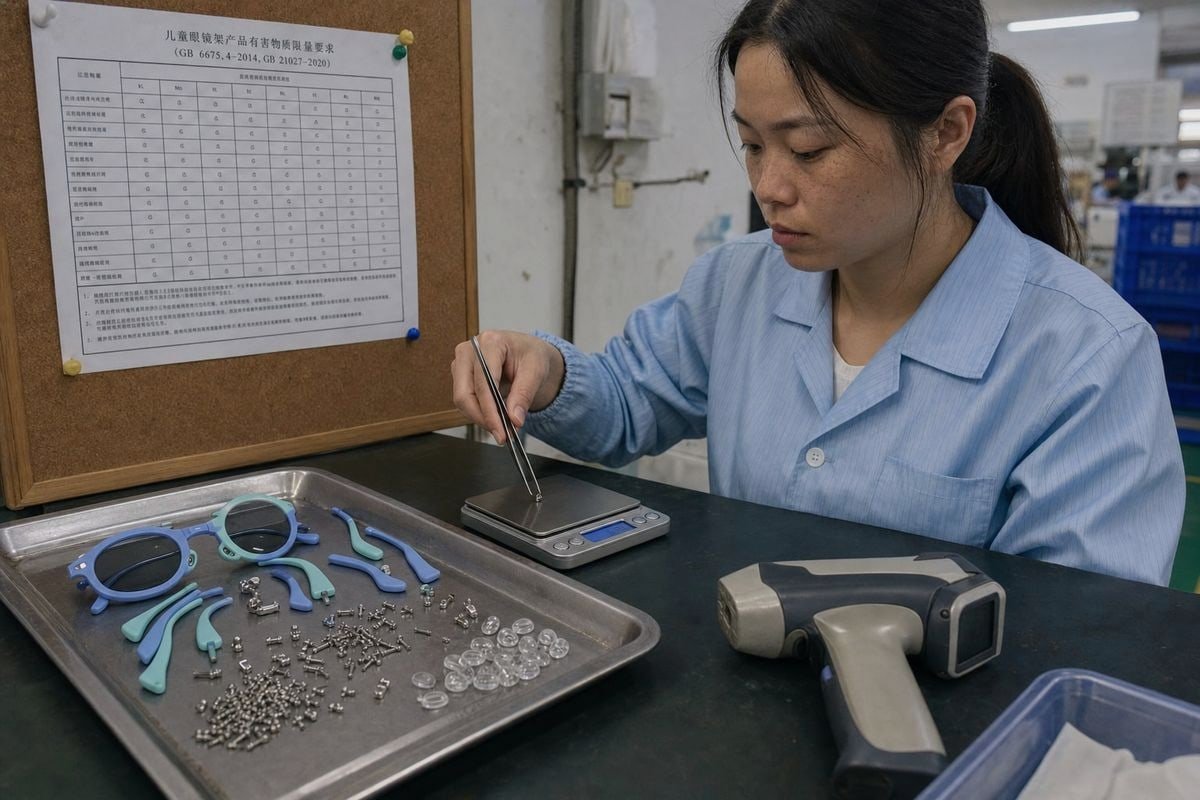
A complete documentation package does three jobs. It proves compliance to CPSC and Customs. It satisfies retailer onboarding requirements. And it protects you if a question ever arises after sale.
The Complete Document Checklist
| Document | What It Proves | Who Issues It |
|---|---|---|
| Children's Product Certificate (CPC) | Legal certification of CPSIA compliance based on passing tests | You as importer, based on lab data |
| Lead in surface coatings report (16 CFR Part 1303) | Coating lead is under 90 ppm | CPSC accredited laboratory 5 |
| Total lead content report | Accessible components under 100 ppm | CPSC accredited laboratory |
| Heavy metal testing per ASTM F963 standards | Broader soluble heavy metal safety where applicable | CPSC accredited laboratory |
| Drop-ball impact test report | FDA impact resistance for eyewear lenses | Qualified test facility |
| Bill of materials (BOM) | Component-level traceability for every part | Frame supplier |
| Sub-supplier declarations | Pigments, solvents, plating inputs are lead-free | Pigment and material suppliers |
| Tracking label confirmation | Permanent manufacturer, date, and batch marking on product and packaging | Frame supplier |
A few practical notes from our export experience. First, the CPC is your document as the importer, but it must rest on real test results from a CPSC-accepted lab — many of these labs operate in Chinese manufacturing hubs like Shenzhen and Ningbo, so testing near the factory is fast and affordable. Second, insist that test reports name the exact style number and describe the colors and finishes tested. A report for a black uncoated frame does not cover your orange-mirrored sport shield with sprayed white temples. Third, CPSIA compliance also requires permanent tracking labels 6 on both the sunglasses and their packaging showing manufacturer identity, production date, and batch number. We mold or print these on every kids' order because customs and retailers check for them. Finally, consider joining the CPSC eFiling Registry 7, which links your lab data electronically to Customs and Border Protection entries and reduces the risk of port-of-entry holds under US import safety regulations.
How Do I Choose a Factory That Consistently Meets US Lead Safety Standards?
The trade-off I discuss most often with buyers is this: a slightly cheaper quote versus a factory with real compliance systems. After fifteen years and customers in more than twenty countries, I can tell you which choice costs less over three years.
Choose a factory with documented material specifications, approved-substance lists, batch-level traceability, in-house XRF screening, strict change control on coatings and pigments, an organized workshop, and a track record of passing CPSC-accepted lab tests — not just the lowest unit price.

One-time compliance is easy. Consistent compliance across hundreds of thousands of frames is a system. Here is how to evaluate whether a supplier actually has that system.
Ask These Questions During Your Audit
- Do you have written coating specifications? A compliant factory locks pigment chemistry in writing. Verbal recipes drift.
- What happens when a pigment supplier changes? This is the critical question. US guidance is clear that a changed or altered material is not protected by prior test results. If the factory has no change-control procedure, every re-order is a gamble. At our facility, any substitution of finish, ink, or plating triggers new screening and, where needed, fresh lab testing.
- Can you trace a finished frame back to its material batches? Batch-level traceability lets you isolate a problem to one lot instead of recalling everything.
- Do you screen in-house before lab submission? Factories with their own XRF screening 8 catch issues in hours, not weeks.
- How is the workshop managed? A 5S-managed floor — where materials are labeled, segregated, and controlled — dramatically lowers the risk of cross-contamination between compliant and non-compliant pigment stocks. We run our 120-person workshop this way for exactly that reason.
Why Material Strategy Matters Too
A factory's core materials shape its risk profile. Flexible TPEE and TR90 kids' frames with resin-compounded color have fewer coating layers than heavily sprayed, plated fashion frames. That is one reason we built our catalog — roughly 800 existing styles — around these materials. New brands can launch from proven, tested constructions without heavy mold investment, then customize colors, logos, lenses, and packaging through OEM/ODM work with the compliance system already in place. Lead safety is not something you bolt on at the end. It is baked into material choice, supplier discipline, and daily habits on the production floor.
Conclusion
Lead failures destroy shipments, retail relationships, and brand trust. Prevent them upstream: know both limits, verify coatings early, demand full documentation, and partner with a factory built for consistent compliance.
Footnotes
1. Official overview of the Consumer Product Safety Improvement Act requirements for children’s goods. ↩︎
2. FDA classification system for medical devices, including non-prescription sunglasses. ↩︎
More Articles You Might Like

August 1, 2026
Should Factory Handle Kids Sunglasses Packaging & Labeling, or Use a Designated Supplier?

August 1, 2026
Own Warehouse vs Supplier Direct Fulfillment: Which Cuts Return Costs for Kids Sunglasses Brands?

August 1, 2026
Direct-to-Port Warehouse or Overseas Staging: Which Saves More on Kids Sunglasses Shipping?
Looking for a Reliable Kids Eyewear Partner?
Explore 800+ ready styles and full OEM/ODM support tailored to your brand.
Get in Touch English
  Español de México
  Deutsch
  Français
  日本語
日本語  العربية
  Português do Brasil