How to Develop Backup Suppliers When Sourcing Kids’ Sunglasses from China?
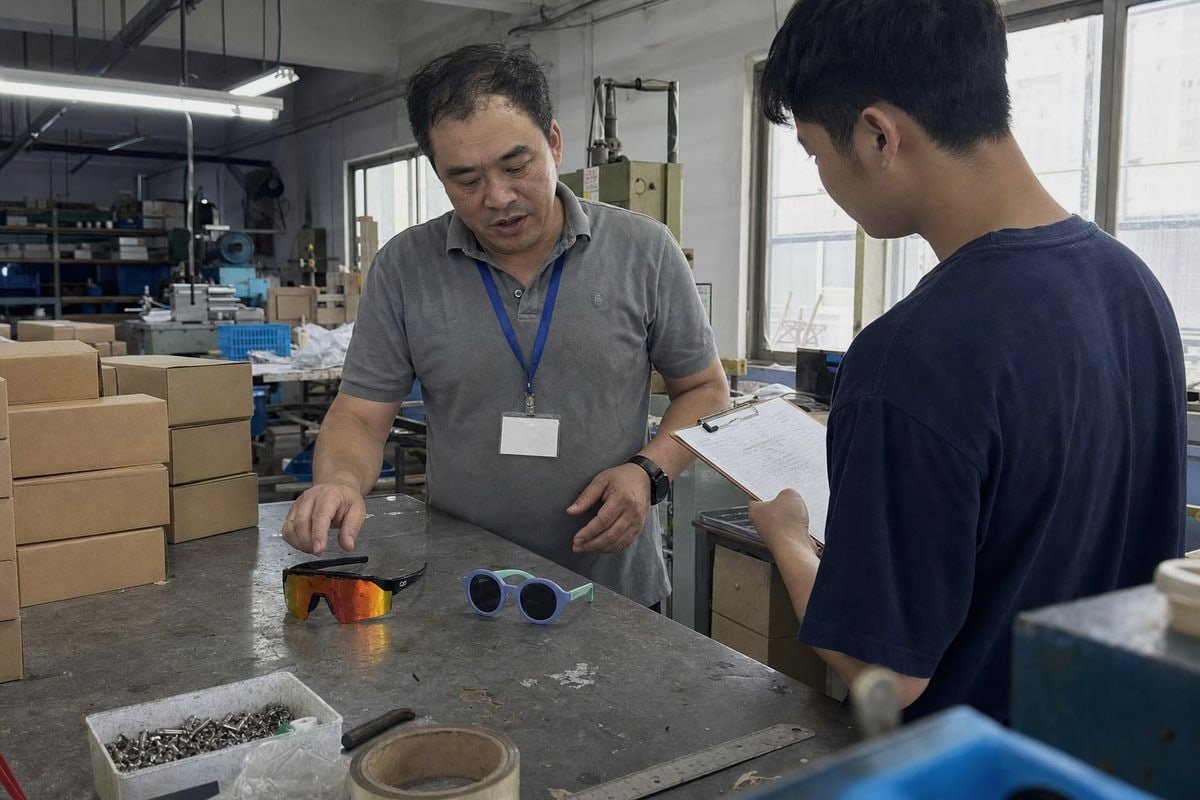
Developing backup suppliers 1 for kids’ sunglasses from China is something buyers ignore until a shipment fails. On our production line in Taizhou, we see the panic calls arrive too late.
To develop backup suppliers when sourcing kids’ sunglasses from China, pre-qualify two or three factories before a crisis: verify certifications and safety test reports, evaluate samples against your specs, run a small trial order, and keep the relationship warm with periodic low-volume orders and standby agreements.
This sounds like a lot of work. It is manageable if you follow a clear process. Below, I break it down into four practical questions buyers ask us most often.
How can I identify reliable backup suppliers without disrupting my current sourcing relationship?
Last year, a European buyer visited our workshop quietly while still working with another factory B2B platforms 2. He was not being disloyal. He was being smart, and we respected that.
Identify backup suppliers discreetly by shortlisting factories through B2B platforms, trade fairs, and referrals, then verifying business licenses, export records, and factory videos remotely. Request samples and quotes framed as new-product exploration, so your primary supplier sees normal market research, not replacement activity.

Finding a backup supplier is not the same as collecting spot quotes. A spot quote tells you a price. A backup supplier is a qualified alternative that can actually produce your kids' sunglasses to the same safety standard. Those are very different things.
Start wide, then narrow fast
A practical funnel works like this. First, build a long list of 20 to 40 candidate factories. Use B2B platforms 3, search engines, eyewear trade fairs, and referrals from other buyers. Then narrow to 5 to 10 for deeper review. In our experience exporting to buyers in more than 20 countries, most long-list factories fall away quickly once you check documents.
Spread your candidates across regions too. China's eyewear production clusters in places like Wenzhou and Taizhou, plus factories in Guangdong. Qualifying backups in different clusters reduces the risk that one regional disruption hits all your sources at once.
Verify quietly and professionally
You do not need to hide your research. But you also do not need to announce it. Here is what you can verify without any factory visit:
| Verification item | How to check remotely |
|---|---|
| Business license | Request a copy; cross-check the registered name |
| Manufacturer vs. trader | Ask for workshop videos and live video calls |
| Export experience | Ask for export records or target-market references |
| Real capacity | Ask for monthly output figures and staffing details |
| Responsiveness | Track whether replies arrive within 24 hours |
When buyers ask us for a live video walk of our 5S-managed workshop 4, we say yes the same day. A factory that hesitates on any of these items is telling you something important.
One more point. Frame your sample requests as new-style exploration. Every serious factory receives these requests weekly. Your current supplier will not be alarmed, and you stay honest.
What criteria should I use to evaluate a backup manufacturer's quality and safety standards?
A hinge that pinches, a lens that distorts, a frame that snaps against a child's face — our engineers have rejected batches for each of these over 15 years of making children's eyewear.
Evaluate backup manufacturers on children's safety compliance first: EN 71-3, ASTM F963, CPSIA lead and phthalate limits, and UV400 lens protection. Then assess sample quality, flexible material expertise, ISO-style quality management, production capacity, and third-party audit or inspection results.
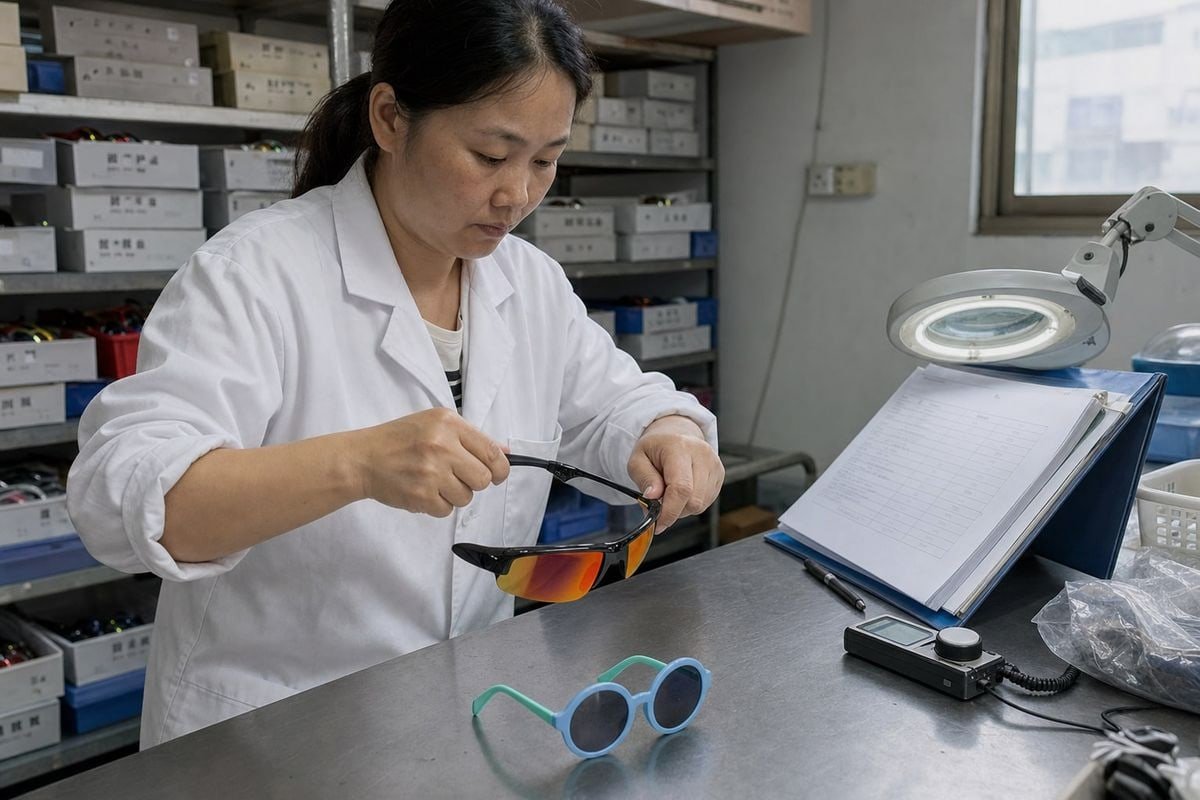
Kids' sunglasses are not fashion accessories with smaller frames. They are children's products, and the compliance bar sits much higher. A backup supplier who is only good at adult sunglasses may fail you on the exact points that matter most to your brand.
Compliance documents come first
Ask for test reports before you ask for prices. The documents below are the baseline for most markets:
| Requirement | What it covers | Why it matters for kids |
|---|---|---|
| EN 71-3 5 / ASTM F963 | Toy safety, migration of elements | Kids chew and handle frames constantly |
| CPSIA (US) | Lead and phthalate limits | Legal requirement for children's products |
| UV400 6 | Full UVA/UVB lens protection | Children's eyes admit more UV than adults' |
| REACH / RoHS | Chemical and substance restrictions | Required for EU-bound goods |
| ISO 9001 7 or equivalent QMS | Process consistency | Predicts batch-to-batch reliability |
Check that reports are recent, issued by recognized labs, and match the actual factory name. Expired or borrowed reports are a common shortcut, and a serious red flag.
Materials and physical sample checks
Materials decide comfort and safety. We build most of our frames in TR90 and TPEE precisely because rigid, brittle plastic has no place on an active child's face. When you evaluate a backup supplier's samples, check these points by hand:
- Frame flexibility: temples should bend well past 90 degrees and recover.
- Lens optics: look through the lens at a straight line; no distortion.
- Hinge operation: smooth, no pinch points, no loose screws.
- Symmetry: both sides should match when placed on a flat surface.
- Finish: no sharp edges, rough mold lines, or flaking coatings.
- Fit: nose bridge and temple length sized for children, not scaled-down adult frames.
Finally, look at the supplier's depth of range. A factory with hundreds of proven children's styles — we maintain around 800 — has clearly solved kids' fit and safety problems many times before. A factory with three kids' SKUs bolted onto an adult catalog has not.
How do I keep a backup supplier ready without paying for constant small orders?
Here is a trade-off I discuss openly with buyers: a dormant backup supplier drifts out of readiness, but constant small orders tie up cash you need elsewhere. Neither extreme works.
Keep a backup supplier ready by placing one or two small trial orders per year, maintaining approved samples and locked specifications on file, signing standby agreements that pre-set pricing and lead times, and staying in regular contact through quarterly check-ins and new-style reviews.
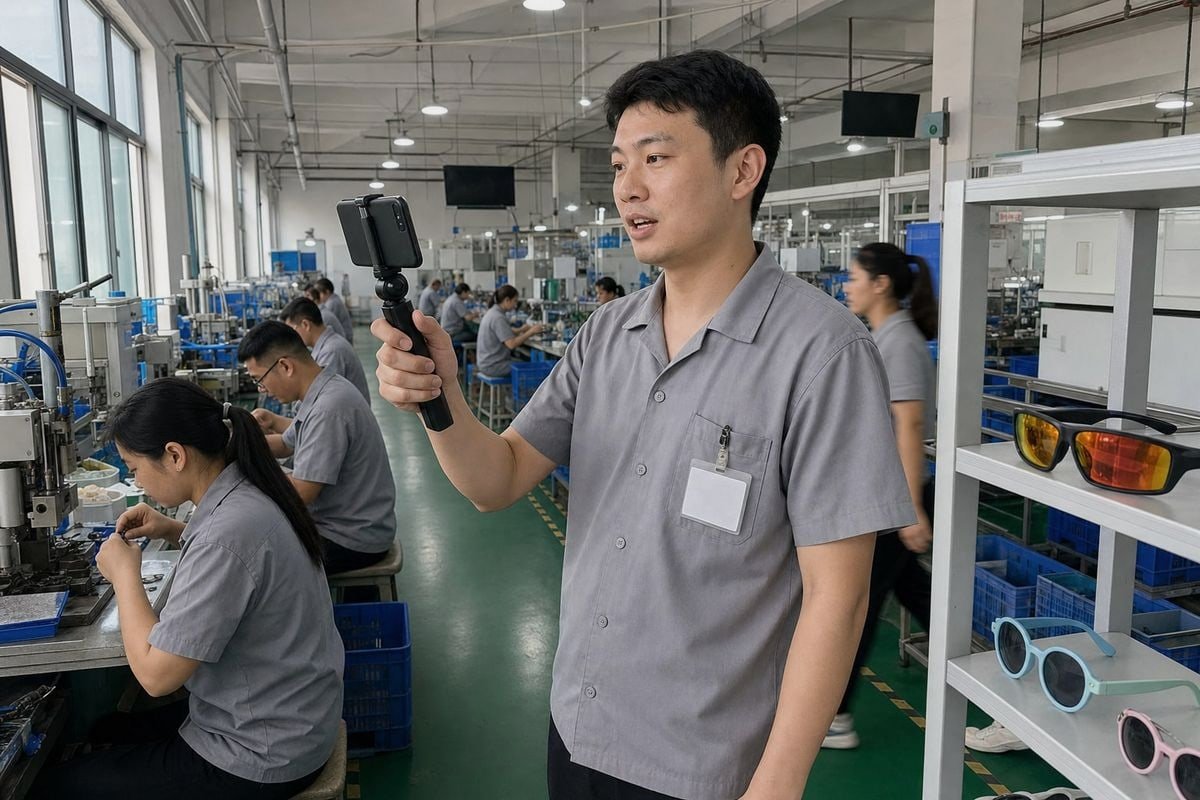
The goal is warm readiness, not continuous production. Think of it as paying a small insurance premium instead of running two full supply chains.
Low-cost ways to stay ready
A few structured practices keep a backup qualified without heavy spending:
- Run an initial trial order sized at roughly 10 to 20 percent of the factory's monthly capacity. This tests real performance, not promises.
- Lock a golden sample and full spec sheet with the backup factory. Both sides sign it. When you need to activate them, there is nothing to renegotiate.
- Negotiate a standby agreement. Pre-agree pricing bands, MOQs, and lead times, with a clause that activates capacity if your primary supplier's output drops.
- Place one small refresh order per year. Even a modest run keeps your specs live in their system and their team familiar with your product.
- Hold quarterly check-in calls. Ask about capacity, material costs, and new styles. This costs an hour and keeps the relationship human.
Use existing styles to lower the cost of readiness
This is where working with a factory that carries a deep existing catalog changes the math. When a brand qualifies us as a backup source, they often trial an existing style from our range with their logo and packaging, instead of investing in new molds. The trial order stays small, the mold cost is zero, and the qualification is still real. We have found this approach lets new brands and importers hold two qualified sources at a fraction of the cost that dual tooling would demand.
| Readiness method | Approximate cost level | What it proves |
|---|---|---|
| Golden sample + spec on file | Very low | Spec alignment |
| Annual small trial order | Low | Real production capability |
| Standby capacity agreement | Negotiation time only | Commercial terms under stress |
| Annual mock rush order | Moderate | True crisis response speed |
The last row deserves emphasis. Once a year, place a real order with a compressed lead time. Paper qualifications tell you what a factory claims. A rush order tells you what they can actually do.
What steps can I take to switch smoothly if my primary supplier fails to deliver?
A distributor once emailed Alan on our team on a Friday: their supplier had missed a seasonal deadline, and retail shelf dates were fixed. What saved them was preparation, not luck.
Switch smoothly by activating your pre-qualified backup with the locked spec and golden sample, confirming capacity and lead time in writing, ordering a fast pre-production sample, booking a third-party pre-shipment inspection, and splitting the first volume across air and sea freight to protect shelf dates.
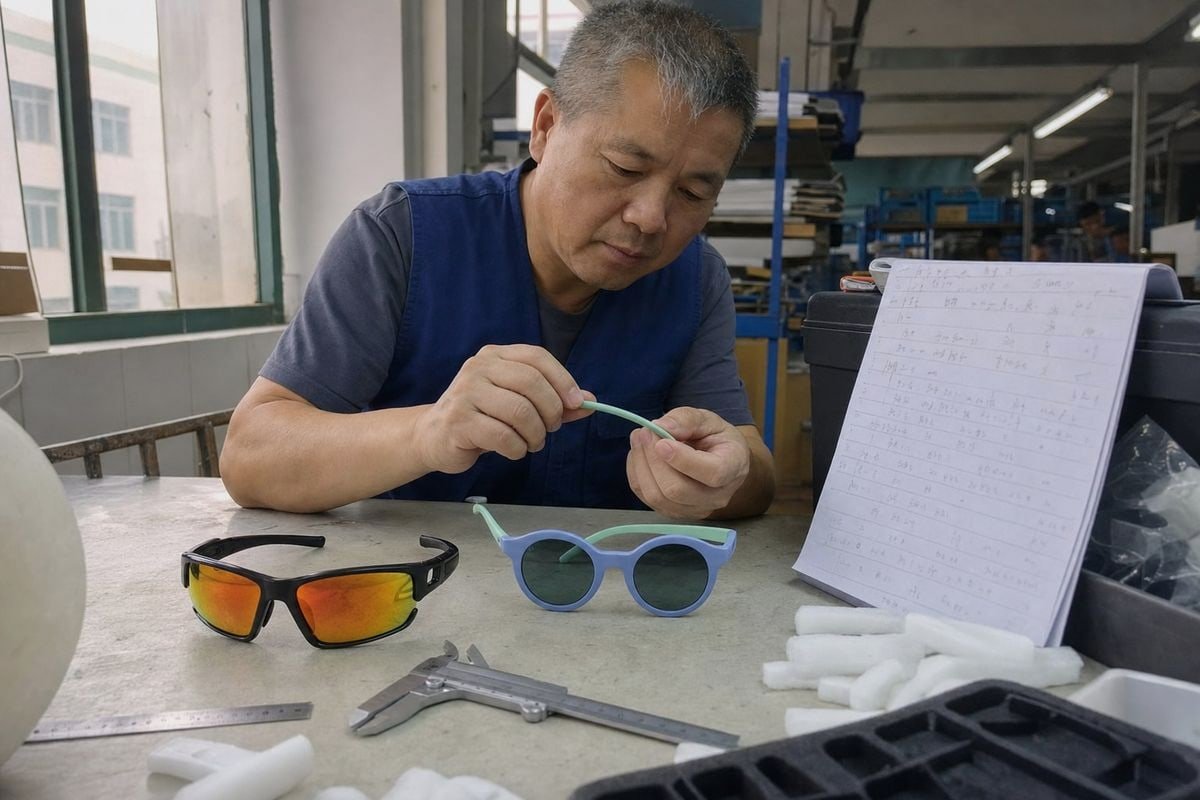
A switch is a project, not a phone call. But if you did the earlier work, it is a short project. Here is the sequence we walk buyers through when they activate us as a second source.
The activation sequence
- Notify the backup factory immediately and share the signed spec sheet, golden sample reference, and target quantity. Ambiguity is your enemy here; documentation kills ambiguity.
- Confirm capacity and lead time in writing. Ask specifically about current order load. An honest factory will tell you what slot they can give you.
- Request a pre-production sample or first-article check, even under time pressure. On children's products, skipping this step to save five days can cost you an entire failed batch.
- Book a third-party inspection before shipment. During a rushed transition, an independent set of eyes matters more than ever.
- Split logistics if shelf dates are at risk. Air-freight a partial quantity to cover launch, and ship the balance by sea.
Protect continuity for the customer
Your end customer should never notice the switch. That means matching color standards, lens tints, packaging artwork, and even hang-tag placement. This is why the golden sample matters so much. When we take over a style, we ask for a physical reference unit, not just photos. Mirrored gradient lenses, soft-touch pastel frames, rubberized temple tips — these details vary between factories unless they are pinned down physically.
Also, manage the exit carefully. Do not burn the relationship with your primary supplier. Their failure may be temporary. The strongest sourcing setups we see keep two or three qualified suppliers in rotation, shifting share based on performance rather than dropping anyone abruptly. Resilience comes from the system, not from any single factory — including us.
More Articles You Might Like
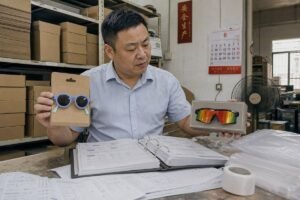
August 1, 2026
Should Factory Handle Kids Sunglasses Packaging & Labeling, or Use a Designated Supplier?
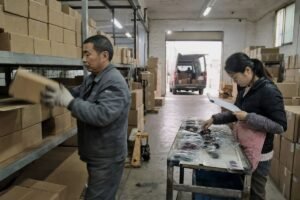
August 1, 2026
Own Warehouse vs Supplier Direct Fulfillment: Which Cuts Return Costs for Kids Sunglasses Brands?

August 1, 2026
Direct-to-Port Warehouse or Overseas Staging: Which Saves More on Kids Sunglasses Shipping?
Looking for a Reliable Kids Eyewear Partner?
Explore 800+ ready styles and full OEM/ODM support tailored to your brand.
Get in Touch English
  Español de México
  Deutsch
  Français
  日本語
日本語  العربية
  Português do Brasil