How to Convert Vision Insurance Frame Allowance Into a Cost Ceiling for Kids Optical Frames?
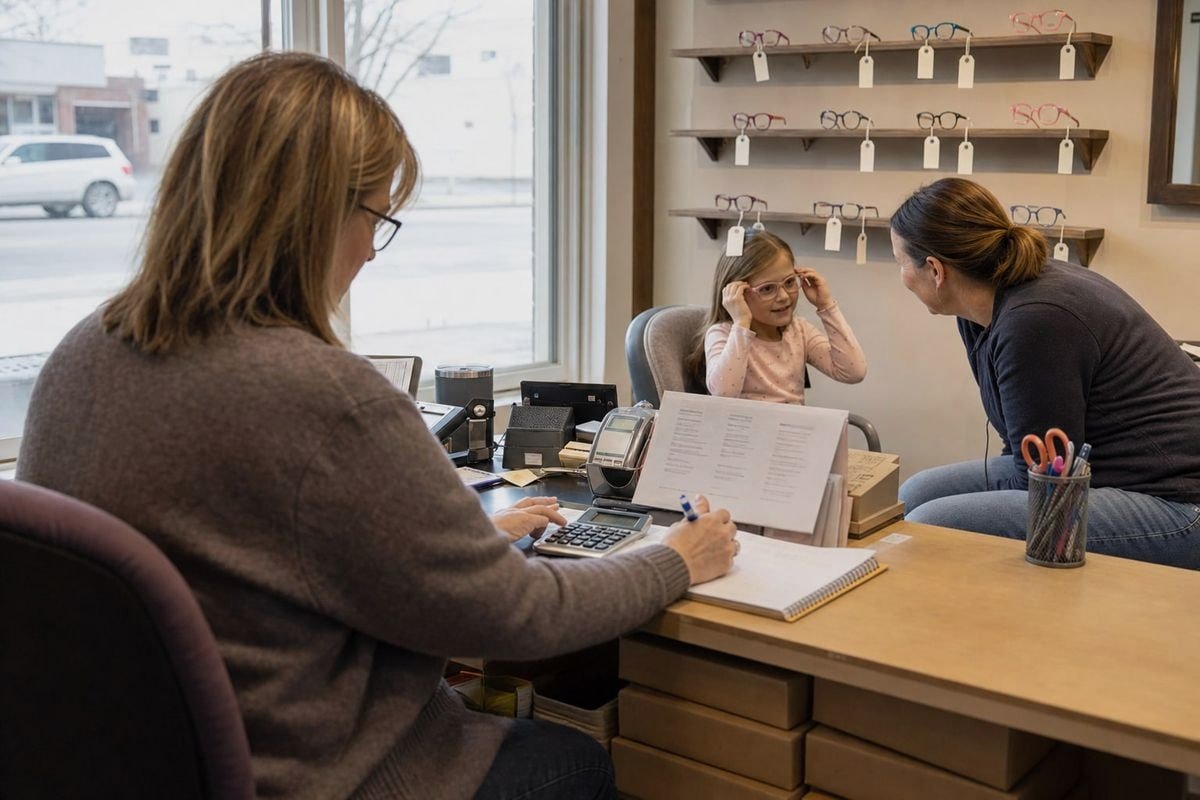
Buyers ask me about vision insurance frame allowance limits weekly ACA-compliant plans 1. Miss that number, and your kids optical frames sit unsold. Our factory learned to build the ceiling into every quote.
To convert a vision insurance frame allowance into a cost ceiling, take the most common allowance your customers hold (typically $130–$150), treat it as your maximum retail price, then divide by your retail markup to set the wholesale price ceiling for kids optical frames.
That formula sounds simple. The details are not. Below, I walk through each step, from surveying real allowances to sourcing frames that fit under the cap.
How do I calculate the average frame allowance my customers actually get from their vision insurance?
A distributor in the US once told me his best-selling frame died overnight. Why? A major managed vision care plan 2 in his region trimmed its allowance by $20, and his price suddenly created a bill.
Pull the frame allowance figures from the three or four managed vision care plans most common in your market, weight each by how many of your customers carry it, and average them. Most retailers land between $130 and $160 for pediatric benefits.

The frame allowance is a fixed dollar amount the insurer contributes toward frames. It is not a promise to cover the full retail price. Published allowances vary widely: $120, $130, $150, $175, $200, and even $225 on some family plans. So you cannot guess. You have to measure.
A simple three-step survey method
First, ask your dispensing partners or retail customers which plans they bill most often. In most regions, three or four plans cover the majority of families. Second, record the pediatric frame allowance for each plan. Remember that children under 19 often have separate, sometimes richer, benefits because pediatric vision is an essential health benefit 3 under ACA-compliant plans. Third, weight each allowance by patient volume and average the result.
Adjust for the rules that shift the real ceiling
The raw allowance is not the whole story. Some plans add a bonus allowance of $20 to $50 at featured retailers or for featured frame brands. Others give a 20% discount on charges above the allowance, which softens the gap. Frequency matters too: some pediatric plans reset every 12 months, others every 24 months, which changes annual spending power.
| Plan factor | Effect on real ceiling | What to record |
|---|---|---|
| Base frame allowance | Sets the floor of your ceiling | Dollar amount ($130–$200 typical) |
| Retailer bonus allowance | Raises ceiling by $20–$50 | Which retailers qualify |
| Discount above allowance | Softens overspend by ~20% | Percentage and conditions |
| Frequency limit | Changes annual budget | 12 vs. 24 months |
| Out-of-network reimbursement | Lowers the practical ceiling | Capped reimbursement amount |
One useful working formula for the family's side: out-of-pocket expenses 4 equal the frame price, minus the allowance, minus any in-network discount applied above the allowance, never less than zero. Your job is to keep that result at zero for as many customers as possible.
What wholesale price ceiling should I set so my kids optical frames stay within that allowance?
Pricing is a trade-off we weigh with buyers all the time: push the wholesale price up for richer finishes, or hold it down so the retail price stays under the insurance cap. In our export experience, the second option sells more units.
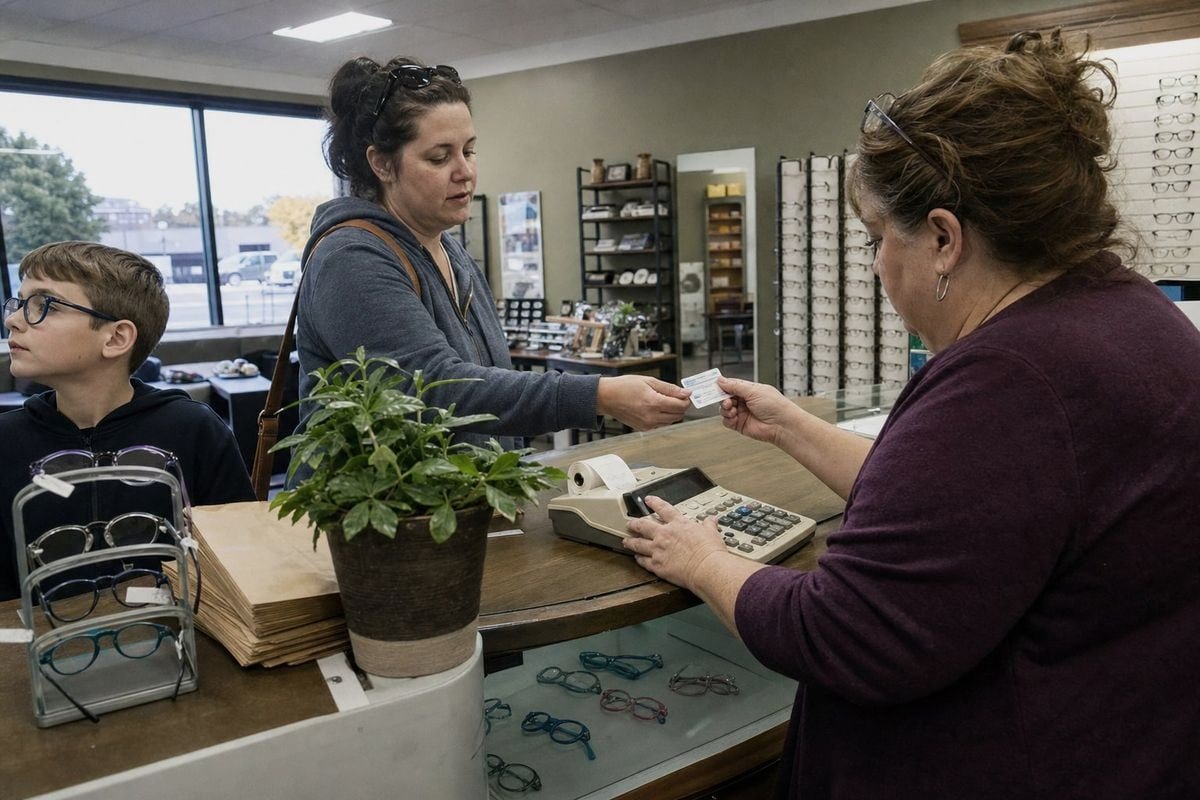
Divide your target allowance by your channel's retail markup. With a $150 allowance and a standard 3x optical markup, your wholesale price ceiling is about $50; at 2.5x, it is $60. Frames landed below that number keep families at zero out-of-pocket.

Retail frame markup 5 in the optical channel usually runs between 2.5x and 3.5x on wholesale cost. That multiple has to cover the optician's rent, staff, and dispensing time. So the math flows backward from the allowance, not forward from your factory cost.
Work the numbers backward
Here is how the ceiling shifts across common allowances and markups:
| Target allowance | Markup 2.5x | Markup 3.0x | Markup 3.5x |
|---|---|---|---|
| $130 | $52 | $43 | $37 |
| $150 | $60 | $50 | $43 |
| $175 | $70 | $58 | $50 |
| $200 | $80 | $67 | $57 |
Notice something useful. Even at a conservative 3.5x markup and a modest $130 allowance, a wholesale ceiling near $37 is workable for durable children's frames made in flexible frame materials. You do not need to race to the bottom.
Leave a safety buffer
I always advise buyers to price 10–15% under the ceiling, not at it. Three reasons. First, allowances get trimmed, as my distributor learned the hard way. Second, retailers sometimes place your frames in a "value collection" or insurance tray pre-priced to match the allowance, and they need room to do it. Third, a frame priced at $139 against a $150 allowance feels like a clear win to parents, while a $149 frame feels like a squeeze.
One objection I hear: "Shouldn't I chase the higher-margin designer frame upcharge instead?" Some brands do, and a plan discount above the allowance can make a $200 frame cost far less than the raw $50 gap. But that strategy depends on plan quirks the parent must understand. No-gap vision coverage positioning is simpler, converts faster at the dispensing table, and builds repeat volume, which is what most of our importer customers actually want.
Can I still offer TR90 flexible frames with quality lenses under a typical insurance cost cap?
During a quality review last year, our team stress-tested a TR90 6 kids frame with TPEE temples through repeated twist cycles. It bounced back every time. The buyer's question that day was the same one you may have: can this quality really fit under an insurance cap?
Yes. TR90 flexible frames with silicone-grip temples and polycarbonate demo lenses can wholesale well below a $43–$60 ceiling, leaving room for retail markup while staying inside a typical $130–$150 vision insurance frame allowance with zero family out-of-pocket cost.
The fear behind this question is understandable. Parents equate low price with fragile plastic. But TR90 is not a premium-priced exotic material. It is a memory nylon that our production line has worked with for years, and at volume, it prices competitively against ordinary acetate while outperforming it on safety.
Why flexible materials fit the pediatric benefit model
Pediatric optometry practices favor frames that survive real childhood. Take one of our rounded-rectangular styles: a glossy TR90 front, two-tone flexible rubber temples, silicone hinge connectors, and adjustable ear hooks that curve behind the ear for a slip-resistant fit. Every element serves an active child. None of it requires designer pricing.
Lenses matter here too. Verify that polycarbonate lens coverage 7 is standard on the plans your customers carry. Many pediatric benefits include polycarbonate lenses at no extra charge because they are impact-resistant. When lenses are covered separately, the entire frame allowance stays available for the frame itself, which widens your ceiling. When lenses are billed against the same benefit, your frame price needs to sit even lower.
What quality survives under the cap
| Feature | Fits under a $150 allowance? | Why it matters for kids |
|---|---|---|
| TR90 memory frame front | Yes | Flexes without snapping on impact |
| TPEE or rubber flexible temples | Yes | Soft, safe, comfortable for all-day wear |
| Silicone hinge connectors and ear hooks | Yes | Slip-resistant fit for active play |
| Polycarbonate lenses | Usually plan-covered | Impact resistance for eye safety |
| Hand-polished luxury acetate with metal inlays | Rarely | Pushes retail past most allowances |
The honest trade-off is aesthetic complexity, not safety. Multi-layer laminated acetates and metal detailing push wholesale costs above the ceiling. But a translucent blush-pink frame with a two-tone matte temple, like another style in our range, delivers strong shelf appeal well within budget.
How do I work with OKAY EYEWEAR to develop styles that fit my target allowance without sacrificing safety or margin?
A procurement manager from Australia emailed us with exactly this brief: frames retailing under $140, safe enough for her brand's reputation, and with margin left for both sides. Six weeks later she had samples from our existing catalog, with her colors, and no mold fees.
Share your target allowance and channel markup with OKAY EYEWEAR, and we work backward to a wholesale target. You select from about 800 existing TR90 and TPEE styles, then we customize colors, logos, lenses, and packaging so the finished frame lands under your ceiling with margin intact.

The reason this works is our starting point. With roughly 800 existing styles, you avoid the mold investment that usually forces new kids' lines to price high. You can test the market at lower risk, confirm which shapes and colors move under your local allowance structures, then invest in fully custom tooling only for proven winners.
Our allowance-fit development process
- Define the ceiling together. You tell us the dominant allowances in your market and your retail markup. We calculate the wholesale ceiling with you, buffer included.
- Shortlist from existing styles. We pull TR90 kids optical frames and TR90-with-TPEE-temple styles that hit your price band, from sporty black-and-navy designs with dotted-texture temple tips to soft translucent pink acetate looks.
- Customize without breaking the budget. Custom colors, your logo, lens specifications, and retail-ready packaging are all part of our OEM/ODM support. We flag any option that would push you over the ceiling before you commit.
- Sample and verify. Our 5S-managed workshop, backed by 15 years of eyewear experience and about 120 workers, runs samples through the same QC as production. Alan Kong on our sales team keeps communication clear at every step.
- Scale and protect the number. As you reorder, we hold specifications steady so your retail price stays reliably under the allowance year after year.
One more angle worth planning around: frames with manufacturer-backed replacement support reduce warranty friction for parents, so a family does not burn a new insurance claim on a broken part. Durable flexible materials make that promise affordable to keep. That is the real value of matching an in-network optical provider's economics: the parent pays nothing, the retailer keeps margin, and your brand becomes the easy yes at the dispensing table.
Conclusion
Guessing prices loses shelf space. Instead, measure your customers' vision insurance frame allowance, divide by markup, buffer down 10–15%, and source flexible, safe kids optical frames built to that ceiling — we are ready to help.
Footnotes
1. Explains ACA plan protections underlying pediatric vision benefit rules. ↩︎
2. Background on how vision insurance plans structure frame allowances. ↩︎
3. Official ACA definition confirming pediatric vision as a required benefit category. ↩︎
4. Official definition of out-of-pocket costs referenced in the family cost formula. ↩︎
5. Explains the standard business markup concept used in the pricing formula. ↩︎
6. Background on nylon-based TR90 material used in flexible eyewear frames. ↩︎
7. Authoritative medical source explaining the importance of polycarbonate lenses for children’s safety. ↩︎
More Articles You Might Like

August 5, 2026
Bio-Based vs Regular Cellulose Acetate: What's the Difference for Kids' Frames?

August 5, 2026
How Recyclable Are Kids' Optical Frame Materials, and What Eco-Friendly Alternatives Exist?

August 5, 2026
Do Kids Optical Frames Whiten or Age in Storage, and How to Control Warehouse Conditions?
Looking for a Reliable Kids Eyewear Partner?
Explore 800+ ready styles and full OEM/ODM support tailored to your brand.
Get in Touch English
  Español de México
  Deutsch
  Français
  日本語
日本語  العربية
  Português do Brasil