How to Control Sample Loss and Replenishment Costs for Kids Optical Frames Try-Ons?

Kids optical frames try-ons quietly drain money RFID tags 1. On our Taizhou production line, buyers keep telling me the same story: samples break, disappear, and replacement invoices pile up faster than sales grow.
Control sample loss and replenishment costs for kids optical frames try-ons by curating small fit-first kits of 3–5 durable TR90 flexible frames, tracking every sample with barcodes, securing kits with deposits or authorization holds, and reordering only proven high-turnover styles on fixed thresholds.
That single sentence hides a full operating system TR90 flexible frames 2. Below, I break it into four practical questions, using what we have learned supplying children’s eyewear brands in over 20 countries.
How can I reduce the cost of replacing lost or damaged try-on samples?
During a QC audit last year, I watched a European client's returned try-on kit come back to our factory: two snapped hinges, one missing temple tip. The frames were fine. The system around them was not.
Reduce replacement costs by using durable demo-grade samples, limiting how many frames children handle, assigning each sample a tracked identity, and setting clear liability terms. Most sample loss comes from uncontrolled handling and untracked movement, not from unavoidable accidents.
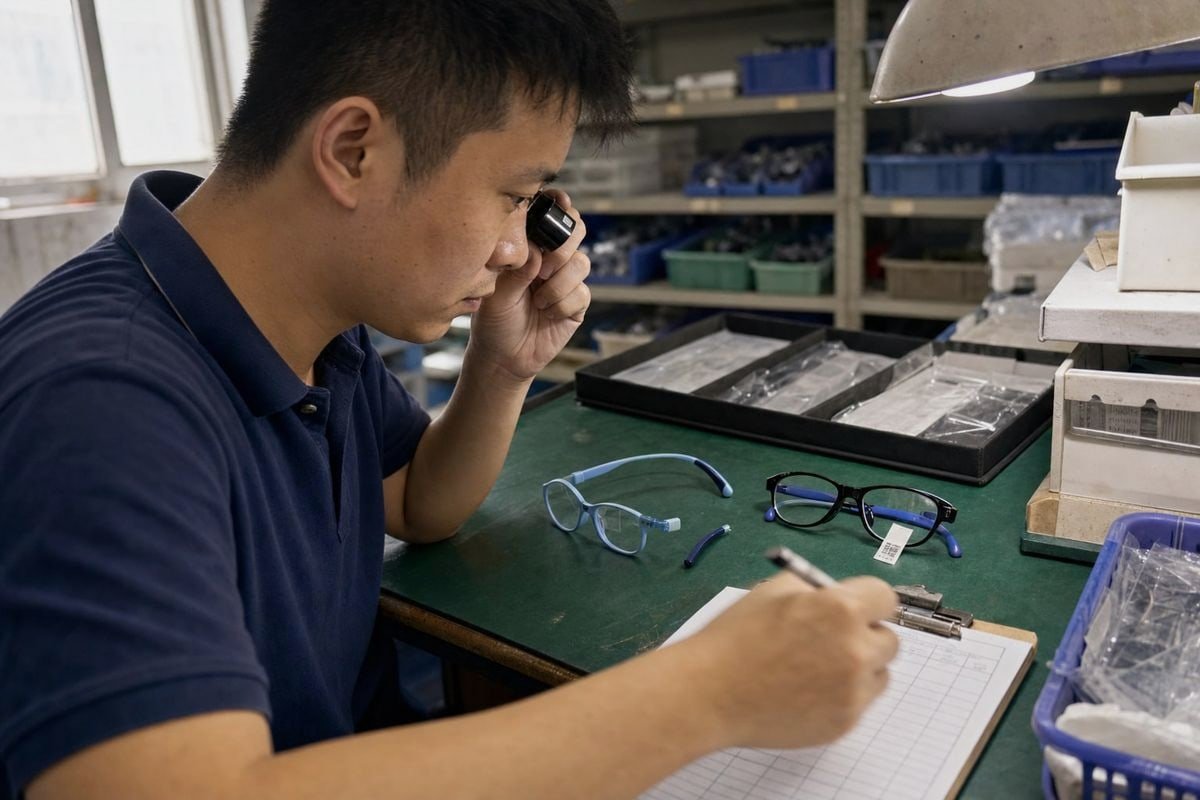
The first thing I tell buyers is this: treat try-on samples as controlled inventory, not as a loose pile of demo frames. Inventory shrinkage in a try-on program almost always traces back to three causes. Frames get over-handled. Frames get misplaced between waiting areas and dispensing stations 3. And nobody notices a loss until reorder time.
Start with the material
Material choice is your cheapest insurance. A rigid acetate demo frame 4 breaks when a child bends it. Our TR90 flexible frames with TPEE temples 5 survive being twisted, dropped, and sat on. That is why we developed them for active kids in the first place. If your try-on samples flex instead of snap, your replacement rate drops before you change a single process.
Then control the handling
Fewer touches means fewer breaks. Set simple rules:
- Only staff pull frames from the board.
- Children try frames at one designated station, not while wandering.
- Every frame returns to its labeled slot immediately after trial.
- Fragile or premium samples stay behind the counter; customer-facing samples are the durable ones.
Then make loss visible
Digitize every sample. Barcode or RFID tags 6 let you count kits in minutes and spot a missing frame the same day, not the same quarter. Pair that with a monthly breakage review by brand, material, and shape. When one style keeps failing, retire it or ask your supplier for demo-grade replacements with sacrificial components that cost less than retail stock.
| Loss driver | Typical cost impact | Control tactic |
|---|---|---|
| Over-handling by children | High breakage rate | Guided try-on, 3–5 frames only |
| Misplacement across stations | Silent shrinkage | Labeled slots, same-day counts |
| Fragile sample materials | Frequent replacement | TR90/TPEE flexible samples |
| No tracking records | Losses found too late | Barcode or RFID per sample |
What sample program strategies help me control replenishment expenses without limiting selection?
One trade-off we weigh constantly at our factory is depth versus breadth. A buyer wants every colorway on the try-on board. Their finance team wants half the samples. Both can win, if the program is structured right.
Control replenishment expenses by building preset kits around a demographic frame matrix, keeping deep stock only in proven high-turnover styles, negotiating vendor exchange or buy-back programs, and setting reorder thresholds. Selection stays wide because curation replaces duplication, not variety.

The instinct to stock everything is understandable. But every extra sample is capital tied up and one more item exposed to damage. The stronger model is lean inventory backed by fast reorder rules and real vendor support. Here is how I structure it with our brand clients.
Build a frame matrix, not a wish list
Map your assortment to age band, face size 7, gender lean, and activity type. Then fill each cell with one or two strong styles instead of five near-duplicates. Because we hold around 800 existing styles, our buyers can cover a full matrix without mold investment, which keeps their sample exposure low while their perceived selection stays broad.
Standardize preset kits
Preset kits based on age or face shape simplify everything downstream. Replenishment becomes predictable: you reorder a known kit configuration, not a scattered list of one-off frames. Reverse logistics also gets easier, because a returned kit can be inspected against a fixed checklist in minutes.
Let data decide what you replenish
Track three numbers per style: conversion rate, breakage rate, and outgrow-return rate. Then apply simple rules.
- High conversion, low breakage: hold safety stock levels and set an automatic reorder threshold.
- High conversion, high breakage: keep it, but request demo-grade samples or reinforced construction from your supplier.
- Low conversion, any breakage: retire it and reclaim the slot.
Use your supplier as a lever
Ask for exchange programs on slow movers, discounted demo replacements, and merchandising support. We offer this kind of OEM/ODM flexibility because a partner who protects your margins reorders for years. A supplier who only sells you frames is making your replenishment problem worse.
| Strategy | What it replaces | Cost effect |
|---|---|---|
| Demographic frame matrix | Random broad buying | Fewer dead samples |
| Preset kits by age/face shape | Ad-hoc kit assembly | Predictable reorders |
| Reorder thresholds on winners | Emergency restocking | Lower rush costs |
| Vendor buy-back/exchange | Writing off duds | Recovered capital |
Should I request a security deposit or minimum order from retailers before sending optical try-on kits?
A distributor in Australia once asked me to ship six full sample sets with no terms attached. Two sets never came back. Since then, I advise every buyer to put financial accountability in writing before any kit leaves the warehouse.
Yes. Require either a refundable security deposit, a credit card authorization hold covering the kit's retail value, or a reasonable minimum opening order. Pair it with prepaid return labels and a defined trial window so accountability feels professional, not punitive.
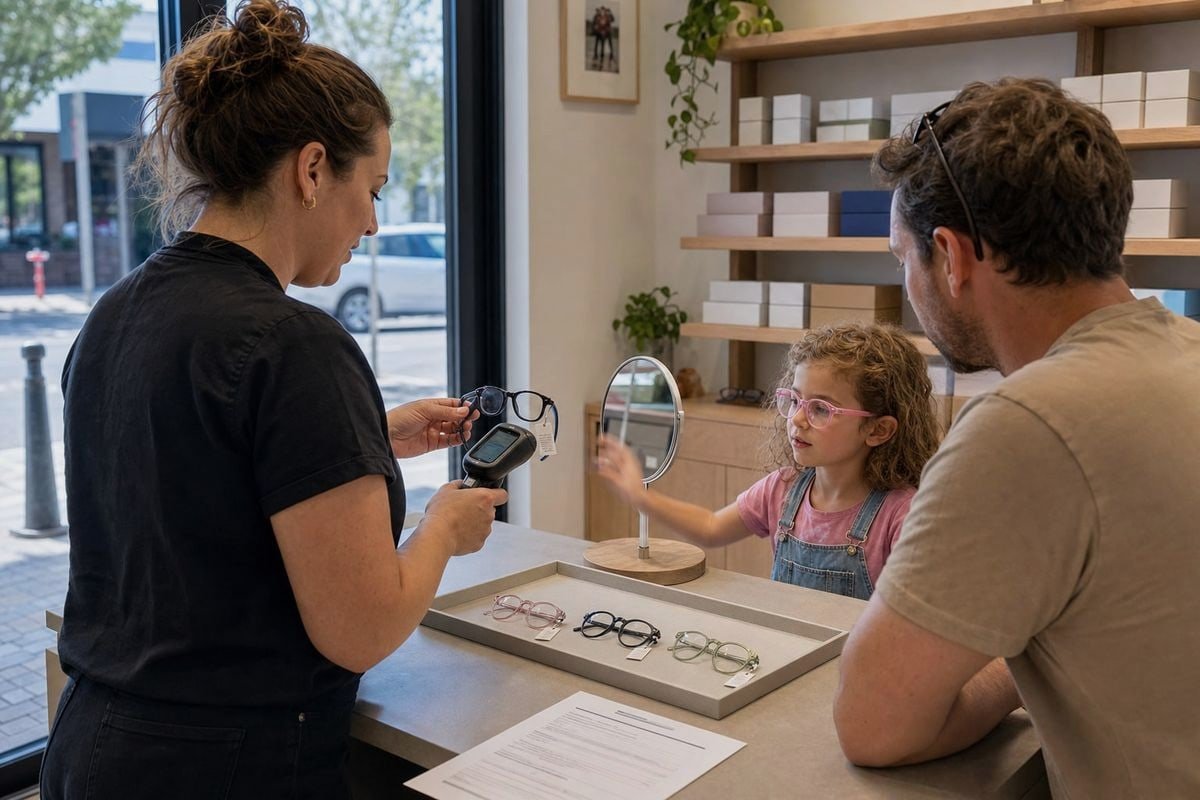
Some buyers worry that asking for a deposit will scare retailers away. In our experience exporting to brands in Japan, Europe, and Australia, the opposite happens. Serious retail partners expect terms. The ones who object to any accountability are often the ones whose kits never return. A deposit is not a barrier; it is a filter.
Choose the right mechanism for the relationship
Different partners deserve different tools. Here is how I frame it:
| Mechanism | Best for | How it works |
|---|---|---|
| Authorization hold | New or unproven retailers | Card is held for kit retail value; released on complete return |
| Refundable security deposit | Mid-trust wholesale accounts | Cash or invoice deposit, refunded or credited against orders |
| Minimum opening order | Established retail partners | Kit ships free once a baseline order confirms commitment |
| Signed liability terms | All partners, always | Loss and damage responsibility defined before shipment |
Make returning easy, then enforce the clock
Deposits punish failure. Good logistics prevent it. Include pre-printed prepaid return labels in every home try-on kit or retailer kit, so returning takes zero effort. Set a strict 5-to-7-day trial window with automated reminder notifications and clearly stated late-return penalties. Consider a fast-return incentive too, such as a small discount on the final order for kits postmarked within 48 hours. Carrots and clocks together beat deposits alone.
Put liability in plain language
Your terms of service should state, in one short paragraph, who pays for a lost frame, a snapped temple, and a late return. When quality control standards for returned kits are defined upfront, disputes almost never happen. Ambiguity, not strictness, is what damages relationships.
How many styles do I actually need in my try-on sets to balance cost and customer choice?
Early in my work with a kids' accessory brand, we packed twelve styles into their pilot try-on kit. Returns were slow, breakage was high, and children were overwhelmed. We cut the kit to five. Conversion went up.
Most kids try-on sets work best with 3–5 curated styles per child, drawn from a total program of 12–20 samples segmented by age and face size. Fit screening happens first; style and color choice happens only within frames that already fit.
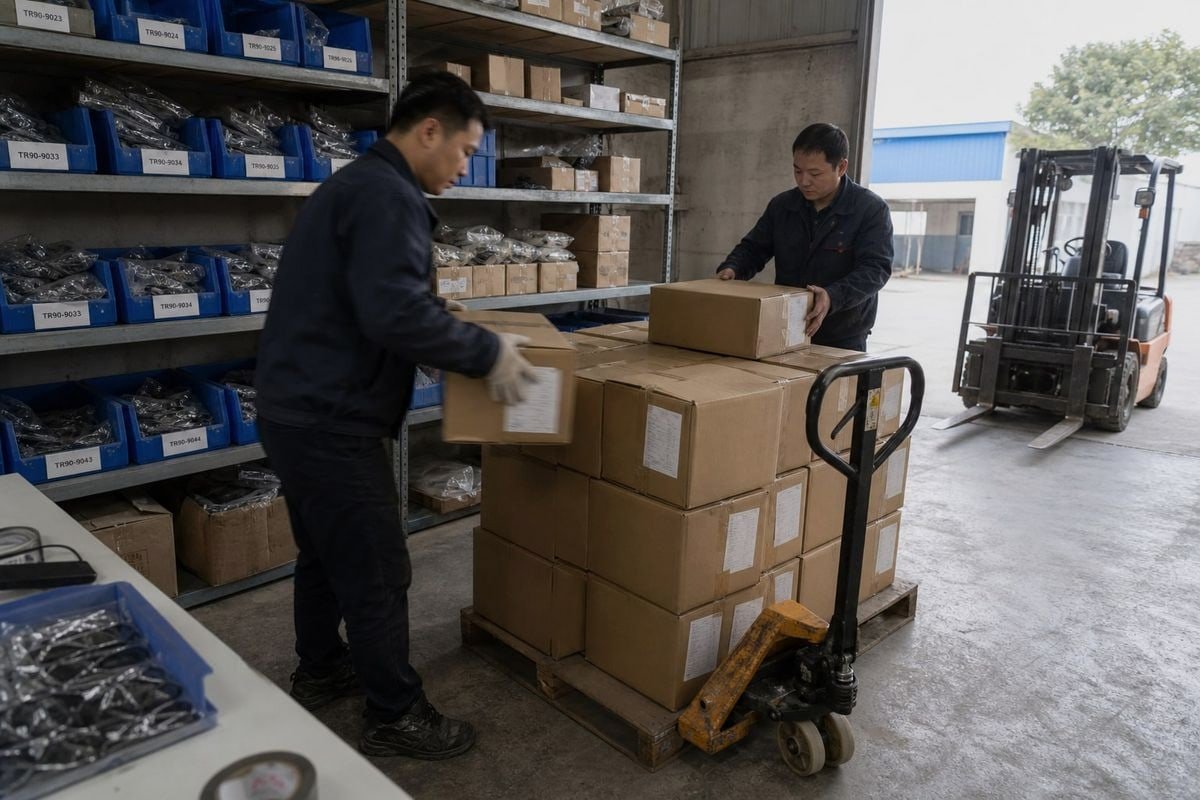
The tension here is real, and I want to address the objection directly. Many retailers believe children need many styles to feel excited and involved. I understand the instinct, but the evidence from pediatric dispensing points the other way. Too many frames increase handling, decision fatigue, and damage risk, while making the final choice harder for the child. The answer is not less choice. It is later choice.
Fit first, style second
Pediatric selection is operationally different from adult browsing. Bridge fit, temple length, and durability for school and sports matter more than fashion range. So screen first: eliminate every frame that does not fit the child's bridge and face size or match their activity needs. Then present 3–5 finalists and let the child own the style and color decision. The child still feels in control. You just moved their choice to a safer, smaller set. This also cuts remakes and exchanges, because a child can no longer fall in love with an unsuitable frame.
Pre-qualify before physical handling
Virtual try-on software makes the curation even tighter. A short VTO session lets parents and kids shortlist shapes and colors before a single physical frame is touched, often shrinking a home try-on kit from five frames to three. Fewer frames shipped means lower reverse logistics costs and fewer wear-cycles per sample. For in-store programs, a quick fit chart near the dispensing station stops staff from pulling extra frames while they search.
Size the total program, not just the kit
Your board or kit pool should segment by age band. A workable baseline: four to six styles for ages 3–5, five to seven for ages 6–9, and five to seven for ages 10–13, with two or three colorways available on reorder rather than all displayed at once. Keep one backup set of your best sellers so display samples are not over-handled. Regional rotation between nearby customers can also keep kits moving without routing everything through a central warehouse.
Conclusion
Sample loss is a system problem, not a kids problem. Curate small fit-first kits, track every frame, secure kits with clear terms, and replenish only proven winners.
Footnotes
1. Background on RFID technology referenced for tracking and counting try-on samples efficiently. ↩︎
2. Provides background on the flexible polymer material used in durable TR90 eyewear frames. ↩︎
3. Refers to the professional area where eyewear is fitted and provided to patients by opticians. ↩︎
4. Explains the properties of cellulose acetate, a common but rigid material used in eyewear frames. ↩︎
5. Details the characteristics of TPEE, a flexible elastomer used to increase the durability of children’s glasses. ↩︎
More Articles You Might Like

August 5, 2026
Bio-Based vs Regular Cellulose Acetate: What's the Difference for Kids' Frames?

August 5, 2026
How Recyclable Are Kids' Optical Frame Materials, and What Eco-Friendly Alternatives Exist?
August 5, 2026
Do Kids Optical Frames Whiten or Age in Storage, and How to Control Warehouse Conditions?
Looking for a Reliable Kids Eyewear Partner?
Explore 800+ ready styles and full OEM/ODM support tailored to your brand.
Get in Touch English
  Español de México
  Deutsch
  Français
  日本語
日本語  العربية
  Português do Brasil