How to Confirm Interchangeable Temple Colors and Accessory Stock with Kids’ Sunglasses Suppliers?
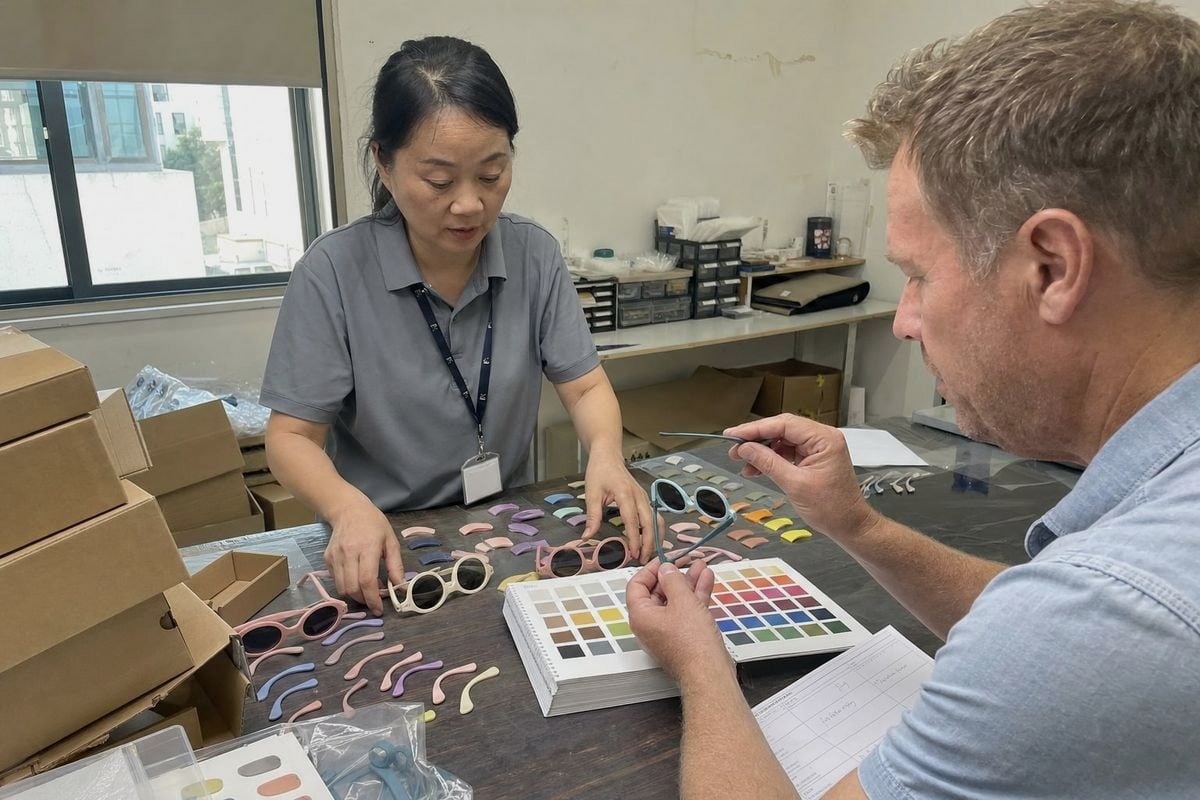
Confirming interchangeable temple colors and accessory stock sounds simple — until a shipment arrives with mismatched shades TPEE frame material 1. On our production line, we see why buyers get burned by vague “customizable” promises.
To confirm interchangeable temple colors and accessory stock, request the exact frame model number, a SKU sheet with live inventory counts, Pantone color references, a parts compatibility chart, packaging photos, and a physical sample. Get written confirmation of MOQ, lead times, and buffer stock before ordering.
That answer covers the essentials. But each step has details that decide whether your order succeeds or fails. Let me walk you through what to check, ask, and test.
How can I verify that a supplier's interchangeable temple colors will match my brand's exact color standards?
A buyer from Australia once sent us three "mint green" samples from three different suppliers. None matched. That day taught me why color verification must happen before production, not after.
Verify color matching by providing Pantone codes, requesting physical swatches molded in the actual temple material, approving a pre-production color sample, and demanding a written color consistency guarantee of Delta E under 2.0 across batches. Never approve colors from screen images alone.
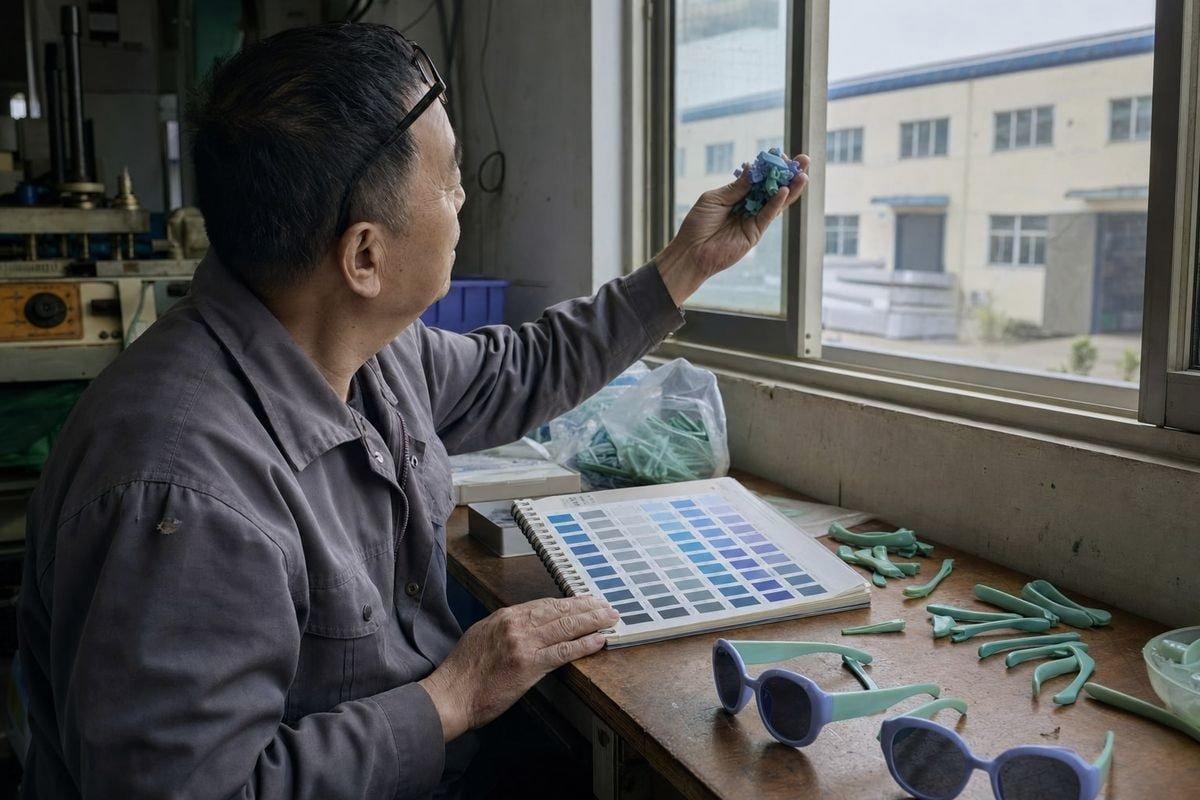
Color accuracy is harder for interchangeable systems than for standard frames. Why? Because a replacement temple made six months from now must still match the front frame made today. If the batches drift, your customer sees the mismatch instantly.
Why Material Changes the Color
The same Pantone code 2 looks different in different plastics. TPEE frame material has a slightly softer, more matte surface than TR90. Pigment loads behave differently in each. In our workshop, we always mold color chips in the actual temple material before confirming anything. Ask your supplier to do the same. A printed swatch card is not proof.
The Color Verification Sequence
| Step | What to Request | Why It Matters |
|---|---|---|
| 1 | Pantone or RAL code confirmation in writing | Removes guesswork from "sky blue" naming |
| 2 | Molded color chip in TPEE or TR90 | Shows true color in the real material |
| 3 | Pre-production sample on the actual frame | Confirms front-and-temple pairing under natural light |
| 4 | Delta E < 2.0 guarantee across batches | Protects future reorders from color drift |
| 5 | Retained "golden sample" at the factory | Gives QC a physical reference for every run |
One more caution. Digital swatch libraries and 3D renders are useful for approving new colorways quickly, and we use them ourselves during OEM eyewear manufacturing 3 development. But treat them as previews. Final approval should always rest on a physical, molded, light-checked sample. Check the parts under daylight, not only studio lighting — mirrored or gradient finishes especially can shift dramatically between the two.
What should I ask about accessory stock levels before placing a bulk order for interchangeable kids' sunglasses?
There is a trade-off we discuss with buyers every season: a wide color catalog looks attractive, but wide catalogs rarely mean everything sits in the warehouse. Catalog pages and live stock are two different things.
Ask which colors are stocked versus made to order, request current inventory counts by SKU and temple length, confirm whether accessories use stock molds, verify MOQ for custom colors, and compare accessory lead times against frame lead times. Get every answer in writing.
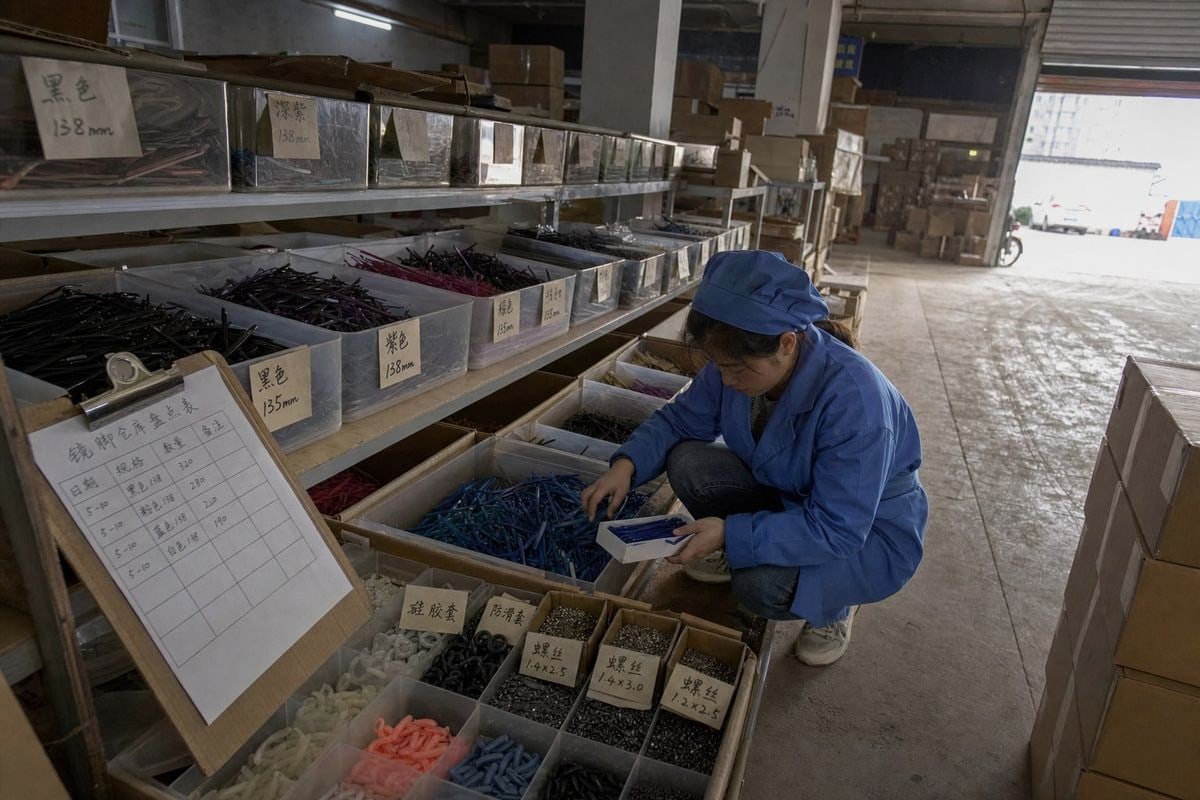
A supplier can honestly offer twenty temple colors and still have only four ready to ship. The rest may need production lead time, minimum batch quantities, or even new pigment orders. That gap between the catalog and the shelf is where delivery dates slip.
The Questions That Separate Stock from Marketing
Here are the questions I recommend putting in your first serious inquiry email:
- Which exact frame models support interchangeable temples, by model number?
- Are these temple colors stocked now, or made to order?
- Can you send current inventory counts by color and temple length?
- Do accessories run on stock molds, or do they need new tooling?
- What is the MOQ for custom colors versus stocked colors?
- What is the lead time for accessories compared with complete frames?
- Are spare temples, screws, and silicone strap accessories sold separately?
- Can you hold 10–15% buffer stock of my fast-moving colors?
That last point matters more than most buyers realize. A buffer stock agreement 4 — where the supplier reserves a percentage of high-turnover accessory colors — prevents stockouts during peak summer demand. We offer this to repeat customers because it protects both sides.
Stock Molds Change Everything
When accessories run on existing stock molds, MOQs drop and reorder cycles shorten. With roughly 800 existing styles in our range, many buyers can build a full interchangeable program without any mold investment at all. New tooling, by contrast, adds weeks and cost. Always ask which situation applies to your chosen frame.
Also request packaging photos showing what ships in each box. If your retail concept includes extra temples in a window box, confirm the supplier can assemble retail-ready sets, not just bulk bags of loose parts.
How do I confirm my supplier can maintain consistent temple and accessory supply for future reorders?
Reorders are where partnerships are tested. In fifteen years of exporting kids' eyewear 5 to buyers in more than twenty countries, I have learned that the second order reveals more about a supplier than the first.
Confirm reorder consistency by verifying the supplier owns its molds, retains golden samples and color standards, documents each SKU with a parts chart, guarantees batch-to-batch Delta E tolerance, and commits in writing to minimum accessory availability periods and reorder lead times.
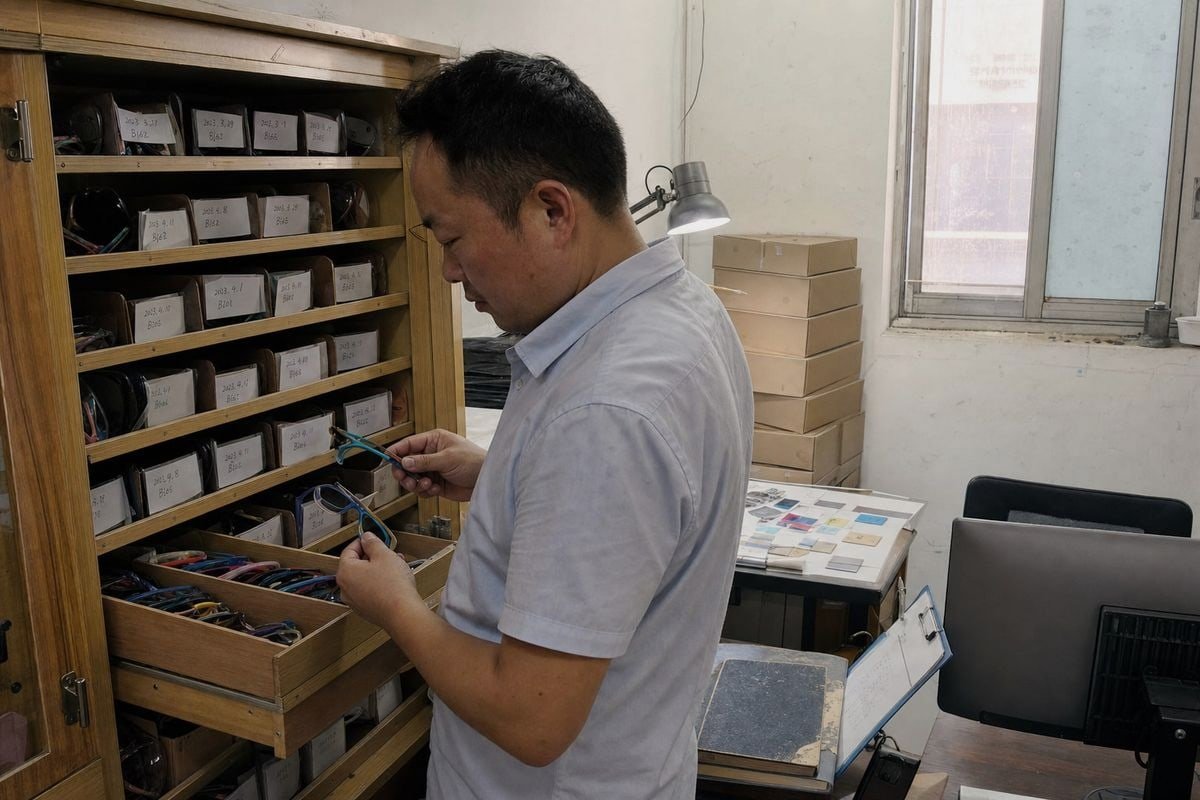
The core risk with interchangeable systems is fragmentation. Your customer buys a frame this year and wants a replacement temple next year. If your supplier discontinued the color, changed the hinge, or lost the mold, your brand takes the blame.
Documentation That Protects Your Reorders
| Document | What It Should Contain | Reorder Risk It Removes |
|---|---|---|
| SKU sheet | Every frame, temple, and accessory as a distinct unit | Shipping errors and mixed-stock confusion |
| Parts compatibility chart | Which temples fit which frame models | Mismatched hinges damaging frames |
| Color standard record | Pantone codes plus retained molded chips | Color drift between production runs |
| Mold ownership statement | Who owns tooling and where it is stored | Losing the product if you switch factories |
| Lifecycle commitment | How long the model and its parts stay available | Discontinued accessories stranding your inventory |
Build SKU Discipline Early
Granular SKU diversification sounds like extra admin work, but it is the backbone of bulk inventory management for modular products. Track each frame color, each temple color, and each temple length as its own unit. When we set up OEM programs, we assign distinct codes to every combination so warehouse picking stays accurate and reorders reference exact parts, not descriptions like "the blue one."
Ask one more revealing question: do the sales team, the catalog, and the production floor give the same answer about availability? At our 5S-managed workshop, we keep a single live inventory record precisely because conflicting answers between departments are one of the clearest red flags a buyer can spot. If three people at one supplier tell you three different lead times, believe none of them until it is in writing.
What questions help me check if interchangeable temples are truly safe and durable for children's daily use?
Watching a four-year-old test a sample is humbling. Children pull temples sideways, chew the tips, and drop frames on tile floors. Our engineers design detachable temple hinges 6 around that reality, not around adult handling.
Ask for cycle testing data on the interchange joint, confirm the frame and temples use flexible BPA-free materials like TPEE or TR90, verify UV400 and CPSIA compliance covers every colorway SKU, and test removal and reinstallation yourself on a physical sample.
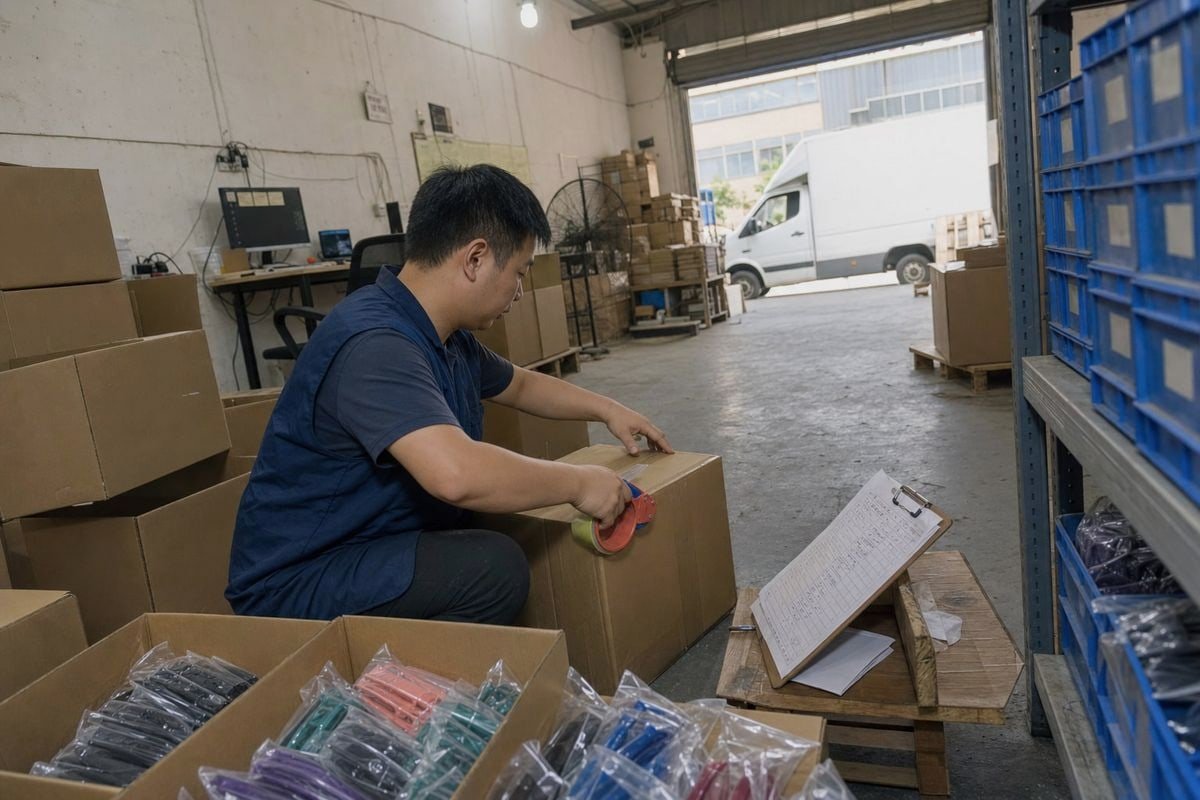
Here is the objection I hear most often: does making temples removable make the glasses weaker? It is a fair concern. More parts can mean more failure points. But a well-engineered snap-in or screw-based joint, molded in flexible material, survives repeated swaps without loosening. A poorly engineered one cracks at the hinge within weeks. The difference shows up in testing, so demand the evidence.
Safety and Durability Checks by Category
| Category | What to Verify | Evidence to Request |
|---|---|---|
| Interchange joint | Connection stays secure after hundreds of swaps | Cycle testing data for the specific hinge |
| Materials | Flexible, lightweight, BPA-free TPEE or TR90 | Material datasheets and safety test reports |
| Lenses | UV400 protection standards, impact resistance | Third-party lens test certificates |
| Chemical safety | Lead-free pigments across all colors | CPSIA safety compliance covering every accessory SKU |
| Fit | Secure fit after temple swaps, correct temple lengths | Temple length options in millimeters |
Test the Sample Like a Child Would
Product sample verification is not a formality. When your sample arrives, remove and reattach the temples ten or twenty times. Check the joint for looseness. Bend the temples gently and watch for stress marks. Confirm the frame still sits securely on a child's face after swapping. Verify that no small screws or parts detach easily enough to become a choking risk 7. Interchangeable temple lengths — often offered in steps like 130 mm and 135 mm — should adapt fit, never compromise it.
One critical detail buyers miss: certifications must cover every colorway and accessory SKU, not just the base model. A new pigment is a new formulation. Confirm the test reports name the exact parts you are ordering.
Conclusion
Vague promises cause costly surprises. Verify the exact model, demand written color standards and stock counts, confirm certified safety per SKU, and test a sample hard. That process turns interchangeable temples from a risk into a real advantage.
Footnotes
1. Background on the flexible thermoplastic elastomer commonly used in children’s eyewear temples. ↩︎
2. Explains the standardized color matching system referenced for frame and temple color verification. ↩︎
3. Leading B2B sourcing platform for verifying and comparing OEM eyewear manufacturing suppliers. ↩︎
4. Explains the inventory buffer stock concept used to prevent accessory stockouts. ↩︎
5. Authoritative U.S. government resource for international trade and export solutions. ↩︎
6. International standard governing spectacle frame requirements and test methods, including hinges. ↩︎
7. US government safety guidance on choking hazards relevant to small children’s product parts. ↩︎
More Articles You Might Like

August 1, 2026
Should Factory Handle Kids Sunglasses Packaging & Labeling, or Use a Designated Supplier?

August 1, 2026
Own Warehouse vs Supplier Direct Fulfillment: Which Cuts Return Costs for Kids Sunglasses Brands?

August 1, 2026
Direct-to-Port Warehouse or Overseas Staging: Which Saves More on Kids Sunglasses Shipping?
Looking for a Reliable Kids Eyewear Partner?
Explore 800+ ready styles and full OEM/ODM support tailored to your brand.
Get in Touch English
  Español de México
  Deutsch
  Français
  日本語
日本語  العربية
  Português do Brasil