How to Complete Licensor Sample Approval for Cartoon Character Kids Sunglasses?
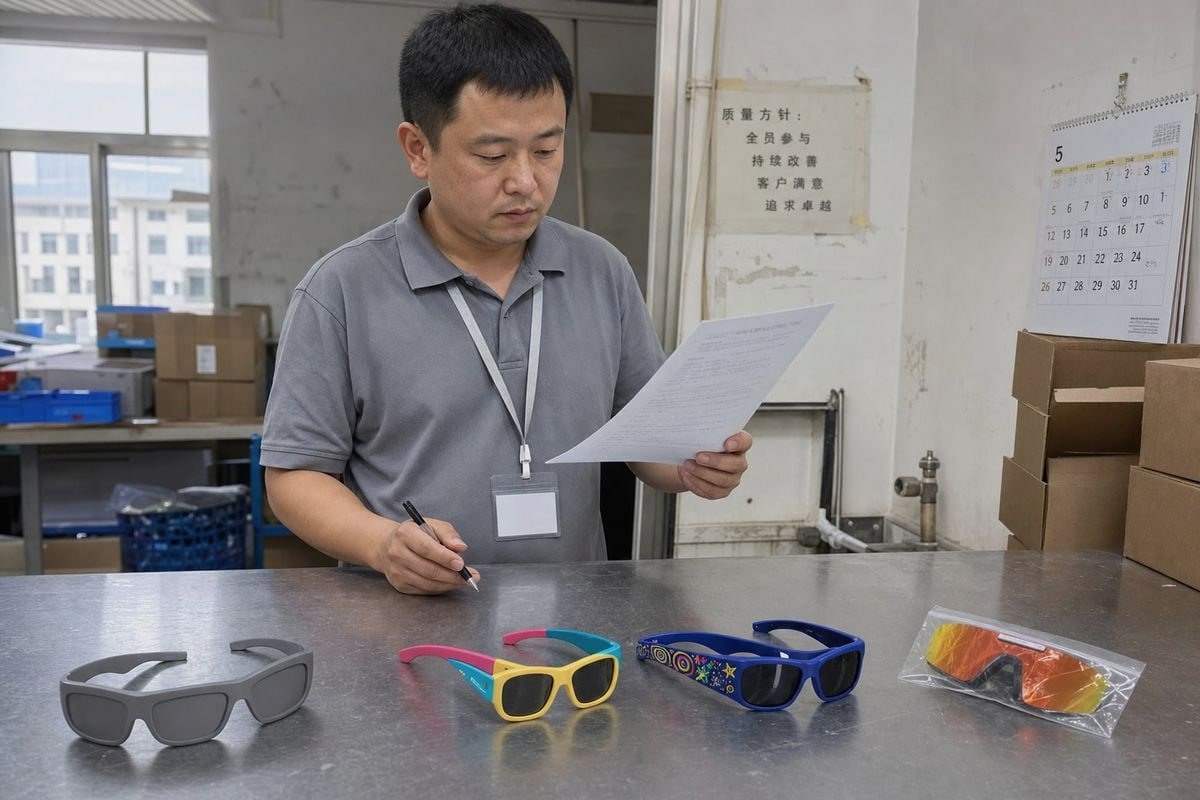
Licensor sample approval for cartoon character kids sunglasses can stall a whole launch Pantone codes 1. I have watched buyers miss retail windows because one sample bounced back three times from the brand owner.
Licensor sample approval for cartoon character kids sunglasses follows a staged workflow: submit concept art, get artwork approval, produce a pre-production sample, then secure written final or golden sample sign-off. Approval covers character fidelity, Pantone colors, materials, safety compliance, packaging, and legal markings before mass production.
The process sounds heavy, but it becomes manageable once you break it into stages EN71 2. Below, I walk through each stage the way we run it in our own factory.
How do I prepare samples that meet licensor approval requirements the first time?
A buyer from Europe once sent us character artwork as a low-resolution screenshot. We rebuilt the sample twice before anyone checked the official style guide. That lesson shaped how we prepare every licensed project now.
Prepare samples by studying the licensor's brand style guide first, using only official character artwork files, matching exact Pantone codes, keeping character proportions on-model, and building the sample on a child-safe frame that fits the character's target age group. Document every material and finish before submission.
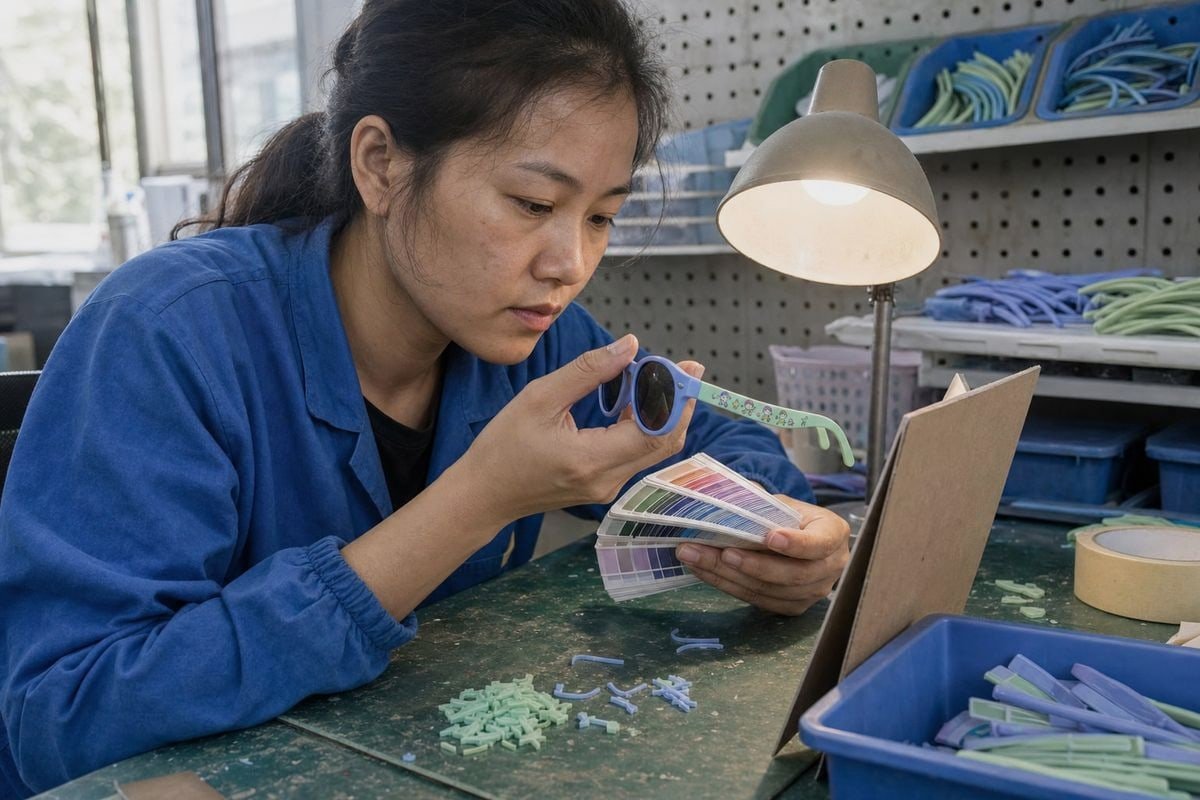
The style guide is your contract in visual form. Before we cut a single frame or print a single temple, we ask the buyer to share the licensor's official brand guidelines. These documents define the character's approved poses, color codes, minimum sizes, and forbidden uses. Guessing is expensive. A character's eye spacing, smile angle, or outline weight can all trigger a rejection if they drift off-model.
Start with the right base product
The frame itself matters as much as the artwork. Licensors expect a children's product that fits the character's audience. In our workshop, we usually recommend starting from an existing flexible TPEE or TR90 3 style. With around 800 existing styles in our library, buyers can pick a proven child-safe base and focus their energy on decoration and character placement. That reduces mold investment and shortens the path to a compliant sample.
Match the artwork with discipline
We treat character reproduction as a technical spec, not a creative exercise. Our printing team checks:
| Check Item | What the Licensor Compares | Common Failure |
|---|---|---|
| Color accuracy | Pantone references in the style guide | Print looks close but measures off-shade |
| Proportions | Approved character sheets | Stretched or squeezed artwork on curved temples |
| Placement | Approved layout zones | Character cropped by hinge or frame edge |
| Scale | Minimum reproduction size | Details blur when the character is too small |
| Finish | Brand quality standard | Rough print edges or visible layering |
Curved surfaces distort flat artwork. We pre-compensate the print files so the character looks correct once applied to a curved temple or wraparound frame. Doing this before the first submission saves at least one full revision round.
What documents and references should I provide to speed up licensor sign-off?
There is a trade-off we weigh on every licensed project: spend two extra days building a complete submission package, or ship the sample fast and risk a returned submission. Complete always wins.
Provide the signed license scope confirmation, official artwork files, flat sketches with front, side, and back views, Pantone color callouts, full material specifications, packaging mockups, children's safety test documentation, and a numbered revision history. Complete submission packages cut review cycles and prevent returns for missing information.
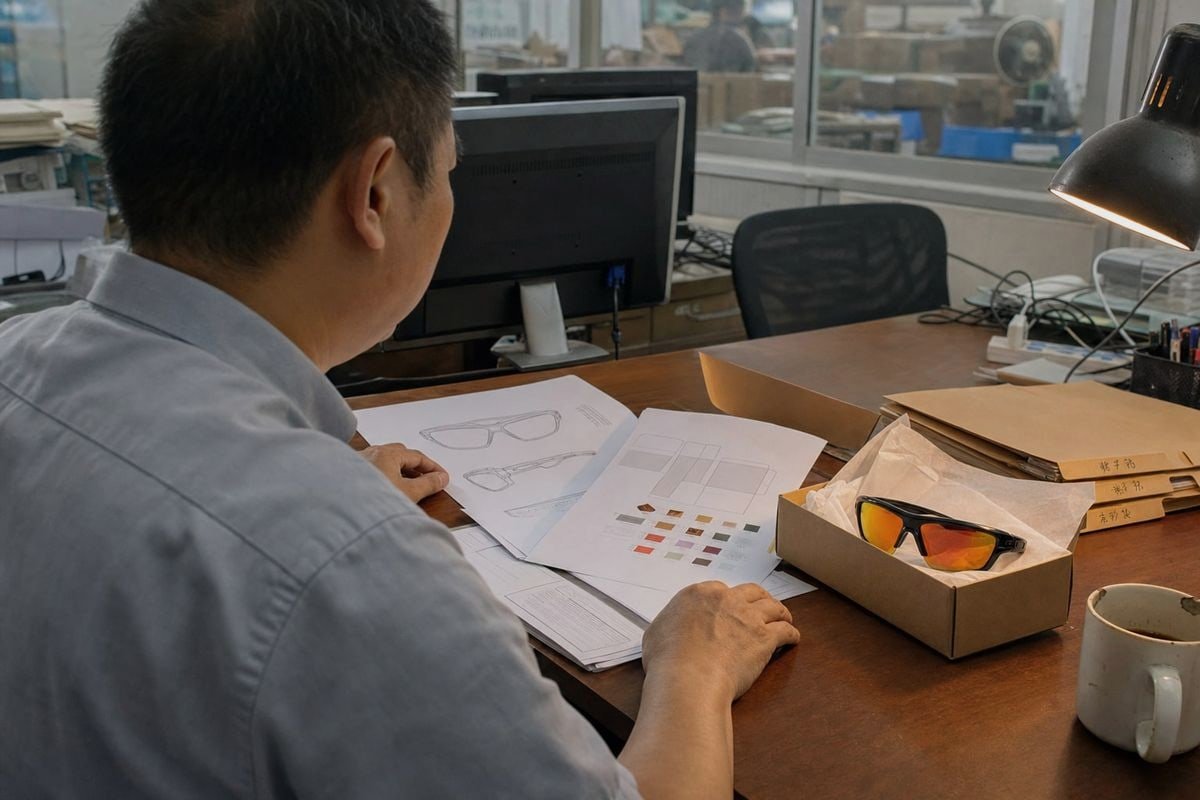
Licensors review dozens of product submissions every week. A reviewer who has to chase missing information will simply return your file, and you lose an entire review cycle, which often runs ten to fifteen business days or longer. In our experience exporting to buyers in more than twenty countries, the fastest approvals always come from the cleanest packages.
The core submission package
Here is the document set we help buyers assemble:
| Document | Purpose | Who Prepares It |
|---|---|---|
| License scope confirmation | Proves sunglasses are an approved category | Licensee (buyer) |
| Official character artwork | Ensures on-model reproduction | Licensor supplies, buyer forwards |
| Tech pack with multi-view sketches | Shows exact character placement and scale | Factory with buyer |
| Pantone and material callouts | Enables objective color and spec review | Factory |
| Packaging and labeling mockups | Covers legal marks, warnings, copyright lines | Factory with buyer |
| Safety compliance references | Addresses CPSIA 4, EN71, or market rules | Factory and test lab |
| Revision log | Shows what changed since last round | Factory |
Why version control matters
We number every revision and photograph every sample before it ships. When a licensor comments on round two, the reviewer can see exactly what changed from round one. This sounds bureaucratic. In practice, it builds trust with the reviewer, and trusted submitters often get faster, lighter reviews on later rounds. It also protects you if a dispute arises about which version was approved.
One more practical point: submit through the licensor's designated portal or agent if one exists. Sending files by scattered emails creates confusion, and informal replies may not count as the written approval your contract requires.
How can I avoid common delays or rejections during the approval process?
Silence taught me the hardest lesson here. Early in a licensed project, a client assumed no reply after two weeks meant approval. It did not. The licensor's contract said silence equals rejection, and a production run nearly went to waste.
Avoid delays by confirming the sunglasses category is licensed before sampling, following the current style guide version, submitting complete packages, planning for two to three revision rounds in your timeline, never treating silence as approval, and refusing to start production without written pre-production sample sign-off.
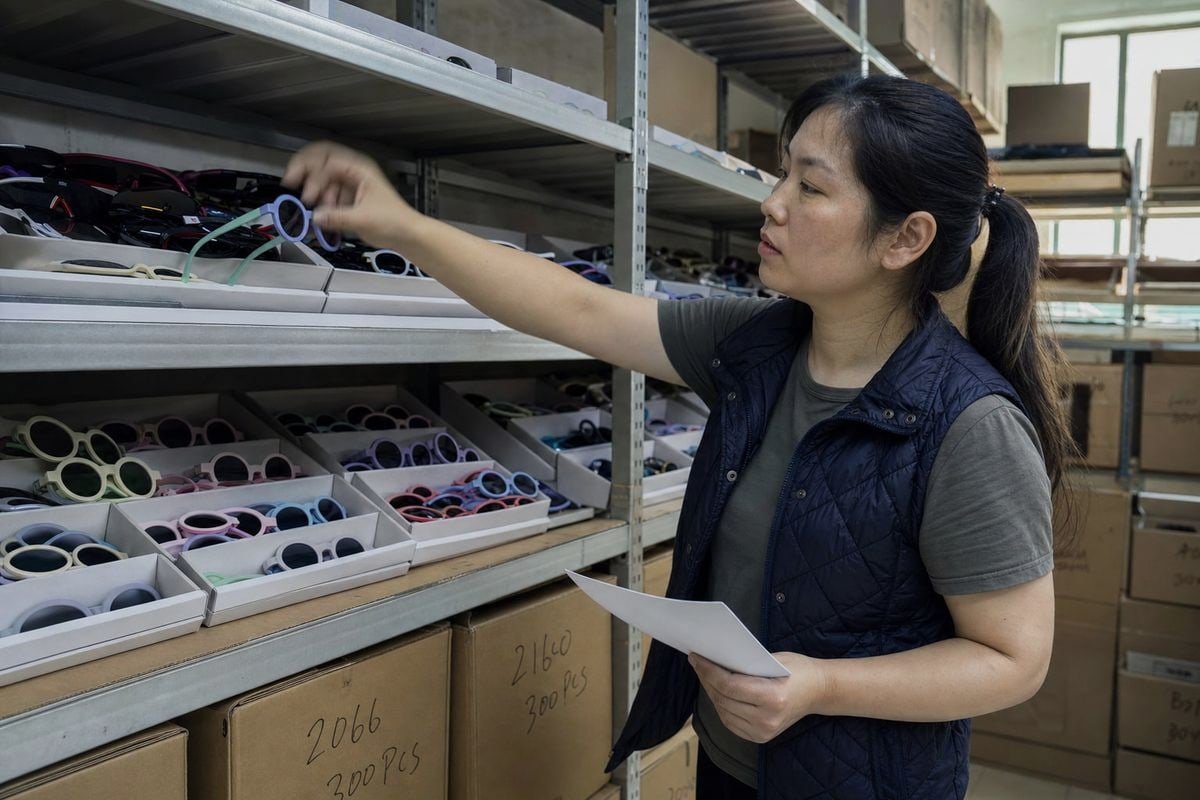
Most rejections trace back to a handful of preventable causes. I list them here in the order we see them most often:
- Off-model character reproduction. Stretched artwork, wrong colors, or unapproved poses.
- Outdated style guides. Licensors update character guidelines periodically, and an old file means an automatic rejection.
- Incomplete submissions. Missing Pantone callouts, missing packaging mockups, or missing safety references.
- Skipped stages. Jumping from concept straight to pre-production without artwork approval.
- Legal marking errors. Missing copyright lines, wrong trademark symbols 5, or incorrect country-of-origin labels.
- Timeline pressure mistakes. Starting production before written approval to hit a season.
Build the calendar backward
The biggest scheduling error is planning for one approval round. Realistic planning looks different:
| Stage | Typical Review Time | Rounds to Expect |
|---|---|---|
| Concept and artwork | 10–15 business days | 1–2 |
| Prototype or strike-off | 10–15 business days | 1–2 |
| Pre-production sample | 10–15 business days | 1–2 |
| Final or golden sample | 10 or more working days | 1 |
Some approval cycles stretch to four to eight weeks per round when portals are busy or seasonal submissions pile up. So we tell buyers to work backward from their retail date and reserve three to four months for the full approval chain. That feels slow, but it beats air-freighting a late shipment.
Respect the safety layer
For children's eyewear, safety review runs parallel to brand review. Our flexible TPEE and TR90 frames are built for durability and comfort on children’s faces, and we align lens and material specs with the buyer's target market rules early. A sample that passes brand review but fails a safety question still stalls, so handle both tracks at once.
What should I expect from my manufacturer during licensor sample revisions?
When a licensor's comments arrive, the real test of a factory begins. Our team once turned a color-correction round in five days because the print files, Pantone records, and frame stock were already organized from round one.
Expect your manufacturer to interpret licensor comments accurately, revise print files and materials quickly, deliver corrected samples within days rather than weeks, maintain a documented golden sample archive with photographs, and hold production until written approval arrives. A capable factory treats revisions as routine, not exceptions.
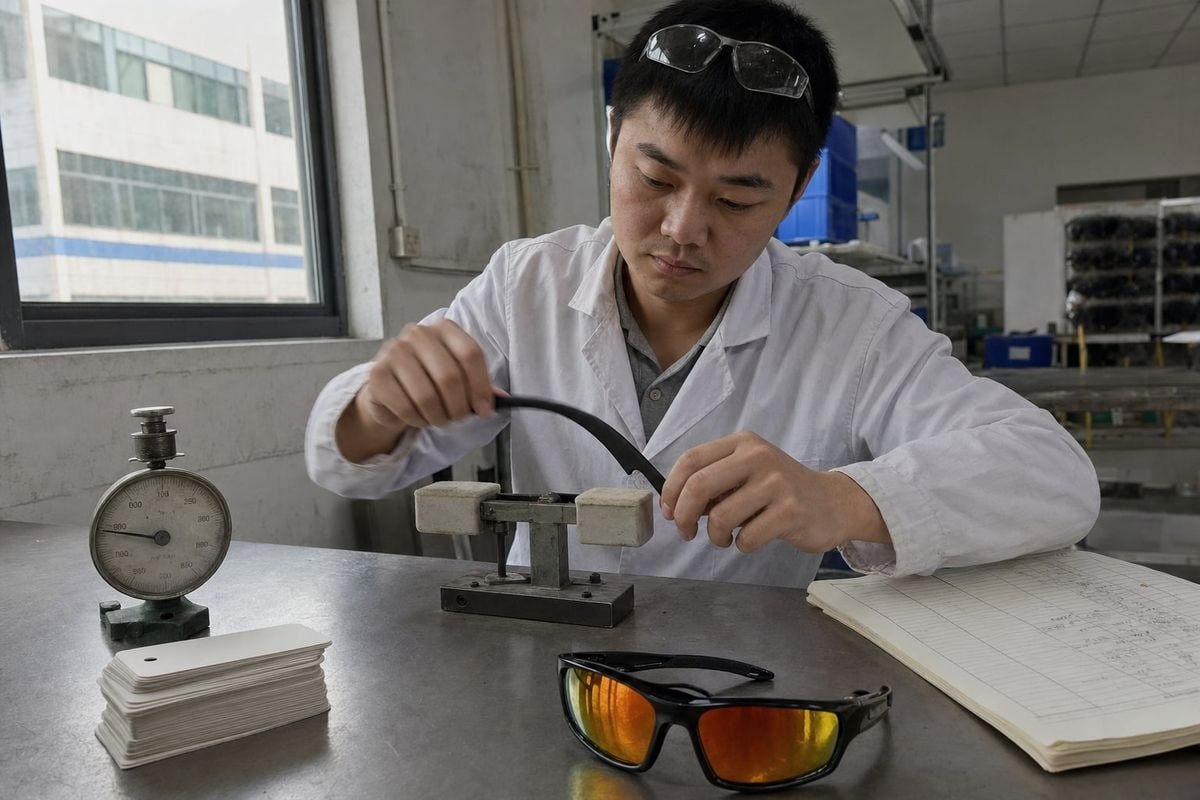
Revision rounds are where a manufacturing partner proves its value. Licensor comments are often short and technical: adjust the character's outline weight, shift the print three millimeters from the hinge, correct the yellow toward a specific Pantone 6. Your factory must translate those comments into production changes without introducing new errors elsewhere.
What a professional revision cycle looks like
In our 5S-managed workshop 7, a licensed revision follows a fixed routine. First, we log every licensor comment into the revision record. Second, our engineers update the tech pack and print files, then flag any comment that conflicts with a manufacturing limit, such as a print zone that crosses a mold parting line. Third, we produce the corrected sample and photograph it beside the previous version so the buyer can see the change clearly before it goes to the licensor. Fourth, we hold everything until written sign-off comes back.
You should also expect honesty about feasibility. Sometimes a licensor asks for a placement or finish that will not survive daily use by an active child. A good factory says so early and proposes an alternative, rather than shipping a sample that looks right but fails in the field.
The golden sample archive
Once final approval lands, insist that your factory keeps the approved golden sample sealed and archived with timestamped photographs. We keep ours as the reference for every production check and every future reorder. If a licensor audits the product line, or if a shipment quality question arises months later, that archived sample settles the discussion in minutes. It also protects you when style guides update mid-cycle, because you can show exactly what was approved and when, then re-approve only what changed.
Conclusion
Licensor approval is slow when you improvise and fast when you prepare. Study the style guide, submit complete packages, plan for revisions, and archive every approval in writing.
Footnotes
1. Explains the standardized color matching system referenced throughout licensor approval ↩︎
2. European toy safety standard referenced for children’s eyewear compliance ↩︎
3. Background on the flexible thermoplastic material used in child-safe sunglasses frames ↩︎
4. Official source for the US children’s product safety law mentioned in safety compliance ↩︎
5. Official government resource explaining proper trademark symbol usage for legal markings ↩︎
6. Pantone’s official site verifies the standardized color-matching system licensors require for approval. ↩︎
7. Explains the workplace organization methodology used in the factory’s revision process ↩︎
More Articles You Might Like

August 1, 2026
Should Factory Handle Kids Sunglasses Packaging & Labeling, or Use a Designated Supplier?

August 1, 2026
Own Warehouse vs Supplier Direct Fulfillment: Which Cuts Return Costs for Kids Sunglasses Brands?

August 1, 2026
Direct-to-Port Warehouse or Overseas Staging: Which Saves More on Kids Sunglasses Shipping?
Looking for a Reliable Kids Eyewear Partner?
Explore 800+ ready styles and full OEM/ODM support tailored to your brand.
Get in Touch English
  Español de México
  Deutsch
  Français
  日本語
日本語  العربية
  Português do Brasil