How to Complete ARTG Registration as Australian Sponsor for Kids Myopia Lenses?

ARTG registration 1 for kids myopia lenses confuses many buyers who contact our Taizhou factory. They plan an Australian launch, then discover the sponsor rules late — and stall.
To complete ARTG registration for kids myopia lenses, an eligible Australian-based sponsor confirms the device is not exempt, signs a manufacturer agreement, collects conformity assessment and technical documentation, submits the inclusion application through the TGA Business Services portal, then maintains post-market obligations after listing.
That is the short version. Below, I walk through each stage in plain English, based on what we see when our B2B customers enter the Australian market.
How do I qualify as an Australian Sponsor for ARTG registration of kids myopia lenses?
A buyer from Melbourne once asked us to "just register the frames ourselves from China." We had to explain why our factory cannot hold that role — and why she could Therapeutic Goods Act 2.
To qualify as an Australian sponsor, you must be an Australian resident or a body incorporated in Australia, as defined under the Therapeutic Goods Act. Overseas manufacturers cannot hold the sponsor role directly; they need an eligible Australian entity to act as their local regulatory representative.

Before you worry about paperwork, you need to answer one question honestly: does your product even need ARTG inclusion? The Therapeutic Goods Administration 3 exempts prescription spectacle lenses supplied solely for refractive correction. But kids myopia lenses that claim to slow myopia progression — for example, lenses with peripheral defocus optics — are treatment devices. They sit inside the ARTG pathway. The intended purpose and the claims on your packaging decide this, not the lens shape.
Exempt or not exempt?
This distinction is the legal hinge of your whole project. Many buyers hope their product qualifies as exempt. In practice, the moment you market a therapeutic effect, such as paediatric myopia treatment or myopia control, you have a regulated medical device.
| Product type | Claim made | ARTG inclusion needed? |
|---|---|---|
| Standard prescription lenses | Refractive correction only | No — exempt |
| Myopia management lenses | Slows myopia progression in children | Yes |
| Lenses paired with treatment protocols (e.g., alongside low dose atropine programs) | Therapeutic outcome | Yes |
Who can actually be the sponsor?
The sponsor is the party legally responsible for the ARTG application and everything after it. In our experience exporting children's optical frames to 20+ countries, the workable models are: an Australian importer or distributor takes the sponsor role, the brand sets up an Australian entity, or a third-party regulatory consultancy in Australia acts as sponsor. Whichever route you choose, choose it before you order stock. We have seen containers of finished frames wait in limbo because the sponsor question was left until last.
What documents and manufacturer certifications will I need from my factory for TGA compliance?
One thing our 15 years of eyewear production has taught us: the buyers who succeed abroad are the ones who ask for documentation before signing the purchase order, not after.
You will need a signed manufacturer-sponsor agreement, conformity assessment evidence or a Manufacturer Evidence identifier, a Declaration of Conformity, a technical dossier covering design and clinical data, proof of a quality management system, and English-language labeling and instructions for use.
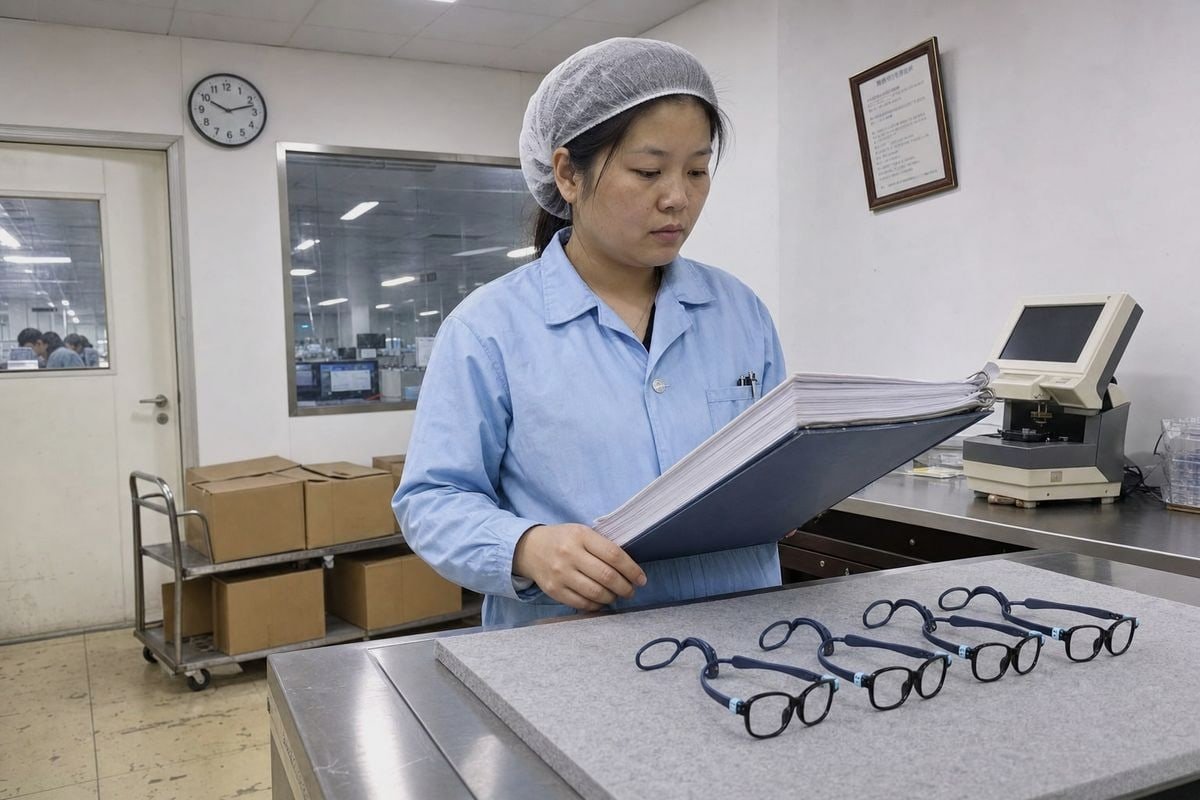
The Therapeutic Goods Administration expects the sponsor to hold, or be able to produce on request, evidence that the device meets Australian requirements. That evidence spans regulatory, technical, clinical, and safety information. The exact dossier depends on the medical device classification 4 of your lens — myopia management lenses typically fall into a moderate risk class, and the class dictates which conformity assessment procedure applies.
The core evidence package
| Document | Who provides it | Why the TGA cares |
|---|---|---|
| Manufacturer-sponsor agreement | Both parties | Establishes the legal relationship and information access |
| Conformity assessment evidence / ME identifier | Manufacturer | Proves an appropriate quality management system 5 |
| Declaration of Conformity | Manufacturer | Confirms compliance with the Essential Principles 6 |
| Technical documentation (design, materials, testing) | Manufacturer | Demonstrates safety and performance |
| Clinical evidence for the myopia-control mechanism | Manufacturer / lens designer | Supports the therapeutic claim |
| English labeling and IFU | Manufacturer with sponsor review | Ensures safe use in the Australian market |
Questions worth asking your factory early
At our workshop, we run 5S management and keep material traceability records for our TR90 and TPEE frame lines, because brand buyers audit us on exactly these points. Ask your lens and frame suppliers the same hard questions. Can they show current quality system certificates? Can they produce clinical data for the optical design's myopia-control effect? Who writes and controls the IFU? A frame partner also matters here: a child wears these lenses all day, so material safety documentation and comfort testing for the frame should sit alongside the lens dossier, even though the therapeutic claim belongs to the lens. Robust clinical evidence is the single most scrutinized item for devices claiming to slow paediatric myopia, so do not accept marketing brochures as a substitute.
How long does the ARTG registration process typically take before I can import and sell?
Timing is the trade-off I discuss most with procurement managers. Our factory can sample a custom kids frame in weeks, but regulatory compliance Australia-side runs on its own clock — and you cannot ship stock ahead of it.
Expect several months end to end. Preparing manufacturer evidence and the technical dossier usually takes the longest, often two to four months. Once submitted through the TGA Business Services portal, straightforward inclusion applications can be processed in weeks, but TGA information requests or audits extend the timeline.
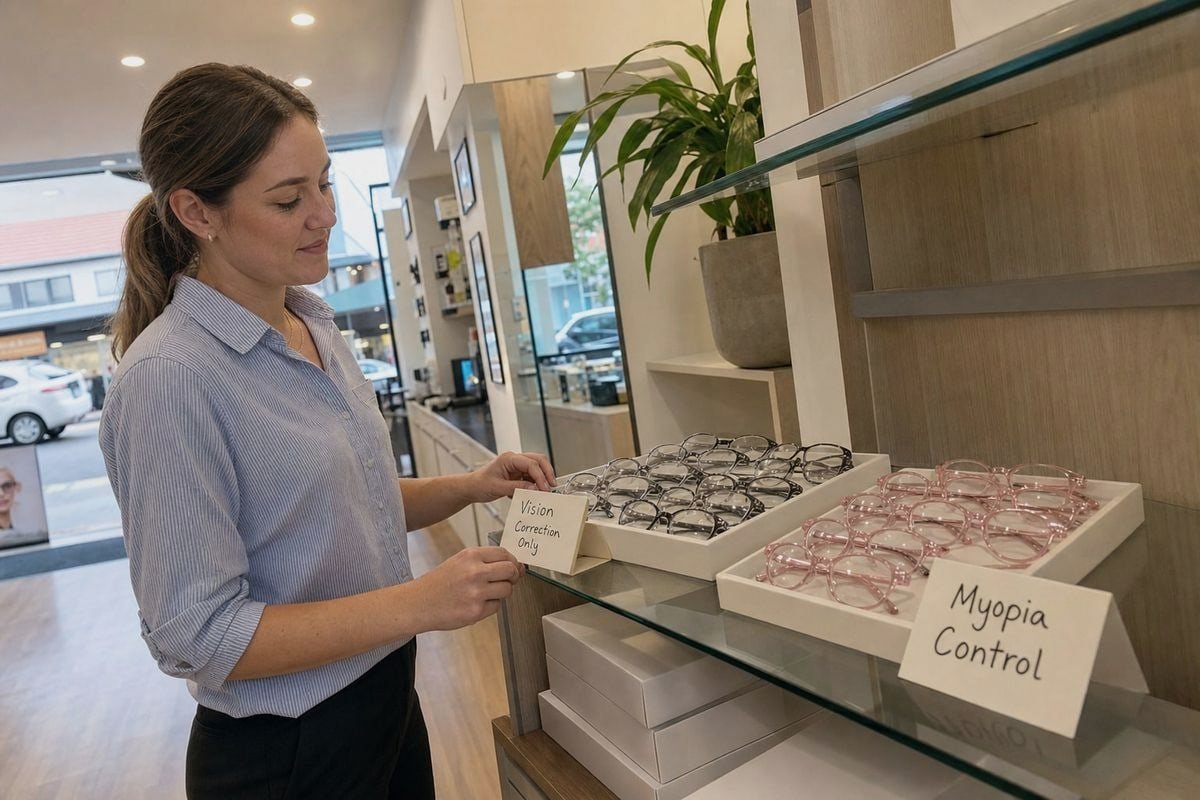
The sequence matters more than the calendar. You cannot legally supply the device in Australia until the ARTG entry is granted, so every step you run in parallel saves real time. Here is the practical order of operations we see working:
- Confirm the lens is not exempt and does need ARTG inclusion.
- Establish or appoint the eligible Australian sponsor entity.
- Sign the manufacturer-sponsor agreement.
- Obtain a Client ID and set up Organization Details in the TGA Business Services portal.
- Lodge manufacturer evidence for TGA acceptance.
- Prepare the application package, English labeling, and IFU.
- Submit the inclusion application electronically and pay the fees.
- Respond promptly to any TGA requests for information.
- Receive the ARTG entry — then import and supply.
Where timelines stretch
| Stage | Typical duration | Common delay cause |
|---|---|---|
| Sponsor setup and portal access | 1–3 weeks | Missing entity or ABN details |
| Manufacturer evidence acceptance | 4–8 weeks | Incomplete quality system certificates |
| Dossier and labeling preparation | 4–12 weeks | Weak clinical evidence for the myopia claim |
| Application assessment | 2–8 weeks | TGA information requests or application audit |
One more planning note. If your lenses involve any software component — an app for treatment tracking or patient monitoring — the SaMD framework adds requirements and time. And looking ahead, Unique Device Identification obligations 7 begin phasing in from July 1, 2026 for higher-risk devices, so build UDI readiness into your labeling plans now rather than reworking packaging later. On our side, we typically align frame production and retail-ready packaging so goods are finished as the ARTG entry lands, not months before.
What ongoing responsibilities do I have as the Sponsor after my kids myopia lenses are ARTG listed?
A distributor client of ours once treated their ARTG entry like a diploma — framed, filed, forgotten. Eighteen months later, an adverse event report caught them without a vigilance procedure. The lesson stuck with all of us.
After listing, the sponsor must monitor product safety, report adverse events to the TGA, manage recalls if needed, keep manufacturer evidence current, ensure ongoing conformity with the Essential Principles, follow the Therapeutic Goods Advertising Code, and pay annual charges or lodge required declarations.
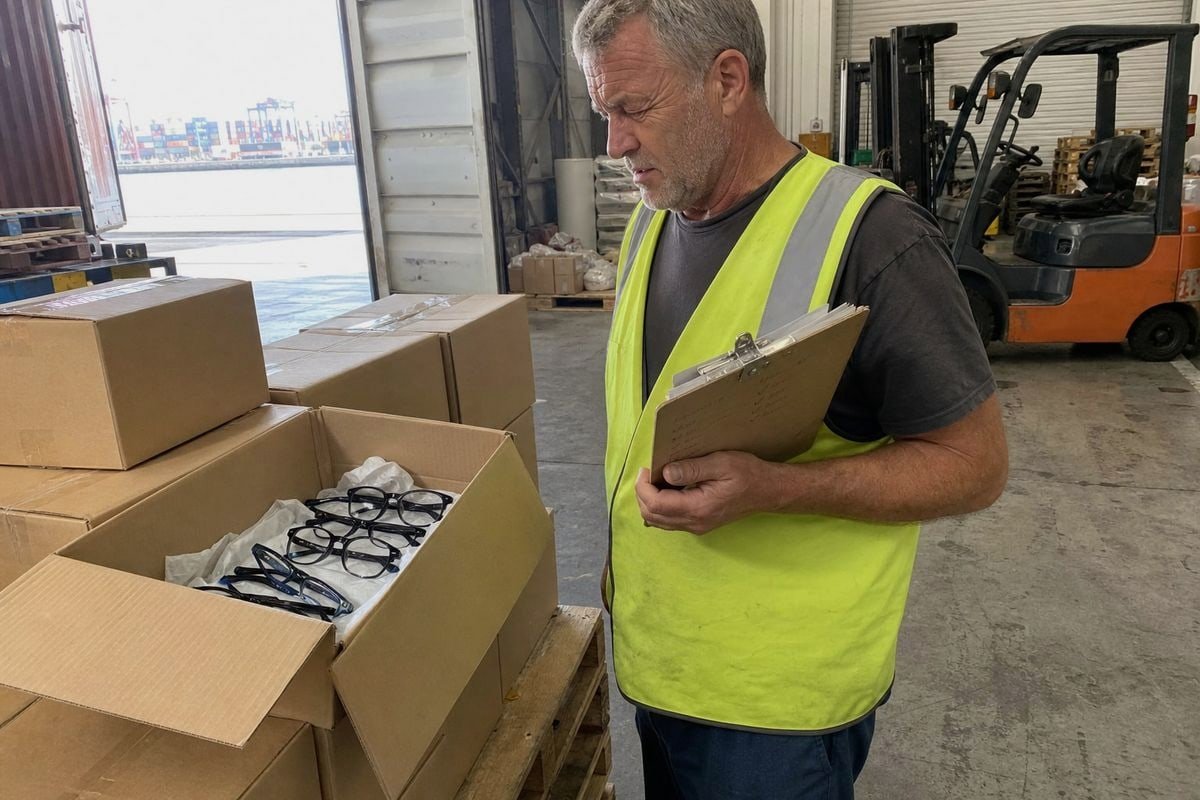
ARTG inclusion is the start of your regulatory life, not the end of it. The sponsor remains the TGA's point of contact for the device in Australia, so your systems need to run for as long as the product is on shelves — and often beyond, while units remain in use on children's faces.
Vigilance and safety
You need a working procedure for collecting complaints from optometrists, retailers, and parents, then assessing whether any incident is reportable. Serious adverse events have tight reporting deadlines. For paediatric myopia treatment products, regulators watch children's devices closely, so a slow response damages both compliance and brand trust. Your manufacturer agreement should oblige the factory to notify you of design changes, field issues, and corrective actions. At our end, we keep batch records for frames precisely so partners can trace any complaint back to a production lot quickly.
Advertising, records, and annual admin
Every therapeutic claim in your marketing must match the intended purpose in your ARTG entry and comply with the Therapeutic Goods Advertising Code. Overselling — for example, implying results comparable to combined therapies involving low dose atropine without evidence — invites enforcement. Administratively, expect annual charges, and note that some sponsors must lodge yearly turnover declarations through the portal. Keep your technical documentation, distribution records, and supply chain controls current, including proper dispensing through qualified eye-care professionals. Budget real hours for these post-market obligations; they are ongoing, not occasional.
Conclusion
ARTG success for kids myopia lenses comes down to correct classification, an eligible Australian sponsor, complete manufacturer evidence, a clean TBS submission, and disciplined post-market compliance. Get the sponsor and documentation questions settled early, partner with a factory that treats documentation as seriously as production, and your Australian launch becomes a process — not a gamble.
Footnotes
1. Explains the purpose and function of the Australian Register of Therapeutic Goods. ↩︎
2. Provides the official legislative framework for therapeutic goods in Australia. ↩︎
3. Official website of the Australian regulatory body for therapeutic goods. ↩︎
4. Explains the risk-based system for categorizing medical devices in Australia. ↩︎
5. Provides TGA guidance on quality management systems for medical device manufacturers. ↩︎
6. Outlines the fundamental safety and performance requirements for medical devices in Australia. ↩︎
7. Details the TGA’s framework and requirements for Unique Device Identification. ↩︎
More Articles You Might Like
August 5, 2026
Bio-Based vs Regular Cellulose Acetate: What's the Difference for Kids' Frames?
August 5, 2026
How Recyclable Are Kids' Optical Frame Materials, and What Eco-Friendly Alternatives Exist?
August 5, 2026
Do Kids Optical Frames Whiten or Age in Storage, and How to Control Warehouse Conditions?
Looking for a Reliable Kids Eyewear Partner?
Explore 800+ ready styles and full OEM/ODM support tailored to your brand.
Get in Touch English
  Español de México
  Deutsch
  Français
  日本語
日本語  العربية
  Português do Brasil