Which Sections Are Most Overlooked When Reviewing Kids Sunglasses Test Reports?

[Kids sunglasses test reports](https://okayeyewear.com/how-third-party-testing-agencies-issue-test-reports-kids-sunglasses/) land on my desk every week at our Taizhou factory, and most buyers only read one line: the UV result hinge durability results 1. That habit hides real risks.
The most overlooked sections in kids sunglasses test reports are lens category and transmittance data, frame material chemical safety, impact resistance and hinge durability results, and the certification scope fine print. Buyers fixate on UV protection claims and miss labeling, mechanical safety, and compliance gaps.
I want to walk you through each of these blind spots. I will show you what to check, why it matters, and how to spot a weak report quickly.
What Do I Need to Know About Lens Category and UV Protection Claims Before I Trust Them?
A buyer from Australia once told me every supplier she contacted promised "100% UV protection." Then she asked me why none of their reports showed transmittance numbers. Good question.
Never trust a UV claim without transmittance data. A valid report must show UV400 protection levels backed by measured UV transmittance, plus the visible light transmission percentage that determines lens category classification from 0 to 4. If the label and the data do not match, walk away.

UV protection is the most familiar claim in the industry, and that is exactly why it gets abused. In our fifteen years making children's eyewear, we have seen plenty of packaging that says "UV protection" with nothing behind it. A serious report separates two things: how much ultraviolet light the lens blocks, and how much visible light it lets through. They are not the same, and confusing them is dangerous.
UV400 Versus Generic "UVA/UVB" Claims
"Blocks UVA/UVB" is vague marketing language. UV400 means the lens blocks wavelengths up to 400 nanometers, which covers the full UVA and UVB range. When we spec lenses for our own styles, we require the lab report to show measured transmittance across that spectrum, not just a checkbox.
Why Lens Category Classification Matters for Children
Visible light transmission tells you how dark the lens actually is. A category 1 lens is a fashion tint. A category 3 lens suits bright sun. Under ISO 12312-1 compliance rules, the marked category must match the measured data. Here is how to read it:
| Lens Category | Visible Light Transmission | Suitable Use for Kids |
|---|---|---|
| 0 | 80–100% | Fashion only, no sun protection |
| 1 | 43–80% | Overcast days, light shade |
| 2 | 18–43% | Average daylight |
| 3 | 8–18% | Bright sun, beach, playground |
| 4 | 3–8% | Extreme glare; not for driving, rarely right for kids |
Also check optical distortion standards 2 in the same section. Prismatic imbalance between the left and right lenses can strain a child's binocular vision. A dark lens can still block UV badly, and a UV-perfect lens can still distort vision. Read both parts.
Am I Checking the Frame Flexibility and Material Safety Data Closely Enough?
Our engineers spend more time on frame materials 3 than on lenses. That surprises new clients, until they see what a rigid, cheap frame does on a toddler's face after one fall.
Most buyers skim past chemical composition analysis and flexibility data. Check the report for lead, phthalates, BPA, and cadmium results, nickel release testing on metal hinges, and evidence the frame flexes without snapping. Material safety failures are invisible on samples but serious for children.
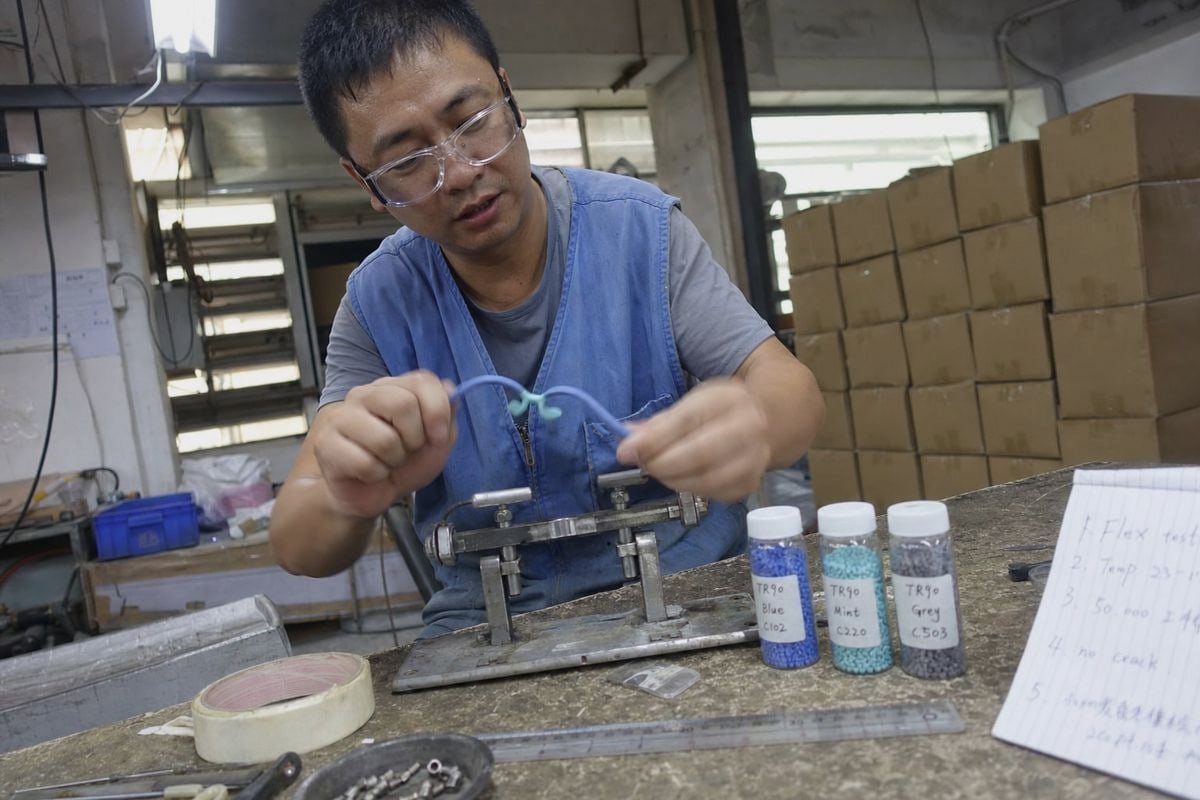
Children chew temple tips. They sweat against the frame all day. They fall onto the nose bridge. So the material section of a test report deserves as much attention as the lens section, yet it is often a single skipped paragraph. When we chose TPEE and TR90 as our core materials, the deciding factors were exactly what these tests measure: flexibility, skin contact safety, and long-term durability.
The Chemical Results You Should Demand
A children's product report should include chemical composition analysis 4 for the frame, the temples, and any painted or coated parts. Look specifically for:
- Lead and cadmium content, including in surface coatings and decorations.
- Phthalates, which appear in soft plasticized parts that kids may mouth.
- BPA, especially relevant for polycarbonate components.
- Nickel release testing 5 on any metal hinge screws or decorative trims that touch skin.
If a report lists only the lens material, ask why. Frames touch skin far longer than lenses do.
Flexibility Is a Safety Feature, Not a Comfort Feature
A rigid frame concentrates force at the hinge or nose bridge on impact, which creates sharp break points near a child's eye. Flexible TPEE temples bend instead of breaking. Good reports include frame durability tests such as bridge deformation and temple flex cycles. In our 5S-managed workshop, we bend-test samples from every production batch precisely because lab certificates describe one sample, not your whole shipment. Ask your supplier how they verify consistency between the tested sample and mass production.
Do I Understand What the Impact Resistance and Hinge Durability Results Really Mean?
One lesson took us years to fully absorb: a pair of kids' sunglasses lives a harder life than almost any adult accessory. Backpacks, sandpits, drops onto concrete, twisting little hands. Reports describe this in dry technical terms, and buyers glaze over.
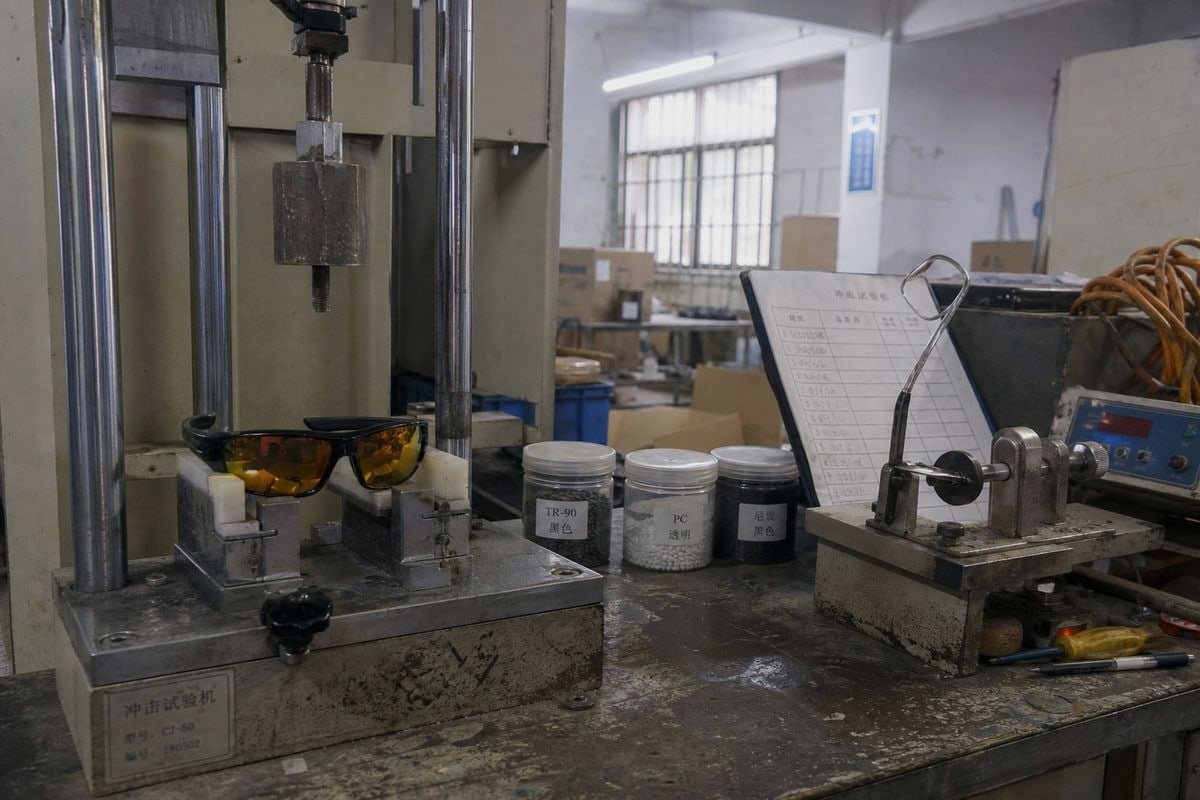
Impact resistance testing shows whether lenses shatter under a defined strike, such as the drop ball test, while hinge durability results count open-close cycles before failure. Together they predict whether the sunglasses survive real child use or become a disposable, potentially dangerous accessory.
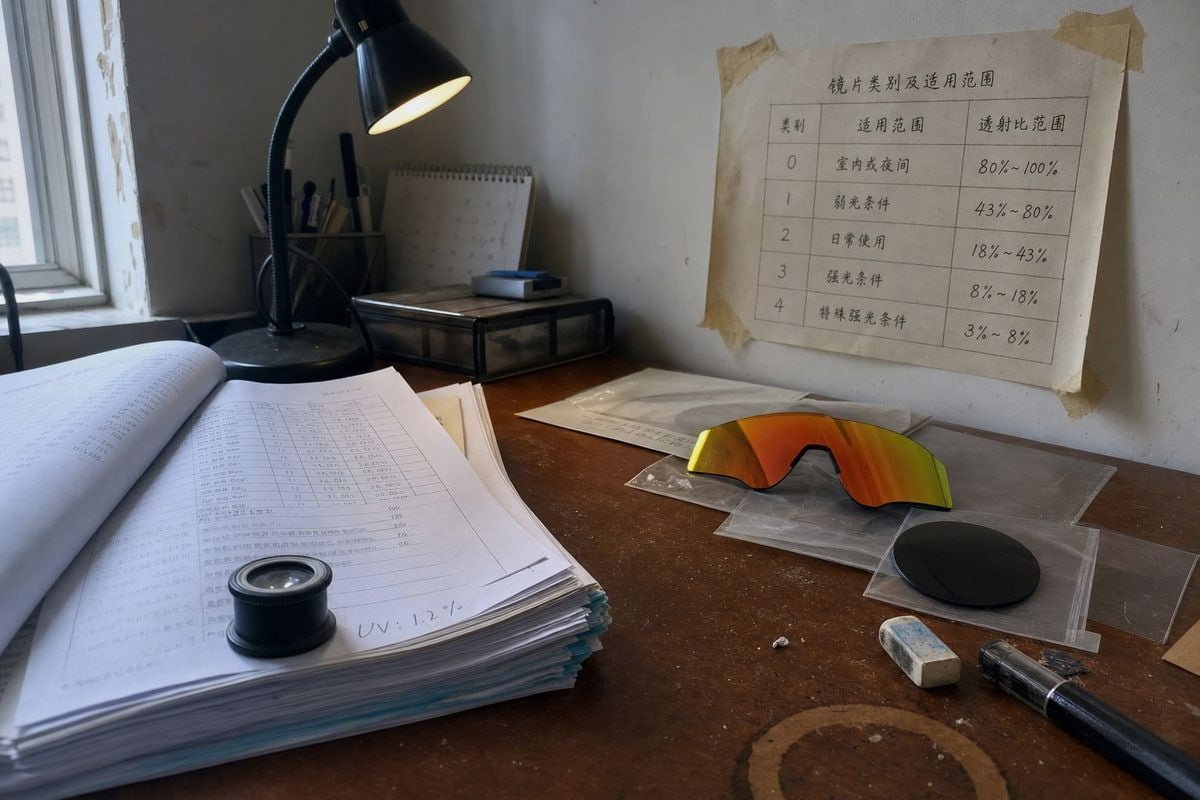
These results usually hide under headings like "construction," "robustness," or "mechanical requirements." Skipping them is a mistake, because mechanical failure near a child's eye is a genuine injury risk, not just a warranty cost.
Decoding the Mechanical Section
Here is how I translate the common line items for our B2B clients:
| Report Section | What It Actually Tests | What Failure Looks Like in Real Life |
|---|---|---|
| Drop ball / impact test | Lens resistance to a falling steel ball | Lens cracks or shatters when a ball hits the child's face |
| Hinge endurance | Repeated opening and closing cycles | Loose, wobbly temples after a few weeks |
| Bridge deformation | Frame shape under sustained load | Frame no longer sits straight; lenses misalign |
| Small parts safety | Whether pieces detach under force | Hinge screws or nose pads become choking hazards |
| Ignition resistance | Frame behavior near heat | Material melts or burns too easily |
Small parts safety deserves special attention for younger age groups. A hinge screw that backs out under twisting force is a choking hazard, which is why several of our baby-focused styles use hingeless one-piece TPEE construction.
Passing Is Not the Same as Excelling
Standards define minimums. Two frames can both "pass" hinge endurance while one lasts three times longer in the field. When buyers visit our factory, we twist a TR90 frame with TPEE temples into a near-circle in front of them. That demonstration is not in any report, but it explains why the report numbers look the way they do. Ask your supplier what margin they pass by, not just whether they pass.
Have I Overlooked the Fine Print on Certification Scope and Testing Standards?
A procurement manager in Europe once sent me a competitor's certificate and asked if it covered her market. It did not. The certificate tested one lens color, under one standard, two years earlier.
Certification scope fine print defines which standard was applied, which exact product variant was tested, when, and by which lab. A report can be genuine yet irrelevant if it covers a different colorway, an expired standard version, or excludes mechanical and chemical testing entirely.
This is the least glamorous section of any report, and the most commonly ignored. Yet it determines whether the document actually protects you as a brand owner. In our export experience across twenty-plus countries, the scope page causes more customs and compliance problems than any failed test result.
The Five Scope Questions to Ask Every Time
| Question | Why It Matters |
|---|---|
| Which standard and version? | ISO 12312-1 compliance, AS/NZS 1067, and ANSI Z80.3 differ; an outdated version may not satisfy current regulations |
| Which exact SKU was tested? | A report for the black frame may not cover the pink one if coatings or masterbatch differ |
| What was excluded? | Some reports cover only optical properties and skip impact, flammability, and chemical panels entirely |
| When was it issued? | Old reports may predate material or supplier changes |
| Was the lab accredited? | Unaccredited results may be rejected by your importer or retailer |
A Missing Section Does Not Mean a Passing Section
This is the subtle trap. If a report never mentions impact resistance testing 6, the product did not "pass" impact testing. It was simply never evaluated. The same logic applies to labeling requirements 7: consumer council investigations have repeatedly found children's sunglasses missing required warning statements, care instructions, and category markings even when the lenses themselves performed fine. When we prepare OEM documentation for clients, we map every destination market’s requirements against the report scope before production starts, because fixing a scope gap after shipment is painful for everyone.
Conclusion
UV claims alone tell you almost nothing. The overlooked sections — lens category data, material chemistry, mechanical durability, and certification scope — reveal whether kids' sunglasses are truly safe.
Reading kids sunglasses test reports as a full safety checklist changes how you source. Verify UV400 protection levels against real transmittance numbers. Confirm lens category classification matches the label. Demand chemical composition analysis for frames, not just lenses. Read the impact resistance and hinge durability lines as injury-prevention data, not lab trivia. And always finish with the scope fine print, because a genuine certificate can still be the wrong certificate. At our factory in Taizhou, we have built our whole approach — flexible TPEE and TR90 materials, batch-level QC, and complete documentation across roughly 800 existing styles — around this checklist mindset. If you review reports the same way, you will catch the red flags before they reach a child's face, and you will choose partners who welcome the hard questions instead of dodging them.
Notes de bas de page
1. Wikipedia section detailing the mechanical and optical standards for sunglasses. ↩︎
2. International standard for sunglasses including optical requirements and distortion limits. ↩︎
3. Wikipedia overview of common materials used in the construction of sunglass frames. ↩︎
4. Federal safety requirements for chemical substances in children’s consumer products. ↩︎
5. REACH regulation details regarding nickel release limits for skin-contact items. ↩︎
6. FDA regulation specifying impact resistance requirements for eyeglass lenses. ↩︎
7. Mandatory labeling and performance requirements for sunglasses sold in Australia. ↩︎
Plus d'articles que vous pourriez aimer
1 août 2026
L'usine doit-elle gérer l'emballage et l'étiquetage des lunettes pour enfants, ou utiliser un fournisseur désigné ?

1 août 2026
Entrepôt propre vs. exécution directe par le fournisseur : lequel réduit les coûts de retour pour les marques de lunettes pour enfants ?

1 août 2026
Entrepôt direct au port ou staging outre-mer : lequel permet d'économiser le plus sur l'expédition des lunettes pour enfants ?
Vous recherchez un partenaire fiable en lunetterie pour enfants ?
Explorez plus de 800 styles prêts et un support OEM/ODM complet adapté à votre marque.
Contactez-nous English
  Español de México
  Deutsch
  Français
  日本語
日本語  العربية
  Português do Brasil