Quels scénarios conviennent aux lunettes de soleil pour enfants sportives ou mode ?
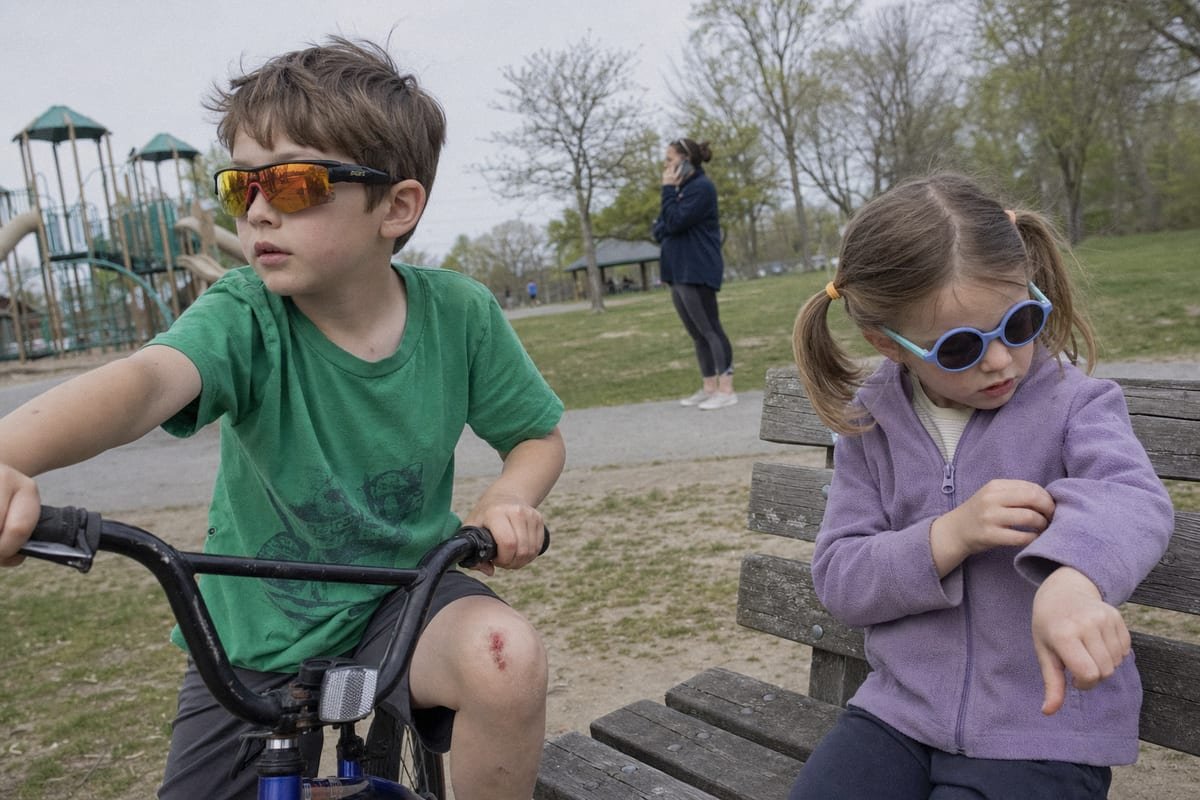
Les acheteurs me demandent chaque semaine ce qui se vend le mieux : les lunettes de soleil pour enfants sportives ou mode casques de vélo 1. Sur notre chaîne de production à Taizhou, je vois des marques perdre des saisons à deviner mal. Choisir à l'aveugle gaspille le budget d'inventaire.
Les lunettes de soleil sportives pour enfants conviennent aux scénarios de forte mobilité et de fort éblouissement comme le cyclisme, les jeux de plage et les sports de plein air, grâce à leurs montures enveloppantes et leurs poignées sécurisées. Les styles mode conviennent à un usage quotidien, aux sorties scolaires et aux événements sociaux décontractés où la volonté de l'enfant de les porter est primordiale.
La vraie question n'est pas de savoir quel style gagne. C'est de savoir dans quel scénario vivent vos clients. Laissez-moi vous expliquer comment nous aidons les marques à décider.
Comment savoir si ma marque doit se concentrer sur les lunettes de soleil pour enfants de style sportif, mode, ou les deux ?
Un acheteur d'Australie m'a un jour envoyé deux tableaux d'inspiration : l'un rempli d'enfants surfeurs, l'autre rempli de terrains de jeux urbains. Notre équipe l'a aidée à réaliser qu'elle décrivait en fait deux gammes de produits différentes.
Concentrez-vous sur les styles sportifs si vos clients sont des familles actives, sportives ou d'aventure ; concentrez-vous sur les styles mode si vous vendez des produits axés sur le style de vie, les vêtements ou les cadeaux. La plupart des marques pour enfants qui réussissent finissent par proposer les deux, car les enfants passent quotidiennement du jeu actif aux événements sociaux décontractés.
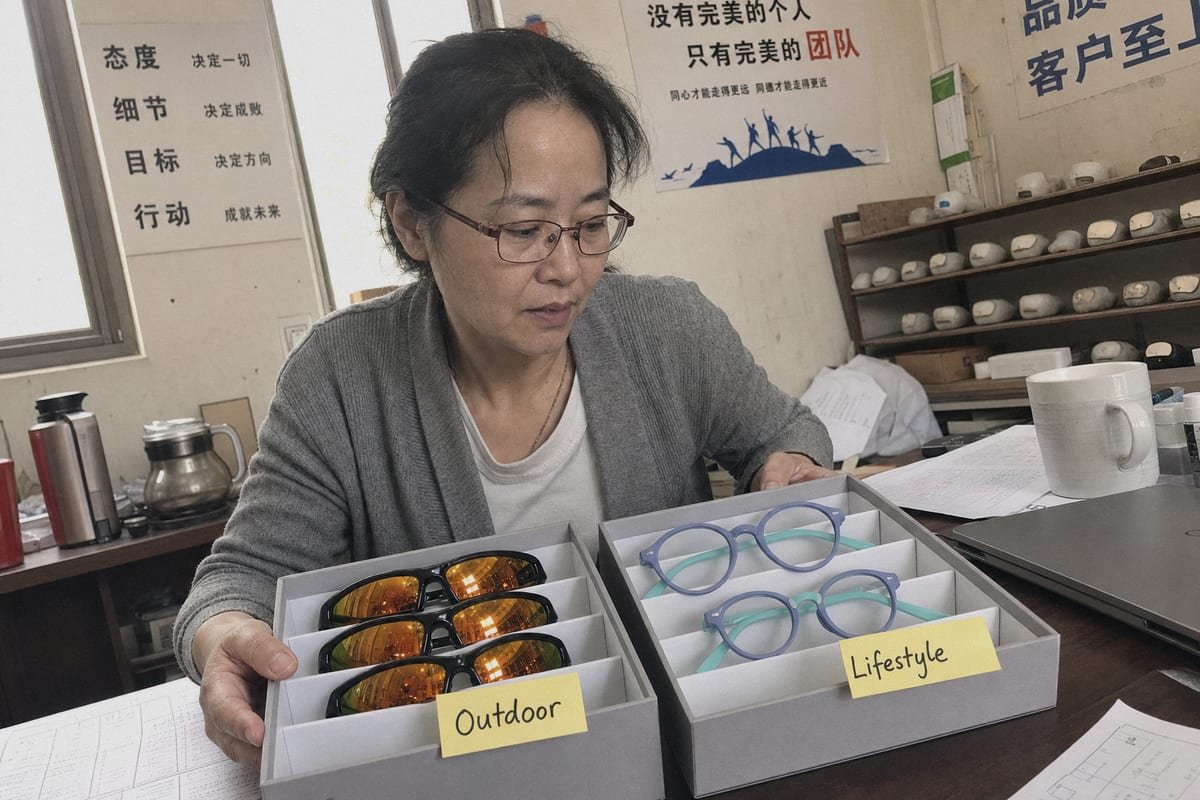
La décision commence par votre client existant, pas par le produit. Au cours de nos quinze années de fabrication de lunettes pour enfants, les marques qui choisissent la bonne voie en premier évoluent toujours plus rapidement que celles qui poursuivent les deux dès le premier jour sans données.
Commencez par trois questions simples
Premièrement, où votre client porte-t-il vos autres produits ? Si votre marque vend des équipements de natation 2, des casques de vélo ou des équipements pour activités sportives de plein air, les montures sportives sont l'extension naturelle. Si vous vendez des vêtements pour enfants, des accessoires pour cheveux ou des cadeaux, les montures mode s'intègrent plus facilement dans le panier.
Deuxièmement, quel âge servez-vous ? Les parents de tout-petits achètent pour la durabilité et le confort. Les enfants d'âge scolaire veulent avoir l'air cool. Les adolescents rejettent tout ce qui est bébé ou trop technique.
Troisièmement, qu'est-ce que votre canal de vente au détail récompense ? Les détaillants de sport veulent des arguments de vente : protection UV400 3, résistance aux chocs, réduction de l'éblouissement. Les boutiques veulent des coloris et un attrait visuel.
| Votre type de marque | Meilleure première orientation | Pourquoi |
|---|---|---|
| Marque d'enfants d'extérieur / de sport | Sportif | Correspond à l'activité, justifie les spécifications de performance |
| Marque de mode / de vêtements pour enfants | Mode | Se coordonne avec les collections de vêtements |
| Marque pour bébés et tout-petits | Hybride flexible | Le confort et la sécurité priment sur les débats de style |
| Importateur / distributeur général | Les deux, testés en petite quantité | Les données du marché décident du ratio gagnant |
Le marché des lunettes pour jeunes est en croissance constante, et la demande couvre les deux extrémités. Ainsi, la réponse honnête pour de nombreux acheteurs est une approche progressive : lancez avec votre ajustement naturel, puis ajoutez l'autre style une fois que les données de vente confirment la demande. Parce que nous avons environ 800 styles existants, nos clients peuvent tester les deux directions sans payer pour de nouveaux moules. Cela réduit considérablement le risque de la décision.
Quelles différences de conception et de matériaux dois-je rechercher entre les lunettes de soleil de sport et de mode pour enfants ?
Nos ingénieurs pèsent un compromis constant au stade de l'échantillon : couverture versus charme. Un écran enveloppant protège mieux du vent, mais une monture ronde douce bicolore est ramassée en premier en magasin.
Les lunettes de soleil sportives pour enfants utilisent des montures enveloppantes, des verres en polycarbonate monobloc, des poignées en caoutchouc et une ventilation pour une utilisation active. Les styles mode utilisent des formes tendance, des couleurs ludiques et une couverture plus légère. Les deux doivent offrir une protection UV400, un matériau de monture flexible et une résistance aux éclats pour la sécurité des enfants.
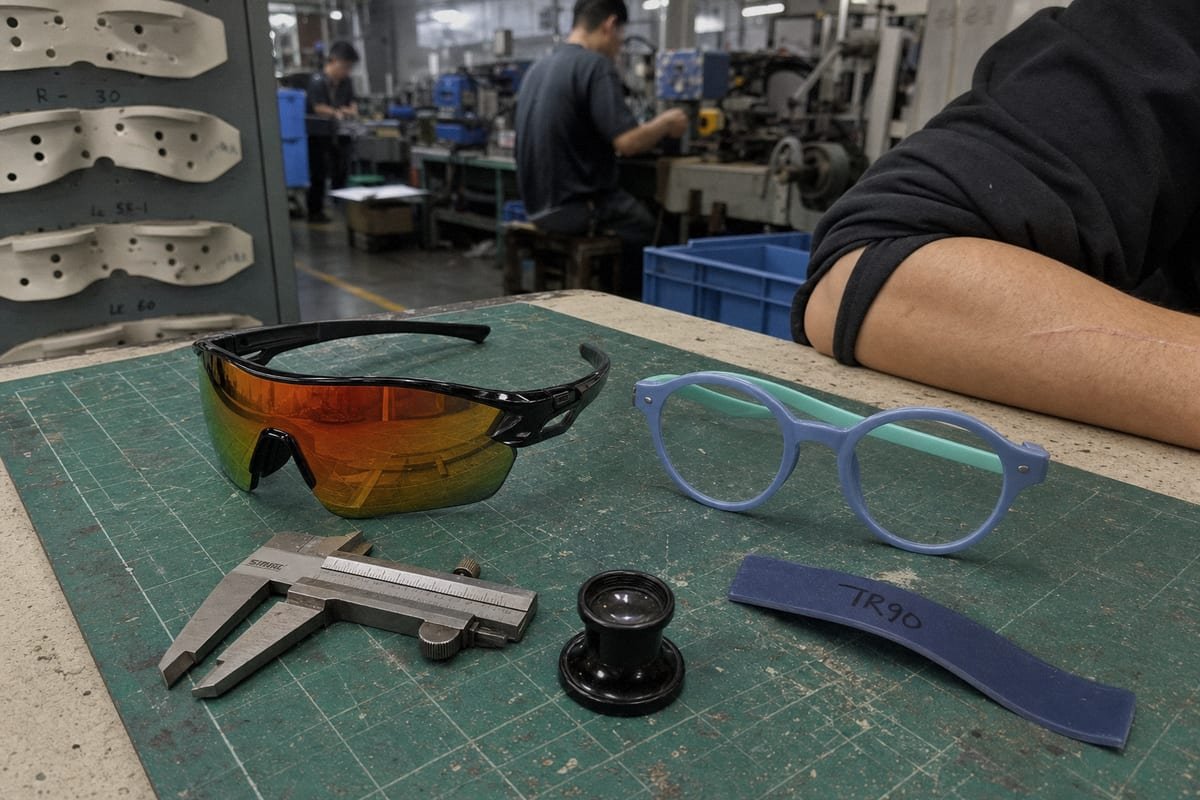
Les différences de conception sont faciles à voir. Les différences de matériaux sont là où la qualité est gagnée ou perdue. Laissez-moi décomposer les deux comme nous le faisons lors du développement de produits.
Géométrie et couverture de la monture
Les designs sportifs s'enroulent autour du visage. Pensez aux styles enveloppants à écran unique 4 que nous produisons en noir brillant ou en blanc mat avec des revêtements de lentilles orange-à-turquoise miroitants. Cette courbe bloque les reflets latéraux, le vent et les débris – essentiels pour le cyclisme ou le patinage. Certaines montures techniques ajoutent même des canaux de micro-ventilation pour éviter la buée pendant les jeux intenses.
Les designs mode sont plus plats. Une monture ronde bleu pervenche avec des branches bleu menthe, par exemple, privilégie le charme et les courbes rétro épurées. La couverture est adéquate pour les promenades en ville, pas pour le VTT en descente.
Matériaux qui comptent vraiment
C'est là que je pousse le plus les acheteurs. Sur les visages des enfants, le plastique rigide bon marché est un inconvénient. Nous fabriquons la plupart des montures en TR90 ou TPEE – un matériau de monture véritablement flexible qui se plie et revient sans se casser. Les charnières doivent être flexibles ou sans charnières ; les montures douces au toucher aident également les enfants ayant des sensibilités sensorielles.
| Caractéristique | Style sportif | Style mode |
|---|---|---|
| Type de lentille | Lentilles en polycarbonate à écran unique, souvent miroitantes | Lentilles teintées ou fumées de forme standard |
| Matériau du cadre | TR90, zones en TPEE caoutchouté | TR90, TPEE, finitions mates douces au toucher |
| Poignée | Plaquettes de nez en caoutchouc, poignées de branches | Embouts de branches confortablement courbés |
| Couverture | Protection périphérique enveloppante | Façade plate, couverture modérée |
| Priorité | Conformité au test de chute de bille de la FDA 5, ajustement stable | Coloris, forme, expression de soi |
| Non négociables | UV400, résistance aux éclats | UV400, résistance aux éclats |
Quel que soit le style, les spécifications des verres ne peuvent pas être une décision de mode. Non protégé exposition rétinienne aux UV pendant l'enfance est cumulative, nous équipons donc des verres UV400 dans tout notre catalogue, qu'ils soient sportifs ou mode.
Quels marchés de détail ou segments de clientèle répondent le mieux aux styles sportifs par rapport à la mode ?
Les modèles d'exportation nous apprennent beaucoup. En expédiant dans plus de vingt pays au fil des ans, j'ai vu les mêmes deux styles se comporter de manière complètement différente selon le canal et le climat dans lesquels ils arrivent.
Les styles sportifs sont les plus performants dans les détaillants de plein air, les chaînes sportives, les marchés côtiers et alpins, et auprès des parents d'enfants actifs en âge scolaire. Les styles de mode sont les plus performants dans les boutiques, les magasins de vêtements, les canaux de cadeaux, et auprès des enfants soucieux de la mode, des préadolescents et des familles urbaines.
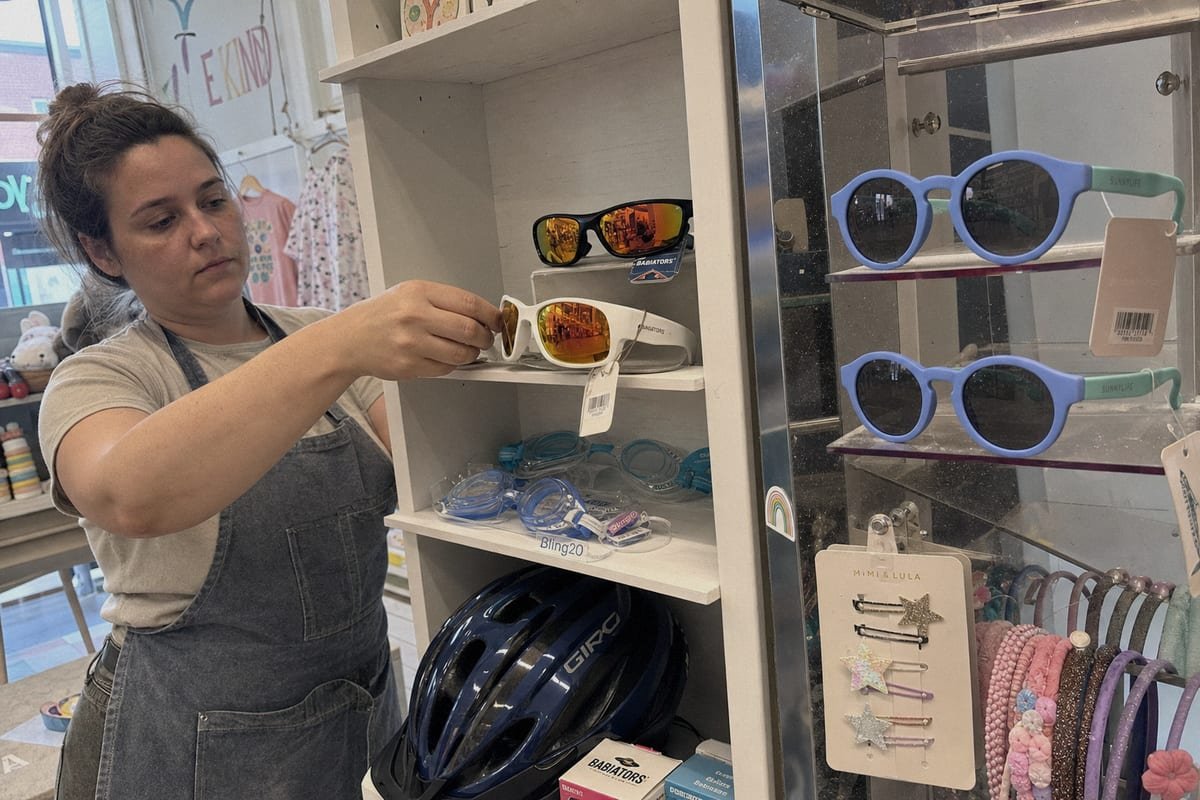
La segmentation de l'ajustement concerne rarement le produit seul. Il s'agit du scénario que l'acheteur imagine lorsqu'il voit l'étagère. Voici comment le marché se divise généralement.
Segmentation axée sur le scénario
Les montures sportives se vendent là où le scénario imaginé implique le mouvement et l'éblouissement. Les villes côtières, les régions de ski, les cultures cyclistes comme les Pays-Bas ou les clubs sportifs scolaires du Japon, et le commerce de détail australien axé sur la sécurité solaire penchent tous vers le sportif. Les verres polarisés ajoutent une réelle valeur ici, car la réduction de l'éblouissement autour de l'eau, de la neige et du sable est un véritable avantage fonctionnel pour lequel les parents paieront.
Les montures mode se vendent là où le scénario imaginé est social. Les trajets scolaires, les photos de famille, les promenades en ville, les anniversaires et les événements sociaux décontractés. Dans ces canaux, les histoires de couleurs et les formes saisonnières stimulent le chiffre d'affaires plus que les fiches techniques. Certains acheteurs de mode demandent également des teintes ambrées ou roses pour le port en fin d'après-midi, ce qui adoucit confortablement la lumière.
| Segment / Canal | Tendance Sportif | Tendance Mode |
|---|---|---|
| Détaillants de plein air et de sport | ✔ | |
| Boutiques de vêtements pour enfants | ✔ | |
| Marchés côtiers, alpins, ensoleillés | ✔ | |
| Magasins de style de vie urbain et cadeaux | ✔ | |
| Acheteurs de produits promotionnels | Mixte | Mixte |
| Âges 2–5 (achat dirigé par les parents) | Hybride axé sur le confort | Hybride axé sur le confort |
| Âges 6–12 (influence de l'enfant) | ✔ si athlétique | ✔ si axé sur le style |
| Adolescents | Seulement si vraiment cool | ✔ fortement |
Une autre idée tirée des conversations avec les acheteurs : la conformité est un segment à part entière. Les parents du monde entier rapportent que les enfants ne portent que les lunettes de soleil qu'ils aiment. Ainsi, même dans les canaux sportifs, les meilleures ventes sont des montures sportives avec des touches mode — verres miroirs audacieux, silhouettes épurées, couleurs modernes. Un écran de sport peut même servir de petit uniforme psychologique, aidant un enfant à passer en mode jeu. La séparation pure entre sportif et mode s'estompe ; le style rencontre la performance est la tendance que nous observons dans chaque brief de marché.
Puis-je me procurer à la fois des lunettes de soleil sportives et tendance pour enfants auprès du même fabricant sans augmenter mon MOQ ou mes coûts ?
Une responsable des achats d'Europe a supposé qu'elle avait besoin de deux fournisseurs : un pour les écrans, un pour les ronds mode. Lorsqu'elle a visité notre atelier géré selon la méthode 5S, elle a vu les deux fonctionner sur les mêmes lignes la même semaine.
Oui. Une usine avec une bibliothèque de moules existante profonde peut produire ensemble des lunettes de soleil pour enfants sportives et mode, combinant souvent des styles au sein d'une même commande pour répondre aux MOQ. Le partage des matériaux, des verres et des processus d'emballage maintient les coûts unitaires stables dans les deux catégories.
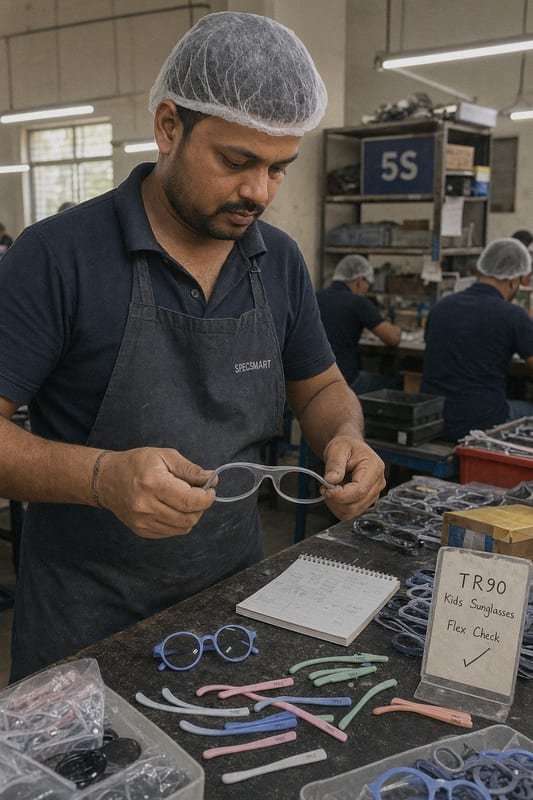
S'approvisionner auprès d'un seul partenaire pour les deux styles n'est pas seulement possible. Bien fait, c'est moins cher, plus rapide et plus facile à contrôler en qualité que de diviser les fournisseurs. Voici pourquoi, du point de vue de l'atelier.
Pourquoi une usine peut gérer les deux
Les processus de base se chevauchent largement. Moulage par injection, découpe de verres, ajustement de verres UV400, assemblage de charnières et inspection de contrôle qualité sont des étapes partagées fabrication de verres 6 que la monture soit un écran enveloppant ou un rond rétro. Nos quelque 120 ouvriers passent constamment d'une famille de styles à l'autre. Les matériaux se chevauchent également : façades en TR90, branches en TPEE et verres en polycarbonate servent les deux catégories.
Ce chevauchement crée de réels avantages commerciaux pour les acheteurs :
- MOQ de styles mixtes. Parce que nous produisons à partir d'environ 800 moules existants, les acheteurs peuvent souvent répartir une commande entre des SKUs sportifs et de mode au lieu de s'engager profondément dans un seul style. Aucun nouvel outillage ne signifie aucun investissement en moules pour un test de marché.
- Normes de qualité constantes. Un protocole de contrôle qualité, une norme de sécurité, une équipe d'inspection pour toute votre gamme. La division des fournisseurs signifie auditer deux usines et réconcilier deux niveaux de qualité.
- Image de marque unifiée. Support complet OEM/ODM — couleurs personnalisées, impression de logo, options de verres, y compris les verres polarisés, et emballage prêt pour la vente au détail — s'applique aux deux familles de styles, de sorte que votre présentation en rayon reste cohérente.
- Logistique simplifiée. Une expédition consolidée, un jeu de documents, un canal de communication.
Là où les coûts changent légèrement : verres miroirs boucliers 7 et les améliorations polarisées entraînent une prime modeste par rapport aux verres fumés standard. Mais c'est un choix de spécification, pas une pénalité pour le mélange des styles. D'après mon expérience, les acheteurs qui consolident les deux catégories auprès d'un partenaire expérimenté en lunetterie pour enfants obtiennent un meilleur pouvoir de négociation sur les prix au fil du temps, et non le contraire, car leur volume total avec ce partenaire augmente.
Conclusion
Choisir mal fait perdre des saisons et des stocks. Associez les montures sportives au mouvement et à l'éblouissement, les montures de mode au style quotidien, et sourcez les deux de manière flexible auprès d'un partenaire éprouvé en lunetterie pour enfants.
Notes de bas de page
Normes et guides de sécurité du gouvernement américain pour la protection des casques de vélo. ↩
Plus d'articles que vous pourriez aimer

28 septembre 2026
Les lunettes de soleil pour enfants en TR90 et TPEE peuvent-elles utiliser des matériaux recyclés ou biosourcés ?
28 septembre 2026
Les lunettes de soleil pour enfants en TR90 et TPEE sont-elles recyclables ? Conseils de mise au rebut expliqués ?
28 septembre 2026
Comment éviter la déformation et les rayures lors de l'expédition de lunettes de soleil pour enfants en TR90 et TPEE ?
Vous recherchez un partenaire fiable en lunetterie pour enfants ?
Explorez plus de 800 styles prêts et un support OEM/ODM complet adapté à votre marque.
Contactez-nous English
  Español de México
  Deutsch
  Français
  日本語
日本語  العربية
  Português do Brasil