What Properties Make TPEE Ideal for Kids’ Sunglasses Frames?
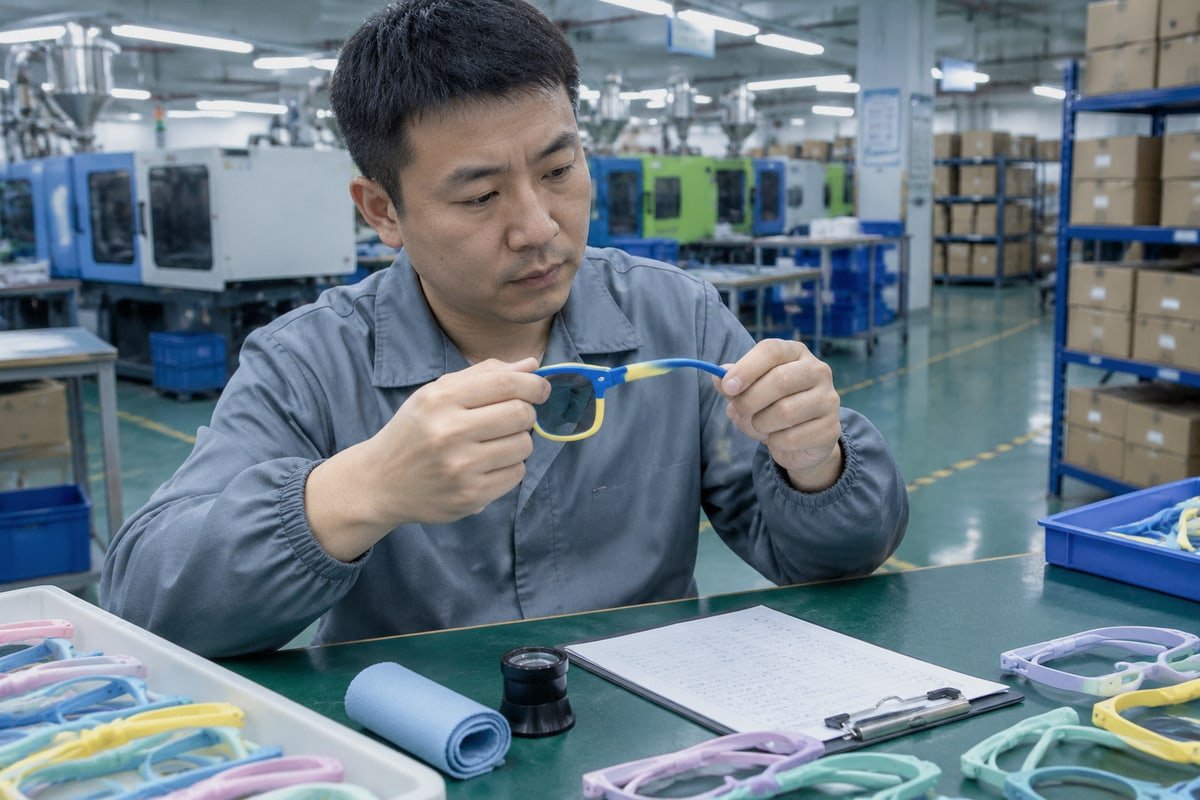
Every returned pair of snapped kids’ sunglasses costs a brand trust. On our Taizhou production line, TPEE for kids’ sunglasses frames became our answer to that problem.
TPEE is ideal for kids’ sunglasses frames because it combines rubber-like flexibility, high impact resistance, light weight, and reliable shape recovery. Frames bend and twist without snapping, stay comfortable on small faces, and are BPA-free and non-toxic, which lowers injury risk during rough everyday play.
That short answer covers the headline. But buyers need more than a headline. Below, I break down what TPEE is, how it behaves under real abuse, why it feels good on a child’s face, and where it sits against TR90 and silicone. I will also flag the claims you should not repeat in your own marketing.
What Makes TPEE Safer and More Flexible Than Traditional Plastic Frames for Kids?
During a routine bend check in our 5S workshop, a new operator twisted a royal blue TPEE sample almost flat, then watched it spring back.
TPEE is a Thermoplastic Polyester Elastomer that blends rubber elasticity with engineering-plastic toughness. Unlike brittle traditional plastics, it bends and twists under stress and then recovers its shape, so frames rarely snap into sharp fragments. It is also BPA-free, non-toxic, and gentle on skin.
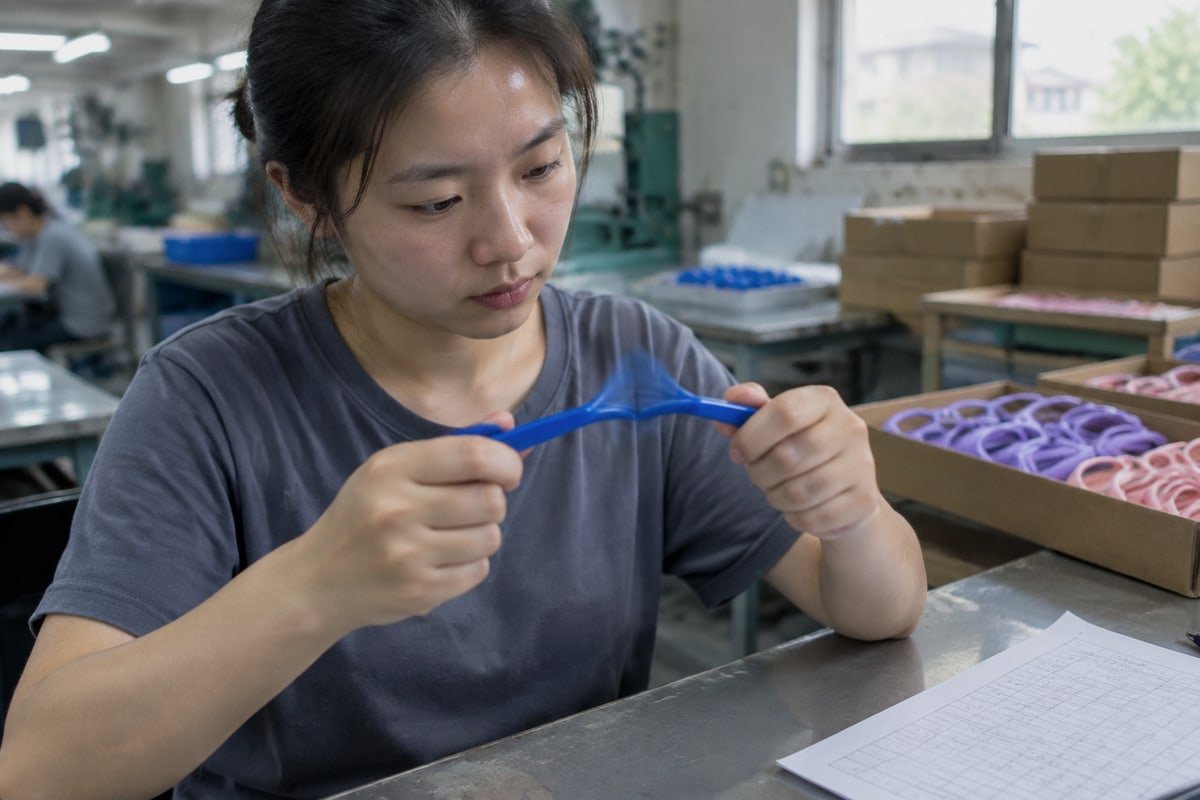
That moment on the QC bench explains the material better than any datasheet. The frame did not fight the twist. It absorbed it. Then it went back to its original shape. That behavior is the core of why we chose TPEE for kids' sunglasses frames in the first place.
What Thermoplastic Polyester Elastomer Actually Is
TPEE is not "soft plastic." It is a hybrid. The polymer chain has hard polyester segments and soft ether segments. The hard segments give the frame its structure. The soft segments give it stretch and recovery. In production, TPEE runs through a standard injection molding process 1, much like a hard plastic. In use, it behaves closer to rubber. That is a rare combination, and it is why we treat it as a premium material rather than a budget one.
Why Bending Is a Safety Feature
A rigid frame stores energy when a child sits on it. When the limit is reached, it fractures. The fragments can be sharp, and they sit right next to the eyes. TPEE does the opposite. It spreads the load along the temple and front. Its natural damping also soaks up some of the energy from a facial bump. Nothing shatters.
Flexibility also opens up design options. Because TPEE tolerates repeated bending, we can build one-piece flexible temples with living-hinge style movement for infant and toddler frames. That removes tiny metal screws, which are a choking hazard. For older kids, we still offer conventional hinges. Our two-tone royal blue front with yellow temples uses small silver hinge pins on a sturdier medium-size frame, because that age group wants a bolder, more grown-up look.
Skin and Mouth Safety
Toddlers chew temple tips. That is normal. So we specify BPA-free materials that are also phthalate-free and non-toxic. TPEE's smooth surface and hypoallergenic properties make it friendly to sensitive skin behind the ears and on the nose. When buyers ask about food-grade safety for chew-prone infant styles, we walk through the material grade documentation with them rather than making a blanket claim.
| Le rétrécissement des montures en acétate est le problème caché des matériaux traditionnels. L'acétate perd lentement ses plastifiants, se contractant avec le temps. Ironiquement, un léger rétrécissement peut resserrer un verre — mais il rend également la monture cassante, et les fils de lunette cassants se fissurent au niveau de la gorge. Il faut également tenir compte de la contraction thermique différentielle : lorsqu'un enfant passe de la chaleur extérieure à la climatisation, la monture et le verre se contractent à des vitesses différentes. Les polymères flexibles absorbent cette inadéquation ; les matériaux rigides transfèrent le stress au siège du verre. | Traditional rigid plastic | TPEE | Pourquoi c'est important pour les enfants |
|---|---|---|---|
| Response to twisting | Cracks or snaps | Se plie et reprend sa forme | No sharp fragments near the eyes |
| Conformité au test de chute de bille de la FDA | Moderate to low | Élevé | Survives drops and sit-on accidents |
| Poids | Moyen | Très léger | Less pressure on nose and ears |
| Surface feel | Hard, can slip | Soft, slight grip | Stays on during active play |
| Hinge options | Metal screws only | Living hinge or metal | Fewer small parts for babies |
| Contact avec la peau | Varies by grade | BPA-free, hypoallergenic | Fewer irritation complaints |
How Do I Know If TPEE Material Will Hold Up to Rough Everyday Play?
A procurement manager from Australia once asked me for proof, not promises. She wanted to know how her toddler line would survive sandpits, pools, and car seats.
You can judge TPEE durability by checking four things: bend and twist recovery, resistance to flexural fatigue after repeated bending, stability in heat and cold, and resistance to sunscreen, sweat, and chlorine. Good TPEE frames pass all four without cracking, whitening, or warping.
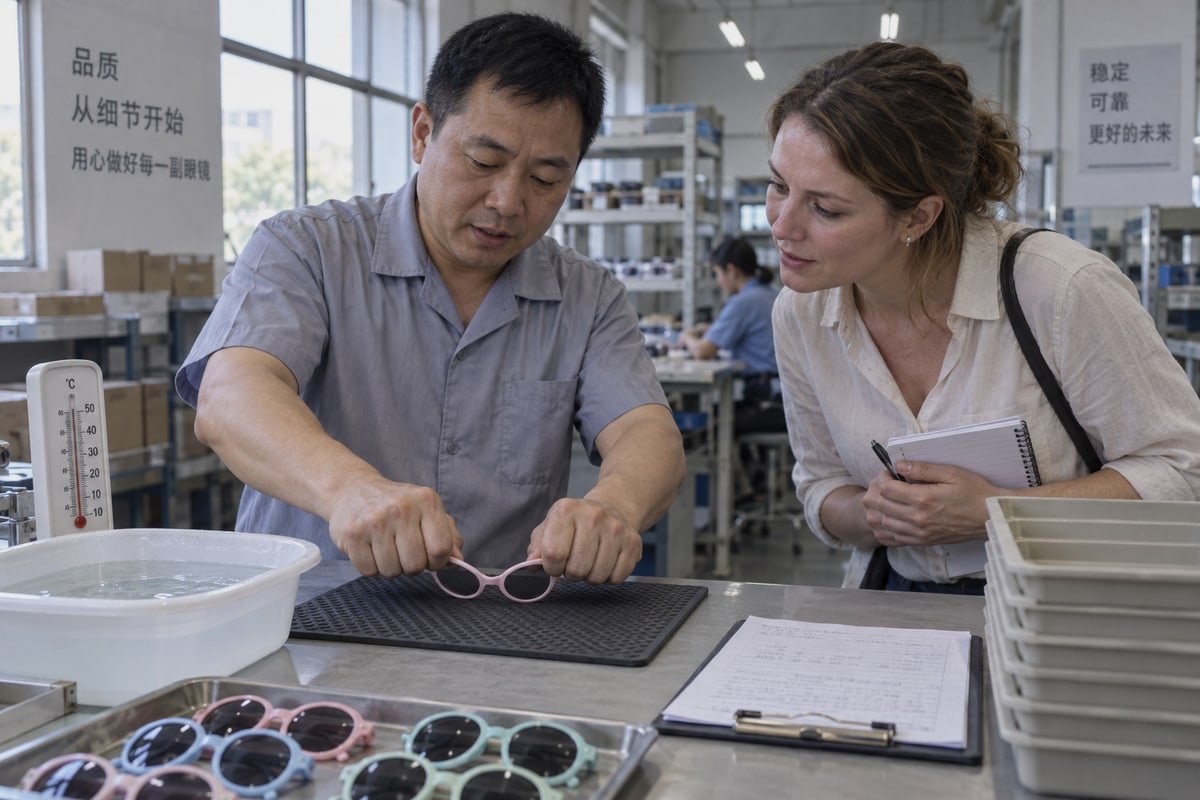
Her question was the right one. A material name on a spec sheet means little until you map it to what children actually do. So I built the answer around real scenarios. Here is the same map I shared with her.
| Everyday abuse | What happens to brittle plastic | How TPEE responds |
|---|---|---|
| Dropped on concrete | Chips or cracks at the rim | Bounces, no surface damage |
| Sat on in a car seat | Temple snaps at the hinge | Temple flexes flat, then recovers |
| Twisted 180 degrees by curious hands | Breaks at the bridge | Twists and returns to shape |
| Chewed on temple tips | Teeth marks, possible splinters | Dents lightly, no splintering |
| Left in a hot car | Warps or softens | Holds shape |
| Winter playground | Turns brittle, cracks on impact | Reste souple |
| Pool, salt water, sweat, sunscreen | Finish dulls, material weakens | Resists swelling and degradation |
Flexural Fatigue and Stress Whitening
One bend is easy. A thousand bends is the real test. Many plastics develop a white line at the point of repeated bending. That is stress whitening, and it is the first sign the material is tiring. TPEE has high resistance to flexural fatigue 2, so the temples on our frames keep their color and their spring after months of daily opening and closing. When we develop a new style, we open and close the temples over and over before we approve the tooling. If we see whitening, we adjust the wall thickness or the hinge geometry.
Heat, Cold, and Water
Kids' sunglasses live outdoors. They ride in hot cars in summer and sit in cold backpacks in winter. TPEE keeps its mechanical properties 3 across a wide temperature range, so it does not go soft in the sun or brittle in the frost. It also has good hydrolytic stability. That means chlorine, salt water, and humid climates do not make the frame swell or lose its finish. For brands selling into beach and pool markets, this is one of the most valuable properties.
The Unbreakable Objection
Here is where I push back on my own industry. Many brand pages call TPEE frames "unbreakable." I do not use that word. TPEE is highly durable, but no frame is indestructible. Performance still depends on design, hinge construction, and how well the lens is held in the rim. A great material in a poor design will still fail. So ask your supplier for physical samples and bend them yourself. With around 800 existing styles in our catalog, we can send samples quickly so you test the frame, not the marketing.
Can TPEE Frames Really Stay Comfortable for Long Wear on Small Children's Faces?
Softness and structure pull in opposite directions. When we tune a TPEE temple, we weigh grip against pressure, because a frame that pinches ends up in a backpack.
Yes. TPEE frames stay comfortable for long wear because the material is very light, which reduces pressure on a child's developing nose bridge and ears. Its soft, slightly rubberized surface grips gently without slipping, and its hypoallergenic, skin-friendly profile suits sensitive young skin.
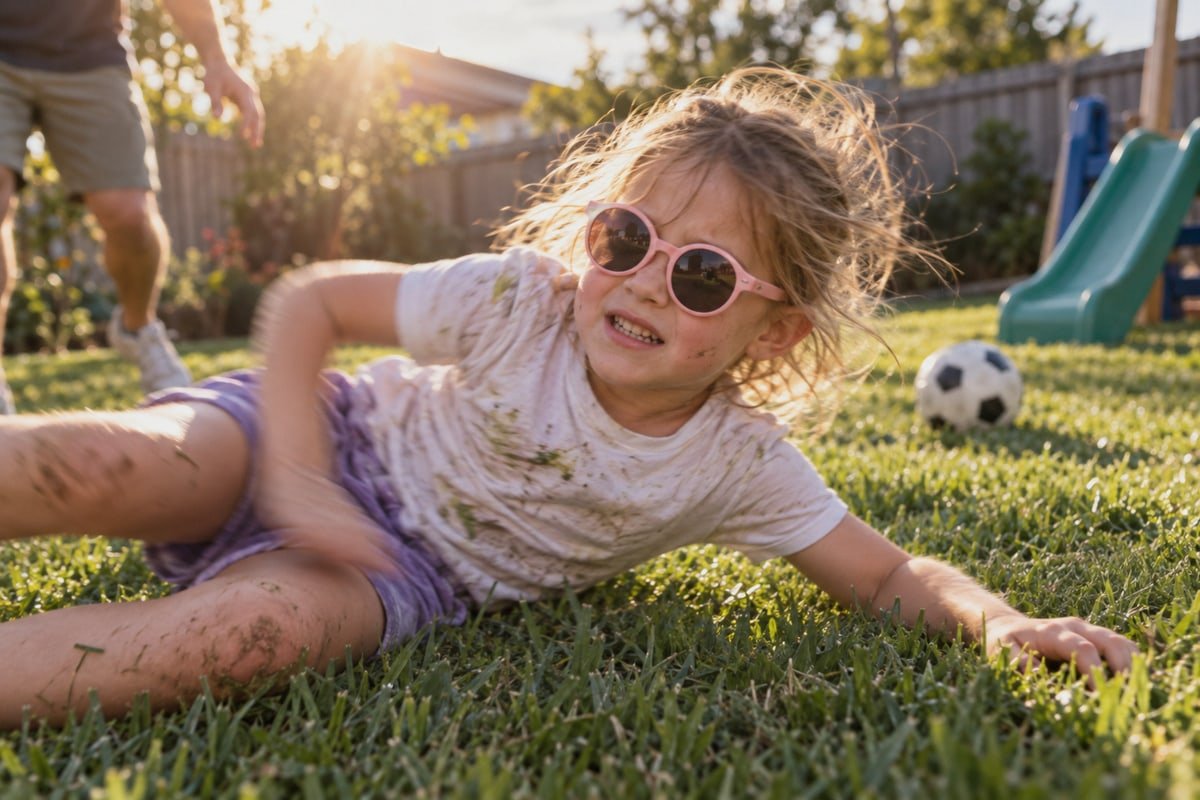
Comfort is the property parents notice last and children notice first. A child will not explain that the nose pads are too hard. They will simply take the glasses off. Then the UV protection is gone. So for us, comfort is a safety feature, not a luxury. Here is how I break it down for product managers.
- Weight. TPEE is lighter than many rigid frame plastics. Less weight means less downward pull on the nose bridge, which is still developing in young children.
- Contact pressure. The temples need to hold the frame without squeezing the skull. TPEE's low stiffness lets us shape a temple that follows the head instead of pushing against it.
- Grip. The soft-touch surface has a slight natural friction. It keeps the frame in place during running and climbing without needing a tight fit.
- Skin response. The material's hypoallergenic properties reduce redness behind the ears, which is a common complaint with some hard plastics and metals.
- Fit across sizes. Small faces vary a lot between ages one and ten. Flexible temples cover a wider range of head widths with the same mold.
Weight and Pressure Points
Our blush pink round style is a good example. The rim looks chunky, which kids and parents like, but the frame is compact and proportioned for a child's face. Because the material is light, the visual boldness does not translate into weight on the nose. The slim temples taper toward the ear, so the contact area is spread out and gentle.
Grip Without Squeeze
The lavender cat-eye style takes a different approach. The temples are slender and taper elegantly to the tips. The soft TPEE surface does the holding work, so we do not need to curve the temples aggressively. It sits securely and still comes off without pulling hair.
Hybrid Comfort for Older Kids
Some buyers want a crisper, more rigid front for fashion reasons. For them, we build TR90 fronts with TPEE temples. The front keeps its sharp lines, and the part that touches the head stays soft. We also check color fastness on pastel shades, because UV stability 4 of the pigment matters as much as the strength of the frame when a product lives in the sun all summer.
Why Should I Choose TPEE Over TR90 or Silicone for My Kids' Eyewear Line?
Fifteen years of molding kids' frames taught us one thing: no single material wins every brief. That is why we run both TPEE and TR90 in our workshop.
Choose TPEE when you need maximum softness, bend recovery, and chew-safe durability for babies, toddlers, and rough play. TR90 offers a crisper, more rigid look with less flex, and silicone is soft but can feel floppy and attract dust. TPEE balances safety, structure, and comfort.
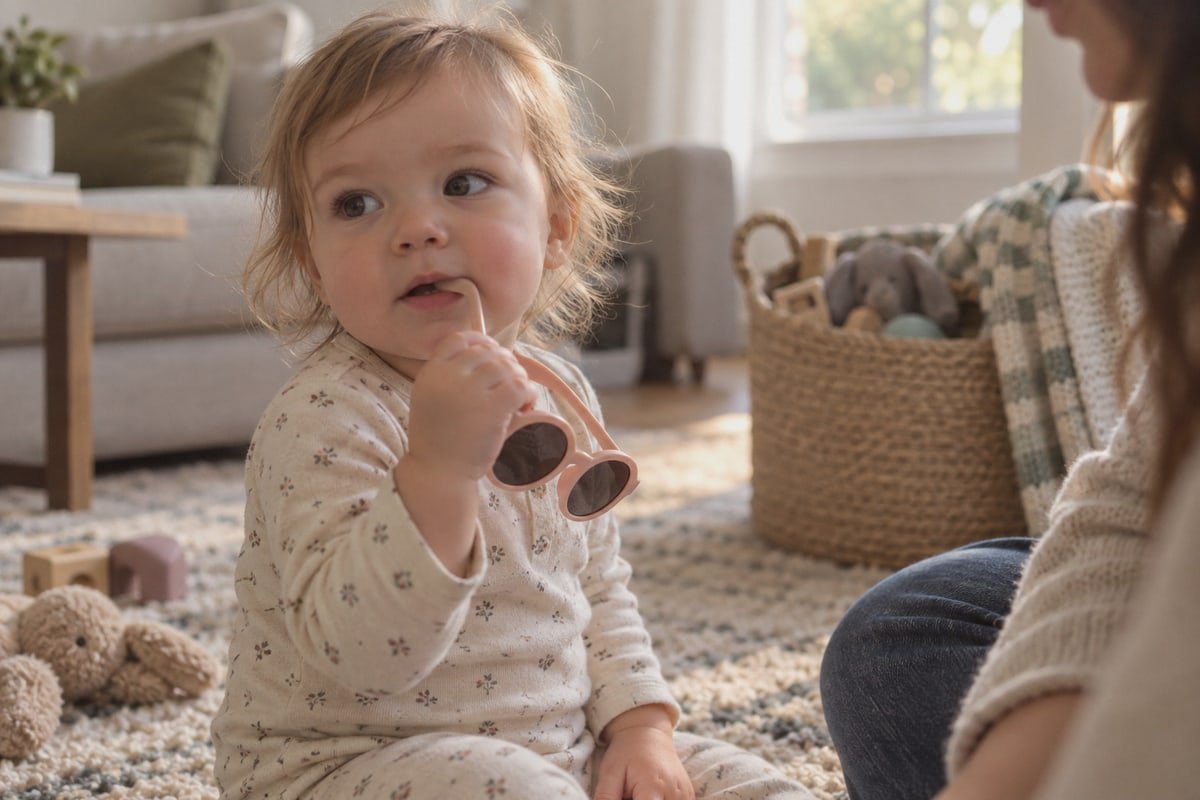
La TR90 vs TPEE question comes up in almost every first call with a new brand. Silicone comes up right after. So I keep a simple comparison table on hand. It is not a ranking. It is a decision aid.
| Facteur | TPEE | TR90 | Silicone |
|---|---|---|---|
| Feel | Soft, rubber-like | Firm, smooth | Very soft, rubbery |
| Bend recovery | Excellent | Bon | Excellent but can stay floppy |
| Conformité au test de chute de bille de la FDA | Élevé | Élevé | Élevé |
| Shape holding | Bon | Excellent | Weak |
| Surface | Slight grip, easy to clean | Glossy, easy to clean | Attracts dust and lint |
| Chew safety | Good, dents without splintering | Fair, harder surface | Bon |
| Fashion finishes | Matte and gloss, pastels, color blocking | Sharpest edges, widest gloss range | Limited detail |
| Meilleur ajustement par âge | Infants to early school age | Enfants d'âge scolaire et plus | Infants only |
When TR90 Is the Better Answer
I will not tell you TPEE is the only good option, because it is not. TR90 is a strong, lightweight material and it holds crisp lines better. If your line is for eight-year-olds who want glossy, sharp-edged frames, TR90 fronts make sense. Its slightly higher stiffness gives a frame that looks more like adult eyewear. Our TR90 kids optical frames are popular with optical companies for exactly that reason.
Where Silicone Falls Short
Silicone is often marketed as the safest choice for babies. It is safe, but it has trade-offs. It struggles to hold the lens firmly, so lens retention can suffer. It also picks up dust and lint from pockets and changing bags. TPEE gives you similar softness with far better structure, so the lens stays put and the frame looks clean on a shelf.
The Hybrid Path and Full OEM/ODM Support
Many of our best-selling styles are TR90 fronts with TPEE temples. You get a sharp front and a soft, bendable temple where the frame touches the head. Whichever material you pick, we handle custom colors, logos, UV400 or polarized lenses, packaging, and accessories, with retail-ready presentation. The engraved CE marking on the inner temple of our lavender cat-eye style shows the kind of small detail buyers in Europe and Japan expect to see done cleanly.
A Note on Sustainability Claims
Some brands call TPEE eco-friendly. Be careful with that word. It can mean BPA-free, recyclable, or lower energy in production, and those are three different claims. Our materials are environmentally friendly in the sense of being BPA-free and non-toxic. If you want to say more than that, we recommend keeping the wording specific and backed by your own supplier documentation.
Conclusion
Kids break rigid frames, and every break erodes trust. TPEE for kids' sunglasses frames solves that with flexibility, safety, and comfort. Choose the material, then choose the partner carefully.
Interested in sourcing the products mentioned in this article? See details and request a quote here:
Notes de bas de page
1. ISO standard for plastic molded parts and tolerances. ↩︎
2. ISO standard for determining flexural properties of plastics. ↩︎
3. Overview of mechanical properties in material science. ↩︎
4. WHO facts on UV radiation and protective measures. ↩︎
Plus d'articles que vous pourriez aimer
Vous recherchez un partenaire fiable en lunetterie pour enfants ?
Explorez plus de 800 styles prêts et un support OEM/ODM complet adapté à votre marque.
Contactez-nous English
  Español de México
  Deutsch
  Français
  日本語
日本語  العربية
  Português do Brasil