Does Private Labeling Kids’ Sunglasses Make Me a Manufacturer Under EU PPE Rules?
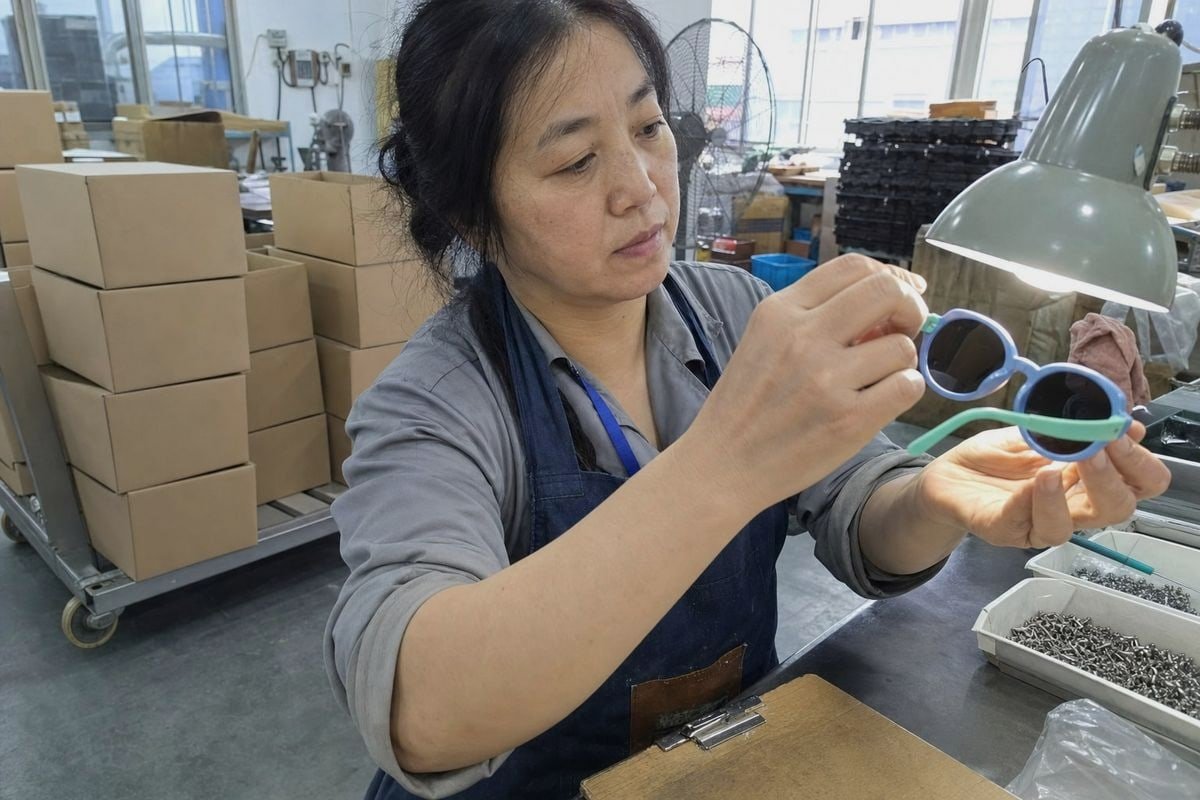
Private labeling kids’ sunglasses looks simple until an EU buyer asks who the legal manufacturer is. On our production line in Taizhou, we see that question stall launches every year.
Yes, in most cases. Under EU Regulation 2016/425, anyone who places kids’ sunglasses on the EU market under their own name or trademark is legally the manufacturer. That means you carry CE marking compliance, technical documentation, and the EU Declaration of Conformity — even if a factory made the product.
That answer surprises many new brand owners. So let’s break down what the rules actually say, what you are responsible for, and how to stay compliant without becoming a testing lab yourself.
What Does the EU PPE Regulation Actually Say About Private Label Brands?
A German importer once told us he was "just a reseller" of the kids' sunglasses we produced for him. His customs broker corrected him within a week. Our export team hears this story often.
Article 3 of EU Regulation 2016/425 defines the manufacturer as any person who manufactures PPE, or has PPE designed or manufactured, and markets it under their own name or trademark. Private labeling therefore transfers full manufacturer obligations to the brand owner, regardless of who physically produced the sunglasses.

The key insight is that EU law defines the manufacturer by function and branding, not by factory ownership. The regulation does not ask "who ran the injection molding machine?" It asks "whose name is on the product placed on the EU market?" If that name is yours, the manufacturer duties in Article 8 are yours too.
Why Sunglasses Count as PPE at All
Sunglasses that protect against sunlight and Rayonnement UV 1 fall under the PPE framework. They are not treated as a simple fashion accessory once they claim UV protection. Kids' sunglasses follow the same logic as adult sunglasses here. The protective claim — not the age group — is what triggers PPE obligations. Almost every pair of children's sunglasses sold seriously in Europe claims UV400 protection, so in practice, nearly all of them sit inside the PPE rules.
The Economic Operator Roles Compared
EU product law assigns duties to each "economic operator 2" in the chain. Here is how the roles differ:
| Role | Definition | Core duties |
|---|---|---|
| Fabricant | Places PPE on market under own name or trademark | Conformity assessment, CE marking, DoC, technical file |
| Importer | Brings PPE from outside the EU into the EU | Verify manufacturer compliance, add own name and address |
| Distributor | Resells PPE already on the EU market | Verify CE mark and documents, act with due care |
| Private labeler | Sells under own brand | Treated as the manufacturer — all manufacturer duties apply |
Notice the last row. The moment your logo goes on the temple arm or the packaging, you jump from distributor-level duties to full manufacturer-level economic operator responsibilities. There is no "brand owner only" category in the regulation. That is the nuance many small ecommerce brands miss, and market surveillance authorities will not accept "the factory handled it" as a defense.
Am I Responsible for CE Certification If I Put My Own Logo on Sunglasses?
When we develop custom-branded frames 3 for European clients — whether a flexible TPEE toddler style or a wraparound sport shield for older kids — the logo conversation always turns into a compliance conversation. The two cannot be separated.
Yes. If your logo is on the sunglasses, you are responsible for CE marking compliance. Sunglasses are Category I PPE, so you may self-certify, but you must verify conformity with EN ISO 12312-1, affix the CE mark, and sign your own EU Declaration of Conformity.

The good news is that sunglasses sit in Category I, the lowest PPE risk class. Unlike Category III equipment, you do not need a Notified Body number after the CE mark. Self-certification is allowed. But "self-certification" does not mean "no work." It means you take on the assessment burden yourself and stand behind it legally.
What Self-Certification Actually Requires
Here is the practical sequence we walk clients through:
- Confirm the product meets the harmonized EN ISO 12312-1 standard through recognized lab test reports covering UV400 protection testing, optical clarity, and mechanical durability.
- Compile a technical documentation file with design drawings, material data, risk assessment, and those test reports.
- For children's products, extend the risk assessment to vulnerable consumers — small parts, sharp edges, hinge pinch points, and breakage behavior.
- Draft and sign the Déclaration de conformité UE 4 in the language required by the destination member state.
- Affix the CE mark, usually on the inner temple arm, before the product is placed on the market.
- Add your brand name, contact address, and — under the GPSR effective December 2024 — an electronic contact point such as an email or URL.
Where Kids' Sunglasses Demand More Care
Children's frames raise the bar on mechanical safety. Our engineers chose TPEE and TR90 for exactly this reason: these materials flex rather than snap, which reduces sharp-edge risk when a child sits on their glasses or bends the temples backward. Your risk assessment must document this behavior explicitly, because the "vulnerable consumers" requirement is where surveillance authorities look hardest on kids' products. REACH chemical compliance also applies to frame and lens materials, so phthalate and heavy-metal test data belongs in your file too.
How Can I Stay Compliant Without Managing Factory-Level Testing Myself?
The trade-off we discuss most with founders is control versus workload. Nobody launching a kids' brand wants to run tensile tests 5 on temple hinges. The realistic goal is to own the legal responsibility while delegating the technical execution to a capable factory.
Partner with a factory that already tests against EN ISO 12312-1, then take ownership of the outputs. You do not need to run the lab work yourself; you need to receive, verify, and hold the original test data, sign your own DoC, and control labeling and traceability.

Compliance is a chain, and the private labeler's job is to hold the chain — not forge every link personally. In fifteen years of exporting children's eyewear from our 5S-managed workshop, we have found the brands that stay out of trouble follow a clear division of labor with their supplier.
A Practical Division of Responsibilities
| Task | Factory handles | You (brand owner) handle |
|---|---|---|
| Lens UV400 protection testing | ✔ Arranges accredited lab tests | Verify reports match your exact SKU |
| EN ISO 12312-1 conformity | ✔ Designs and produces to standard | Confirm the standard version is current |
| Technical drawings and material specs | ✔ Provides originals | Store in your technical file for 10 years |
| Risk assessment for children | Shared — factory supplies data | Sign off with vulnerable-consumer analysis |
| Déclaration de conformité UE | Cannot sign for you | Draft and sign under your legal name |
| CE mark and traceability labeling | ✔ Applies per your instruction | Specify placement, batch codes, your address |
| GPSR electronic contact address | Prints per artwork | Provide the email or URL |
Why "Reference the Certificate Number" No Longer Works
Enforcement has shifted toward what compliance consultants call "virtual manufacturing" scrutiny. Customs and market surveillance authorities increasingly want the private labeler to possess the full original test data, not just a certificate number quoted from a supplier catalog. The European Commission 6 has also made clear that voluntary or generic certificates are not recognized proof of compliance. Practically, this means you should request test reports tied to your exact frame model, lens type, and colorway — and store them yourself. One of our clients in the Netherlands learned this the expensive way: a border check held a shipment for three weeks because the test report referenced a different lens category than the goods in the container. Matching paperwork to product is not bureaucracy; it is your fastest route through customs.
What Documentation Should I Request From My Manufacturer to Prove Compliance?
Buyers often email Alan on our sales team with a one-line question: "Can you send the CE certificate?" The honest answer is that a single certificate is not what protects you. A complete document package is.
Request the EN ISO 12312-1 test reports for your exact SKU, UV400 and optical test data, material and REACH declarations, technical drawings, a child-specific risk assessment, and production traceability records. Then draft your own EU Declaration of Conformity from these documents.

Think of the documentation as building your technical file — the file market surveillance authorities can demand for 10 years after the last unit is sold. Your factory supplies the raw material; you assemble and own the file. Here is the checklist we hand to new private-label clients before their first order ships to Europe.
The Core Document Checklist
| Document | Purpose | Red flag if missing |
|---|---|---|
| EN ISO 12312-1 test report (your SKU) | Proves optical and mechanical conformity | Report references a different model or lens |
| UV400 protection testing data | Verifies the UV claim on your packaging | Only a verbal "all our lenses are UV400" |
| REACH chemical compliance declaration | Confirms frame/lens materials are safe | No phthalate or heavy-metal data for a kids' product |
| Technical drawings and bill of materials | Anchors the technical file | Factory refuses to share design specs |
| Risk assessment (vulnerable consumers) | Mandatory for children's products | Generic adult-product assessment reused |
| Batch and traceability records | Meets product traceability requirements | No batch codes on product or packaging |
| Instructions and safety information | Required in the end user's language | English-only leaflets for non-English markets |
Two Documents You Create, Not Request
Two items cannot come from the factory. First, the EU Declaration of Conformity must be drafted and signed under your legal entity, because you are the manufacturer of record. Second, your product and packaging labeling — your brand name, EU address, electronic contact point, batch code, and CE mark placement 7 — must be specified by you, even if we print and apply it on the line. When we prepare retail-ready packaging for OEM clients, we build these fields into the artwork approval stage precisely so nothing is left implicit. A supplier who resists sharing original test data or drawings is telling you something important: they expect you to carry legal responsibility without the tools to do it. Choose partners who treat your technical file as part of the product.
Conclusion
Private labeling kids' sunglasses in the EU makes you the legal manufacturer. Own the DoC, hold the technical file, and partner with a factory that hands you audit-ready documentation.
Notes de bas de page
1. WHO fact sheet detailing the health risks of ultraviolet radiation and the necessity of protection. ↩︎
2. EU guidance on the roles and responsibilities of different entities within the product supply chain. ↩︎
3. Wikipedia entry explaining the concept of private labeling and custom branding in retail. ↩︎
4. Wikipedia overview of the legal document where a manufacturer declares a product meets EU requirements. ↩︎
5. Wikipedia article describing the mechanical testing process used to determine the strength of materials. ↩︎
6. The executive branch of the European Union responsible for proposing and enforcing product regulations. ↩︎
7. Official EU Commission replacement for the broken URL, covering general CE marking and affixing rules. ↩︎
Plus d'articles que vous pourriez aimer
1 août 2026
L'usine doit-elle gérer l'emballage et l'étiquetage des lunettes pour enfants, ou utiliser un fournisseur désigné ?
1 août 2026
Entrepôt propre vs. exécution directe par le fournisseur : lequel réduit les coûts de retour pour les marques de lunettes pour enfants ?

1 août 2026
Entrepôt direct au port ou staging outre-mer : lequel permet d'économiser le plus sur l'expédition des lunettes pour enfants ?
Vous recherchez un partenaire fiable en lunetterie pour enfants ?
Explorez plus de 800 styles prêts et un support OEM/ODM complet adapté à votre marque.
Contactez-nous English
  Español de México
  Deutsch
  Français
  日本語
日本語  العربية
  Português do Brasil