Do Kids’ Sunglasses Come With a Case or Storage Pouch?

Buyers often ask me whether kids’ sunglasses come with a case or storage pouch. On our production line, this small detail decides how retail-ready a shipment really looks.
Kids’ sunglasses sometimes come with a case or storage pouch, but not always. Premium and gift-set products usually include a microfiber pouch or hard shell glasses case, while budget pairs often ship bare. In OEM/ODM manufacturing, cases are optional add-ons that buyers choose during order specification.
So the honest answer is: it depends. Let me walk you through how packaging decisions actually work, from custom branding to costs and minimum order quantities.
Can I get custom-branded cases or pouches for my kids' sunglasses orders?
Last year, a buyer from Australia sent us her logo files before she even confirmed frame colors. In my experience, packaging is often where a brand's identity truly lives.
Yes, custom-branded cases and pouches are widely available for kids' sunglasses orders. Buyers can print or emboss logos on microfiber pouches, hard cases, zippered cases, and boxes. Most factories, including ours, offer this as standard OEM/ODM service, subject to reasonable minimum order quantities.
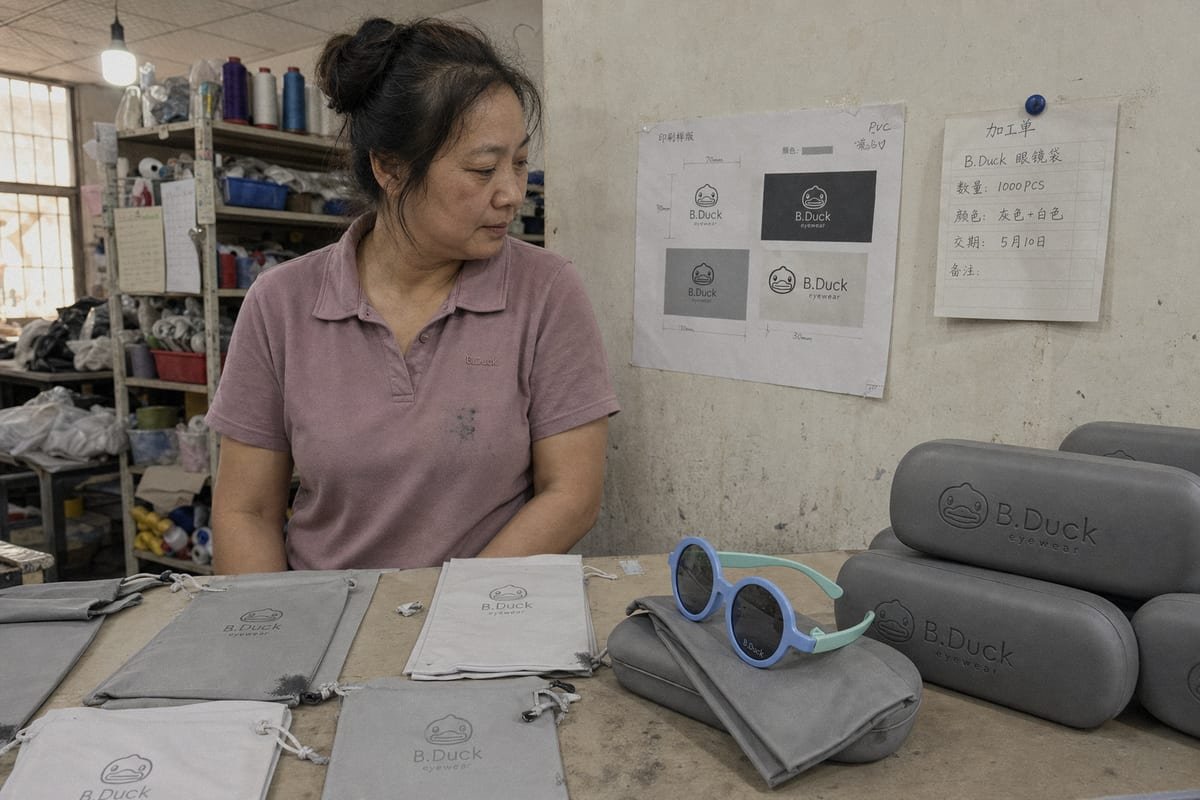
Custom branding on cases is one of the easiest wins for a new children's eyewear brand 1. The frames themselves may come from our catalog of roughly 800 existing styles 2, but the pouch, the case, and the box are where your name meets the parent's eye. We have helped kids' brands from more than 20 countries do exactly this, and the process is more flexible than most first-time buyers expect.
What can be customized?
Almost everything. Here is what buyers typically request:
| Accessory | Branding Method | Cas d'utilisation typique |
|---|---|---|
| Microfiber cleaning pouch | Screen printing, full-color sublimation | Everyday kids' sunglasses, doubles as a lens cloth |
| Hard shell glasses case | Embossing, foil stamping, printed wrap | Premium lines, prescription-ready frames |
| Zippered EVA case | Printed patch, rubber logo badge | Sport styles, travel-focused positioning |
| Silicone case | Debossed logo, custom Pantone color | Toddler and baby lines, soft-touch feel |
| Retail box or sleeve | Full custom artwork | Gift sets, boutique retail display |
How does the process work?
When we develop custom packaging for a client, we usually follow four steps. First, you send us your logo and brand colors. Second, we prepare digital mockups within a few days. Third, we produce a physical pre-production sample for your approval. Fourth, we lock the specification into your order file so every future reorder matches exactly. This last step matters. Parents notice inconsistency, and retailers notice it even faster.
One tip from our side: match the accessory to your frame material story. If you sell flexible rubber frames 3 made for toddlers, a soft silicone or fabric pouch feels more coherent than a rigid clamshell. Coherence sells.
What types of protective cases work best for children's eyewear packaging?
A trade-off we weigh constantly at our Taizhou factory is protection versus practicality. A bulky case protects lenses beautifully — until a five-year-old refuses to carry it.
The best protective cases for children's eyewear are zippered EVA cases for everyday use, hard shell cases for travel and gifting, microfiber pouches for lightweight sport styles, and food-grade silicone cases for toddlers. The right choice depends on the child's age and the product's positioning.
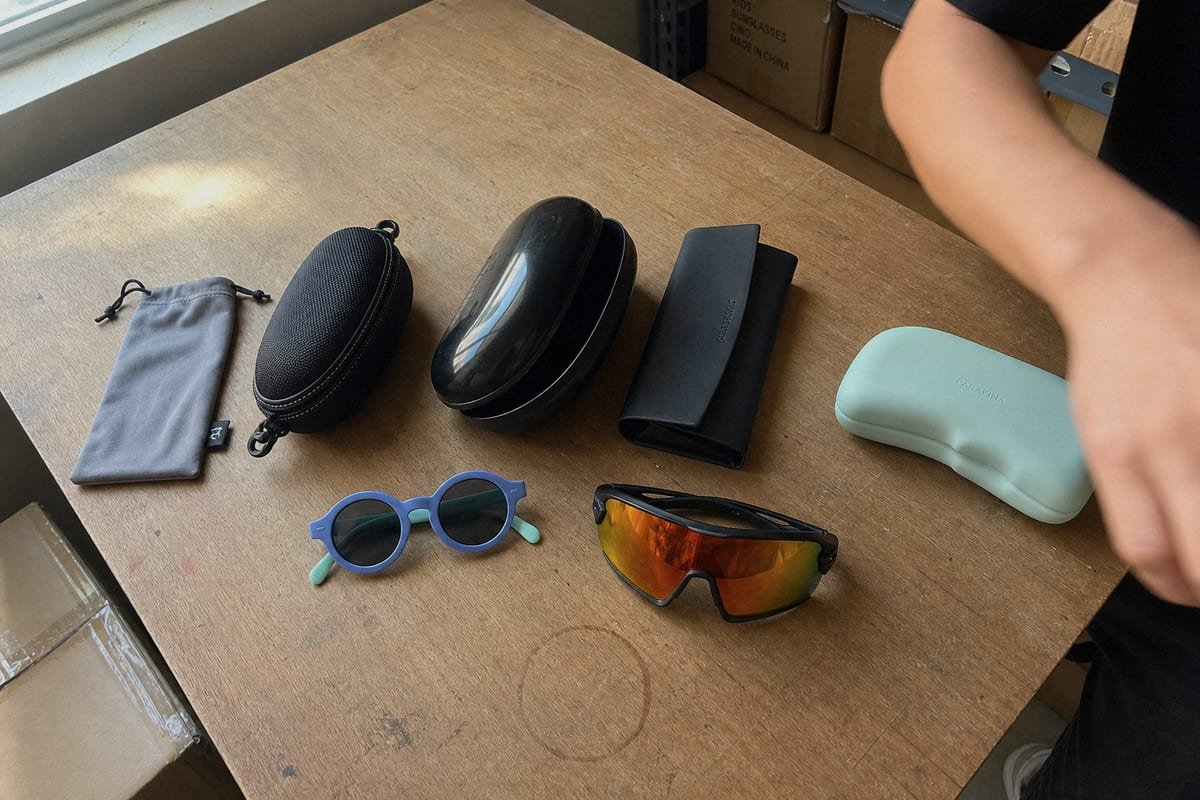
Not all cases serve the same job. A case must protect scratch-resistant lenses 4 from grit, keep frames from bending in a backpack, and be simple enough for small hands to open. Over 15 years of making children's eyewear, we have learned that the case is used by the child far more often than by the parent. Design for the child.
Comparing the main case types
| Case Type | Protection Level | Kid-Friendliness | Idéal pour |
|---|---|---|---|
| Microfiber pouch | Faible-Moyen | Très élevé | Sporty frames, low-cost lines, doubles as cleaning cloth |
| Zippered EVA case | Moyen-Élevé | Élevé | School-age kids, everyday wear |
| Hard shell glasses case | Élevé | Moyen | Gift sets, prescription-ready optical frames |
| Foldable magnetic case | Moyen-Élevé | Moyen | Travel-focused brands, fits in a parent's pocket |
| Silicone soft case | Moyen | Très élevé | Babies and toddlers, non-toxic soft material |
Match the case to the frame and the child
For sport shield sunglasses — like the wraparound single-lens styles we produce with mirrored coatings 5 — a zippered EVA case protects the large curved lens without adding bulk to a gear bag. Pair it with an adjustable head strap and you address the two biggest parent complaints at once: damage and loss.
For toddler frames made from TPEE with flexible rubber frames characteristics, a food-grade silicone case is a smart match. It is soft, safe even if chewed, and it reinforces your safety message. For optical lines using impact-resistant polycarbonate lenses, a hard shell glasses case signals the premium, prescription-ready positioning that optical retailers expect.
There is also a growing sustainability angle. Several of our European clients now request pouches made from recycled PET fabric. Eco-conscious parents notice these details, and the cost difference is modest.
Will adding a storage pouch increase my per-unit costs and MOQ requirements?
A procurement manager from Japan once asked me to quote her order three ways: bare, with a pouch, and with a full care kit. The comparison surprised her — in a good way.
Yes, but modestly. A basic microfiber pouch typically adds only a small fraction to per-unit cost, while hard cases cost more. Custom-branded accessories usually carry their own MOQ, often 500–1,000 pieces per design, which generally aligns with standard sunglasses order minimums anyway.
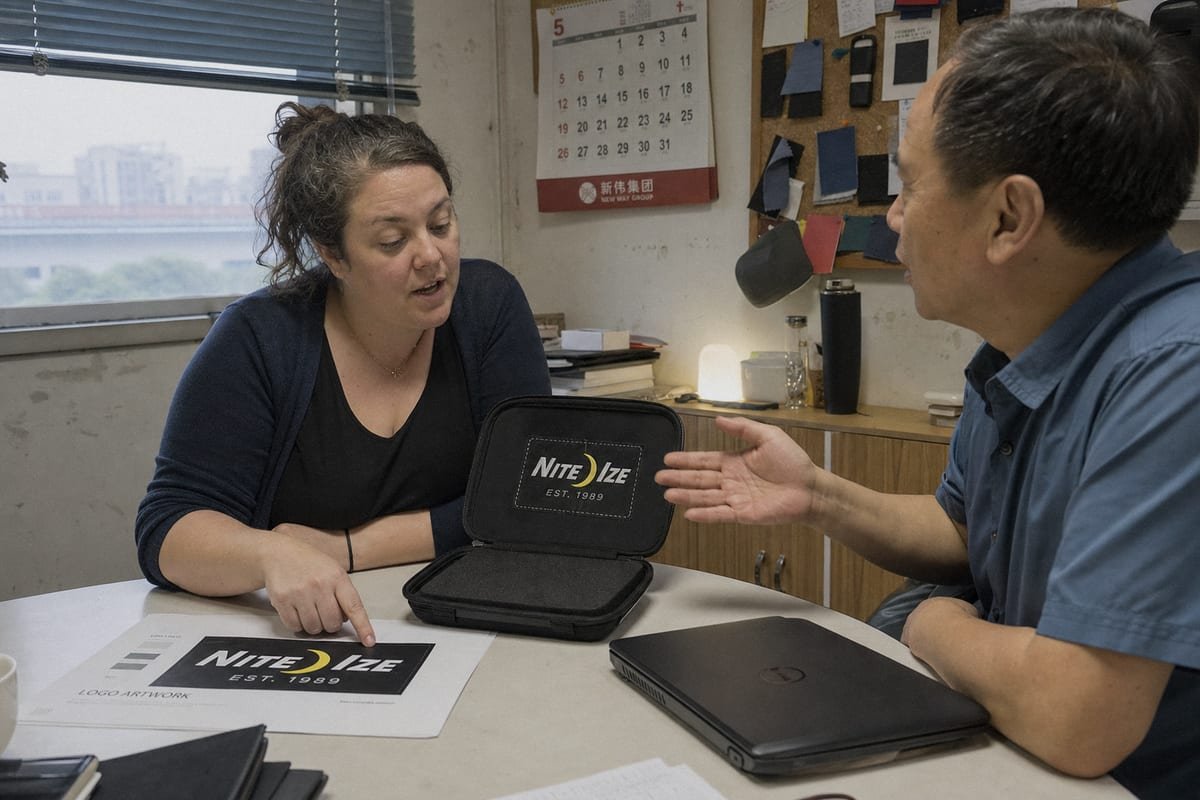
Let me break down how the math actually works, because this is where many first-time buyers overestimate the burden. Accessories are cheap to produce at volume. The real variables are branding method, case complexity, and whether your accessory MOQ matches your frame MOQ.
The typical cost ladder
| Packaging Option | Relative Cost Impact | Typical MOQ Consideration |
|---|---|---|
| No accessory (polybag only) | Référence | Aucun |
| Plain microfiber pouch | Très faible | Usually stocked, no extra MOQ |
| Branded microfiber cleaning pouch | Bas | Around 500–1,000 pcs per print design |
| Zippered EVA case with logo badge | Faible-Moyen | Similar to pouch MOQ |
| Hard shell glasses case, branded | Moyen | May require higher MOQ per color |
| Full care kit (case + cloth + strap) | Moyen-Élevé | Each component has its own MOQ |
Why the accessory MOQ rarely blocks an order
Here is the practical reality we see at our factory. If you are ordering kids' sunglasses at a typical wholesale quantity 6, you are usually already above the accessory MOQ. The friction only appears when a buyer wants five different case designs across a small total order. Our advice in that situation is simple: use one branded pouch design across your whole collection. One design, one print run, lower cost per unit, and a consistent brand look on the shelf.
Also consider the retail return on that small cost. A pouch or case lets you position the product as travel-friendly and gift-ready. Retail listings that say "includes case" convert better with parents, because parents know children scratch and lose things. Spending a little more per unit often supports a meaningfully higher retail price. The accessory is not a cost. It is margin insurance.
One caution: always confirm the case specification in writing. Some suppliers substitute case types "according to availability," which creates inconsistency across reorders. We lock the exact accessory into the order specification so batch two matches batch one.
How does OKAY EYEWEAR handle packaging and accessories for OEM/ODM orders?
Early in my career at our Taizhou workshop, we shipped a beautiful frame order in plain sleeves, and the client's feedback taught me a lasting lesson: the unboxing is part of the product.
OKAY EYEWEAR treats packaging as a core part of every OEM/ODM order. Buyers choose from stocked pouches and cases or fully custom-branded options, with logo printing, custom colors, and retail-ready boxes. Every specification is sampled, approved, and quality-checked before mass production ships.
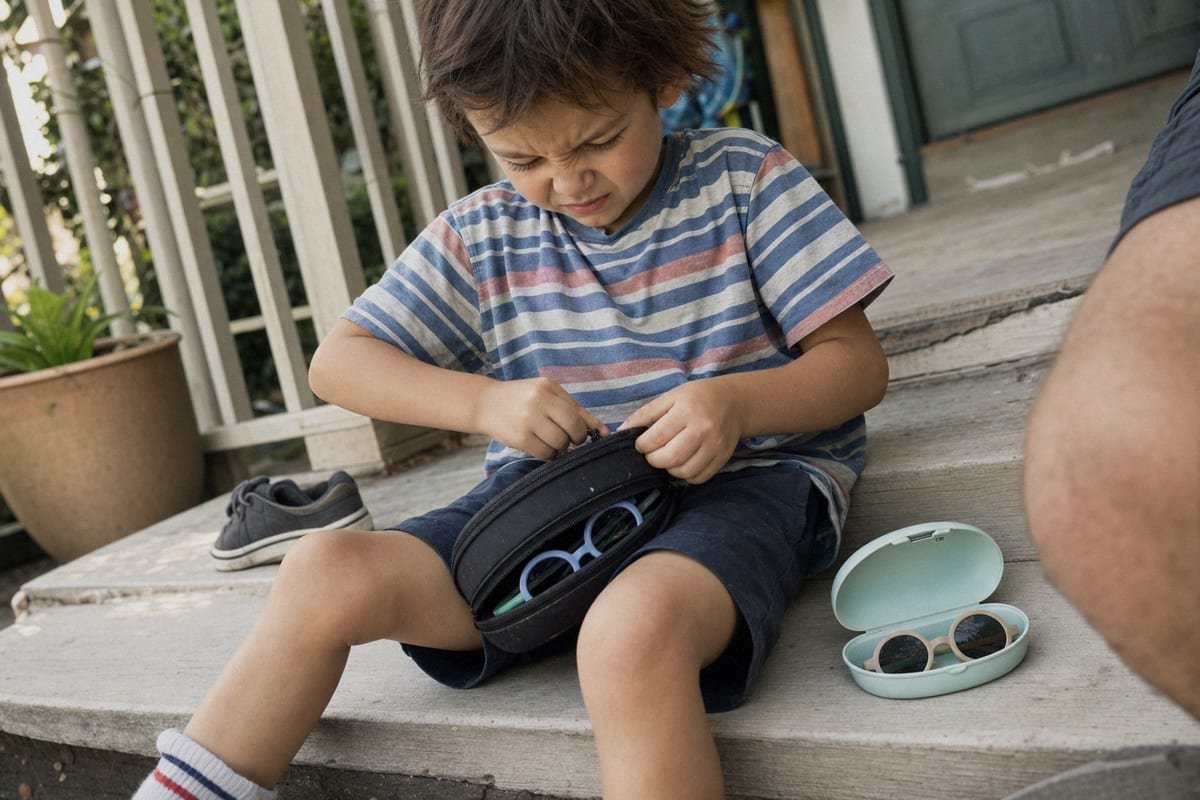
Our approach starts from a simple belief: a children's eyewear brand should not have to coordinate three suppliers to deliver one finished product. When you order frames from us — whether a pastel round style in flexible TPEE for toddlers or a wraparound sport shield with mirrored, shatterproof lenses for older kids — the accessories and packaging are handled in the same order file, under the same quality control.
What the process looks like
- You select frames from our catalog of about 800 existing styles, or we develop a custom design together.
- You specify lens options — UV400 protection is standard, and polarized lenses for children are available for premium lines.
- You choose your accessory package: microfiber cleaning pouch, zippered case, hard case, or a full care kit with an adjustable head strap.
- We produce branded pre-production samples for your sign-off.
- Our 5S-managed workshop runs production, and our QC team inspects frames, lenses, and packaging together before shipment.
Why one-stop packaging matters for kids' brands
Children's products face higher scrutiny than adult products. Parents check materials, safety, and finish quality. Retail buyers check presentation consistency. When frames and eyewear storage solutions come from one factory with 15 years of eyewear experience and around 120 workers, there is one accountable party for the whole retail unit. That reduces risk for founders and procurement managers who cannot inspect every carton personally.
We also help clients think strategically. A promotional products company needs low-cost pouches at volume. A boutique baby brand in Europe needs a soft silicone case and eco-friendly materials 7. An optical distributor needs hard cases that suit prescription-ready TR90 kids' frames. Same factory, different packaging strategies — and we advise on which fits your market before you commit.
Conclusion
Kids' sunglasses do not automatically include a case — but they should. For brands, a branded pouch or case is low-cost, high-impact, and easy to arrange through a capable OEM/ODM partner.
Notes de bas de page
1. General information about the eyewear industry, covering different types of frames, lenses, and brands. ↩︎
2. Authoritative Wikipedia entry defining product lines and assortments. ↩︎
3. Technical overview of thermoplastic elastomers, the material used to create flexible rubber frames for children. ↩︎
4. Provides technical information on anti-scratch coatings used to protect optical lenses from surface damage. ↩︎
5. Medical advice on choosing sunglasses with protective coatings to ensure proper eye health and UV protection. ↩︎
6. Authoritative Wikipedia entry defining wholesale trade and bulk quantities. ↩︎
7. Official EPA resource for sustainable materials management and resource conservation. ↩︎
Plus d'articles que vous pourriez aimer
Vous recherchez un partenaire fiable en lunetterie pour enfants ?
Explorez plus de 800 styles prêts et un support OEM/ODM complet adapté à votre marque.
Contactez-nous English
  Español de México
  Deutsch
  Français
  日本語
日本語  العربية
  Português do Brasil