Does Impact Resistance of Kids’ Sunglasses Decline After Long-Term Use?

Impact resistance of kids’ sunglasses is a question buyers raise with our Taizhou factory every season Polycarbonate and similar polymers 1. A frame that passes lab tests today may fail after a year of rough play — and that risk lands on your brand.
Yes, impact resistance of kids’ sunglasses does decline after long-term use. Scratches, hinge fatigue, heat exposure, and repeated flexing weaken lenses and frames over months of daily wear. Quality TR90 and polycarbonate eyewear resists this decline longest, but inspection and replacement every 1–2 years is still recommended.
Let me break down what actually happens to kids’ sunglasses over time, and what you as a buyer can do about it before placing an order.
How Long Can I Expect Impact Resistance to Last in TR90 Kids' Sunglasses?
During a QC review at our workshop last year, we compared returned samples that had seen a full summer of use against fresh production units AS/NZS 1067 2. The difference told us a lot about real-world service life.
TR90 kids' sunglasses typically retain strong impact resistance for 1–2 years of normal daily use. The material itself degrades slowly, but scratches, heat exposure, and frame fatigue reduce protection over time. Eye care professionals recommend replacing children's sunglasses every 1–2 years for both safety and fit.
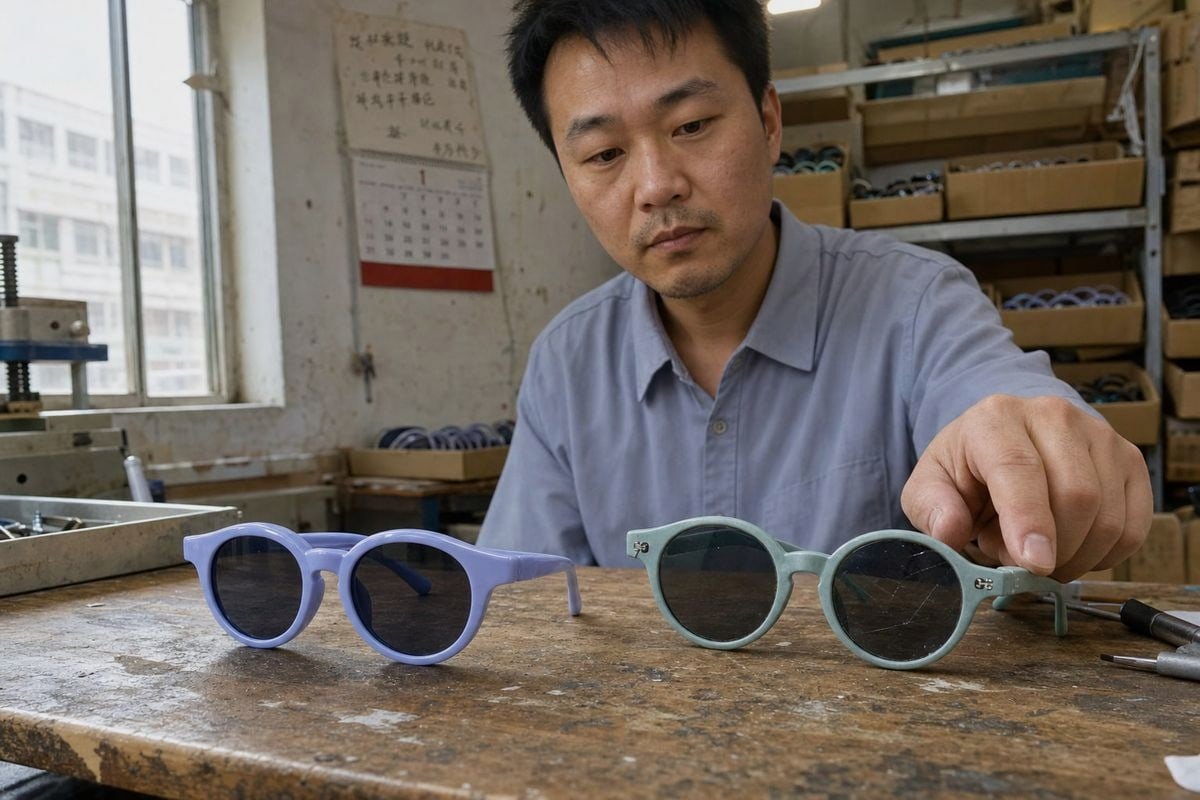
TR90 is a thermoplastic material 3 with excellent memory. It bends and returns to shape. That is exactly why we chose it, along with TPEE, as the core material across our ~800 kids' styles. But no material lasts forever under real conditions.
What "Lifespan" Really Means Here
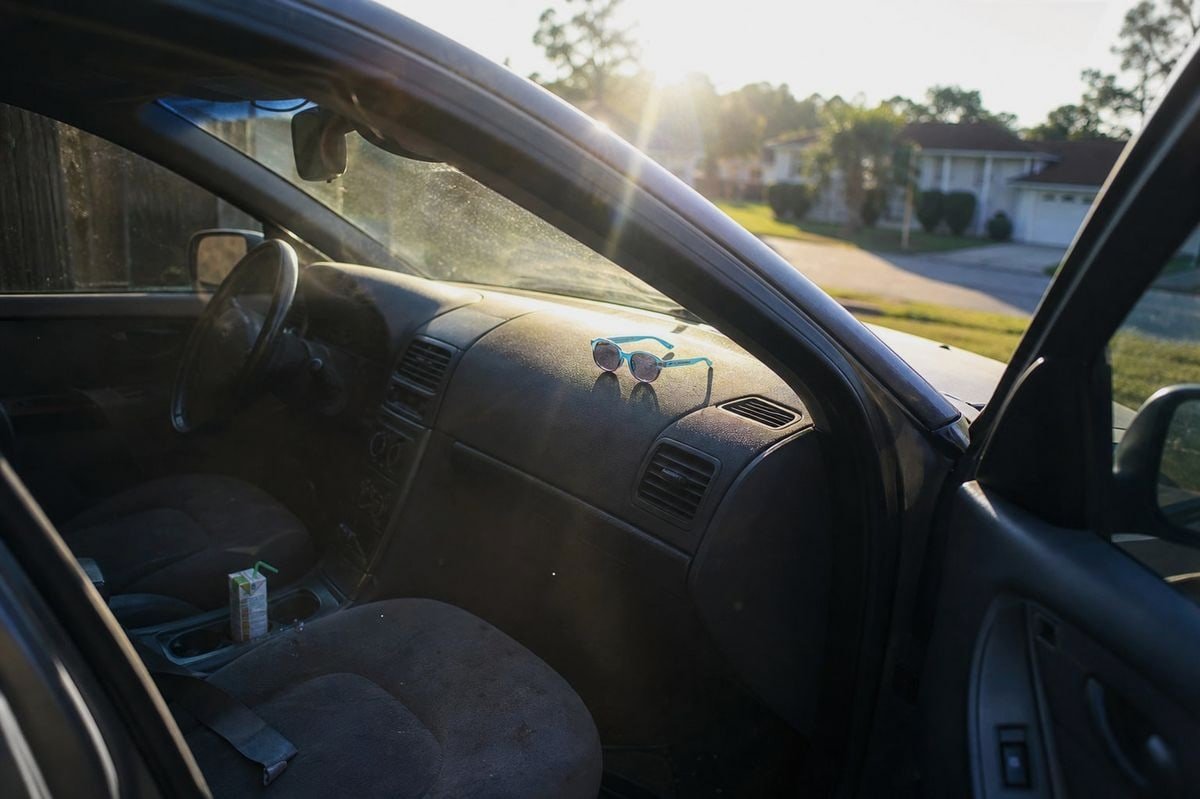
There is no fixed expiry date printed into the polymer. Instead, the useful safety life depends on three things: how the child treats the glasses, how the glasses are stored, and how well they were made in the first place. A well-made TR90 frame that lives in a case can stay protective for years. The same frame left on a car dashboard every day may weaken within one summer.
Here is a realistic guide based on what we see in production and in buyer feedback:
| Usage Pattern | Expected Protective Lifespan | Main Risk Factor |
|---|---|---|
| Light use, stored in case | 2–3 years | Child outgrows the fit first |
| Daily wear, normal play | 1–2 years | Lens scratches, hinge wear |
| Sports and rough outdoor use | 6–12 months | Flexing, drops, deep abrasion |
| Frequent hot-car or beach storage | 6–12 months | Heat-driven material stress |
Growth Is the Hidden Timer
Even if the material stays sound, a growing face changes everything. Sunglasses that sat correctly at age four sit too tight and too high at age six. Poor fit reduces coverage, and coverage is part of protection. In our experience supplying brands in Australia and Europe, sizing turnover is often the real replacement driver — the frame outlives the fit.
So a fair answer is this: expect 1–2 years of dependable impact performance, then reassess. That matches what most eye care professionals advise for children's eyewear generally.
What Causes Impact Resistance to Weaken After Months of Daily Wear?
One lesson we learned early in our 15 years of eyewear work: the lens material is rarely the first thing to fail. It is usually the surface, the hinge, or the fit that gives way first.
Impact resistance weakens mainly through surface scratches, coating micro-cracks, hinge and frame fatigue from repeated flexing, and heat exposure that slowly embrittles the polymer. FDA guidance confirms lens impact strength drops in proportion to breakdown of polished and edged surfaces.

Kids are hard on eyewear. They drop sunglasses on concrete. They sit on them. They stuff them into backpacks with metal water bottles. Each event may look harmless, but the damage accumulates. Let me walk through the main mechanisms.
Scratches and Surface Damage
A lens resists impact best when its surface is smooth and intact. Every scratch is a stress concentrator 4. Under impact, a crack starts at the scratch and spreads. This is why regulators warn that continuing to wear scratched lenses carries an inherent hazard. The lens does not need to look badly damaged. Deep micro-abrasions are enough to lower the failure threshold.
Coating Delamination
Anti-scratch and UV coatings 5 age too. Over months, they can micro-crack or lift at the edges. Those tiny defects create new stress points on the lens surface. The lens may still look clear, but it behaves differently under a sharp blow.
Heat and Thermal Cycling
Sunglasses left in hot cars go through repeated heating and cooling. Polycarbonate 6 and similar polymers slowly relax and lose some toughness under this cycling — often within 6–12 months of heavy exposure. On our production line, we control molding temperatures precisely for exactly this reason: thermal history changes polymer behavior.
Frame and Hinge Fatigue
The lens is only half the story. Here is how failure points typically rank in children's eyewear:
| Failure Point | How It Develops | Effect on Protection |
|---|---|---|
| Charnières | Loosen from repeated opening and twisting | Frame shifts, lens can pop out on impact |
| Temple arms | Fatigue from being pulled outward | Poor grip, glasses fall during play |
| Lens surface | Scratches and coating wear | Lower impact threshold, cracks spread |
| Frame front | Micro-cracks from drops and sitting | Frame can snap instead of flexing |
This is why we pair TR90 fronts with TPEE temples on many kids' styles. Flexibility at the temple absorbs the abuse that would otherwise fatigue a rigid hinge.
Can I Test or Verify Impact Resistance Before Placing a Bulk Order?
A procurement manager from Japan once asked us to prove our samples would still protect after a year in a child's hands, not just on day one. It was a fair challenge — and one every serious buyer should raise.
Yes. Request third-party test reports to ANSI Z80.3 or EN ISO 12312-1, order pre-production samples for drop-ball and flex testing, and ask the factory for aged-sample or heat-cycle data. Note that standards only test new lenses, so supplement with your own durability checks.
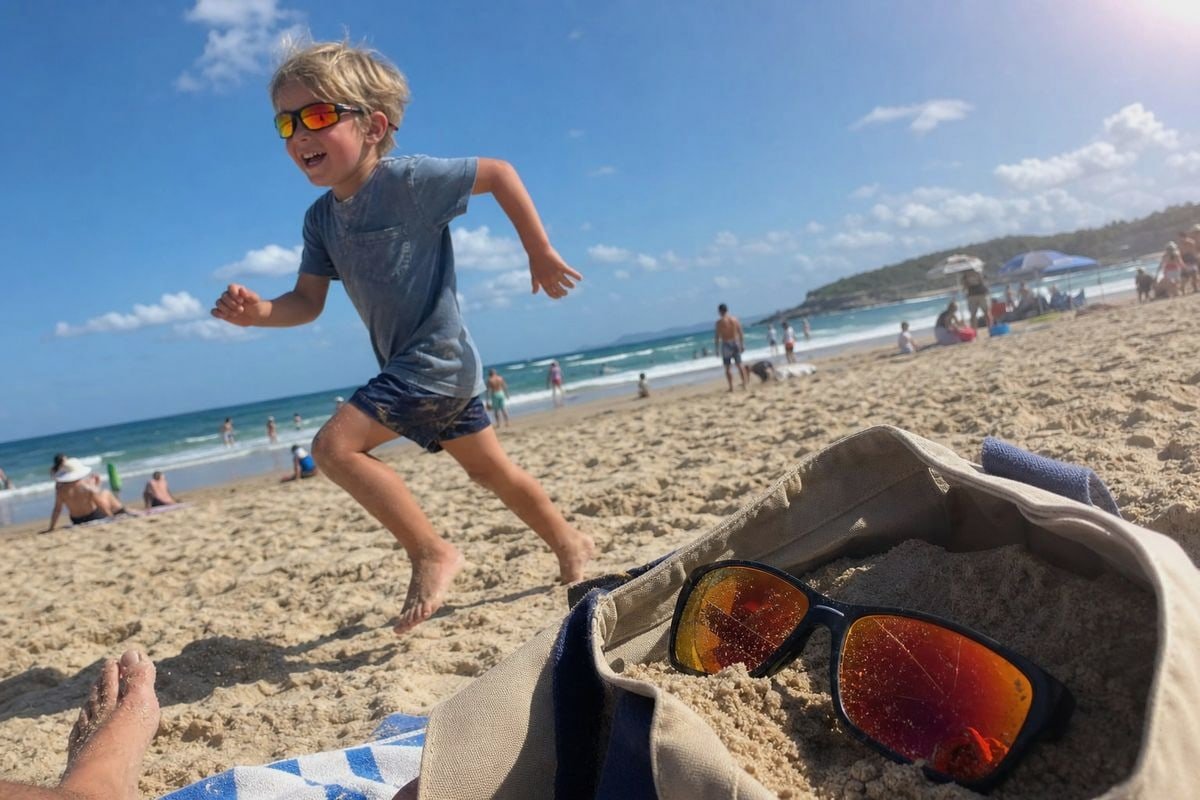
Here is the honest gap in the industry: current safety standards test brand-new lenses under one-time impact conditions. There is no standardized protocol for impact resistance after months of use. That means your verification process has to go beyond the certificate.
A Practical Verification Checklist
Based on how our own B2B customers audit us, I recommend this sequence:
- Ask for current test reports. Reports should reference EN ISO 12312-1 (Europe), ANSI Z80.3 7 (US), or AS/NZS 1067 (Australia), and be dated within a reasonable period for the exact material batch.
- Order physical samples. Do not judge from photos. Flex the temples, drop the sample onto a hard floor from table height, and inspect the lens edges for chips.
- Run a simple heat test. Leave one sample in a hot car or a 60–70°C oven cycle for a few days, then repeat the flex and drop checks. Compare against a fresh sample.
- Check lens retention. Press the lens firmly from the front. A lens that dislodges easily will not stay in place during a real impact.
- Audit the factory's QC process. Ask how they check material batches, molding parameters, and hinge torque. At our 5S-managed workshop, we document these checks per production run, and we expect buyers to ask about them.
What Tests Actually Cover
| Test Type | What It Verifies | What It Misses |
|---|---|---|
| Drop-ball / static load (standards) | New-lens impact strength | Aged or scratched performance |
| Flex and torsion checks | Frame and hinge durability | Long-term polymer fatigue |
| Heat-cycle sample test | Thermal degradation resistance | Real UV aging over years |
| Wear trial with real users | Fit, comfort, real handling | Slow, small sample size |
No single test tells the whole story. Combined, they give you strong confidence before you commit to a container.
How Do I Choose a Manufacturer That Guarantees Long-Term Impact Safety?
When we onboard a new kids' brand, the trade-off we discuss first is never price versus price. It is upfront material and tooling quality versus warranty claims and reputation damage two years later.
Choose a manufacturer with proven flexible-material expertise (TR90/TPEE), documented batch-level quality control, valid third-party certifications, and willingness to share aging and flex-test data. A factory with existing tested styles and full OEM/ODM support reduces both safety risk and launch cost.
Long-term impact safety is built into eyewear months before a child ever wears it. It comes from material selection, molding discipline, and honest quality control. So how do you separate a real safety-focused factory from a trader reselling generic stock?
Questions That Reveal Real Capability
Ask these directly, and listen for specific answers:
- What raw material grades do you use, and can you name the supplier? Vague answers usually mean recycled or mixed-grade resin, which ages faster and less predictably.
- How do you control molding temperature and cycle time? Thermal history during production affects how the polymer behaves years later. Our engineers calibrate this per material batch because we learned the hard way that shortcuts here show up as brittleness in the field.
- Do you own your production, or subcontract it? A factory with its own workshop — ours runs with about 120 workers — controls consistency across reorders. A trader cannot promise the second batch matches the first.
- Can I start with existing molds? A supplier with a deep library of tested styles (we maintain roughly 800) lets you launch without heavy mold investment, using designs that have already been through real production and testing cycles.
- What OEM/ODM support do you offer? Custom lenses, colors, logos, and retail-ready packaging should come with documented QC at each step, not as an afterthought.
Red Flags to Walk Away From
Be cautious with suppliers who claim their lenses are "virtually unbreakable" or "ten times more durable" without context. That marketing language ignores what regulators emphasize: impact resistance is never absolute, and it declines with surface damage. A trustworthy partner talks about inspection, replacement cycles, and realistic service life — because guaranteeing long-term safety means being honest about its limits.
Finally, look at how the factory treats communication. Buyers we work with in 20+ countries tell us the same thing: clear answers, consistent samples, and on-time delivery matter more than the lowest quote. A partner who is careful with your questions will be careful with your children's product.
Conclusion
Impact resistance of kids' sunglasses does decline with hard use. Choose proven TR90/TPEE construction, verify testing before bulk orders, and partner with a factory that controls quality at every step.
Notes de bas de page
1. Background on polycarbonate’s mechanical aging properties relevant to sunglasses durability claims. ↩︎
2. Standards Australia source for the AS/NZS 1067 sunglasses safety standard mentioned. ↩︎
3. Explains the polymer class behind TR90, supporting the material science discussion. ↩︎
Plus d'articles que vous pourriez aimer
1 août 2026
L'usine doit-elle gérer l'emballage et l'étiquetage des lunettes pour enfants, ou utiliser un fournisseur désigné ?
1 août 2026
Entrepôt propre vs. exécution directe par le fournisseur : lequel réduit les coûts de retour pour les marques de lunettes pour enfants ?
1 août 2026
Entrepôt direct au port ou staging outre-mer : lequel permet d'économiser le plus sur l'expédition des lunettes pour enfants ?
Vous recherchez un partenaire fiable en lunetterie pour enfants ?
Explorez plus de 800 styles prêts et un support OEM/ODM complet adapté à votre marque.
Contactez-nous English
  Español de México
  Deutsch
  Français
  日本語
日本語  العربية
  Português do Brasil