How to Tell If a Kids’ Sunglasses Supplier Is Worth a Long-Term Partnership?
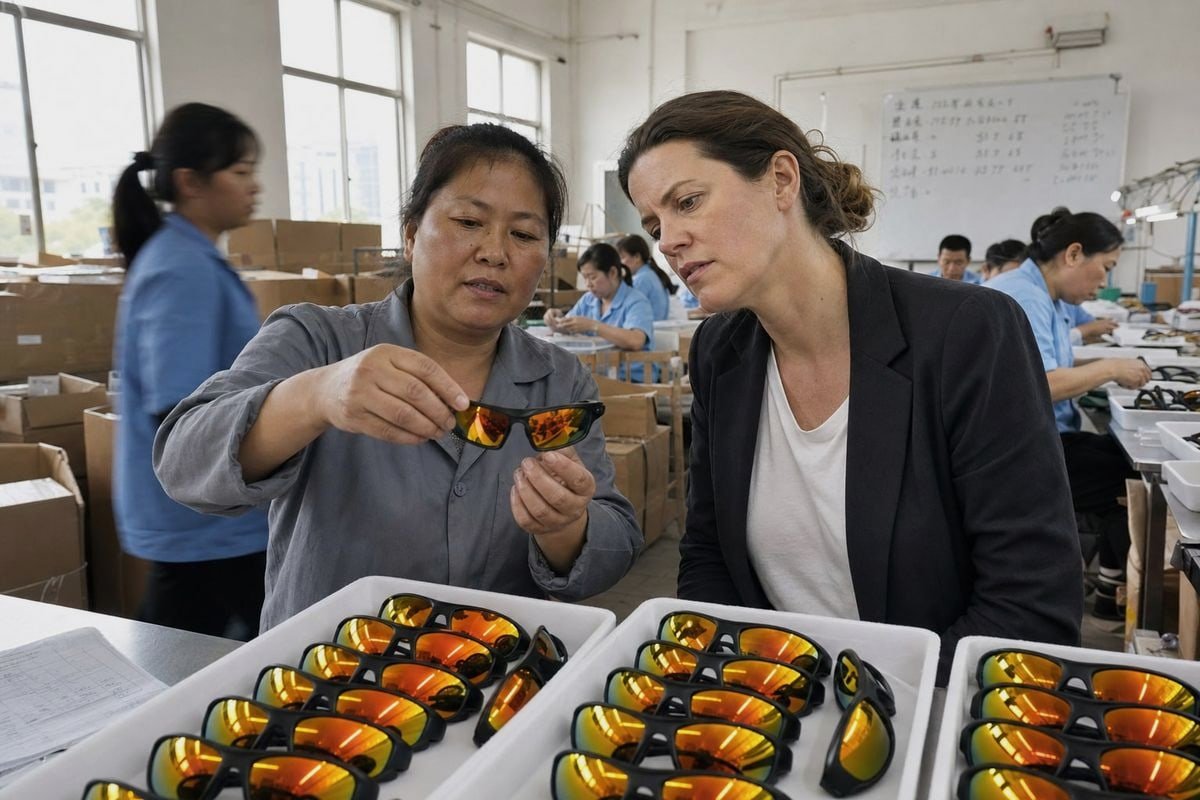
Choosing a kids’ sunglasses supplier feels risky EN ISO 12312-1 1. On our production line in Taizhou, I’ve seen brands arrive after a bad reorder ruined a whole season. One inconsistent batch damages trust fast.
A kids’ sunglasses supplier is worth a long-term partnership when they can prove — not promise — consistent safety compliance, batch-to-batch quality control, real flexible-material expertise, full OEM/ODM support, and reliable capacity for repeat orders as your brand grows across multiple seasons.
That’s the short answer. But how do you actually verify each of those points before you commit exigences CPSIA 2? Let me walk you through the checks I would run, step by step.
What Quality Control Standards Should I Expect From a Reliable Kids' Sunglasses Manufacturer?
Last year, a buyer from Europe asked me to show her exactly where defects get caught on our line — not the showroom, the workshop. That visit changed how I explain QC to every new client.
A reliable kids' sunglasses manufacturer should run in-process QC at injection, polishing, assembly, and packing — not just final inspection. Expect batch-specific UV400 test reports, a master sample system, documented tolerances, traceability for defects, and compliance with standards like EN ISO 12312-1 and CPSIA.
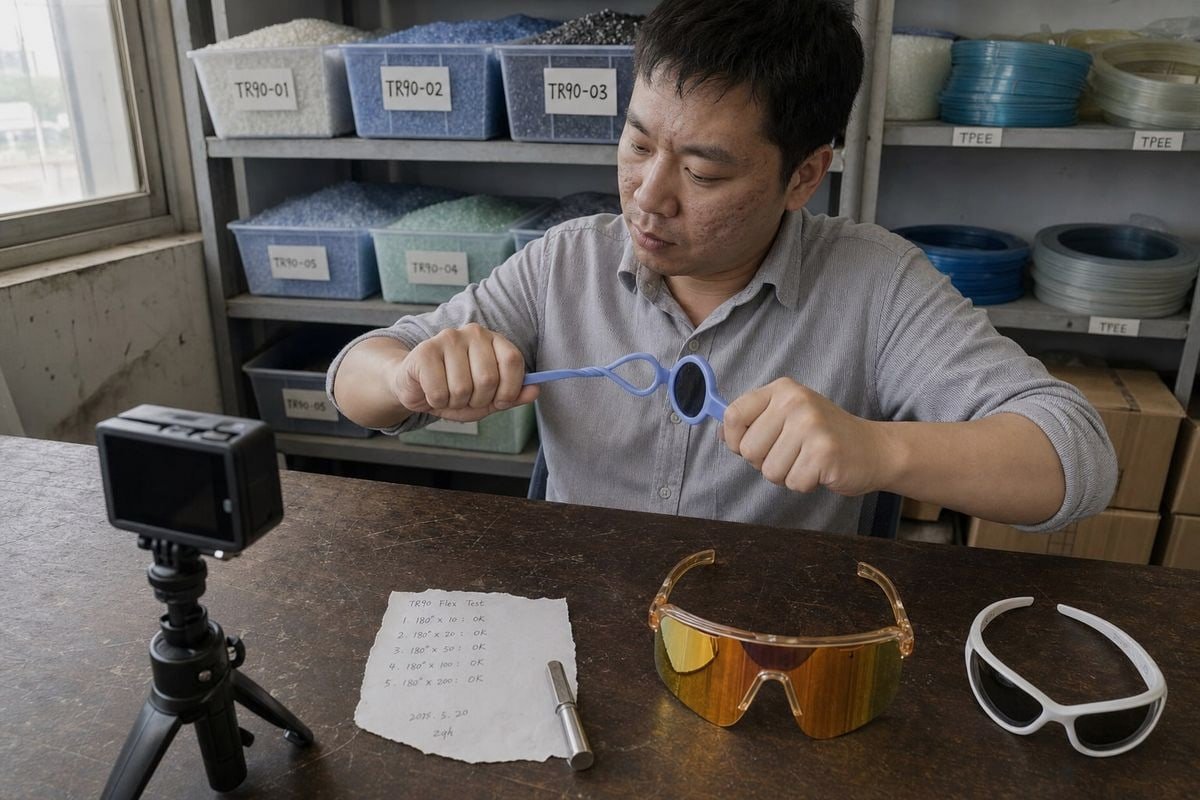
Quality control for children's eyewear is stricter than for adult fashion sunglasses, and it should be. Kids chew temples, drop frames on concrete, and wear the same pair for hours in the sun. A factory that only inspects finished goods at the packing stage is catching problems too late. In our 5S-managed workshop, we check parts at each stage because a warped frame found at injection costs cents to fix; found in your warehouse, it costs your reputation.
The QC Checkpoints That Actually Matter
Here is what a serious kids' sunglasses supplier should be able to show you, on paper and in photos:
| QC Checkpoint | What It Catches | What You Should Ask For |
|---|---|---|
| Injection molding 3 | Warping, short shots, uneven wall thickness | In-process rejection records |
| Polishing/finishing | Rough edges, sharp contact points, scratches | Close-up photos of finished frames |
| Lens fitting | Misalignment, loose lenses, optical distortion | Lens retention and clarity checks |
| Assembly | Loose hinges, uneven temple tension, asymmetry | Hinge-cycle test data |
| Final packing | Wrong colors, logo errors, packaging damage | AQL inspection report per batch |
Beyond checkpoints, ask two harder questions. First: do they keep a signed master sample and compare every production run against it? If they hesitate, consistency will slip. Second: can they trace a defective batch back to the line, day, and operator? Traceability is what separates a factory that fixes problems from one that just apologizes for them.
Finally, compliance documents must be batch-specific. A UV400 certificate from three years ago tells you nothing about the lenses in your current order. Insist on current test reports tied to your production run, covering UV protection, lead and phthalate limits, and small-parts safety where relevant.
How Can I Verify a Supplier's Experience With Flexible Materials Like TPEE and TR90?
There is a trade-off we weigh constantly in our workshop: make a frame softer for safety, and you risk losing the structure that keeps lenses aligned. Getting that balance right takes years of mold work.
Verify flexible-material expertise by asking for material datasheets, twist and rebound demonstrations on video, age-specific mold dimensions, and hinge-free or TPEE-temple construction details. A genuine TPEE and TR90 specialist can explain wall thickness, flex points, and safety trade-offs in specific technical terms.
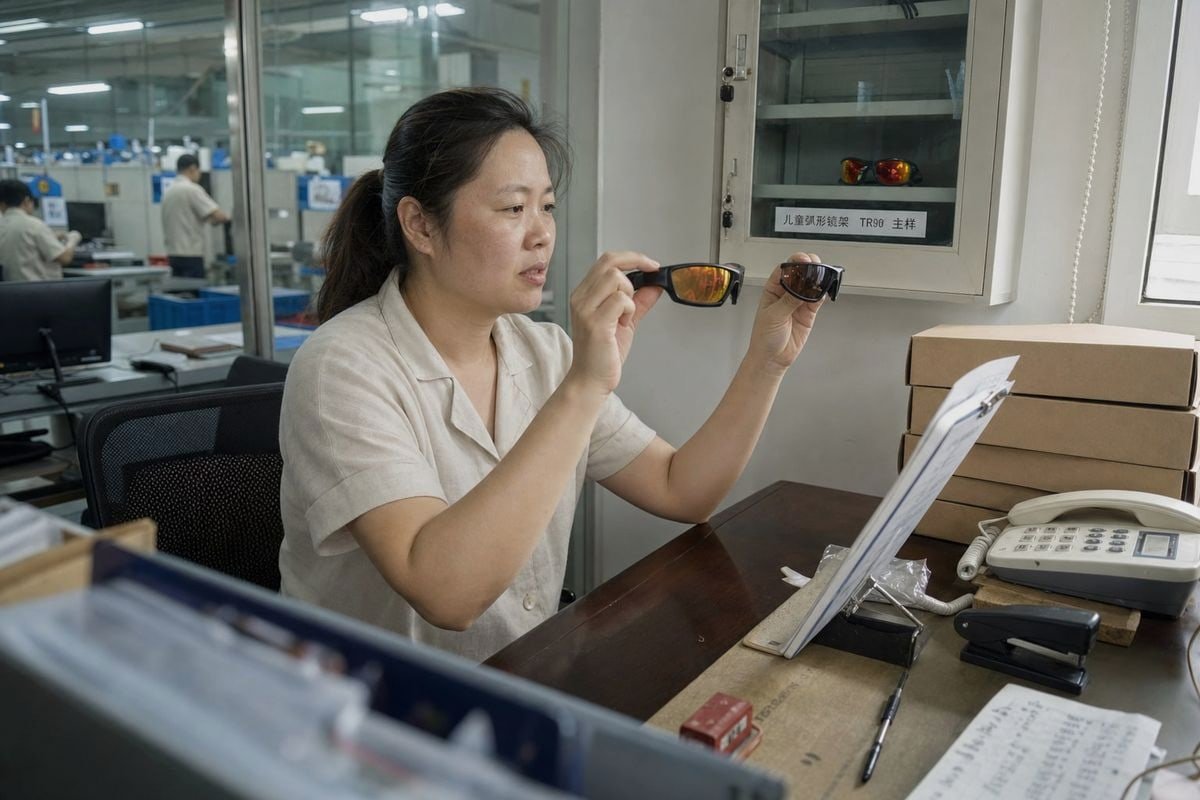
Many factories claim they work with TR90 4. Far fewer truly understand it, and fewer still combine it well with TPEE. The difference shows up on a child's face. TR90 gives lightweight strength and shape memory. TPEE gives soft, rubbery flexibility that survives being sat on, bent backward, or chewed. In our own range, we often pair a TR90 front with TPEE temples — the front holds the lenses stable while the temples flex safely around a child's head. A supplier who cannot explain why they chose one material over the other for a given part is probably just buying generic frames and relabeling them.
Questions That Expose Real Material Knowledge
- Ask them to twist a frame 180 degrees on video and show the rebound. Genuine TPEE and TR90 frames recover their shape; cheap PC frames crack or stay deformed.
- Ask for the material supplier's datasheet, plus confirmation the resin is BPA-free 5 and paints are lead-free.
- Ask how wall thickness changes between their toddler molds and their older-kids molds. A real specialist has different answers for different ages.
- Ask where the designed flex points are, and what happens in a fall. Soft materials should absorb impact, not snap into sharp edges.
- Ask how the material behaves in heat — a car dashboard in summer is a real test environment for kids' products.
Why Material Expertise Compounds Over Time
This matters for a long-term partnership because material problems appear slowly. A frame might look fine at inspection but turn brittle after months of UV exposure, or a coating might peel after repeated sunscreen contact. After fifteen years of eyewear work, we've learned which resin grades hold up and which fail quietly. A transactional vendor never accumulates that knowledge, because they never see the same product twice.
What Level of OEM/ODM Support Should I Look for When Choosing a Long-Term Partner?
A founder of an Australian baby brand once told me her biggest fear wasn't price — it was launching with a product that looked like everyone else's. That conversation shaped how we structure our development support.
Look for a supplier offering a large existing style library to launch without mold investment, plus full customization of colors, logos, lens tints, and retail-ready packaging. Strong OEM/ODM partners also advise on age-appropriate fit, materials, and compliance during development, not just production.
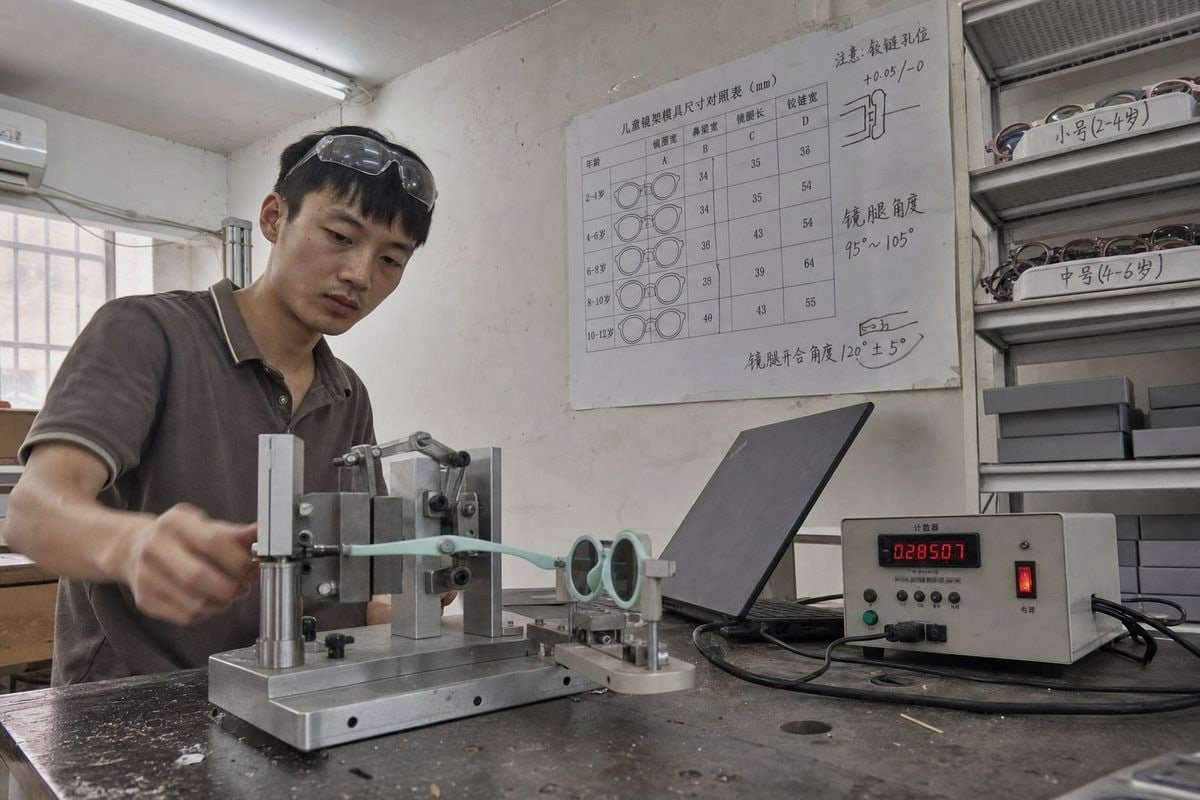
OEM/ODM support is where a supplier either becomes part of your product team or stays a distant vendor. The gap shows early. When a buyer sends us a design idea, we don't just quote it — we flag whether the bridge width suits the target age, whether the chosen lens tint meets category requirements, and whether the paint finish will survive rough play. That kind of feedback prevents expensive mistakes before tooling ever begins.
For newer brands, the smartest path is usually to start from existing molds. Our style library holds around 800 designs — from sport wraparound shields with mirrored gradient lenses to pastel two-tone round frames — so a brand can test the market with custom colors and logos before investing in a private mold. Customization then layers on top: frame colors, rubberized soft-touch finishes, lens tints and mirror coatings, UV400 or polarized lenses, printed or laser-engraved logos, and packaging that is genuinely retail-ready with hang tags, pouches, and cases.
Matching Support Level to Your Business Stage
| Your Stage | What You Need From OEM/ODM | Ce qu'il faut vérifier |
|---|---|---|
| Market testing | Existing styles, custom colors and logo, low tooling risk | Size of style library, sampling speed |
| Brand building | Custom lens options, branded packaging, accessories | Packaging samples, Pantone color matching |
| Established line | Private molds, exclusive designs, seasonal development | Design team capability, mold ownership terms |
| Scaling brand | Multi-style programs, coordinated launches | Capacity planning, parallel production ability |
One more test: ask how they handle design feedback rounds. A true partner documents every revision, keeps approved samples on file, and treats your artwork files carefully. A weak supplier loses track after the second change — and that chaos always resurfaces at reorder time.
How Do I Know If a Supplier Can Handle My Brand's Growth and Repeat Orders Over Time?
The hardest lesson from our early exporting years was this: winning the first order is easy compared to making the fifth reorder match the first. Consistency, not sampling, is where factories are truly tested.
Judge growth readiness by checking factory scale, workforce stability, documented lead times, and on-time delivery history. A supplier ready for repeat orders keeps master samples, color standards, and full batch records, and reproduces identical fit, finish, and logo placement on every reorder without reminders.
Growth exposes weak suppliers. A small workshop can handle your 2,000-piece trial order beautifully, then fall apart at 20,000 pieces across five styles with a hard retail deadline. Before you commit long term, you need evidence that the factory can scale without quality drifting. In our case, that means roughly 120 workers, dedicated lines, and a 5S system 7 that keeps molds, color standards, and approved samples organized — because reorder accuracy depends on retrieval, not memory.
The Reorder Test: What Should Stay Identical
When you receive a repeat order, compare it against your retained samples from the previous batch. Check these points every time:
- Frame color and finish, under both daylight and store lighting
- Lens tint depth, mirror coating, and optical clarity against printed text
- Weight and balance of the frame in hand
- Hinge tension and temple symmetry on a flat surface
- Logo position, size, and print sharpness
- Packaging print quality and assembly
Signals of a Growth-Ready Partner vs. a Transactional Vendor
| Transactional Vendor | Growth-Ready Partner |
|---|---|
| Quotes fast, documents nothing | Keeps master samples and signed specs per SKU |
| Lead times shift without warning | Publishes standard lead times and flags risks early |
| Reorder colors drift batch to batch | Locks color standards and retains lens sourcing |
| Silent when problems occur | Reports issues proactively with corrective actions |
| Prioritizes new customers over reorders | Reserves capacity for repeat clients each season |
| Cannot trace defects | Identifies the exact line and day of any faulty batch |
Also ask about communication structure. Serving buyers in more than 20 countries taught us that a dedicated contact who answers technical questions within a working day is worth more than a slightly lower unit price. When a shipment issue happens — and eventually one will — response speed and honesty determine whether the partnership survives. Ask any prospective supplier to describe a past problem and how they resolved it. Vague answers predict vague accountability.
Conclusion
The wrong kids' sunglasses supplier risks your brand every season. The right one proves safety, material expertise, OEM/ODM depth, and reorder consistency — turning a vendor into a true manufacturing partner.
Notes de bas de page
1. Official ISO standard for sunglasses safety requirements referenced in QC compliance discussion. ↩︎
2. Background on the US consumer product safety law mentioned for children’s product compliance. ↩︎
3. Background on the manufacturing process central to frame production and defect prevention. ↩︎
4. Wikipedia background on nylon-based polymer materials used in TR90 eyewear frames. ↩︎
5. FDA provides authoritative background on BPA safety relevant to plastic resin materials. ↩︎
6. Background on BPA chemical safety concerns referenced in material verification questions. ↩︎
7. 5S is a recognized workplace organization methodology mentioned for factory quality control. ↩︎
Plus d'articles que vous pourriez aimer

1 août 2026
L'usine doit-elle gérer l'emballage et l'étiquetage des lunettes pour enfants, ou utiliser un fournisseur désigné ?

1 août 2026
Entrepôt propre vs. exécution directe par le fournisseur : lequel réduit les coûts de retour pour les marques de lunettes pour enfants ?

1 août 2026
Entrepôt direct au port ou staging outre-mer : lequel permet d'économiser le plus sur l'expédition des lunettes pour enfants ?
Vous recherchez un partenaire fiable en lunetterie pour enfants ?
Explorez plus de 800 styles prêts et un support OEM/ODM complet adapté à votre marque.
Contactez-nous English
  Español de México
  Deutsch
  Français
  日本語
日本語  العربية
  Português do Brasil