How Do UV400 and UV380 Differ in Kids’ Sunglasses UV Protection?
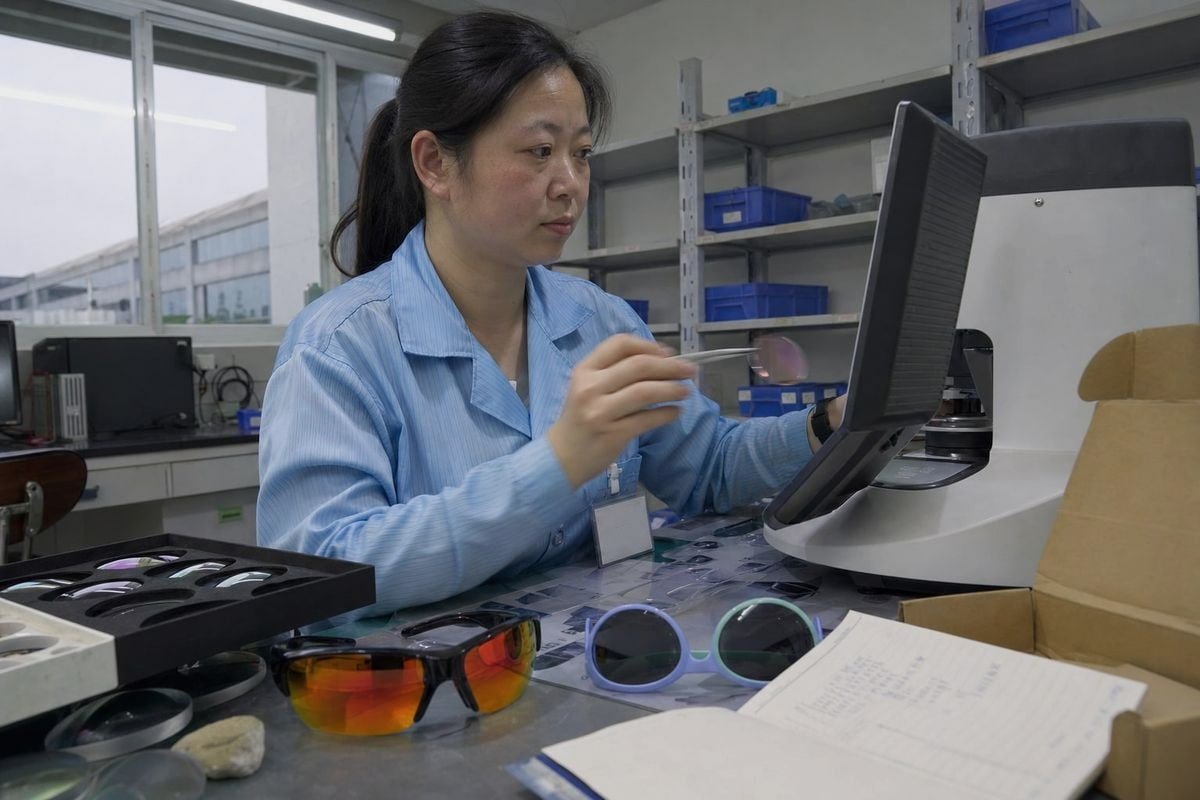
Buyers often ask me about UV400 and UV380 in kids’ sunglasses. Choose wrong, and children’s eyes absorb hidden UVA rays daily. On our production line, this difference is never a small detail.
UV400 lenses block ultraviolet light up to 400 nanometers, covering the complete UVA and UVB spectrum. UV380 lenses only block up to 380 nanometers, leaving a 20 nm gap of UVA exposure. For kids’ sunglasses, UV400 is the stronger, more complete UV protection standard.
That 20 nm gap sounds tiny. But for children’s eyes, it matters more than most people think. Let me break down why, and what it means for your sourcing decisions.
What Does the UV400 or UV380 Rating Actually Mean for My Kids' Sunglasses?
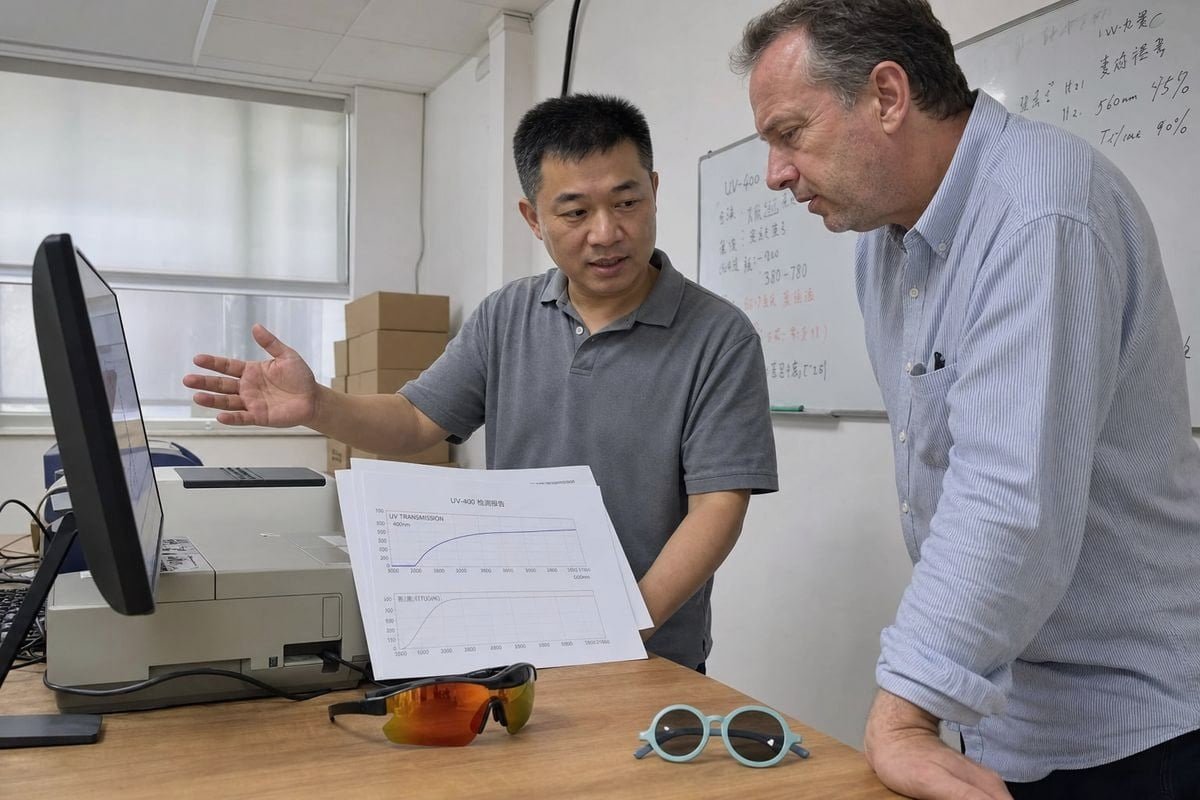
During a factory audit last year, a European buyer asked me if UV380 was "basically the same" as UV400. I pulled out our lors d'un appel vidéo, en direct. Ce niveau d'ouverture devrait être votre attente de base de la part de tout fournisseur. 1 data to show him it is not.
The number refers to the maximum nanometer wavelength range the lens blocks. UV380 stops ultraviolet light up to 380 nm, covering UVB and most UVA. UV400 stops light up to 400 nm, capturing the final 380–400 nm band of UVA rays that UV380 lenses let through.
La ultraviolet spectrum 2 is measured in nanometers. Shorter wavelengths carry more energy. UVB rays sit between 280 and 315 nm. UVA rays run from 315 nm all the way up to 400 nm. Beyond 400 nm, visible light begins, starting with HEV blue light.
So the rating is not a vague quality label. It is a precise cutoff point. A UV380 lens filters everything below 380 nm. A UV400 lens filters everything below 400 nm. The difference is exactly that 380–400 nm slice of UVA.
Why the Last 20 Nanometers Are Not Trivial
That final band is still true UVA radiation. Research links long-wave UVA exposure to cataracts 3, pterygium 4, et la cumulative ocular sun damage. Some estimates suggest the 380–400 nm band can represent a large share of the solar UV energy that actually reaches the eye, because longer wavelengths penetrate the atmosphere more easily.
Here is a simple side-by-side view:
| Caractéristique | UV380 | UV400 |
|---|---|---|
| Wavelength cutoff | 380 nm | 400 nm |
| UVB coverage (280–315 nm) | Full | Full |
| UVA coverage (315–400 nm) | Partial | Full |
| Unblocked band | 380–400 nm | Aucun |
| Meets "100% UV protection" claim | Non | Oui |
| Recommended for children | Acceptable minimum | Preferred standard |
One more key point. The UV rating has nothing to do with lens darkness. Tint controls visible light transmission, not UV filtering. A very dark lens with a weak UV filter is worse than a clear lens with a proper filter, because the dark tint makes pupils dilate and admit more unblocked radiation.
Which UV Protection Standard Should I Choose When Sourcing Children's Sunglasses?
In our fifteen years supplying kids' eyewear brands across 20+ countries, we have standardized on UV400 lenses for every children's style. The pediatric case for it is simply too strong to compromise.
Choose UV400 for children's sunglasses. Kids' crystalline lenses are clearer than adults', so far more UVA reaches the retina. Because roughly 80% of lifetime UV exposure occurs before age 18, the complete 400 nm cutoff gives children the protective margin their developing eyes need.

The core issue is pediatric eye health. A child's eye is not a small adult eye. The ocular media in young children transmit far more UV to internal structures. Some studies suggest up to 75% of UVA can reach a young child's retina, compared with roughly 10% in adults. The adult lens yellows with age and absorbs UV naturally. A child's lens does not yet do that job.
UV damage is also cumulative. It builds silently across decades. Conditions like cataracts and pterygium in adulthood often trace back to childhood sun exposure. That is why a "good enough" adult standard is not automatically a good child standard.
Where UV380 Still Fits
I want to be fair here. UV380 is not useless. It blocks all UVB rays and most UVA. For brief, occasional exposure, it is meaningfully better than no protection. Some lower-cost retail eyewear still uses it, and some older regional standards historically accepted a 380 nm cutoff. But the WHO and ICNIRP 5 recommend protection to 400 nm, and modern buyer expectations have followed.
Here is how I frame the decision for our B2B clients:
| Buyer scenario | Recommended standard | Reasoning |
|---|---|---|
| Kids' outdoor and beach brands | UV400 | Long, repeated sun exposure demands full UVA coverage |
| Baby and toddler eyewear | UV400 | Youngest eyes transmit the most UV |
| Promotional giveaway sunglasses | UV400 strongly preferred | Liability and brand trust outweigh minor cost savings |
| Fashion accessories, indoor-leaning use | UV380 minimum, UV400 ideal | Occasional exposure lowers risk but not to zero |
There are secondary reasons too. The 380–400 nm range causes subtle micro-fluctuations in pupil constriction, which can fatigue young eyes during long outdoor play. Blocking it creates a more stable visual environment. For active kids wearing wraparound sport styles, that comfort difference is real.
How Can I Verify That My Supplier's UV400 Lenses Truly Meet the Claimed Protection Level?
A hard lesson from early in my career: a batch of lenses from an outside vendor tested at 385 nm despite a "UV400" sticker. Since then, our QC team spectro-tests incoming lens lots before assembly.
Verify UV400 claims through spectrophotometer transmission reports showing near-zero transmittance below 400 nm, third-party lab testing against standards like ANSI Z80.3 or EN ISO 12312-1, batch-level QC documentation, and independent spot checks with a UV lens tester on received goods.
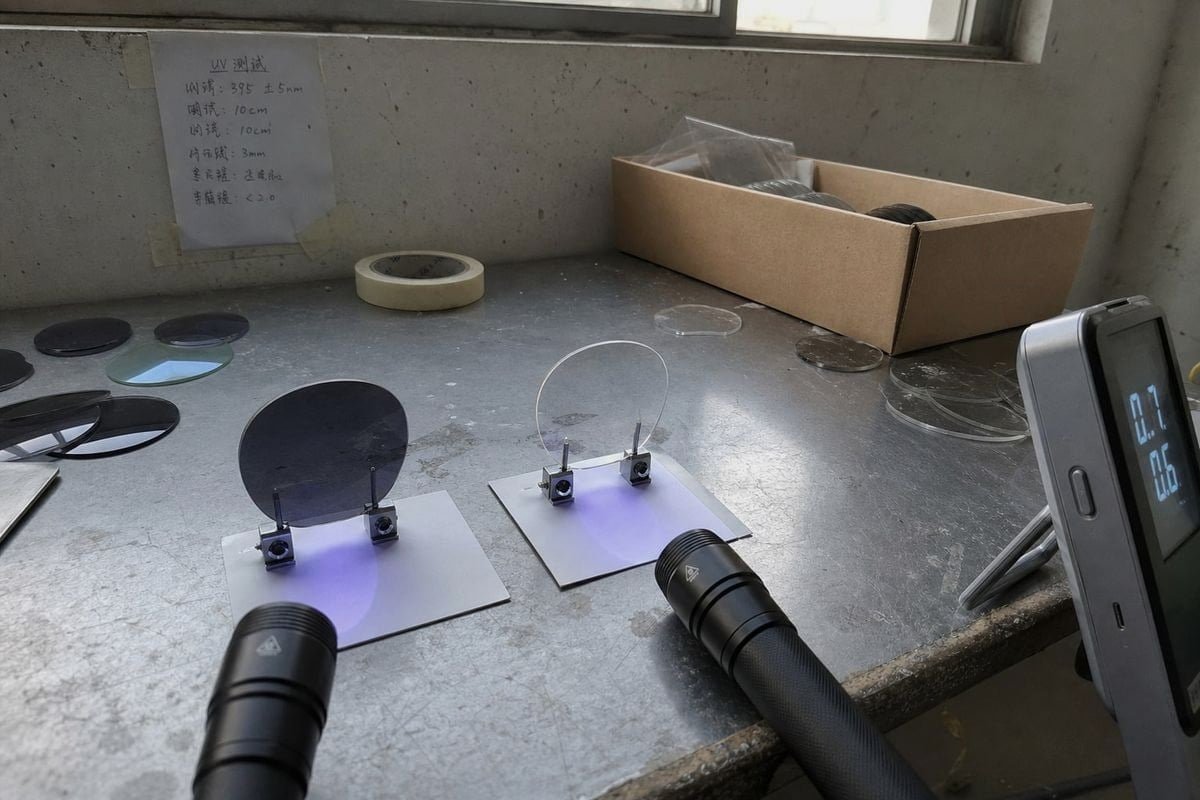
Trust, then verify. Stickers and listings are marketing. Transmission curves are evidence. Here is the verification process I recommend to every procurement manager we work with.
A Practical Four-Step Verification Process
- Request the spectral transmission report. A legitimate supplier can provide a curve from a UV-visible spectrophotometer. Look for transmittance at or near 0% across 280–400 nm. If the curve climbs before 400 nm, the lens is not truly UV400.
- Ask which standard the lens is certified against. La ANSI Z80.3 6 standard governs nonprescription sunglasses in the US market. Europe uses EN ISO 12312-1, and Australia uses AS/NZS 1067, which is among the strictest. Confirm the test house is independent.
- Check the lens material and process. Polycarbonate 7 lenses inherently absorb UV up to around 380–400 nm because of their molecular structure, which is one reason we favor them for kids alongside their impact resistance. Cheaper acrylic lenses rely on coatings that can be inconsistent.
- Spot-test received shipments. A benchtop UV lens tester costs little and takes seconds per lens. Test random samples from each carton, not just the golden samples.
What Honest Documentation Looks Like
At our Taizhou facility, every kids' lens order ships with batch records. We keep material traceability from lens blank to finished frame under our 5S workshop system. If a supplier hesitates to share raw test data, treat that hesitation as data itself.
One more nuance worth knowing: UV380 lenses can also degrade faster over time, because the 380–400 nm energy they fail to block slowly attacks the chemical bonds of the lens material. A verified UV400 lens tends to hold its optical quality longer through seasons of hard use.
Does Choosing UV400 Over UV380 Affect My Lens Costs or Sourcing Options?
When we quote new brands, this question comes up in almost every first call. The honest answer surprises many buyers: the gap is much smaller than they expect.
UV400 lenses cost only marginally more than UV380 at the factory level, often just a few cents per pair. Modern polycarbonate production has made 100% UV protection the mainstream default, so choosing UV400 rarely restricts sourcing options, style range, or minimum order quantities.
Twenty years ago, UV400 carried a real premium. Today it does not. The industry shifted, and material science shifted with it. Polycarbonate, the dominant material for children's lenses, blocks most UV inherently. Pushing the cutoff to a full 400 nm is a matter of formulation and coating consistency, not exotic technology.
Where costs actually diverge is in the layers you add on top. Here is how the typical lens options stack up in our catalog of roughly 800 existing kids' styles:
| Lens option | Coût relatif | Protection UV | Best suited for |
|---|---|---|---|
| Basic acrylic UV380 | Le plus bas | Partial UVA | Low-cost novelty items only |
| Polycarbonate UV400 | Low-moderate | Full UVA/UVB | Lunettes de soleil pour enfants de tous les jours |
| UV400 polarisé | Modéré | Full UVA/UVB plus glare control | Beach, water, and snow brands |
| Mirrored gradient UV400 | Modéré | Full UVA/UVB plus surface reflection | Sport and performance styles |
Note that polarized lens technology addresses glare, not UV. It is a comfort feature layered onto the UV filter, and the two should never be confused in your product copy.
The Real Cost Question Is Downstream
Think past the unit price. A UV380 lens sold as "kids' sun protection" creates liability exposure in markets with strict standards, like Australia and the EU. One failed customs test or one recall erases years of cent-level savings. That is why we steer clients toward UV400 even on promotional runs.
Sourcing flexibility is not a barrier either. Because our existing style library already carries UV400 across sport wraparounds with mirrored shield lenses, soft two-tone round frames for toddlers, and TR90 frames with flexible TPEE temples, brands can test the market without heavy mold investment. Full OEM/ODM support means custom colors, logos, and retail-ready packaging sit on top of the same verified lens standard.
Conclusion
UV380 leaves a 380–400 nm UVA gap that children's clear eyes cannot afford. UV400 closes it affordably. For kids' sunglasses, specify UV400, verify it, and partner with factories who prove it.
Notes de bas de page
1. Explains the lab instrument used to verify lens UV transmittance claims. ↩︎
2. Background reference on UV wavelength ranges discussed in the article. ↩︎
3. WHO fact sheet on vision impairment causes including UV-related cataracts. ↩︎
4. Authoritative government health resource defining pterygium and its causes, including UV exposure. ↩︎
5. Background on the international body setting UV exposure protection guidelines. ↩︎
6. Comprehensive Wikipedia entry detailing the ANSI Z80.3
Plus d'articles que vous pourriez aimer


Vous recherchez un partenaire fiable en lunetterie pour enfants ?
Explorez plus de 800 styles prêts et un support OEM/ODM complet adapté à votre marque.
Contactez-nous English
  Español de México
  Deutsch
  Français
  日本語
日本語  العربية
  Português do Brasil