How to Use ANSI Z80.5 to Inspect Kids Optical Frames from Chinese Suppliers?
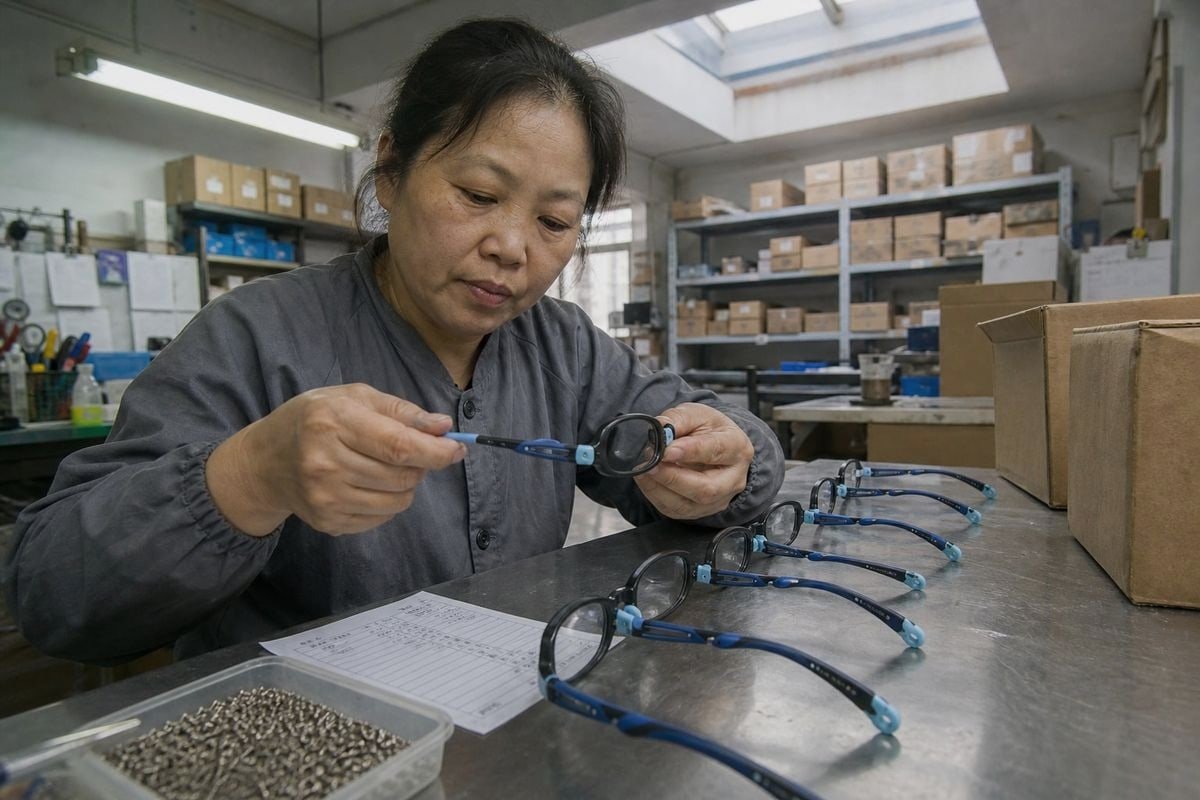
Using ANSI Z80.5 to inspect kids optical frames sounds simple until a container arrives with loose hinges ISO 8624 1. On our Taizhou production line, we see why buyers get burned.
Utilisez la norme ANSI Z80.5 comme cadre de vérification : confirmez que la monture est une monture ophtalmique de lunettes de vue, puis testez les dimensions, la résistance des charnières, la déformation du pont, la rétention des verres, la résistance à la corrosion et le dégagement de nickel. Associez-la à la conformité ISO 12870 et aux contrôles de sécurité spécifiques aux enfants avant d'approuver des montures optiques pour enfants.
That short answer needs unpacking. Below, I walk through how to turn the standard into a practical QC checklist, which tests to demand, and which documents to keep.
Comment puis-je vérifier si les montures optiques pour enfants de mon fournisseur chinois répondent réellement aux exigences ANSI Z80.5 ?
A buyer from Australia once emailed me a supplier's quote that simply said "ANSI Z80.5 compliant." No test list, no lab name, no sample size. That single line told me almost nothing — and I build children's frames for a living.
Vérifier la conformité en trois étapes : confirmer que la catégorie de monture correspond à la portée de Z80.5 (montures de lunettes de vue de rue), demander les tests exacts effectués avec les méthodes nommées et les tailles d'échantillons, et vérifier si le fournisseur a réellement testé selon ANSI Z80.5 ou ses remplacements ISO (ISO 7998, 8624, 12870).
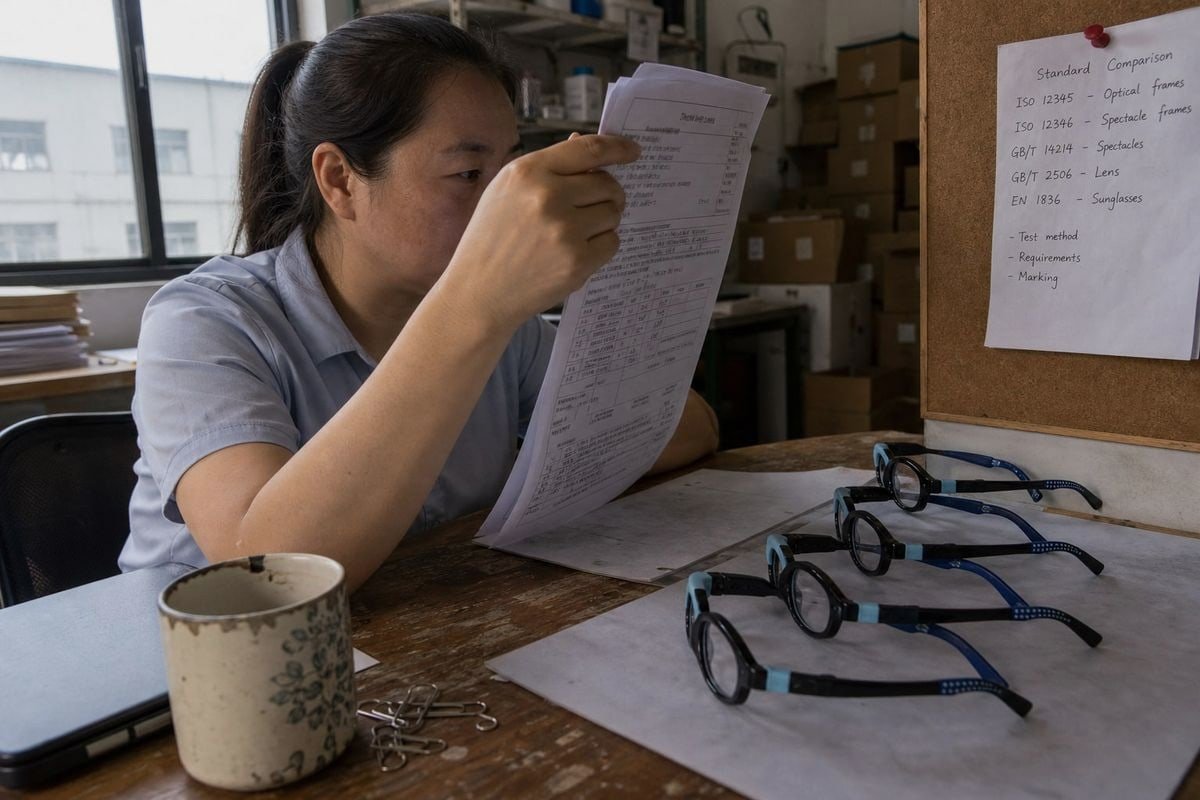
The first thing to understand is what ANSI Z80.5 is and what it is not. It is the American National Standard for ophthalmic frames intended for street wear with prescription lenses. It excludes occupational eyewear, nonprescription sunglasses, fashion eyewear, and sport frames. It is also not a child-safety certification. In our 15 years of exporting kids' eyewear, the most common confusion we see is buyers treating Z80.5 as proof that a frame is safe for children. It is not that. It is a frame performance standard.
There is a second complication. The ANSI Z80.5 frame standard has been withdrawn and replaced in the current standards landscape by the ISO set: ISO 7998 2, ISO 8624, and ISO 12870 3. Many labs, buyers, and factories still say "ANSI Z80.5" out of habit. So when your supplier claims compliance, you need to know which version of reality they mean.
A quick scope check before anything else
Ask your supplier these questions before you look at a single test report:
| Question à poser | Pourquoi c'est important |
|---|---|
| Is this frame designed for prescription lenses? | Z80.5 only covers ophthalmic street-wear frames |
| Which standard did you actually test to? | Suppliers may reference the withdrawn ANSI standard, ISO 12870, or China's GB/T 14214 4 |
| Which lab ran the tests, and when? | Old or in-house reports may not reflect current production |
| What sample size was tested? | One golden sample proves little about a 10,000-piece order |
The regional mapping matters too. Chinese factories often test to GB/T 14214, the Chinese national standard for spectacle frames. Europe uses EN ISO 12870. The USA historically used ANSI Z80.5. "Tested in China" does not automatically mean "tested to the standard your market expects." When we prepare frames for US-bound customers, we translate their Z80.5 request into current test methods and confirm the target in writing before sampling.
Quels tests spécifiques ANSI Z80.5 devrais-je demander avant d'approuver une commande en gros de montures optiques pour enfants ?
Every trade-off in children's eyewear design shows up in testing. Our engineers weigh flexibility against lens retention constantly — a TR90 frame with TPEE temples bends beautifully, but the lens groove must still grip under heat and stress. Testing is where those design decisions get proven or exposed.
Request these tests by name in your purchase order: dimensional tolerance, hinge endurance, bridge deformation, lens retention, thermal stability, perspiration and corrosion resistance, ignition resistance, optical radiation resistance, and nickel release for metal parts. Never accept a generic "compliant" statement without a named test list.
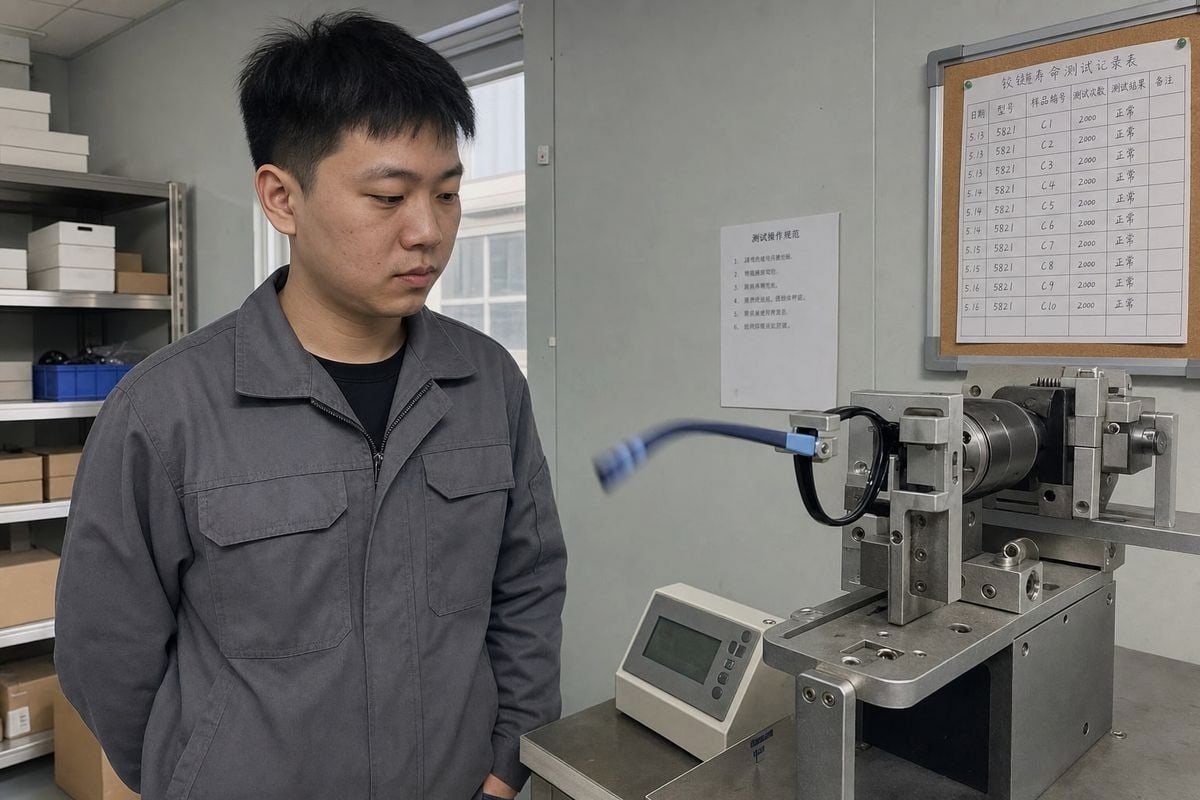
For kids' frames, some tests matter far more than others. Children drop their glasses, sit on them, chew the temple tips, and sweat into the finish all summer. Your test priorities should reflect that reality. Here is how I break the tests into four categories, ranked by real-world importance for children's eyewear safety.
The four test categories that matter
| Catégorie | Key tests | Pourquoi c'est important pour les enfants |
|---|---|---|
| Design & dimensions | Temple length, bridge width, lens opening size, symmetry | A child's small nose bridge and short temples leave no room for tolerance drift |
| Mechanical durability | Hinge endurance, bridge deformation, lens retention | Kids flex frames hundreds of times a day; hinges fail first |
| Environmental resistance | Thermal stability, perspiration, corrosion resistance | Sweat, heat, and cleaning chemicals attack coatings during long daily wear |
| Material safety & finish | Nickel release, ignition resistance, biocompatibility 5 | Prolonged skin contact demands non-toxic materials and controlled allergen release |
The 2010 update to the standard put real weight on material safety. New ophthalmic frame materials must be evaluated for biocompatibility before use, and materials with allergenic, carcinogenic, mutagenic, or reproductive-toxicity concerns need scrutiny. For children's frames this is not paperwork theater. That is why we work in TPEE and TR90 — flexible, lightweight, environmentally friendly materials — rather than cheap unknown blends. When a buyer sends us a competitor's low-cost sample, the material declaration is usually the first thing missing.
Turning tests into buyer questions
Convert the lab language into direct supplier questions. Has the hinge passed endurance cycling? Does the frame retain lenses under heat and mechanical stress? Does the plating survive perspiration and corrosion exposure? Is nickel release controlled on any metal components? A supplier who can answer with specific methods and results is a supplier worth sampling. One who answers "yes, all compliant" without detail is asking you to carry the risk. And for very young children, add impact resistance testing and consider toy safety standards like EN71 or ASTM F963 if the product could be perceived as a toy.
Puis-je me fier aux rapports de test de mon fournisseur, ou dois-je obtenir une vérification indépendante ANSI Z80.5 ?
Years ago, a European importer showed me a factory self-test report from another vendor. The report looked professional. Then the shipment arrived with plating that corroded within weeks. That lesson shaped how our own factory now handles documentation: we expect buyers to verify us, and we make it easy.
Traitez les auto-déclarations des fournisseurs comme un point de départ, pas comme une preuve. Commandez toujours une vérification par un tiers pour la première commande et après tout changement de matériau ou de processus. Des laboratoires indépendants effectuent les tests réels de dimensions, d'endurance, de corrosion et de libération de nickel sans la pression commerciale à laquelle est confronté le laboratoire interne d'une usine.
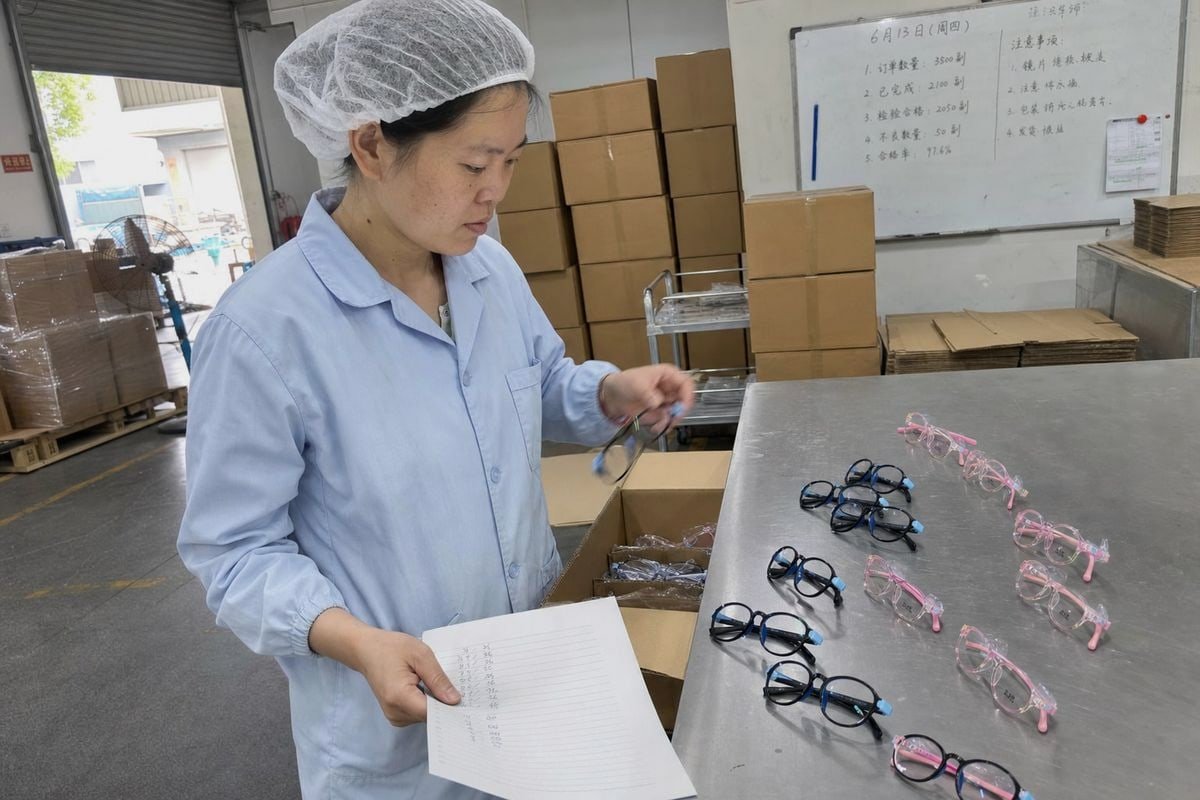
I say this as someone who runs a 5S-managed workshop with about 120 workers: even honest factories have blind spots. In-house quality control procedures catch production drift, but they cannot replace independent verification for three reasons. First, self-testing has an obvious conflict of interest. Second, factory equipment may not be calibrated to lab standards. Third, a self-report rarely states sample size, test method version, or failure criteria — the details that make a report meaningful.
Un flux de travail de vérification pratique
Here is the workflow I recommend to buyers, and the one our own export customers typically follow:
- Confirm the declared standard and product category in writing. Z80.5 or ISO 12870 compliance must be named, not implied.
- Compare the physical sample to your approved tech pack — dimensions, construction, hinge action, finish.
- Send samples from the pre-production run to an accredited third-party lab. Prioritize endurance, corrosion, thermal stability, lens retention, and nickel release based on your frame material.
- Conduct a pre-shipment inspection on the production lot for workmanship, finish consistency, and common eyewear defects like misaligned temples, rough edges, and loose screws.
- Hold any nonconforming lot until corrective action is documented.
A supplier factory audit adds another layer. Visiting the factory — or hiring an inspection company to do it — tells you whether the quality system behind the test report actually exists. When buyers visit us in Taizhou, I walk them through incoming material checks, in-process inspection points, and final QC. A factory that resists this visibility is telling you something. Also verify any eco-material claims: bio-acetate or recycled plastic statements need documentation, not just marketing copy.
Quels documents d'inspection ANSI Z80.5 dois-je conserver pour protéger ma marque de la responsabilité?
The hardest conversation I ever had with a buyer was after a retailer requested a full compliance file on short notice. The buyer had test reports scattered across old email threads. Since then, we prepare document packages for customers proactively, because liability protection is really a filing discipline.
Conservez six types de documents : rapports de laboratoire tiers nommant chaque test, déclarations de matériaux avec preuves de biocompatibilité, la nomenclature, les spécifications de placage et de revêtement, le plan de contrôle qualité de l'usine et les enregistrements d'inspection au niveau du lot avec codes de traçabilité. Conservez-les pendant toute la durée de vie du produit sur le marché plus votre période de conservation légale.

Documentation is your defense if a product question ever becomes a product claim. For children's products, regulators and retailers expect you to show due diligence, not just good intentions. The file proves you specified requirements, verified them independently, and monitored production over time.
The compliance file, document by document
| Document | Ce qu'il doit montrer | When to obtain it |
|---|---|---|
| Third-party lab report | Named tests, methods, sample size, pass/fail results | Before first bulk order; after any change |
| Déclaration des matériaux | Ophthalmic frame materials identified; non-toxic materials confirmed; allergen and toxicity screening | At sampling stage |
| Liste des matériaux | Every component and its source, including screws and temple tips | Before production approval |
| Plating/coating specs | Coating type, thickness, corrosion performance | With the material declaration |
| Factory QC plan | Inspection points tied to the frame tests above | During supplier qualification |
| Registres d'inspection des lots | Lot numbers, dates, inspection results, approved-sample reference | Every shipment |
Traceability deserves special attention. Each batch of kids optical frames should carry a lot code that links back to production dates, material lots, and inspection records. If a recall ever happens, that code determines whether you pull one batch or your entire inventory. Proper labeling also supports country-specific import requirements across different destination markets.
One more practical point: keep the approved golden sample physically, alongside the paperwork. During pre-shipment inspection, the inspector compares production against that sample. Without it, "matches the approved sample" is an opinion, not a check. On our side, we hold sealed reference samples for every OEM/ODM project — custom colors, logos, and packaging included — so both parties always have the same benchmark.
Conclusion
ANSI Z80.5 gives buyers a proven inspection framework for kids optical frames — but only when paired with ISO 12870, named tests, independent labs, and child-safety checks. Specify, verify, document, repeat.
Notes de bas de page
1. Outlines a measuring system and related vocabulary for spectacle frames. ↩︎
2. Defines vocabulary and equivalent terms for spectacle frames. ↩︎
3. Specifies requirements and test methods for ophthalmic spectacle frames. ↩︎
4. Describes the Chinese national standard for spectacle frames. ↩︎
5. Defines the concept of biocompatibility for materials in medical devices. ↩︎
Plus d'articles que vous pourriez aimer

Vous recherchez un partenaire fiable en lunetterie pour enfants ?
Explorez plus de 800 styles prêts et un support OEM/ODM complet adapté à votre marque.
Contactez-nous English
  Español de México
  Deutsch
  Français
  日本語
日本語  العربية
  Português do Brasil