How to Set Shipping Times for Kids Sunglasses Pre-Orders Without Overstocking?
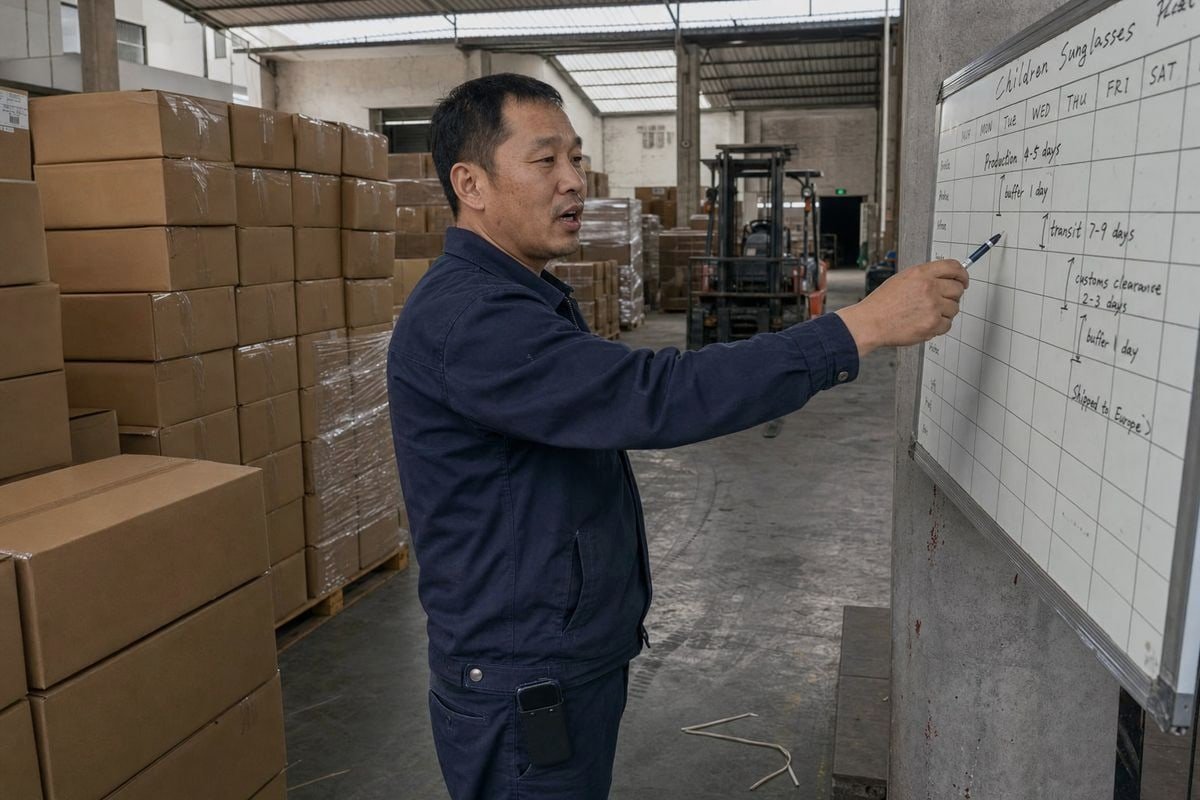
Setting shipping times for kids sunglasses pre-orders trips up many new brands. I have watched buyers on our production line promise dates their supply chain could never hit — and then drown in refund requests, angry parents, and leftover stock. The fix is simpler than most people think: build the promise from confirmed supply, not from marketing hope.
Set shipping times for kids sunglasses pre-orders by adding supplier production time, transit, customs, QC, and pick-pack time, then adding a 10–20% buffer. Cap pre-order quantity to your confirmed inbound units so you never oversell — and never overstock beyond real demand.
That is the short version. Below, I break down the lead-time math, the MOQ realities, the inventory control tactics, and the styles-vs-molds decision that determines how predictable your dates really are.
How can I set realistic pre-order shipping timelines when working with an overseas eyewear factory?
A buyer from Australia once asked us to confirm a ship date before we had even confirmed her lens colors. In our Taizhou factory, we always tell clients: lock the specification first, then talk dates. Lead time estimation only works when every variable is fixed.
Build your pre-order timeline backward from a confirmed factory ship date: add production cycle time, ocean or air transit, customs clearance, receiving and inspection, and pick-pack handling. Then add a 10–20% buffer before publishing any date to customers.

The biggest mistake I see is confusing "shipping time" with transit time. For a pre-order, the customer-facing shipping window combines your entire fulfillment timeline: when the goods leave our factory, how long they sit on the water, how long customs takes, and how fast your warehouse turns them around. Platforms like Shopify and Google Merchant Center 1 separate handling time from delivery time for exactly this reason, and your pre-order page should reflect that same logic.
The lead-time math, step by step
Here is the simple formula we walk buyers through before every pre-order launch:
| Étape | Typical range | Notes |
|---|---|---|
| Production cycle | 25–45 days | Depends on order size, lens type, and customization |
| Ocean transit | 20–35 jours | Varies by destination port and season |
| Air freight (alternative) | 5–10 jours | Faster, but raises landed cost |
| Dédouanement | 2–7 jours | Buffer for inspections on children's products |
| Receiving + QC | 2–5 jours | Count, inspect, label if needed |
| Pick and pack | 1–3 business days | Your handling promise to the customer |
| Safety buffer | 10–20% of total | Protects against slippage |
Add these up, and a realistic ocean-freight pre-order often lands at 60–90 days from purchase order to customer doorstep. That is why we push clients to phrase the promise conservatively: "Ships 3–5 business days after inventory arrives" or "Expected to ship the week of [date]." Use business days, not calendar days, because carriers, customs offices, and warehouses rarely work weekends.
One more point from experience: children's eyewear can attract extra scrutiny at customs because it is a child-safety product category 2. We ship UV400 and polarized lens orders 3 with full documentation to keep clearance smooth, but you should still budget buffer days for it. A specific, slightly longer date beats an optimistic date you miss.
What MOQ and production lead times should I expect for kids sunglasses before I promise delivery dates to customers?
The trade-off I weigh with almost every new brand is this: a smaller minimum order quantity 4 lowers your overstock risk, but per-unit costs rise and some customization options close. Knowing where those lines sit lets you promise delivery dates with confidence.
Expect MOQs of roughly 300–1,200 pairs per style for existing designs with custom colors or logos, and higher for custom molds. Production cycles typically run 25–45 days after sample approval — so never promise customer delivery dates before your factory confirms its production slot.
MOQ and lead time are linked more tightly than most buyers realize. A factory schedules production in lots. If your order is below the material-purchasing threshold for a given TPEE or TR90 frame color, the job may wait until it can be batched with another run. That waiting time is invisible on a quote sheet but very visible when your pre-order customers start emailing.
What drives the MOQ for kids sunglasses
- Material batching. Flexible materials like TPEE 5 are compounded in minimum batch sizes. Custom frame colors need enough volume to justify a dedicated batch.
- Lens type. Standard UV400 smoke lenses 6 ship fast. Polarized film, mirrored gradient lenses — like the orange-to-yellow shield lenses on sport wraparound styles — may have component-level lead times of their own.
- Customization depth. Logo printing on an existing style adds days. Custom packaging adds more. A new mold adds weeks.
Typical lead-time scenarios
| Type de commande | Typical MOQ | Production cycle | Date predictability |
|---|---|---|---|
| Existing style, stock colors | Lower end | 25–35 days | Élevé |
| Existing style, custom colors + logo | Modéré | 30–40 days | High to medium |
| Existing style, custom lens (polarized/mirror) | Modéré | 35–45 days | Medium |
| Fully custom mold | Highest | 75–120 days incl. tooling | Low at first run |
In our 15 years of making children's eyewear, the buyers who hit their pre-order dates are the ones who order the sample, approve it quickly, and confirm the purchase order before opening pre-orders. Sample approval is the trigger for the production cycle — every day of delayed feedback on your side pushes the customer ship date back by a day on the other end. Build your customer communication strategy around that reality: only publish dates that trace back to a confirmed factory schedule.
How do I avoid overstocking while still meeting seasonal demand for children's sunglasses pre-orders?
A European kids' brand we supply once tripled its summer order because pre-orders "felt strong" — then sat on inventory through winter. That lesson shaped how we now advise every client on seasonal demand planning: let confirmed data, not enthusiasm, set the quantity.
Cap your pre-order at the number of units in your confirmed inbound lot, use live pre-order sales as a demand forecasting signal for the bulk order, and hold modest safety stock only for proven best-sellers. Close pre-orders when the lot is fully allocated.
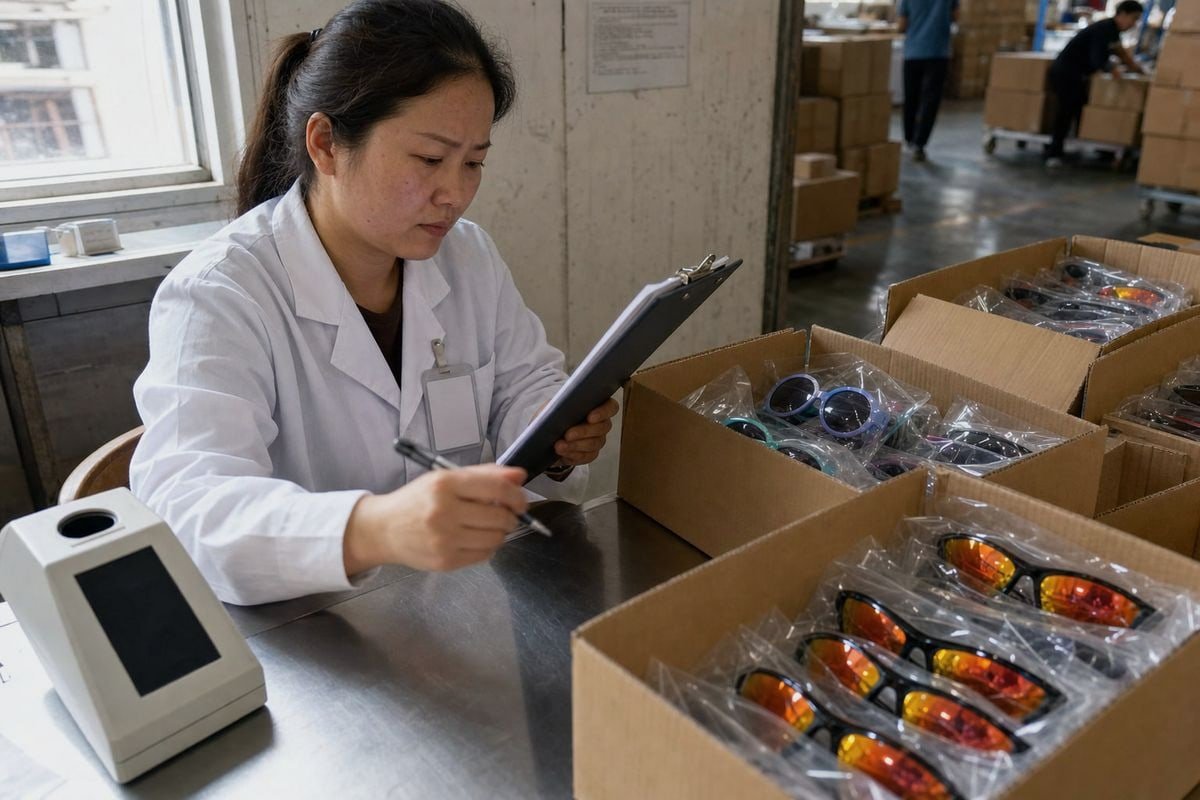
Overstocking and overselling are two sides of the same failure: quantities disconnected from supply. The pre-order model actually protects you here — if you use it correctly. Your pre-order window becomes a live demand signal. Which colors sell first? The periwinkle-and-mint round frames or the black sport shields? That data should finalize your bulk order quantities per variant before production locks, which is a far better forecast than any spreadsheet guess.
Practical inventory controls that prevent overstock
- Set a hard pre-order cap per SKU. Sync pre-order inventory with your order management system in real time so the store stops selling when the inbound lot is spoken for.
- Tie purchase-order size to sell-through, not to price breaks. A better unit price on double the volume is not a deal if half of it winters in your warehouse.
- Use variant-level allocation. Kids sunglasses sell unevenly by color. Allocate pre-order caps per color and size, not one pooled number.
- Plan a fast reorder trigger instead of a fat first order. With a factory partner that keeps your specifications on file, a repeat run moves faster than the first — this is your just-in-time inventory lever 7.
- Hold safety stock levels only where velocity is proven. New styles get zero safety stock. Established best-sellers earn a small buffer sized to lead-time variability.
Seasonality raises the stakes. Parents buy children's sunglasses for summer holidays, camps, and school terms. Miss the window and demand simply evaporates until next year. That is why we encourage buyers to confirm summer production slots in late autumn — the pre-order launches earlier, the demand signal arrives earlier, and the bulk order lands before the season peaks. Good supply chain management here is mostly calendar discipline.
Should I choose from existing styles or custom molds if I want faster, more predictable shipping for my pre-order launch?
When a Japanese baby-products buyer visited our 5S-managed workshop last year, she came intending to commission a custom mold. She left having chosen three of our roughly 800 existing styles instead — because her launch date mattered more than a unique silhouette.
Choose existing styles for a faster, more predictable pre-order launch: production runs 25–40 days with proven tooling and no mold investment. Custom molds add tooling, sampling, and validation time — often 75–120 days — making first-run ship dates far harder to guarantee.
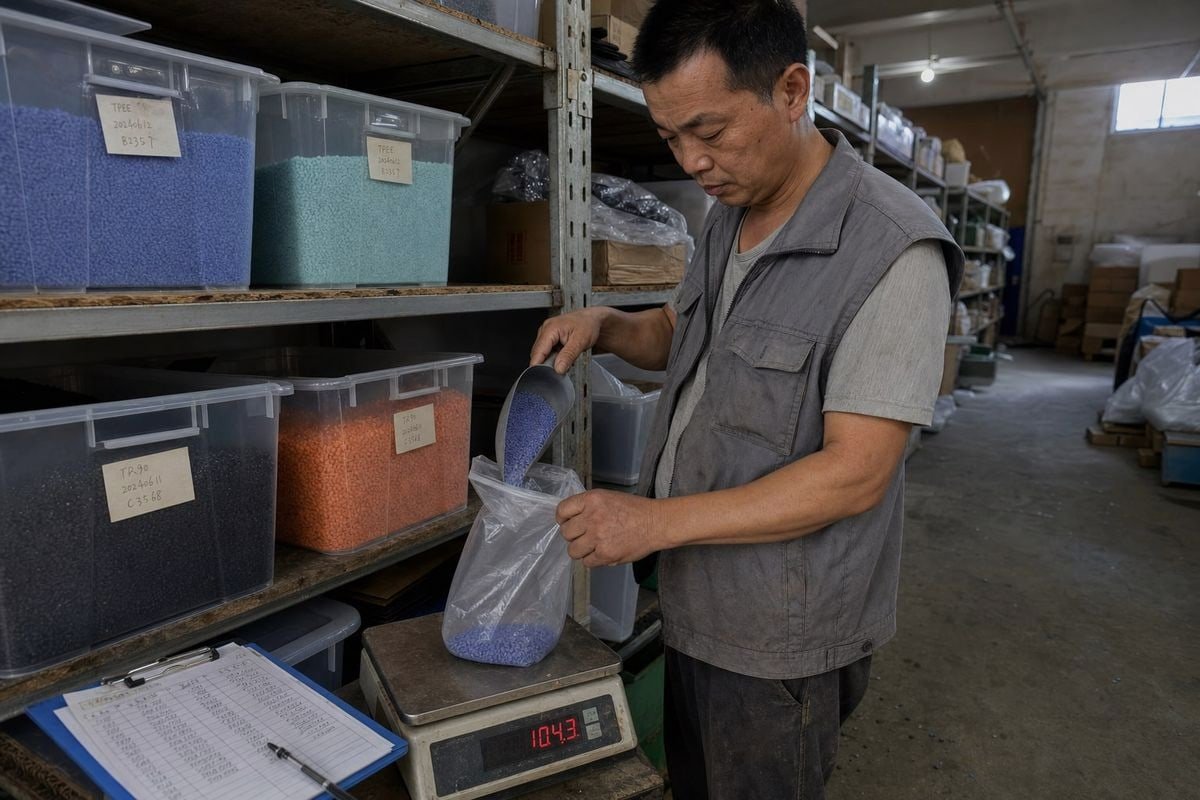
For a pre-order launch, predictability is worth more than uniqueness. Every extra variable between purchase order and delivery widens your shipping window and forces a bigger buffer. Existing styles remove the biggest variables: the mold already works, the fit is validated on children's faces, and the flexible TPEE and TR90 materials have known cycle times on our machines.
Side-by-side comparison
| Facteur | Existing styles | Custom mold |
|---|---|---|
| Total time to first shipment | 25–40 jours | 75–120 days |
| Mold investment | Aucun | Significant upfront cost |
| MOQ pressure | Lower | Higher, to amortize tooling |
| Ship-date predictability | Élevé | Low on the first run |
| Différenciation | Colors, lenses, logo, packaging | Fully unique shape |
| Overstock risk | Lower — test with small lots | Higher — big lots to justify the mold |
The middle path is where most successful pre-order launches live. You take an existing frame — say, a round two-tone kids frame or a wraparound sport shield — and customize the colors, add a mirrored or polarized lens, print your logo, and design retail-ready packaging. To a parent, that is your product. To your fulfillment timeline, it behaves like a proven, repeatable production run.
There is also a strategic sequencing argument. Launch season one on existing styles, learn which shapes and colors your market actually buys, then invest in a custom mold for season two with real sales data behind the decision. That order of operations protects your pre-order dates now and de-risks your mold investment later. Custom development is valuable — we build custom projects constantly — but it belongs after your demand signal exists, not before it.
Conclusion
Base pre-order shipping times on confirmed supply, add a buffer, cap quantities to inbound stock, and start with existing styles. Predictable dates build trust — and prevent overstock entirely.
Notes de bas de page
1. Official documentation explains handling time vs delivery time policies referenced in the article. ↩︎
2. CPSC regulates child-safety product categories, relevant to customs scrutiny mentioned in the text. ↩︎
3. Background explanation of polarization technology used in the lens types discussed. ↩︎
4. Alibaba is a leading sourcing platform where MOQ practices for manufacturers are widely documented. ↩︎
5. Explains the thermoplastic elastomer material referenced as a batching constraint. ↩︎
6. CDC provides authoritative guidance on UV protection standards relevant to children’s sunglasses lenses. ↩︎
7. Provides background on the just-in-time inventory concept applied to reorder strategy. ↩︎
Plus d'articles que vous pourriez aimer

1 août 2026
L'usine doit-elle gérer l'emballage et l'étiquetage des lunettes pour enfants, ou utiliser un fournisseur désigné ?

1 août 2026
Entrepôt propre vs. exécution directe par le fournisseur : lequel réduit les coûts de retour pour les marques de lunettes pour enfants ?

1 août 2026
Entrepôt direct au port ou staging outre-mer : lequel permet d'économiser le plus sur l'expédition des lunettes pour enfants ?
Vous recherchez un partenaire fiable en lunetterie pour enfants ?
Explorez plus de 800 styles prêts et un support OEM/ODM complet adapté à votre marque.
Contactez-nous English
  Español de México
  Deutsch
  Français
  日本語
日本語  العربية
  Português do Brasil