How to Plan Small-Batch Restocking for Kids Sunglasses with Per-Unit Ordering?

Small-batch restocking for kids sunglasses is a real headache for many buyers I talk to from our Taizhou factory floor. Overstock kills cash flow. Stockouts kill sales. Neither is acceptable.
Plan small-batch restocking for kids sunglasses by forecasting demand per SKU, calculating a reorder point from lead time plus safety stock, then ordering the smallest quantity your supplier allows — often 20–100 units per style from existing catalog molds — and reviewing sell-through after every cycle.
That is the short answer. Below, I will walk through each part of the system. We will cover per-unit ordering, MOQ options, style selection, and quality consistency in smaller batches.
How can I use per-unit ordering to restock kids sunglasses without overcommitting to inventory?
Last spring, a buyer from Australia asked me to ship 60 pairs of one flexible TPEE style — not 600. We did it, and her cash cycle improved within two months.
Per-unit ordering means restocking at the lowest viable unit count per SKU, usually from a supplier's existing catalog styles. You forecast weekly sell-through, set a reorder point, and replenish in small increments instead of buying a full season's stock in one purchase.
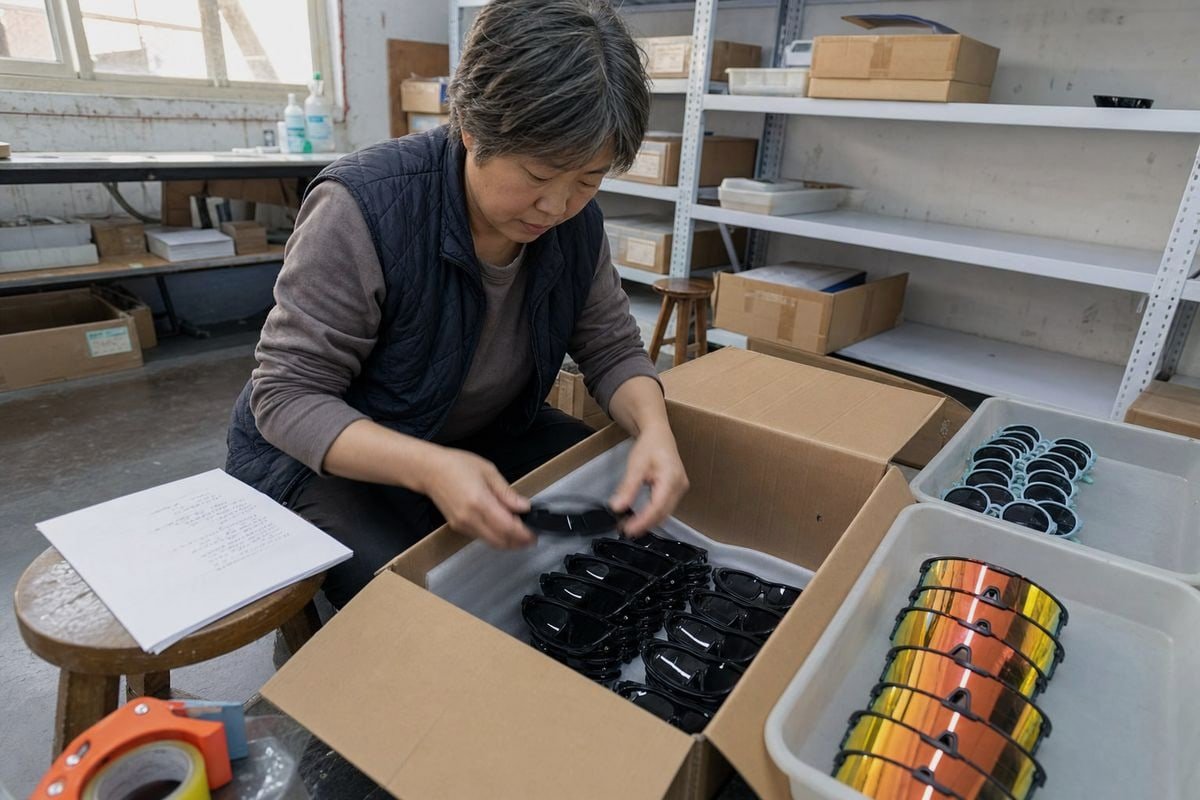
Let me be honest about what per-unit ordering really means. It rarely means buying literally one pair at a time. In practice, it means a test-and-replenish loop. You order the smallest batch your supplier accepts, watch how fast it sells, and reorder before you run out.
The core replenishment logic
The math is simple. Use this reorder point calculation 1: average daily demand × lead time + safety stock. If a round two-tone kids frame sells 3 pairs a day and our production plus shipping takes 30 days, your reorder point is 90 pairs plus a buffer. When stock hits that level, you place the next small order.
Safety stock levels should differ by SKU. A fast-moving black wraparound needs a bigger buffer than a novelty neon shield lens. Do not treat all kids sunglasses as one demand pool. That is the single most common mistake I see, and it wrecks your inventory turnover rate.
A simple per-SKU replenishment plan
| SKU type | Example style | Monthly sales | Safety stock | Reorder quantity |
|---|---|---|---|---|
| Fast-moving basic | Black wraparound sport shield | 90 pairs | 30 pairs | 100 pairs |
| Seasonal color | Mirrored orange gradient lens | 40 pairs | 15 pairs | 40–60 pairs |
| Playful novelty | Periwinkle-mint round frame | 25 pairs | 10 pairs | 20–30 pairs |
Each row gets its own reorder point. Each row gets its own quantity. This is how per-unit thinking beats bulk guessing. Small batches raise unit cost 2 slightly, yes. But they cut the risk of holding a full season of a color that fizzles. For trend-driven, SKU-fragmented kids eyewear, that trade is usually worth it.
What MOQ options can I expect from a manufacturer for small-batch children's sunglasses restocking?
MOQ is the question I answer most often in first calls. Buyers assume every factory demands thousands of pieces. With around 800 existing styles in our catalog, we can go far lower than that.
Expect layered MOQs: ready-stock catalog styles from roughly 20 pieces per color, logo-only customization from as few as 5–100 pieces depending on the method, custom colorways around 300 pieces per model, and fully custom OEM molds at 500 pieces or more.
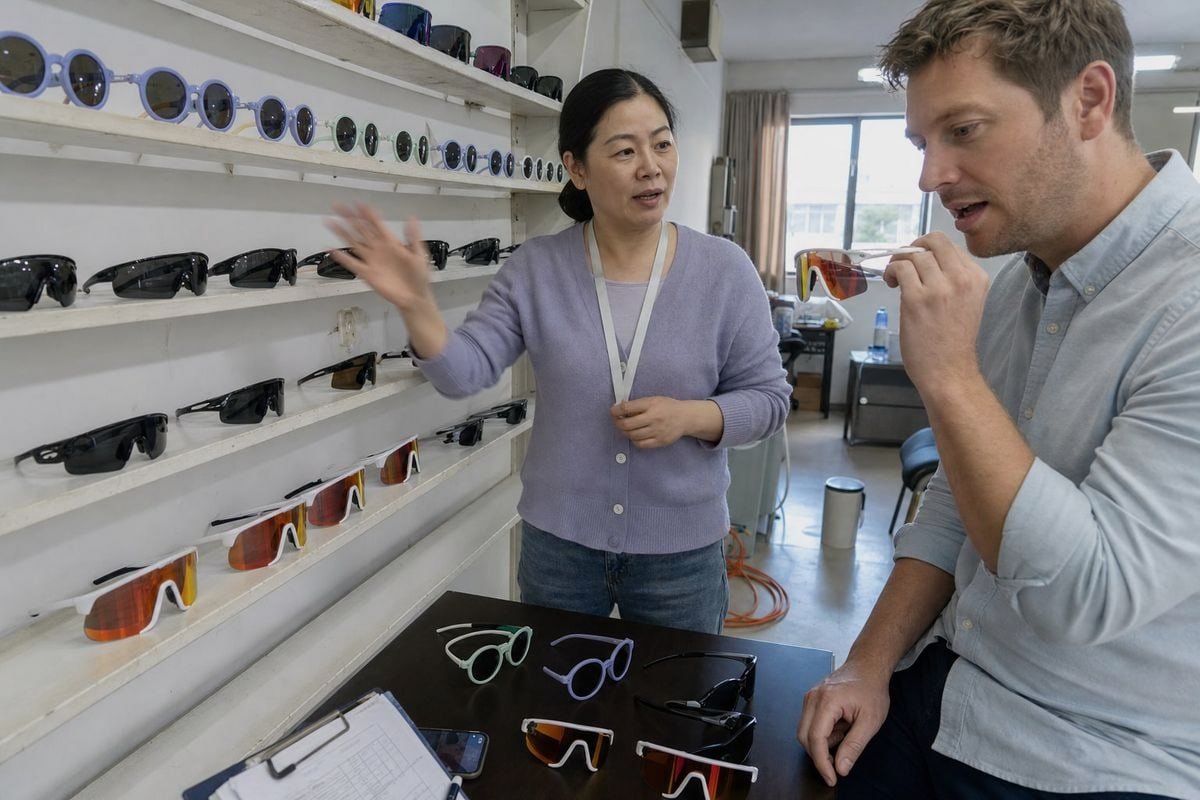
The word MOQ hides three separate numbers, and you need all three before you can plan. There is the total order MOQ, the per-model MOQ, and the per-color MOQ. Some suppliers also add a packaging MOQ for custom boxes or pouches. Always ask which level the minimum applies to. A "100-piece MOQ" that turns out to be 100 pieces per color is a very different commitment from 100 pieces mixed across styles.
Typical MOQ tiers for kids sunglasses
| Type de commande | Typical MOQ | Unit cost | Idéal pour |
|---|---|---|---|
| Ready stock, mix-and-match | 20 pcs per color/model or less | Highest | Fast restocks, market tests |
| Logo-only customization | 5–100 pcs per style | Élevé | Early branding on catalog frames |
| Custom colorway on existing mold | ~300 pcs per model | Medium | Proven styles scaling up |
| Full OEM/ODM new mold | 500+ pcs per style | Lowest | Established, validated designs |
Negotiating the true minimum
A low minimum order quantity 3 usually costs more per unit. That is fair. The factory still sets up the line, pulls materials, and runs QC. But you can soften the trade-off. Ask whether mixed styles can combine to hit one contract MOQ. Ask whether packaging has a separate minimum. Ask about pilot runs before scale-up. In our experience exporting to 20+ countries, buyers who split a 500-piece order across five catalog styles almost always outperform buyers who bet 500 pieces on one unproven design. Compare fixed costs 4, variable costs, and months of supply — never just the sticker price. Working with wholesale eyewear distributors that allow open-stock or broken-case ordering gives you the same flexibility on the trading side.
How do I choose which styles from an existing catalog to restock quickly for my kids eyewear brand?
One trade-off we weigh with every buyer is depth versus breadth. Restock deep on three proven frames, or spread thin across ten? Our catalog data usually points the same way: proven basics first.
Choose restock styles by ranking per-SKU turnover rates, prioritizing proven basics in staple colors, adding one or two trending "pop" colorways as tests, and matching each pick to age-specific sizing tiers and upcoming seasonal demand windows.
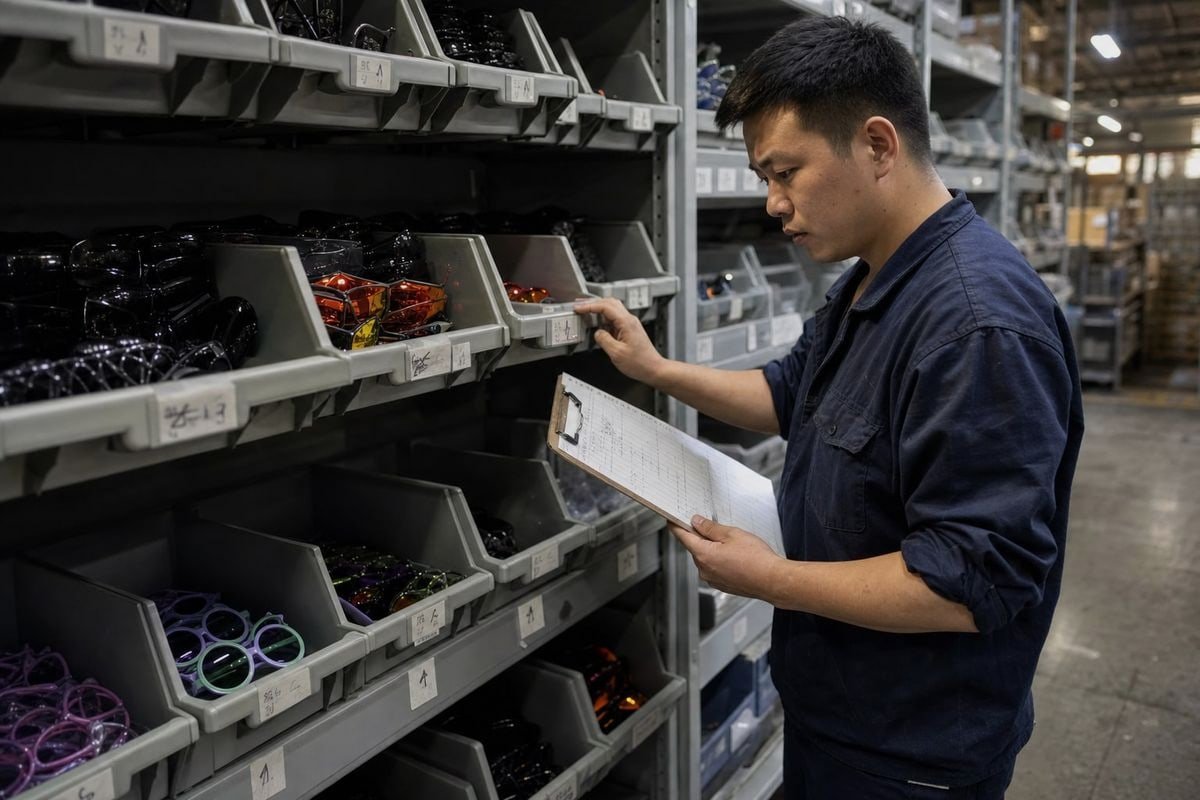
Style selection should be data first, taste second. Pull your last two or three months of per-SKU sales. Rank every frame by sell-through velocity and by margin. Then apply SKU rationalization 5: cut the bottom performers, hold the middle, and go deeper on the top. This keeps your inventory turnover rate healthy and frees cash for tests.
A practical selection filter
- Rank SKUs by units sold per week, not by total revenue.
- Check age-tier fit — 0–3, 3–8, and 8+ have different frame sizes and different return rates.
- Confirm the style is still in the supplier's active catalog with molds ready.
- Add one trend test — mini-me styles that mirror adult fashion sell well to coordinated-family shoppers.
- Time the order 4–6 weeks before Spring Break or summer peaks.
Seasonal demand forecasting matters more for kids eyewear than for adult frames. Children's purchases cluster around holidays, beach trips, and local events like youth sports tournaments. Some of our sharpest buyers even restock specific quantities around regional festivals rather than broad seasonal averages.
Material also guides selection. Flexible montures TR90 6 with TPEE temples survive shipping, playgrounds, and backpack bottoms far better than rigid cheap plastic. Lower damage rates mean fewer returns eating your small-batch margin. And because catalog styles need no mold investment, you can restock a mirrored sport shield in a new gradient lens within weeks, not months. That speed is exactly what makes just-in-time fulfillment realistic for a small kids eyewear brand.
Can I maintain consistent quality and packaging when restocking in smaller batches?
A lesson we learned early in our 15 years of eyewear production: small orders fail buyers not on style, but on inconsistency. So we built our 5S-managed workshop process to treat a 50-piece reorder like a 5,000-piece one.
Yes — if your supplier keeps documented color standards, retained samples, stable material sourcing, and the same QC checkpoints for every batch size. Confirm UV400 test reports, safety certifications, and packaging specifications in writing before your first reorder.
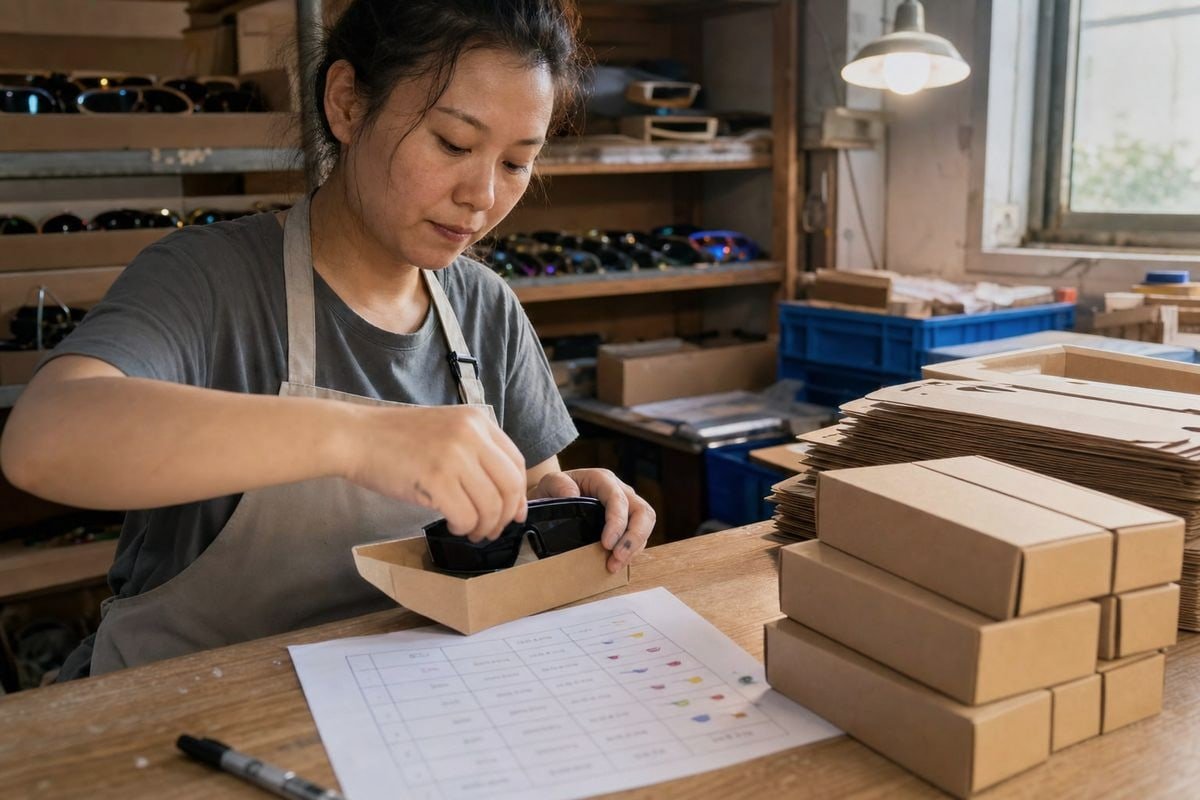
Consistency across batches comes down to controlled inputs and documented standards. If the factory uses the same TPEE and TR90 material grades, the same lens supplier, and the same approved color masters every run, your third reorder will match your first. If they source opportunistically to cut costs on small runs, it will not. Ask directly how retained samples are stored and referenced.
What to lock down before reordering
| Consistency factor | What to request | Why it matters |
|---|---|---|
| Lens safety | UV400 protection standards test report per batch | Children's eyes need verified UV filtering, every run |
| Compliance | CE / FDA documentation and safety labeling | Required for kids eyewear imports in most markets |
| Color accuracy | Approved color masters and retained samples | Prevents drift between batch one and batch five |
| Packaging | Written spec sheet: box, pouch, insert, barcode | Retail-ready presentation must not change mid-season |
| Inspection | Pre-shipment QC report with photos | Catches defects before final payment |
Packaging in small quantities
Packaging often has its own minimums because printed boxes run on separate presses. Two workarounds exist. First, order packaging in one larger run and let the factory hold it for future restocks — we do this routinely for repeat buyers. Second, use standard packaging with a branded sticker or insert until volumes justify full custom boxes. Either way, lead time optimization 7 improves when packaging is already on the shelf, because your reorder skips the printing queue. Also confirm labeling is included in your per-unit cost audit; mandatory safety marks are not optional extras on children's products.
Conclusion
Overbuying drains cash; stockouts drain trust. Small-batch restocking with per-unit ordering — demand-based reorder points, layered MOQ awareness, data-driven style picks, and documented quality standards — solves both. Start small, measure, then scale what sells.
Notes de bas de page
1. Authoritative Wikipedia entry explaining the reorder point formula and calculation. ↩︎
2. Authoritative Wikipedia definition of unit cost in production and accounting. ↩︎
3. Describes the smallest amount of product a supplier is willing to sell to a customer. ↩︎
4. Authoritative Wikipedia entry defining fixed costs and their role in business economics. ↩︎
5. Provides details on managing individual product identification codes to optimize inventory performance. ↩︎
6. Technical overview of the high-performance thermoplastic material used in durable, flexible eyewear frames. ↩︎
7. Defines the latency between the initiation and completion of a process, critical for inventory replenishment. ↩︎
Plus d'articles que vous pourriez aimer

1 août 2026
L'usine doit-elle gérer l'emballage et l'étiquetage des lunettes pour enfants, ou utiliser un fournisseur désigné ?
1 août 2026
Entrepôt propre vs. exécution directe par le fournisseur : lequel réduit les coûts de retour pour les marques de lunettes pour enfants ?

1 août 2026
Entrepôt direct au port ou staging outre-mer : lequel permet d'économiser le plus sur l'expédition des lunettes pour enfants ?
Vous recherchez un partenaire fiable en lunetterie pour enfants ?
Explorez plus de 800 styles prêts et un support OEM/ODM complet adapté à votre marque.
Contactez-nous English
  Español de México
  Deutsch
  Français
  日本語
日本語  العربية
  Português do Brasil