How Do Scratches on Kids’ Eyewear Lenses Affect Vision and Need Replacement?
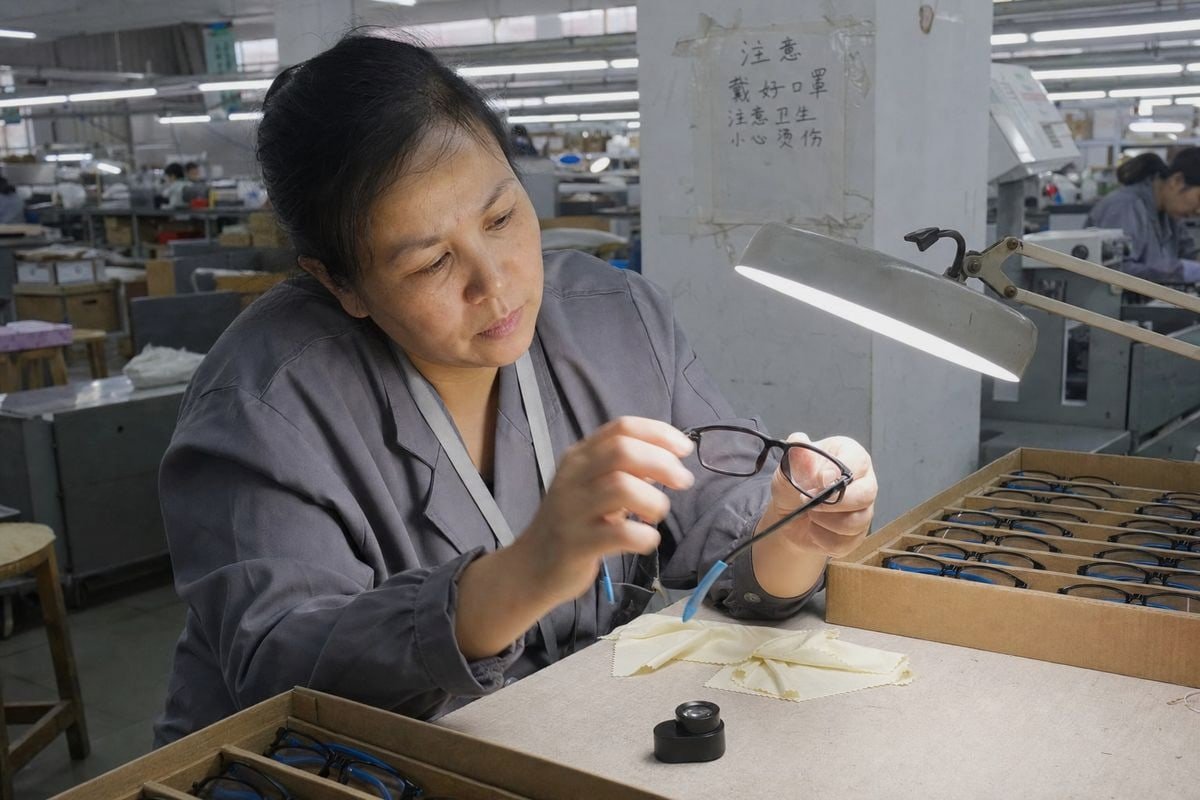
Scratches on kids’ eyewear lenses land on my inspection bench in Taizhou every week protection UV400 1. Parents shrug them off, kids stop wearing their glasses, and brands quietly lose repeat customers.
Scratches on kids’ eyewear lenses do not damage a child’s eyes, but they scatter light and cause blur, glare, and eye strain. Replace the lenses when scratches sit near the optical center, cause headaches or squinting, or interfere with reading and schoolwork.
That short answer hides real nuance. Below, I break down when scratches actually matter, which materials resist them, and when replacement beats repair.
How Do I Know If Scratched Lenses Are Actually Harming My Child's Vision?
A buyer from Australia once returned samples to us, worried that scratched demo lenses had "hurt" a tester child's eyes , leur sensibilité au contraste et leurs compétences binoculaires continuent de mûrir tout au long de l'enfance et de l'adolescence. Cette plasticité a ses avantages et ses inconvénients. Elle permet à la thérapie visuelle de faire des merveilles. Mais elle signifie aussi que le cerveau peut "apprendre" à partir d'une mauvaise information optique. Une exposition prolongée à un prisme induit peut pousser le 2. They had not — but the child's complaints were still real.
Scratched lenses cannot permanently harm a child's eyes or change their prescription. However, deep or central scratches scatter light, reducing visual acuity and contrast. Watch for squinting, head tilting, headaches, rubbing eyes, or a child refusing to wear their glasses — these signal meaningful damage.
Let me be clear about the mechanism first, because it removes a lot of parental panic. A scratch does not alter the refractive power of the whole lens. Instead, it acts like a tiny prism. It bends and scatters incoming light in irregular directions. That light scattering creates glare, halos, a "starburst" effect around lights, and reduced contrast. The eye itself stays healthy. The image quality drops.
So the real question is not "Is this dangerous?" It is "Is this interfering with clear vision?" For children, that threshold is lower than most adults assume.
Why Kids Feel Scratches More Than Adults
Children rarely say "my lens is scratched." Their visual system quietly overcompensates. The extra effort to filter out visual noise increases cognitive load and causes faster mental fatigue during reading and screen time. Over a school day, that adds up to genuine eye strain and headaches.
Children with amblyopia, strabismus 3, or strong prescriptions are hit hardest. Their visual development depends on a crisp, corrected image. A degraded signal from a scratched lens can even undermine prescribed vision therapy. And if only one lens is heavily scratched, the image disparity between the two eyes can disrupt developing depth perception 4.
Which Scratches Matter Most
Not all scratches deserve the same reaction. Depth, density, and location decide everything.
| Scratch Type | Typical Effect on Vision | Action requise |
|---|---|---|
| Light, isolated, near the edge | Barely noticeable | Monitor; clean regularly |
| Multiple fine surface scratches | Haze, reduced contrast in bright light | Watch for behavior changes |
| Scratch across the optical center | Blur, glare, distortion in direct line of sight | Replace lenses soon |
| Deep gouge in coating or lens | Constant blur, possible debris trap | Replace promptly |
One practical test I share with buyers: clean the lenses thoroughly first. If blurry vision persists after a proper clean, the scratch — not smudging — is the cause, and it is time to see a pediatric optometrist 5 or order lens replacement.
What Lens Materials and Coatings Can Help Me Reduce Scratch Damage in Kids' Eyewear?
There is a trade-off we weigh on every kids' lens spec: the safest, most impact-resistant materials are often the softest and easiest to scratch. Getting both takes deliberate engineering.
Polycarbonate lenses with a factory-applied hard coating offer the best balance for children: high impact resistance plus a scratch-resistant treatment. Adding an anti-reflective coating and UV400 protection further preserves clarity, while quality hard coats can multiply a soft lens's scratch resistance many times over.
Here is the paradox every kids' eyewear buyer should understand. Les verres en polycarbonate 6 are the industry standard for children because of their impact resistance — they will not shatter when a ball hits a face. But bare polycarbonate is inherently soft. Without treatment, it scratches faster than glass or CR-39. That is why a hard coating is not optional on kids' lenses. It is essential.
How the Common Options Compare
| Matériau des verres | Résistance aux chocs | Native Scratch Resistance | Suitability for Kids |
|---|---|---|---|
| Polycarbonate | Excellent | Low (needs hard coat) | Best all-round choice |
| Trivex | Excellent | Moderate (still needs coating) | Excellent, higher cost |
| CR-39 plastic | Modéré | Modéré | Acceptable, heavier and less safe |
| Glass | Poor (shatters) | Élevé | Not recommended for children |
Coatings That Protect Clarity
On our production line in Taizhou, we treat coatings as a system, not a menu. A hard scratch-resistant treatment forms the durability base. An anti-reflet sur la surface arrière 7 on top cuts reflections and digital glare, which matters for kids on screens. UV400 lenses protect developing eyes outdoors — a standard spec across our sunglass range.
One point brands often miss: scratches damage coatings before they damage the lens. A scratch through an anti-reflective or UV-protective layer compromises that layer's function across the damaged zone. So a "cosmetic" scratch can quietly reduce UV protection or increase glare. When we help brands spec lenses for their markets, we always pair flexible TR90 or TPEE frames with properly hard-coated polycarbonate, because a frame that survives a drop is pointless if the lens fogs with micro-scratches in three months.
When Should I Replace Scratched Lenses Instead of Trying to Repair Them?
A lesson I learned early in fifteen years of eyewear work: nobody truly "repairs" a scratched lens. I have watched well-meaning fixes turn a mild annoyance into a ruined optic.
Replace scratched lenses whenever scratches sit in the child's line of sight, cause blurry vision, glare, headaches, or school difficulties, or when the child avoids wearing the glasses. Repairs like toothpaste polishing strip coatings and distort the prescription, so meaningful scratches always warrant lens replacement.
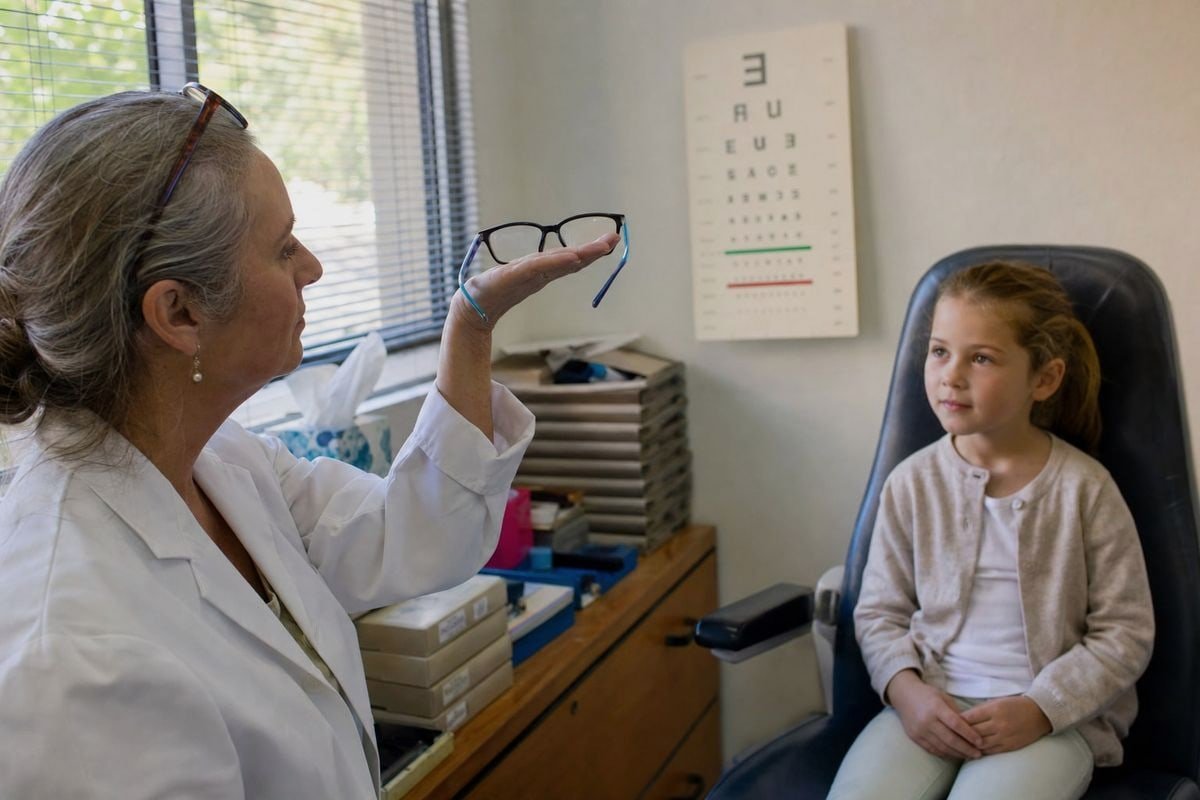
Some sources argue minor scratches are harmless, and honestly, they are often right. If a child sees clearly, reports no discomfort, and the scratch sits at the lens edge, replacement is not urgent. But I push back on treating that as a blanket rule for children. "Not dangerous" is not the same as "good enough" for a seven-year-old spending six hours a day on reading and classroom boards. Persistent visual distortion creates what I call perceptual friction — the child starts associating near work with discomfort and avoids it.
A Simple Decision Path
- Clean the lenses properly with lens cleaner and a microfiber cloth.
- Test vision: if clarity returns, the problem was grime, not scratches.
- Check location: hold the glasses up to light; central scratches matter most.
- Watch behavior for one week: squinting, sitting closer to screens, head tilting, removing glasses.
- If any symptom appears, replace the lenses; the frame usually does not need replacing.
Why DIY Repairs Backfire
Household abrasives like toothpaste or baking soda remove material unevenly. They permanently distort the optical surface and strip the anti-reflective and UV coatings entirely. Professional polishing faces the same physics: removing a scratch means removing lens material, which changes the prescription. There is one more issue few parents consider — deep gouges in polycarbonate can trap microscopic debris and bacteria, occasionally causing skin or eye irritation. Replacement is not the expensive option. It is the only real option once a scratch matters.
How Can I Choose a Manufacturing Partner That Delivers Consistently Scratch-Resistant Kids' Lenses?
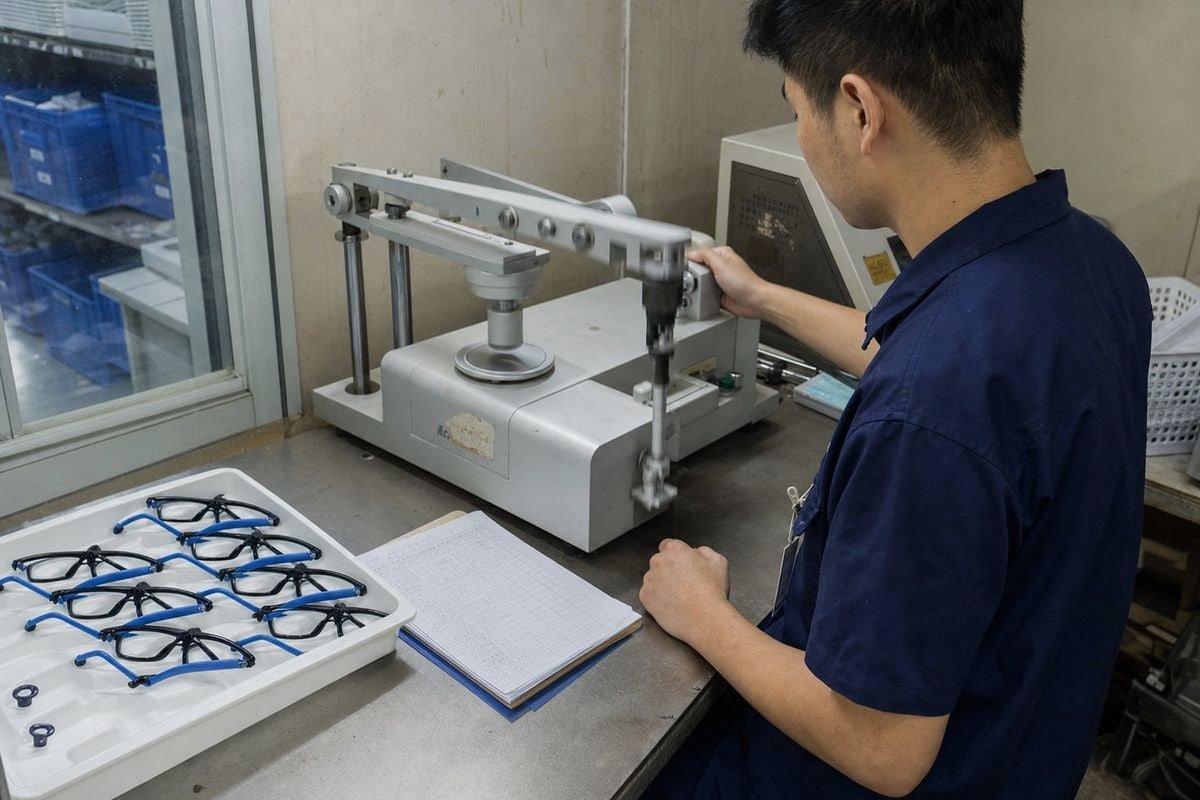
During a factory audit last year, a European buyer asked our QC team one sharp question: "How do you verify coating adhesion batch to batch?" That question separates serious suppliers from traders.
Choose a factory partner with proven flexible-material and lens expertise, documented coating and adhesion checks, in-house quality control, and OEM/ODM flexibility. Verify they test scratch resistance per batch, offer UV400 and polarized options, and support your specs with samples before mass production.

Scratch resistance is not a spec sheet claim. It is a process outcome. At our 5S-managed workshop in Taizhou, with around 120 workers and fifteen years of eyewear experience, we have seen how small process drifts — coating thickness, curing time, handling between stations — quietly degrade lens durability. A partner who cannot explain their coating process cannot guarantee your lenses survive a playground.
What to Verify Before You Commit
| Point de contrôle | Ce à quoi ressemble un bon résultat | Why It Matters for Scratches |
|---|---|---|
| Lens sourcing and coating | Consistent hard-coated polycarbonate or specified equivalent | Coating quality drives real-world scratch life |
| Contrôle qualité par lot | Documented inspection of coating adhesion and surface defects | Catches weak batches before shipment |
| Material expertise | Genuine TR90 / TPEE frame capability | Flexible frames absorb drops that would gouge lenses |
| Processus d'échantillonnage | Pre-production samples you can abuse-test | Lets you validate durability, not just looks |
| Emballage | Retail-ready cases and cloths included | Protects lenses from transit and first-owner scratches |
Why Existing Styles Lower Your Risk
For new brands, mold investment is the hidden trap. We keep roughly 800 existing styles precisely so buyers can test a market without tooling costs, then customize colors, logos, lenses, and packaging once a style proves itself. That same catalog depth means our lens and coating suppliers are already validated across thousands of production runs — you inherit that consistency instead of gambling on it. When a promotional products company or a kids' outdoor brand in one of the 20-plus countries we serve asks for polarized or UV400 lens options, the scratch-resistant treatment is already part of the standard spec, not an upsell. Ask any prospective partner the audit question above. Their answer will tell you everything.
Conclusion
Scratched lenses will not harm a child's eyes, but blur, glare, and eye strain harm their days. Replace meaningful scratches promptly, spec coated polycarbonate, and partner with a factory that proves its consistency. We are happy to help — reach Alan Kong at sales@okayeyewear.com.
Notes de bas de page
1. Official FDA consumer guide explaining UV400 ratings and how to choose protective sunglasses. ↩︎
2. Authoritative NIH/MedlinePlus resource defining visual acuity and how it is measured. ↩︎
3. Background on visual development conditions affected by degraded lens clarity in children. ↩︎
4. Wikipedia background on binocular vision development disrupted by image disparity between eyes. ↩︎
5. Authoritative guidance on when children should see an eye care professional. ↩︎
6. Wikipedia explains the polymer properties behind impact resistance and scratch susceptibility. ↩︎
7. Wikipedia explains the optical coating technology reducing glare on children’s lenses. ↩︎
Plus d'articles que vous pourriez aimer

23 août 2026
Comment les lunettes pour enfants trop petites peuvent-elles être recyclées ou réutilisées ?

23 août 2026
Quelle est l'efficacité des matériaux biosourcés et recyclables dans les lunettes pour enfants ?
23 août 2026
Peut-on remplacer les verres après un changement de prescription pour les lunettes d'enfants ?
Vous recherchez un partenaire fiable en lunetterie pour enfants ?
Explorez plus de 800 styles prêts et un support OEM/ODM complet adapté à votre marque.
Contactez-nous English
  Español de México
  Deutsch
  Français
  日本語
日本語  العربية
  Português do Brasil