How to Price Kids Optical Frames for Retailers’ Gross Margin?

Pricing kids optical frames is where I see buyers stumble most total cost of ownership 1. On our production line in Taizhou, I watch new brands underprice, bleed margin, and quietly disappear within a year.
Price kids optical frames by working backward from a target gross margin of 50–70%, not by guessing a markup. Calculate full landed cost first, then use the formula: retail price = landed cost ÷ (1 − target margin). Finally, test that price against local competitors.
That formula sounds simple. But the details behind it decide whether your retailers stay profitable. Let me walk you through each step, using real numbers from our factory experience.
How do I calculate the right wholesale price to protect my retailers' margins?
Last spring, a buyer from Australia asked me to quote a TR90 frame 2 with TPEE temples. Her first question was not our price. It was her retailers' shelf price.
Set your wholesale price so retailers can apply keystone pricing (2x) at minimum and still land under the local parent resistance point. Work backward: take the viable retail price, divide by the retailer's required multiple, and that ceiling defines your maximum wholesale frame cost.

That buyer taught me something important. Smart eyewear pricing strategies start at the shelf and move backward to the factory, not the other way around.
Start with the retail ceiling, not your cost
Every market has a price parents will not cross for children's eyewear 3. In many regions, that sits somewhere between $80 and $160 for a complete kids frame before lenses. Your retailer needs room under that ceiling. If they need a 60% gross margin 4, and the market tolerates a $100 frame, their maximum landed cost is $40. Your wholesale price must sit below that after they pay freight and duties.
Understand markup versus margin
This confusion destroys more retailer relationships than bad quality does. Markup is added to cost. Margin is a share of the selling price. A 2x markup gives a 50% margin, not 100%. Here is the quick reference I share with new buyers:
| Markup Multiple | Retail Price on $30 Cost | Gross Margin |
|---|---|---|
| 2x (keystone) | $60 | 50% |
| 2.5x | $75 | 60% |
| 3x | $90 | 67% |
| 4x | $120 | 75% |
Optical retail markup for most products clusters around 2.5x to 3x. Kids frames often sit at the lower end because the children's vision market is more price-sensitive than adult fashion eyewear. When we quote a wholesale frame cost, I always ask the buyer to run these numbers first. If the math does not leave the retailer at least 50% gross margin at a sellable shelf price, we adjust the spec, the material, or the packaging before we adjust the quality.
What margin percentage should I target when pricing kids optical frames for retail?
One trade-off I weigh constantly: a buyer wants a premium acetate look, like our translucent pink cat-eye style, but her retail partners demand entry-level margins. Something has to give.
Target a 50–70% gross margin on kids optical frames. Use 50% (keystone) as your absolute floor for entry-level styles, 60–65% for mid-tier frames, and 67–75% for premium or licensed designs. Tier your assortment rather than applying one flat number.
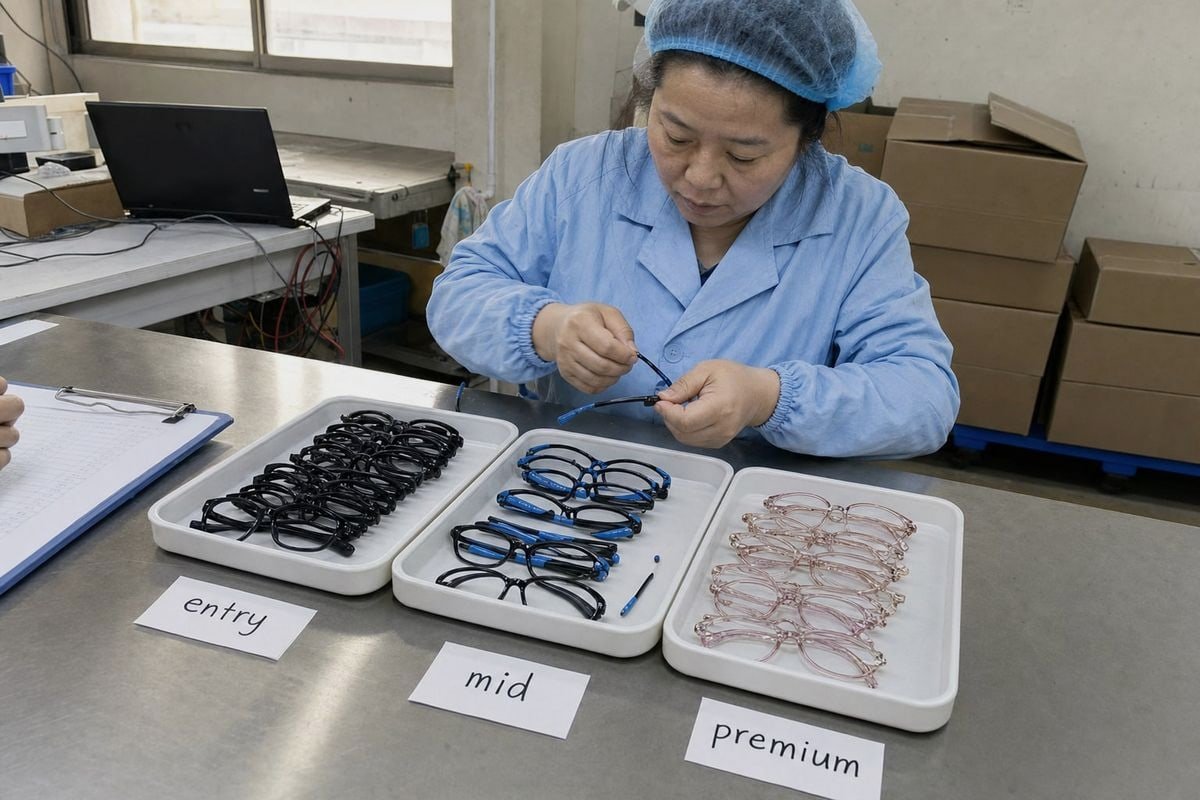
A single fixed markup across your whole range is a quiet profit killer. It overprices your basics and underprices your best frames. Optical store profitability comes from tiering, and from managing the eyewear product mix deliberately.
Tier your kids frames by cost and target margin
Here is a tiered model I often sketch for buyers, based on the styles we ship most:
| Tier | Example Landed Cost | Target Margin | Retail Price | Effective Markup |
|---|---|---|---|---|
| Entry (flexible TR90 basic) | $20 | 50–55% | $40–45 | 2.0–2.2x |
| Mid (TR90 + TPEE temples) | $35 | 60–65% | $88–100 | 2.5–2.9x |
| Premium (acetate look, coatings) | $50 | 67–70% | $152–167 | 3.0–3.3x |
Notice how small margin changes move the shelf price a lot. A $30 landed frame at 65% margin retails near $86. Push the target to 70% and it becomes $100. That $14 gap can decide whether a parent says yes.
Account for the realities of kids retail
Two factors pull kids margins in opposite directions. Managed vision care reimbursement often caps what the retailer collects, which argues for tighter costs on entry frames. On the other hand, children's eyewear durability features — flexible TPEE temples, bendable hinges, safe kids glasses materials — justify a real premium, because parents pay to avoid replacing broken frames. Some advisors even recommend a minimum list price floor, around $159–$219 in stronger markets, rather than pricing strictly from cost. I think the honest answer sits in between: build a margin floor from landed cost, then let value features lift the mid and premium tiers. Review at least six months of sell-through data before changing your targets.
How can I balance competitive pricing with quality when sourcing from a manufacturer?
A German importer once told me he could buy frames 30% cheaper elsewhere. Six months later he came back. His return rate on those cheaper frames had eaten the entire saving.
Balance price and quality by comparing total cost of ownership, not unit price. Factor in defect rates, returns, replacement shipments, and lost customers. A slightly higher wholesale frame cost with proven flexible materials and QC usually protects margin better than the cheapest quote.
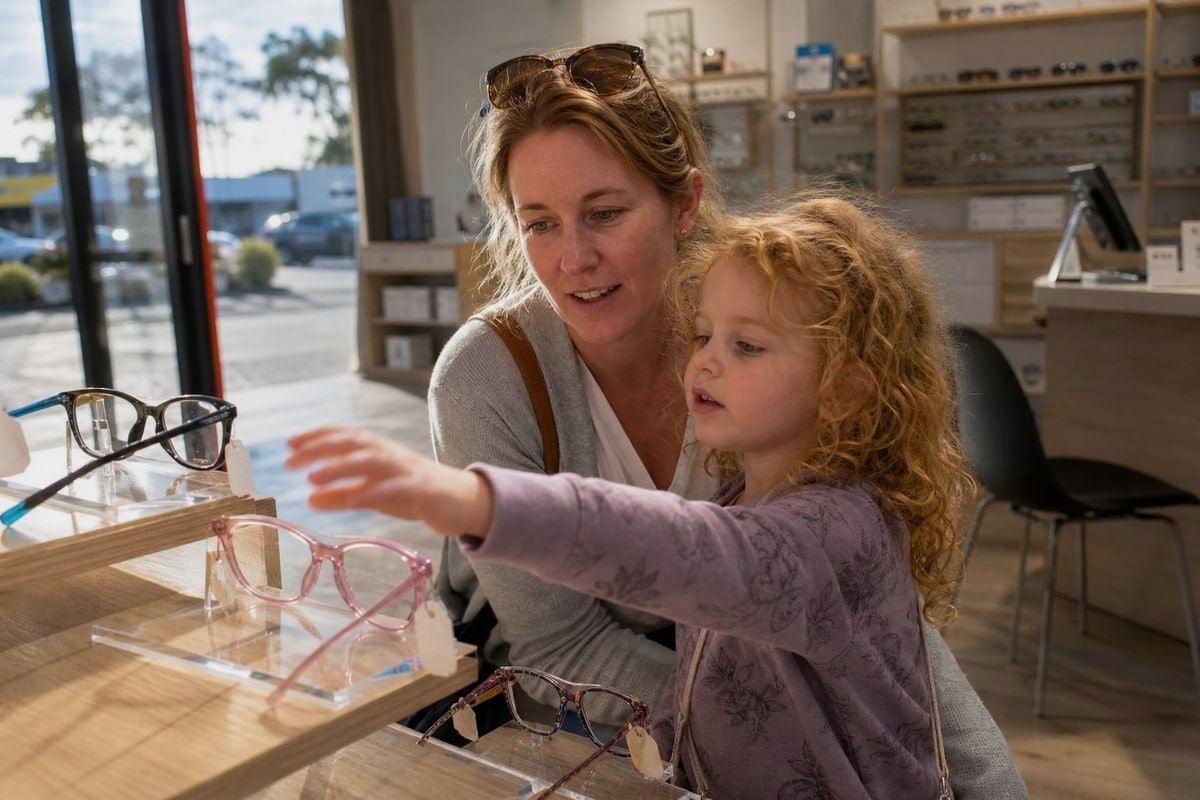
Cheap frames are only cheap until a child snaps them. In our 15 years making children's eyewear, the pattern is consistent: quality problems in the kids category surface faster and cost more than in any adult category.
Where quality actually pays back in margin
Kids treat glasses roughly. They sit on them, bend them, and drop them in playgrounds. That is why we build most of our optical styles in TR90 with TPEE temples — like our black frame with navy flexible rubber temples and silicone cable ear hooks. The flexibility is not cosmetic. It directly cuts breakage returns, and returns are pure margin loss. A sensible practice is to build a 5–10% durability buffer into your pricing to absorb the higher defect and return rates typical of children's products.
Quality also gives retailers a selling story. Parents will pay more for protection UV400 5, BPA-free materials, and frames that survive rough use. Polycarbonate lenses, anti-reflective coatings, and blue light filters add further per-transaction profit. These value-adds let a retailer defend a 60%+ margin without feeling overpriced.
Practical ways to lower cost without lowering quality
- Choose from existing styles instead of opening new molds. Our catalog holds around 800 styles, which lets a new brand launch and test the market with far lower risk.
- Consolidate orders across colorways to hit better volume pricing.
- Standardize packaging across your range rather than customizing every SKU.
- Negotiate on non-current styles or simplified accessories, not on materials or safety testing.
- Ask your factory to suggest cost-down alternatives; our engineers often find a hinge or temple change that saves cost without touching durability.
The goal is a partner relationship. A factory that understands your retail margin math will help you protect it. A supplier chasing only the lowest quote will not.
Early in my export career, a buyer priced her whole range off our FOB quote alone. When compliance testing and freight invoices arrived, her real margin was ten points lower than planned.
Hidden costs — freight, duties, compliance testing, packaging, payment fees, breakage returns, and licensing royalties — typically add 20–35% to the factory price. Build your landed cost calculation from all of these before applying any margin formula, or your gross margin will look better on paper than in reality.

Undercounting landed cost is the most common mistake I see in this industry. It makes every downstream number wrong. Your margin report looks healthy while your bank account disagrees.
Build the full landed cost line by line
Here is a realistic landed cost calculation for a mid-tier kids frame:
| Cost Component | Gamme typique | Example on $10 FOB Frame |
|---|---|---|
| Factory (FOB) price | Base | $10.00 |
| Freight and handling | 5–12% | $0.90 |
| Import duties and clearance | 3–8% | $0.60 |
| Compliance and safety testing (amortized) | 2–5% | $0.35 |
| Retail-ready packaging and case | 5–10% | $0.80 |
| Payment and currency fees | 1–3% | $0.20 |
| Durability/return buffer | 5–10% | $0.75 |
| True landed cost | +20–35% | $13.60 |
That $10 frame is really a $13.60 frame. At a 60% margin target, the difference between pricing off $10 and pricing off $13.60 is a $9 gap on the shelf — enough to wipe out the margin you thought you had.
Do not forget the category-specific extras
Licensed character frames carry royalties of roughly 5–15% of net sales plus marketing contributions, which can push retail prices 30–50% above identical unlicensed frames. Decide early whether licensing fits your positioning. Also consider retail inventory management costs: kids sizes turn over unevenly, and slow SKUs tie up cash. Finally, look at services around the frame. Bundling professional fittings and adjustments, offering breakage-replacement programs, or using virtual consultations to trim overhead can all lift perceived value and protect margin beyond the product itself. When we prepare retail-ready packaging for clients, we design it so the safety and durability story is visible on the shelf — that presentation is part of the price justification, not an afterthought.
Conclusion
Underpricing quietly kills kids eyewear brands. Calculate true landed cost, set tiered margin targets of 50–70%, test the parent price ceiling, and partner with a factory that protects your math.
Notes de bas de page
1. Provides a comprehensive definition of Total Cost of Ownership (TCO) for assets. ↩︎
2. Found a working URL on the original domain (Lens.com) that provides a comprehensive definition and properties of TR90 frame material. ↩︎
3. Provides market size and trends for the children’s eyewear industry. ↩︎
4. Found a working URL on the original authoritative domain (BDC) that defines gross margin and explains its calculation. ↩︎
5. Explains the UV400 standard for sunglasses and its importance for eye protection. ↩︎
Plus d'articles que vous pourriez aimer

août 5, 2026
Bio-Based vs Regular Cellulose Acetate: What's the Difference for Kids' Frames?

août 5, 2026
How Recyclable Are Kids' Optical Frame Materials, and What Eco-Friendly Alternatives Exist?
août 5, 2026
Do Kids Optical Frames Whiten or Age in Storage, and How to Control Warehouse Conditions?
Vous recherchez un partenaire fiable en lunetterie pour enfants ?
Explorez plus de 800 styles prêts et un support OEM/ODM complet adapté à votre marque.
Contactez-nous English
  Español de México
  Deutsch
  Français
  日本語
日本語  العربية
  Português do Brasil