How to Pre-Negotiate Recall Cost Liability with Chinese Suppliers for Kids’ Sunglasses (ACCC)?
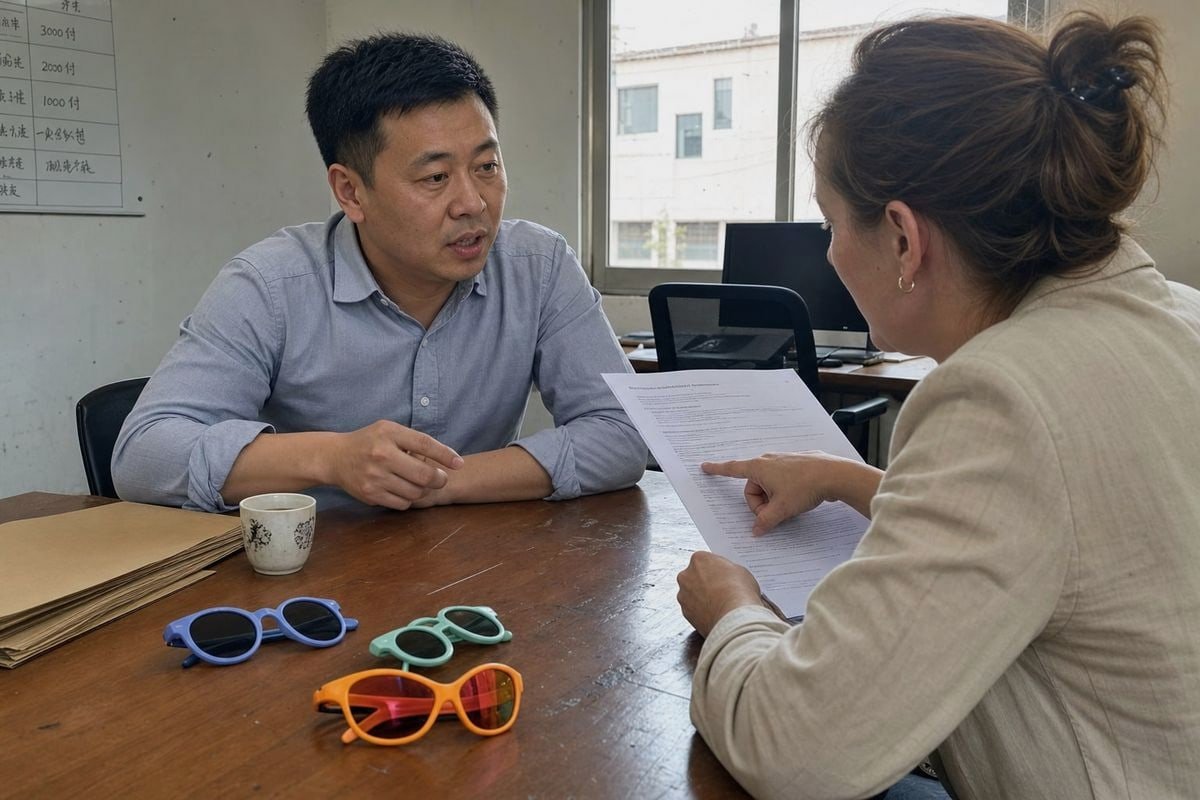
Recall cost liability for kids’ sunglasses is a question buyers rarely ask us at our Taizhou factory — until a shipment goes wrong ACCC recall database 1. By then, notification costs, retailer chargebacks, reverse logistics costs, and refunds are already piling up on the importer alone, because under Australian Consumer Law 2 the importer is the “deemed manufacturer.” The fix is simple in principle: [negotiate who pays for what](https://okayeyewear.com/how-negotiate-after-sales-warranty-terms-kids-sunglasses-suppliers/) before the first purchase order, not after the first complaint.
To pre-negotiate recall cost liability with Chinese suppliers for kids’ sunglasses sold under ACCC oversight, sign a Manufacturing Service Agreement with itemized recall-cost indemnification clauses, require product liability insurance naming you as additional insured, mandate AS/NZS 1067.1:2016 third-party lab testing, hold a quality retention payment, and choose enforceable arbitration.
That single paragraph is the whole strategy. But each piece needs detail to actually work. Below, I walk through the contract terms, the supplier vetting, the quality control steps, and the cost-sharing negotiation itself.
What contract terms should I include to define recall cost liability before production starts?
A buyer from Melbourne once sent us a draft agreement with one line: "Supplier shall be responsible for all recall costs." Our own legal review flagged it immediately — that sentence is almost impossible to enforce, and I told her so.
**Include a defined recall clause covering both voluntary and ACCC-mandated recalls, itemized recoverable costs (retrieval, refunds, shipping, disposal, notification), a recall carve-out from any liability cap, supplier notice duties within 48 hours of learning of a defect, cooperation obligations, and a pre-agreed reverse logistics credit per unit.
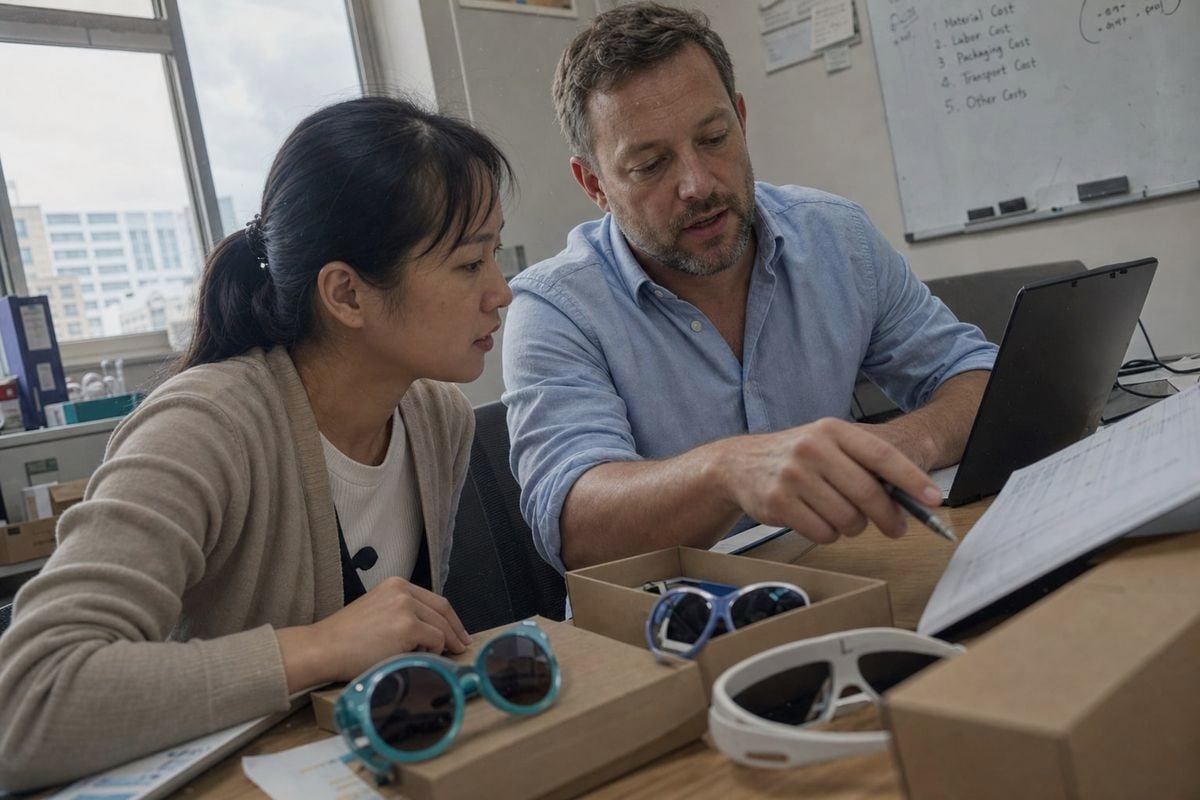
The core drafting mistake is vagueness. A generic indemnity says the supplier "will be responsible." A real recall-cost allocation clause defines what a recall is, who can declare one, and exactly which cost categories the supplier must reimburse. In our experience working with importers from 20+ countries, the contracts that survive disputes are the ones that read like checklists, not promises.
Define the trigger, not just the fault
Suppliers naturally want to pay only if a defect is conclusively proven to be their fault. I understand that instinct — but from the buyer's side, it is a trap. Root-cause investigations take months. A recall of children's sunglasses cannot wait for a lab report. Your Manufacturing Service Agreement should state that a recall is triggered by an ACCC mandatory recall notice, a voluntary recall you reasonably initiate on safety grounds, or a confirmed failure against AS/NZS 1067.1:2016 3 compliance requirements. Interim cost responsibility should be allocated up front, with a true-up mechanism once the root cause is confirmed.
Itemize every recoverable cost category
| Cost category | Include in clause? | Why it matters |
|---|---|---|
| Product retrieval and return freight | Yes | Reverse logistics costs from Australia are high per unit |
| Consumer refunds and replacements | Yes | Often the largest single line item |
| Customer notification and call center | Yes | ACCC recall guidance expects prompt consumer notice |
| Disposal or destruction of stock | Yes | Kids' products often cannot be reworked and resold |
| Regulatory response and investigation | Yes | Legal and testing fees add up quickly |
| Retailer chargebacks and penalties | Negotiable | Big-box retailers impose their own recall fees |
| Business interruption | Rarely accepted | Push for it, expect a cap or exclusion |
Two more essentials. First, state that recall costs are carved out of any general liability cap and that supplier liability is not limited to insurance proceeds. Second, consider a pre-negotiated reverse logistics credit — for example, a fixed multiple of unit cost per recalled pair — so administrative overhead is covered without invoice-by-invoice arguments.
How can I verify my supplier's ACCC compliance history before signing a recall liability agreement?
During factory audits at our workshop, the buyers who impress me most arrive with a checklist of documents already reviewed — test reports, insurance certificates, past shipment records. They verify first, negotiate second.
**Verify a supplier by searching the ACCC Product Safety recall database for their past products, requesting AS/NZS 1067.1:2016 test reports from accredited third-party labs, reviewing their product liability insurance certificate with territory coverage for Australia, auditing batch traceability records, and checking export history to regulated markets.
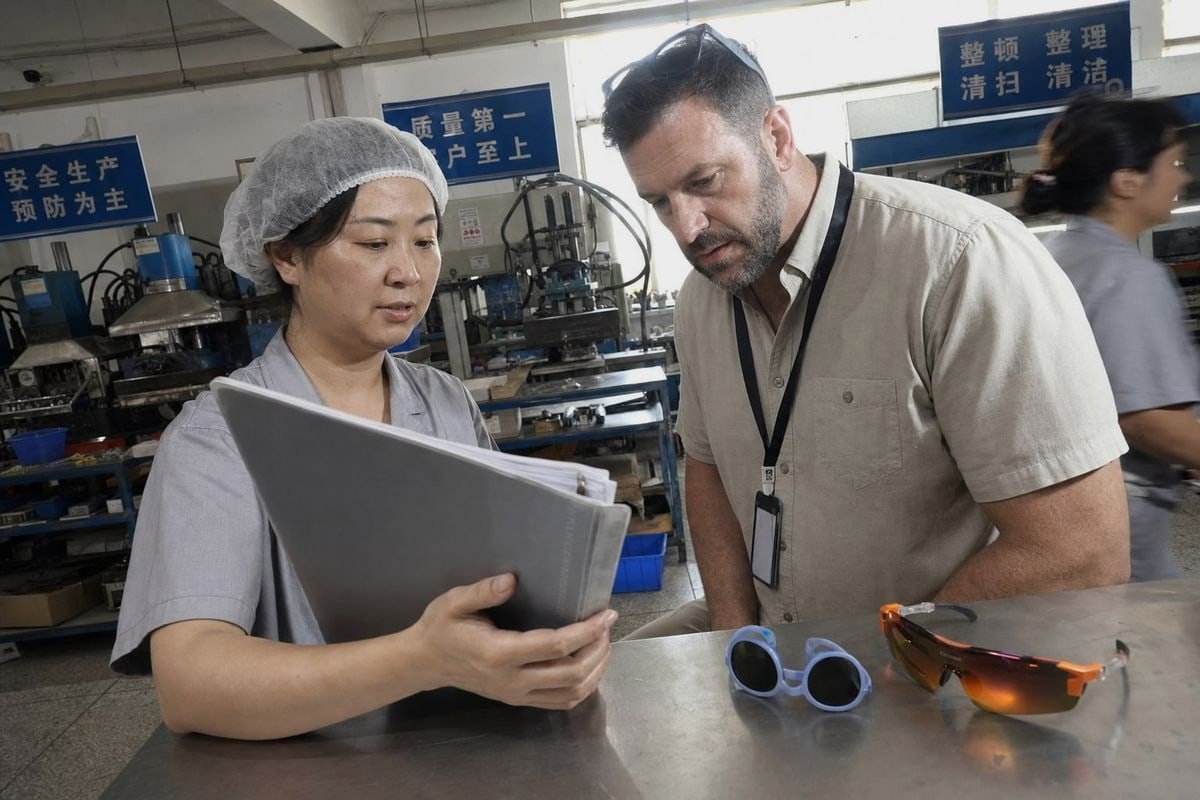
A recall liability agreement is only as strong as the counterparty behind it. If the supplier has no insurance, no assets exposed to enforcement, and no compliance track record, even a perfectly drafted clause will not pay your bills. So verification is not a formality — it determines whether the agreement is worth signing at all.
A practical verification sequence
- Search the ACCC recall database. Look for the supplier's name, their known brand customers, and similar eyewear products. Children's sunglasses have been recalled in Australia for safety and compliance failures before, so this is not hypothetical.
- Request historical third-party lab testing reports. Ask for at least two years of AS/NZS 1067.1:2016 test results, plus heavy-metal and lead paint 4 reports for painted or coated frames. Reports should come from accredited labs, in English, tied to specific production batches.
- Review the insurance certificate line by line. Confirmer product liability insurance 5 exists, check the policy limit, and confirm the territory clause covers Australia or is worldwide. Many Chinese domestic policies exclude overseas claims by default.
- Audit batch traceability in person or via a third-party inspector. Ask the factory to trace one random past order back to its raw material lot, mold records, and lens supplier. At our facility, this trace takes under an hour because our 5S-managed workshop logs every batch; if a supplier cannot do it at all, a "surgical recall" of one production run will be impossible, and any recall will hit the entire SKU.
- Check export experience with regulated markets. A factory already shipping to the EU, Japan, or Australia understands mandatory safety standards. A factory selling only domestically usually does not.
One honest caveat from our side of the table: certificates can be borrowed or outdated. Always confirm the test report applies to the exact model, colorway, and coating you are ordering — a mirrored gradient shield lens and a soft rubberized kids' frame are tested very differently.
What quality control steps can I request to reduce the risk of a recall in the first place?
The cheapest recall is the one that never happens. That belief shapes how we run production: we would rather scrap a suspect batch of TPEE temples in Taizhou than debate liability across an ocean later.
**Request a signed Quality Assurance Agreement specifying a defect rate threshold, pre-production material certification, in-line inspections, pre-shipment third-party lab testing against AS/NZS 1067.1:2016, a sealed golden sample held in escrow, and batch-level serialization on each frame for surgical traceability.
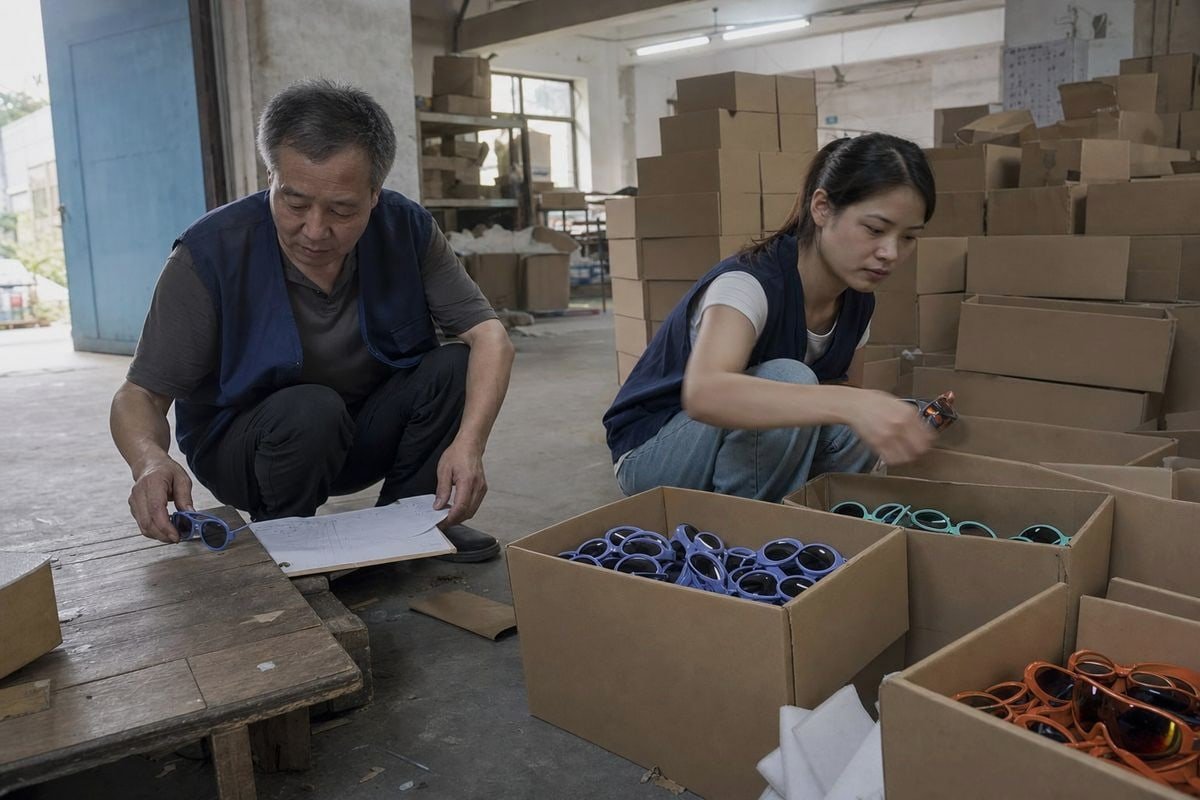
Quality control is where you convert bargaining power into recall prevention. Before you wire a deposit, the supplier will agree to almost any reasonable inspection regime. After the goods land in Sydney, your leverage is gone. So build the QC plan into the contract, not into a friendly email.
The QC stack, from raw material to container
| Étape | What to request | Recall risk it removes |
|---|---|---|
| Pre-production | Material certificates for TR90/TPEE resins; lead paint and phthalate screening on coatings | Chemical contamination in child-contact parts |
| Golden sample | Lab-tested sealed sample held by a neutral inspection firm in China | Disputes over what "conforming product" means |
| In-line | Hinge torque, lens retention, and sharp-edge checks during assembly | Mechanical hazards for small children |
| Pre-shipment | Accredited third-party lab testing: UV transmission, lens category labeling, impact behavior per AS/NZS 1067.1:2016 | The most common ACCC compliance failures |
| Final inspection | AQL-based inspection against an agreed defect rate threshold | Systemic batch defects reaching consumers |
Traceability is a recall-cost weapon
Ask for unique batch codes — laser-etched or printed on the inner temple of every pair. On our lines, each production run carries its own code linked to resin lots, lens batches, and QC records. If a defect ever surfaces, batch traceability 6 lets you recall one run of a few thousand units instead of an entire SKU across every Australian retailer. That single capability can cut recall exposure by an order of magnitude, and it costs almost nothing to implement at the factory stage.
Also insist on document retention. Test reports, inspection records, and traceability logs should be kept for the product's market life plus several years, in English, and shared with you at every shipment. When the ACCC asks how quickly you can identify affected stock, your answer should take hours, not weeks.
How do I negotiate fair cost-sharing with my Chinese supplier if a recall does happen?
A lesson I learned early in fifteen years of eyewear manufacturing: the negotiations that turn ugly are the ones where money and blame are decided at the same time. Separate them, and both sides stay rational.
**Negotiate fair cost-sharing by pre-agreeing interim funding through a 5–10% quality retention holdback, a fixed recall credit per unit, insurance as first-line payment, fault-based true-up after root-cause analysis, and China-enforceable arbitration under an NNN-style agreement rather than foreign court judgments.
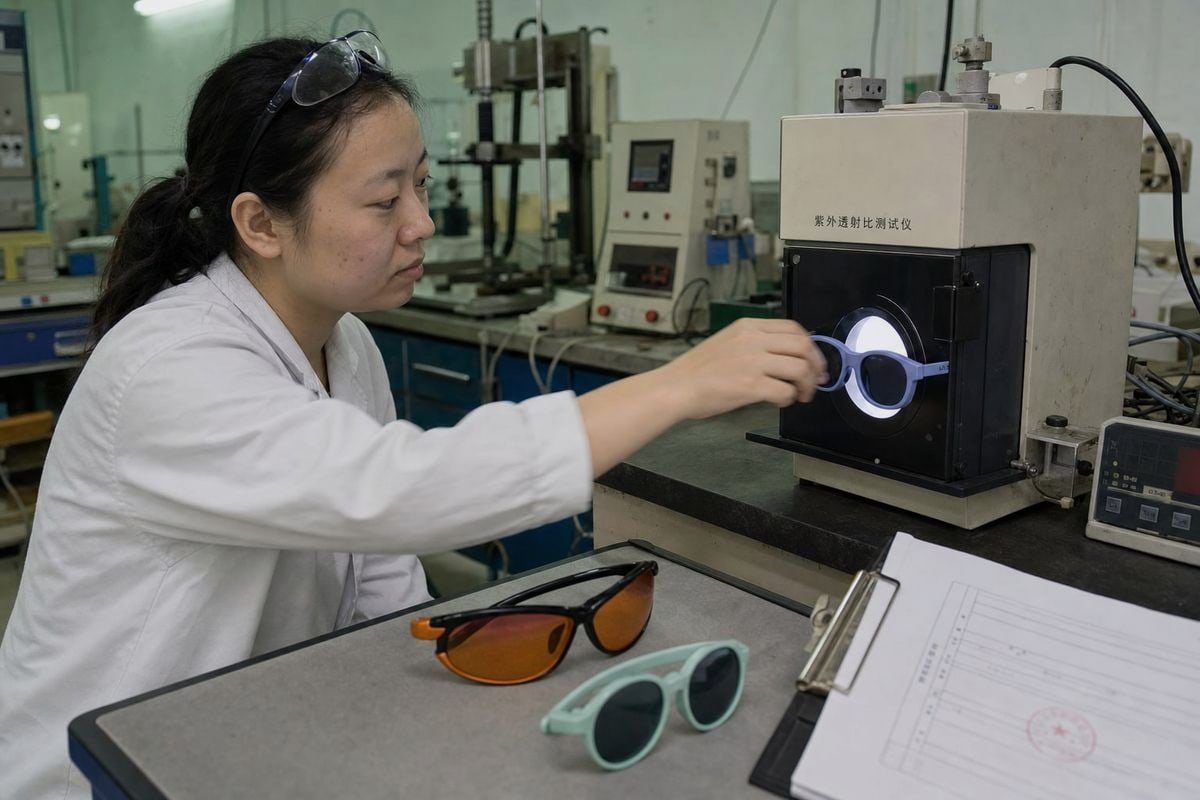
Even with a strong contract, an actual recall becomes a negotiation — over scope, causation, and cash flow. The importers who come out whole are the ones who built payment security and enforceability into the deal from day one.
Build layers of payment security
| Mechanism | Comment ça marche | When it pays |
|---|---|---|
| Quality retention holdback | 5–10% of invoice value held 90 days after delivery | Immediate liquidity for early-stage recall costs |
| Fixed recall credit | Pre-agreed multiple (e.g., 1.5x unit cost) per recalled unit | Covers admin and shipping overhead without itemized proof |
| Product liability insurance | Supplier's policy with you as additional insured, Australia territory | Larger claims, consumer injury exposure |
| Contractual reimbursement | Indemnification clauses above insurance limits | When coverage is exhausted or excluded |
| Ongoing order leverage | Future purchase volume tied to cooperation | Keeps the supplier at the table commercially |
Make the agreement enforceable in China
Here is the uncomfortable truth many buyers skip: an Australian court judgment is very difficult to enforce against a Chinese factory. Arbitration awards, by contrast, are far more readily enforced in China. So specify arbitration — commonly CIETAC 7 or a neutral venue like Singapore — with clear governing law. Pair your supply contract with a China-specific NNN agreement drafted to be enforceable under Chinese law, so the supplier faces real local consequences.
Handle the fault argument fairly
Suppliers will argue they should pay only for proven manufacturing defects, not for design choices or labeling instructions you supplied. That is actually a fair point — and conceding it wins goodwill. A reasonable split: the supplier funds recalls caused by nonconformity with the golden sample, agreed specifications, or mandatory safety standards; the buyer carries costs caused by its own design or marketing decisions. When we discuss OEM projects with brand customers, we put this fault matrix in writing before tooling begins. It protects both sides, and it signals you want a long-term partner, not a scapegoat.
Conclusion
Recall liability for kids' sunglasses is decided before production, not after a defect. Itemized clauses, verified insurance, rigorous QC, traceability, and enforceable arbitration turn a symbolic indemnity into recoverable money.
Notes de bas de page
1. Direct government database buyers should search for supplier recall history. ↩︎
2. Official government portal for the Australian Consumer Law (ACL). ↩︎
Plus d'articles que vous pourriez aimer
1 août 2026
L'usine doit-elle gérer l'emballage et l'étiquetage des lunettes pour enfants, ou utiliser un fournisseur désigné ?
1 août 2026
Entrepôt propre vs. exécution directe par le fournisseur : lequel réduit les coûts de retour pour les marques de lunettes pour enfants ?
1 août 2026
Entrepôt direct au port ou staging outre-mer : lequel permet d'économiser le plus sur l'expédition des lunettes pour enfants ?
Vous recherchez un partenaire fiable en lunetterie pour enfants ?
Explorez plus de 800 styles prêts et un support OEM/ODM complet adapté à votre marque.
Contactez-nous English
  Español de México
  Deutsch
  Français
  日本語
日本語  العربية
  Português do Brasil