How to Negotiate MOQ With Kids’ Optical Frame Suppliers for First Orders?
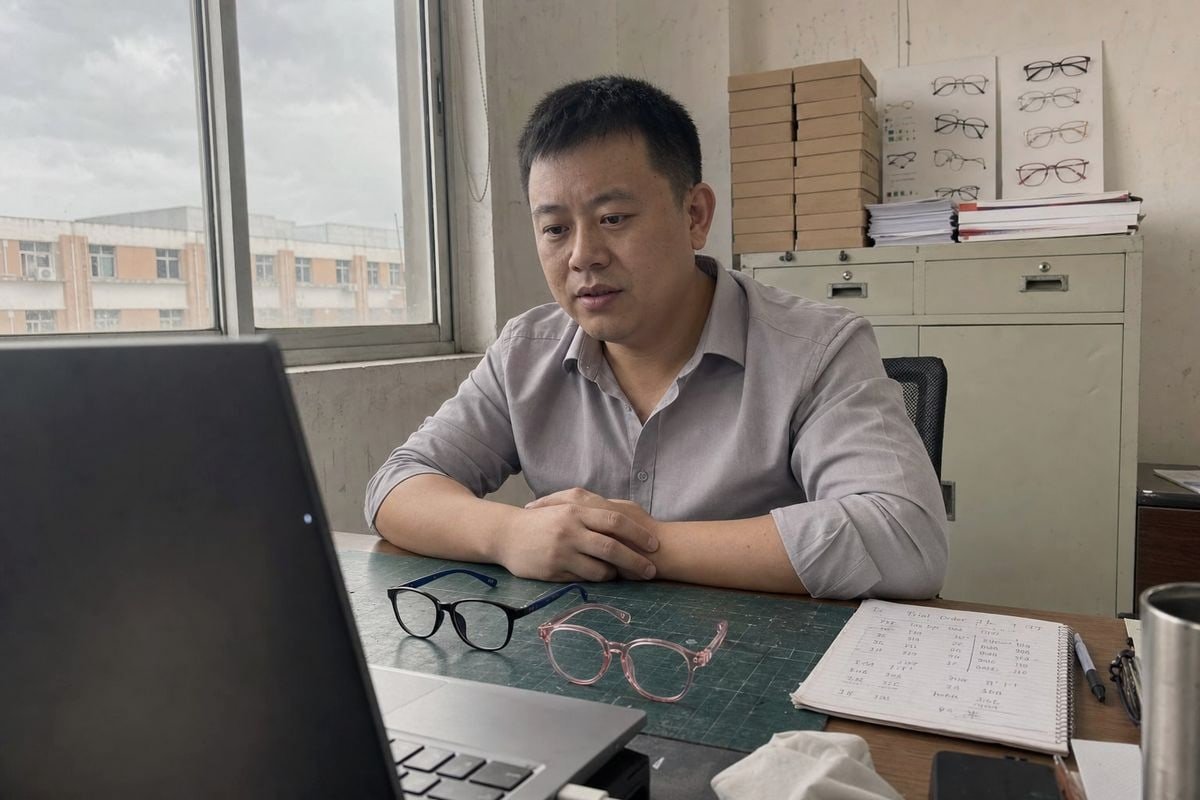
Every week, buyers ask our factory about MOQ for kids’ optical frames. Many walk away from good suppliers too early — because nobody taught them how to negotiate a first order.
To negotiate MOQ with kids’ optical frame suppliers, frame your first order as a trial order, choose existing styles and stock materials, reduce colors and SKUs, offer a 10–20% higher unit price or faster payment terms, and commit to a clear reorder plan.
That is the short answer. Below, I will break down each lever in detail, share what actually drives MOQ inside an eyewear factory, and give you scripts you can use in your first supplier email.
How can I lower MOQ risk when placing my first order with a kids' optical frame supplier?
A buyer from Australia once told me she almost gave up on launching her kids' brand because every quote started at thousands of pieces. We closed her first order at a fraction of that — by changing how she asked.
Lower your MOQ risk by treating the first order as a structured trial: pick from the supplier's existing catalog, limit colors, request sample evaluation first, offer a modest unit price premium, and put a written reorder commitment on the table in exchange for a smaller run.
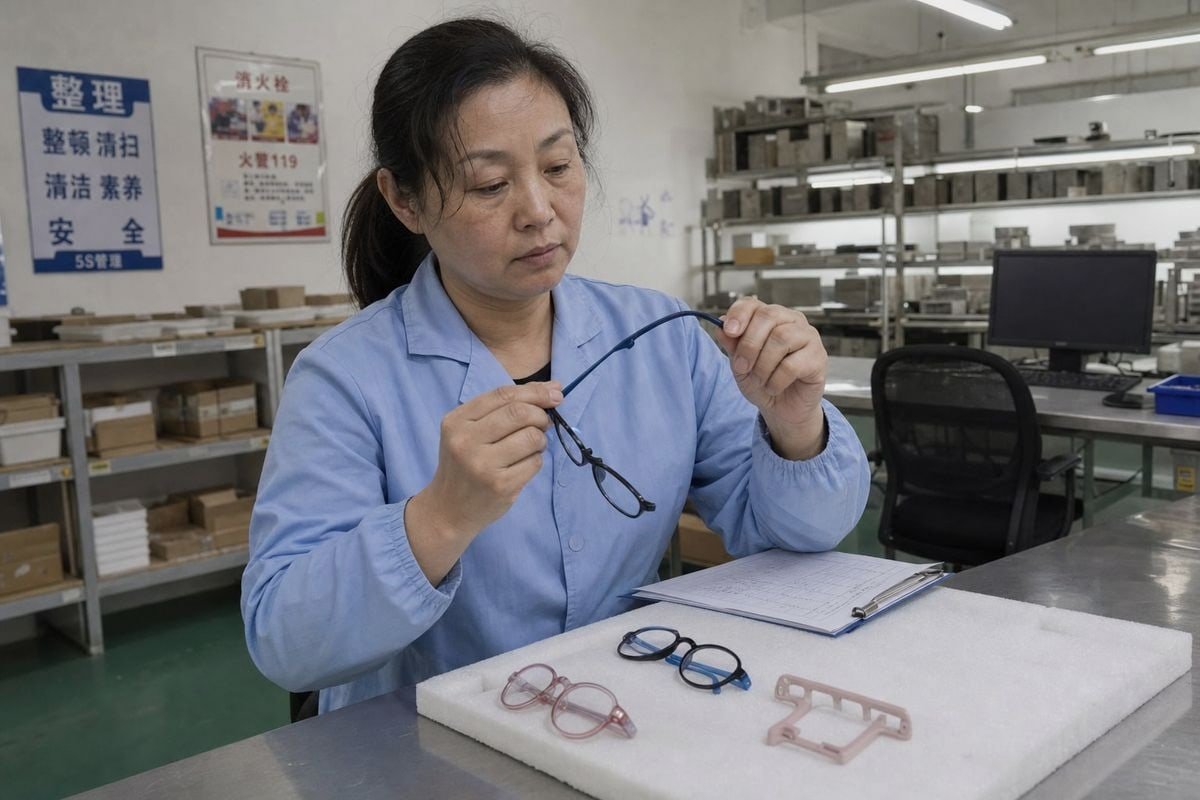
The biggest mistake first-time buyers make is asking for a lower number without offering anything back. From the factory side, an MOQ is not a wall built to annoy you. It reflects real setup costs: color mixing for TR90 material 1, mold changeovers, packaging runs, and line scheduling. When you understand that, negotiation becomes a trade, not a fight.
Trade flexibility for commitment
The most reliable approach is simple: you give flexibility on product spec, and the supplier gives flexibility on quantity. In our experience serving buyers in 20+ countries, the orders that get MOQ concessions almost always share three traits. First, the buyer accepts existing styles — we keep around 800 in our catalog exactly so new brands can launch without mold investment. Second, the buyer keeps the color count low. Third, the buyer talks openly about a second order, with a rough timeframe.
A practical sequence for first orders
- Order samples first and do a proper sample evaluation with real children's faces in mind — bridge fit, temple flexibility, weight.
- Ask the supplier what specifically drives their MOQ (material batch, color run, or packaging).
- Request a quote for one style in two colors instead of four styles in three colors each.
- Offer a small unit price premium or improved payment terms for the reduced quantity.
- Confirm the reorder quantity that unlocks standard pricing, and get it in writing.
One more point on risk: a smaller first order costs more per unit, but it protects your cash and your inventory management. Testing 300 pieces of the right frame beats sitting on 2,000 pieces of the wrong one. I have watched buyers learn that lesson the expensive way.
What MOQ should I realistically expect from TR90 or TPEE kids' frame manufacturers?
When we mix a custom color of TR90 pellets on our line, the material batch alone sets a floor on quantity. That single fact explains most of the MOQ numbers buyers see in quotes.
For TR90 or TPEE kids' optical frames, expect roughly 300–1,000 pieces per style for existing designs, and significantly more for custom molds. Custom colors, logos, or packaging raise the floor. Ready-stock frames can sometimes ship in much smaller quantities.
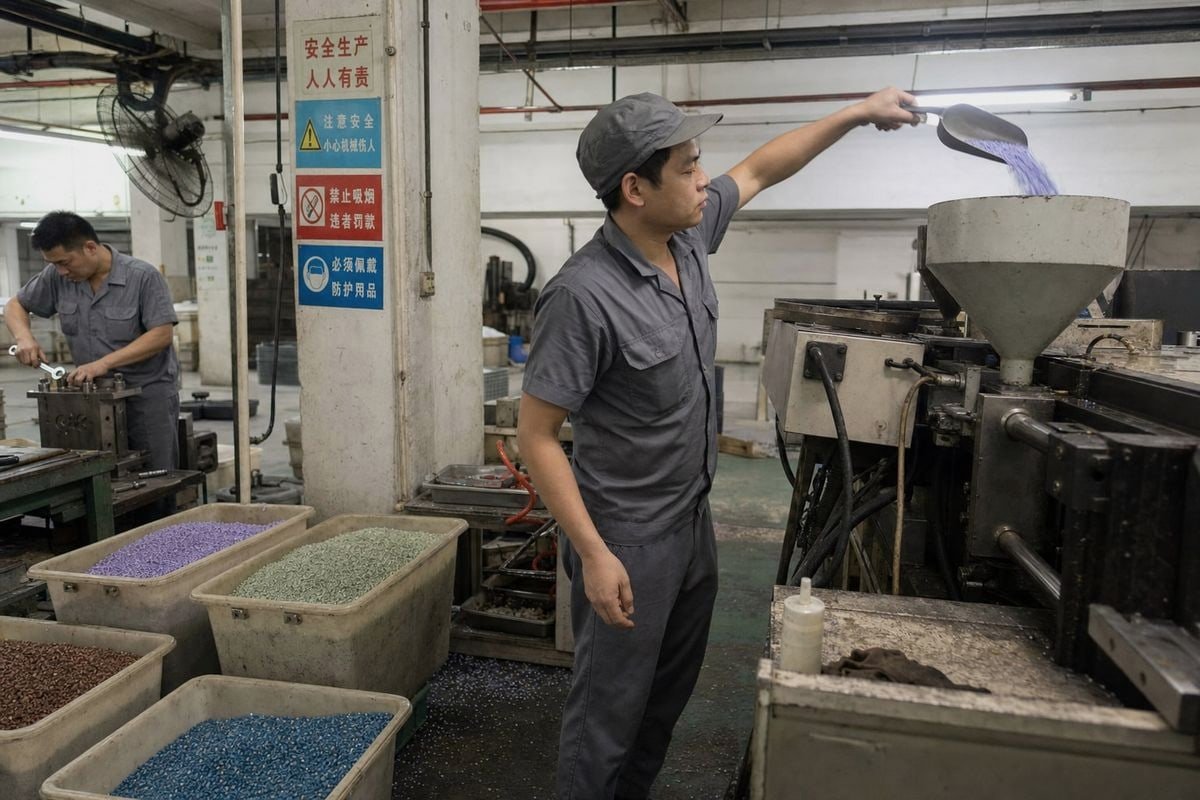
Numbers vary by factory, but the logic behind them does not. After 15 years making flexible kids' eyewear, I can tell you the MOQ you receive depends far more on what you order than on who you ask. Here is how the main scenarios typically compare:
| Order scenario | Typical MOQ range | Why the floor exists |
|---|---|---|
| Ready-stock frames, standard colors | Very low (sometimes 100–300 pcs) | Frames already produced; only packing needed |
| Existing style, standard colors, your logo | 300–500 pcs per style | Logo printing setup, but no new tooling |
| Existing style, custom color | 500–1,000 pcs per color | TR90/TPEE material must be mixed in batches |
| Fully custom mold (new design) | 2,000–5,000+ pcs | Mold tooling cost must be amortized |
Why kids' frames carry extra complexity
Children's frames are not just shrunken adult frames. We produce multiple size variants for different age groups, and safety requirements shape every component — flexible TPEE temples, soft hinge connectors, rounded tips. That multi-size, safety-first structure means a factory plans color assortments across sizes, which nudges minimums upward compared with a single-size adult style.
What "negotiable" really means
A sensible ask is 50–70% of the listed MOQ on a trial order, often paired with a 10–20% higher unit price. That is a realistic band, not a magic trick. If a supplier quotes 500 pieces for an existing TR90 style, asking for 300 with a premium and a reorder plan is reasonable. Asking for 50 pieces in a custom color is not — the material batch alone makes it uneconomical. Knowing where the real floor sits saves you from burning goodwill on impossible requests, and it helps you spot suppliers whose OEM/ODM services 2 are genuinely built for smaller brands.
Can I mix styles or colors to meet my supplier's minimum order quantity?
One of the most useful questions a buyer ever asked me was not "Can you lower the MOQ?" but "Is your MOQ per order, per style, or per color?" That single question reshaped the whole negotiation.
Yes, many kids' eyewear suppliers allow mixing styles, colors, and sizes to reach a total minimum — especially across existing catalog designs. Always ask whether the MOQ applies per order, per style, or per color, because the answer determines how much you can mix.
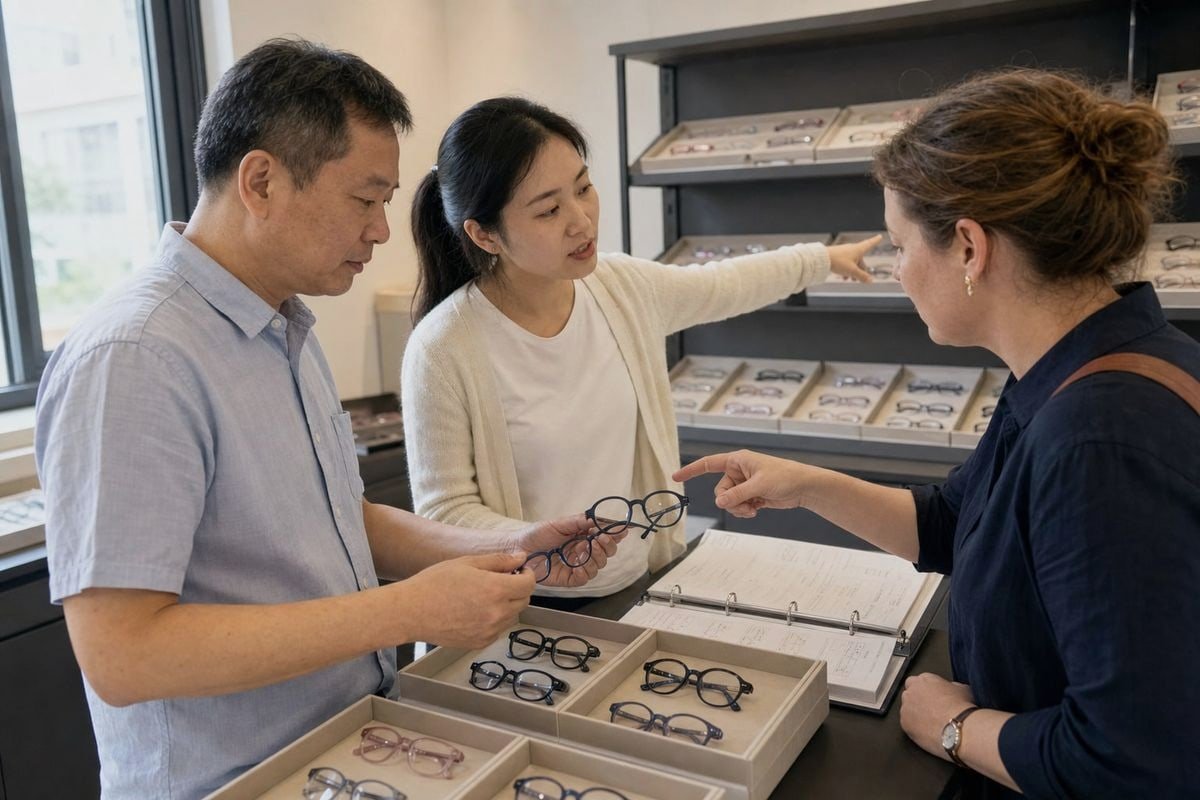
Mixing works because it protects the factory's efficiency in different ways depending on where the cost sits. Let me show you how we think about it on our own production line in Taizhou.
Where mixing is easy, and where it is not
| Mixing type | Feasibility | Factory-side reason |
|---|---|---|
| Multiple existing styles in one order | Usually easy | No new tooling; each style already runs on the line |
| Multiple standard colors within one style | Usually easy | Material for standard colors is already in stock |
| Multiple sizes of the same kids' frame | Often easy | Sizes share design DNA and often share components |
| Multiple custom colors, small quantity each | Difficult | Each custom color needs its own material batch |
| Mixing while requesting custom packaging per SKU | Modéré | Packaging print runs have their own minimums |
Take a concrete example from our catalog. A buyer wants a rounded rectangular TR90 frame with flexible TPEE temples — one order combining a glossy black version with navy two-tone temples for a sporty line, and a translucent pink acetate-look version for a softer line. If both are existing styles in standard colors, we can often aggregate them toward one total minimum. The line runs efficiently either way.
Questions that unlock mixing
Ask these directly in your first email:
- Is the MOQ per style, per color, or per total order? minimum order quantity 3
- Can sizes count toward the same style minimum?
- Do standard colors have a lower per-color minimum than custom colors?
- Does mixed packaging change the lead time?
One caution: mixing helps you hit the number, but it multiplies SKUs. More SKUs means more complexity in your own inventory management and contrôle qualité 4 checks at inspection. Two or three well-chosen colorways per style is usually the sweet spot for a first order — enough range to test the market, not enough to dilute your launch.
How do I know if a low MOQ supplier can still guarantee quality and safety?
Here is a trade-off I weigh honestly with every buyer: a rock-bottom MOQ from an unknown workshop can cost far more than a slightly larger order from a disciplined factory. For children's products, that math is unforgiving.
Verify a low MOQ supplier by requesting samples for hands-on evaluation, asking for kids' eyewear safety test documentation, confirming their quality control standards and inspection process, checking whether they are a real factory, and reviewing material certificates for TR90 and TPEE.
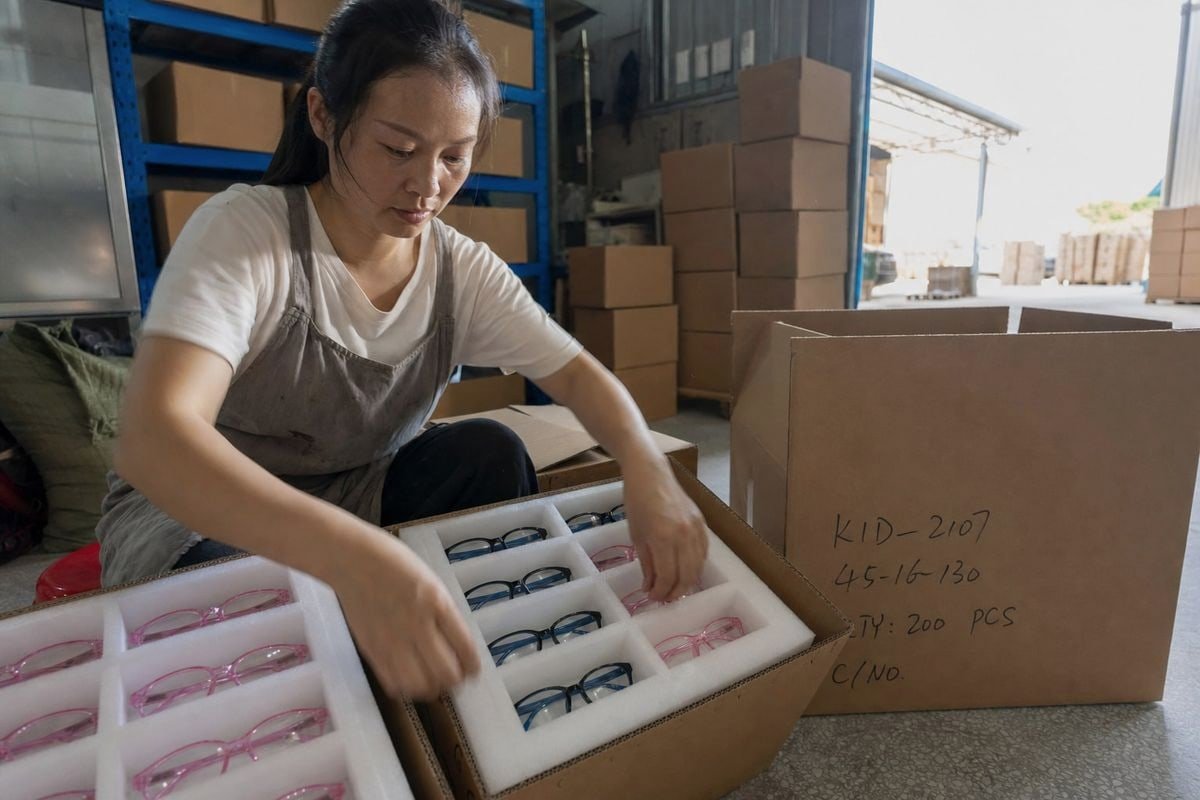
Low MOQ and high quality are not opposites — but they only coexist in factories with real systems. Some suppliers offer tiny minimums because they resell uncontrolled stock. Others, like our Réalités du transit par mode 5 with about 120 workers, offer flexibility on existing styles precisely because production is well-organized enough to absorb small runs. Your job is to tell these two apart before money moves.
A verification checklist for first-time buyers
- Order physical samples and stress-test them. Twist the temples. Check hinge action. Feel the weight. Genuine TR90 material bends and returns; brittle imitations crack or stay deformed.
- Ask for safety test reports 6 relevant to your market — buyers in Europe, Japan, and Australia each have standards their frames must meet.
- Ask how quality control standards are applied on small runs. A serious factory inspects a 300-piece trial order with the same process as a 3,000-piece order.
- Confirm factory status. Ask for a video call from the workshop floor. A trader can forward photos; only a factory can walk you down the line live.
- Clarify lead time and payment terms in writing. Vague answers on either are an early warning sign.
Indicateurs rouges par rapport aux indicateurs verts
Watch for suppliers who accept every request instantly — any color, any quantity, any deadline. Real production has constraints, and honest suppliers name them. A supplier who says "that custom color needs 800 pieces because of the material batch" is showing you how their factory actually works. That transparency is exactly what you want in a long-term private label eyewear 7 partner, because the same discipline that produces an honest MOQ answer also produces consistent frames, safe materials, and on-time delivery for your second, third, and tenth orders.
Conclusion
High MOQs stall many promising kids' eyewear launches. The fix is not pressure — it is trading flexibility for commitment.
Choose existing styles, simplify colors, offer a fair unit price premium or better payment terms, and put a reorder plan in writing. Verify quality through samples, safety documentation, and a real factory check before you commit. Do these things, and your first order becomes what it should be: a low-risk trial that opens the door to a long-term manufacturing partnership. If you want to test the water with existing TR90 and TPEE kids' frame designs, our team is always glad to talk through a first order that fits your launch — not just our line schedule.
Notes de bas de page
1. Explains the thermoplastic material class behind TR90 used in kids’ frames. ↩︎
2. Background on ODM/OEM manufacturing models referenced for smaller eyewear brands. ↩︎
3. Defines the core MOQ concept underpinning the entire negotiation article. ↩︎
4. Comprehensive Wikipedia entry covering standard quality management and manufacturing control processes. ↩︎
5. 5S is the recognized workplace organization methodology mentioned for factory discipline. ↩︎
6. Wikipedia overview of product testing procedures used to ensure safety and regulatory compliance. ↩︎
7. Explains private label business model relevant to sourcing custom kids’ eyewear brands. ↩︎
Plus d'articles que vous pourriez aimer
août 5, 2026
Bio-Based vs Regular Cellulose Acetate: What's the Difference for Kids' Frames?
août 5, 2026
How Recyclable Are Kids' Optical Frame Materials, and What Eco-Friendly Alternatives Exist?
août 5, 2026
Do Kids Optical Frames Whiten or Age in Storage, and How to Control Warehouse Conditions?
Vous recherchez un partenaire fiable en lunetterie pour enfants ?
Explorez plus de 800 styles prêts et un support OEM/ODM complet adapté à votre marque.
Contactez-nous English
  Español de México
  Deutsch
  Français
  日本語
日本語  العربية
  Português do Brasil