How Do I Negotiate Small-Batch Trial Orders for Kids’ Sunglasses with Suppliers?
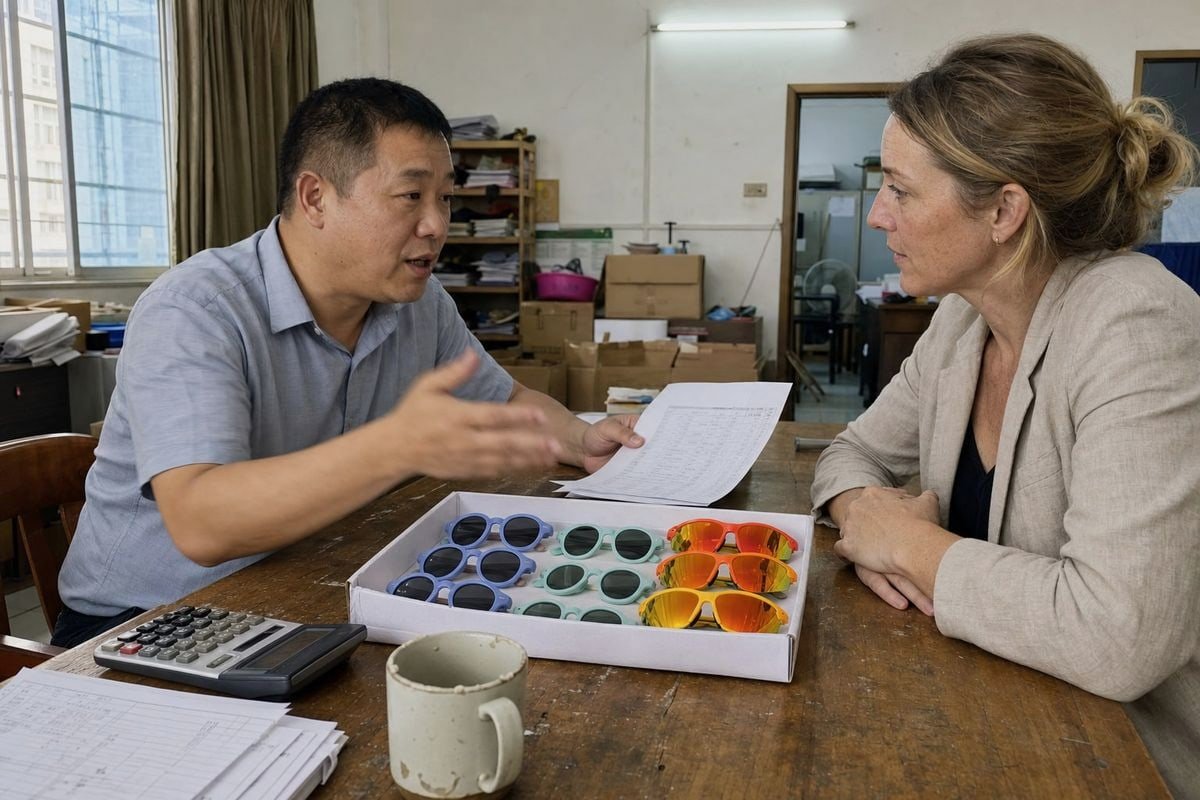
Negotiating small-batch trial orders for kids’ sunglasses stops many new brands cold CE requirements 1. On our production line in Taizhou, I see promising buyers walk away because one MOQ number scared them. That hesitation costs a full selling season — while a prepared buyer, with the right framing, gets the same factory to say yes.
To negotiate a small-batch trial order for kids’ sunglasses, frame it as market testing, choose existing open-mold styles, offer a 10–25% unit price premium or a committed follow-on order, confirm UV400 and safety compliance, and lock every term — quantity, quality standard, and reorder pricing — into a written agreement.
That is the short answer. Below, I break down each step: realistic MOQ targets, style selection, quality control questions, and how to grow the trial into a real partnership.
What Minimum Order Quantity Can I Realistically Negotiate for a First Kids' Sunglasses Trial Order?
Last spring, a founder from Australia emailed me asking for 100 pieces against our standard MOQ. We said yes — because of how she asked. Her request read like the start of a relationship, not a one-off squeeze.
Most factories will accept a trial order at roughly 50–70% of their standard Minimum Order Quantity — sometimes as low as 20–50% — if you offer a reasonable concession such as a higher unit price, simpler specifications, fewer SKUs, or a pre-agreed second order upon success.
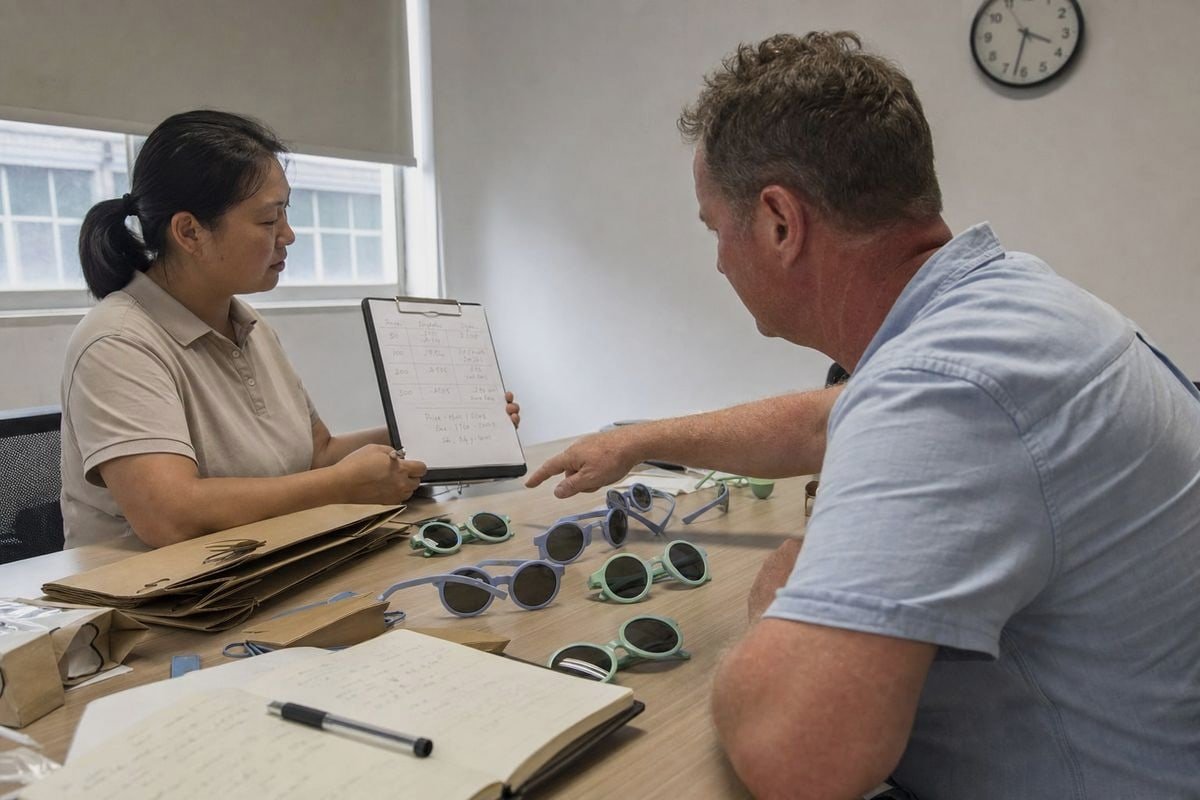
The key mindset shift is this: a supplier evaluating your trial order is not asking "Can I make this?" They are asking "Will this buyer reorder, and can I avoid losing money on a small first run?" Your job in the negotiation is to answer both questions before they are asked.
Understand Why MOQ Exists Before You Push On It
MOQ is not arbitrary. It covers machine setup, material purchasing minimums, labor scheduling, and packaging print runs. When a buyer demands a tiny quantity with no context, the factory hears "risk." When a buyer explains the trial as phase one of a structured plan, the factory hears "future volume." Same quantity, completely different reception.
What a Realistic First Ask Looks Like
Aim for a 30–50% reduction in your first counter, not an extreme number. Then trade something for it. Here are the levers that actually move factories like ours:
| Negotiation Lever | What You Offer | Typical MOQ Impact |
|---|---|---|
| Unit price premium | Pay 10–25% more per piece on the trial run | Strong — offsets setup costs directly |
| Follow-on commitment | Pre-negotiated second PO if quality passes | Strong — answers the reorder question |
| Fewer SKUs | Consolidate colors and styles into 2–3 variants | Moderate to strong |
| Full upfront payment | 100% payment instead of deposit/balance | Moderate — reduces factory risk |
| Flexible lead time negotiation | Let the factory slot your run between big jobs | Modéré |
| Standard packaging | Skip custom print runs on the first batch | Modéré |
One more practical tactic: request unit price tiers at 50, 100, 200, and 500+ units in the same quotation. This shows you where the factory's break-even points sit, and it signals that you are thinking in volumes, not just in one small order. Buyers who compare quotes from 10–15 suppliers also negotiate from reality, not guesswork — just avoid using those quotes as threats. Respectful leverage keeps the relationship intact before the first carton ever ships.
How Do I Choose Existing Styles to Reduce Mold Costs and Risk on My First Order?
A trade-off I discuss with almost every new buyer: custom tooling 2 for a new frame shape can cost thousands of dollars and demands high minimums, while our catalog of roughly 800 existing styles requires neither. For a trial order, that choice is rarely close.
Choose from your supplier's existing open-mold catalog to eliminate custom tooling costs entirely. Select two or three proven styles, customize only color and lens options, order unbranded blank stock if possible, and use standard polybag packaging — this cuts both MOQ and upfront investment dramatically.
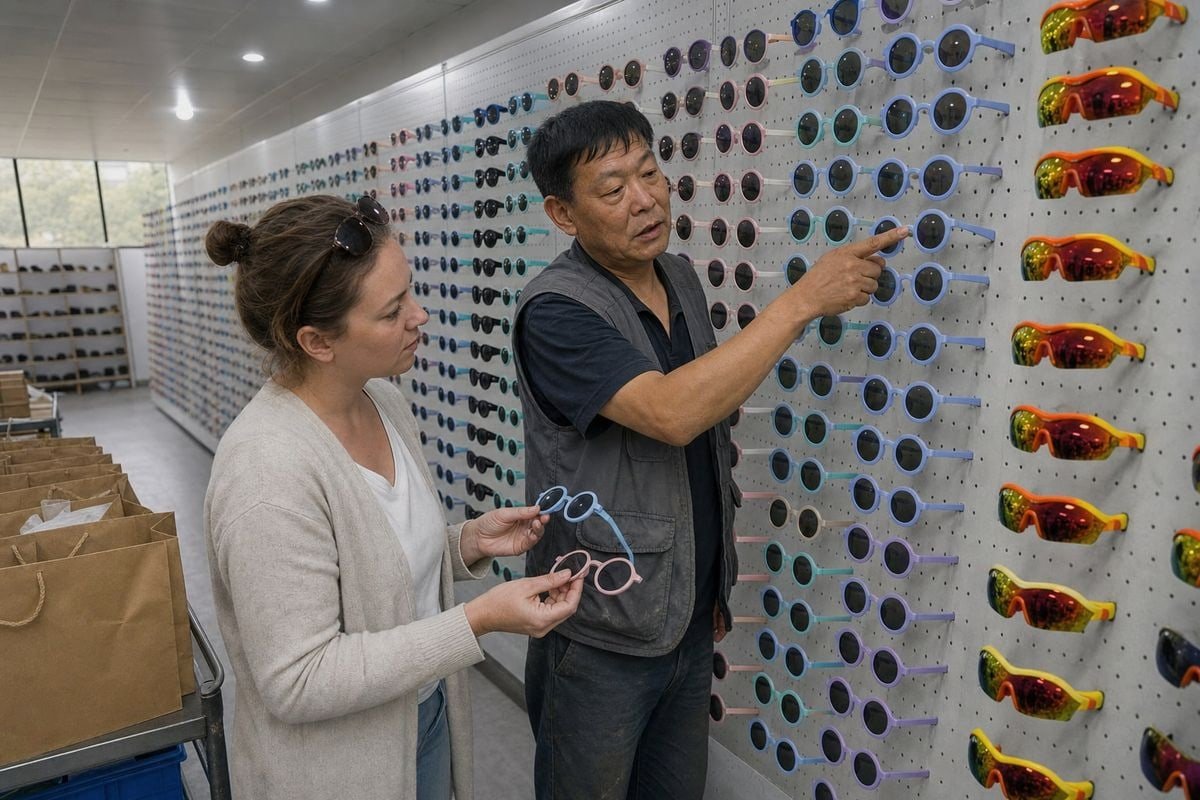
Open-mold styles are frames the factory has already tooled, tested, and produced. The mold cost is amortized across many customers, so you pay nothing for it. For kids' sunglasses, this matters even more than for adult fashion eyewear, because fit and safety have already been validated on the existing shape.
Match the Style to Your Market, Not Just Your Taste
Our catalog spans playful round two-tone frames — like a periwinkle-blue front with mint-teal temples — through to sporty wraparound shield designs with mirrored gradient lenses for active kids. A baby brand and an outdoor kids' brand need very different starting points:
| Your Brand Positioning | Recommended Style Direction | Material Priority |
|---|---|---|
| Marques pour bébés et tout-petits | Soft rounded frames, flexible construction | TPEE flexible frames for bend-and-return safety |
| Kids' lifestyle / fashion | Two-tone round or geometric frames | TR90 frames with TPEE temples |
| Outdoor and sports brands | Wraparound single-shield designs, mirrored lenses | TR90 with secure-fit temple tips |
| Promotional companies | Simple classic shapes, easy logo placement | Standard TR90, cost-efficient colorways |
Customize in the Right Order
Not all customization is equal. On a trial order, follow this sequence — stop wherever your budget says stop:
- Stock style, stock colors, blank stock. Zero customization. Lowest MOQ, fastest lead time. Ideal for testing frame durability and fit in your local market.
- Custom colorway. A modest step up. The mold stays the same; only the material color changes.
- Logo printing. Adds a print setup and usually a higher minimum. Consider deferring this to order two.
- Custom packaging. Printed boxes carry their own print-run MOQs. Use packaging decoupling instead: order in bulk polybags and source retail cases locally for the trial.
- Custom mold. Save this for after your market test proves demand. This is where private label manufacturing becomes full ODM development 3.
Over-customizing the first batch is the single most common mistake I see. Buyers pile on custom colors, logos, and printed boxes, then blame the supplier when the MOQ climbs back up. Simplify first. Prove demand. Then invest.
What Should I Ask Suppliers About Quality Control Before Committing to a Trial Batch?
Years ago, we rejected an entire lens shipment from a sub-supplier because UV readings 4 drifted outside tolerance. That day taught our team something buyers should internalize: with children's eyewear, quality control is not a checkbox — it is the product.
Before committing, ask for UV400 protection test data, compliance documentation for your market such as CPSIA or CE, the factory's AQL inspection standard, sharp-edge and small-parts checks, sample policy including any sample fee refund policy, and how defects found after delivery will be handled.
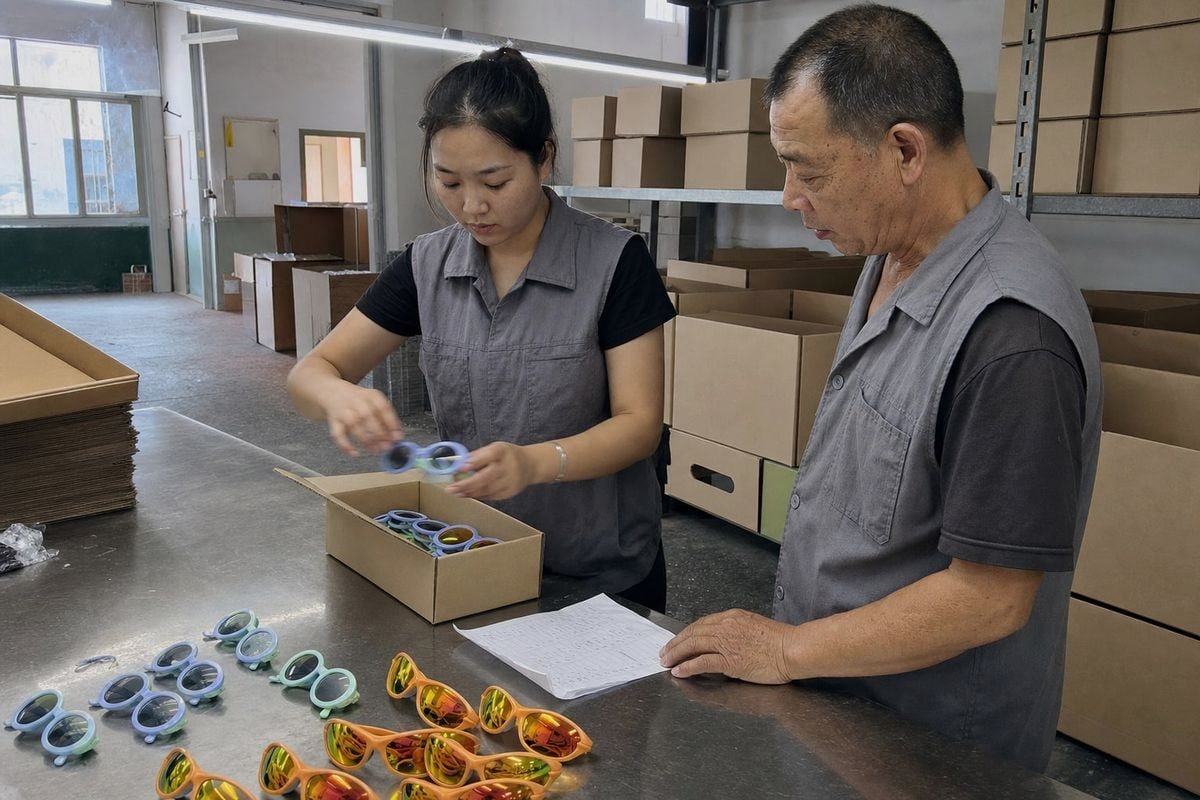
Kids' sunglasses carry obligations that generic accessories do not. The product sits on a child's face for hours. Lenses must genuinely block UV. Frames must not snap into sharp fragments. Retail channels — especially in Europe, Japan, and Australia — increasingly expect documented proof, not verbal assurances.
The Questions That Separate Real Factories from Traders
Ask these directly, and judge the supplier by how specifically they answer:
- Are you a verified factory or a trading company? Can I see workshop photos or a video call tour?
- What is your quality control inspection process 5 — incoming materials, in-line checks, and final random inspection?
- What AQL level 6 do you apply, and can we agree on zero tolerance for sharp edges and lens defects?
- Can you provide UV400 test reports 7 and, where relevant, documentation supporting CPSIA safety standards 8 or CE requirements for my market?
- What is your sample fee refund policy if I proceed to a bulk order?
- What is your claim window and defect-handling process after delivery?
A supplier who answers with structured, specific detail is almost always easier to negotiate with than one who answers vaguely. At our 5S-managed workshop, we treat these questions as a sign of a serious buyer, not a difficult one.
Two Cost-Saving QC Tactics for Small Orders
First, request a 3–5% after-sales buffer of extra units in your shipment. Handling the occasional defect locally beats negotiating international return logistics for a small batch. Second, ask about compliance piggybacking: if your trial run can be scheduled alongside a larger client's production of a similar spec, mandatory lab testing costs can sometimes be shared. Both tactics show the factory you understand their side of the table — which itself strengthens your negotiating position.
Also confirm the commercial frame around quality: FOB shipping terms or otherwise, when the lead time clock starts (usually at deposit receipt, not PO date), and which inspection method triggers final payment.
How Do I Turn a Successful Small-Batch Trial into a Long-Term OEM Manufacturing Partnership?
A Japanese kids' brand we work with started three years ago with a modest trial of stock TR90 frames. Today they run custom colorways, branded temples, and retail-ready packaging across multiple seasonal collections. That progression was not luck — it was structured from the first email.
Convert a trial into a partnership by pre-agreeing a phased ordering plan: the trial batch serves as a quality benchmark that triggers a larger, pre-negotiated purchase order at defined unit price tiers. Share sales feedback, honor your forecasts, and expand customization gradually with each reorder.
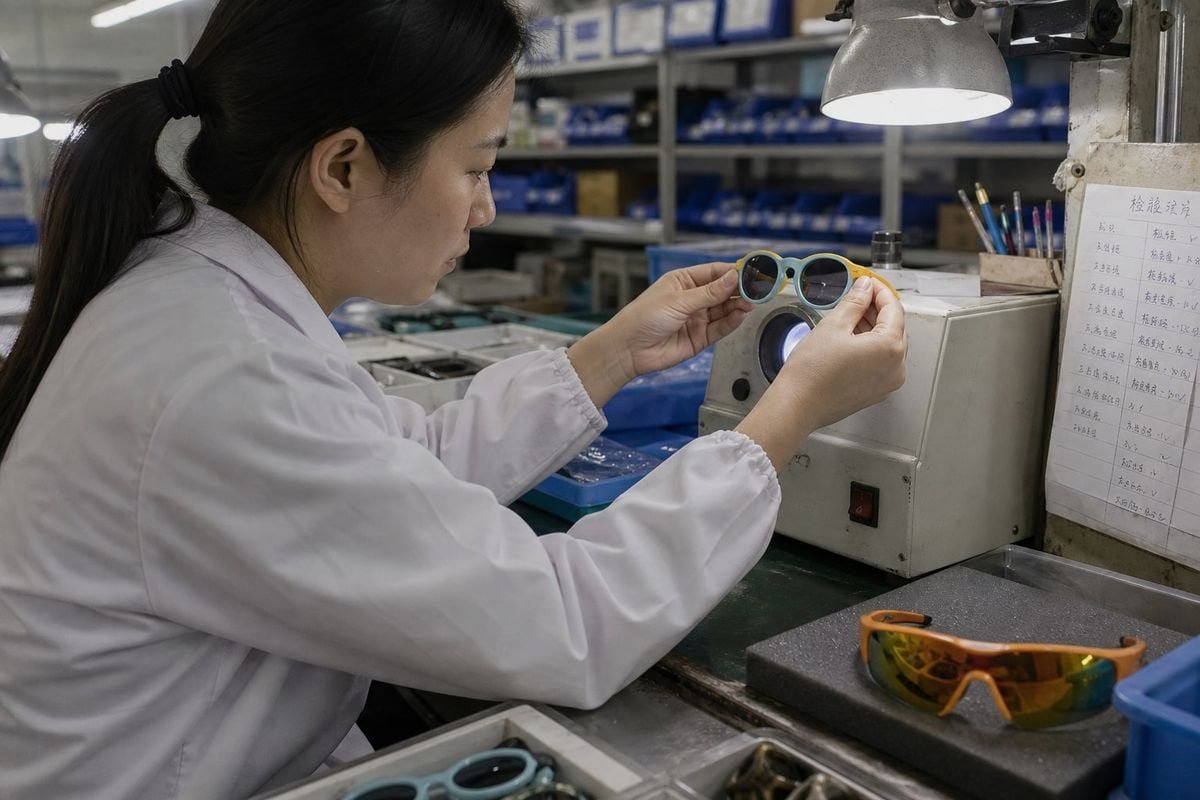
A trial order is phase one of a relationship, not a transaction. The buyers who grow fastest with us treat it that way, and factories respond by prioritizing their production slots, improving their pricing, and investing engineering time in their custom projects.
Build the Phased Agreement Before the Trial Ships
Put the growth path in writing at the quotation stage. The structure usually looks like this:
| Phase | Order Scope | What Gets Agreed in Advance |
|---|---|---|
| Phase 1: Trial | Reduced quantity, stock styles, minimal customization | Quality benchmark, AQL standard, trial unit price |
| Phase 2: Validation reorder | Standard MOQ, custom colors and logo | Pre-negotiated reorder price if trial passes QC |
| Phase 3: Brand build | Full private label manufacturing, custom packaging | Volume-based price tiers, seasonal planning calendar |
| Phase 4: ODM development | Custom molds, exclusive designs | Tooling investment terms, design exclusivity |
Critically, clarify in writing whether the trial unit price applies only to the trial. Nothing sours a second order faster than a surprise price change nobody documented.
Give Value Back to the Factory
Partnership runs both ways, and small gestures compound. Offer marketing reciprocity: professional lifestyle photography of children wearing the glasses is genuinely valuable for a factory's B2B portfolio, and suppliers remember buyers who provide it. Share honest sell-through data so the factory can plan materials for your reorders. Give realistic forecasts — and then hit them, or communicate early when you cannot. Pay on the agreed terms without drama.
One warning from experience: do not push so hard on the trial that resentment builds before the first shipment. Ask what arrangement works for the factory's side too. The buyers we quietly prioritize during peak season are never the ones who squeezed hardest on order one. They are the ones who negotiated firmly, documented clearly, and treated us like the long-term manufacturing partner they wanted us to become.
Conclusion
MOQ barriers stall too many kids' eyewear launches. Prepare your numbers, pick existing styles, verify quality controls, offer fair trade-offs, and document everything — then a small trial becomes a lasting partnership.
Notes de bas de page
1. Official EU page details CE marking requirements referenced for export compliance. ↩︎
2. Explains mold tooling process underlying the custom tooling cost discussion. ↩︎
3. Wikipedia explains ODM development, the advanced manufacturing stage referenced. ↩︎
4. WHO explains UV radiation risks, supporting the lens testing example described. ↩︎
5. Background concept explaining incoming, in-line, and final inspection practices mentioned. ↩︎
6. Authoritative Wikipedia entry defining AQL and sampling standards for quality control. ↩︎
7. FDA guidance confirms UV protection testing standards relevant to sunglasses lens compliance. ↩︎
8. CPSC page explains the CPSIA regulation buyers must verify for children’s products. ↩︎
Plus d'articles que vous pourriez aimer
1 août 2026
L'usine doit-elle gérer l'emballage et l'étiquetage des lunettes pour enfants, ou utiliser un fournisseur désigné ?
1 août 2026
Entrepôt propre vs. exécution directe par le fournisseur : lequel réduit les coûts de retour pour les marques de lunettes pour enfants ?

1 août 2026
Entrepôt direct au port ou staging outre-mer : lequel permet d'économiser le plus sur l'expédition des lunettes pour enfants ?
Vous recherchez un partenaire fiable en lunetterie pour enfants ?
Explorez plus de 800 styles prêts et un support OEM/ODM complet adapté à votre marque.
Contactez-nous English
  Español de México
  Deutsch
  Français
  日本語
日本語  العربية
  Português do Brasil