How to Label Country of Origin on Kids’ Sunglasses from China for U.S. Customs?
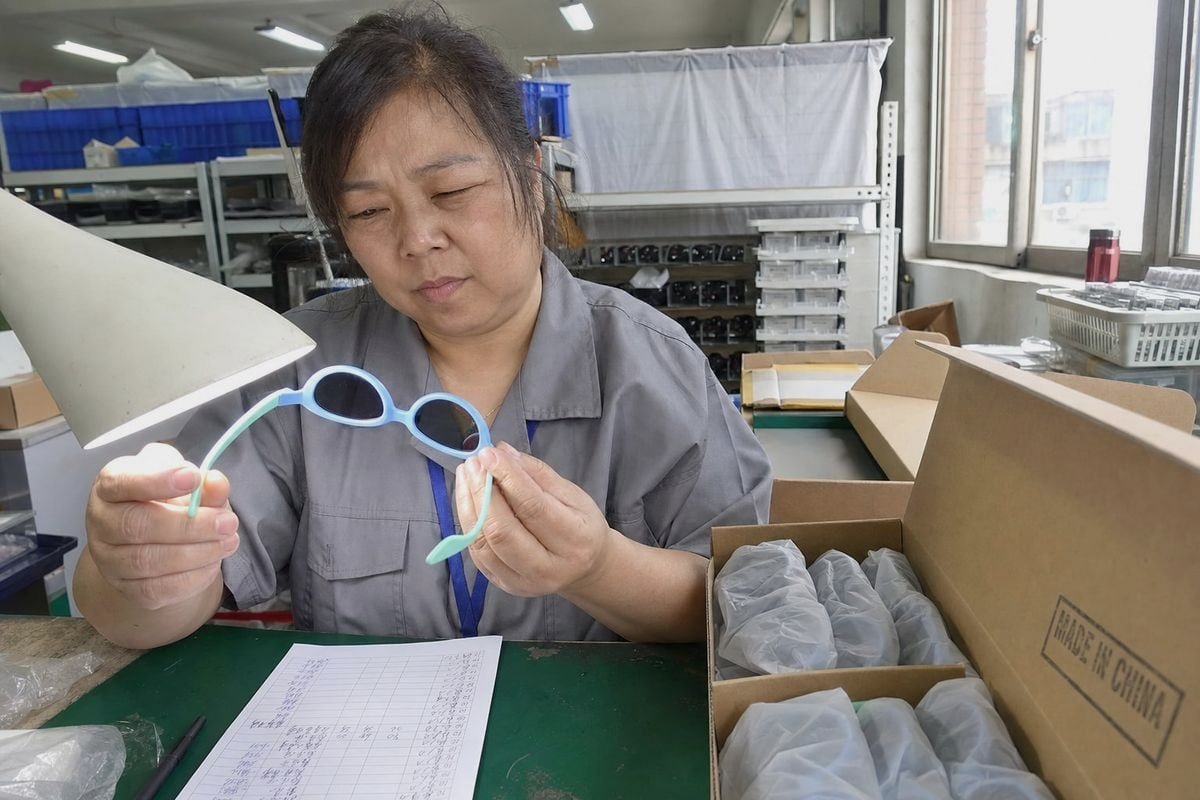
Country of origin labeling on kids’ sunglasses from China trips up more U.S. importers than almost any other detail we see on our production line. A missing mark can freeze an entire shipment at the port. Suddenly you face rework fees, marking duties 1, and a missed retail launch. The good news: after 15 years of shipping children’s eyewear from our Taizhou factory, we know exactly what CBP expects — and it is very achievable.
Kids’ sunglasses imported from China must be permanently marked “Made in China” or “China” in English, in a conspicuous place the ultimate purchaser can see — typically the inner temple arm. The mark must be legible and indelible under 19 U.S.C. 1304 and 19 CFR Part 134, with the outer carton also marked.
That is the short answer. Below, I will walk through the exact wording, the marking methods, the penalties for getting it wrong, and how packaging fits in.
What exact wording and placement does U.S. Customs require for "Made in China" labels on kids' sunglasses?
A buyer from Australia once asked me to leave the temples completely blank "for aesthetics." We had to push back, because we knew her U.S. reseller would hit a wall at customs.
U.S. Customs requires the English words "Made in China," "China," or "Frame China" marked in a conspicuous place on the sunglasses themselves — most commonly the inner temple arm or temple tip. The lettering must be legible, indelible, and permanent, and it cannot be hidden by hinges, stickers, or decoration.

The legal foundation is Section 304 of the Tariff Act, implemented through 19 CFR Part 134. The rule says every article of foreign origin must tell the ultimate purchaser — the person who buys the sunglasses at retail — where the item was made. For eyewear, decades of CBP practice have settled on the temple as the standard location. It stays with the product for its whole life, and a consumer can find it in seconds.
Acceptable wording formats
We mold or print these formats for U.S.-bound orders every month:
| Wording | Acceptable? | Notes |
|---|---|---|
| Made in China | Yes | The safest, most universal choice |
| China | Yes | Must still be conspicuous and legible |
| Frame China | Yes | Common for eyewear frames specifically |
| P.R.C. | Risky | Abbreviations can be rejected; use the English name |
| Chinese characters only | No | Marking must be in English |
Placement rules that matter
Conspicuous place marking means a reasonable buyer can find the mark without disassembling anything. On our kids' TR90 and TPEE frames, we put the mark on the inside of the left temple, away from the hinge screw, in lettering large enough to read without a magnifier. One more trap worth flagging: if your artwork includes "Designed in USA" or a U.S. address, 19 CFR 134.46 2 requires the origin statement to appear in close proximity and comparable size. We physically separate any U.S. branding from the origin mark on our tooling so CBP never reads the label as misleading.
Can my manufacturer permanently mark the country of origin directly on the frame or lens?
Permanence is a trade-off we weigh on every new order: molded lettering costs a small tooling change, while pad printing is cheaper but must pass our adhesion tests first.
Yes — and permanent marking is what CBP prefers. Acceptable permanent marking methods include mold-engraved (raised or recessed) lettering, laser engraving, pad printing, and silk screening on the temple. Adhesive stickers on the frame are risky because they can fall off before the ultimate purchaser sees them.

For non-prescription kids' sunglasses, CBP guidance has long accepted die stamping, raised lettering, silk screening, and similar permanent marking methods. At our factory, we build the origin text directly into the injection mold for most of our roughly 800 existing styles. That means the mark can never rub off, wash off, or peel — it is part of the plastic itself.
Comparing the main marking methods
| Méthode | Permanence | Cost | Best for kids' frames? |
|---|---|---|---|
| Mold-engraved lettering | Excellent | One-time tooling cost | Yes — our default for TR90 and TPEE |
| Laser engraving 3 | Excellent | Low per unit | Yes — clean and ink-free |
| Pad printing / silk screen | Good if cured properly | Très faible | Acceptable with adhesion QC |
| Adhesive sticker on frame | Poor | Lowest | Not recommended for the frame itself |
Why marking method matters more on children's eyewear
There is a compliance angle specific to kids' products. Children's sunglasses fall under CPSIA compliance 4, which means the materials — including any printed ink — get tested for lead and phthalates 5, and you need a Children's Product Certificate backed by third-party testing. This is why we prefer laser engraving or molded lettering over solvent-based inks on children's frames: no ink, no added chemical risk. It also pairs naturally with the CPSIA permanent tracking label 6, which must identify the manufacturer, production date, and batch on both product and packaging. On small kids' temples, we consolidate origin and tracking information into one clean, micro-printed layout so the frame stays retail-ready. And because sunglasses are regulated as Class 1 medical devices, importers also handle FDA registration and keep a drop ball test certificate for lens impact resistance — separate obligations, but ones we coordinate in the same artwork approval.
What happens if my shipment arrives without proper country of origin labeling?
Early in my export career, a customer's freight forwarder called us in a panic: a container was held at Long Beach over unmarked frames from another supplier. That week taught me how expensive this "small detail" can be.
Improperly marked shipments can be detained by CBP, and the importer must mark, re-export, or destroy the goods. Uncorrected merchandise faces an additional marking duty of 10% ad valorem on top of normal duties and any Section 301 tariffs, plus storage costs and delivery delays.
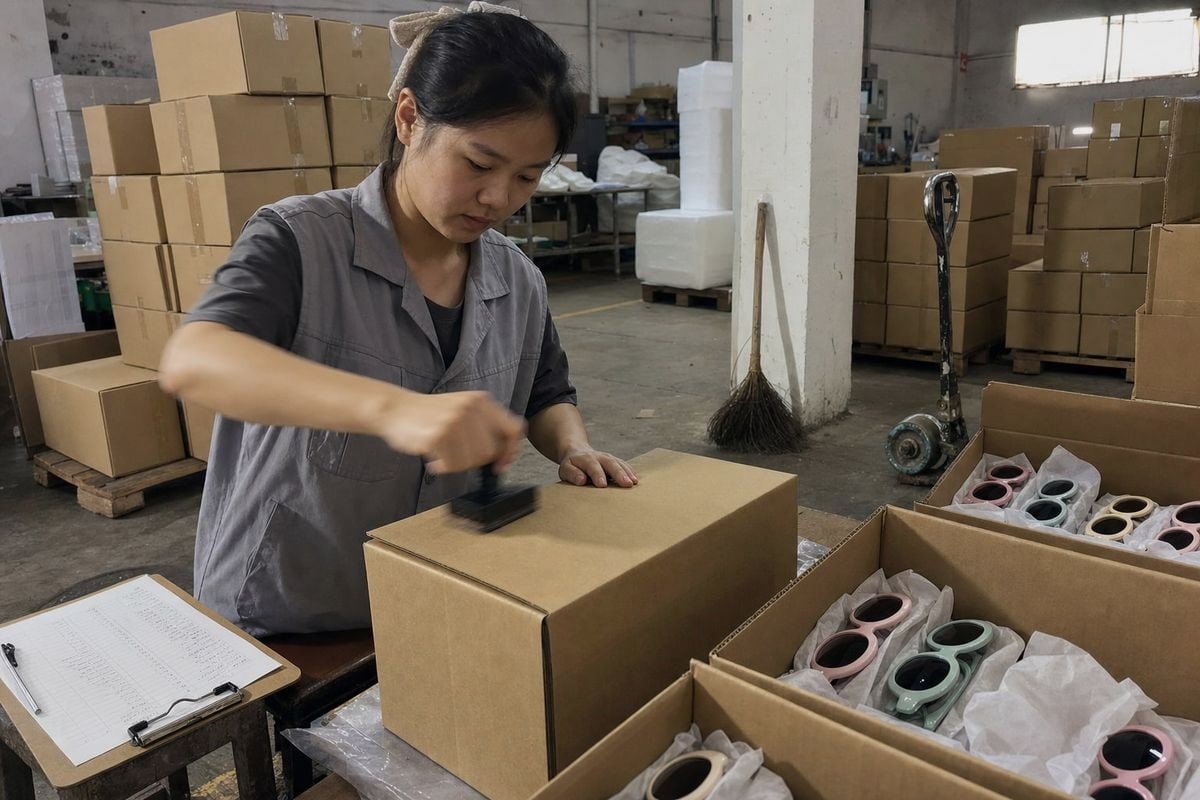
CBP treats origin marking as a foundational entry requirement, so this is one of the first things an inspector checks. Here is how a marking failure typically unfolds:
- Detention. CBP issues a notice to redeliver or mark the merchandise. Your goods sit in a bonded facility, accruing storage fees daily.
- Corrective action. You must mark the goods under CBP supervision, export them, or destroy them. Hand-applying stickers to thousands of kids' sunglasses in a warehouse is slow, ugly, and expensive.
- Marking duty. If unmarked goods are distributed without correction, the 10% ad valorem marking duty applies. Note that this stacks on top of the regular duty for sunglasses under HTS code 9004.10.00 and any applicable Section 301 tariffs on Chinese goods — a painful triple layer.
- Reputation cost. Repeated marking problems can flag your company for closer inspection on future entries, which slows every shipment afterward.
The hidden costs beyond duties
The duty is rarely the worst part. For a kids' brand, a four-week port delay can mean missing the summer selling season entirely. We have seen buyers lose retailer purchase orders because a shipment arrived after the planogram reset date. That is why our export checklist requires photographed proof of origin marks on the frame, the retail packaging, and the outer shipping carton before any U.S. order leaves Taizhou. Prevention costs minutes; correction costs weeks.
Do I need different origin labeling for retail packaging versus the product itself?
When we develop retail-ready packaging for private-label clients, the question comes up in almost every artwork review: if the box says Made in China, does the frame still need it?
Yes — mark both. The sunglasses themselves need a permanent origin mark for the ultimate purchaser, and the retail packaging and outer shipping carton must also show "Made in China." Packaging-only marking is allowed only under narrow exceptions that most kids' sunglasses do not qualify for.

Some importers hope the box alone is enough, usually to keep the product looking clean. I understand the aesthetic instinct — but CBP rulings show that packaging-based marking only substitutes for article marking in limited, fact-specific cases, such as sealed containers that always reach the consumer unopened. Kids' sunglasses do not fit that pattern. Children try frames on in stores. Cases, pouches, and boxes get separated from the product. So the frame must carry its own mark even when every layer of packaging is labeled.
What each layer needs
| Layer | Origin marking required? | Typical format |
|---|---|---|
| Frame (temple/temple tip) | Yes — permanent | Molded or engraved "Made in China" |
| Case or pouch | Yes, if of Chinese origin | Printed or woven label |
| Retail box / blister / polybag | Yes | Printed "Made in China" visible before opening |
| Multi-pack window box | Yes | Origin visible through the window or on the panel |
| Outer shipping carton | Yes | Clear carton marking for CBP inspection |
Practical rules we follow on every U.S. order
For multi-pack sets — a popular format for our two-tone TPEE kids' styles — we make sure the origin marking is visible through clear polybags or window boxes, so conspicuousness is satisfied before the consumer opens anything. We also train packers never to place price stickers, hang tags, or sleeve wraps over the origin text. Finally, we align the packaging artwork with CPSIA tracking information in one approval round, so the customs marking, the Children's Product Certificate 7 references, and the brand design all lock together before mass production. One artwork file, checked once, shipped correctly — that discipline has kept our clients' U.S. entries clean for years.
Conclusion
Skipping proper origin marks invites detentions, 10% marking duties, and lost seasons. Mark "Made in China" permanently on the temple, packaging, and carton — and verify everything before shipment.
Notes de bas de page
1. Official eCFR page for 19 CFR 134.2, which defines the 10% additional marking duty penalty. ↩︎
2. Official federal regulation regarding the marking of imported articles when U.S. addresses or names appear. ↩︎
3. Wikipedia overview of laser engraving, a permanent marking method used for industrial product identification. ↩︎
4. Official CPSC page explaining the Consumer Product Safety Improvement Act and its requirements for children’s products. ↩︎
5. CPSC educational resource regarding the restrictions on lead content in consumer products, especially for children. ↩︎
6. CPSC requirements for permanent tracking information on children’s products and their packaging. ↩︎
7. Official CPSC guide on the mandatory certification required for importers and manufacturers of children’s products. ↩︎
Plus d'articles que vous pourriez aimer

1 août 2026
L'usine doit-elle gérer l'emballage et l'étiquetage des lunettes pour enfants, ou utiliser un fournisseur désigné ?

1 août 2026
Entrepôt propre vs. exécution directe par le fournisseur : lequel réduit les coûts de retour pour les marques de lunettes pour enfants ?

1 août 2026
Entrepôt direct au port ou staging outre-mer : lequel permet d'économiser le plus sur l'expédition des lunettes pour enfants ?
Vous recherchez un partenaire fiable en lunetterie pour enfants ?
Explorez plus de 800 styles prêts et un support OEM/ODM complet adapté à votre marque.
Contactez-nous English
  Español de México
  Deutsch
  Français
  日本語
日本語  العربية
  Português do Brasil