How to Help Kids Get Used to Wearing Sunglasses for the First Time?
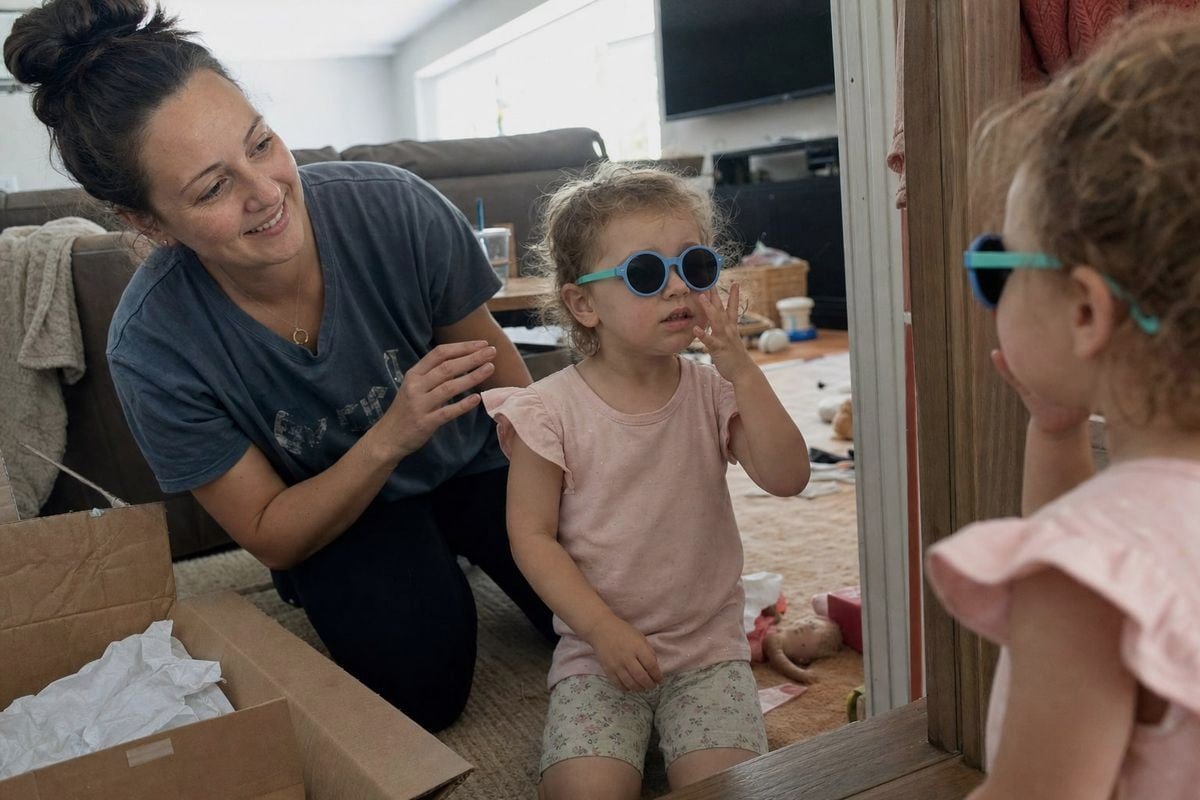
Helping kids get used to wearing sunglasses 1 is a challenge I hear about constantly from the children’s brands our Taizhou factory supplies. Parents buy a cute pair, and the child rips it off in three seconds. The brand gets a return, a bad review, and a frustrated customer. But here is the good news our fifteen years of building flexible TPEE and TR90 2 kids’ frames has taught us: resistance is rarely about stubbornness. It is almost always about comfort, pressure, and pacing — and all three can be fixed with a simple, gradual plan.
To help kids get used to wearing sunglasses, let the child pick the pair, start with a few seconds of wear indoors, model the habit yourself, praise every attempt, and build up slowly to full outdoor use. Comfortable, flexible, well-fitting frames make acceptance far easier.
That is the short answer. Now let me walk you through each stage in detail, from the first gentle introduction to solving refusals and checking the fit.
What Are the Best Ways to Introduce My Child to Sunglasses Gradually?
A buyer from Australia once told me her best-selling tip card, packed inside every box, simply said: "Start with sixty seconds." Our team now designs samples with that gradual first wear in mind.
Introduce sunglasses gradually by letting the child hold and play with them first, then trying them on indoors at a mirror for seconds, then wearing them briefly outside. Increase duration daily, keep sessions positive, and never force all-day wear at the start.
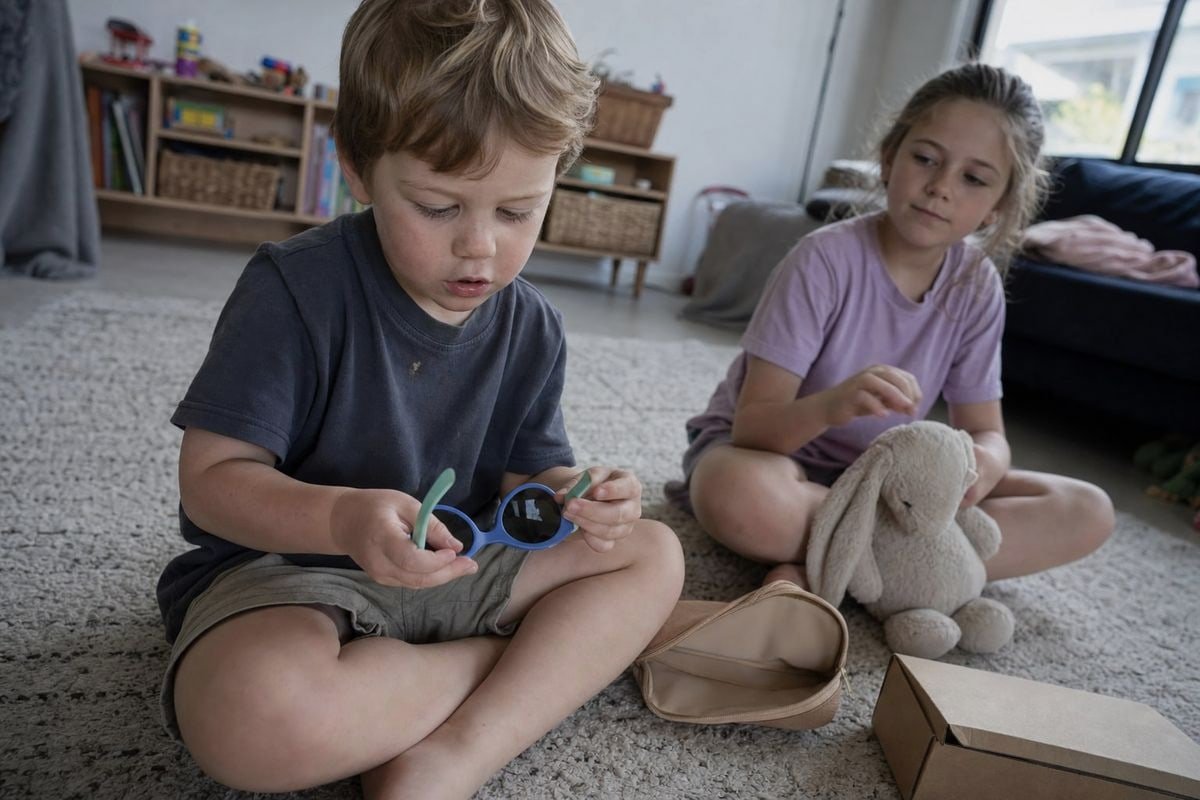
Gradual habituation 3 works because a child is not just learning to wear sunglasses. The child is learning to tolerate an object on the face, in the same way they once learned hats and shoes. So the first goal is familiarity, not protection time. Let your child touch the sunglasses, open and close the temples, and even put them on a stuffed animal. This lowers tactile resistance before the glasses ever touch their nose.
A Simple Day-by-Day Progression
Here is the plan I usually suggest to the parent-facing brands we supply:
| Étape | Activity | Goal |
|---|---|---|
| Day 1 | Child holds, inspects, and plays with the sunglasses | Familiarity and ownership |
| Day 2 | A few seconds of wear indoors, at a mirror | Visual confidence |
| Day 3 | Short wear outside — a walk or a car ride | First real-world tolerance |
| Week 1 | Five to ten minutes at the playground or park | Wearing while distracted by fun |
| Week 2+ | Full outings, errands, beach days | Sunglasses become routine |
Two extra tips make this progression stick. First, pair the glasses with enjoyable activities, so the child links sunglasses with fun, not restriction. Second, keep the pair in a fixed spot near the door, and put them on as part of the "going outside" ritual. Routine, not rules, builds the habit. Experts suggest starting the habit early — some say from six months, others around age one — but the consensus is simple: introduce early, and let tolerance build at the child's pace.
Why Does My Child Refuse to Wear Sunglasses, and How Can I Fix It?
During a QC review last year, we bent a batch of rigid competitor frames next to our TPEE samples, and the difference explained half the refusal complaints buyers had forwarded to us.
Children usually refuse sunglasses because the frames pinch, slip, or feel strange — not because they dislike sunglasses. Fix it by checking fit and comfort first, then use modeling, choice, praise, and calm repetition instead of pressure or punishment.
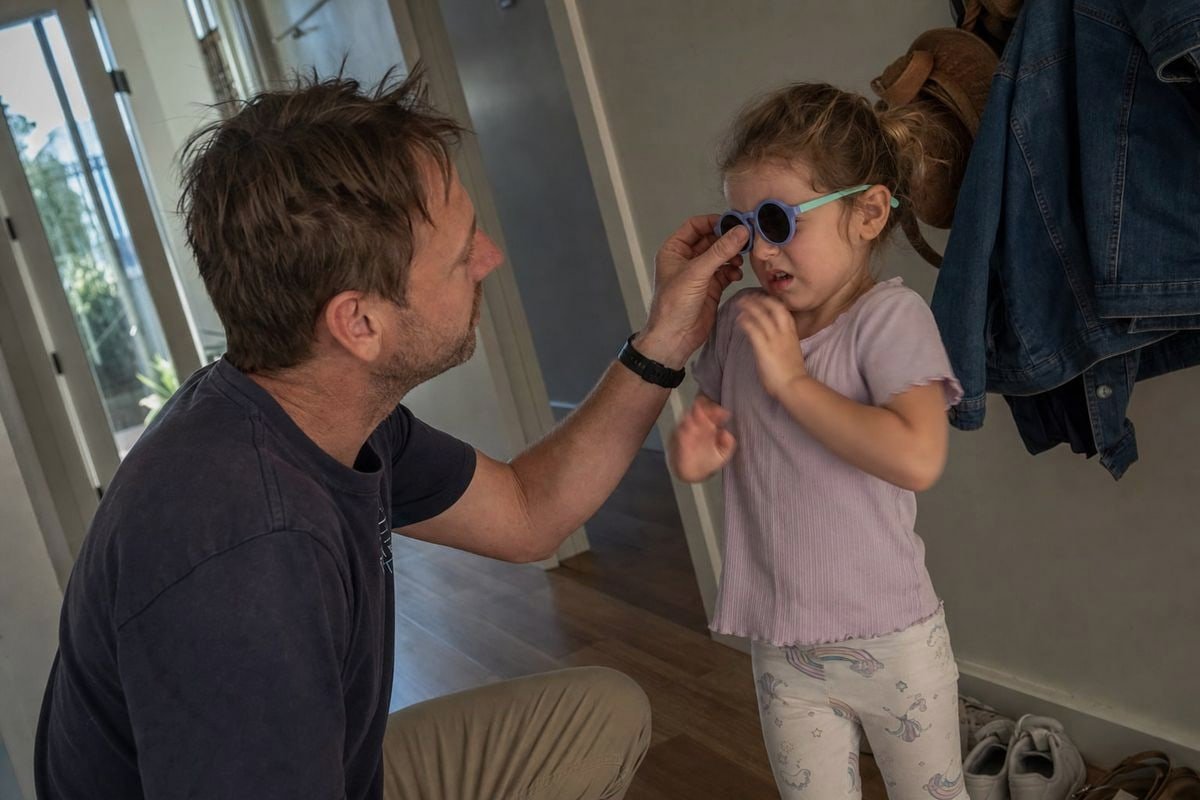
Before you assume your child is “just being difficult”, run through the real causes of refusal. In our experience, most rejections trace back to a physical or emotional trigger you can identify and remove.
Match the Cause to the Fix
| Refusal Cause | What It Looks Like | The Fix |
|---|---|---|
| Sensory discomfort | Rips glasses off within seconds | Switch to lighter, flexible frames; check nose and ear pressure |
| Poor fit | Glasses slide down, child pushes them up or off | Resize; add a strap or silicone ear hooks 4 |
| No sense of ownership | Refuses only the pair you chose | Let the child pick the color and style |
| Novelty fear | Cries or turns away from the glasses | Slow down; return to holding and mirror play |
| Power struggle | Refusal escalates when you insist | Stop forcing; model the habit and praise calmly |
Modeling and Motivation Beat Logic
Young children copy what they see. If you wear your own sunglasses every time you step outside, your child learns this is simply what people do. Add positive reinforcement 5 — specific praise, high fives, stickers, or a fun photo — every time the glasses stay on. Keep the explanation kid-friendly too: "These keep the bright sun out of your eyes so playing outside feels better."
The key distinction is calm repetition versus conflict. Keep offering the sunglasses. Keep praising. But if today becomes a battle, put them away and try again tomorrow. Persistence works; pressure backfires.
How Do I Choose Sunglasses That Feel Comfortable Enough for My Child to Keep On?
Material choice is the trade-off we weigh most often when developing new styles: a frame stiff enough to hold its shape, yet soft enough that a toddler forgets it is there. That balance is why our factory works almost exclusively in TPEE and TR90.
Choose lightweight, flexible frames sized for a child's face, with smooth edges, soft nose fit, and UV400 lenses. Let the child pick the color or style, and add a strap for active play. Comfort drives compliance more than any other factor.
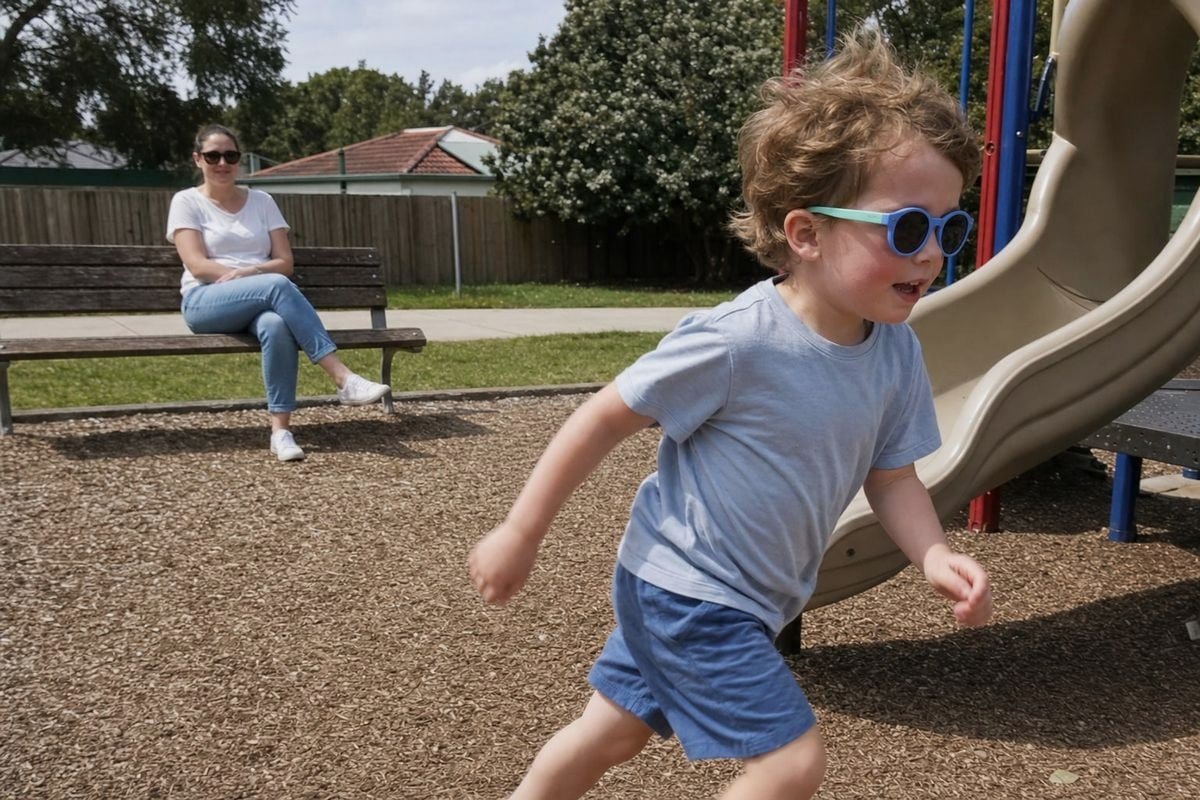
Comfort is not a bonus feature for children's eyewear. It is the deciding factor. An adult will tolerate a slightly heavy frame for the sake of style. A three-year-old will not. So when you evaluate a pair, judge it the way our engineers judge samples: by material, weight, flexibility, and fit — in that order.
What to Look For, Feature by Feature
| Feature | Why It Matters | What "Good" Looks Like |
|---|---|---|
| Frame material | Rigid plastic pinches and cracks | Flexible TPEE or TR90 that bends and returns to shape |
| Weight | Heavy frames press on the nose | Noticeably light in the hand; child forgets it is on |
| Lens protection | The whole point of the habit | verres UV400 6; polarized for water, snow, or bright glare |
| Edges and hinges | Sharp points scratch small faces | Smooth finishes, no exposed sharp screws |
| Style ownership | Children wear what they chose | Fun colors and shapes the child picks personally |
| Retention | Active kids shake glasses loose | Optional strap, headband, or silicone ear hooks |
Style matters more than many parents expect. In our catalog of roughly eight hundred existing kids' styles, the playful two-tone rounds — like a periwinkle-blue front with mint-teal temples — win over toddlers, while older, sporty kids gravitate toward bold wraparound shields with mirrored gradient lenses in orange, gold, and blue. Offer your child two or three suitable options and let them make the final call. A pair the child chose is a pair the child defends, wears, and shows off.
What Signs Tell Me My Child's Sunglasses Fit Safely and Properly?
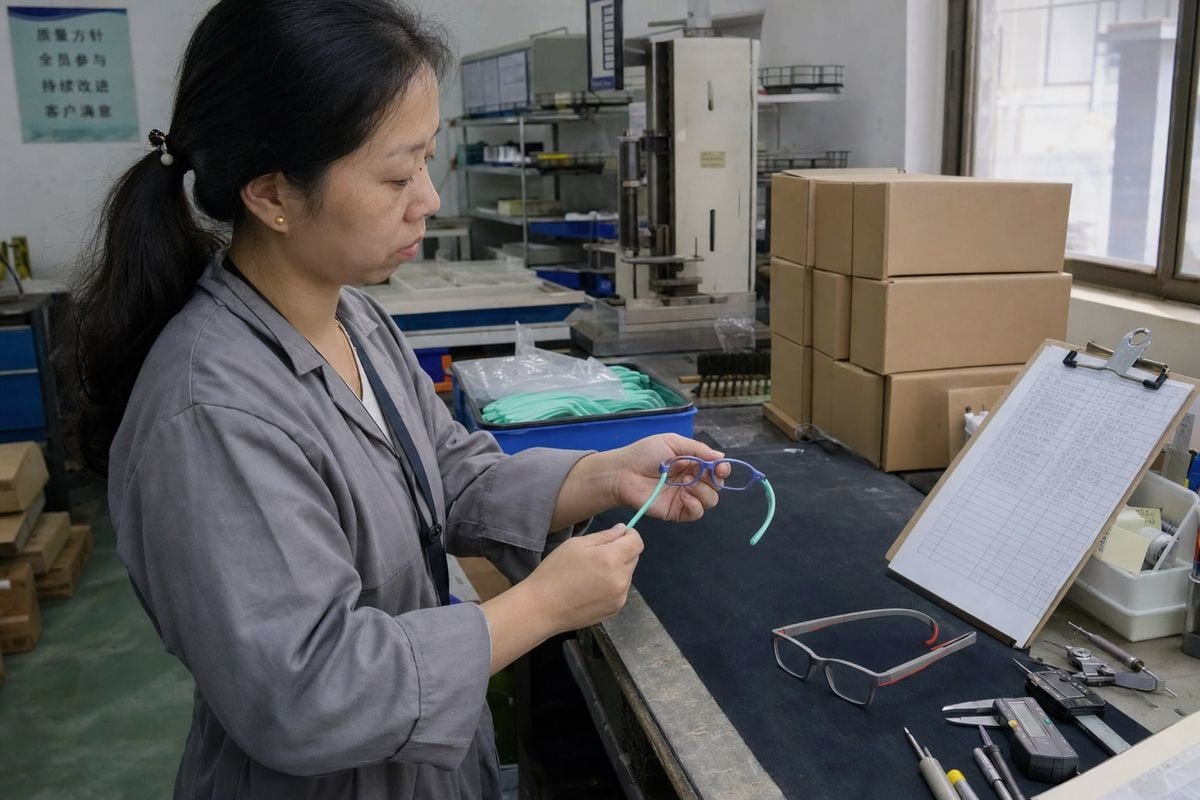
One lesson our 5S-managed workshop drilled into me early: a frame that measures perfectly on the bench can still fit poorly on a real child, so we always check fit signals on actual faces during sampling.
Well-fitting kids' sunglasses sit level without sliding, leave no red marks on the nose or ears, do not touch the eyelashes, cover the eyes fully, and stay in place when the child bends, runs, or shakes their head.
You do not need optical training to check fit at home. You need two minutes and a short checklist. Run through it when the glasses first arrive, and again every few months, because children's faces grow fast.
The Two-Minute Fit Check
- Position. The glasses sit level across the face, centered on the nose, with the eyes roughly in the middle of each lens.
- Pressure marks. After ten minutes of wear, remove the glasses. Look for red lines on the nose bridge 7 or behind the ears. Marks mean the frame is too tight.
- Slide test. Ask your child to look down at their shoes, then shake their head gently. The glasses should shift only slightly, not slide down or fall off.
- Lash clearance. Eyelashes should not brush the lenses when the child blinks. If they do, the frame sits too close.
- Coverage. The lenses should cover the eyes fully, including some side coverage, so bright light does not leak in around the edges.
- Play test. Watch your child run and climb. Constant readjusting means the fit is off, not that the child dislikes the glasses.
If the frame passes position and pressure checks but still slips during active play, do not size up. Add a retention strap or silicone ear hooks instead. And remember that fit is a moving target: a pair that fit perfectly at age two may pinch at age four. When a previously accepted pair suddenly gets rejected, check the fit before blaming a phase. In sampling reviews, we treat sudden refusal as a fit signal first — and parents should too.
Conclusion
Resistance is normal, not permanent. Comfortable flexible frames, child-chosen styles, short first sessions, parental modeling, and calm praise turn kids' sunglasses from a daily battle into a lifelong habit.
Notes de bas de page
1. EPA sun safety guidance underscores why establishing a sunglasses habit protects children’s eyes. ↩︎
2. Background on thermoplastic elastomer materials used in flexible kids’ frame construction. ↩︎
3. Explains the psychological process behind gradually building tolerance to a new sensation. ↩︎
4. Background on the silicone material commonly used for flexible eyewear retention hooks. ↩︎
5. CDC parenting resource supports using praise and reinforcement to build children’s habits. ↩︎
6. FDA guidance confirms UV400 lenses are essential for protecting children’s eyes from UV rays. ↩︎
7. Ophthalmology source supports guidance on proper sunglasses fit and pressure points for children. ↩︎
Plus d'articles que vous pourriez aimer

1 août 2026
L'usine doit-elle gérer l'emballage et l'étiquetage des lunettes pour enfants, ou utiliser un fournisseur désigné ?

1 août 2026
Entrepôt propre vs. exécution directe par le fournisseur : lequel réduit les coûts de retour pour les marques de lunettes pour enfants ?

1 août 2026
Entrepôt direct au port ou staging outre-mer : lequel permet d'économiser le plus sur l'expédition des lunettes pour enfants ?
Vous recherchez un partenaire fiable en lunetterie pour enfants ?
Explorez plus de 800 styles prêts et un support OEM/ODM complet adapté à votre marque.
Contactez-nous English
  Español de México
  Deutsch
  Français
  日本語
日本語  العربية
  Português do Brasil