How to Explain Why Supplied Kids Sunglasses Can’t Be Found Online as Same Model?
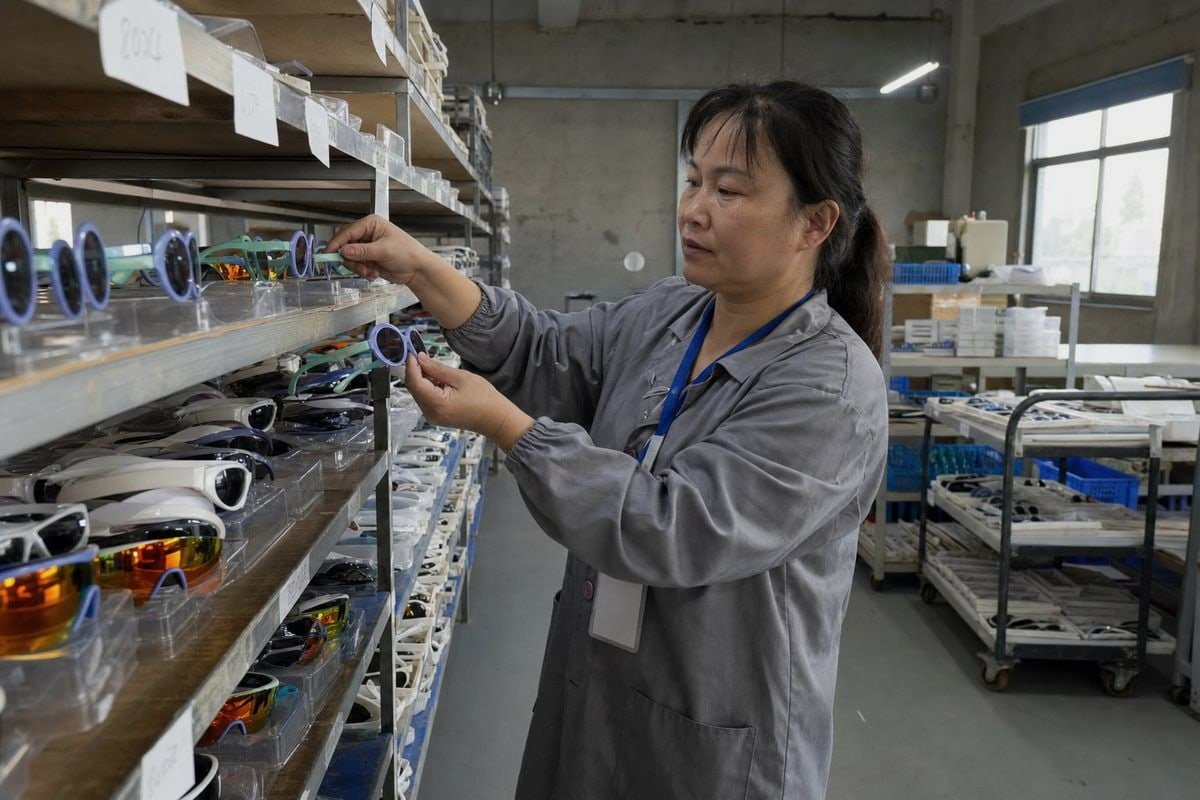
Buyers often ask us why supplied kids sunglasses can’t be found online as the same model child-safe hinges 1. It worries them. Their customers Google the style, find nothing, and start doubting the product. Left unanswered, that doubt kills reorders. In our Taizhou factory, we coach brand clients through this exact conversation every season.
Supplied kids sunglasses often can’t be found online because they are OEM or private label products made from proprietary frame molds, sold under exclusive distribution agreements, or produced with brand-specific SKUs. Absence from search results reflects controlled distribution and traceability choices, not fake or low-quality eyewear.
That is the short answer. But your customers need more than one sentence. Below, I break down each part of the explanation. I also show you how to turn this question into a trust-building moment instead of a red flag.
How can I explain that my kids sunglasses use a manufacturer's private mold instead of a public catalog model?
Last spring, a buyer from Australia emailed me in a mild panic. Her retail partner had searched her frame style online and found zero matches. She asked if that was normal. It absolutely is — and here is why.
Explain that private mold products are built from proprietary frame molds owned by the factory or the brand, never listed in public catalogs. The design exists only within your supply chain, so search engines have no product page to index, unlike mass-distributed generic styles.
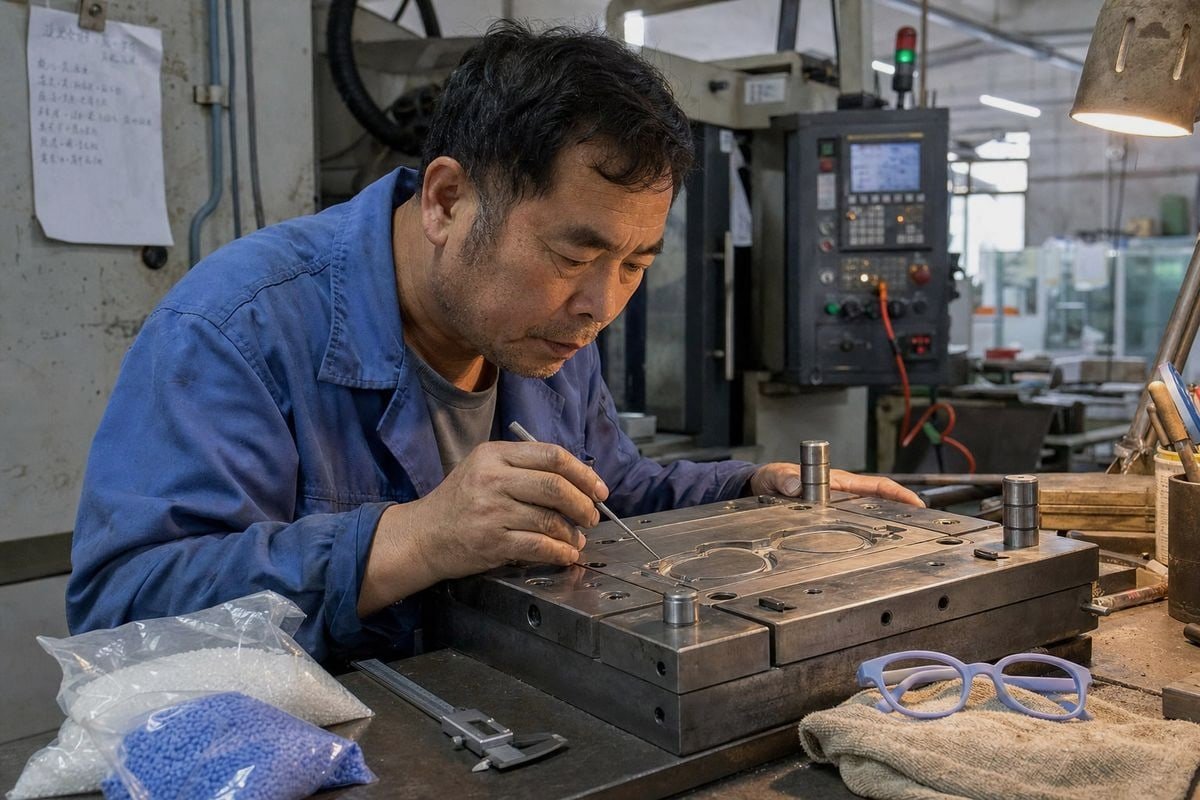
The core idea is simple: not every product is meant to be publicly searchable. In OEM eyewear production, factories like ours maintain a library of styles — we hold around 800 existing designs in TPEE and TR90 2 — and many of those styles never appear on any consumer-facing website. They live in B2B catalogs, sample rooms, and trade show booths. That is by design, not by accident.
What a private mold actually means
A private mold is tooling that produces one specific frame shape. When a brand commissions a new design from us, or selects a factory style for exclusive use, that mold output belongs to a closed supply chain 3. There is no "official" public listing because the manufacturer never sells that frame directly to consumers.
Here is how the three common sourcing paths compare:
| Sourcing Path | Who Owns the Design | Public Listing? | Searchable Model Number? |
|---|---|---|---|
| Public catalog / generic import | No one exclusively | Yes, often many duplicates | Sometimes, but inconsistent |
| Factory private mold (ODM) | Factory, licensed to buyers | No | Only internal SKU |
| Brand-commissioned mold (OEM) | The brand | Only on the brand's own site | Brand-assigned SKU |
When you explain this to a customer, use plain language: "This frame was developed through private label manufacturing 4. The design is ours. It was never published in a public catalog, so you won't find it under a generic model number anywhere online."
Turn it into a selling point
In our experience, buyers who frame exclusivity as a feature win the conversation. A frame nobody else can source is a competitive moat. A frame anyone can find on ten marketplaces at half your price is a liability. Say it that way, and the "missing" search result becomes proof of exclusivity, not a problem.
Why do OEM eyewear factories avoid listing exact styles online, and how do I communicate this to my customers?
There is a trade-off we weigh with every new style: publish it widely and risk copycats, or keep it in the B2B channel and protect our brand clients. After fifteen years of eyewear production, we almost always choose protection.
OEM factories avoid public listings to protect clients under exclusive distribution agreements, prevent design copying, avoid channel conflict with their own buyers, and keep pricing confidential. Tell customers the factory deliberately shields the style so your brand remains the only retail source.
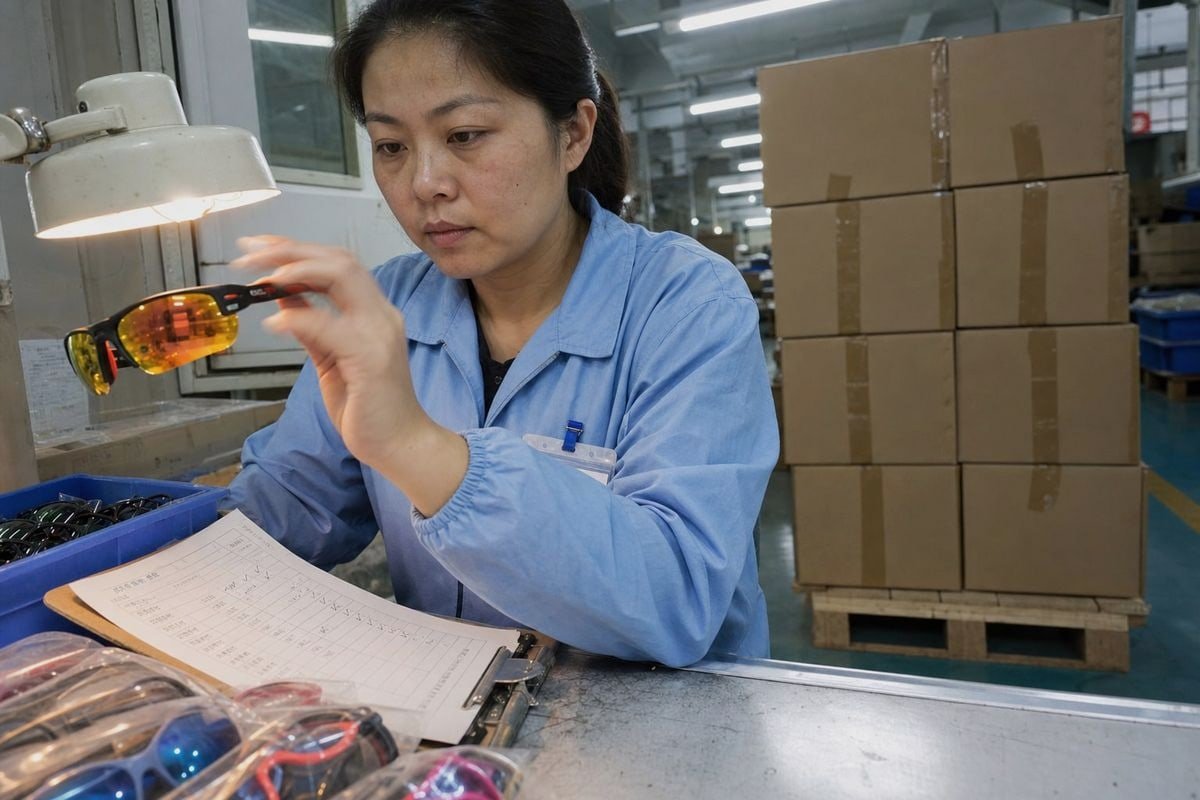
Think about our position for a moment. Our customers are children's product brands, importers, and distributors in more than twenty countries. If we listed every style publicly with photos and model numbers, three bad things would happen fast.
The three reasons factories stay quiet online
First, copycat risk. A published frame design gets duplicated by lower-tier workshops within weeks. Those copies often skip the safety layer — proper verres UV400 5, flexible TPEE temples, child-safe hinges — while looking identical in photos. Keeping styles unlisted slows that theft.
Second, channel conflict. If a factory sells the same visible style to the public, it competes directly with its own B2B buyers. No serious brand would tolerate that. Wholesale product sourcing depends on the factory staying invisible to the end consumer.
Third, exclusivity contracts. Many of our styles are locked to one brand per market under an exclusive distribution agreement 6. Publishing them would breach those commitments. Some styles also feed the promotional merchandise industry — gift-with-purchase bundles and event giveaways — which are never meant to appear as standalone retail listings at all.
A script you can adapt for customers
When a retail partner or end customer asks, you can say something like this: "Our sunglasses are produced through a dedicated OEM eyewear production partnership. The factory does not publish styles online — that protects our design from copies and keeps this model exclusive to us. That is why you'll only find it under our brand, on our channels."
Short, honest, and confident. In my experience, that answer ends the doubt in one message.
What should I tell buyers who search for my supplier's model number and find nothing on Google?
A Japanese client once forwarded me a customer complaint: the buyer had typed our internal SKU into Google, found nothing, and assumed the worst. We fixed it with one paragraph of explanation. Here is the logic behind that paragraph.
Tell them the model number is an internal manufacturing SKU, not a retail identifier. Factory SKUs track molds, colorways, and production batches inside the supply chain. They are never indexed online, so a zero-result search is expected and completely normal for OEM products.
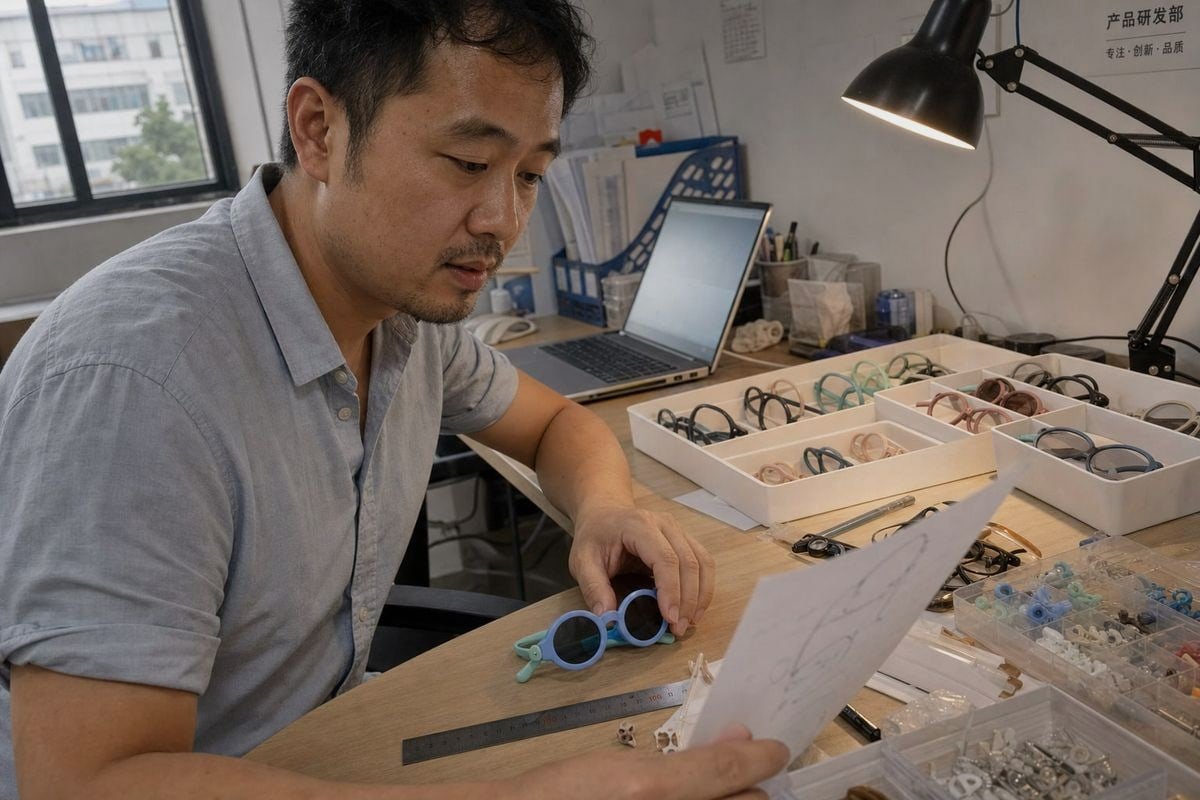
The confusion comes from a reasonable assumption: people think every model number works like a Ray-Ban code printed inside the temple, which leads straight to a product page. Big licensed brands build that traceability on purpose. OEM supply chains build a different kind of traceability — one that points inward, not outward.
What an internal SKU actually encodes
At our factory, a single frame shape can carry multiple SKUs. SKU differentiation happens for reasons the end consumer never sees:
| Reason for a New SKU | Example | Visible to Consumers? |
|---|---|---|
| Colorway change | Periwinkle-blue front with mint-teal temples vs. all-black | No |
| Size or age variant | Toddler fit vs. youth fit of the same shape | No |
| Lens upgrade | Standard UV400 vs. polarized lens option | Rarely |
| Compliance revision | Updated marking for a new regional standard | No |
| Material batch adjustment | TPEE formula tweak for flexibility tolerance | No |
| Client-specific version | Same mold with custom logo imprinting | Only as the client's brand |
None of these codes get published. They exist so we can trace a batch back to a mold, a material lot, and a QC record. That is real traceability — it just doesn't live on Google.
The honest search-result explanation
Also remind buyers that even legitimate retail listings vanish. Kids sunglasses are seasonal and fast-moving. Discontinued product lines get purged from e-commerce sites every year, and marketplace listings churn constantly. So even a once-listed model can disappear from search. Absence from results is weak evidence of anything. The frame in their hands, its markings, and its documentation are the strong evidence — which brings us to the next section.
How do I reassure my retail customers that an unlisted sunglasses model is still authentic and quality-checked?
One lesson I learned early in exporting: buyers don't actually need a Google result. They need proof of care. When we ship a container of kids frames from our 5S-managed workshop, the documentation traveling with it does more reassuring than any search engine ever could.
Show evidence instead of listings: UV400 test reports, CE or relevant compliance markings, lens category labels, factory QC records, and consistent branded packaging. Authenticity for private label eyewear is proven by documentation and physical markings, not by search engine visibility.

Here is the uncomfortable truth your customers half-suspect, and you should address it head-on: some unlisted kids sunglasses on marketplaces really are poorly documented. Consumer investigations, such as testing by Which?, have found children's sunglasses sold online that lacked required CE or UKCA markings 7 and failed to deliver claimed UV protection. Poor compliance and poor cataloging often travel together. So "you can't find it online" can be a warning sign — for products with no paper trail.
That is exactly why your answer cannot be "trust me." It must be "here is the file."
The reassurance checklist
Give retail partners a package like this, and the online-search question disappears:
| Proof Item | What It Demonstrates | Who Provides It |
|---|---|---|
| UV400 / lens test report | Real UV protection, not just a claim | Factory or third-party lab |
| Compliance markings (e.g., CE) | Legal conformity for the target market | Factory, verified by importer |
| Material declaration (TPEE / TR90) | Child-safe, flexible, environmentally friendly materials | Usine |
| Batch QC inspection record | Every production run was checked | Factory QC team |
| Branded, retail-ready packaging | Professional white label branding, consistent identity | Brand + factory ODM support |
Make the brand the anchor, not the model number
The deeper fix is positioning. When packaging, custom logo imprinting, hang tags, and care cards all carry your brand consistently, customers stop searching for a factory model and start searching for you. That is the whole point of white label branding done properly: your brand becomes the searchable identity. We support clients with custom colors, lenses, packaging, and accessories precisely so their product looks like a documented retail item — because it is one.
Conclusion
Unsearchable supplied kids sunglasses feel alarming, but the cause is usually private molds, exclusive agreements, and internal SKUs. Explain the closed supply chain, then prove quality with documentation — and doubt becomes confidence.
Notes de bas de page
1. CPSC safety guidance relevant to hardware and hinge safety in children’s products. ↩︎
2. Authoritative scientific overview of thermoplastic elastomers used in flexible eyewear frames. ↩︎
3. Background concept clarifying how closed supply chains function in manufacturing. ↩︎
4. Background on private label manufacturing practices referenced in the customer script. ↩︎
5. FDA consumer guidance on verifying genuine UV protection claims in sunglasses. ↩︎
6. Explains the legal concept of exclusive distribution agreements mentioned in the text. ↩︎
7. Official UK government explanation of compliance marking requirements for consumer goods. ↩︎
Plus d'articles que vous pourriez aimer
1 août 2026
L'usine doit-elle gérer l'emballage et l'étiquetage des lunettes pour enfants, ou utiliser un fournisseur désigné ?
1 août 2026
Entrepôt propre vs. exécution directe par le fournisseur : lequel réduit les coûts de retour pour les marques de lunettes pour enfants ?

1 août 2026
Entrepôt direct au port ou staging outre-mer : lequel permet d'économiser le plus sur l'expédition des lunettes pour enfants ?
Vous recherchez un partenaire fiable en lunetterie pour enfants ?
Explorez plus de 800 styles prêts et un support OEM/ODM complet adapté à votre marque.
Contactez-nous English
  Español de México
  Deutsch
  Français
  日本語
日本語  العربية
  Português do Brasil