How to Evaluate a Supplier’s Style Development and Customization for Kids’ Sunglasses?
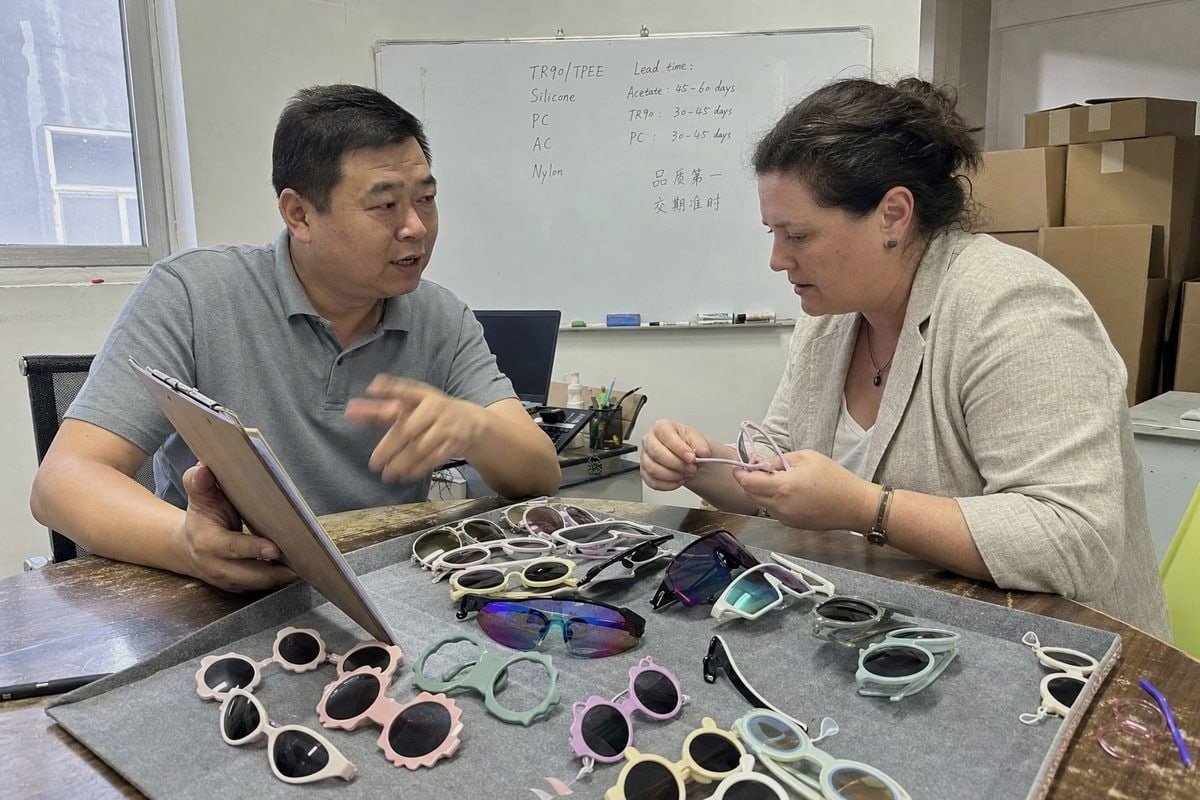
Evaluating a supplier’s style development and customization for kids’ sunglasses is where many brands stumble. On our production line in Taizhou, I’ve seen buyers arrive with beautiful designs — and broken supplier stories.
Evaluate a supplier’s style development and customization for kids’ sunglasses by checking four things: the depth of their ready-made style library, the layers of OEM/ODM customization they offer, their real expertise in flexible materials like TPEE and TR90, and their sampling and quality control discipline.
Each of those four checks answers a specific question. Let’s walk through them one by one, so you know exactly what to ask before you sign anything.
How many ready-made styles can a supplier offer before I invest in custom molds?
A buyer from Australia once told me she almost spent five figures on a new mold — before seeing that our existing library already held the shape she wanted. That conversation changed how I explain style development.
A capable kids' sunglasses supplier should offer several hundred ready-made styles — ideally 500 to 800 or more — segmented by age group, so you can launch a brand, test the market, and validate demand without investing in expensive custom molds upfront.
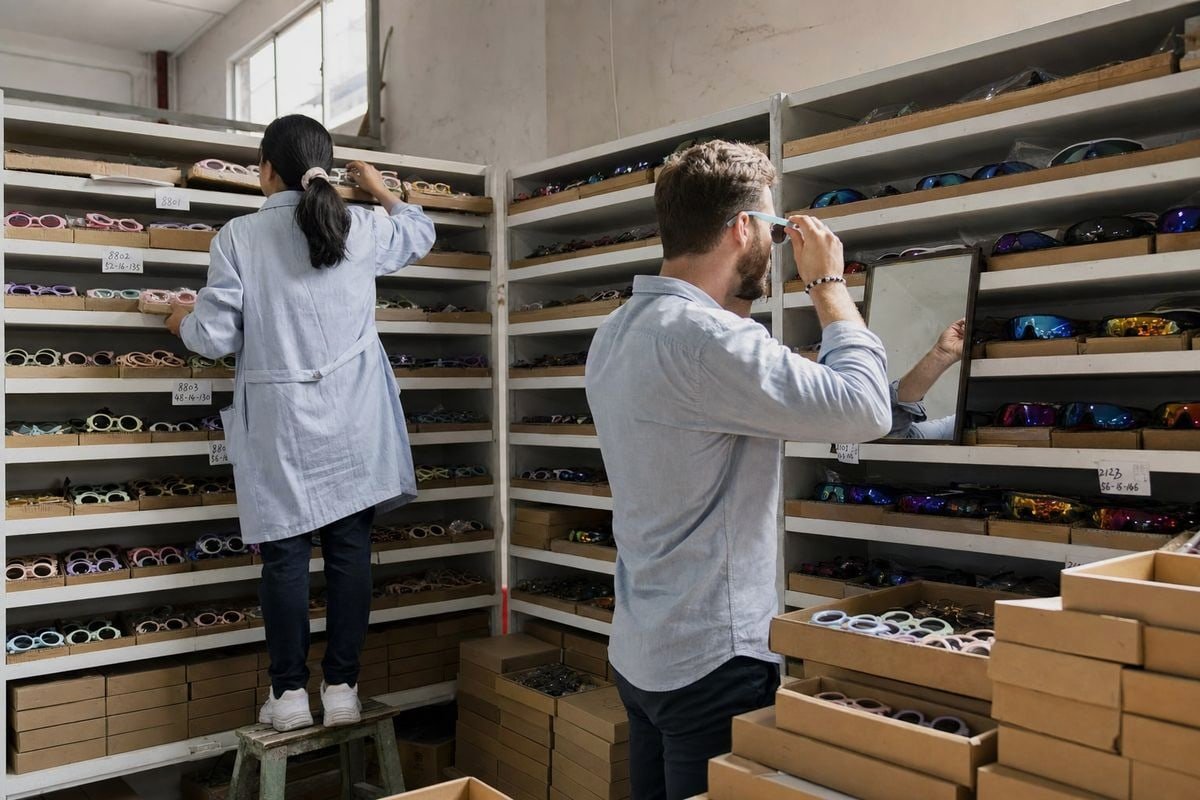
A large existing library is not just a convenience. It is proof of development history. At our factory, we maintain roughly 800 existing styles, and each one represents a mold that was designed, tested, and refined for children's faces. When a supplier shows you that kind of depth, you learn three things at once. First, they understand trend forecasting and design across seasons, from pastel round frames with soft-touch matte finishes to sporty wraparound shields with mirrored gradient lenses. Second, they have already solved the fit geometry — bridge width, temple length, and frame width — for different age brackets. Third, they can support you with private label branding on proven shapes instead of gambling on unproven tooling.
Why age segmentation matters more than style count
Eight hundred styles mean little if they are all resized adult frames. Ask whether the supplier uses dedicated molds built for children's flatter nose bridges and lower ear positions. Ask for measurement sheets that go beyond total width. A genuine children's specialist will hand you bridge width, temple length, and lens height without hesitation.
How to use an existing library strategically
| Launch stage | Smart approach | Risk if you skip it |
|---|---|---|
| Market test | Pick 5–10 existing styles, add your logo | Overcommitting to unproven designs |
| First collection | Modify existing styles: colors, lenses, packaging | Paying for tooling before demand exists |
| Brand scaling | Invest in 1–2 custom molds for hero styles | Diluting budget across too many molds |
| Seasonal drops | Mix library styles with custom colorways | Slow speed-to-market |
The pattern I recommend to new brands is simple. Start with the library. Prove demand. Then invest in molds only for the styles your customers already love.
What level of OEM/ODM customization should I expect for colors, logos, and packaging?
There is a trade-off I discuss with almost every buyer: how deep should customization go before it slows you down? Our OEM and ODM services 1 span everything from a simple temple logo to full collection development, but not every project needs every layer.
Expect at least four customization layers from a serious supplier: branding only (logos, packaging), existing-style modification (colors, lens tints), functional customization (temples, nose fit, materials), and full OEM/ODM mold development. Each layer should have a clearly stated MOQ and lead time.
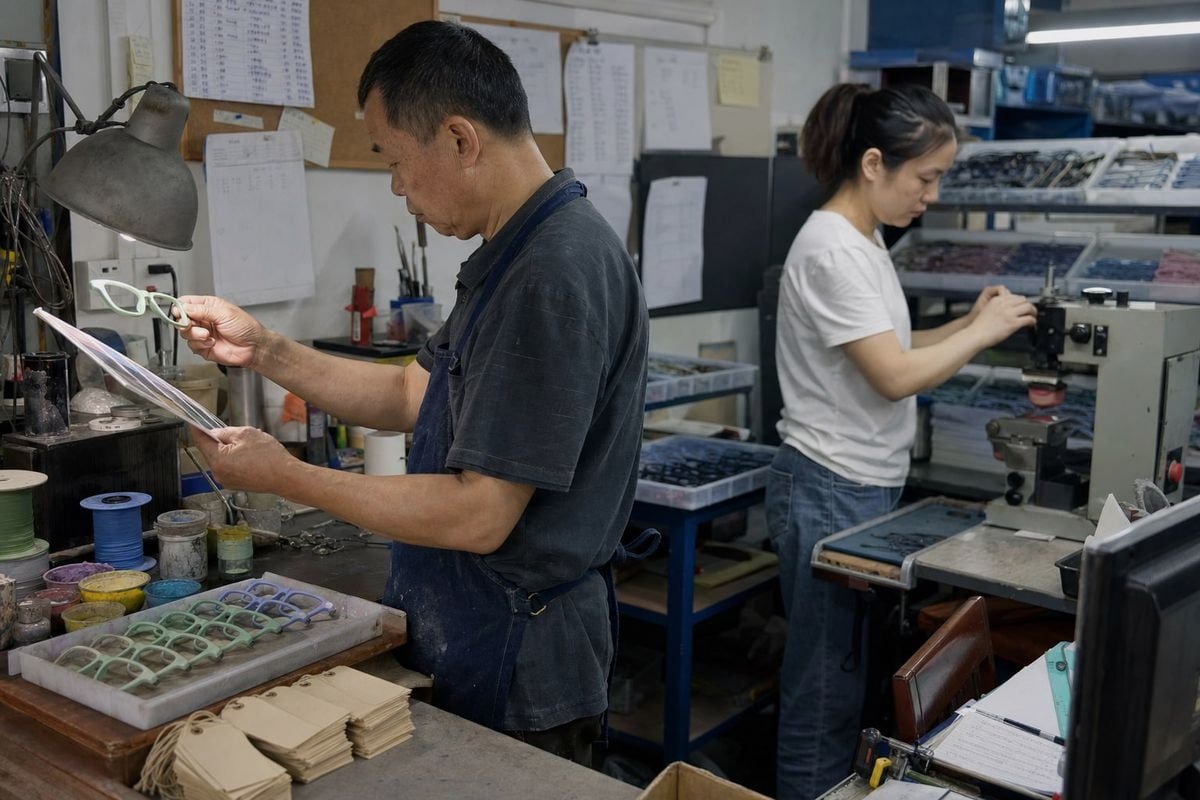
Customization is best judged in layers, because suppliers vary enormously in how deep they can actually go. Many can print a logo. Far fewer can develop a new frame shape, coordinate polarized lens technology 2 options, and deliver retail-ready packaging as one coherent program. Here is how I break it down for buyers:
| Level | What changes | Typical MOQ impact | Tooling needed? |
|---|---|---|---|
| 1: Branding only | Logo position, hang tags, packaging, labels | Lowest | No |
| 2: Style modification | Frame colors, lens tints, mirror coatings, accessories | Low to medium | No |
| 3: Functional customization | Temple length, nose fit, material swaps, adjustable features | Medium | Sometimes |
| 4: Full OEM/ODM | New molds, new shapes, age-specific collections | Highest | Yes |
Questions that reveal true customization depth
Ask the supplier: which elements can change on existing styles, and which require new tooling? A capable partner answers precisely. A weak one gives vague promises. Also ask about Minimum Order Quantity 3 per level. Logo-only work should carry a much lower MOQ than a new mold. Ask whether they keep mold files for reorders — this protects your repeat production.
Packaging is part of the product
For children's eyewear, packaging is not an afterthought. Gift-ready boxes, cases, cleaning cloths, and display-ready presentation directly affect retail sell-through. In our experience exporting to buyers in over twenty countries, brands that treat packaging as part of the design brief see far stronger shelf performance. Some buyers even request 3D digital assets during development, which supports virtual try-on and e-commerce visualization before production begins.
How do I know if a supplier truly understands flexible materials like TPEE and TR90?
Fifteen years of working with these materials taught our engineers one hard lesson: TPEE and TR90 forgive nothing. Get the injection temperature or wall thickness slightly wrong, and the frame either warps or loses the flexibility that makes it child-safe in the first place.
A supplier truly understands TPEE and TR90 when they can explain material selection by age group, demonstrate frames that twist and recover without stress marks, provide BPA-free material documentation, and show combined constructions like TR90 fronts with TPEE flexible temples.
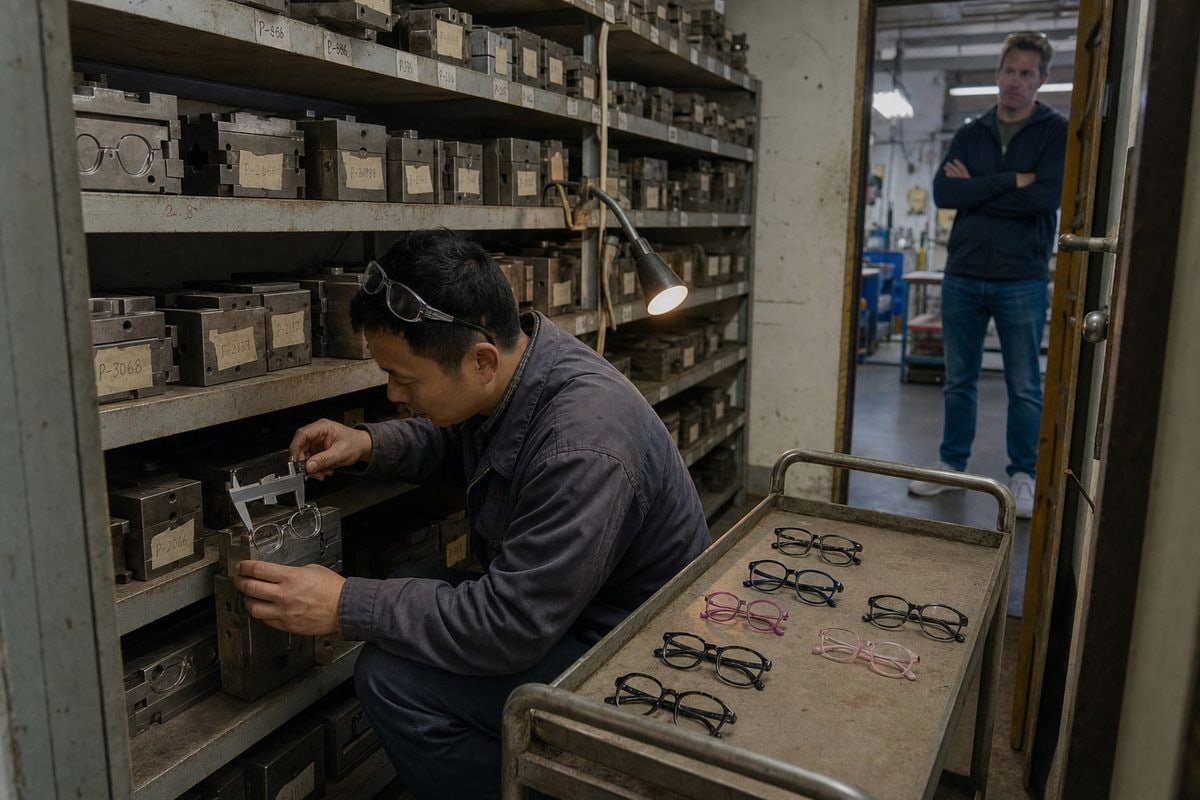
Material expertise is the hardest thing to fake, so this section deserves your closest attention. TPEE flexible frames 4 are soft, elastic, and nearly unbreakable in a child's hands — ideal for toddlers who bend, chew, and sit on their sunglasses. TR90 is lightweight, memory-flexible, and holds color and finish beautifully, which suits older kids and print-heavy designs. A supplier who genuinely works with both can match the material to the child, not just to the price point.
A simple hands-on test you can do with any sample
- Twist the frame gently along its length. It should flex smoothly and return to shape with no white stress lines.
- Press the temple tips inward. Flexible temples should give without creaking at the hinge.
- Run a finger along every inner edge. TPEE and TR90 should be polished smooth, with no sharp flash lines from molding.
- Check the weight. Both materials should feel noticeably lighter than standard acetate or cheap PC frames.
- Smell the frame. Quality BPA-free materials have little to no chemical odor.
Material knowledge shows up in the conversation
Ask why they would recommend TPEE over TR90 for a two-year-old. A real expert will talk about ergonomic fit for toddlers, chew resistance, and hinge-free or seamless constructions that suit sensory-sensitive children. They should also discuss lead-free paints and coatings 5 without being prompted, and explain how flexibility interacts with wearing stability — a frame that is too soft slips off an active child's face, while one that is too rigid becomes a breakage and safety risk. Some suppliers now also explore bio-based resins for eco-focused brands; ask whether those materials have been tested for high-impact children's use, not just adult frames.
What should I check in the sampling and quality control process before placing a bulk order?
A quality issue we caught years ago still shapes our inspection routine: two pre-production samples from the same order had slightly different temple curves. One workshop fixture had drifted. Since then, our 5S-managed workshop compares multiple samples from separate runs before any bulk approval.
Before a bulk order, check that samples match the target age group's dimensions, have smooth polished edges, stable fit, accurate colors, and durable branding. Request two to three samples from different runs, plus UV400 test reports and safety compliance documentation.
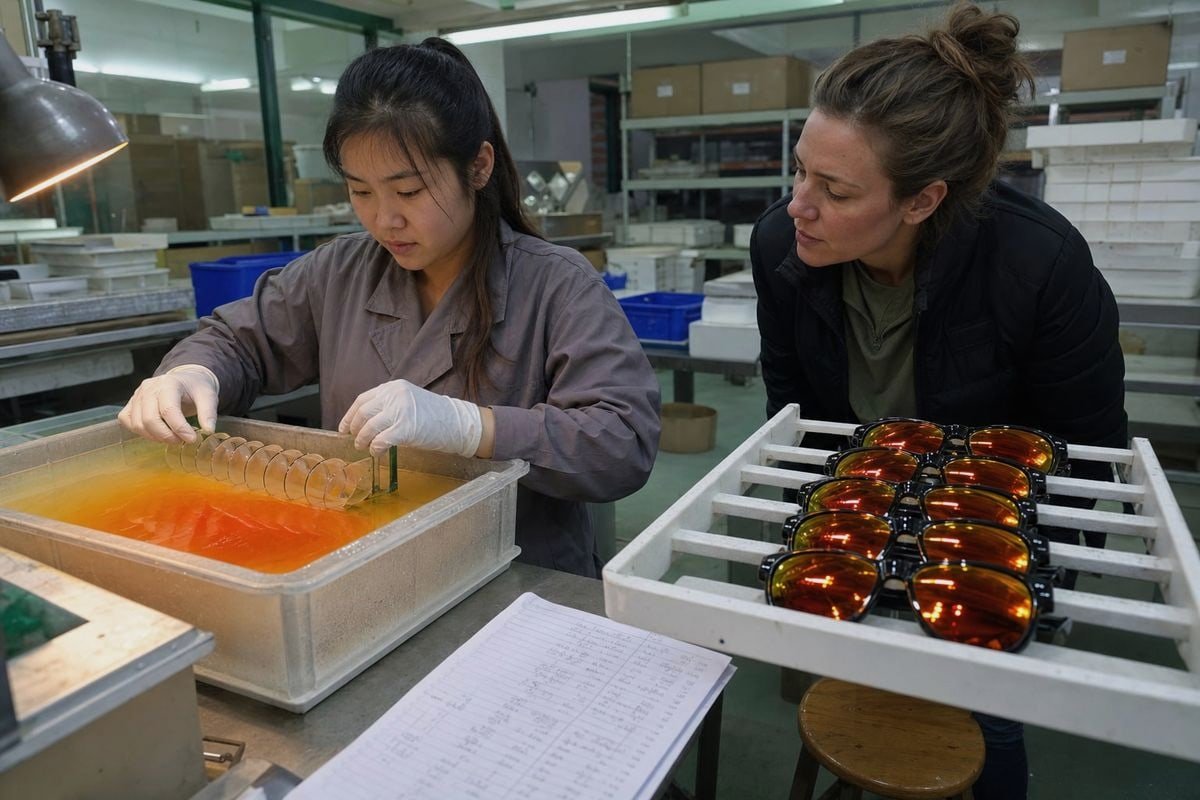
Sampling is not just a preview of your product. It is a test of the supplier's process maturity. A factory can hand-finish one beautiful sample; only a disciplined operation can repeat it ten thousand times. So treat prototype sample production as an audit of the whole system, not a photo opportunity.
Your sample inspection checklist
| Check point | What good looks like | Indicateur rouge |
|---|---|---|
| Frame dimensions | Matches age-group spec sheet exactly | "Close enough" measurements |
| Edge finishing | Rounded, polished, no sharp contact points | Rough flash lines near nose or temples |
| Fit and stability | Sits securely without pressure marks | Slips forward or pinches behind ears |
| Color accuracy | Matches approved Pantone or swatch | Visible batch-to-batch variation |
| Logo durability | Survives rubbing and cleaning tests | Print smears or peels |
| Lens quality | Verified les normes de protection UV400 6, no distortion | Verbal UV claims with no report |
| Consistency | 2–3 samples from different runs match | Only one hand-picked sample offered |
Documentation is part of quality control
Ask for batch-specific test reports, not generic certificates. For lenses, insist on documented UV400 protection standards, and ask about impact-resistance testing for polarized lens technology if you offer polarized options. For markets like the US, confirm the supplier understands CPSIA compliance certification requirements 7, including lead-free paints and small-parts control — loose screws on children's products are a choking hazard, not a cosmetic flaw. If possible, run factory audit procedures yourself or through a third party. A factory that welcomes an audit usually has nothing to hide; one that stalls usually does. Finally, agree in writing on lead-time stages: design confirmation, tooling if needed, material procurement, production, inspection, packaging, and shipping. Vague timelines cause most sourcing disasters, not bad intentions.
Conclusion
Choosing the wrong supplier costs brands seasons of lost momentum. Evaluate style libraries, customization layers, TPEE and TR90 expertise, and sampling discipline — and you'll build kids' eyewear that parents trust.
Notes de bas de page
1. Wikipedia article defining and comparing OEM and ODM manufacturing models and intellectual property. ↩︎
2. Background on polarization physics helps buyers understand this lens technology claim. ↩︎
3. Investopedia defines MOQ, a key business term buyers must understand when negotiating. ↩︎
4. Explains the material class behind TPEE, supporting the article’s technical claims. ↩︎
5. EPA’s lead safety resource supports the article’s emphasis on lead-free children’s product materials. ↩︎
6. WHO fact sheet on UV radiation supports the need for verified UV400 lens protection. ↩︎
7. Authoritative Wikipedia entry explaining US safety standards and certification for children’s products. ↩︎
Plus d'articles que vous pourriez aimer
1 août 2026
L'usine doit-elle gérer l'emballage et l'étiquetage des lunettes pour enfants, ou utiliser un fournisseur désigné ?
1 août 2026
Entrepôt propre vs. exécution directe par le fournisseur : lequel réduit les coûts de retour pour les marques de lunettes pour enfants ?

1 août 2026
Entrepôt direct au port ou staging outre-mer : lequel permet d'économiser le plus sur l'expédition des lunettes pour enfants ?
Vous recherchez un partenaire fiable en lunetterie pour enfants ?
Explorez plus de 800 styles prêts et un support OEM/ODM complet adapté à votre marque.
Contactez-nous English
  Español de México
  Deutsch
  Français
  日本語
日本語  العربية
  Português do Brasil