How to Design a Replacement Policy for Broken Kids’ Optical Frame Temples and Hinges?
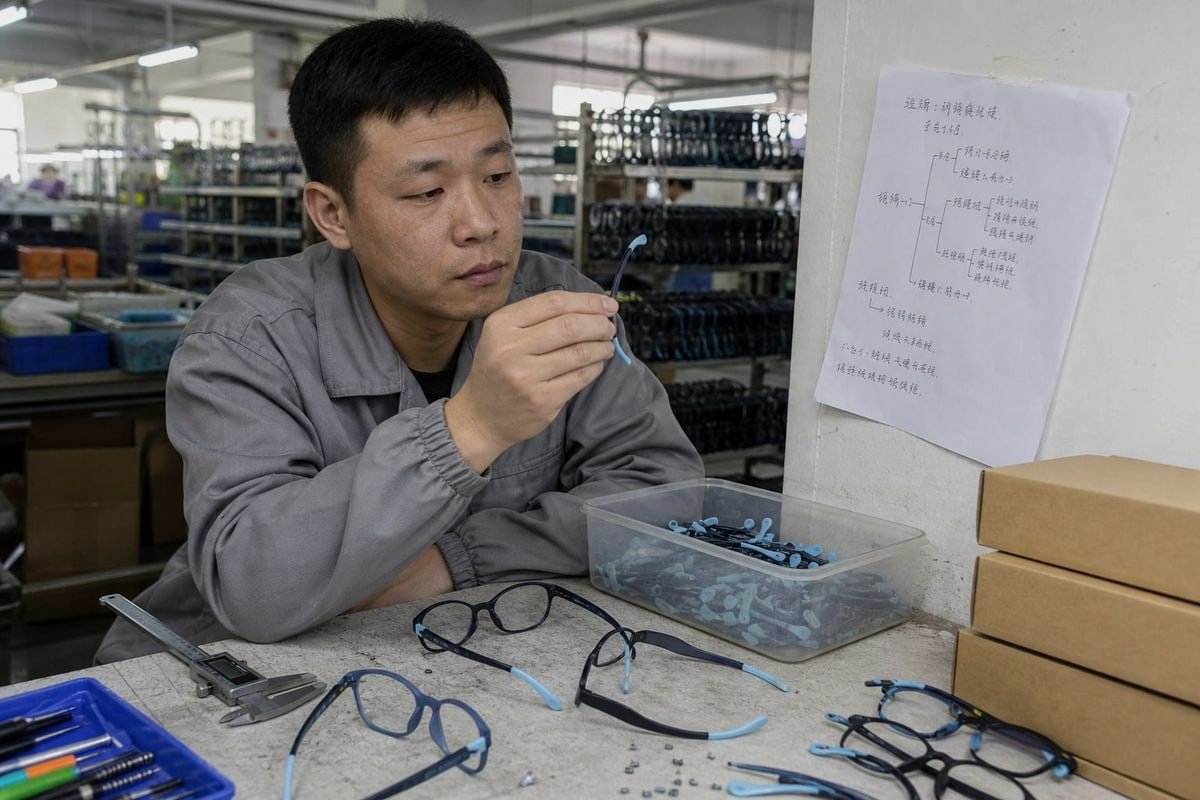
A replacement policy for broken kids’ optical frame temples and hinges is something our factory in Taizhou gets asked about constantly by brand buyers preparing to launch pediatric eyewear 1.
A strong replacement policy for broken kids’ optical frame temples and hinges combines a one-year eyewear warranty, a clear repair-vs-replace decision tree, tiered coverage for accidental damage, stocked replacement parts, and durable TR90 and TPEE frame construction that reduces breakage before claims ever happen.
Here is the problem. Kids bend, drop, sit on, and twist their glasses. Temples and hinges fail first. Without a written policy, every broken frame becomes an argument at the counter, a frustrated parent, and a margin-eating remake. With a policy, it becomes a fast, predictable process. Let me walk you through how to build one, piece by piece.
How can I set clear eligibility rules for what counts as a legitimate temple or hinge replacement claim?
A distributor in Australia once told me his front desk staff approved almost every claim just to avoid conflict. His remake costs doubled in a year. That conversation shaped how we advise buyers today.
Define eligibility in plain written categories: manufacturer defect, normal wear and tear, accidental damage, lost parts, and misuse beyond normal wear. Cover defects fully, cover accidental damage once with a copay, and exclude lost glasses, intentional damage, and cosmetic wear from your eyewear warranty.
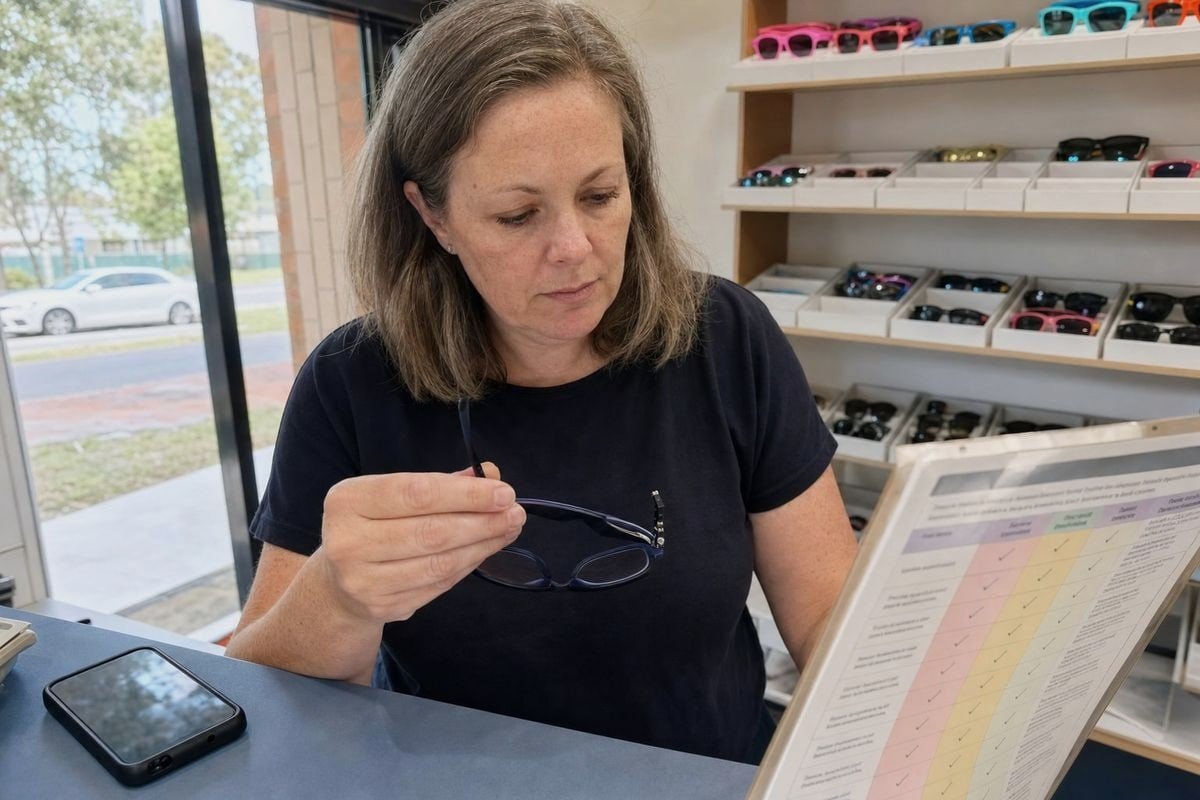
Ambiguity is the real enemy here, not the parents. In our fifteen years supplying pediatric eyewear to buyers in more than twenty countries, the practices and brands with the fewest disputes are the ones whose staff can explain coverage in one sentence. So write your categories down. Train every dispenser on them. Then apply them the same way every time.
The five categories every policy needs
A legitimate claim question should route into one of these buckets within thirty seconds of intake:
| Catégorie | Exemple typique | Coverage recommendation |
|---|---|---|
| Manufacturer defect 2 | Hinge barrel cracks under normal use in month two | Free replacement, no conditions |
| Normal wear and tear | Screws loosen, temple tips compress over a year | Free minor adjustment; parts at cost |
| Accidental damage | Child sits on frame, temple snaps at the hinge | One covered replacement with small copay |
| Lost parts or lost glasses | Temple lost at the beach | Excluded; offer discounted replacement parts |
| Misuse beyond normal wear | Frame deliberately bent or chewed apart repeatedly | Excluded; document with photos |
Make the frame tell the story
Require the damaged frame to be returned or photographed before approving a claim. A cleanly sheared hinge rivet in a new frame points to a defect. A temple snapped mid-arm with teeth marks points to misuse. A digital claims process where parents submit photos speeds up this triage and often saves an in-person visit entirely. It also creates a record, so you can spot repeat patterns by frame model — data you should be feeding back to your manufacturing partner. When our OEM customers share this data with us, we can often trace a failure cluster to one hinge batch or one temple geometry and fix it at the source.
One more rule: never let "eligibility" sound punitive. The goal of clear rules is faster yeses, not more noes.
What replacement timeframes and warranty periods make sense for kids' optical frames that see daily wear and tear?
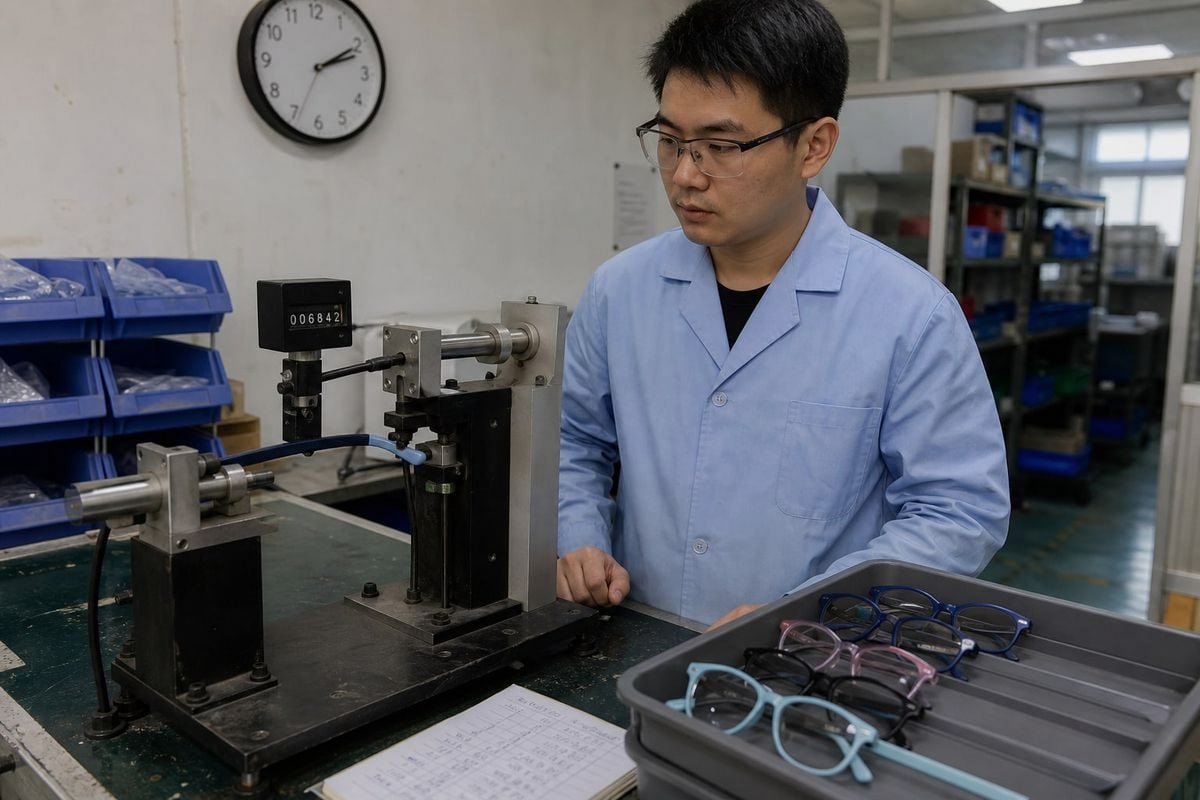
When we run flex-cycle tests 3 on TPEE temples in our QC lab, we are essentially simulating a year of a child's daily abuse. Warranty periods should be built on that same logic.
A one-year warranty from the purchase date is the industry standard for kids' optical frames, covering defects and one accidental break. Process minor repairs same-day, component replacements within three to five days, and full frame remakes within one to two weeks.
Timeframes matter twice in this policy: how long coverage lasts, and how fast you resolve each claim. Parents judge you on both, but they remember the second one more vividly. A child without glasses cannot read the board at school, so turnaround speed is a clinical issue, not just a service issue.
Coverage length: why one year works
Twelve months matches how quickly children grow and how long a well-built frame in TR-90 material should realistically survive active use. A shorter warranty feels stingy on a child's product. A longer one exposes you to frames that are outgrown anyway. One useful refinement we see from our European brand customers: a full-coverage first six months, then defect-only coverage for months seven through twelve, with accidental damage moving to a discounted repair rate.
Resolution speed: set service-level targets
| Service tier | Ce qu'elle couvre | Target turnaround |
|---|---|---|
| Tier 1: Minor repair | Loose screw, temple realignment, nose pad swap | Same day, while they wait |
| Tier 2: Component replacement | New temple arm, hinge screw, spring hinge swap | 3–5 business days |
| Tier 3: Full frame replacement | Cracked front, unrepairable hinge mount, multiple failures | 1–2 weeks |
| Tier 4: Urgent temporary fix | Stabilization so the child can keep wearing glasses now | Same day, permanent fix ordered |
Tier 4 deserves emphasis. A temporary stabilization keeps a child seeing while replacement parts ship. It costs you minutes and buys enormous goodwill. Finally, add proactive communication: notify parents when their coverage is nearing expiration and offer a renewal or a new-frame option. Frame durability is finite, and that reminder often converts into a planned second purchase instead of an emergency one. Note that vision insurance plans sometimes contribute to frame replacement, so train staff to check benefits before quoting out-of-pocket costs.
Should I offer free replacement parts or a discounted repair program to keep customers loyal without hurting my margins?
The trade-off I weigh with buyers on almost every kids' project is this: a temple arm costs cents at our factory, but a lost customer costs a brand hundreds. That asymmetry should drive your answer.
Offer both, in tiers. Give free minor hardware — screws, nose pads, temple tips — with no questions asked, provide one free component replacement per warranty year, and run a discounted repair program at roughly fifty percent for everything beyond that. Low-cost parts buy high-value loyalty.
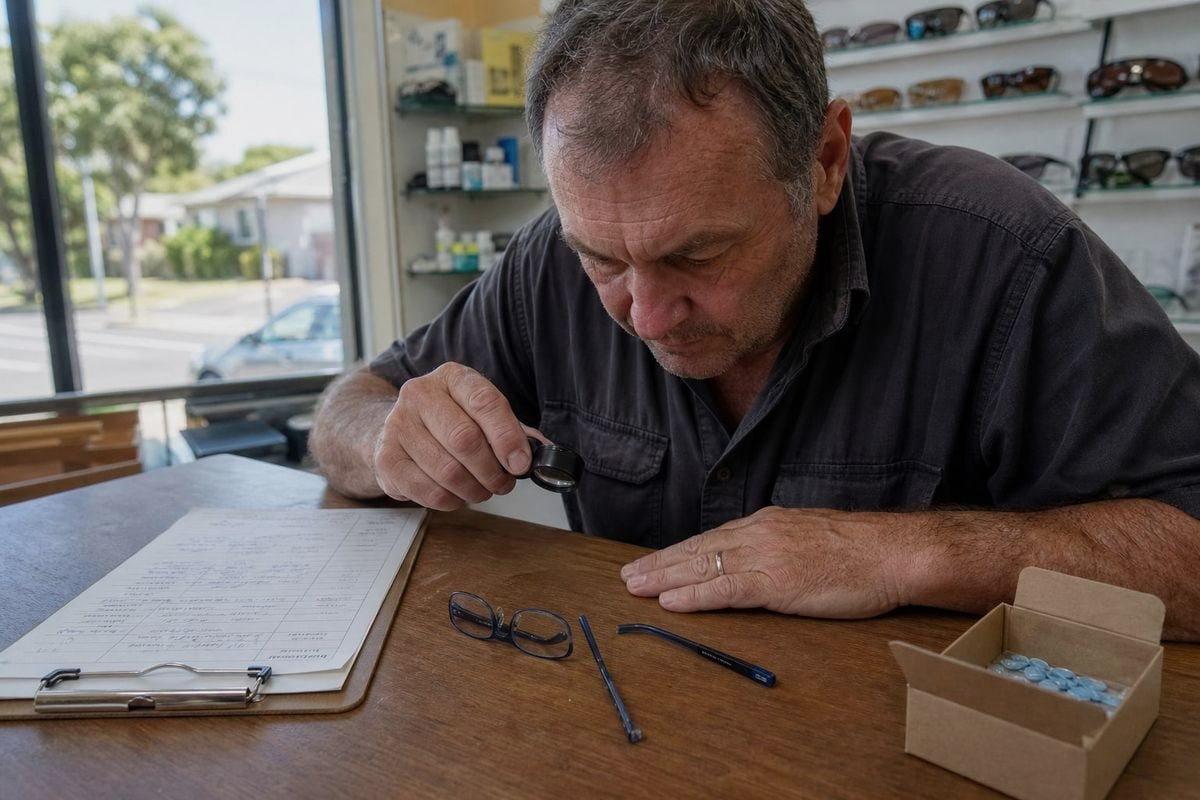
The math favors generosity at the small end. Screws, nuts, temple tips, and nose pads are the cheapest items in your entire supply chain 4. Giving them away freely costs almost nothing and makes every visit feel like service, not billing. The margin risk lives at the big end — full frames and lenses — so that is where copays and limits belong.
A tiered program that protects margins
- Always free: screws, nose pads, temple tips, adjustments, and cleaning. Keep a professional eyeglass repair kit at every dispensing station so these take two minutes.
- Free once per year: one temple arm or one spring hinge replacement under the eyewear warranty, with the broken part returned.
- Discounted after that: additional replacement parts at around half retail, so parents of active children never feel penalized for a second accident.
- Optional premium tier: for a small upfront fee at purchase, unlimited part replacements for the year. Some parents of known frame-destroyers will happily pay this, and it converts your riskiest customers into your most committed ones.
The buyer objection worth addressing
Some retailers push back: why not just replace the whole frame every time and skip the repair workflow? Full replacement feels simpler. But it is the expensive kind of simple. Component-level service — swapping only the broken temple or hinge — keeps your cost per claim low, keeps the child's already-fitted frame in service, and reduces waste. Modular repair only works, however, if you plan inventory. Stock the common screw sizes, temple styles, and hinge types for your best-selling pediatric models. This is where your supplier relationship matters: we ship spare temple arms and hinge hardware alongside frame orders for exactly this reason, and buyers who order a five percent spares allowance almost never face a stranded repair.
How do I choose a manufacturing partner whose TR90 and TPEE frame construction actually reduces temple and hinge breakage in the first place?
Early in our factory's history, we learned a hard lesson: a beautiful frame with a fragile hinge mount generates returns for years. That failure taught us to engineer the hinge zone first and the styling second.
Choose a partner who pairs a rigid TR90 front with flexible TPEE temples, reinforces or eliminates stress points at the hinge, performs flex and pull testing during QC, offers proven existing molds, and supplies matching replacement parts so your policy stays serviceable long-term.
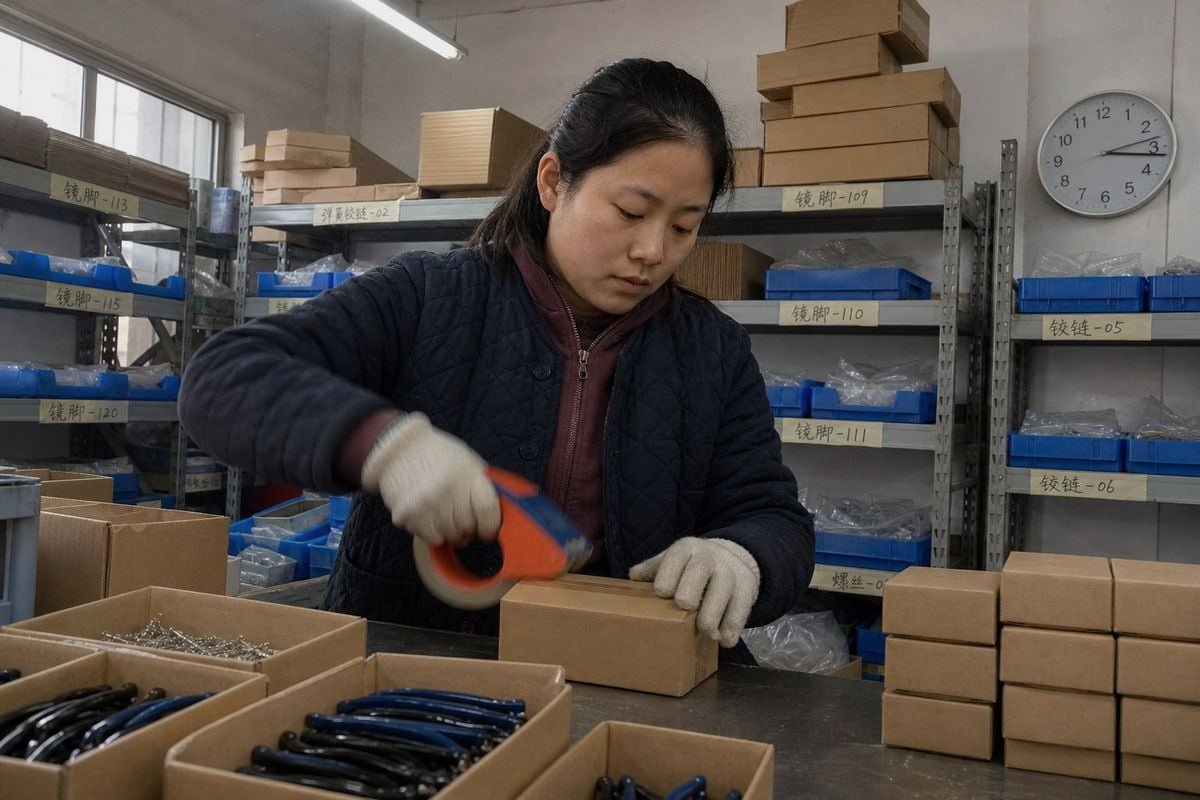
The best replacement policy is the one you rarely need. Material and construction choices upstream decide most of your claim volume downstream, so vet your factory as carefully as you write your warranty.
What the right materials actually do
TR-90 material is a lightweight nylon-based polymer with memory. It bends and returns instead of snapping like brittle acetate. TPEE goes further: it is a soft, rubbery, environmentally friendly elastomer ideal for temples that get twisted daily. The construction we build most often for active children combines a TR90 front — for lens retention and shape stability — with TPEE temples that flex a full range without stressing the hinge. Look at any well-designed sporty kids' frame, like a glossy black TR90 front with navy flexible rubber temples ending in soft silicone cable ear hooks, and you can see the philosophy: rigidity where the lenses need it, flexibility everywhere a child applies force.
A supplier evaluation checklist
| What to check | Why it reduces breakage claims |
|---|---|
| Hinge design | Integrated flexible hinge zones or quality spring hinges outlast cheap riveted barrels |
| Material verification | Genuine TR90 and TPEE flex thousands of cycles; cheap substitutes crack early |
| QC process | Flex, pull, and torsion testing catches weak batches before they ship |
| Existing style library | Proven molds (we maintain around 800 styles) carry field-tested durability history |
| Spare parts supply | Matching temples, screws, and hinges keep your repair program viable |
| OEM/ODM depth | Custom colors, logos, and packaging without compromising structural design |
Ask hard questions during sampling. How is the temple joined to the front? Can the temple be replaced without tools that a dispensing bench would not have? Will the factory commit to supplying replacement parts for the life of the program? A partner who hesitates on that last question will strand your warranty promises. A partner who answers confidently — with samples, test data, and a spares plan — becomes the quiet foundation of the whole policy you have just designed.
Conclusion
Broken temples and hinges are inevitable with kids. Disputes and lost margins are not. Write clear eligibility rules, set a one-year warranty with fast tiers, price parts generously, and build on TR90 and TPEE construction that prevents most breaks before they happen.
Notes de bas de page
1. Provides comprehensive information on why children need glasses and fitting considerations. ↩︎
2. Defines a manufacturing defect in the context of product liability. ↩︎
3. Describes the process and purpose of dynamic flex (bend cycle) testing for material durability. ↩︎
4. Provides an authoritative definition of supply chain management and its components. ↩︎
Plus d'articles que vous pourriez aimer

août 5, 2026
Bio-Based vs Regular Cellulose Acetate: What's the Difference for Kids' Frames?

août 5, 2026
How Recyclable Are Kids' Optical Frame Materials, and What Eco-Friendly Alternatives Exist?
août 5, 2026
Do Kids Optical Frames Whiten or Age in Storage, and How to Control Warehouse Conditions?
Vous recherchez un partenaire fiable en lunetterie pour enfants ?
Explorez plus de 800 styles prêts et un support OEM/ODM complet adapté à votre marque.
Contactez-nous English
  Español de México
  Deutsch
  Français
  日本語
日本語  العربية
  Português do Brasil